1. Home
  2. World

Category: World

World
India clears military purchases worth $25 billion to buy aircraft, Russian S-400 missile systems

India clears military purchases worth $25 billion to buy aircraft, Russian S-400 missile systems

 India approved proposals worth $25bn ‌yesterday to buy transport aircraft, Russian S-400 ‌missile systems ⁠and remotely ‌piloted strike aircraft as it pushes ‌its military modernisation and replenishes equipment after its conflict with Pakistan.The ⁠decision comes on the back of another major approval last month worth $40bn to purchase more French Rafale fighter jets for the air force and Boeing P-8I reconnaissance aircraft for the navy.Yesterday's approvals also covered purchases of armoured piercing tank ammunition, gun systems and aerial surveillance systems for the army, ​increasing the life of the Sukhoi-30 fighter jets operated by the air force, and hovercraft for the coastguard, a statement from the defence ministry ‌said.Separately, the ministry also ⁠signed a 4.45 ​billion rupees ($47mn) contract yesterday with Russia's ​JSC Rosoboronexport to acquire Tunguska air defence missile systems for the army.In all, India has approved 55 proposals worth 6.73tn rupees ($71bn) and signed contracts for another 503 proposals amounting to 2.28tn rupees in the fiscal year ending March 31, the statement said, adding that both were the highest in a fiscal year.India is the world’s fifth-largest military spender and the second-largest arms importer ‌after Ukraine, according to latest data ‌from the Stockholm International ⁠Peace Research Institute.It has for decades been modernising its ⁠mostly Soviet-era equipment and ⁠increasingly looking to new sources including France, Israel, the US and Germany. In recent years, it has pushed to manufacture everything from guns and drones to fighter jets and submarines at home, either on its own or in collaboration with foreign partners. Last year, ​India and Pakistan were involved in a fierce four-day military conflict, their worst in decades, after an attack on Hindu tourists in Indian Kashmir. New Delhi said the militant attackers were from Pakistan. Pakistan denied the accusations.India's ties with China have also been testy and they were locked in a military stand-off in the Himalayas for more than four years before they agreed ‌to pull back ​in 2024 and repair relations. 

World
Middle East war exposes UK Navy’s limitations

Middle East war exposes UK Navy’s limitations

HMS Dragon, a Royal Navy Type 45 Daring-class air-defence destroyer warship, is guided by tug boats, as it departs from HM Naval Base Portsmouth, on the south coast of England. (AFP/File Photo) A single destroyer sent to the Mediterranean and Germany stepping in to command a Nato maritime mission: the Iran war is exposing the limits of Britain's navy, seen by observers as an embarrassment for a once proud maritime power.The conflict, launched on February 28 with US-Israeli strikes on Iran, is highlighting the effects of years of under-investment and industrial delays, leaving the Royal Navy virtually absent from the Middle East.Controversy about Britain's naval capabilities first erupted over the slow deployment of HMS Dragon to protect British bases in Cyprus, one of which was hit by an Iranian drone on March 1.The destroyer has only just arrived.In the meantime, France deployed its Charles de Gaulle aircraft carrier, while Italy and Greece sent ships to reassure Cyprus. Right-wing newspaper the Daily Telegraph called the comparisons "embarrassing".This week Germany announced it will assume command in April of a Nato maritime mission in the North Atlantic in place of Britain, which was due to assign HMS Dragon to the role but is not able to deploy another vessel."This is what good allies do," Defence Secretary John Healey said Thursday, while admitting he was "not happy with the situation we have with British warships"."I have to make decisions based on what we've got," he added, noting the UK now has 17 frigates and destroyers, compared with 23 when Labour was last in power in 2010.The vessels include six Type 45 destroyers and 11 Type 23 frigates, but most are currently unavailable, in maintenance or being decommissioned.The next generation of warships — eight Type 26 anti-submarine frigates and five Type 31s — are not due to be ready before 2028-2029 due to delays, prompting some experts to warn of a capability dip in the coming years.The Strategic Defence Review published last year lamented that maintenance costs are being driven up by the ageing fleet — a blow for the Royal Navy, which for centuries extended Britain's empire around the world, once dominating the oceans and turning the island into a global power.It took eight years to complete upgrades on the destroyer HMS Daring.Britain's two aircraft carriers — HMS Prince of Wales and HMS Queen Elizabeth — are also docked. The former is expected to take part in a North Atlantic mission soon.They were labelled "toys" by US President Donald Trump on Thursday, who has criticised London for its limited response to the US-Israel war against Iran.Prime Minister Keir Starmer has said the UK will not be drawn into a broader war, and refused to join the US and Israel's bombing of Iran.But the UK government has allowed US planes to take off from two UK bases to target Iran's missile sites.And Britain has deployed fighter jets and air-defence systems to the Gulf to protect British interests and allies, shooting down numerous drones.Russia's war in Ukraine, the expansion of Nato missions, and the conflict in the Middle East means it is "a particularly challenging period for the Navy", Nick Childs of the International Institute for Strategic Studies told reporters including AFP recently."It is struggling to make capabilities match commitments in particular, but also is struggling to maintain force levels," he said.Mark Sedwill, formerly Britain's most senior civil servant, told the BBC recently that under successive governments "there's been an erosion of the basics, the maintenance, the training, the ordinance supplies and so on that keep an effective force ready to deploy".— 'Russia main threat' —Starmer's Labour government, elected in July 2024 following 14 years of Conservative rule, has pledged to significantly ramp up defence spending, with priority given to Nato commitments.But the publication of its defence investment plan, first expected back in late 2025, continues to be pushed back — to the frustration of industry.Within the Navy, priority is to go to nuclear deterrence and the shift toward a so-called hybrid force combining traditional crewed warships with autonomous maritime drones."For good reason, the UK has decided that the main threat faced by the UK is Russia," Kevin Rowlands of the RUSI think-tank told AFP."And the main theatre of operations where we need to confront Russia will be in Northern Europe, the North Atlantic and the High North."So it's almost inevitable, if something happens in a different part of the world, then we won't necessarily be there." 

World
India cuts excise duties on petrol, diesel as global oil prices surge

India cuts excise duties on petrol, diesel as global oil prices surge

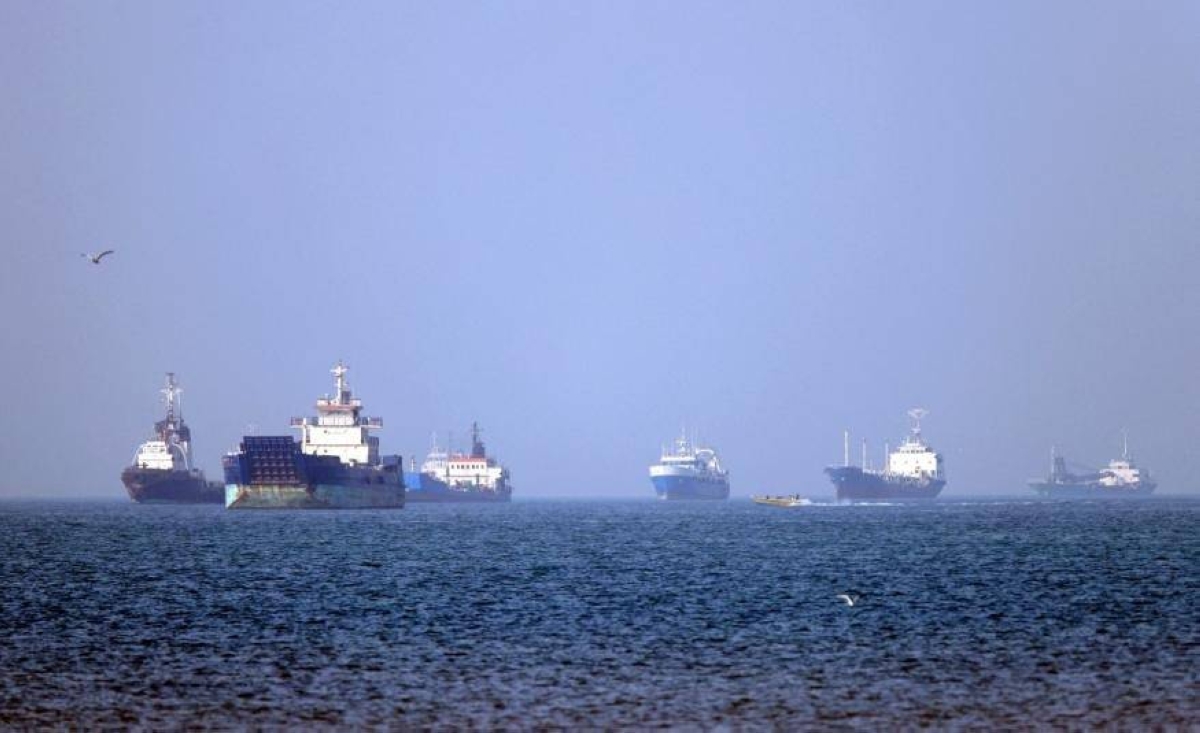
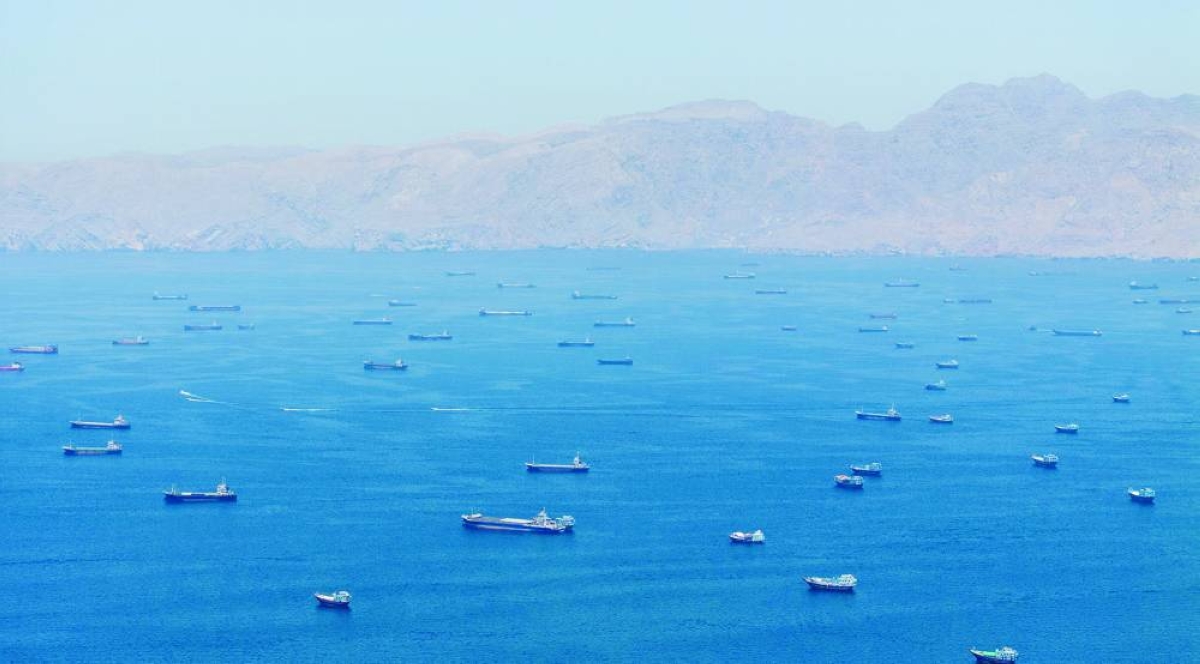
People rush to refuel their vehicles at a fuel station in Amritsar yesterday. (AFP) India has slashed excise duties on petrol ‌and diesel to protect consumers and curb a potential spike in inflation, while imposing windfall taxes ​on aviation fuel and diesel exports, amid ‌volatile global oil markets due to the Iran war.Global oil prices have surged past $100 per barrel ‌after the near closure of ⁠the Strait of Hormuz, ‌which serves as a conduit for 40% of India's ‌crude oil imports, since the US and Israel first struck Iran on February 28.In a government order late Thursday, ⁠India's finance ministry reduced the special excise duty on petrol to 3 rupees ($0.0318) per litre from 13 rupees. It also cut the duty on diesel to zero from 10 rupees per litre.The move comes ahead of elections next month in four Indian states and one federal territory, with voters very sensitive to higher prices.India will lose 70bn rupees ($739mn) a fortnight from the excise cuts, although it will recover part of this — 15bn rupees — through separate export taxes on some fuel products, Vivek Chaturvedi, chairman of Central Board of Indirect Taxes and Customs, ​told a press briefing.The net hit to government finances will be 55bn rupees per fortnight.The yield on 10-year government bonds rose 7 basis points to 6.95%, its highest level in 20 months on concerns that the government may struggle to meet its ‌fiscal deficit target of 4.3% of GDP for ⁠the financial year beginning ​April.The tax cuts also ease the burden for oil marketing companies. While fuel prices in India ​are technically deregulated, state-run oil companies, which control 90% of the retail network, do not always raise prices when crude climbs.As a result, consumers are shielded from volatility, with either the government or the companies absorbing the increases."Government has taken a huge hit on its taxation revenues to ensure very high losses of oil companies, approximately 24 rupees a litre for petrol and 30 rupees a litre for diesel, at this time of sky high international prices, are reduced," Oil Minister Hardeep Singh Puri said in a post on X.The government said that at current crude rates, the combined daily under-recoveries being absorbed by oil firms stand at 24bn rupees.Shares of oil marketing companies such as Bharat Petroleum Corp and HPCL reversed early gains to close slightly higher.The diesel export tax was set ‌at 21.5 rupees a litre, along with a 29.5 ⁠rupees a litre tax on aviation fuel exports, the order said.Between April 2025 and January 2026, India exported 14mn ⁠metric tonnes of gasoline and 23.6mn tonnes ⁠of gasoil. Most refiners have stopped exporting fuels. Reliance Industries is the country's biggest fuel exporter.Finance Minister Nirmala Sitharaman said the government will ensure there is no shortage of petrol, diesel and jet fuel.It will support oil marketing companies so that citizens are spared price hikes and ensure that jet fuel prices do not rise, she told news agency ANI.India, the world's third-biggest oil importer and consumer, relies heavily on overseas supplies.In a letter dated Thursday, the petroleum ministry said it will ​raise the allocation of liquefied petroleum gas to commercial and industrial users by 20%, taking total supply to 70% of pre-crisis levels.The increase builds on an existing 50% allocation, with priority to sectors such as steel, automobiles, textiles and other essential industries. India had cut gas allocation for non-cooking purposes after the start of the Iran war.India consumed 33.15mn tonnes of cooking gas last year, with imports covering about 60% of demand. About 90% of those imports came from the Middle East.Prime Minister Narendra Modi and his government have stressed adequate arrangements are in place, including for fertiliser supplies for the summer sowing season and coal to meet rising electricity demand.The government, in a separate statement, assured the ‌public that retail petrol and diesel ​prices will not change. 

World
S. Korean budget airlines cut flights on high fuel costs

S. Korean budget airlines cut flights on high fuel costs

South Korea's low-cost carriers (LCCs) are cutting international flights to mitigate the impact of surging fuel costs amid prolonged tensions in the Middle East.Aviation industry sources reported Thursday that some companies plan to suspend 50 flights between April 20 and May 31, citing limited local refueling conditions in Vietnam.The country's three largest LCCs are also considering cutting services on select Southeast Asian routes, according to industry watchers.Jet fuel prices in Asia and Oceania rose 16.6% to $204.95 per barrel in the week of March 13-20, compared with the previous week, and were sharply higher than the prior month's average, according to the International Air Transport Association (IATA).

World
S. Korea to expand fuel tax cuts

S. Korea to expand fuel tax cuts

The Ministry of Finance and Economy of South Korea announced on Thursday that South Korea will significantly expand its temporary fuel tax cut in a bid to ease the financial burden on consumers amid the prolonged conflict in West Asia.Under the latest measures, the tax reduction rate on gasoline will rise from 7 percent to 15 percent, and on diesel from 10 percent to 25 percent, as part of the government's efforts to support living costs.The measure, which had been set to expire in April, will be extended through the end of May, according to the ministry.As a result, fuel taxes per liter, including value-added tax, will fall by KRW 65 (USD 0.04) to KRW 698 for gasoline and by KRW 87 to KRW 436 for diesel.The decision is aimed at easing the burden of rising oil prices and supporting small and midsize businesses, as well as vulnerable households affected by the prolonged conflict.South Korea first introduced the fuel tax cut in November 2021 as a response to rising energy prices. The government has since extended the measure, adjusting the rates in accordance with changes in the global energy market. 

World
18 Killed after passenger bus plunges into river in Bangladesh

18 Killed after passenger bus plunges into river in Bangladesh

At least 18 people were killed after a passenger bus carrying about 40 people plunged into the Padma River in central Bangladesh while attempting to board a ferry.Local authorities reported that the accident occurred after the driver lost control of the bus as it approached the ferry. The bus was traveling from Kushtia to Dhaka.Rescue teams managed to recover the bus and continued the search despite difficult weather conditions. Bodies, including those of women and children, were recovered Thursday morning, while the fate of some passengers remains unknown.Officials fear that others may still be missing. Hundreds of people die every year in road and ferry accidents in Bangladesh.  

World
Japan starts release of state-held oil to stabilize supplies amid Iran war

Japan starts release of state-held oil to stabilize supplies amid Iran war

The Japanese government on Thursday started releasing state-held oil to stabilize supplies amid the ongoing US-Israeli war with Iran, as part of the largest-ever drawdown of reserves stockpiled in the country.The release of oil equivalent to 30 days of domestic demand, or around 8.5 million kiloliters, is set to conclude by the end of April and follows the freeing up of 15 days' worth held by the private sector, which commenced last week.According to Japan's Kyodo News Agency, there is growing concern about an oil supply shortage in Japan, which relies on the Middle East for over 90% of its crude oil imports, as Tehran has effectively blocked the Strait of Hormuz - a vital waterway for global energy supplies - following the attacks on Iran launched by the US and Israel on Feb. 28.To deal with the energy supply disruption, the Japanese government decided to release about 80 million barrels of oil, equivalent to 45 days' worth of domestic consumption and 1.8 times the amount released after the massive earthquake and tsunami in 2011 that devastated Japan's northeast.The average retail price of gasoline in Japan rose to a record-high 190.80 yen per liter in mid-March, with the government resuming state subsidies to bring down the price.While the number of oil tankers arriving in Japan after passing through the Strait of Hormuz has fallen drastically, the chemical sector is also facing difficulties in procuring naphtha, a liquid derived from crude oil that is used to produce ethylene, a raw material for plastics and synthetic fibers. 

World
Leaked Nepal report into deadly uprising calls for prosecuting ex-PM

Leaked Nepal report into deadly uprising calls for prosecuting ex-PM

Newly elected lawmakers taking an oath during a swearing-in ceremony at the parliament in Kathmandu Thursday. (AFP) A Nepal commission has recommended the prosecution of ex-prime minister KP Sharma Oli in connection to the deadly September 2025 uprising that toppled his government, according to a leaked report.At least 77 people were killed in the anti-corruption youth uprising on September 8 and 9, which began over a brief social media ban but tapped into longstanding fury over economic hardship.Four-time prime minister and Marxist leader Oli, 74, was defeated in the polls this month by the 35-year-old rapper-turned-politician Balendra Shah, whose Rastriya Swatantra Party (RSP) won in a landslide after promising to oust an ageing elite, stem corruption and fix the economy.The commission's recommendations, set out in a report leaked by Nepali media, came ahead of the swearing-in Thursday of newly elected members of parliament."It was decided to recommend to the Government of Nepal that an investigation, inquiry, and prosecution be carried out against the then executive head, Prime Minister KP Sharma Oli," reads a copy of the report seen by AFP Thursday.At least 19 young people were killed in a crackdown on the first day of protests.No one has been convicted of the killings.Former interior minister Ramesh Lekhak and ex-police chief Chandra Kuber Khapung should also be investigated and prosecuted, according to the recommendations in the report.Lekhak bore "overall responsibility for home administration, security agencies, and maintaining law and order", the report said, adding that he and Oli "did not appear to have made any effort on the afternoon... to prevent further human casualties".The report said it was "not established that there was an order to shoot", but "no effort was made to stop or control the firing and, due to their negligent conduct, even minors lost their lives".The report said victims in 48 out of 63 completed autopsies died of bullet wounds, and that the majority were struck in their chest or head.The nationwide unrest in September saw the parliament and government offices set ablaze and led to Oli's ouster.Former chief justice Sushila Karki took on the role of interim prime minister and established a commission to investigate the violence.The commission's report was submitted this month and protesters have demanded that its findings be released.Commission member Bigyan Raj Sharma told reporters the team had questioned more than 200 people and submitted a 900-page report — with more than 8,000 additional pages of evidence.Karki's office said on Wednesday evening that she would release the report but the official version was not out yet.The March 5 election returned a new 275-seat lower house of parliament, with the RSP winning a commanding majority of 182.New lawmakers took the oath of office Thursday in a hall within the newly constructed parliament building.The national anthem played as RSP's president Rabi Lamichhane and soon-to-be prime minister Shah stood next to each other, before the parliamentarians were sworn in.Shah, who kept his trademark dark sunglasses on for the ceremony, has yet to give a formal speech since winning his seat.Shah, popularly known as Balen, is expected to be sworn in as prime minister around midday today.  Related Story

World
Bangladesh rescuers recover 24 bodies after bus plunges into river

Bangladesh rescuers recover 24 bodies after bus plunges into river

Onlookers gather near the scene of an accident involving a bus that plunged into the Padma River in Goalanda in Bangladesh’s Rajbari district Thursday. (AFP) Rescue teams including navy divers in Bangladesh have recovered 24 bodies from a bus that plunged into a river at a ferry crossing, officials said Thursday.The bus sank into the deep waters of the Padma river in Goalanda on Wednesday, about 65 kilometres (40 miles) west of the capital Dhaka. It had around 50 passengers on board, many of whom managed to escape.A fire service report said that 24 bodies, including those of five children, had been recovered by midday Thursday.Some were pulled out by fire service officers, others by locals who come to help, as well as by the navy divers."The bus was waiting to board a ferry, when it fell into the river," said Noor Jahan Begum, 35, who saw the accident."Some passengers got out of the bus, but their family members died, trapped inside."Deadly crashes are relatively common in the South Asian nation, because of poor roads, badly maintained vehicles and reckless driving.Bangladesh's Road Safety Foundation reported over 200 deaths during the just-concluded Eid holidays. In one incident, a train rammed into a bus, killing 12.The World Health Organisation says that while reported road traffic fatalities in Bangladesh are around 5,000 a year, it estimates that actual deaths are far higher, at more than 31,500, according to figures from 2023.That translates to more than 85 a day in the country of 170mn people.In neighbouring India, at least 13 people were killed in a bus crash Thursday in Andhra Pradesh state, which Prime Minister Narendra Modi called "tragic". The bus burst into flames, burning the bodies.India, with 1.4bn people, recorded more than 177,000 road traffic deaths in 2025, according to the roads ministry, or 485 a day. 

World
US jury finds Meta, Google liable in social media addiction trial

US jury finds Meta, Google liable in social media addiction trial

Meta spokesperson Ashly Nikkole Davis speaks to the media outside the court in Los Angeles, California, yesterday. (Reuters)  A Los Angeles jury found Alphabet’s Google ‌and Meta liable for $3mn in ‌damages yesterday in a landmark ‌social media addiction lawsuit that will influence thousands of similar cases against the tech companies. Punitive damages for the companies will be decided next. The jury may consider whether Google or Meta’s products caused the plaintiff physical harm or whether the companies disregarded the health of other users, Judge Carolyn Kuhl said in court. The case involves a 20-year-old woman who said she became addicted to Google’s YouTube and Meta’s Instagram at a young age because of their attention-grabbing design. The jury found Google and Meta were negligent in ​the design of both apps and failed to warn about their dangers.“Today’s verdict is a referendum — from a jury, to an entire industry — that accountability has arrived,” the plaintiff’s lead counsel said in ‌a statement. Shares of Meta were up 1% and Alphabet ​shares were up 0.2%, little changed after the verdict.Meta disagrees with the ​verdict and its lawyers are “evaluating our legal options,” a company spokesperson said. Google plans to appeal, said company spokesperson José Castañeda. The plaintiffs in the Los Angeles proceeding focused on platform design rather than content, making it harder for the companies to avert liability. Snap and TikTok were also defendants in the trial. Both settled with the plaintiff before it began. Terms of the agreements were not disclosed. Large technology companies in the US have faced mounting criticism in the last decade over child and teen safety. The debate has now shifted to courts and state governments. The US Congress ‌has declined to pass comprehensive legislation regulating ‌social media. At least 20 states enacted laws last year on social media usage and children, according to the nonpartisan National Conference of State Legislatures, an organisation that tracks state laws. The legislation includes bills that regulate the use of cellphones in schools and require users to verify their ages to open a social media account. NetChoice, a trade association backed by tech companies such as Meta and Google, is seeking to invalidate age verification requirements in court. A separate social media addiction case brought by several states and school districts ​against technology companies is expected to go to trial this summer in federal court in Oakland, California. Another state trial is slated to begin in Los Angeles in July, said Matthew Bergman, one of the attorneys leading the cases for the plaintiffs. It will involve Instagram, YouTube, TikTok and Snapchat.