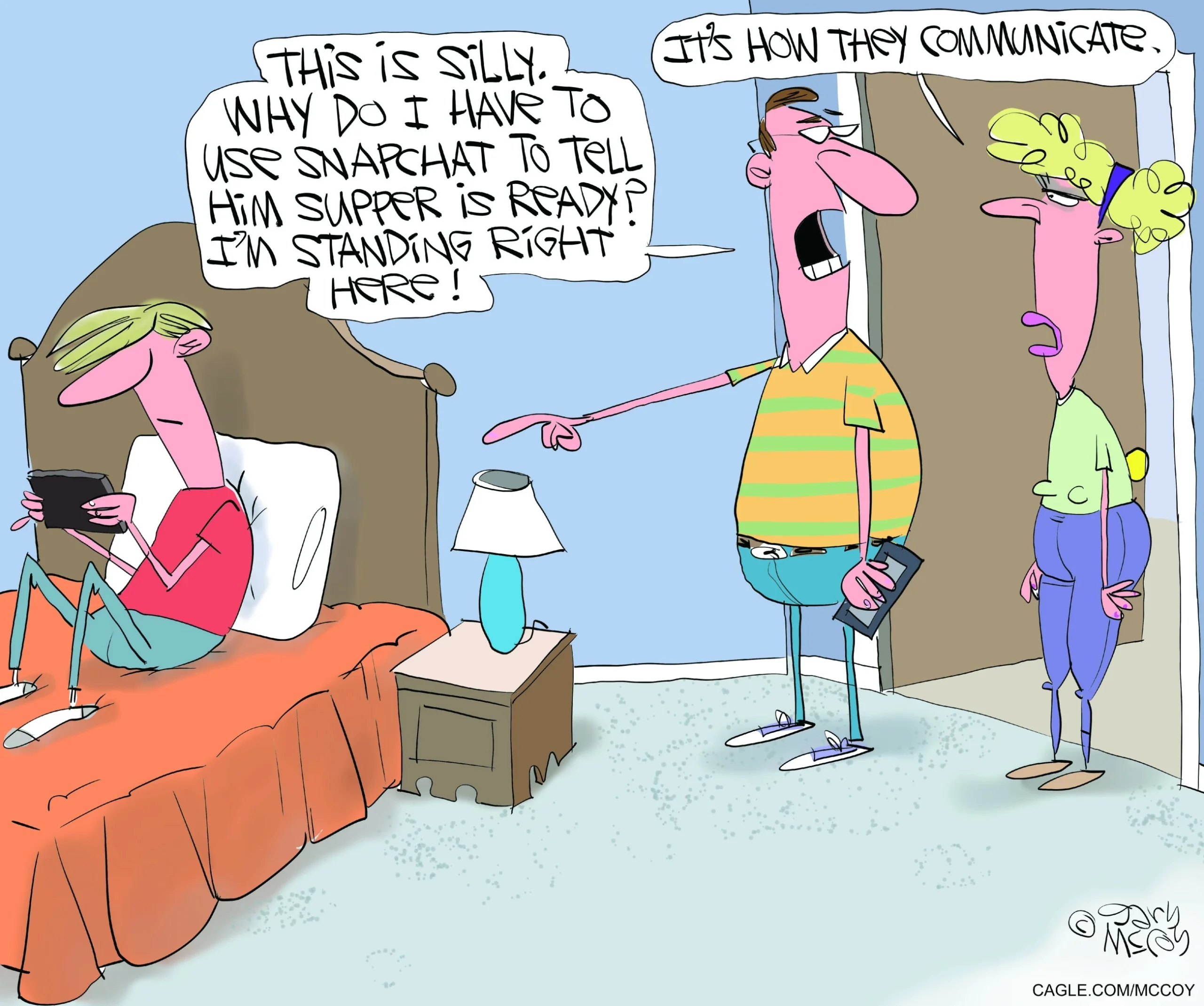
Via Snapchat
-
admin
- July 28, 2026
- 0
Via Snapchat

 admin
admin
Katy Perry rightly slams the US President, Donald Trump, for using her song in his political matters. It’s so important not to involve artistes in politics because artistes always spread joy and happiness among their
 admin
admin
India’s climate-tech companies have attracted approximately $12.8B and 1583 funded companies, with annual funding rising from about $315M in 2020 to $2.6B in 2025, as per the Tracxn India Climate Tech 2026 Report.The report highlights
 admin
admin
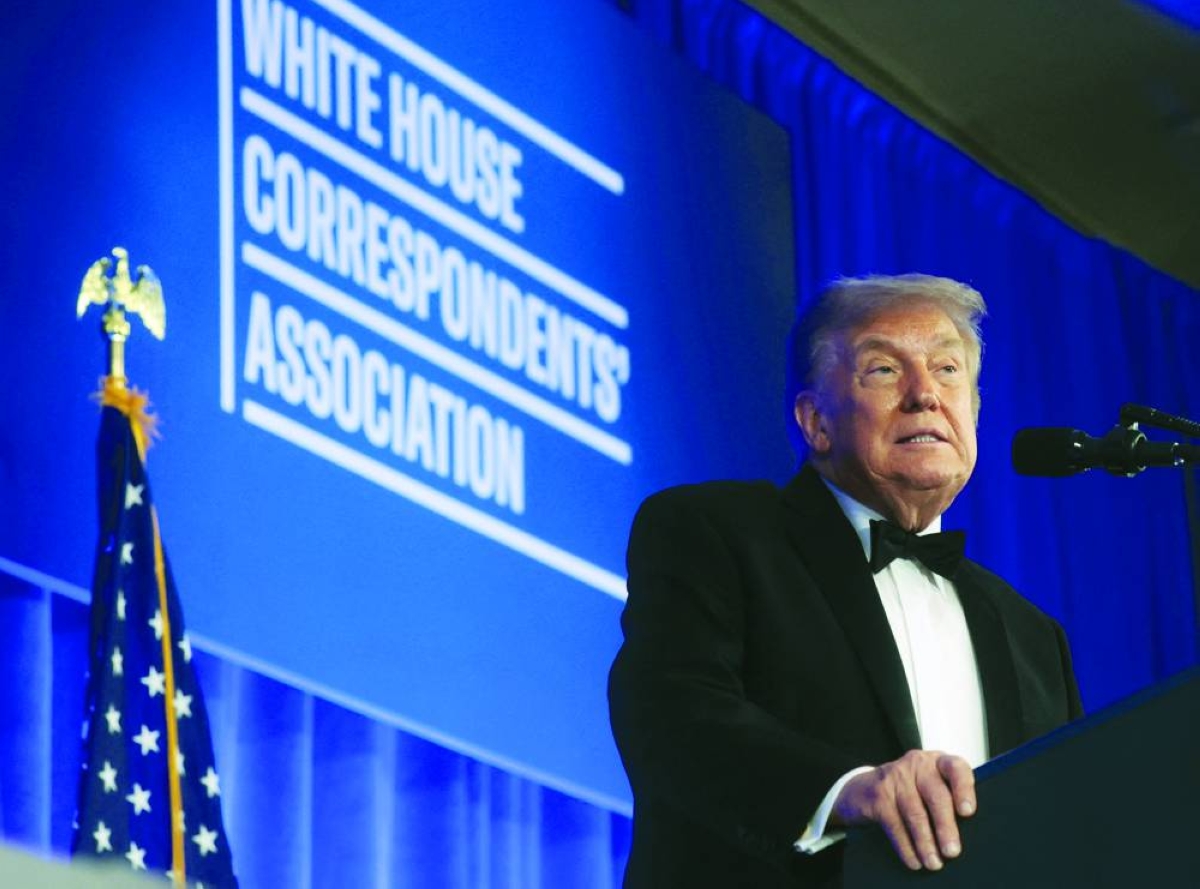
IN A BIND: US President Donald Trump delivers remarks at the White House Correspondents’ Association dinner in Washington, DC, on Friday. (Reuters) For a week, Washington was told to expect the heaviest bombardment of the war. The president himself trailed it. “I am considering a massive attack. Bigger than ever before. I am close to making a decision. We are all set for it,” Donald Trump said on Thursday. Aircraft and munitions moved into the region. Central Command had options on the table running to a fortnight of sustained strikes. Then, on Friday, nothing happened. Ditto for Saturday and Sunday. What changed in the interim is not Iranian behaviour, and it is not a diplomatic breakthrough. It was arithmetic. The most consequential fact of this war is no longer anything happening over Iranian airspace; it is a number on a Pentagon inventory sheet that the White House would prefer nobody published. The number concerns Patriot interceptors — the missiles that shoot down other missiles, the things standing between an Iranian ballistic salvo and a barracks block in Jordan. By late April, more than 1,200 had been fired in this war, each costing north of $4mn. Independent analysts at the Center for Strategic and International Studies now put the figure at 1,500 or more, leaving the United States with fewer than a thousand in hand worldwide. The chairman of the Joint Chiefs, Gen Dan Caine, has told the White House privately that a return to major combat operations is doable, but that it would draw the Middle East magazine down to a level he is not comfortable with. The president’s public answer is a denial: “we have far more munitions than anyone in the world, and far more than we need.” Both halves of that sentence can be true and still leave him stuck. Having more interceptors than any other country is irrelevant if the rate at which you are firing them exceeds the rate at which you can build them — and it does, by a wide margin. Patriot production is measured in hundreds a year. Iranian launches are measured in nights. This is the asymmetry that has quietly beaten American strategy in this war. Iran fires something that costs a fraction of a million dollars; the United States expends several million to stop it. Tehran does not need to win that exchange, only to keep it going. And it is getting better at it: US officials say Iranian missiles are now flying varied profiles, altering speed and approach, forcing defenders to burn two or three interceptors where one might once have sufficed. Defence Secretary Pete Hegseth’s assurance that Iran’s missile programme is “functionally destroyed” sits awkwardly beside the intelligence estimate that thousands of ballistic missiles remain, and beside the wreckage of nine American sites hit in a fortnight — living quarters, hangars, drone shelters, and a radar array in Kuwait destroyed six months after it was switched on. Three American soldiers died in Jordan when a missile got through. Nearly a dozen more were hurt badly enough to be flown to Germany. There is a dissenting view inside the military, and it deserves airing. Admiral Brad Cooper, who runs Central Command, reportedly believes the shortage is manageable precisely because a heavier campaign would suppress Iran’s ability to launch in the first place — spend interceptors now to avoid needing them later. It is a coherent argument. It is also a bet, and the president has just declined to take it. That refusal tells you how much confidence the system has in its own suppression estimates after five months of claims that Iranian capability had been broken, followed each time by evidence that it had not. The depletion problem does not stop at American stockpiles. Gulf states have been firing their own interceptors at the same tempo, defending the same bases and the same cities, and their magazines are draining too. This is the part Washington should find most alarming. The Gulf partners are the platform on which the entire American position in the region rests — the airfields, the ports, the basing rights, the overflight. They are also the states absorbing the retaliation, from struck desalination plants to Houthi fire on Saudi oil infrastructure. Ask them to keep standing exposed while the shield thins, and the political cost of hosting the United States starts to exceed the security benefit. Gulf countries mediating between Washington and Tehran are not doing so out of sentiment. They are mediating because a war fought over their heads with a shrinking supply of defensive missiles is an intolerable proposition, and because the Strait of Hormuz is not an abstraction to them. Then, there is the audience nobody in the room mentions. Every interceptor spent over Jordan is one unavailable to Taiwan, to Poland, to Korea. American officials are right to worry that Moscow and Beijing are reading the same inventory reports and drawing conclusions about what Washington could sustain elsewhere, and for how long. A war launched partly to demonstrate American resolve is quietly demonstrating the opposite: that the world’s strongest military has a finite number of nights it can fight at this intensity, and that the number is knowable. The domestic clock is running just as fast. Hegseth has put the bill at $37.5bn and asked for more. Oil has crossed $100. Only 29% of Americans approve of the president’s handling of the war, and support has begun eroding inside his own coalition, where enthusiasm among self-identified MAGA voters has fallen sharply since May. Speaker Mike Johnson’s assessment — “We got to wrap it up” — is not the language of a party settling in for a long campaign three months before an election. Democrats have found their message, and it is not foreign policy: it is that the war costs money that voters would rather spend on petrol and groceries. So the president has three doors, and each one is bolted. Escalation risks the interceptor supply, mass civilian casualties, and — by his own advisers’ assessment — no return to the table anyway, since bombardment has tended to consolidate the Iranian leadership rather than split it. Sanctions and blockade work slowly, and eight years of predicting Iranian economic collapse have produced an Iran that is poorer, more isolated, and still there. Declaring victory and leaving means accepting an Iran with buried enriched uranium and effective veto power over the world’s most important shipping lane — the exact problem the war was meant to solve, plus a new one. Which is why the pause should be read for what it is. The president’s own framing on Friday was unusually candid: “There’s a military exit where we just keep going just the way we are, and we can even make it a heavier dose... Or there’s a smarter strategy that you make a deal.” A leader with escalation dominance does not think out loud about the smarter strategy. He uses the dominance. Expect, therefore, a period of managed ambiguity: strikes suspended but not renounced, envoy traffic through Muscat and Doha, and a search for language that lets both capitals call the Strait of Hormuz question settled without either conceding it. Benjamin Netanyahu arrives in Washington today to argue against precisely this. He may find, for once, that the constraint on American action is not political will but a supply chain. Trump has spent a decade insisting his power was limited only by his own choices. It turns out it is limited by how many interceptors are in the racks — and by how quickly the Gulf, watching its own racks empty, decides that its interests and Washington’s have stopped pointing the same way.• The writer is Deputy Managing Editor, Gulf Times Related Story
 admin
admin
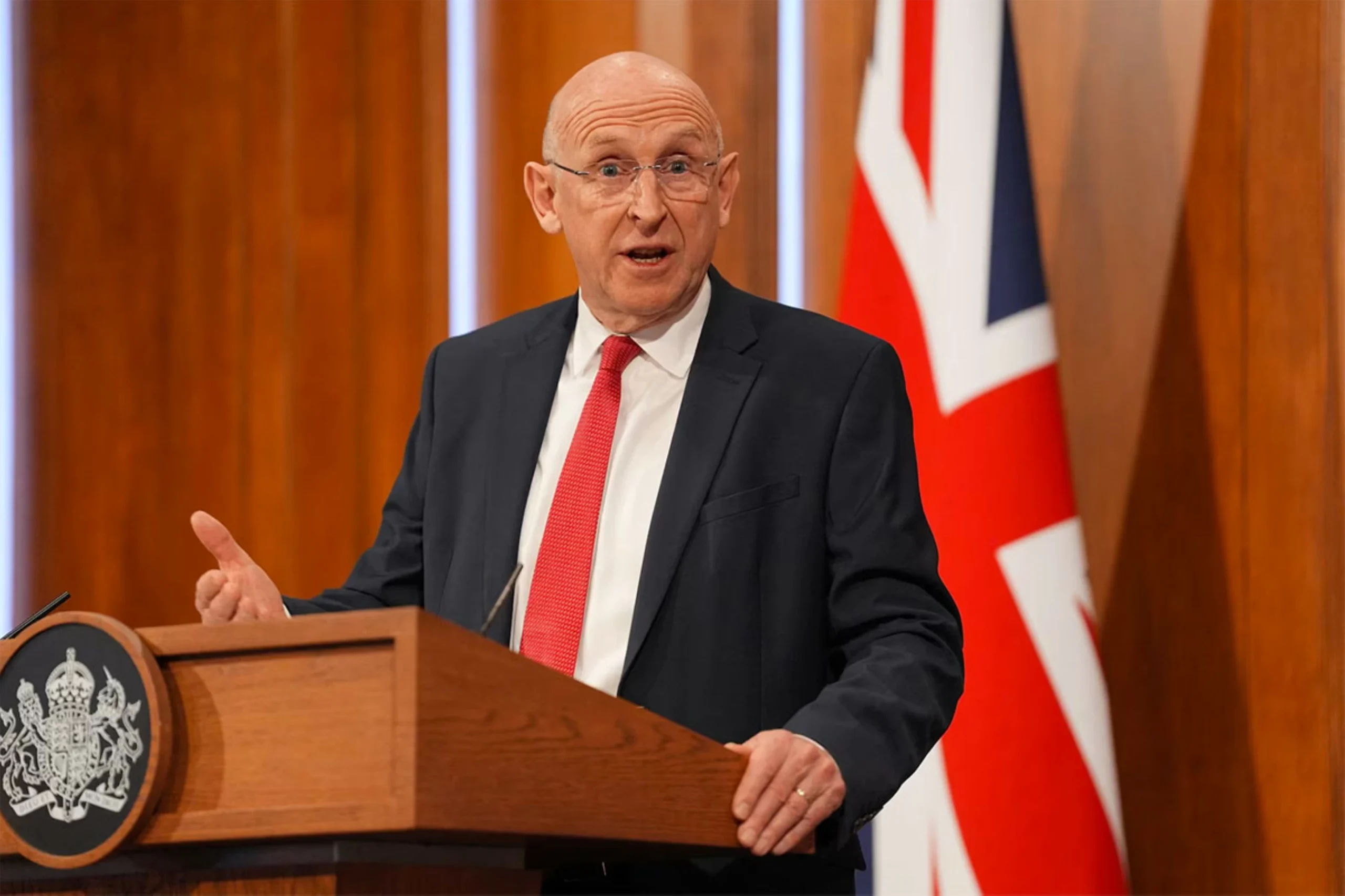
It is only six weeks or so since the then defence secretary, a widely-respected figure by the name of John Healey, told the not-so-widely-respected prime minister at the time, Sir Keir Starmer, that “you have
 admin
admin
Jane Kirby, The IndependentNew figures show the North-South life expectancy divide in England has widened over the past decade. A study found life expectancy reached the highest levels ever recorded in 2025, but the gains
 admin
admin
A recent interview with an influencer gave her job as an "Integrated facialist to the stars" which doesn't seem to involve astronauts or being a support scientist for one.I know the world has changed from
 admin
admin
Jeff Mullin, Tribune News ServiceTime travel has long been a popular subject for fiction authors, dating as far back as H.G. Wells and his 1895 novel, “The Time Machine.”Writers of movies and television shows have
 admin
admin
There is a particular kind of praise that carries more weight than the diplomatic variety, and Qatar received it this week. The UN Under-Secretary-General and Executive Secretary of the Economic and Social Commission for Western Asia, Rania al-Mashat, came to Doha and spoke not of communiqués or summitry but of data governance, social protection, digital public services and the machinery by which the Sustainable Development Goals are actually monitored and met. She described Qatar as a key partner in advancing sustainable development across the Arab region, commended its ranking among the top performers in the 2025 GEMS maturity index, and looked ahead to co-operation in statistics, artificial intelligence and emerging technologies. It is worth pausing on how unglamorous most of that is. Nobody builds a national reputation on SDG reporting platforms or the timely availability of statistics. Yet these are the unseen foundations on which every serious development effort rests, and a country’s willingness to invest in them says something about whether its commitment to the region is a posture or a practice. The same instinct runs through Qatar’s better-known work. Mediation in conflicts far beyond its neighbourhood, sustained humanitarian relief where politics has failed, the steadfast support for the Palestinian cause that al-Mashat singled out, decades of investment in education for children who would otherwise have none — these are not separate policies. They are expressions of a single conviction: that a country’s capacity to help creates an obligation to help, and that the obligation does not lapse when the cameras leave or when the beneficiary has nothing to offer in return. That conviction deserves to be stated plainly, because it has become unusual. Much of the world now treats assistance as an instrument — aid budgets calibrated to influence, humanitarian access traded for concessions, development finance shaped by the strategic returns it might one day yield. There is nothing new in this, and no country is entirely innocent of it. But something has been lost in the openness with which it is now practised, as though generosity requires an alibi and the only respectable justification for helping a stranger is that it serves you. It should always have been the other way round. The capacity to relieve suffering was never a form of leverage awaiting deployment; it was, from the beginning, a responsibility that arrived with the means. A country that can feed the hungry, shelter the displaced, school the illiterate or broker a ceasefire and chooses instead to price that capacity has not been shrewd. It has simply mistaken the nature of what it holds. Al-Mashat’s broader argument reinforces the point. The challenges confronting this region — water and food security, employment, the skills the coming economy will demand, the financing gap that shadows every development plan — transcend borders and cannot be solved by any state acting alone. Regional integration is not charity dressed up as strategy. It is the recognition that prosperity built in isolation, in a neighbourhood this interconnected, is prosperity built on sand. Qatar has understood this and acted on it, often at cost and rarely with fanfare. The lesson on offer is not for the region alone. Every country in a position to help faces the same question, and answers it daily whether or not it admits as much: is our capacity something we hold, or something we owe?