1. Home
  2. Opinion

Category: Opinion

Opinion
Trump says Russia can deliver oil to Cuba

Trump says Russia can deliver oil to Cuba

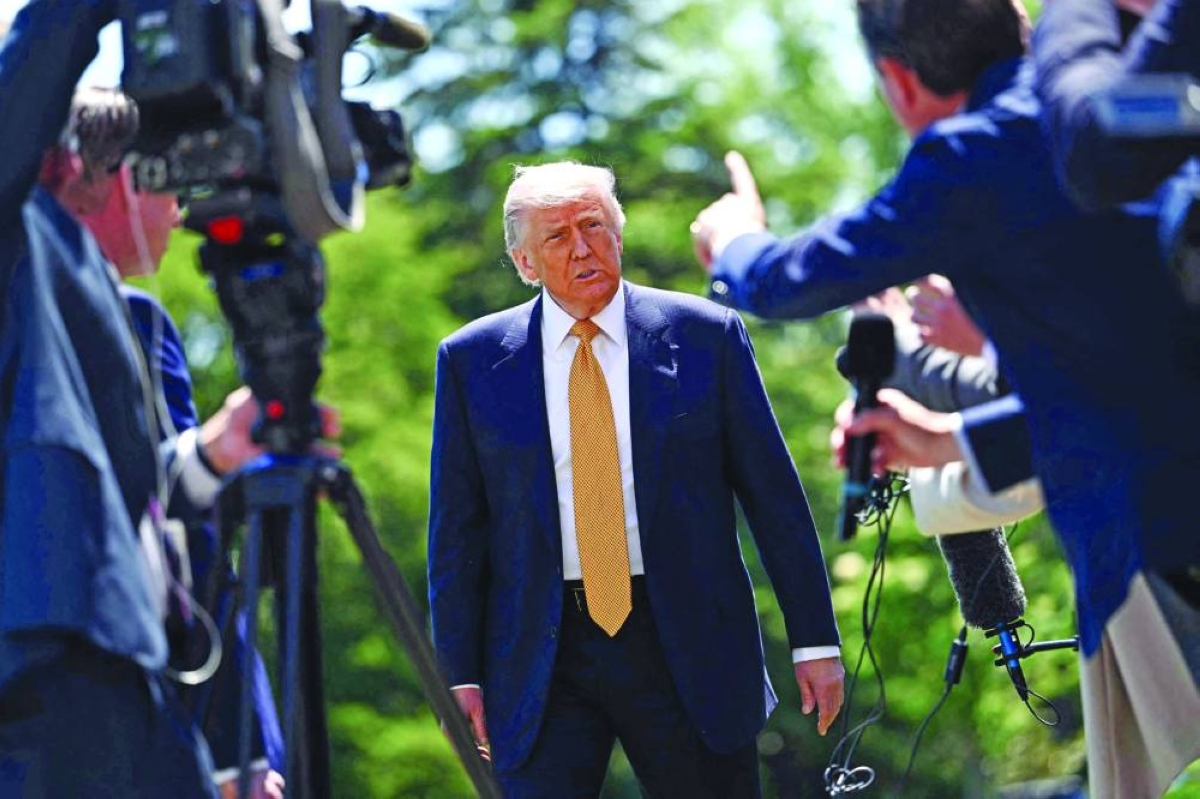
US President Donald Trump said on Sunday that Moscow could send oil to Cuba despite Washington's de facto fuel blockade, as a Russian tanker was expected to deliver some much-needed crude to the crisis-hit island,

Opinion
US factory boom: A tale of two realities in Indiana

US factory boom: A tale of two realities in Indiana

Timothy Aeppel and Jarrett Renshaw, ReutersSOUTH BEND: One of his best customers recently asked John Axelberg to invest $800,000 to double the output of the tubular frames his factory here churns out for large-scale solar

Opinion
Starmer pledges to ‘fight for values’ in elections

Starmer pledges to ‘fight for values’ in elections

Athena Stavrou, The IndependentSir Keir Starmer will vow to "fight for our values" as he launches Labour's local election campaign on Monday, amid fears a looming electoral wipeout could threaten the future of his premiership.

Opinion
Could a Democrat really replace Marjorie Taylor Greene?

Could a Democrat really replace Marjorie Taylor Greene?

During almost three decades of living in Georgia's conservative northwest corner, Kimberly Seals got used to keeping her liberal opinions to herself. She suspected there were others who felt the same way, but she had

Opinion
China’s neighbours get cold shoulder on energy

China’s neighbours get cold shoulder on energy

Joe Cash, ReutersAs energy stress spreads across Southeast Asia, governments across the region are asking China to deliver on its pledges of closer energy security cooperation by freeing up now-banned exports of fertiliser and fuel.

Opinion
Wonderful job!

Wonderful job!

It rained in Dubai on Wednesday and Thursday. Pools of water were there in some areas of Dubai. But I could see delivery riders on the job, despite challenges they facing them on the roads.

Opinion
Blame game

Blame game

Blame game

Opinion
Recent geopolitical developments reshape investor behaviour toward safe-haven assets

Recent geopolitical developments reshape investor behaviour toward safe-haven assets

Global gold prices are experiencing heightened volatility amid escalating geopolitical tensions linked to the war on Iran, alongside disruptions in global energy markets. These developments are directly impacting investor behaviour and their orientation toward safe-haven assets, foremost among them gold. However, the traditional safe haven is no longer responding at the same pace to shocks, due to shifting market priorities toward liquidity and returns. Financial experts explained to Qatar News Agency (QNA) that the initial phase of the crisis witnessed a significant decline in gold prices despite rising geopolitical risks — an apparent paradox that reflects a structural shift in how assets are priced. They noted that gold has recently come under intense selling pressure, recording sharp weekly losses exceeding 11% by some estimates, and even reaching around 16% at the peak of volatility within just a few days — its worst performance in decades. This occurred alongside a strengthening US dollar index and rising yields on US Treasury bonds, which increased the attractiveness of income-generating assets compared to gold, which does not provide periodic returns. The experts clarified that this decline was not due to a loss of confidence in gold as a strategic asset, but rather the result of severe liquidity pressures that forced financial institutions and hedge funds to liquidate part of their holdings to cover losses or meet margin calls, as gold exchange-traded funds (ETFs) recorded outflows amounting to billions of dollars, further deepening the downturn. However, the experts pointed out that markets showed a noticeable rebound as initial signs of a potential negotiation track between the parties emerged, leading to a recovery in prices of approximately 4%, driven by easing tensions. In this context, a financial analyst Mubarak al-Tamimi told QNA that gold has not strategically failed in its role as a safe-haven asset; rather, it experienced a short-term tactical setback at the beginning of the crisis. He explained that markets initially favoured holding cash liquidity amid expectations of continued interest rate increases driven by the energy shock, which limited immediate demand for gold. Al-Tamimi added that the inflationary nature of the shock played a key role in enhancing the appeal of cash and yield-bearing instruments, as the surge in oil and gas prices fueled inflation expectations, prompting investors to anticipate prolonged monetary tightening, which in turn exerted downward pressure on gold in the short term. He further noted that the behaviour of financial institutions during the crisis suggests that gold has partially become a “liquidity victim,” as it was utilized as a quick source of cash, pointing out that gold-backed exchange-traded funds have seen outflows of $7.9bn during the latest downturn. On the strategic front, al-Tamimi said that the rise in US federal debt to around $39.01tn is reinforcing central banks’ shift toward diversifying their reserves, with growing demand for gold as a sovereign asset, noting that estimates indicate that 95% of central banks expect to increase their gold reserves over the next 12 months, while 43% are already planning to expand their holdings. For his part, Investment Manager at Qatar Securities Company (QSC) Ramzi Qasmieh told QNA that the decline in gold’s performance during the crisis is directly linked to the strength of the US dollar and rising bond yields. The US Dollar Index surged to nearly 101 points, its highest level in several months, driven by expectations of persistent inflation and higher interest rates. Qasmieh added that rising yields on US Treasury bonds made them more attractive to investors compared with gold, due to their ability to generate periodic income. This, he said, increased the opportunity cost of holding gold, particularly in a financial environment characterized by elevated real yields. He underlined that the markets witnessed intense gold selling over a short period, resulting in the biggest weekly loss since 1983, with declines exceeding 11%, as financial institutions liquidated positions to raise cash and cover losses in other assets. Qasmieh added that the rise of US federal debt to nearly $40tn has prompted many countries, especially in emerging markets, to increase their gold reserves and reduce reliance on the dollar as part of a strategy to diversify assets and hedge against financial and geopolitical risks. Qatar Chamber Board Member and Chairperson of the Gold and Jewellery Committee Nasser bin Sulaiman al-Haider affirmed in a press statement that the committee closely monitors the gold market, overseeing compliance by retailers with pricing and the availability of bars and jewellery. He denied any speculation or deliberate refusal by traders to sell. He explained that the current challenges stem from disruptions in supply chains, noting that gold imports rely heavily on air shipments, which have been affected by the prevailing circumstances. He added that traders are facing circumstances beyond their control, making it unfair to hold them responsible for shortages or accuse them of malpractice. He emphasized that price fluctuations and supply disruptions remain the main pressures on the market at present.  

Opinion
Priced low, growing fast: women’s sports draw smart money

Priced low, growing fast: women’s sports draw smart money

Wealthy investors are increasingly turning to women’s sports as a ‌rare opportunity to tap into a fast-growing market at lower valuations, favouring strong returns over the high ​entry costs and limited upside of marquee ‌men’s franchises in the NFL or the UK’s Premier League. Once considered underdeveloped, women’s sports are gaining traction ‌as rising media rights, sponsorships and viewership create a ‌mix of low valuations and high growth potential. The US ‌women’s sports market is expected to grow at 16% annually, roughly three times faster than men’s sports, to generate about $2.5bn in annual revenue for rights holders by 2030, according to consulting firm McKinsey. The gap in growth, also fueled by the emergence of women superstars such as Indiana Fever guard Caitlin Clark, is drawing ultra-high-net-worth investors seeking stronger long-term returns. “Valuations are growing very rapidly and there is still plenty of room to grow,” said Jason Wright, partner at Ariel Investments and a former National Football League executive. Ariel backs the National Women’s Soccer League club (NWSL) Denver Summit, which debuted this year. Rising expansion fees and team valuations highlight demand as the league fee for a NWSL team has surged from ​the $2mn paid to launch Los Angeles’ Angel City FC in 2020 to the $165mn put up by the owners of the new Atlanta franchise launching in 2028, according to consulting firm Navigate. That valuation upside applies to existing franchises as well. Digital sports media platform Sportico ‌estimates that Angel City is now worth $335mn, up 34% from just ​over a year ago, when the club’s controlling stake was sold to former Walt Disney CEO Bob ​Iger and his wife, journalist Willow Bay. That deal valued the team at $250mn — setting a global record for a women’s sports franchise at the time. And investors are increasingly underwriting that upside. Tommy Nordam Jensen, chief executive at New York-based women’s sports investment platform Pitch15, said that “well-executed investments in the sector could potentially deliver roughly 2-5x over five to 10 years as the market matures,” the kind of returns rarely available in established men’s leagues. Media rights are also reinforcing that investment case, with the Women’s National Basketball Association (WNBA) signing an 11-year broadcast and streaming deal worth about $200mn annually - more than triple its previous agreement, according to Navigate. Similarly, the NWSL has seen a sharp rise as well. Its 2023 rights deal netted the league about $60 million a year, according to Navigate. Yet, a large valuation gap ‌persists. Sportico estimates the average WNBA team is worth ‌about $269mn, compared with about $5.5b for a National Basketball Association (NBA) franchise, even as the viewership of WNBA playoff games approach levels comparable to the NBA’s regular season ones. The WNBA’s Golden State Valkyries is the most valuable women’s sports franchise, worth about $500mn, according to Sportico, but that figure is still only a fraction of Dallas Cowboys’ valuation of $12.8bn. “A lot of people talk about women’s sports being ahead of valuations that are justifiable, yet at the same time, if viewership and fan attention are the biggest drivers of value, there is a mismatch in valuation that the market has not yet caught up with,” Ariel’s Wright said. Also driving growth is corporate sponsorship as combined spending on the WNBA and NWSL shot up ​32.7% year-on-year to a record $195mn in 2025, according to SponsorUnited, with financial companies such as JPMorgan Chase, CashApp and Ally among the most visible endorsers. The sports intelligence platform said this expansion was running more than three times faster than the men’s leagues, driven by the impact of women superstars such as Clark and newer stars like Angel Reese and Paige Bueckers, some of whom have been signed by dozens of brands. Even so, women’s sports are expected to account for only about 2% of the US sports market by 2030, McKinsey estimated, at a time when Ivo Voynov, head of sports finance at Citi Wealth, says that men’s team valuations are largely “fully priced”. “The number of people globally who can write multi-billion dollar checks to acquire ‌these (men’s sports) assets is not ​expanding at the same rate as team valuations,” Voynov said, underscoring the scale of the untapped potential in women’s sports. 

Opinion
Qatar joins the global community’s united fight against cybercrime

Qatar joins the global community’s united fight against cybercrime

Qatar and numerous other states have signed the United Nations Convention against Cybercrime, a multilateral treaty aimed at preventing, investigating and prosecuting cybercrime. On October 25, 2025, Qatar and numerous other states signed the United Nations Convention against Cybercrime, a multilateral treaty aimed at preventing, investigating and prosecuting cybercrime.The signing ceremony, held in Hanoi, culminated years of negotiations to address the growing global problem of the ease with which perpetrators have been able to access information and communications systems to engage in illicit activities.The Convention requires each State Party to criminalise specific cyber acts, including unauthorised access to communications technology systems, interception or interference with electronic data, misuse of devices, forgery of information and systems, and online theft or fraud. Other acts requiring criminalisation involve cyber activity exploiting children and non-consensual dissemination of intimate images.Beyond the obligation to enact specific criminal laws, a State Party has sweeping procedural duties, ranging from obligations to gather and preserve certain electronic data, which invariably implicates service providers. Measures are to be established to protect witnesses and victims. Recognising the global nature of cybercrime, the treaty requires State Parties to co-operate in investigations and prosecution of offences. Further, the treaty establishes guidance on mutual legal assistance, especially extradition.What does this Convention mean for Qatar?Notably, the country’s adoption of the 2014 Cybercrime Prevention Law foreshadowed numerous Convention requirements. The 2014 Qatar Law criminalises unauthorised access to information systems, software, networks and websites and misuse of these systems and devices to engage in various offensive acts, such as blackmail and threats to national security. The Law also has extensive measures setting forth Qatar’s obligation to co-operate with other states, which is aligned with the Convention.A highly publicised update occurred in August 2025, shortly before Qatar signed the Convention, which imposed a maximum of a one-year prison term and a Qatari Riyal 100,000 fine for the dissemination of images of a person without their consent.Other aspects of Qatar’s legal system beyond the 2014 Qatar Law, however, are relevant to Convention obligations. For example, under the Convention, a State Party is to criminalise laundering of cybercrime proceeds.In 2019, Qatar adopted the Anti-Money Laundering and Terrorism Financing Law (AML Law), which criminalised a person’s engagement in various acts to conceal the true nature of funds when they are the proceeds of a crime. So, Qatar’s AML Law aligns with the Convention’s AML obligation. Nevertheless, the Convention may require Qatar to update domestic legislation to explicitly list the predicate offences in the Convention as invoking the AML Law.Another area of overlap between Convention obligations and existing law in Qatar concerns data protection.Under the Convention, a State Party may be required to transfer personal data to another State Party. In doing so, however, the State is to comply with data protection safeguards, and in the case of Qatar at a minimum that would mean Qatar’s Personal Data Privacy Protection Law.The Convention includes conditions and safeguards, such as requiring that state measures align with the state’s international human rights obligations and be proportional. This aspect of the Convention opens the door for a detailed review of existing relevant cybercrime laws and related ones in the context of Qatar’s human rights duties.Details aside, the Convention should be the impetus for a broader conversation in Qatar about the need to protect critical cyber infrastructure and data while preserving other competing values. Striking the right balance is a challenge and may involve various moving parts as technology advances. Given Qatar’s relatively lengthy focus on cybercrime, it is well-poised to undertake the challenge.(This piece has been submitted by HBKU’s Communications Directorate on behalf of its author. The thoughts and views expressed are the author’s own and do not necessarily reflect an official University stance.)