1. Home
  2. Opinion

Category: Opinion

Opinion
Venezuela’s students reclaim the streets after years of oppression

Venezuela’s students reclaim the streets after years of oppression

In mid-February, hundreds of students from Venezuela’s most prestigious university did the once unthinkable: their protest left the campus of the Central University of Venezuela in Caracas and spilled out into a nearby street. Before the US military operation that captured Nicolas Maduro on January 3, student activism was a risky proposition in Venezuela. Remaining on campus had historically offered some protection; student protesters who ‌took to the streets risked being beaten, detained, or worse. Bodies like the United Nations have denounced torture against detainees in Venezuela, including electric shocks, asphyxiation and sleep deprivation. So when the students, marching ​alongside relatives of some of those imprisoned by the Maduro government left ‌campus chanting “free them all,” it was an act of defiance. “I was born in 2003 and all I knew was fear...until today,” Paola Carrillo, 22, a member of the student ‌union told the cheering crowd. “We are fighting for the freedom we want.” Venezuelan university students, waving flags or bloodied ‌from clashes with security forces, were the key protagonists of massive anti-government protests a decade ago. Those ‌demonstrations waned amid a crackdown by security services which included arrests of students and professors and violence by ruling-party-allied motorcycle gangs that killed hundreds. A deep economic crisis forced many out of classrooms and into the workforce. Smaller protests in 2019, 2024 and early 2025 were quickly extinguished. But now a new generation is on the streets. Ten student activists from four universities around the country told Reuters they see real hope after the ouster of Maduro — despite the endurance of the government he headed — and feel safer speaking out now than at any point in recent history. The students, ranging in age from 22 to 27, have only ever known the socialist ‘Chavismo’ government, named for former President Hugo Chavez, in power since 1999. “I hadn’t done anything like this before, and I think now is the moment even though it’s frightening,” said Carrillo, who is in her final year of a law degree and was just becoming a teenager when the last mass student protests took place. Her goal, she said, is to encourage others to join, “to let people who feel like I do know that they have a voice, that there is someone who feels the same and is still here, trying,” she said. Neither Venezuela’s communications ministry, which handles all press requests for the government, nor the attorney general’s office responded to questions for this story. CONFRONTING ​DELCY RODRIGUEZ IN THE STREETSThe students said their agenda goes far beyond the release of prisoners: they want the repeal of laws against hate speech and terrorism which they say are tools of oppression, free and fair elections, and what they call “reinstitutionalization,” repairing state institutions activists say have been destroyed by the socialist party. The students also want larger budgets for universities and salary increases for professors, who earn just $4 a month. Miguelangel Suarez, 26, president of the student federation at the Central University of Venezuela, ‌even confronted Interim President Delcy Rodriguez after she attended an event on campus in January, an encounter which was shared widely ​on Venezuelan social media. “I told the group: ‘Look, I’m going to confront Delcy Rodriguez.’ About 20 others stood up and decided, ‘We’re going with you.’ That says a lot about how the paradigm ​has changed since January 3,” he said. The interaction was a rare unscripted one for Rodriguez, a 56-year-old lawyer and herself a Central University of Venezuela graduate, who rarely gives interviews or takes questions. Her interactions with the public are mostly at pro-government events. “She told us we weren’t letting her speak. On the contrary, we were - and still are - willing to engage in dialogue,” said Suarez, who is set to graduate in December with a degree in political and administrative studies. “As a graduate, and as someone with such important responsibilities, she should come and talk with us about the many problems facing universities.” Though the students are anti-government, many are not involved directly in opposition parties and have yet to turn their attention to eventual elections promised by the US. About 1.3mn students are eligible to vote, according to Carlos Melendez, a sociologist and director of the non-governmental Observatory of Universities, which could make them a crucial voting bloc in the country of 28 million. “We are seeing a group of students who not only want to study, but also to engage in the country’s political agenda,” said Melendez, who has monitored Venezuela’s higher education system since 2018. Their participation is “not due to party indoctrination, but rather a reaction to the government and its policies, as they seek to push for democratic restoration.” ‘NOBODY WANTS THEIR COUNTRY TO BE BOMBED’Students across Venezuela expressed gratitude that Maduro is gone, but are wary of the United States and said they wished his ouster had been achieved through other means. Maikel Carracedo, 27, a law student ‌at the University of Zulia in Maracaibo said he learned of the US ‌operation to remove Maduro when he was woken by a phone call. “They’re invading Caracas!” a friend said. “The first thing I did was make myself a cup of coffee. My first coffee in freedom,” he said. But for all the elation of seeing the potential end of the Chavista era and the hope for reconstruction, Carracedo, like a lot of other students, expressed dismay about how it happened. “We truly hoped that change would come in a much more democratic, peaceful way,” he said. “Nobody wants their country to be bombed or attacked, but that’s what happened. Most people weren’t injured, it was surgical. And I’m genuinely glad because the dictator’s departure was quite significant.” Carrillo, the student leader in Caracas, said that in general, young Venezuelans “would have preferred to reach this point differently.” “Deep down there is frustration that it couldn’t be done by us and that the situation, the circumstances, the regime, led us to this point where someone else had to do it for us,” she said. “Furthermore, there is practically indirect administration by a third country over our country and especially over our resources.” US President Donald Trump has repeatedly praised Rodriguez for stabilizing the country after the removal of Maduro, as well as for her efforts to open the country to oil and mining interests. Maduro always denied accusations he presided over a dictatorship and said he was fairly elected for his third term ​in 2024, an assertion rejected by the opposition and international observers, who say the candidate for an opposition coalition roundly won. FROM STUDENT TO PRISONER AND BACKFor some students, prisoner releases are personal. Jose Castellanos, a 22-year-old economics student at the Lisandro Alvarado Central Western University in the western state of Lara, was detained in October 2025 and held for nearly four months on charges of terrorism, inciting hate and treason, all of which he denies. Authorities accused Castellanos of hanging a banner reading ‘Freedom... it’s happening’ on a university building. He was arrested alongside his brother, a communications student and reporter, and their mother. Both have also been released. “Being in prison made me mature. It gave me more courage and strength to fight for the country’s freedom, for democracy,” Castellanos told Reuters while taking part in a march in Barquisimeto in February. “We will continue peacefully in the streets, with the truth on our side, demanding our rights as Venezuelans.” At least two Central University of Venezuela students and two professors were also released from detention in February, student leader Suarez said. They include Jesus Armas, a professor, human rights activist and opposition member who was arrested in December 2024 and accused of terrorism, which he denies. “We are basically going through a personal transition - from uncertainty and fear of speaking out to feeling freer,” said Luigi Lombardo, 26, a social sciences education student at the University of Carabobo, in the ‌central state of the same name, adding that Maduro’s capture marked “the ​end for us of a long and painful era.” “It’s the freedom to say what you feel, to express the circumstances you’re living through today or the needs facing the university, such as lack of transportation funding, increases in student grants and decent salaries for professors,” Lombardo said. “Now there is space to express that discontent...to understand that the country is moving toward reconciliation.”   

Opinion
Polish president vetoes €40b EU defence funding plan

Polish president vetoes €40b EU defence funding plan

Poland's ferocious dispute over EU defence loans reached a fever pitch on Thursday as nationalist president Karol Nawrocki vetoed a multi-billion-euro plan that parliament had already approved, reported Agence France-Presse. Lawmakers in Poland, the largest

Opinion
Rise and fall of Daniel Vorcaro and Banco Master

Rise and fall of Daniel Vorcaro and Banco Master

For years Daniel Vorcaro was best known in Brazil's financial world as the head of Banco Master, a bank whose breakneck expansion left some analysts puzzled. Less noticed during Master's ascent was Vorcaro's ability to

Opinion
Smithsonian museum will revamp its slavery exhibition

Smithsonian museum will revamp its slavery exhibition

A Smithsonian museum exhibit about the maritime journey that millions of Africans were forced to take across the Atlantic to slavery in the Americas will change later this month, when a remnant from one of

Opinion
Noem’s replacement underscores Trump’s incompetence

Noem’s replacement underscores Trump’s incompetence

President Donald Trump’s cabinet is filled with grifters, fools, and thugs. Kristi Noem somehow managed to be all three. While she will not be missed as head of the U.S. Department of Homeland Security, her

Opinion
New Nepal government faces old challenges

New Nepal government faces old challenges

Nepal's rapper-turned-politician Balendra Shah is set to become the next prime minister after his centrist Rastriya Swatantra Party (RSP) won a commanding majority in parliamentary elections. His meteoric rise — propelled by anti-establishment sentiment and

Opinion
Peaceful negotiations

Peaceful negotiations

I am in a state of shock to see the situation around the world. We are talking about AI, landing on Mars and exploring the moon but at the same time attacking each other with

Opinion
Road trip

Road trip

Road trip

Opinion
China rebuilding grip on N Korea. Is Kim Jong-un ready to oblige?

China rebuilding grip on N Korea. Is Kim Jong-un ready to oblige?

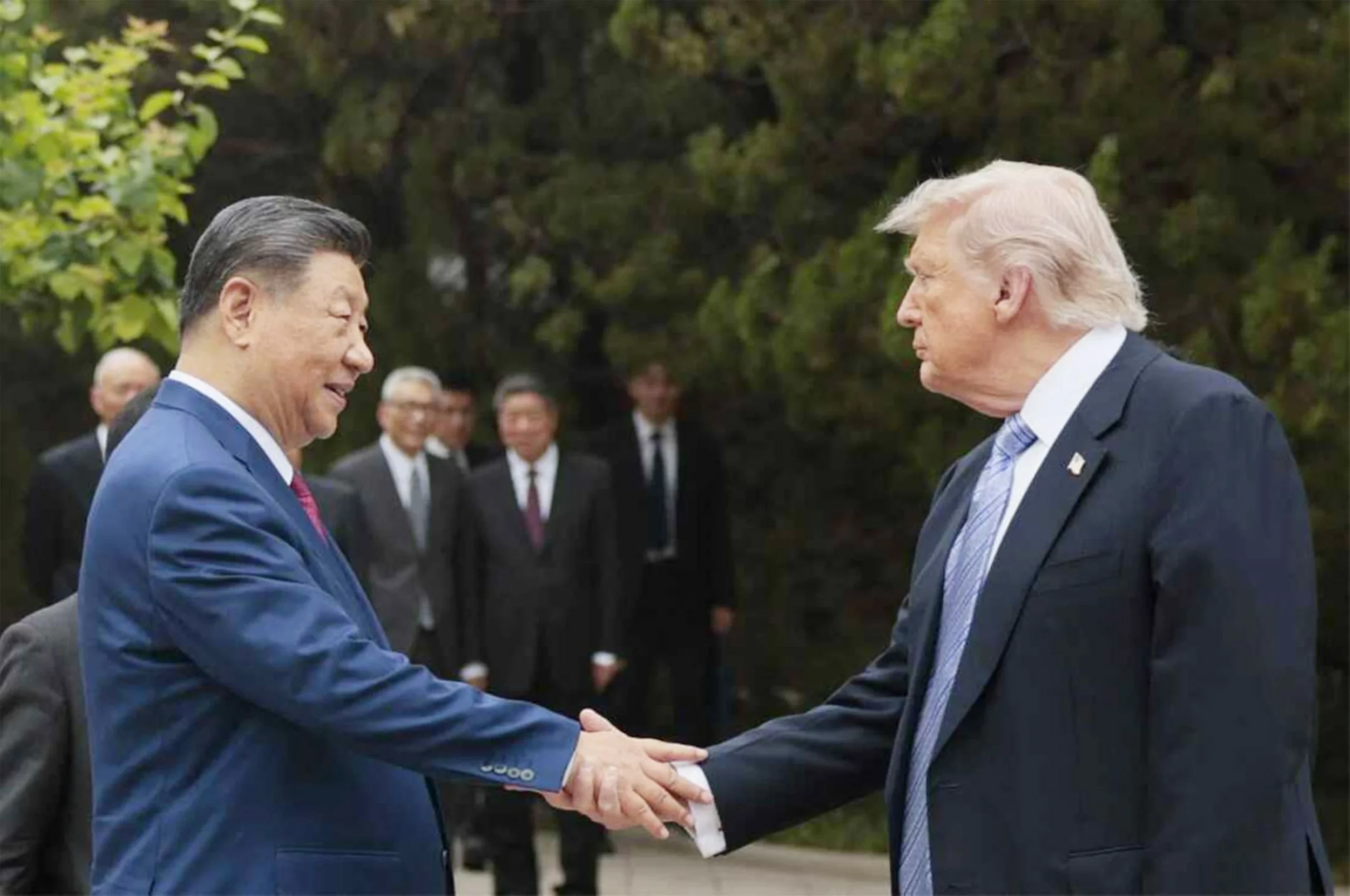
When Kim Jong-un arrived by armoured train in Beijing for a military parade in September, the pageantry signaled a thaw in one of the world’s most important relationships after several years of frosty ties. Behind the spectacle of tanks and fighter jets, North Korea’s leader brought a senior economic team to talk trade and investment. Five weeks later, Chinese Premier Li Qiang reciprocated ‌in Pyongyang, and China’s ambassador declared both countries were “writing a new chapter.” For China, the mission is clear: reassert its traditional influence over a neighbour that has drawn closer to Russia since its 2022 invasion of Ukraine. North ​Korea has supplied troops and weapons to Moscow in exchange for fuel and ‌food to shore up an economy hobbled by UN sanctions over its nuclear-weapons program. A Reuters examination reveals how Beijing is deepening engagement with North Korea as US President Donald Trump prepares to visit China and ‌expresses interest in reviving talks with Kim for the first time since 2019. Satellite imagery shows China and North Korea are ‌installing new infrastructure along the border — including roadworks and port facilities, some not previously reported — and forging closer ‌economic links that boost Beijing’s sway over any US overtures to Pyongyang. To document the shift, Reuters reviewed trade data, traveled along parts of the 1,350-km border and interviewed some three dozen people, including North Korean waitresses, Chinese business owners with factories in North Korea, Western tour operators, and a Chinese government official. Most spoke on the condition of anonymity because of the sensitivity of the topic. The rapprochement is cautious: North Korea shut its borders in 2020 in response to Covid-19 and remains largely closed to tourism, even as passenger-train services to the country from China resume this week. And Kim’s pivot to Moscow in recent years has diversified his political and economic partners amid continued sanctions pressure. Still, his intensifying co-operation with China positions North Korea for a wider reopening that some analysts said would enable Beijing to reinforce its smaller neighbour’s economic dependence and signal to Trump that his top strategic rival holds the key to shaping Kim’s actions. China’s exports to North Korea reached a six-year high of $2.3bn last year, a 25% annual increase. In November, China dropped its longstanding call for North Korea’s denuclearization from an official arms-control white paper. In a message to Chinese President Xi Jinping on March 9, Kim said co-operation between the two countries “will become even closer in the future as we advance the common cause of socialism,” North Korean state media reported. “Discussions across all areas — politics, economy, security, and military — have kicked off, laying ground for relations to take a leap,” said Lim Eul-chul, a ​professor who studies North Korea at South Korea’s Kyungnam University. Asked about China’s courting of North Korea, Kremlin spokesman Dmitry Peskov told Reuters that Russia welcomes greater co-operation in the region, which contributes to stability and security. Beijing’s foreign ministry told Reuters that China and North Korea have been “actively advancing border co-operation” to foster exchanges, without addressing Pyongyang’s ties with Moscow. North Korea’s mission to the U.N. and its embassy in Beijing didn’t respond to questions. BRIDGING THE DIVIDEIn the frontier city of Dandong, China has shown its readiness for a surge in cross-border traffic. In May, road markings reading “Truck ‌Entry Lane” and “Passenger Vehicle Entry Lane” were painted onto the Chinese side of the unopened New Yalu River Bridge, which spans the border ​with North Korea, satellite images show. A new sports court has been installed at Dandong New Zone’s dormant customs facility. Recent construction is evident at other Chinese border stations, including roadworks and new facilities at the northernmost ​Quanhe port; and new pavement and buildings at Nanping and Sanhe, which Reuters is reporting for the first time. Reuters’ analysis of satellite imagery provided by Planet Labs was corroborated by Center for Strategic and International Studies analysts Joseph Bermudez Jr. and Jennifer Jun. North Korea has also been building what CSIS experts say is a customs and immigration facility, as well as warehouse and cargo-transfer buildings, on its side of the unopened bridge. After a 15-year delay, North Korea spent most of last year working on the project before construction stalled in November. Reuters couldn’t determine why the work was paused. The infrastructure work is now being matched by operational steps. China announced this week that passenger-train services between Beijing, Dandong and Pyongyang would resume for the first time in six years. Tickets are limited to travelers with a North Korean business visa, a sales-office representative in Beijing told Reuters. While tourism to North Korea hasn’t officially resumed - Pyongyang canceled an international marathon scheduled for April - the revival of the rail connection is a positive sign for the eventual return of tourists, said Rowan Beard, co-founder of travel operator Young Pioneer Tours. Chinese travelers accounted for the bulk of tourists to North Korea before the border closure. When Reuters traveled to Dandong in January, peddlers on the riverfront promenade were selling lapel pins emblazoned with Kim’s portrait, while touts offered boat trips to visitors. A steady stream of Chinese trucks carried goods such as cloth, soybean oil, tires, and frozen duck meat across the old Sino-Korean Friendship Bridge toward North Korean guards. At the Songtaoyuan restaurant on a freezing evening, five North Korean waitresses moved between tables, serving cold noodles. One told Reuters she was among a group of more than 10 workers ‌who arrived from North Korea in December. China’s foreign and commerce ministries didn’t address questions about ‌the North Korean workers and Beijing’s enforcement of UN sanctions, which prohibit member states from issuing new work permits to North Koreans. Songtaoyuan didn’t respond to a request for comment. WIGS, FAKE BEARDS — AND TUNGSTENThe pickup in activity shows China is preparing to expand trade, said Bermudez. “North Korea has a lot of raw material and also lots of people who could be put to work at a very, very low wage rate,” he said. While UN sanctions restrict traditional North Korean exports like coal, Beijing has pivoted to importing labour-intensive materials that help prop up the Kim dynasty. Hair products — wigs, eyelashes, and false beards — now account for nearly half of China’s imports from North Korea, rising 327-fold over the last decade. China is also the main buyer of strategic metals from North Korea. Shipments of molybdenum ores and tungsten ores — essential for rockets and missile components — reached records of $17.2mn and $31.5mn, respectively, in 2025, customs data show. These official imports allow China to bolster its stockpile at low prices while ensuring North Korean minerals don’t reach the global market to undermine Chinese export controls, said Cory Combs, a critical-minerals analyst at Trivium China. Political momentum is gaining, too. North Korea in October explicitly endorsed Beijing’s position on Taiwan, shortly before China’s arms white paper dropped calls for “denuclearization” of the Korean Peninsula. At a party congress in February, Kim vowed to expand his nuclear arsenal and said prospects for better relations with the United States rested entirely on Washington’s attitude. Trump, who plans to visit China in late March and early April, has said he would love to ​meet the North Korean leader again. Kim has said the US must first drop its demands for Pyongyang to relinquish its nuclear weapons. A State Department spokesperson said the US remains committed to the complete denuclearization of North Korea. ‘THE SECOND SHANGHAI’Despite increased engagement between Beijing and Pyongyang, a transformation remains elusive in Dandong, where hopes of renewed trade with North Korea have fueled boom-and-bust cycles for years. No traffic crosses the New Yalu River Bridge, completed by China in 2014. On the Chinese side, residents curious about any signs of progress use binoculars to peer over the crossing, which ends abruptly in a field. North Korea’s new entry port, conceived in 2010, sits abandoned, with no workers in sight. “We once joked that Dandong New Zone would be the second Shanghai,” said Fu, a waiter at a cafe by the unused bridge. “If the other side really opened up, it would be.” Instead, empty storefronts line the streets. Property prices have slumped to around 3,000 yuan (about $435) per square meter, down from 10,000 yuan during Trump’s first term, according to residents and a Reuters review of property records and local media reports. Four traders in China said logistics with North Korea remain restrictive. “Before the pandemic, our trucks could freely enter North Korea’s interior to deliver or pick up goods,” said an owner of an eyelash manufacturer with a factory in North Korea. “Now, they can only receive and drop off goods at the North Korean customs.” North Korea’s caution about reopening stems partly from frustration that China hasn’t done more to relax compliance with UN sanctions, said Lim, of ‌Kyungnam University. Some Dandong residents said North Korea’s port-of-entry needs to be completed ​for the promised “new chapter” to materialize. Qi, a Chinese government official who monitors border trade, told Reuters any improvement will be gradual, but he remains hopeful. “The worst time has passed,” said Qi. “It can only get better and better.”   

Opinion
China pins hopes on society-wide AI push to add jobs

China pins hopes on society-wide AI push to add jobs

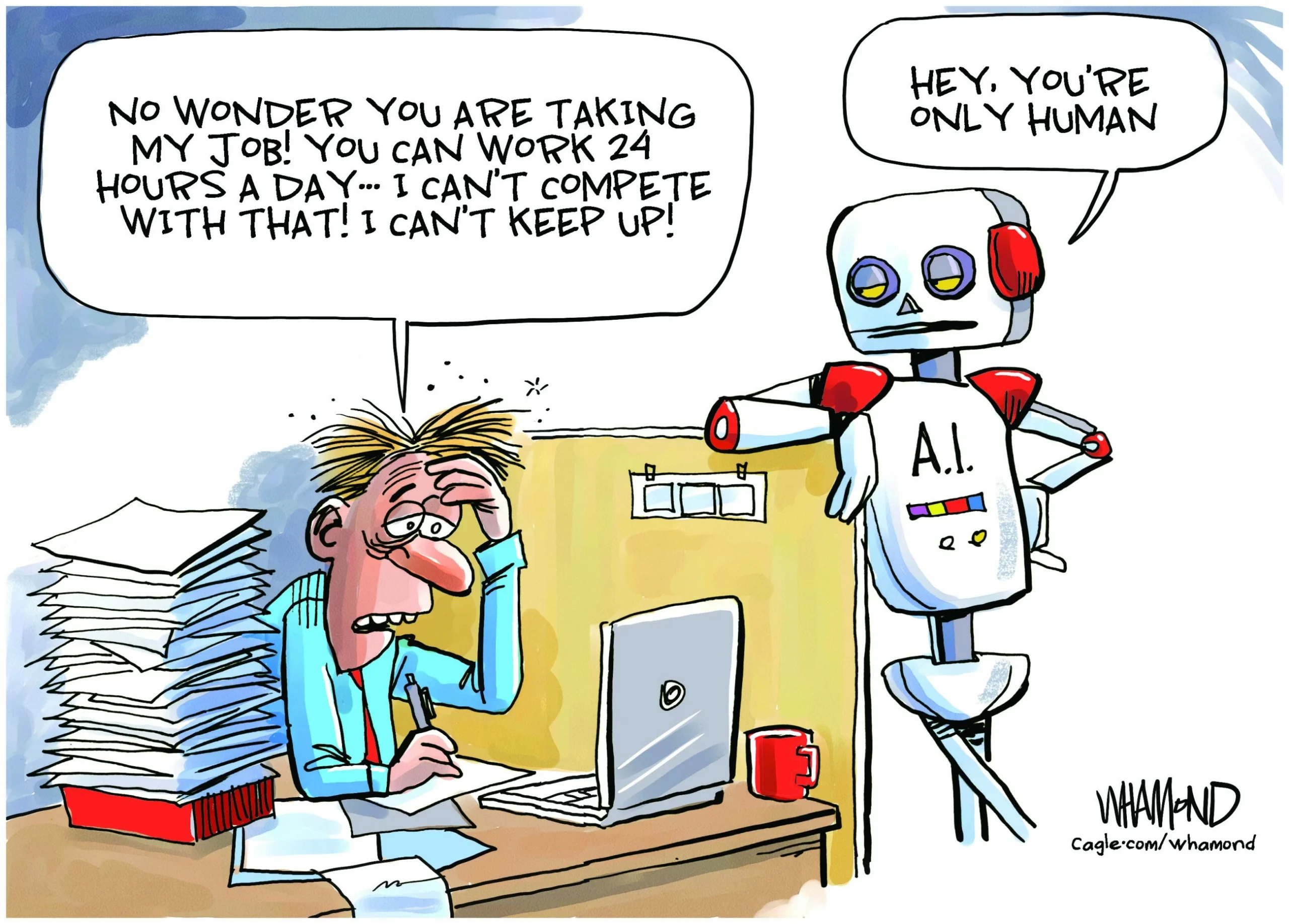
China’s scramble to adopt artificial intelligence will spawn new jobs and propel the world’s second-largest economy, say policymakers and company executives, as they downplay growing global fears that the technology could stunt employment. Plans unveiled at the opening of parliament’s annual session last week go all-in on AI, outlining ambitions to offset an ageing workforce and long-term economic slowdown through the technology’s “job-creation” effect over the next five years. “For now, advancing AI adoption and capability appears to be a higher policy priority than pre-emptively addressing potential job displacement,” said Shujing He, senior analyst at consultancy Plenum. She added the government’s focus on AI’s positive effects leaves room to respond later to any disruptive labour market impact. Human Resources Minister Wang Xiaoping said China was working to “actively leverage” AI to create jobs and expand opportunities for 12.7mn university graduates this year. The International Monetary Fund predicts AI will affect nearly 40% of global jobs, rising to 60% in advanced economies, while Stanford University researchers have found the technology is already having a “significant and disproportionate” impact on new US workers. Some analysts remain sceptical of Beijing’s optimism. “Automation has two major impacts: wages are being pushed down, and youth unemployment will continue to go up,” said Alicia Garcia-Herrero, chief Asia-Pacific economist at Natixis. “If China does not introduce any kind of universal basic income, there is no way the population can cope with this shock.” In a state-run CCTV broadcast during the parliament sessions, executives from Chinese state-owned enterprises — traditionally offering “iron rice bowl” job security — said AI would spark major restructuring within their organisations. Yet Changan Automobile chairman Zhu Huarong said he was optimistic that China’s AI drive would transform the automobile industry into a “sunrise industry” from a fading one. Chinese universities are already adapting. ShanghaiTech University has introduced AI “micro-majors” to teach skills machines cannot easily replace, such as critical thinking and creativity, said provost Yin Jie. “We must train them to ask questions,” he added. “If your thinking isn’t sharp, you won’t beat the robots.” China’s emphasis on reskilling and talent development reflects its strategy to align with shifting industry dynamics, said Wei Sun, principal AI analyst at Counterpoint Research, noting that policymakers view AI and labour not as a “zero-sum” rivalry but as mutually reinforcing. The push is also tied to demographic pressures: about 300mn people are set to retire in the next decade, threatening pension budgets. Last week, China set its lowest GDP growth target since the 1990s, at 4.5% to 5%, while youth unemployment remains high. Under its new five-year plan, Beijing aims to extend AI use beyond manufacturing into services, developing industry-specific models and rollout strategies. Still, concerns linger. “Job destruction often precedes and outweighs job creation,” wrote labour economist Cai Fang in a recent book. “Although technological progress will ultimately create new jobs, the high automation of AI may lead to long-term employment shocks.” He urged more investment in human capital and social welfareprotections. In a landmark labour ruling last year, a Beijing court said dismissing employees solely to replace them with AI was illegal. Yet robotaxis and autonomous delivery vehicles are already reducing traditional job demand, even on a small scale. State media have hailed Bytedance’s new video-generation model, Seedance 2.0, as a “singularity moment” for AI in film and television. Meanwhile, entrepreneurs are using AI agent OpenClaw to automate e-commerce shopfronts, forming so-called “one-person companies.” Local governments are now building industries around such tools. “From DeepSeek in 2025 to OpenClaw now, Chinese media have been hammering one narrative non-stop: learn this AI tool, get a high-paying job,” wrote technology analyst Poe Zhao. The viral craze highlights both excitement and unease about the future of work, added the founder of the Hello China Tech newsletter.