1. Home
  2. Opinion

Category: Opinion

Opinion
EU would see UK bid to rejoin as a victory

EU would see UK bid to rejoin as a victory

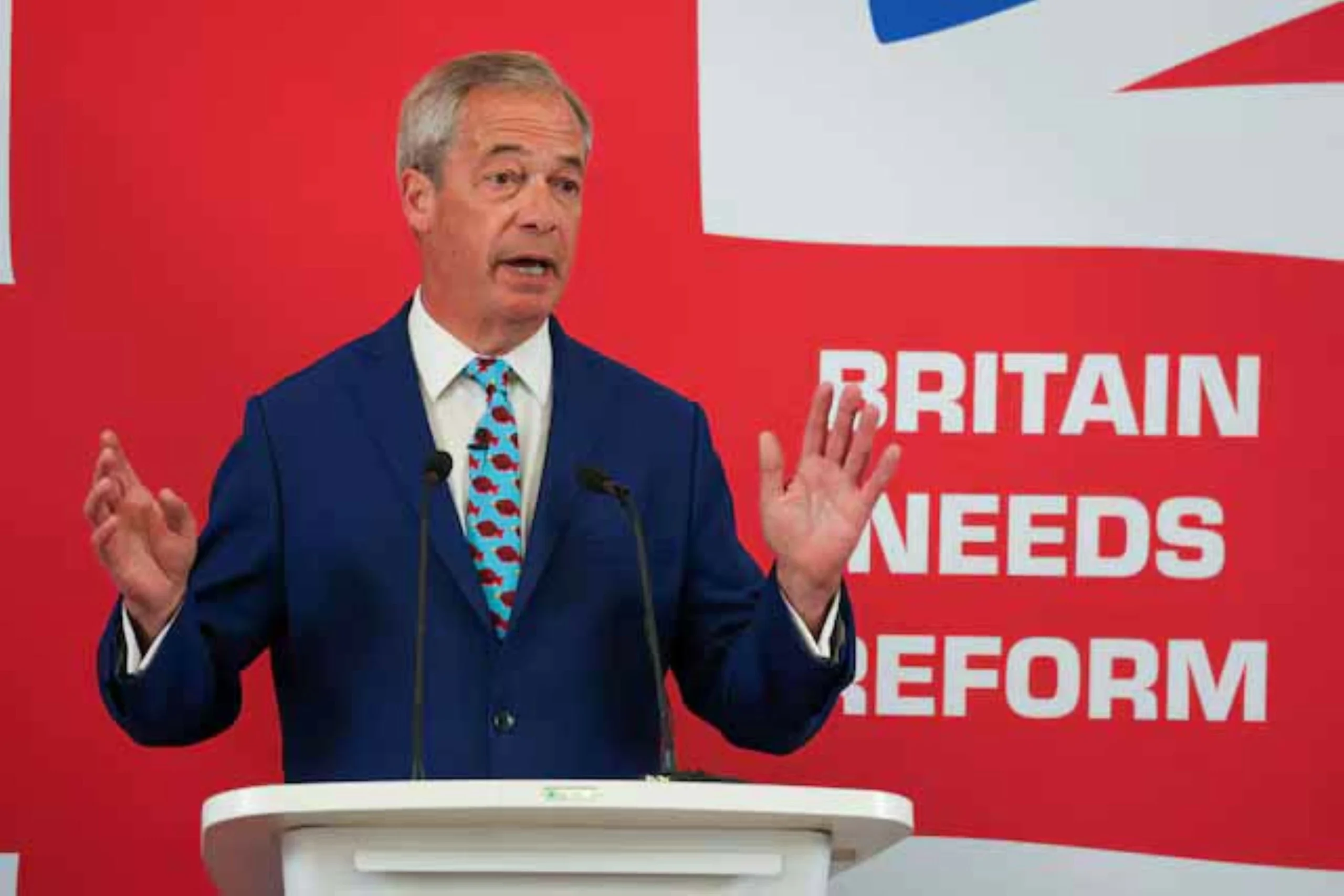
One of the arguments against Britain seeking to rejoin the European Union is often phrased as a question: “What makes you think that the EU would want us?”Sandro Gozi, the chair of the EU delegation

Opinion
World Central Kitchen resilient on Gaza

World Central Kitchen resilient on Gaza

The World Central Kitchen (WCK) has reverted to the level before last October’s ceasefire for delivering hot meals to Gaza’s 2.3 million Palestinians. The WCK said the decision to reduce output is driven entirely by

Opinion
Election denier issue creates Colorado political controversy

Election denier issue creates Colorado political controversy

Mark Z. Barabak, Tribune News Service It’s entirely possible — as hard as it may be to conceive in these deeply tribal, us-vs.-them times — for two competing notions to be true. Tina Peters personally

Opinion
Very unfortunate

Very unfortunate

As Batman said in 1966, “Crime doesn’t pay,” now a fat man or at least an overweight man, Donald Trump, says, “Crime will pay” or at least the Government is planning to pay the Jan.6

Opinion
Streaming now!

Streaming now!

Streaming now!

Opinion
India’s job engine strains as Iran war hits remittances, trade

India’s job engine strains as Iran war hits remittances, trade

The war in the Middle East is squeezing two pillars of Indian employment, forcing Gulf-based workers home and crushing demand for the country’s manufactured exports, from leather goods to glassware. For decades, work in the Middle East and global demand for labour-intensive ‌manufacturing in sectors such as footwear and garments gave a generation of Indians stable, and in some cases lucrative, incomes. Now, the foreign conflict ​has dealt a double blow to the economy, with ‌returning migrant workers stuck in India and unable to find similar pay in their home towns, heightening the risk of social unrest ‌as unemployment grows. Until January, Mohammad Qureshi worked at a jewellery shop in Saudi ‌Arabia, earning about 30,000 rupees ($311) a month, saving enough to build a ‌small home and help pay for his sister’s wedding. Now, the 32-year-old earns barely a third of that working at his cousins’ tea stall in the Indian city of Kanpur, after the Iran war disrupted his plans to return to the Middle East. “Life in Saudi was easy and the money was good,” Qureshi said. “Life is difficult here. I pray the war ends soon so we can go back.” India’s economy is still growing at nearly 7% and urban unemployment stands at 6.6%, but economists and recruiters warn of weak hiring, slow wage growth and worsening job quality for the 6-7mn young Indians entering the workforce each year. If unattended, the strain could hurt consumption and fuel unrest like the protests in north India last month, they ​warn. The pressures are visible in industrial hubs such as Kanpur in Uttar Pradesh, India’s most populous state. At Kings International, a leather factory supplying saddlery overseas and sports goods to Decathlon, owner Taj Alam said the Middle East conflict has driven up fuel, gas, logistics and shipping costs, squeezing profits just as demand weakens. Alam said his factory, which can process ‌200 hides a day, and once employed over 500 workers, is now running at about ​half capacity and half its workforce, leaving little incentive to expand or hire. “The outlook will remain bleak until the Strait of Hormuz stabilises,” ​he said. “Why invest when the future looks uncertain?” Kanpur accounts for roughly a quarter of India’s $6bn annual leather exports and directly or indirectly employs about 500,000 people, according to Mukhtarul Amin, vice-chairman of the Council for Leather Exports. He said businesses in the sector remain cautious about hiring and investment, even as they try to retain workers and avoid layoffs. Out of nearly 19mn Indians working overseas, about 9mn are in the Gulf. World Bank estimates show economic growth in the Gulf region slowing to 1.3% in 2026 from 4.4% in 2025, putting jobs at risk. Recruiters say hiring has become more uncertain since the US-Israeli strikes on Iran, with employers delaying recruitment and families hesitant to pay migration costs. At Hayat Placement Services in Kanpur, recruiter Gautam Bhatnagar said opportunities had dried up at home and abroad. “Earlier, we used to place 5-10 candidates every month,” he said. “Now we are lucky if we can place even one or two.” There are no official figures on how many Indian workers have left the Gulf. However, a foreign ministry official ‌told reporters last month that about 1.1mn Indians including passengers, workers ‌and other travellers, had returned from the region between the start of hostilities on February 28 and the end of April. Uncertainty is also rippling through southern Kerala, where Gulf remittances have long shaped the local economy. Thomas Cherian, 50, spent 18 years working for a construction firm in Saudi Arabia before returning home on leave in December. He had been due to return in March, but the company halted its project and laid off about 600 workers, he said. If he cannot return by end-June, his visa will lapse. “There has been no mass return so far,” said Ajith Kolassery, chief executive of NORKA Roots, an agency of the state’s Non-Resident Keralites Affairs Department. “But if the conflict continues, financial stress in Gulf economies could lead to large-scale repatriation, adding pressure to Kerala’s already strained job market.” Remittances from overseas Indians stood at $102.5bn in April-December 2025, up from $92.4bn a year earlier. Data for January-March is yet to be ​released. For Prime Minister Narendra Modi’s government, the risks extend beyond the economy.India has nearly 400mn people aged 15-29, and generating non-farm jobs for them remains one of its biggest challenges despite rapid growth. 

Opinion
High hopes dashed: Britain’s cost-of-living woes snare PM Starmer

High hopes dashed: Britain’s cost-of-living woes snare PM Starmer

British Prime Minister Keir Starmer’s failure to allay concerns about the cost of living is driving dissatisfaction with ‌his government among Britons, adding to economic grievances dating back to the 2008 global financial crisis. Starmer won the biggest parliamentary ​majority since 1997 for his Labour Party in 2024 ‌after 14 years of Conservative-led government. But less than two years on, Labour is polling at 17% and Starmer’s ‌future as leader is in doubt. “People were hoping for better things ‌than what has actually transpired, so I think that feeds ‌through to some of the negativity we are seeing now,” said Neil Bellamy, consumer insights director at GfK, which has surveyed British household sentiment since 1974. Starmer is not alone: his French and German counterparts Emmanuel Macron and Friedrich Merz have equally poor ratings, in no small part due to economic unhappiness. Consumer morale readings in their countries have plunged to near three-year lows since the Iran war began in late February. OECD data shows consumer sentiment has declined more in Britain than G7 peers since Starmer came to office, while polling company YouGov shows the economy overtook immigration as Britons’ top worry late last year. A surge in inflation to more than 11% after Russia’s 2022 invasion of Ukraine - which coincided with bond market turmoil under Liz Truss’ brief premiership - pushed sentiment indicators to a record low from which they never quite recovered. The conflict in Iran has renewed pressures, driving oil prices up almost 50%. While wage growth has been fairly strong since the pandemic, it has not kept pace with price rises and household after-tax income in real terms is 0.4% lower than at the end of 2019. “The cost of living crisis ‌is still very much fresh in the minds of people. They see inflation going ​up again and it’s a bad hit at a bad time,” said Stephen Millard, deputy director at the National ​Institute of Economic and Social Research. Pantheon Macroeconomics’ chief economist Rob Wood agreed Britain “does stand out for its inflation concerns”. Inflation has been above the Bank of England’s 2% target for all but four months in the past five years. That is one reason why BoE interest rates are more than 1.5 percentage points higher than the European Central Bank’s, adding to the cost of Britons’ mortgage repayments. Cost of living increases have been concentrated in highly visible areas such as food, fuel and hospitality, with food prices now more than a third higher than at the start of 2022. “If you go to the supermarket to buy your daily products ... they’re a lot more expensive than they were four or five years ago,” Bellamy said. This has not been lost on Starmer, who on Wednesday postponed a planned rise in fuel tax and whose finance minister Rachel Reeves has shifted some environmental levies away from energy bills and into general ‌taxation. On Thursday, Reeves announced a raft of smaller measures ranging ‌from free summer bus travel for schoolchildren to reduced tariffs on imported nuts. There is a long-running and heavily political debate about the more deep-rooted sources of Britain’s economic difficulties. These range from austerity imposed after the global financial crisis to the harm caused by Brexit, rising taxation or the persistent regional inequalities highlighted by Greater Manchester Mayor Andy Burnham, a leading challenger to Starmer. 

Opinion
Trump tightens his grip, but the reckoning comes after 2028

Trump tightens his grip, but the reckoning comes after 2028

US President Donald Trump raises a fist as he departs after delivering a speech about the economy at Rockland Community College Fieldhouse in Suffern, New York, on Friday. (AFP) Over the last few weeks, US President Donald Trump has been on a revenge tour of sorts as he has backed candidates who have mounted successful primary campaigns against Republican candidates he perceives to have crossed him. On May 5, five of the seven state senators in Indiana who had rejected a redistricting plan were defeated by primary challengers supported by the president. Two weeks later, a Trump-endorsed challenger won the Louisiana primary against Bill Cassidy, one of the seven Republicans who had voted to convict Trump on impeachment charges in 2021. Also on May 19, Kentucky Representative Thomas Massie, a vocal critic of the president’s handling of the Epstein files, was defeated in his primary election by a Trump-picked challenger with little political experience. This pattern of results demonstrates Trump’s continuing grip over the Republican Party, eleven years after he declared his ambition to run for president as a political outsider and proceeded to mount a hostile takeover of the party from its establishment figures. The subsequent four electoral cycles – the 2020 and 2024 presidential elections and the 2018 and 2022 primaries – saw a gradual phasing out of the older guard of Republican politicians. The defeat of the few remaining incumbents who have crossed with Trump is a challenge for the party as it moves into a post-Trump era that will begin to take shape after the midterms. Six and a half months remain in the 119th Congress, which sits until January 2, 2027. Republicans hold majorities of 53-47 in the Senate and 218-212 in the House of Representatives with five seats vacant in the latter. Should the current math hold until the midterm elections on November 3, the Democrats would need a four-seat swing to regain control of each chamber. In the midterm elections at the comparable point of Trump’s first presidency, in 2018, the Democrats made a net gain of 40 seats to win back the House but Republicans were able to increase their majority in the Senate with two additional gains. Years of redistricting have generated an era of comparatively small Congressional majorities in which mere handfuls of races are genuinely competitive and control hinges on a small number of seats changing hands. As recently as 2008, the election which swept Barack Obama into the White House gave Democrats sweeping majorities in both chambers which would be unthinkable less than two decades later. Consequently, the loss of just a few votes in the House or Senate, should members vote against their own party or choose to abstain, could make a difference in determining the outcome of votes between now and November. Already Massie has suggested that he will continue to push back against White House policies in the months he has left in the House. In the Senate, Cassidy and John Cornyn, the four-term incumbent from Texas who faces likely defeat in his primary on May 26 after Trump endorsed his opponent, Ken Paxton, are likely to become more independent in their voting. The pair could be joined by North Carolina Senator Thom Tillis and former Majority Leader Mitch McConnell of Kentucky, who have both become more outspoken and critical of the Trump administration since they announced their impending retirement from active politics. Sharp criticism on May 21 from Tillis and McConnell over Trump’s planned ‘anti-weaponisation’ fund gave Republican leaders in the Senate a sign of the difficulty they may face in maintaining discipline in the months ahead. Their unease, which is reportedly shared by significant numbers of their colleagues who did not go public, caused Senate Majority Leader John Thune to delay votes in the Senate rather than risk defeat. In the House, too, Republican leadership cancelled a scheduled vote on a War Powers Resolution to end the war in Iran after they assessed they did not have enough support to defeat it. Earlier in the week, four Republican Senators, including Cassidy on the day of his primary defeat, had joined Democrats to vote in favor of the war powers resolution against Trump’s wishes. For years, the threat of being ‘primaried’, of facing a challenge from a Trump-backed and funded candidate, was enough to instill an internal discipline in the Republican Party, and the events of recent weeks have shown that the threat to incumbents remains potent. As he prepares to leave office, if not necessarily the political stage he has so dominated for a decade, Trump continues to remake the party but this may come at a longer-term cost. This may be the last election in which Trump remains the centre of attention as by 2028 the focus will be on his successor as Republican nominee. Although he has defied the laws of political gravity that would have felled almost any other figure in public life, time horizons will inexorably begin to shift to beyond 2028 and the transition to a new generation of politicians. The challenge for Republicans is that the defeat of more moderate incumbents by inexperienced and, in some cases, significantly more right-wing challengers in the primaries may weaken the party’s chances in the Congressional elections (of course, the same goes for Democrats and the tussle between centrists and progressives in their primary season). Cornyn had been widely admired and respected by his colleagues in the Senate over his 24 years in the chamber and it is only 18 months since he ran Thune a close second in the bid to succeed McConnell as the party’s leader. His seat in Texas had not been considered one of the competitive races that could see a Democrat flip, but Paxton is rather more controversial with a checkered history and he may find it harder than Cornyn to fight off a significant challenge from James Talarico, a moderate Democrat, in November. The fault-lines between a party base still loyal to Trump and a wider electorate that has other priorities end up defining the midterms and setting the parameters for Trump’s final two years in office. The writer is a leading scholar specialising in Gulf politics and international political economy, and a fellow at the Baker Institute and co-director of the Middle East Energy Roundtable.   

Opinion
Early childhood screening for type 1 diabetes may be beneficial for patients

Early childhood screening for type 1 diabetes may be beneficial for patients

Type 1 diabetes can be detected in children with a blood test by ​the family pediatrician long before symptoms develop or an ‌emergency occurs, researchers reported, suggesting more widespread early screening may be in order. Most children who developed full-blown type 1 diabetes ‌in this study had no family history of the disease, which means screening ‌should not be limited to those with a family history, the ‌researchers said in a report in JAMA. “The ability to detect type 1 diabetes early through screening and monitoring is a significant breakthrough with vast potential to reach a broad population and change the course of the disease for those who will develop it,” Esther Latres of Breakthrough T1D, which helped fund the research, said in a statement. Families often don’t recognize the early-warning symptoms of diabetes such as excessive thirst, weight loss, or fatigue, leading to development of diabetic ketoacidosis, a severe medical emergency, the researchers noted. In the study in Germany, more than 220,000 children were tested for early stages of type 1 diabetes during routine pediatric care. A small blood sample is analyzed for the presence of at least two different types of islet autoantibodies, which are immune cells that mistakenly attack the pancreas. Children with islet autoantibodies but normal blood glucose levels are considered to be in stage 1. Families receive information, education, and ​access to specialized diabetes centres where regular follow-up examinations then take place. In stage 2, the first signs of impaired glucose metabolism appear. In stage 3, insulin is required. At the first screening, 590 children, or roughly 0.3%, were found to have early-stage type 1 diabetes. Eventually, 212 of them progressed to stage 3. After five years, the probability of ‌progressing from an early stage to clinical type 1 diabetes was 36.2%, researchers reported. Once an early ​stage was diagnosed, there was no difference in disease progression in children with and without a family history, they noted. “The long-standing ​argument that early-stage disease cannot be readily identified - and therefore cannot efficiently or effectively be studied or targeted - no longer holds,” Dr Jamie Felton and Dr Emily Sims of the Indiana University School of Medicine, who were not involved in the study, wrote in an editorial. “The findings suggest that the time to seriously consider general population screening has arrived,” they concluded. 

Opinion
How America’s folly and Khomeini’s hubris set the Middle East on fire

How America’s folly and Khomeini’s hubris set the Middle East on fire

An Iranian man walks past an image of former and the current Iranian supreme leaders, Ayatollah Ruhollah Khomeini (L), Ali Khamenei, and his son, the current leader Mojtaba Khamenei (R), in Tehran yesterday. (AFP) The Middle East does not convulse in a vacuum. It’s wars, its proxy armies, its assassinations, its coup attempts, its sectarian hatreds, none arose spontaneously from desert sand. They descend, with the terrible logic of cause and consequence, from two foundational acts: a decision made in Washington on a May afternoon in 1948, and a declaration thundered from Tehran in February 1979. Together, they form the twin original sins of the modern Middle East. On May 12, 1948, the Oval Office held a clash of historic proportions. President Harry Truman had assembled his senior advisers to deliberate on the imminent declaration of a Jewish state. General of the Armies George C Marshall, whom Truman himself called “the greatest living American,” the architect of Europe’s postwar resurrection, rose to object. Marshall believed that recognising Israel the moment it was declared would ignite a war across the entire Middle East. Within twenty-four hours of independence, it did. His memo that evening left no ambiguity: “I said bluntly that if the President were to follow Mr Clifford’s advice, and if I were to vote in the next election, I would vote against the President.” For a man who, as a matter of principle, had never cast a ballot in his life, it was the gravest possible rebuke. Marshall’s objections were both strategic and moral. Recognition would alienate the Arab world, threaten American access to oil, and hand Moscow a pretext to penetrate a region that Washington was trying to seal. His Near East experts agreed almost without exception They were right. They have been proved right every decade since. And yet Truman overruled his greatest adviser, not solely for humanitarian reasons, but because an old friend walked into the Oval Office. Harry Truman and Eddie Jacobson had opened a haberdashery together in Kansas City after the First World War. It failed. The friendship did not. By 1948, Jacobson, the eighth-grade-educated son of Lithuanian Jewish immigrants, was the only private Jewish citizen an exasperated president would still receive. On March 13, he slipped past the gatekeepers and made a single, devastating appeal: “Your hero is Andrew Jackson. I have a hero too, Chaim Weizmann. He’s an old man, very sick, and you’re putting him off. This isn’t like you, Harry.” Truman agreed to the meeting. Eleven minutes after Israel declared independence on May 14, 1948, the United States became the first nation on earth to recognise it. America’s UN ambassador walked out of the building rather than witness the announcement. What those eleven minutes also produced, unremarked upon in Washington, was the dispossession of 700,000 Palestinian Arabs who had lived on that land for centuries. They were not in the Oval Office. They were not in Eddie Jacobson’s prayer. In the calculus of 1948, they were invisible: a people erased by the momentum of Zionist diplomacy and the moral arithmetic of post-Holocaust guilt. The Nakba, the Catastrophe, planted a grievance so deep it has never healed, and never will until it is honestly named. Thirty-one years later, a different hubris took hold. On February 11, 1979, as the Shah fled and Ayatollah Khomeini descended from the skies like a figure from scripture, a new ideology seized state power. It was not, its architect immediately declared, a domestic affair. In a 1980 speech, Khomeini was unambiguous: “We should try hard to export our revolution to the world.” The target map was drawn in sectarian ink. Iraq, where Shia constituted 65% of the population but lived under a Sunni Ba’athist boot. Bahrain, 70% Shia, is ruled by a Sunni monarchy. Kuwait, Saudi Arabia’s Eastern Province, and Lebanon, all home to Shia communities that Khomeini considered his constituency, not sovereign citizens of independent nations. The theory was seductive in its simplicity: demographics would do the work of ideology. What Khomeini fatally miscalculated was that Arab Shia were not Iranians. Their grievances were real; their willingness to serve as instruments of Persian theocratic ambition was another matter. The results were a decade of blood: a coup attempt in Bahrain in 1981, bombings in Kuwait in 1983, assassinations across the Gulf, and the birth of Hezbollah in Lebanon under Iranian Revolutionary Guard tutelage. Above all, there was the war: Saddam Hussein, watching Khomeini’s revolutionary export doctrine with the eye of a man who saw both threat and opportunity, invaded Iran in September 1980. Eight years. One million dead. To understand Khomeini’s ferocity, one must travel back to August 1953. Mohammad Mossadegh, Iran’s democratically elected prime minister, nationalised the Anglo-Iranian Oil Company, ending the arrangement by which British shareholders extracted Iranian wealth while Iranians watched. The CIA and MI6 organised Operation Ajax, bribed military officers, hired street thugs, and on August 19, 1953, arrested Mossadegh in his pajamas and restored the Shah to his throne. Washington then funded the Shah’s secret police, SAVAK, for 26 years. David Nalle, who served as Director of the Bi-National Center in Tehran, later said it plainly: “The removal of Mossadegh was, in my estimation, a tragic mistake. We caused, in effect, the Khomeini revolution by doing that.” The three decisions form a chain. Washington’s careless erasure of Palestinian rights in 1948. It’s the criminal overthrow of Iranian democracy in 1953. Tehran’s delusional attempt to ignite a regional revolution in 1979. Each was made by men who believed they were acting rationally. Each sowed a catastrophe that outlasted them. The Middle East of today, its rubble Gaza, its hollowed Lebanon, its proxy-war Yemen, is the direct inheritance of these original sins. The wars are not ancient. The hatreds were manufactured in specific rooms by specific men on specific days. History does not forgive what it does not forget. And the Middle East forgets nothing. The writer is a prominent news anchor, programme presenter and media instructor