FIFA presents…
-
admin
- July 8, 2026
- 2
FIFA presents...

 admin
admin
The Sharjah Roads and Transport Authority (SRTA) has undertaken several road improvement projects to ease traffic congestion, and I am delighted to see the positive impact of these initiatives. The SRTA deserves appreciation for providing
 admin
admin
Encrypted communications, wives and children in the dark, and spending only in cash – the Ukrainian soldiers behind brazen long-range drone strikes on Russia live their lives almost completely in the shadows. The retaliatory attacks
 admin
admin
Britain’s prime minister-in-waiting, Andy Burnham, promises radical change while sticking to the country’s fiscal rules, a strategy that needs discipline, luck, and maybe an old trick: kicking the pain points into the long grass. Last week, Burnham committed to existing fiscal rules that require the government to match day-to-day spending against revenue — a balanced current budget — a feat achieved only fleetingly in the last 25 years. So far, Britain’s £2.9tn ($3.87tn) government bond market has shown little sign of concern, helped by falling oil prices since the de-escalation of the Iran war, but also Burnham’s efforts to burnish an image of fiscal responsibility. But he has yet to set out how he will square demands for spending and borrowing against his commitments to the fiscal rules and the Labour Party’s 2024 manifesto, which ruled out raising taxes on working people. In March, Britain’s Office for Budget Responsibility estimated that finance minister Rachel Reeves’ plans would meet the rules with a current budget surplus of £24bn by 2029/30. But that outlook was based on the economy before the outbreak of war in the Middle East, and above-consensus growth forecasts for the years ahead. Economists at Bank of America last week estimated that margin had shrunk to £19bn. That combination — shrinking headroom and a manifesto that rules out broad tax rises — increases the temptation to do what governments have done before: defer the reckoning. “The idea that this government might promise fiscal consolidation in the future, while topping up spending plans in the near term, seems quite plausible to me,” said Bee Boileau, senior researcher at the Institute for Fiscal Studies, a think tank. Reeves’ reforms to the fiscal framework, including comprehensive spending reviews every two years, have made gaming the fiscal rules harder, but not impossible. Her Conservative Party predecessor Jeremy Hunt set the modern template: his March 2024 Budget contained pre-election tax cuts to be paid for by large, unspecified real-terms cuts to government departments in later years. Here’s how a similar ploy could look for Burnham. Once in power, the new prime minister could publish an initial Budget this year that mostly sticks with current plans, meeting the rule to balance the current budget in the 2029/30 financial year while teeing up his defining Budget in 2027. From April 2027, the three-year target to balance the budget will shift to 2030/31, which will give Burnham the chance to shift fiscal consolidation past the next election, due in mid-2029 at the latest, while potentially increasing near-term spending. A biennial review of government spending due next year represents a potential complication. Burnham will be required to set government department budgets for the post-election 2030/31 financial year, and cuts would look politically difficult. But for a pre-election Budget 2028, Burnham could again postpone fiscal consolidation to 2031/32, this time without specifying where the axe will fall, because that year will fall outside the scope of the Spending Review 2027 for departmental budgets. The trouble is, the gilt market’s tolerance for these strategies may now be limited, said Emma Moriarty, portfolio manager at CG Asset Management, which specialises in fixed income. “Meeting the fiscal rules is a necessary but not sufficient condition for the bond markets,” Moriarty said, adding that gilts had to be viewed in the context of a crowded sovereign debt market, where competition for buyers is strong. Some argue there is still room to borrow more. Jim O’Neill, a former British government minister who was chief economist of Goldman Sachs and has recently advised Burnham, has argued that Britain should borrow more to boost infrastructure - something the fiscal rules would allow for. But Moriarty said the market would still be focused on the bottom line, whatever the stated purpose of the borrowing. “For gilt investors, the purpose of borrowing matters less than the volume — what moves markets on Budget day is the Debt Management Office’s issuance remit, not the Chancellor’s justification for it,” she said. — Reuters
 admin
admin
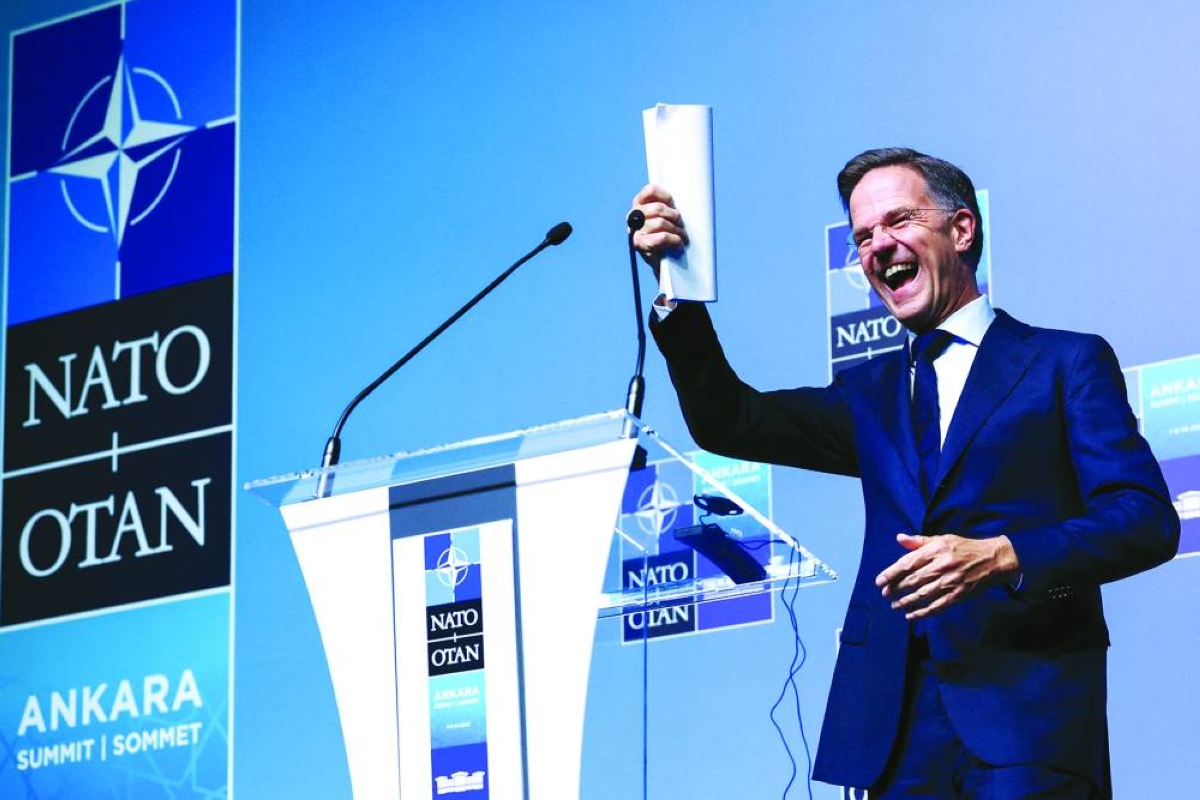
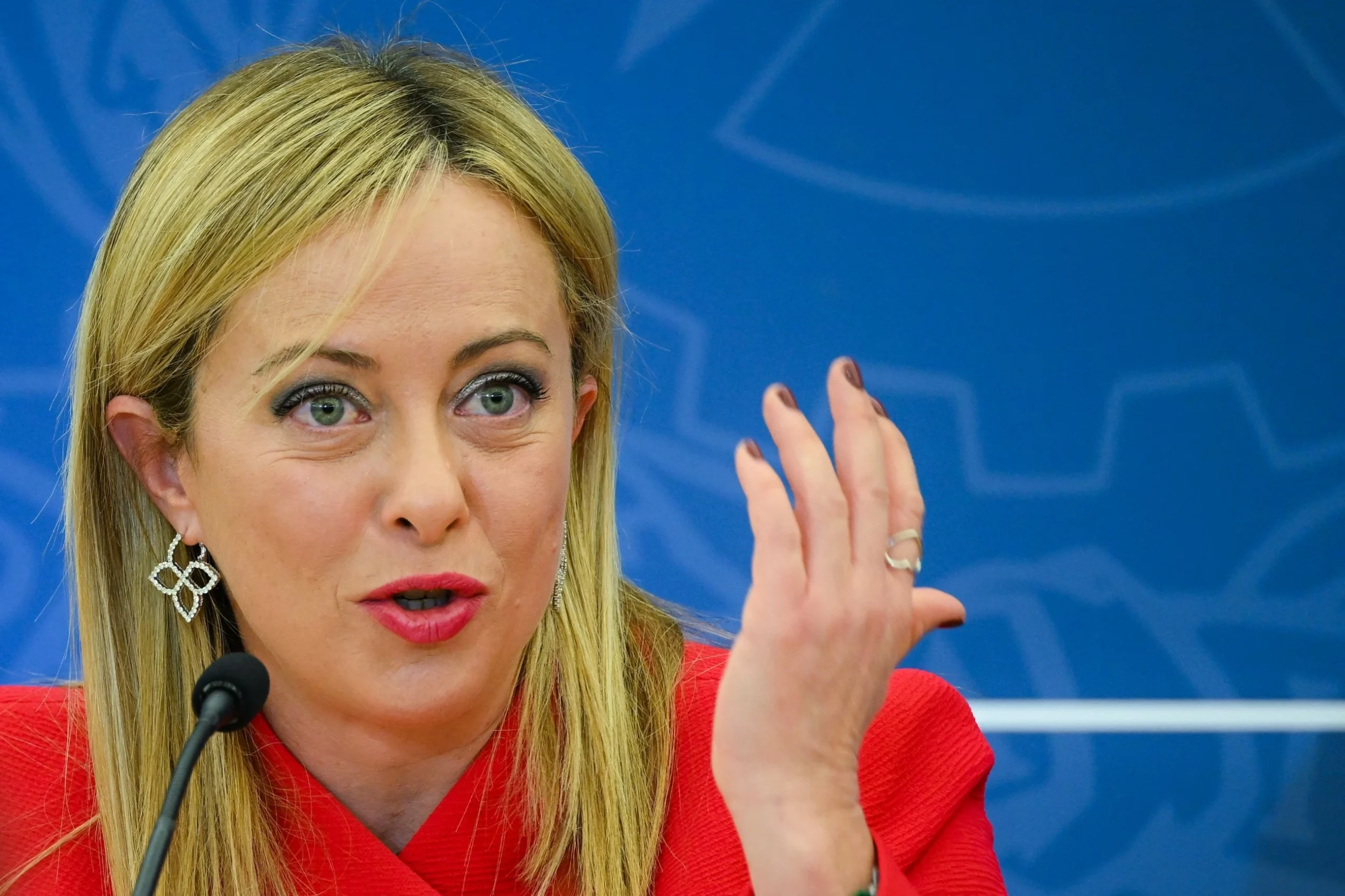
Nato Secretary General Mark Rutte is insisting that member states are keeping their promise to boost defence spending. Yet progress has been uneven and the push is already stretching some national budgets. Under pressure from US President Donald Trump, members of the 32-country military pact agreed at last year’s summit to boost defence spending to 5% of GDP by 2035 — just over double the overall level for European states and Canada in 2025. But since then, two camps have emerged: one is led by Germany and the mostly Nordic and eastern European nations which have found the fiscal space to raise spending; in the other are several big players struggling to do the same. “The UK isn’t managing, for example. France isn’t and Italy isn’t either,” Guntram Wolff, senior fellow at the Bruegel economics think tank, said of the three largest economies in Europe behind Germany. Nato says its European members plus Canada spent an extra $90bn on defence in real terms last year compared to 2024 as they seek to raise core military spending to 3.5% of GDP by 2035 with a further 1.5% GDP on security-related items. Before the summit, Rutte has stressed that last year’s new spend amounts to a bigger $139bn tally in nominal terms and that there is a “strong commitment” to hit the combined 5% target on time. Germany will use a rule change exempting defence items from strict borrowing limits to double its spending to over €200bn ($228.38bn) between now and 2030, according to a budget draft seen by Reuters ahead of a cabinet review on Monday. Poland, Lithuania and Estonia — countries where the perception of the threat posed by Russia is at its sharpest — are already well on their way to making the new targets, with Warsaw notably having devoted 4.3% of GDP to defence last year. Elsewhere the push faces political and fiscal roadblocks. Britain last week announced plans for an extra £15bn ($20.01bn) of defence spending, partly funded by cuts elsewhere. But it emerged that one-third was still unfunded, creating an early budget challenge for the likely new prime minister Andy Burnham. More fundamentally, the plan was criticised by opposition politicians and former military chiefs for failing to set out when defence spending would reach 3% of GDP, on the way to meeting Britain’s Nato commitment to spend 3.5% of GDP by 2035. “Defence spending will likely remain one of the biggest fiscal pressures facing the UK in the medium term,” said Max Warner, senior research economist at the Institute for Fiscal Studies, a think tank. Italian Prime Minister Giorgia Meloni is due to tell the summit that Rome, despite one of Europe’s largest debt burdens, will lift core and non-core defence spending to 2.8% of GDP in 2026, roughly 0.71 percentage point higher than last year. But with higher military spending unpopular with many voters ahead of next year’s national elections, most of the increase will come from domestic security spending such as police duties. Plans detailed by France in April would lift its defence spending to 2.5% of GDP by the end of the decade from about 2% now, even as it attempts to bring its overall deficit into line with euro area rules - a tough budget goal as it heads towards next year’s presidential elections. Spain’s Socialist government meanwhile is not seen budging from its refusal to spend more than 2.1% of GDP on defence, with new resources set to be heavily skewed towards technologies with civil applications. Elsewhere, NATO officials have queried the assertion of three countries — Czech Republic, Slovenia and Albania — that they had met the old alliance target of 2% of GDP and asked them to review and re-submit their spending figures. “For us, the challenge is to ensure that Allies remain on the credible path towards that 3.5% commitment, if you keep on bumping along at 2%, then you’re not on the credible path,” a senior Nato official said. Bruegel’s Wolff noted that, unlike at last year’s summit in the Hague, European leaders can look Trump in the eye and argue they have stepped up to shoulder the burden of a Ukrainian war effort that has shown it is able to resist Russian advances. Still, even if European publics may be starting to accept that more money should go on the military, some observers argue that arms suppliers will need to be convinced that government defence spending will remain high before they make the investment needed to increase their capacity. “There has been a before Trump, and there will be an after Trump, so this 5% target can change any time,” said Ana Boata, head of economic research at Allianz Trade. “So I think there is a bit of scepticism from European defence companies to actually ramp up investments in order to ramp up production,” she said. — Reuters
 admin
admin
The Big Tech professes to have the loftier aim of building a more equitable global society. However, governments, business leaders and the general public are coming to view its overarching power and influence with caution and suspicion. Consequently, the European Union’s regulatory crackdown is intensifying across multiple legal frameworks with over 60 active antitrust and regulatory probes targeting US technology giants. The EU has put in place two laws: the Digital Markets Act and the Digital Services Act, both better known by their initials, DMA and DSA. Europe’s top court on July 2 dismissed Google’s challenge against a €4.1bn ($4.8bn) EU antitrust fine over Android, largely upholding regulators’ findings that the company used its mobile operating system to shut out rivals. The European Commission originally imposed a €4.3bn penalty in 2018, which a lower tribunal reduced in 2022. Google has accumulated almost €11bn in EU antitrust fines over the past decade. Italy’s privacy watchdog in February ordered an Amazon.com unit to stop using personal data from more than 1,800 warehouse workers near Rome. Germany’s cartel office in the same month barred Amazon from imposing price caps on retailers selling through its German marketplace and sought recovery of profits it said were generated through anti-competitive conduct. Italy’s competition authority fined Apple and two subsidiaries €98.6mn last December over alleged abuse of a dominant position in the mobile apps market. The European Commission fined Apple €500mn in April 2025 under the DMA, while Germany’s Federal Court of Justice upheld a regulatory designation subjecting the company to tighter competition controls. Meta said in March it would allow AI rivals access to WhatsApp for a fee after the Commission threatened interim measures during an abuse-of-dominance investigation. The EU ordered Meta yesterday to give rival AI chatbots access to its WhatsApp platform for free within five working days as it carries out an antitrust probe, or risk a heavy fine. Meta said it would appeal the order, which follows the launch in December of an EU investigation into the US firm. Britain’s competition regulator said in March it would investigate Microsoft’s business software ecosystem, including software licensing practices in cloud computing. Microsoft avoided a potentially hefty EU antitrust fine by promising in September reduced prices for Office products excluding its Teams app after the European Commission had charged the US company with illegally bundling the app with its Office software suite. EU regulators charged TikTok in February with breaching online content rules through what they described as addictive platform features. The European Commission said in January it would investigate X’s AI chatbot Grok over concerns it may disseminate illegal content, including manipulated images. Ireland’s Data Protection Commission also opened a formal investigation into Grok in February, while French police raided X’s offices later as part of a separate probe. The Big Tech, despite its overarching global reach, has for long been facing a widening trust deficit, both from the users and regulators. For sure, technology has become an inseparable part of everyday life across the world. But the business model of social media, with its stifling data monopoly, may be undermining the well-being of its users. Fundamentally, social media users are driven by the same ancient desire: Human Connection. But that has for long been crowded out by addictive technology, amazing products and invasive corporate branding.
 admin
admin
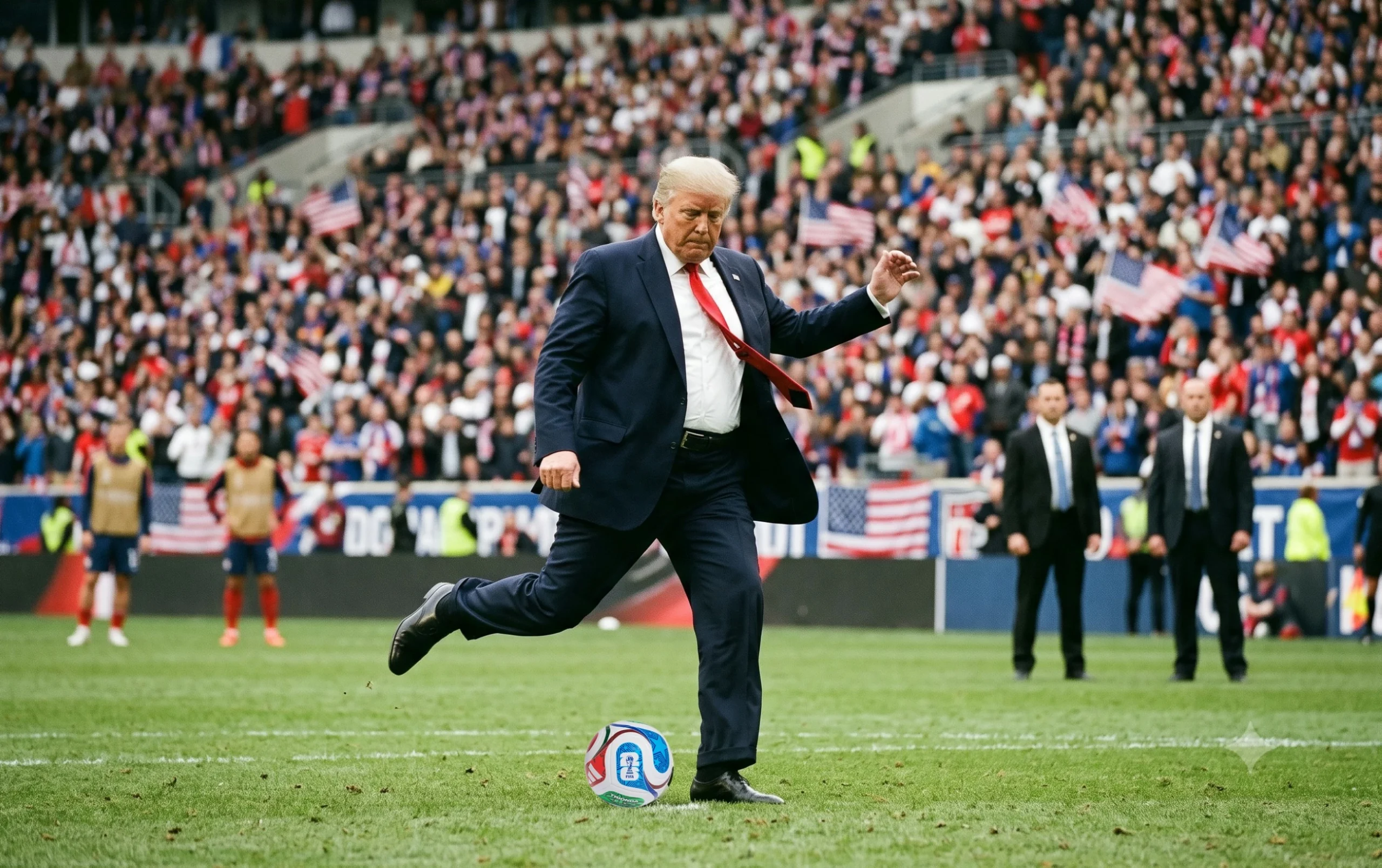
It should come as no surprise that US President Donald Trump should get involved in a football controversy. It had to do with the red card suspension of US footballer Folari Balogun for dragging his
 admin
admin
Mark John, ReutersNATO Secretary General Mark Rutte will insist at this week's alliance summit that member states are keeping their promise to boost defence spending. Yet progress has been uneven and the push is already
 admin
admin
Neymar has done his best while playing football for his country, Brazil, for many years. He will remain a hero in the hearts of football fans all over the world for generations. I think he