1. Home
  2. World

Category: World

World
Arab Parliament mobilises world against Israel’s execution law

Arab Parliament mobilises world against Israel’s execution law

The Arab Parliament announced Sunday that it launched a broad international campaign across parliamentary, human rights, and international levels to confront the so-called execution law for Palestinian prisoners approved by Israel’s Knesset.In a statement, the Arab Parliament stressed that the discriminatory legislation represents one of the most dangerous forms of legitimising systematic political killing against the Palestinian people, describing it as a fully-fledged legislative crime that undermines international law and threatens the global justice system.Arab Parliament Speaker Mohammed bin Ahmed al-Yamahi sent a series of urgent official letters to UN Secretary-General, UN High Commissioner for Human Rights, President of the Inter-Parliamentary Union, President of the International Committee of the Red Cross, as well as heads of regional and international parliaments, calling for immediate and decisive action to halt the implementation of the law and hold those responsible accountable before international justice.Al-Yamahi stressed in his letters that the adoption of this law constitutes an unprecedented escalation in Israeli occupation policies, effectively institutionalising a new phase of systematic executions of Palestinian prisoners under a false legislative cover.He described it as a blatant violation of Geneva Conventions, international humanitarian law, and all relevant international human rights instruments, warning that any international silence or inaction regarding this law would be considered direct complicity in a fully-fledged crime, would grant the occupying entity political cover to continue its crimes, and would open the door to a serious collapse in the international legitimacy system and entrench a policy of impunity.He called on the international community to assume its legal and moral responsibilities and take urgent measures, including activating international accountability mechanisms, referring the crime to competent judicial bodies, ensuring immediate international protection for Palestinian prisoners, and forming independent fact-finding committees to investigate serious violations committed against them in Israeli occupation prisons.He also renewed calls to suspend and freeze the membership of Israeli Knesset in the Inter-Parliamentary Union and other international parliamentary forums, affirming that the Arab Parliament It will continue its political, diplomatic, and parliamentary efforts until the discriminatory law is repealed and the occupying authorities are held accountable for their escalating crimes against Palestinian prisoners.   Related Story
World
Stalemate over Hormuz control – Gulf Times

Stalemate over Hormuz control – Gulf Times

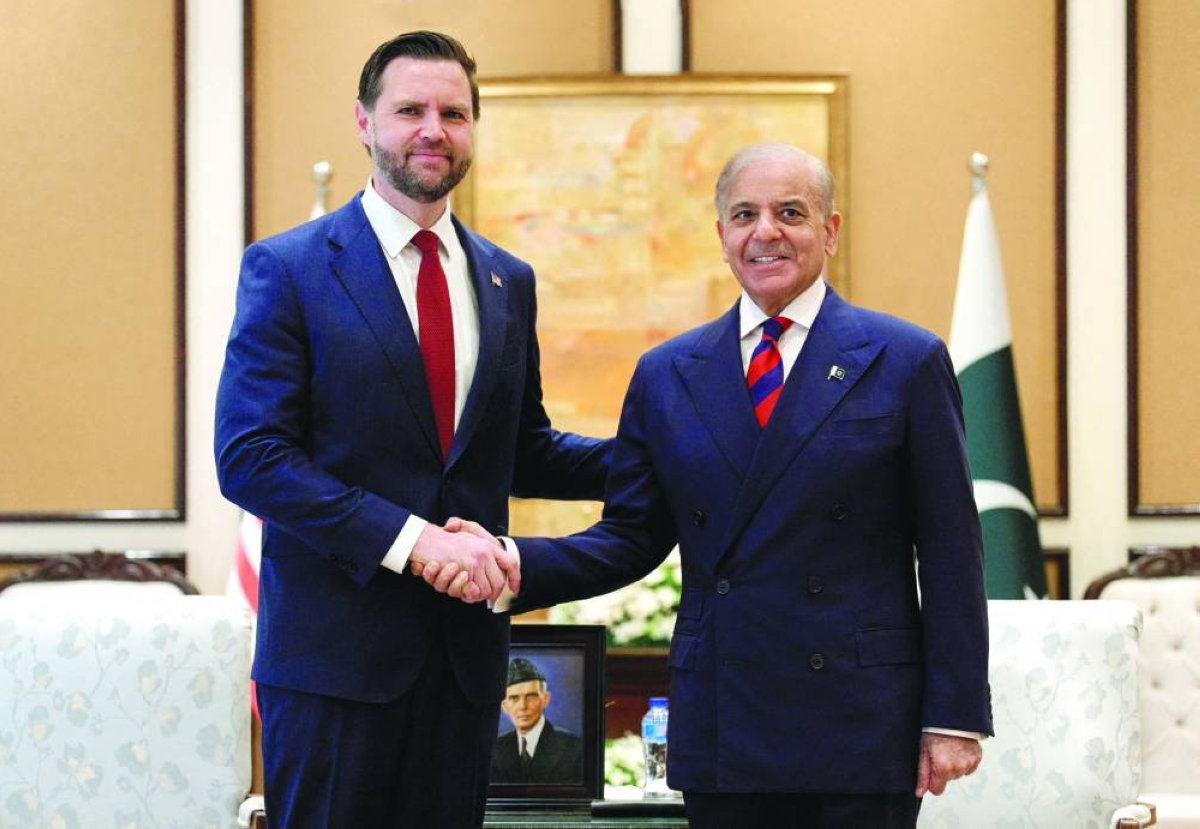
US Vice President JD Vance with Pakistan's Prime Minister Shehbaz Sharif before the talks in Islamabad Saturday. Right, Iran's parliamentary speaker Mohammad Bagher Ghalibaf confers with his colleagues during the talks. (Reuters, AFP) In a city that has rarely been short of drama, the Serena Hotel is hosting something that would have seemed unthinkable just months ago — American and Iranian officials sitting across from each other, exchanging written texts, dining, and trying to find a way out of a war that has shaken the Middle East to its foundations and sent tremors through the global economy. Yet for all the symbolism of the moment, the substance remains stubbornly elusive. After two rounds of talks and well into a third, the negotiations have run into the one obstacle that was always going to be the hardest to clear: who controls the Strait of Hormuz. The White House said the United States, Pakistan, and Iran held face-to-face trilateral talks. Its senior official said the three sides were meeting directly in person, marking a shift from recent negotiations where Washington and Tehran communicated through intermediaries while seated in separate rooms.  Two people briefed on the discussions told the Financial Times that the waterway remains the central sticking point. Iran is insisting on retaining full sovereign control of the strait and the right to levy tolls on vessels passing through it — a position that amounts, in Washington's eyes, to Tehran holding the world's energy supply to permanent ransom. Iranian negotiators have flatly rejected any notion of joint control, even after reportedly a face-to-face meeting between US Vice-President JD Vance and Iran's wartime parliamentary speaker Mohammad Bagher Ghalibaf. The word being used by those close to the talks is stark: stalemate. 

World
India legend Asha Bhosle is no more

India legend Asha Bhosle is no more

(FILES) Bollywood playback singer Asha Bhosle attends an event celebrating 'Marathi Bhasha Gaurav Diwas,' also known as Marathi Language Day, in Mumbai on February 27, 2025. Bhosle, one of India's most iconic playback singers and

World
A ringside view of historic talks

A ringside view of historic talks

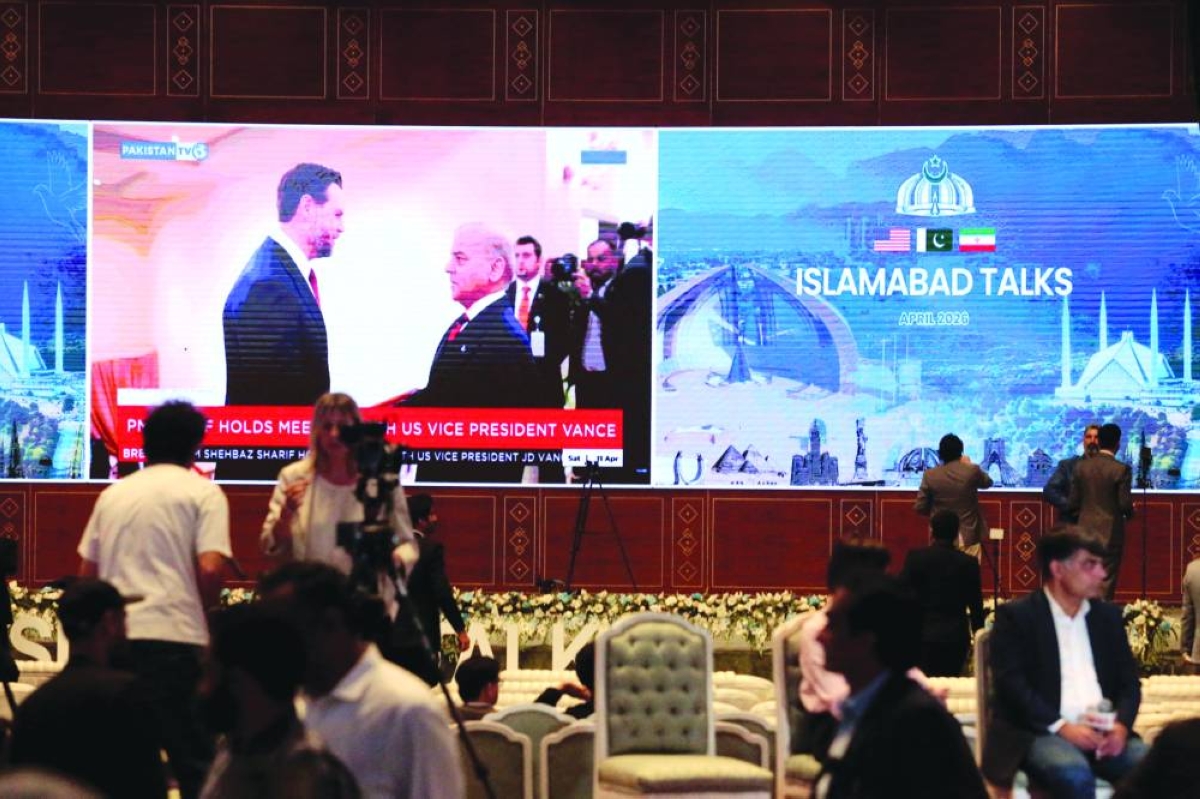
Members of the media work as a screen displays news with an image of Pakistan's Prime Minister Shehbaz Sharif meeting with US Vice President JD Vance, at a media centre set up for the coverage

World
Trump orders US Navy to block Hormuz Strait after Iran talks fail

Trump orders US Navy to block Hormuz Strait after Iran talks fail

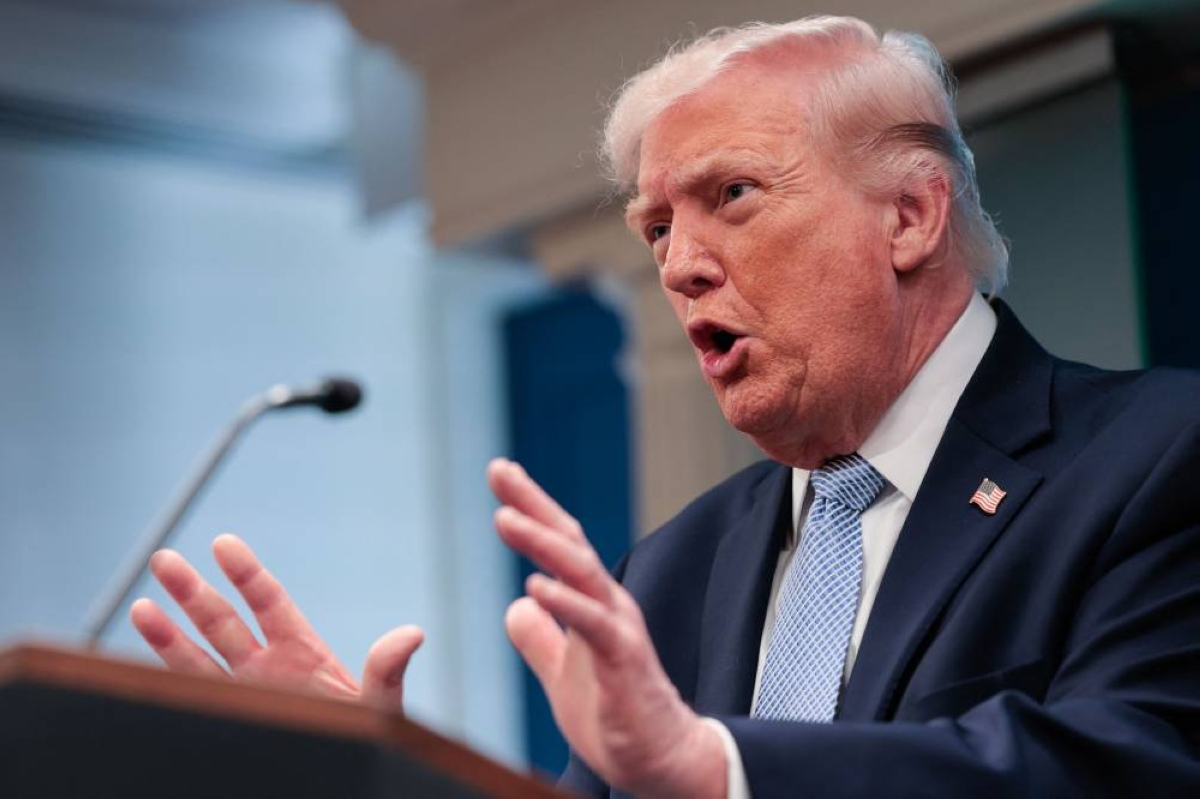
President Donald Trump ordered the US Navy on Sunday to block the crucial Strait of Hormuz shipping lane, furious with Iran's refusal to surrender its nuclear ambitions after peace talks in Pakistan broke down without an agreement.In response to Trump's announcement, Iran's Revolutionary Guards warned they had traffic in the strategic waterway under their full control and would trap any enemy who tried to challenge it 'in a deadly vortex'.In a lengthy declaration on his social media platform, Trump said his eventual goal was to clear the strait of mines and reopen it to all shipping, but that in the meantime Iran must not be allowed to profit from its control of the waterway.'Effective immediately, the United States Navy, the Finest in the World, will begin the process of BLOCKADING any and all Ships trying to enter, or leave, the Strait of Hormuz,' Trump said. 'Any Iranian who fires at us, or at peaceful vessels, will be BLOWN TO HELL!'Iran has itself been restricting traffic through the strait -- a key route for global shipments of oil, gas and fertiliser -- while allowing vessels deemed to be working for friendly countries, such as China, to pass. There have been unconfirmed reports that Tehran plans to charge tolls.'THIS IS WORLD EXTORTION,' Trump said. 'I have also instructed our Navy to seek and interdict every vessel in International Waters that has paid a toll to Iran. No one who pays an illegal toll will have safe passage on the high seas. We will also begin destroying the mines the Iranians laid in the Straits.'The US military had said Saturday that two Navy warships transited through the strait to begin clearing it of mines and ensure it was a 'safe pathway' for tankers, a claim denied by Tehran.Iran's Fars news agency reported on Sunday that two Pakistani-flagged oil tankers heading for the strait had turned around.Fears of renewed fighting rattled an already tense region after the US-Iran talks collapsed.'I am worried about the continuation of the situation and the return of attacks again,' said Imam, an Egyptian housewife living in UAE capital Abu Dhabi.'I was making a great effort not to pass my tension on to the children.''Act of extortion' Trump later in a Fox News interview again threatened Iran's energy infrastructure, before warning he would impose a 50 percent tariff on Chinese imports if Beijing tried to help the Iranian military.'I could take out Iran in one day. I could have their entire energy everything, every one of their plants, their electric generating plants, which is a big deal,' he said.The president's latest ultimatum appeared to have been triggered by the failure of talks to secure a deal to end the six-week-old war, which began when the US and Israel launched strikes on Tehran and killed Iran's supreme leader, Ali Khamenei.Iran's refusal to give up its right to a nuclear programme frustrated the US delegation, led by Vice President JD Vance, White House envoy Steve Witkoff and Trump's son-in-law Jared Kushner.'I have always said, right from the beginning, and many years ago, IRAN WILL NEVER HAVE A NUCLEAR WEAPON!' Trump said.'The Blockade will begin shortly. Other Countries will be involved with this Blockade,' he added, without specifying.Experts said blocking the crucial waterway in the middle of a two-week ceasefire, after the Islamabad negotiations, would further erode America's global credibility.'Imposing a blockade on the Strait of Hormuz right now -- even if it's implementable, which remains an open question -- is bewildering and seems self-defeating,' said Shibley Telhami, a professor of peace and development at the University of Maryland.Vance left Pakistan after the talks -- the highest-level meeting between the two sides since the 1979 Islamic revolution -- and warned that Washington had made Tehran its 'final and best offer' for a deal, adding: 'We'll see if the Iranians accept it.'Iran's parliamentary speaker Mohammad Bagher Ghalibaf, the head of his country's negotiating team, said he had 'put forward constructive initiatives' but the US team did not win Iran's trust.Ceasefire efforts The failure of the talks will raise concerns that a return to fighting could drive world energy prices higher and further damage shipping and oil and gas facilities.Pakistan, which hosted the talks, urged both countries to continue respecting the temporary truce.UK Prime Minister Keir Starmer called the Sultan of Oman, Haitham bin Tariq, and both leaders agreed it 'was vital there was a continuation of the ceasefire, and that all parties avoided any further escalation'.An EU spokesman said diplomacy would be 'essential' to securing peace and hailed Pakistan's mediation efforts, while Russia's President Vladimir Putin called Iranian President Masoud Pezeshkian to offer his services to the diplomatic effort.'Vladimir Putin emphasised his readiness to further facilitate the search for a political and diplomatic settlement to the conflict, and to mediate efforts to achieve a just and lasting peace in the Middle East,' the Kremlin said, in its readout of the call. 

World
Talks stalled over Hormuz control

Talks stalled over Hormuz control

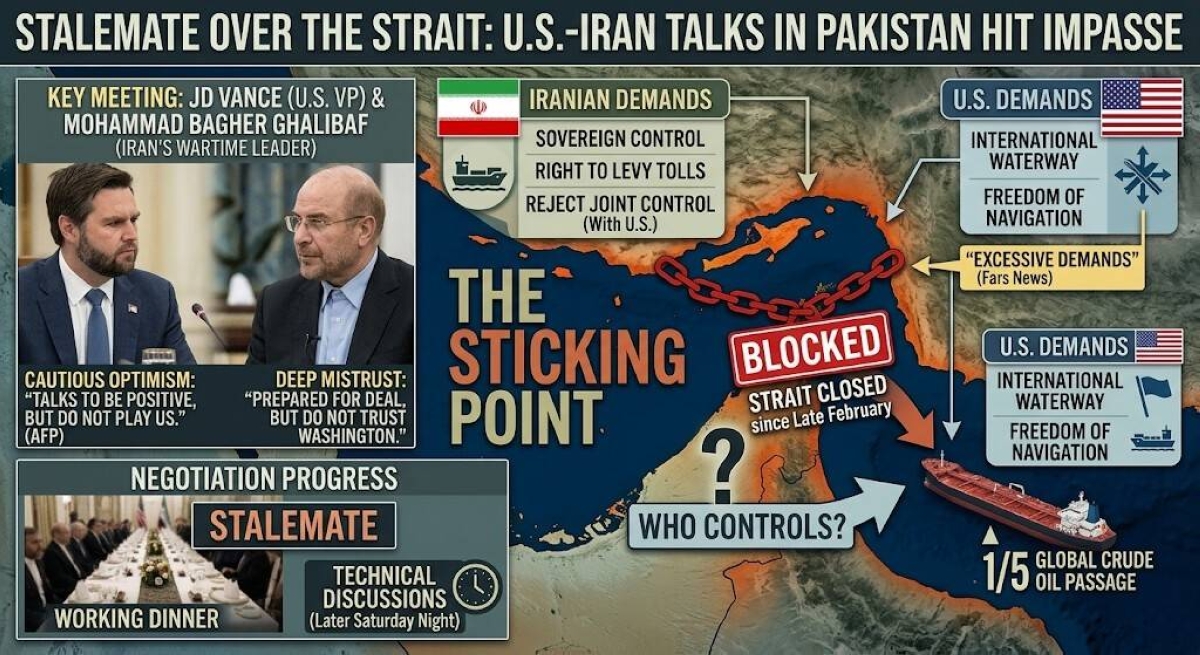
Negotiations between the United States and Iran in Pakistan have hit a stalemate over who controls the Strait of Hormuz, with both sides digging in over one of the most consequential issues in the talks.According to the Financial Times, two people briefed on the discussions said the reopening of the strait remained a central sticking point. One said Iranian negotiators were insisting that Tehran retain sovereign control over the waterway and retain the right to levy tolls on passing vessels, while flatly rejecting proposals for any form of joint control with the US — even after a high-level meeting between US Vice-President JD Vance and Iran's wartime leader Mohammad Bagher Ghalibaf. Negotiators were holding a working dinner, to be followed by technical discussions later on Saturday night, one of the sources added.AFP reported that Vance had earlier expressed cautious optimism, saying he expected the talks to be "positive" but cautioning Iranian negotiators "not to play us." Iran, for its part, said it was prepared to reach a deal but did not "trust" Washington.Iranian state media offered a sharper characterisation of the impasse. Fars news agency reported that the US was making "excessive demands" regarding the strait, and that several other American positions were similarly unacceptable. The Tasnim news agency also flagged Washington's demands over the strategic waterway as a point of serious contention.The strait, through which roughly a fifth of global crude oil passes, has been closed since the US and Israel began bombing Iran in late February. Related Story

World
US Navy claims, Iran denies passing through Hormuz

US Navy claims, Iran denies passing through Hormuz

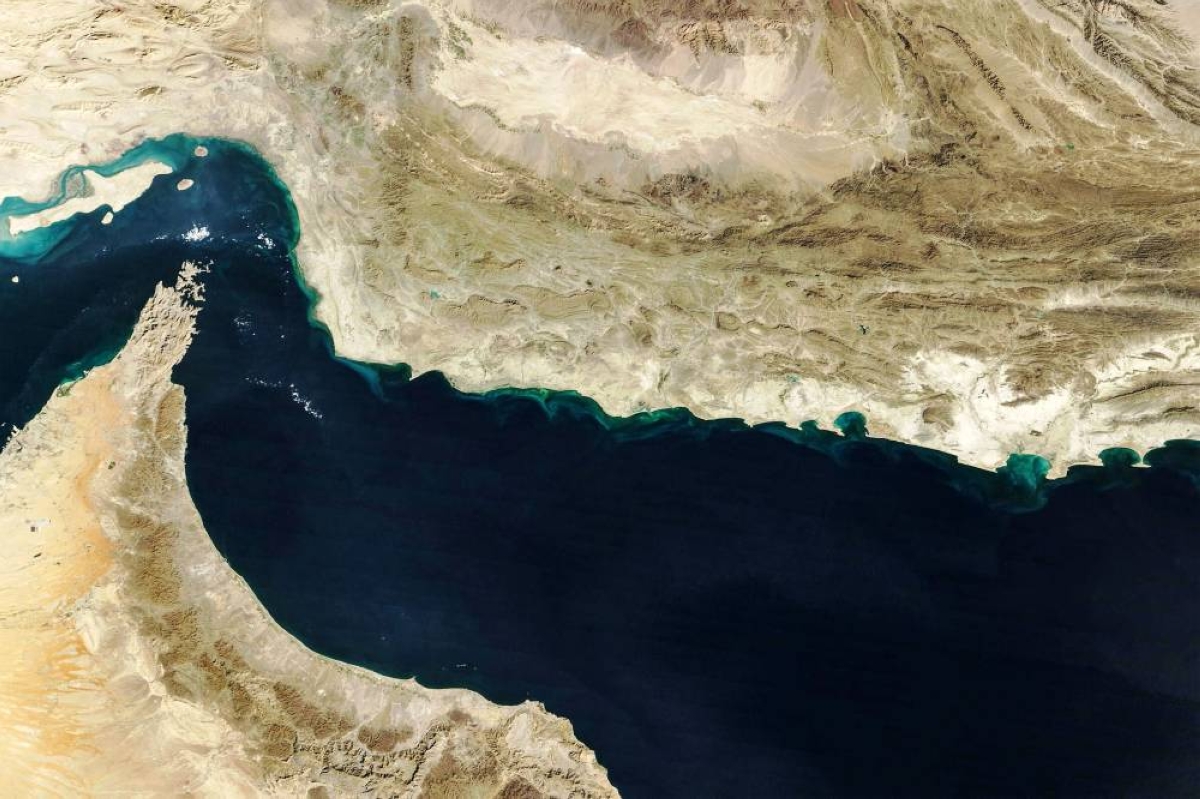
Two US Navy guided-missile destroyers have transited the Strait of Hormuz in the opening phase of an American operation to clear Iranian mines from the critical waterway, US Central Command announced Saturday. The USS Frank E Peterson and USS Michael Murphy passed through the strait as part of what CENTCOM described as a broader mission to remove mines laid by Iran's Islamic Revolutionary Guard Corps. Admiral Brad Cooper, the CENTCOM commander, said the US military had begun establishing a new passage through the strait and would share the safe route with the maritime industry to facilitate the free flow of commerce. Additional forces, including underwater drones, may join the effort in the coming days. Al Jazeera quoting Iran's IRIB broadcaster however denied any US vessel crossed the Strait of Hormuz. This followed claims by US President Donald Trump that the US was working to clear the mines Trump announced the operation on his Truth Social platform, framing it as a favour to nations such as China, Japan and France that relied on the waterway but lacked the will to act themselves. He also claimed that all 28 Iranian mine-laying vessels had been sunk, and maintained that Iran was faring poorly in the conflict. The strait, through which roughly a fifth of the world's crude oil passes, has been effectively closed since the United States and Israel began bombing Iran on 28 February. The disruption has rattled global energy markets and pushed up fuel prices in several countries. The mine-clearing operation comes alongside a fragile ceasefire and the opening of face-to-face US-Iran negotiations in Islamabad Saturday, hosted by Pakistan, in a bid to end the wider conflict. .

World
Third round of Islamabad talks ‘tonight or tomorrow’

Third round of Islamabad talks ‘tonight or tomorrow’

Two rounds of talks have taken place between Iranian and US officials in Pakistan with a third round expected this evening or tomorrow, Iranian state television reported as negotiations were underway in Islamabad."According to information provided to the state TV correspondent by a person close to the negotiating team, another round of negotiations will likely be held tonight or tomorrow," state broadcaster IRIB reported.The trilateral direct negotiations were taking place with host Pakistan, a senior White House official said earlier today, a departure from recent practice where both sides held talks via a mediator while seated in separate rooms. Related Story

World
US President says Strait of Hormuz will open soon

US President says Strait of Hormuz will open soon

US President Donald Trump confirmed that the Strait of Hormuz will be reopened soon, whether Iran cooperates or not, stressing that his top priority in the peace talks in Islamabad is to ensure that Tehran does not acquire a nuclear weapon.In remarks, Trump said that they would open the strait with Iran or without it, expressing his belief that it would happen very quickly, and that if it does not, Washington would be able to resolve the matter.When asked what he considers a good agreement with Iran, the US president replied that it means no nuclear weapons, noting that this accounts for 99% of the agreement.Trump has sent his Vice President JD Vance to Pakistan to negotiate with senior Iranian officials in an effort to reach a peace agreement, following the announcement on Tuesday of a two-week ceasefire, at a time when the world is facing a severe energy crisis due to the halt in navigation through the Strait of Hormuz, through which one-fifth of the world’s crude oil passes.

World
Pakistan voices hope for constructive US-Iran engagement in Islamabad talks

Pakistan voices hope for constructive US-Iran engagement in Islamabad talks

Pakistan on Saturday expressed hope that the United States and Iran would engage constructively in talks hosted in Islamabad, aimed at easing regional tensions.Pakistan's Foreign Minister Ishaq Dar said in a statement that Pakistan remains committed to facilitating dialogue between the parties to help achieve a lasting and sustainable resolution.A high-level US delegation, led by Vice President JD Vance and including Special Envoy Steve Witkoff and Jared Kushner, arrived in Islamabad to take part in talks scheduled for later on Saturday.On the Iranian side, the delegation is headed by Parliament Speaker Mohammad Bagher Ghalibaf and Foreign Minister Abbas Araghchi.The talks follow a recently announced ceasefire agreement between the United States and Iran after weeks of heightened tensions since late February, in a move aimed at de-escalating the situation and safeguarding energy flows through the Strait of Hormuz.  Related Story