1. Home
  2. World

Category: World

World
German school students rally against army recruitment drive

German school students rally against army recruitment drive

Demonstrators hold a banner that reads "The rich want war, the youth wants a future" during a protest against the potential return of military conscription in Berlin, Germany, Thursday. Thousands of German teenagers skipped school Thursday to join protests against a stepped-up military recruitment drive that many fear may in future involve a form of conscription.About 3,000 students gathered on Berlin's Potsdamer Platz square, with smaller demonstrations held across Germany as part of a nationwide "school strike"."I don't see why anyone should have to go to the front lines for politicians," Alex Krzeszka, a 15-year-old student, told AFP at the Berlin rally."I don't see it as morally right, and I think war should never be the solution. Problems should be solved diplomatically."Germany, like other European countries, has sought to build up its armed forces in response to Russia's 2022 full-scale invasion of Ukraine and the threat of further aggression against Nato members.Chancellor Friedrich Merz has vowed to turn the Bundeswehr into Europe's largest conventional army, banking initially on a voluntary recruitment drive.The government this year started requiring all 18-year-old men to fill out questionnaires about their interest and fitness for short-term military service.Women are also being asked to fill out the forms, but cannot be compelled to do so under current German law.Among the signs being waved by protesters in Berlin was a poster that read "We are not cannon fodder" while another demanded: "Send Friedrich Merz to the front line!"For now at least, German lawmakers have decided against bringing back mandatory conscription, which Germany suspended in 2011.But some politicians have expressed doubts about whether ambitious recruiting targets can be achieved without some from of conscription.Plans call for strengthening the Bundeswehr from about 185,000 active-duty troops now to 260,000 by 2030, while roughly quadrupling the size of the reserves to 200,000.The Bundeswehr shrank dramatically after the end of the Cold War as countries across Europe slashed defence budgets.In the 1980s, West Germany alone had fielded a military of nearly 500,000 troops."I think they should definitely advertise for the Bundeswehr, but it absolutely shouldn't be compulsory," Leander Martinez, a 16-year-old student from Berlin, told AFP."Reintroducing conscription is nothing other than rearmament," Leon Reinemann, a student who helped organise the school strike in the western city of Koblenz, told broadcaster NTV.He defended the fact students were skipping classes, saying that "a single day of absence from school is significantly less serious than six months in the barracks".Others took a more staunchly pacifist stance at the Berlin demonstration."I'm against conscription and against war propaganda," Tillmann, a 19-year-old student who declined to give his last name, told AFP."And I think murdering someone is always wrong, even if the state says that someone should be murdered. There's nothing more important than human life." 

World
Ukraine, Russia free 200 POWs each

Ukraine, Russia free 200 POWs each

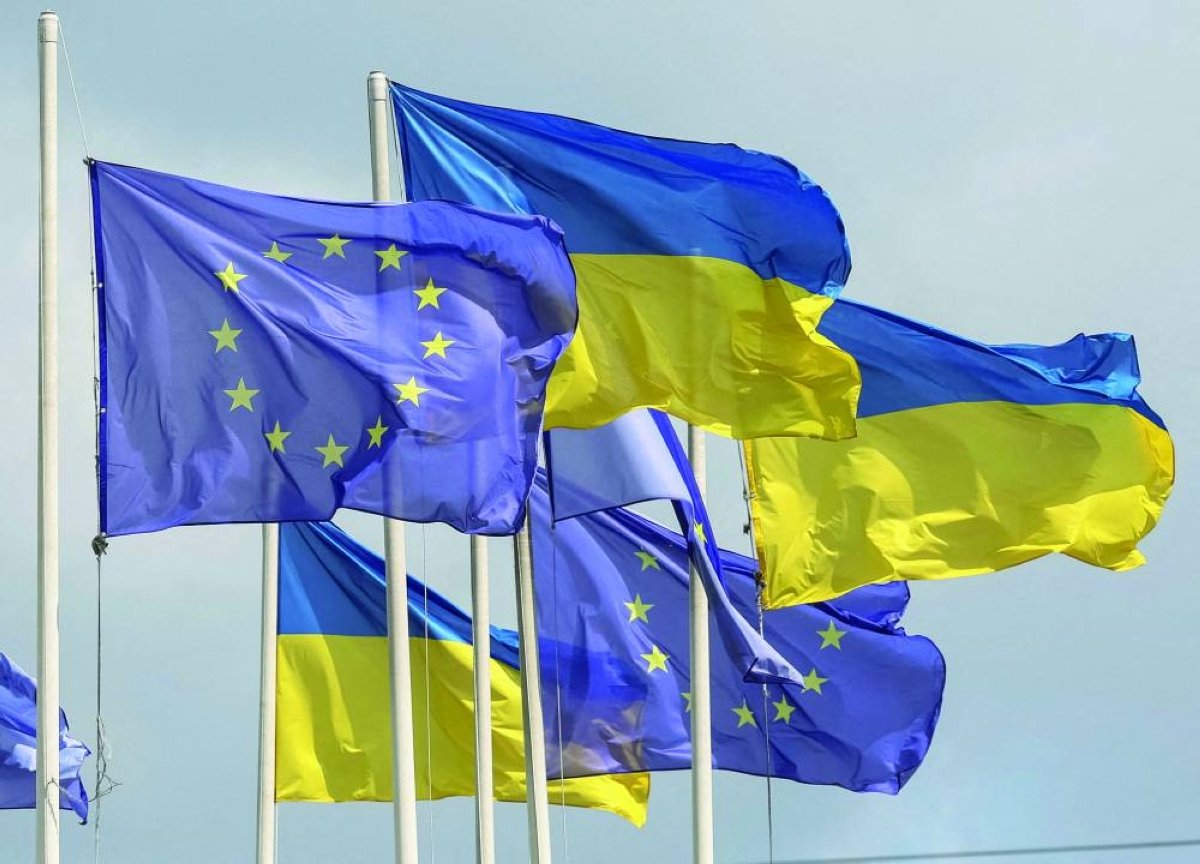
Ukrainian prisoners of war (POWs) are seen after a swap, amid Russia's attack on Ukraine, at an unknown location in Ukraine, Thursday. Ukraine and Russia each freed 200 prisoners of war Thursday, the first part of an exchange that will see them swap 500 people each in total, officials said.The two sides agreed to the exchange during talks in Geneva last month, both sides said. Prisoner swaps are one of the few areas of co-operation between the warring countries."Today, 200 Ukrainian families received the most-awaited message – their loved ones are coming home," Ukrainian President Volodymyr Zelensky said on social media.Video shared by Ukrainian Human Rights Commissioner Dmytro Lubinets showed servicemen leaving buses, wrapped in Ukrainian flags and shouting "Glory to Ukraine!", as well as embracing those who came to welcome them.Among those freed were Ukrainian soldiers captured in 2022, including some who fought in the three-month-long Russian siege of the Azovstal steel plant in Mariupol, said Lubinets.At the site of the exchange in the northern Chernigiv region, Kateryna Movchan, 29, waited for news of her uncle, Valentyn, who went missing on the front in 2024."We're hoping that maybe someone will recognise him and there will be at least some kind of feedback," Movchan, from the northwestern Rivne region, told AFP."We have absolutely no information at all: how he is, where he is," she added.The Russian defence ministry published footage showing its soldiers boarding a bus and cheering while draped in Russian flags.The United Arab Emirates and the United States helped mediate Thursday's exchange, Russia said.More prisoners will be released today, with the two sides set to exchange 500 each in total, Russian negotiator Vladimir Medinsky said on Telegram.There have been several prisoner exchanges during the war. The swaps are among the few tangible results of talks between the two sides, mediated by Washington as it seeks to broker a deal to end the war.Negotiations appear to have stalled, with the United States now focusing its attention on the Middle East.Kyiv had said there was a tentative plan to hold talks in Abu Dhabi this week – one of the places being hit by Iranian missiles and drones.Zelensky on Monday suggested holding the next meeting in Switzerland or Turkiye, which both have hosted previous talks, instead.  Related Story

World
Starmer says UK’s relationship with US still special after Trump criticism

Starmer says UK’s relationship with US still special after Trump criticism

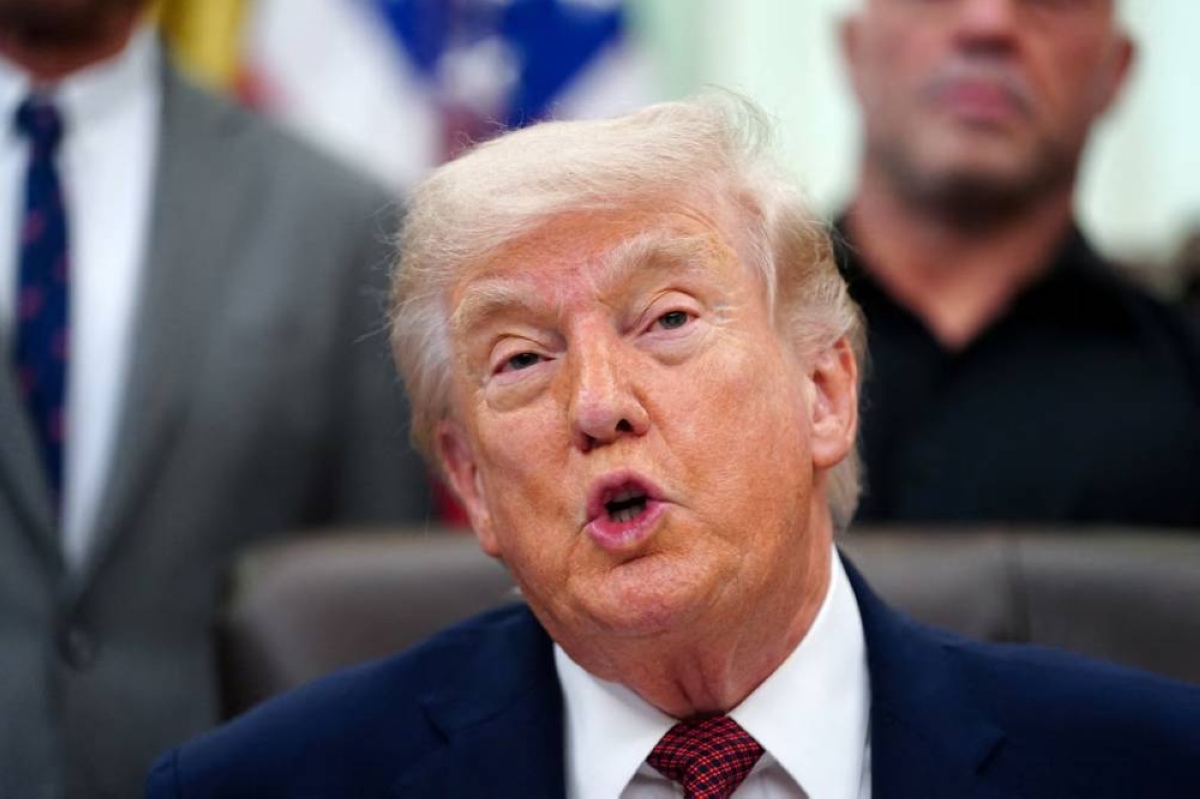
British Prime Minister Keir Starmer gives an update on the situation in the Middle East at Downing Street Briefing Room, in London, Thursday. The "special relationship" between Britain and the US remains intact and they continue to share intelligence, Prime Minister Keir ‌Starmer said Thursday, after Donald Trump rebuked ​him for hesitating to support ‌US strikes on Iran.After initially refusing to allow ‌the United ⁠States to ‌use British bases for the ‌US-Israeli campaign, Starmer has come under personal attack from the US ⁠president, who said the British leader was "not Winston Churchill".Speaking at a press conference, Starmer defended his decisions both to withhold initial access to bases, and then to participate in "defensive" operations against Iran, once Tehran had responded by attacking its neighbours."The special relationship is in operation right now," Starmer said. "We are ​working together in the region, the US and the British working together to protect both the US and the British in joint bases, ‌where we're jointly located ⁠and we're sharing ​intelligence on a 24/7 basis in the usual ​way."As well as the tongue-lashing from Trump, Starmer has also faced criticism for his cautious response from other allies in the region, including Cyprus where an Iranian-made drone hit one of Britain's military bases on the island.He has also faced criticism at home, including from Reform UK leader Nigel Farage, a right-wing Trump supporter, who has accused the prime minister of dithering."What Keir Starmer has done ‌in alienating the American administration ‌is not to just ⁠put that relationship personally at stake, but frankly to risk ⁠a relationship with ⁠a country without whom we are defenceless," he told Reuters Thursday.Starmer's government said this week it would deploy a warship, as well as helicopters with counter-drone capabilities, to help blunt Iran's retaliatory strikes, and Thursday he announced he would send four more ​Typhoon fighter jets to Qatar to provide additional protection.Britain, like other European countries, is searching for ways to repatriate citizens stranded in the Middle East by a conflict that has shut some of the world's busiest airports.Starmer said more than 4,000 people had arrived back in the United Kingdom on commercial flights from the UAE, while 140,000 British nationals had registered ‌their presence in ​the region.  Related Story

World
Australia, Canada sign new deals on critical minerals

Australia, Canada sign new deals on critical minerals

Australian Prime Minister Anthony Albanese shakes hands with Canada's Prime Minister Mark Carney at the Australian Parliament House, in Canberra, Australia, Thursday. (Reuters) Australia and Canada ​said Thursday they had ‌signed new agreements on critical minerals as Canadian Prime Minister ‌Mark Carney made ⁠a landmark ‌address to the Australian parliament, a ‌sign of the developing bond between the "middle powers".Carney is on a multi-leg trip ⁠across the Asia-Pacific region also taking in Japan and India. His stop in Australia included the first address to Australia's parliament by a Canadian leader since 2007."In a world of great power rivalry, middle powers have a choice: compete for favour or combine for strength," he told lawmakers.Introducing Carney in parliament, Australian Prime Minister Anthony Albanese said his ​address represented the closeness of the ties between the two nations."Australia and Canada are middle powers in a world that is changing. We cannot change it back, ‌but we can back ourselves, back ⁠our citizens, and ​back each other," he said.Albanese told a press ​conference that Australia would join Canada's G7 critical minerals production alliance."We have agreed to deepen our relationship across several areas, building on our joint declaration of intent on critical minerals that we signed last year," he told a press conference.The G7 alliance is a Canada-led initiative to diversify and secure global critical minerals production and supply.Canada and Australia together produce about a third of global lithium and uranium, as well as more than 40% of global iron ore.Western ‌nations have been attempting ‌to diversify their supply chains away ⁠from China, which still controls the majority of production and processing of ⁠critical minerals, essential for semiconductors ⁠and defence applications.Canada believes that the best way to address the issue of concentrated supply of critical minerals is through a production alliance or a buyers' club rather than just a price floor, Energy and Mining Minister Tim Hodgson told Reuters on Tuesday.Australia has already allocated A$1.2bn ($850mn) to ​build a critical minerals stockpile, beginning with antimony, gallium and rare earths.That will now be more closely aligned with Canada's defence stockpiling regime that has a similar aim, Albanese said."There's a lot Canada and Australia can do together on critical minerals as producer nations," Australian Resources Minister Madeleine King told Reuters ahead of Carney's visit.Australia and Canada will also deepen cooperation in areas including defence and maritime security, trade and artificial intelligence, the ‌two leaders said.  Related Story

World
N Korea’s Kim oversees naval destroyer, cruise missile test

N Korea’s Kim oversees naval destroyer, cruise missile test

North Korean leader Kim Jong-un oversaw tests this week of his country's naval destroyer, claiming Pyongyang is in the process of "arming the Navy with nuclear weapons", state media reported Thursday.The tests, including a launch of a sea-to-surface cruise missile, come shortly after Kim led a major once-in-five-years Party Congress, at which he renewed goals of a military buildup and vowed to forcefully respond to any threats.It also comes as the nuclear-armed North's key foe — the US — launched its joint offensive with Israel against Iran, aiming to wipe out the Islamic republic's nuclear programme, missiles and navy.Kim inspected on Tuesday a "Choe Hyon" class ship — one of two launched last year — and oversaw a "shakedown" or performance test, the Korean Central News Agency (KCNA) reported."The arming of the Navy with nuclear weapons is making satisfactory progress," Kim said, according to KCNA."All these successes constitute a radical change in defending our maritime sovereignty, something that we have not achieved for half a century," he added.The following day he oversaw the missile launch from the ship, which was "successfully carried out," KCNA said.The Choe Hyon is one of two 5,000-tonne destroyers in the North's arsenal, both launched last year as Kim seeks to ramp up the country's naval capabilities.A third vessel is under construction, which Kim also visited on Wednesday, according to KCNA.Pyongyang has previously said the Choe Hyon is equipped with the "most powerful weapons".Some analysts said the ship could be equipped with short-range tactical missiles capable of carrying nuclear warheads — although North Korea has not proven it has the ability to miniaturise its atomic arsenal.Pyongyang last week condemned the ongoing US and Israeli attack on Iran as an "illegal act of aggression", claiming it had shown Washington's "rogue" nature.Kim's latest move involving the ship appears to be "intended as a show of force amid the ongoing Iran situation and ahead of upcoming South Korea-US joint military drills," Yang Moo-jin, former president of the University of North Korean Studies, told AFP.Pyongyang and Washington are longtime adversaries but the US has mounted a push to revive high-level talks with the North in recent months.Reports and analysts have suggested the US is eyeing a potential summit between US President Donald Trump and the North's Kim this year.After largely ignoring those overtures for months, Kim said last month that the two nations could "get along" if Washington accepted Pyongyang's nuclear status. 

Sri Lanka says it is trying to safeguard lives on second Iranian ship after US sinks frigate

Sri Lanka said it was trying to 'safeguard ‌lives' on a second Iranian ship off its coast Thursday, ​a day after 87 people ‌were killed in a US submarine strike on an Iranian warship ‌in the same ⁠region.The island's security ‌council, which includes top military officials, met ‌to discuss what steps to take, two government sources told Reuters, without saying ⁠whether it was another military ship.'The President, defence officials, and all other relevant officials are aware and we are addressing the situation,' cabinet spokesman Nalinda Jayatissa said in response to questions from an opposition leader.'We are doing our utmost to safeguard lives,' he said, without saying how.The ship was near the port of Colombo, in the country's exclusive economic zone but ​outside its maritime boundary, Jayatissa said.The first ship, IRIS Dena, was sunk on Wednesday 19 nautical miles off Sri Lanka's southern port city of Galle and that two freezers had been ‌dispatched to store the 87 ⁠bodies recovered from the ​sea, he added.Tehran has asked Colombo to help repatriate the bodies, ​Sri Lanka's deputy minister for health and mass media, Hansaka Wijemuni, told Reuters, adding that a timeframe had not yet been determined.Iranian Foreign Minister Abbas Araqchi said the warship was struck in international waters without warning thousands of miles from the Gulf, where US and Israeli forces are striking Iran and Tehran is retaliating with missile and drone attacks.'The US will bitterly regret the precedent it has set,' Araqchi said in a post on X, adding that the warship was a guest of India's navy and was carrying almost ‌130 sailors.IRIS Dena had taken part ‌in a naval exercise organised ⁠by India in the Bay of Bengal from February 18 to 25 and ⁠was on its way back, according ⁠to the drill's website and Sri Lankan officials.Sri Lankan military rescuers responded to an early-morning distress call from the frigate on Wednesday and found 32 survivors.Search and rescue operations would continue for an estimated 10 people who remain unaccounted for, they said.The Indian Navy said it had also launched a search and rescue operation to 'augment' Sri Lanka's ​efforts.The attack dramatically widened the scope of the war.'An American submarine sank an Iranian warship that thought it was safe in international waters,' US Defense Secretary Pete Hegseth said at the Pentagon. 'Instead, it was sunk by a torpedo. Quiet death.'A Pentagon video purporting to have captured the attack showed a huge explosion blowing apart the rear of the vessel, lifting it from the water, and causing it to begin sinking from the stern. 

World
NATO condemns Iranian targeting of Turkiye

NATO condemns Iranian targeting of Turkiye

NATO has condemned Iran's targeting of Turkiye, reaffirming its support for all member states amid rising regional tensions.NATO spokesperson Allison Hart said on Wednesday the alliance "strongly condemns Iran's targeting of Turkiye and stands firmly with all allies, including Turkiye, at a time when Iran continues what she called indiscriminate attacks in the region".She added that NATO's deterrence and defense posture remains strong across all domains, including air and missile defense.Earlier in the day, Turkiye's defense ministry announced that it had intercepted a ballistic missile headed towards Turkish airspace from Iran. The ministry said the missile was neutralized in a timely manner by NATO air and missile defense units deployed in the eastern Mediterranean.Ankara has said it reserves the right to respond to the incident, stressing that it remains in close coordination with NATO and other allied countries.The exchange marks a further escalation in tensions between Iran and several countries in the region, raising concerns among Western allies about the risk of a wider confrontation. 

World
IAEA says no radioactive leaks detected at Iranian nuclear facilities

IAEA says no radioactive leaks detected at Iranian nuclear facilities

The International Atomic Energy Agency (IAEA) said on Wednesday that no damage has been detected at facilities containing nuclear materials in Iran.In a statement posted on the X platform, the agency said that analysis of the latest available satellite imagery showed no damage at facilities housing nuclear materials, adding that there is currently no risk of radioactive leakage.The IAEA noted that damage was detected to two buildings near the Isfahan nuclear site, while no additional impact has been observed at the Natanz facility beyond the previously reported damage to its entrances.It added that no impact has been detected at other nuclear sites, including the Bushehr nuclear power plant.

World
US Department of State orders non-emergency staff to leave Pakistan, Cyprus

US Department of State orders non-emergency staff to leave Pakistan, Cyprus

The US Department of State announced Wednesday that it has ordered non-emergency embassy and consulate staff and their families to leave Pakistan and Cyprus, amid growing security concerns resulting from regional developments.The US Embassy in Pakistan explained that the State Department had asked non-essential government employees and family members of its staff at its consulates in Lahore and Karachi to leave the country for their safety, stressing that this measure did not affect the embassy’s status in the capital, Islamabad.In Cyprus, the US allowed its non-emergency embassy staff and their families to leave the island, following the attack on a British military base on Sunday night, amid the fallout from the ongoing conflict in the Middle East, affirming that the decision was made for security reasons.On Tuesday, the US Department of State urged all American citizens to leave more than 12 countries in the Middle East using any available commercial means of transportation, due to the security risks resulting from the ongoing escalation of the US-Israeli war against Iran. 

World
US President Promises Insurance, Navy Escort for Oil Tankers Passing Through Hormuz

US President Promises Insurance, Navy Escort for Oil Tankers Passing Through Hormuz

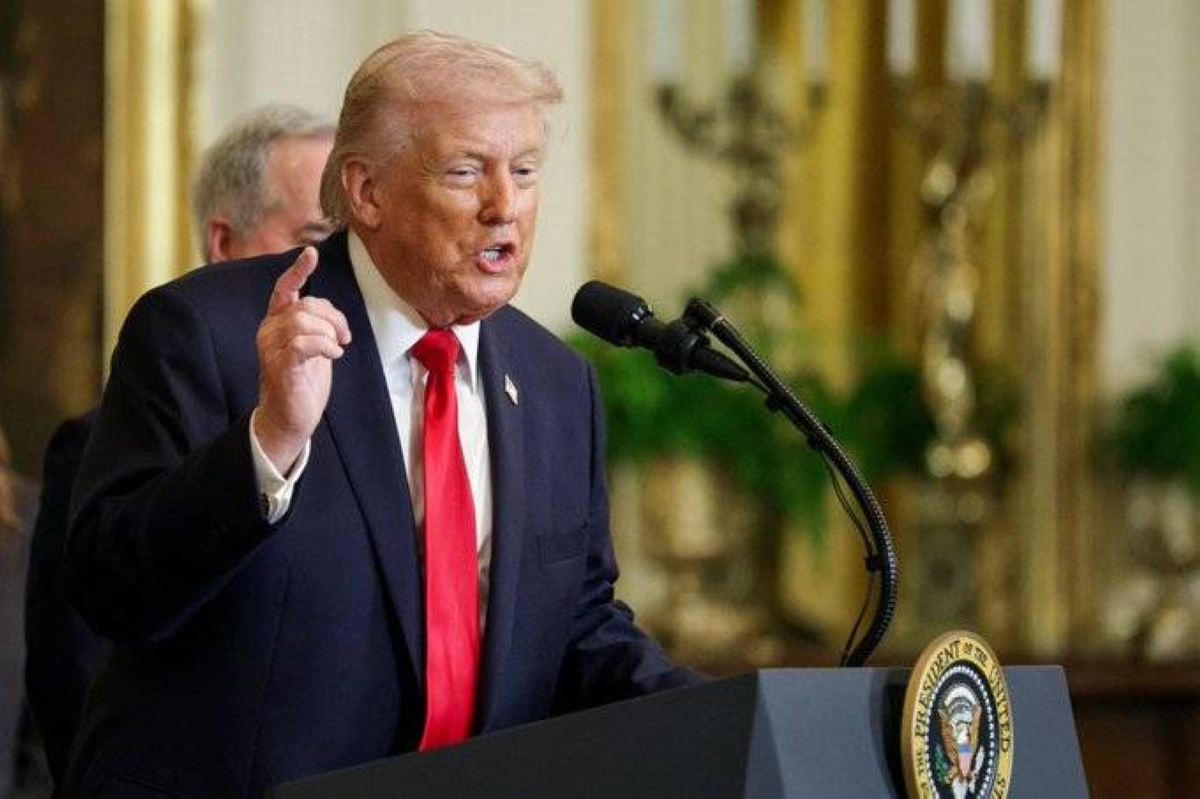
US President Donald Trump said that he ordered the United States Development Finance Corporation (DFC) to provide political risk insurance and guarantees for the Financial Security of ALL Maritime Trade, especially Energy, traveling through the Strait of Hormuz.'If necessary, the United States Navy will begin escorting tankers through the Strait of Hormuz, as soon as possible,' Trump said in a post on Truth Social.Iran had threatened earlier that it would attack ships passing through the Strait of Hormuz, with some tankers attacked. Several insurance companies informed their maritime transport customers that they dropped war insurance. The Strait of Hormuz normally sees the passage of 60 ships a day, around 20 percent of global oil flows.