1. Home
  2. World

Category: World

World
Minister says UK ‘not at war’ after Iranian drone hits UK Cyprus base

Minister says UK ‘not at war’ after Iranian drone hits UK Cyprus base

An emergency vehicle passes by the entrance of RAF Akrotiri, a British sovereign base in Cyprus, which was hit by an unmanned drone overnight, causing limited damage, Monday. An Iranian drone hit the runway of a UK air force base in Cyprus Monday hours after Prime Minister Keir Starmer said Britain would not join the US-Israeli conflict with Iran.He said that mistakes of the Iraq war had been "learned".Starmer announced late on Sunday that he had agreed to the United States' request to use British bases for "specific and limited defensive purpose".Middle East Minister Hamish Falconer insisted Monday that "the UK is not at war"."Let me be really clear: the UK took a deliberate decision not to be part of the first wave of strikes conducted by the US and Israeli governments."But in the face of reckless attacks from Iran on a whole range of allies in the region... we took the decision, as the Prime Minister announced last night, to support the US's request to use our bases in order to conduct defensive actions," he added.Foreign Minister Yvette Cooper said the strike on the Royal Air Force base at Akrotiri had been "specifically on the airport runway" and that the government was "working on every possible option" to help its nationals in the region return home if needed."There's an estimated 300,000 British citizens in Gulf countries that have now been targeted by Iran, including countries where now airspace is closed," she told Sky News.She urged nationals to register with UK authorities and follow local advice.Cyprus President Nikos Christodoulides said the strike took place just after midnight (2200 GMT) when "a Shahed unmanned aerial vehicle crashed into the military facilities of the British Bases in Akrotiri, causing minor material damage".The RAF Akrotiri base is a British overseas territory near the southern coastal city of Limassol.More than 100,000 UK nationals have so far registered their presence in the Middle East, according to Cooper.Scottish teacher Felicity Flanagan, who lives in Dubai, said she had been sheltering at home since Saturday when she heard loud bangs while at the beach with friends."Moments later, we actually saw what we believed to be shrapnel from the missile then fall into the water in front of us," she told the BBC's Radio Scotland.She said she was now following British embassy advice not to venture out.Starmer, speaking late on Sunday before news of the strike on RAF Akrotiri, said the decision not to be involved with the initial strikes was "deliberate"."I want to be very clear: we all remember the mistakes of Iraq. And we have learned those lessons," he said in a video address posted on X."We were not involved in the initial strikes on Iran and we will not join offensive action now," he added.Rosa Freedman, an expert on international law and conflicts at the University of Reading, told AFP the current situation was "materially different" from the war in Iraq in 2003.She said the hostilities were part of a broader conflict following the October 7, 2023 attacks on Israel and concerns about its nuclear programme."The Iranian people have tried for many years to overthrow this regime, including tens of thousands of young people being slaughtered in the streets over recent weeks. Regime change needs to happen for domestic and international stability and security," she said.  Related Story

World
Nepal’s key candidates in post-uprising elections

Nepal’s key candidates in post-uprising elections

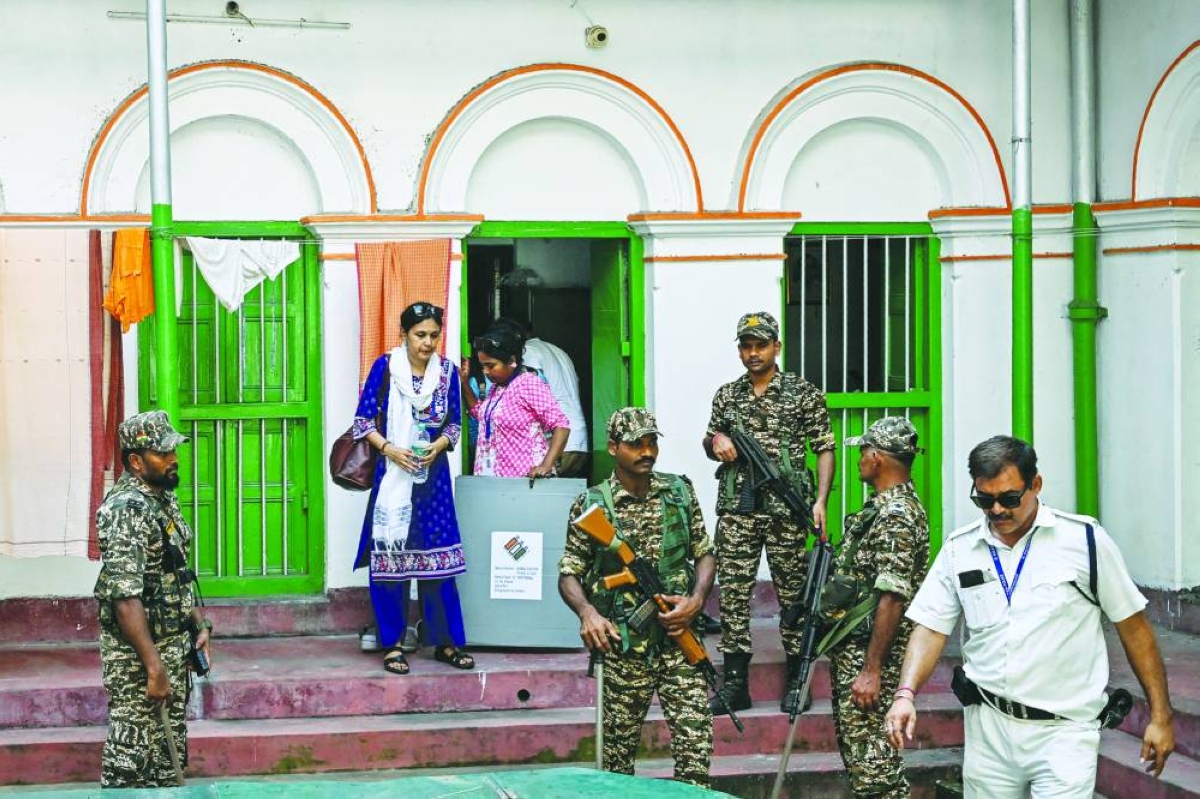
Polling officials carry ballot boxes and other materials at Damak in Jhapa district Monday ahead of parliamentary elections in Nepal. Nepal votes Thursday in the first elections since deadly youth-led anti-corruption protests toppled the government in September 2025.Key figures contesting for power include a former prime minister seeking a return to power, a rapper-turned-mayor bidding for the youth vote, and the newly elected leader of the Nepali Congress party.Here are three of the most closely watched candidates in the March 5 parliamentary polls — all central figures in an election that analysts say is unlikely to deliver an outright majority for any single party. Gagan Thapa, 49 Gagan Thapa presents himself as the face of generational change, arguing that the country can no longer be run by what he calls an "old age" club of revolving veteran leaders.Thapa led an internal revolt in January to be elected as head of the Nepali Congress, the country's oldest and historically dominant party, which had been the largest member of the ousted coalition government.Born in 1976, Thapa was drawn into politics as a teenager during the 1990 pro-democracy movement against the then absolute monarchy.He rose through student activism, linked to the Nepali Congress, and became a prominent figure in the 2006 mass uprising that forced the king to abdicate.Jailed several times for street protests, he then entered parliament as one of its youngest members. He has since served multiple terms, and been health minister."I am the right mix of energy and experience — the right mix which can deliver," Thapa told AFP, pledging governance reform and job creation, while promising to work across party lines.KP Sharma Oli, 74Khadga Prasad Sharma Oli is one of Nepal's most seasoned and polarising political figures.A veteran Marxist leader who has served four times as prime minister, he was ousted in September's protests at his rule.Leader of the Communist Party of Nepal-Unified Marxist Leninist (CPN-UML), Oli has spent nearly six decades in politics.He was drawn into underground communist activism as a teenager and was arrested in 1973 for campaigning against the monarchy. He spent 14 years in prison, including four in solitary confinement.He later rose through party ranks to become prime minister in 2015, returning to office multiple times in Nepal's turbulent parliamentary landscape.Critics accuse him of an authoritarian streak and intolerance of dissent, while supporters credit him with strong leadership and nationalist resolve, particularly in navigating relations with India and China.Oli denies ordering security forces to fire on protesters during last year's unrest, in which at least 77 people were killed and crowds torched parliament.Oli told AFP he blames "infiltrators" for the violence.Despite his dramatic fall, he won re-election as party chief in December and is seeking a comeback, framing the vote as a "competition between those who burn the country and those who build it".Balendra Shah, 35Balendra Shah, widely known as "Balen", has emerged as a symbol of youth-driven political change, after backing the protests that forced the government from power.Born in Kathmandu in 1990, he was a schoolboy during Nepal's decade-long Maoist civil war.A former underground hip-hop artist whose songs railed against corruption and inequality, the 35-year-old civil engineer first shot to national prominence through music.He translated that online popularity into a shock political victory in 2022, when he was elected Kathmandu's first independent mayor.Shah built a reputation as a blunt and often confrontational reformer, launching campaigns against tax evasion, traffic congestion and waste mismanagement.In December, Shah joined the centrist Rastriya Swatantra Party (RSP), positioning himself for national leadership.He has taken the unusual step of challenging former prime minister Oli in his home constituency, telling AFP that it shows he is "not taking the easy way out".Advocating a liberal economic system with social justice, including free education and healthcare for the poor, Shah says Gen Z's core demand is good governance — and insists music will remain part of his identity, even if he becomes prime minister.  Related Story

World
Myanmar grants amnesty to over 7,000 convicted of 'terrorist group' support

Myanmar grants amnesty to over 7,000 convicted of 'terrorist group' support

Myanmar's military junta granted amnesty Monday to more than 7,000 prisoners convicted of financing, sheltering or propagandising for a 'terrorist group', a designation it has used to outlaw pro-democracy factions opposing its rule.Thousands of dissenting civilians have been swept into jails since Myanmar's military snatched power in a 2021 coup, ending a decade-long experiment with democracy and detaining elected figurehead Aung San Suu Kyi.Pro-democracy activists backing Suu Kyi and armed groups challenging the military in a civil war have been labelled 'terrorist' outfits, and far-reaching laws punish association with life prison terms and possible death sentences.A government notice said junta chief Min Aung Hlaing ordered the releases of more than 7,300 prisoners convicted under counter-terrorism provisions.They include laws forbidding 'financing of terrorism', harbouring 'any terrorist group' and the 'exhortation, persuasion, propaganda, recruitment' of any person to join such groups.Media monitors have criticised the junta for weaponising the legislation to muzzle journalists and social media users critical of their takeover.It was not immediately clear which groups the prisoners had been convicted of association with.In recent months, the junta has announced pardons for some political crimes in what analysts describe as a bid to soften its image amidst a handover to a nominally civilian government after elections concluded in January.But with Suu Kyi still jailed, her party dissolved and the dominant pro-military party securing a walkover win, critics have derided the transition as a publicity exercise to rebrand the junta's rule. Hundreds freed An AFP journalist outside Yangon's Insein Prison — Myanmar's most infamous lock-up, renowned for alleged rights abuses — saw around 300 prisoners being bussed out of the compound in a convoy Monday morning.A gaggle of emotional relatives clutched bouquets of flowers and placards bearing loved-ones' names as prisoners were released from Insein's barbed-wire boundary shortly before noon.Min Aung Hlaing granted their release to mark a public holiday Monday 'in consideration of the peace of mind of the general public as well as on humanitarian grounds', the government statement said.Nearly 12,500 people facing trial on the same 'terrorism' charges will have their cases dropped, according to a separate statement.The junta frequently grants prison amnesties on public holidays, and Monday's raft of notices also announced the release of more than 2,800 other prisoners and 10 jailed foreign nationals — without detailing their offences.After ruling by force for more than five years, the military has said its phased month-long election will return power to the people and offer a chance to end the civil war.But the poll did not take place in swaths of the country controlled by rebel groups and Min Aung Hlaing has not ruled out serving as president.The new parliament is due to sit in two weeks, with a president elected in early April. 

World
China calls for cessation of military operations, de-escalation in Middle East

China calls for cessation of military operations, de-escalation in Middle East

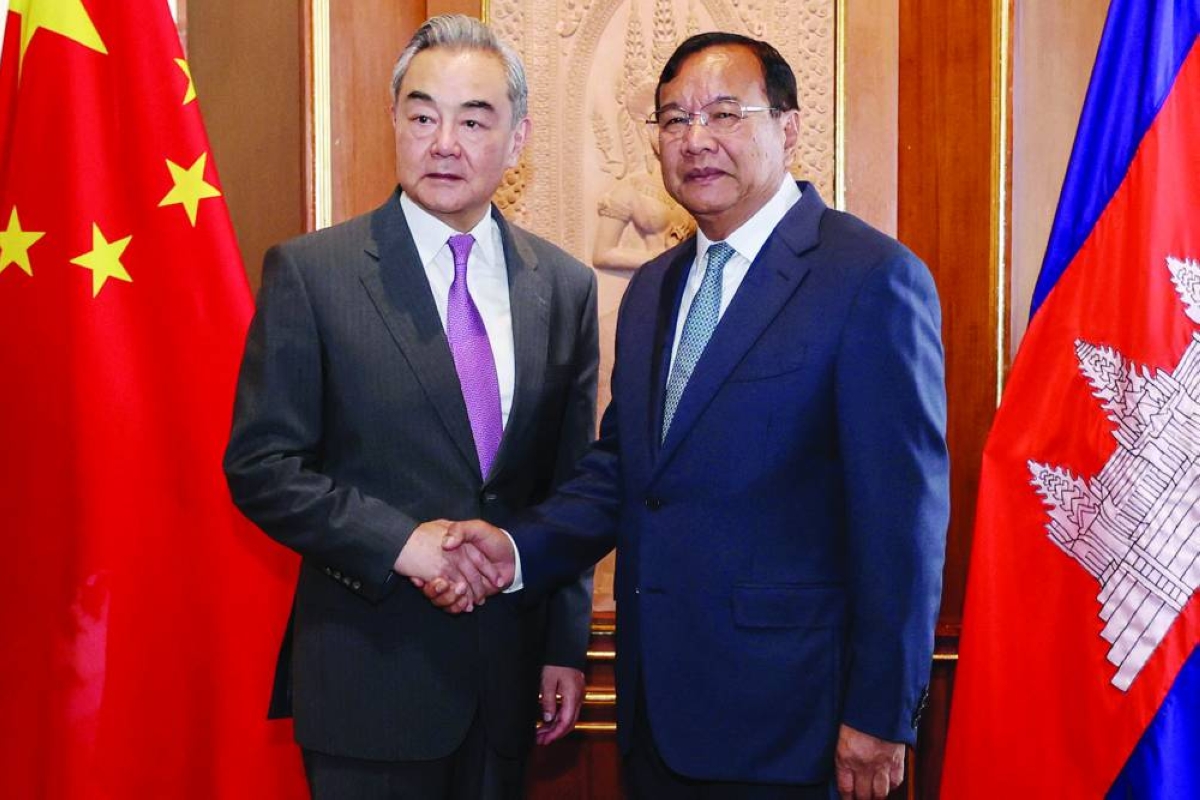
Chinese Foreign Minister Wang Yi today called on all parties involved to halt military operations in the Middle East, prevent the war from spreading and its repercussions from spiraling out of control.This came during a phone call between the Chinese Foreign Minister and his Russian counterpart, Sergey Lavrov, during which they exchanged views on the latest developments in the Middle East.Wang Yi stressed the need for all parties involved to return to dialogue and negotiation as soon as possible, urging all sides to strengthen peace talks and end the war.He emphasized that China has always opposed the use of force or the threat of force in international relations.For his part, Lavrov confirmed that Russia agrees with China's position calling for a ceasefire and a return to diplomatic negotiations. 

World
Egyptian FM discusses regional developments with Iraqi, Romanian counterparts

Egyptian FM discusses regional developments with Iraqi, Romanian counterparts

Egyptian Foreign Minister Badr Abdelatty discussed the rapidly escalating developments and dangerous military escalation in the region in two separate phone calls on Sunday with his Iraqi counterpart Fuad Hussein and Romanian counterpart Oana Toiu.In a statement, the Egyptian Foreign Ministry said that Abdelatty stressed during the calls the need for concerted regional and international efforts to de-escalation and containment of the current crisis, warning of the catastrophic consequences of the conflict's expansion.The Egyptian Foreign Minister emphasized that prioritizing political and diplomatic solutions is the only way to prevent the region from descending into widespread chaos, the devastating effects of which would impact the security, stability, and resources of all the region's peoples. He stressed that there is no alternative to dialogue for addressing the current crises.He expressed his condemnation of the targeting of the territories of several Arab countries, affirming Egypt's categorical rejection of any violation of their sovereignty and territorial integrity. 

World
IAEA to hold emergency meeting on Iran tomorrow

IAEA to hold emergency meeting on Iran tomorrow

The International Atomic Energy Agency (IAEA) has announced that it will hold an emergency meeting on Monday at the request of Russia to discuss the developments following the US-Israeli strikes on Iran.The United Nations agency clarified in a statement on Sunday that this special session of its Board of Governors will address issues related to the military strikes carried out by American and Israeli forces on Iranian territory.Director General of the IAEA, Rafael Grossi, commented on the situation, emphasizing that the Iranian nuclear file will not be permanently resolved through military action. He underscored the critical need to reach an agreement.  

World
UN Secretary-General condemns military escalation in Middle East

UN Secretary-General condemns military escalation in Middle East

The United Nations (UN) Secretary-General Antonio Guterres condemned today's military escalation in the Middle East, saying that the use of force across the region undermines international peace and security.In a statement, Guterres said, "All Member States must respect their obligations under international law, including the Charter of the UN.""The Charter clearly prohibits the threat of the use of force against the territorial integrity or political independence of any state, or in any other manner inconsistent with the Purposes of the United Nations," he added.The UN Secretary-General called "For an immediate cessation of hostilities and de-escalation," saying, "Failing to do so risks a wider regional conflict with grave consequences for civilians and regional stability."Guterres strongly encouraged all parties to return immediately to the negotiating table, reiterating that the peaceful settlement of international disputes in full accordance with international law, including the UN Charter, is the only viable path, adding that the Charter provides the foundation for the maintenance of international peace and security.