1. Home
  2. World

Category: World

World
France announces emergency fuel loans program for SMEs

France announces emergency fuel loans program for SMEs

The French government announced the launch of an emergency loan program to support small and medium-sized enterprises affected by rising fuel prices due to the escalation in the Middle East.In a statement, the Ministry of Economy revealed that companies operating in the transport, agriculture, and fisheries sectors will be eligible for fast-track fuel loans of up to 50,000 Euros.The ministry also said that the interest rate on the loans will be 3.8%, with repayment periods of up to three years. It noted that the program fulfills a commitment made last week by French Prime Minister Sebastien Lecornu, whose government is seeking to contain the economic repercussions of rising oil prices caused by the war. 

World
Russian strike on Ukraine market kills five, wounds 25

Russian strike on Ukraine market kills five, wounds 25

Firefighters put out a fire at the market following a strike in Nikopol, Saturday. (AFP) A Russian drone hit a covered market in the eastern Ukrainian city of Nikopol Saturday, killing five people and wounding 25, officials said, as Moscow pressed on with intensified daytime attacks.Russia has been firing aerial broadsides at Ukraine throughout its more than four-year invasion, mostly at night, but in recent weeks it has stepped up daytime attacks.The market in Nikopol, Dnipropetrovsk region, was hit at 9:50am (0650 GMT), the local prosecutor's office said.Regional governor, Oleksandr Ganja, said in a Telegram post that three women and two men were killed.He added that a 14-year-old girl was among the 25 wounded and was in a "critical condition".Attacks continued during the morning hours on Saturday, wounding six in the northeastern city of Kharkiv, near the front line, regional police said.The Ukrainian air force said Russia fired 286 drones overnight, of which 260 were intercepted.In the northern Sumy region, 11 people were wounded in strikes on residential areas and civilian infrastructure overnight, police said.Images released by Ukrainian emergency services showed a building whose upper floors were engulfed in flames. Another attack killed a woman and wounded another two in the southeastern city of Kherson, which is close to the fighting.In Russia, a missile and drone attack on the southern Rostov region bordering Ukraine left one person dead and four seriously wounded in the city of Taganrog, regional governor Yuri Slyussar said.On the Sea of Azov, a foreign cargo ship was damaged by falling drone debris and caught fire, he added.A family of three, including an eight-year-old child, was killed in a house by a nighttime Ukrainian drone strike that also targeted railway infrastructure in Russian-occupied Lugansk, the Moscow-backed administration said.Ukrainian President Volodymyr Zelensky was on a surprise visit to Istanbul Saturday for security talks with Turkish President Recep Tayyip Erdogan.Zelensky this week signalled he was ready for a truce over the Orthodox Easter holidays, but the Kremlin said it had not received "clearly formulated" proposals.Ukraine has accused Russia of prolonging the war to capture more territory, and says Moscow is not interested in peace. Russia says it wants a permanent settlement instead of a brief ceasefire.Talks between the two warring parties, mediated by the US, have been stalled by the war in the Middle East.In comments to reporters, including AFP, published on Friday, Zelensky said he had invited an American delegation to Ukraine to relaunch negotiations with Moscow."The delegation will do everything possible in the current conditions — during the war with Iran — to come to Kyiv," Zelensky said."The American group can come to us and, after us, go to Moscow. If it does not work out with three parties, let's do it this way," he added.Amid the Middle East war, Ukraine has sought to leverage its expertise in fighting off Russian drones similar to those Iran has been using in retaliatory attacks across Gulf nations.Last week, Zelensky visited several Middle Eastern countries and signed defence agreements with Qatar and Saudi Arabia.He also suggested Ukraine could help unblock the Strait of Hormuz, whose effective closure by Iran has rattled the global economy.He did not specify how Ukraine could contribute, but cited Kyiv's experience in restoring passage through the Black Sea, which Russia had blocked at the beginning of its invasion.  Related Story

World
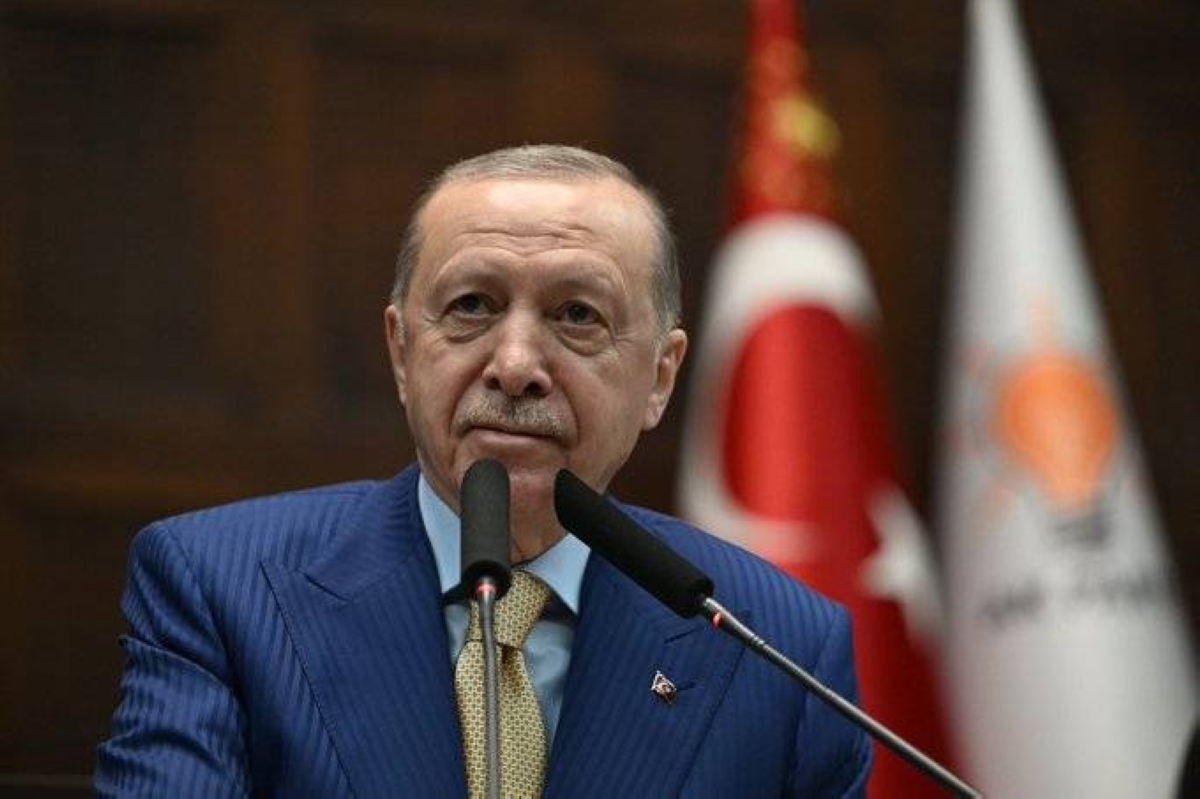
Erdogan, Zelensky discuss energy security, peace efforts

Erdogan, Zelensky discuss energy security, peace efforts

Turkiye's President Recep Tayyip Erdogan (right) and Ukraine's President Volodymyr Zelensky attending a bilateral meeting on security at Dolmabahce Presidential Office, in Istanbul, Saturday. (AFP) Turkish President Recep Tayyip Erdogan received Ukrainian counterpart Volodymyr Zelensky in Istanbul Saturday for talks on energy and navigation security, and efforts to end the war with Russia, the Turkish presidency said.The visit came a day after Erdogan spoke with Russian President Vladimir Putin, who accused Kyiv of attempting to target the gas pipeline between Russia and Turkey supplying several European countries.Erdogan "stressed the importance that Turkiye attaches to the safety of navigation in the Black Sea and the crucial nature of the security of energy supply," his office said.The two leaders had discussed relations between the countries, "peace efforts in the Russia-Ukraine conflict, and regional and international developments", it added.Zelensky said they had discussed "steps to implement joint projects in developing gas infrastructure, as well as opportunities for joint development of gas fields".There was a heavy police presence around the lavish Dolmabahce Palace on the shores of the Bosphorus, which also hosted several rounds of talks between Moscow and Kyiv in the past.Kyiv has been pushing for a truce over the Orthodox Easter holidays that would include a halt in attacks on energy infrastructure.Russia, which is seeking a permanent settlement rather than a brief ceasefire, said it had not seen any "clearly formulated" proposals from Kyiv.Ukraine has struck Russian energy infrastructure throughout the more than four-year war in a bid to weaken Moscow's ability to finance its offensive.Russian strikes on Ukrainian energy facilities have cut power and heating to millions of people since the beginning the war in 2022.  Related Story

World
Australians cancel Easter travel as worries mount over fuel crisis

Australians cancel Easter travel as worries mount over fuel crisis

A woman looks at signs displayed on empty fuel dispensers at a Shell petrol station that ran out of fuel, in Sydney, Australia. (Reuters/File Photo) Every Easter, Sydney retiree Elsa Ulcak is one of the millions of Australians that hit the road to travel during the four-day-long weekend.But this year, she has ‌cancelled her trip with her husband because she could not justify ​how much petrol her ‌getaway would use."We usually go to the countryside, but because ‌of the petrol situation, ⁠we decided to ‌stay at home this year," ‌said Ulcak, 67.A long trip would be costly and also consume fuel that ⁠could be used by people who needed it more, she said."(It's) six or seven hours drive to the countryside ... it's expensive. Also we've got to think about it — working people need their petrol, (but) we're retired, we can stay at home.""We usually go with a group of friends, everyone cancelled."The Easter long weekend is typically one of the busiest travel times ​of the year in Australia. In 2025, more than 4.5mn people had been expected to travel over the period, spending A$11.1bn ($7.67bn) on their trips, according to ‌research firm Roy Morgan.But many ⁠plans this year ​have been disrupted by the outbreak of the Iran war on ​February 28 and the blockade of the Strait of Hormuz, which has choked global energy supplies.Australia, which imports about 90% of its fuel, has experienced localised shortages and seen prices soar, with diesel costing more than A$3 per litre and petrol more than A$2.50 last week before the government cut fuel taxes to help bring prices down.Rachel Abbott, a 27-year-old art director, has also shelved her travel plans this Easter.While she would typically go home to north-east Victoria, both the cost of driving ‌and flights made her decide ‌to stay in Sydney."Work's just been ⁠quite busy and flights are very expensive, and then if I were to ⁠drive, obviously it would ⁠be a lot more expensive," she said.Aid worker Stav Zotalis, 59, said her holiday plans were unaffected since she prefers to stay at home for Easter, but this year "does feel very different" due to the conflict in the Middle East."I don't know that we can celebrate. It feels like the world is shaky, it's ​unpredictable. And I feel that we don't know where things are going."While she has felt the strain of higher costs at the petrol station and supermarket, she said she was more concerned about those in the conflict zones."I've been an overseas aid worker for 25 years and I lived in Asia for 14 years, and I know people that live closer to the conflict are having to forgo food. Not just trips interstate or to the coast, ‌like some of ​us here in Australia," she said.  Related Story

World
Waste water to clean energy: Japanese engineers harness the power of osmosis

Waste water to clean energy: Japanese engineers harness the power of osmosis

A Japanese water plant is harnessing the natural process of osmosis to generate renewable energy that could one day become a common power source.The possibility of generating power from osmosis — when water molecules pass from a less salty solution to a more salty one — has long been known.But actually generating energy from that has proved more complicated, in part due the difficulty of designing the membrane through which the molecules pass.Engineers in the city of Fukuoka and their private partners think they might have cracked it, and have opened what is only the world's second osmotic power plant.It generates power from the transfer of molecules between treated sewage water and concentrated seawater, a waste product from a desalination plant in the city."If osmotic power generation technology advances to the point where it can be practically used with ordinary seawater... this, in turn, would represent a major contribution to efforts against global warming," said Kenji Hirokawa, manager at Sea Water Desalination Plant.Osmosis is familiar to most people. It is the process that, for example, causes water to seep out of a cucumber or eggplant when sprinkled with salt.Water molecules move across membranes from an area of low solution concentration to an area of higher concentrated solution.At scale, that movement can be significant enough to turn a turbine and thereby generate electricity.Desalination solutionFukuoka is particularly well-placed to benefit from the technology because it has a readily available source of extremely salty water — the brine leftover from desalination.With no major rivers to sufficiently source its water, the city and wider Fukuoka region of 2.6mn people have relied on a major desalination plant to produce drinking water since 2005.That left the city with large quantities of concentrated saline waste water to deal with.Ordinarily it is diluted and released back to the sea. Previous attempts to find alternatives, including salt making, failed to gain traction.Then engineering firm Kyowakiden Industry approached the city about harnessing the salty wastewater for osmotic power."When our company rolls this out as a business, we aim to build plants roughly five to 10 times the scale of this current facility," said Tetsuro Ueyama, research and development manager at the Nagasaki-based company.In Fukuoka's system, a generator is attached to a local desalination plant located near a sewage treatment facility.It draws in highly saline waste water from the desalination plant and receives treated sewage.The two separate streams of liquid go through a number of chambers separated by semi-permeable membranes through which water molecules travel from the treated sewage toward the salty water.That process increases the volume, pressure and speed of the saline water flow, spinning a turbine that generates electricity before the now-diluted mixture is discharged to sea.The 700mn-yen ($4.4mn) power generation system came online last August, and once running at full capacity, it should generate up to 880,000 kilowatts annually, equivalent to the electricity consumption of 300 households.However it will remain devoted to supplying the power-thirsty facility, although it covers just a tiny fraction of its energy needs.Not 'a pipe dream'The engineers involved, however, are dreaming big.The system will go through a five-year test to monitor its performance, including costs and maintenance, particularly for the membrane and other parts exposed to salt.Financial details of the project have not been disclosed, but engineers admitted that for now the system's power costs "a lot more" than either fossil fuel or renewable energy.Pumping the water into the system also uses energy itself, and scaling up osmotic power for grid-level energy production has not yet been done anywhere in the world.Still, officials and experts believe the power source has a future, noting that unlike solar and wind, it is not dependent on weather or light.And the current high costs are partly because the company had to build a one-of-a-kind power plant, Ueyama said.Osmotic power has often been seen as primarily useful for estuary areas, where freshwater river flows meet the salty ocean.But Ueyama said the technique being used in Japan could be useful for countries with large desalination facilities like Saudi Arabia and other Middle Eastern nations.Kyowakiden is also working on technology that could generate similar power levels from less salty regular seawater."First we want to popularise this technology from Fukuoka to the rest of Japan. In order for us to do that, we want to further upgrade our technology to create osmotic power generation that can use ordinary ocean water to generate electricity," he said."We don't think this is a pipe dream."  Related Story

World
Indonesia receives bodies of peacekeepers killed in Lebanon

Indonesia receives bodies of peacekeepers killed in Lebanon

Indonesian President Prabowo Subianto (centre) salutes the coffins of Indonesian soldiers killed while serving with the United Nations Interim Force in Lebanon as they arrive at Soekarno-Hatta International Airport in Tangerang Saturday.(AFP) Indonesia received the bodies of three peacekeepers Saturday who were killed while on deployment in Lebanon and called for security guarantees for blue helmets a day after another three of its soldiers were injured.The soldiers' coffins, draped in the Indonesian flag, arrived at the international airport and were carried into a hall on the shoulders of uniformed comrades for a ceremony attended by President Prabowo Subianto.Family members of the men wept over the coffins, each fronted by a photograph of the dead soldier in a gold frame.Prabowo saluted each portrait and held the hands of grieving loved ones, some weeping unconsolably.Another three Indonesian peacekeepers were injured in Lebanon Friday, two seriously, officials said.Foreign Minister Sugiono told reporters after Saturday's ceremony that Indonesia wanted a thorough UN investigation."This is a peacekeeping mission. Incidents such as this should not happen," the minister, who like many Indonesians has only one name, told reporters at the airport."There must be a security guarantee for peacekeeping soldiers," he added.Peacekeeper Farizal Rhomadhon, 28, died when a projectile exploded on March 29 in southern Lebanon, where Israel and Hezbollah have been fighting since Lebanon was drawn into the Middle East war.A UN security source told AFP on condition of anonymity Tuesday that fire from an Israeli tank was responsible for that attack.A day later, two more Indonesian peacekeepers — 33-year-old Zulmi Aditya Iskandar and Muhammad Nur Ichwan, 26 — died after an explosion struck a Unifil logistics convoy, also in southern Lebanon.As Indonesia mourned its fallen soldiers, the UN Interim Force in Lebanon (Unifil) said three more peacekeepers were wounded in a blast at a UN facility near El Adeisse on Friday afternoon, and rushed to hospital.The UN Information Centre in Jakarta said the "origin of the explosion" was unknown but identified the injured soldiers as Indonesian."Repeated attacks or incidents of this kind are unacceptable," the Indonesian foreign ministry said in a statement.The government urged the UN Security Council "to immediately convene a meeting of troop-contributing countries to Unifil to conduct a review and take measures to enhance the protection of personnel serving with Unifil".The father of fallen soldier Zulmi Aditya Iskandar, said this week he was shocked that peacekeepers were losing their lives in the conflict."We were really sad and regretful, because this is a UN troop, a peacekeeping troop, not deployed for war," 60-year-old Iskandarudin told reporters at his house in West Java province.The military has promised financial support for the bereaved families.All three men are to be laid to rest on Sunday.After the latest attack that injured three more soldiers, Armed Forces Commander General Agus Subiyanto ordered Indonesian peacekeepers in Lebanon to enter bunkers and refrain from activities outside.The Indonesian National Armed Forces has said it will deploy more than 750 personnel to Lebanon next month as part of the scheduled Unifil peacekeeping troop rotation.  Related Story

World
Human remains found on Thai ship attacked in Hormuz strait: firm

Human remains found on Thai ship attacked in Hormuz strait: firm

Human remains have been found aboard a cargo ship struck by Iran while transiting the Strait of Hormuz last month, the vessel's owner said on Friday, after three crew members were reported missing following the attack.US-Israeli strikes on Iran late February prompted Tehran to respond by effectively closing the Strait of Hormuz, a crucial artery for global oil supplies.The Thai-flagged Mayuree Naree was struck in March while travelling through the strait after departing Khalifa port in the United Arab Emirates.'Certain human remains were found within the affected area of the vessel,' a statement from transport company Precious Shipping said on Friday, adding it could not yet confirm the identities or the number of individuals.Twenty Thai crew members returned home in mid-March, while three of their colleagues were missing and presumed trapped in the damaged engine compartment.A search was carried out under 'challenging conditions' as the vessel's engine room had been flooded and damaged by fire, the company said.Thailand's foreign ministry said it was 'saddened' by the development and that families of the missing crew had been informed.Iran's Revolutionary Guards said in March they had struck the Mayuree Naree, as well as a Liberia-flagged vessel, in the strait because the ships had ignored 'warnings'. 

World
Sri Lanka struggles to avert economic collapse over Mideast war

Sri Lanka struggles to avert economic collapse over Mideast war

An employee at Sri Lanka's government Information Department works without air conditioning and lights in Colombo. (AFP) Sri Lanka is struggling to prevent a repeat of its spectacular economic collapse four years ago, as the prolonged Middle East war compounds the fallout from a deadly cyclone in November.President Anura Kumara Dissanayake has rationed fuel, raised its price by a third and increased electricity costs by up to 40% since the war began disrupting global energy supplies.Panic buying fuel in Sri Lanka has brought back memories of 2022, when the economy tanked, with inflation hitting 70% after Colombo defaulted on its $46bn external debt.The accompanying protests toppled the once-powerful president, Gotabaya Rajapaksa, who was accused of mismanagement and corruption.But the Frontline Socialist Party (FSP) that led the "Aragalaya", or struggle, that ousted Rajapaksa has warned that Dissanayake's administration may be facing an implosion."We believe that a response to this economic crisis will come politically," FSP politburo member Duminda Nagamuwa told AFP."Because of the strength of the (government's) mandate, this economic shock is still being absorbed by the people without exploding politically," he said.Dissanayake's leftist JVP, or the People's Liberation Front, won a two-thirds majority at the November 2024 parliamentary elections after his own victory two months earlier in the presidential poll.A vendor at Colombo's Pettah night market, Wasantha Jayalath, 55, said he voted for Dissanayake in 2024 hoping for better times, but felt the situation was getting worse."We voted... thinking that a good, self-sufficient era would dawn for our country," Jayalath told AFP. "There is no such situation; instead, what we realise is that the country is going further into an abyss."A trader at the capital's main wholesale market, Priyantha Sudharshana Silva, 53, is not blaming the administration for the crisis."Protesting won't help because the country is already in a difficult position," Silva told AFP. "We believe that moving forward, even with these difficulties, is a significant achievement."Human rights lawyer Bhavani Fonseka said protests have been subdued because people are preoccupied with the day-to-day challenge of securing supplies.Fuel rationing has shortened queues, but on Thursday, the government began limiting water supply hours to conserve reserves and save pumping costs."Compared to what we had in 2022... you're not seeing that level of protest," Fonseka told AFP. "Sri Lanka was just coming out of another disaster — Cyclone Ditwah — and the government imposed a state of emergency to deal with that."Fonseka said the wide powers that emergency laws give the authorities to arrest and detain suspects could be used to stifle any popular protests, raising serious concerns for rights activists."We are in a situation where... laws that are in place, and the way they are being used, raise the question of whether rights could be further eroded in the coming weeks and months," she said.Cyclone Ditwah, the worst disaster since the 2004 Asian tsunami, killed 641 people and affected almost the entire country late last year.The cyclone, which triggered floods and mudslides, caused an estimated $4.1bn in damage, according to the World Bank.The government announced plans in December for 500bn rupees ($1.6bn) in extra spending to fund the country's recovery.The money will be used to rebuild devastated homes, roads, bridges and railways, as well as for cash handouts to help people regain lost livelihoods.Colombo also secured $206mn in emergency financing from the International Monetary Fund (IMF) in December to deal with the aftermath of the disaster.An IMF delegation is currently in Sri Lanka to review its four-year $2.9 bn bailout loan before releasing a $700mn instalment.Sri Lankan authorities have said they may ask the IMF to modify the loan's austerity conditions, given the country's worsening economic circumstances due to external factors.  Related Story

World
University Boat Race in London

University Boat Race in London

Oxford and Cambridge in action during the men's University Boat Race in London, Saturday.  

World
Rain, storms kill 121 in Afghanistan and Pakistan in two weeks

Rain, storms kill 121 in Afghanistan and Pakistan in two weeks

A rescue team helps residents evacuating the flooded area following heavy rainfall on the outskirts of Peshawar Saturday. (AFP) Heavy rain and storms have killed at least 121 people over two weeks across Afghanistan and Pakistan, disaster officials in both countries said Saturday.Stormy weather has brought rain sweeping across Afghanistan since late March, causing floods, landslides, and hitting homes and crops."Since March 26 till today, 77 people have been killed and 137 wounded across the country because of the floods and rains," Afghanistan's disaster management authority (ANDMA) spokesman Mohammad Yousuf Hammad told AFP Saturday.The spokesman added that 26 people were killed and 48 were wounded across the country in the past 48 hours due to rains, floods, landslides and lightning.Across the border in Pakistan, 44 people were killed following heavy rains in the last weeks, officials said.At least 32 people died in the northern province of Khyber Pakhtunkhwa since March 25 and 12 in southwestern Balochistan since March 20, the provincial disaster management authorities told AFP.Afghanistan's latest casualties include a child who drowned in a flash flood in southeastern Ghazni Saturday morning while he was busy playing with other children, provincial police said.Two more children also drowned in different districts of the same province.That came hours after three people died in Kandahar province, southern Afghanistan, when the roof of their house collapsed due to rains, the provincial disaster management authority said.ANDMA spokesman Hammad said rainfall since the start of spring "can strengthen the underground sources of water and give growth to the agriculture sector".But he said it can also cause human suffering and financial loss.In western Herat province, farmer Abdul Rahim Taimori said: "We don't remember such a flood happening before. It has caused us a lot of damage."It has destroyed the crops of people, their homes. If it continues like this then we would have to leave our homes," the 45-year-old told AFP.But relocating is unaffordable for many."Where shall we go? We are forced to stay," said Majal Niazi, a 45-year-old farmer who lives in a one-room house with his family.The rain has also led to several road closures, with Kabul police reporting the partial closure Friday of the road between the capital and the city of Jalalabad.Afghanistan's disaster management authority renewed its warning to people to stay away from "rivers and flooded streams, and follow the weather forecast seriously".The latest casualties follow more than 60 people being killed in snow and heavy rain that hit Afghanistan in January.Afghanistan frequently experiences deadly floods, landslides and storms, particularly in remote areas with fragile infrastructure.Among the poorest countries in the world after decades of war, Afghanistan is particularly exposed to the effects of climate change, which scientists say is spurring extreme weather."It was drought before and now we have these rains, both are a danger," said Abdul Sattar, a 40-year-old farmer in Herat.  Related Story