1. Home
  2. World

Category: World

World
Cambodian deported by US faced ‘misery’ in Eswatini prison

Cambodian deported by US faced ‘misery’ in Eswatini prison

Cambodian Pheap Rom poses for picture at a restaurant in Phnom Penh on March 30, 2026. A Cambodian refugee long-settled in the US, ex-convict Pheap Rom, remains bewildered at how he wound up behind bars

World
40-metre scaffold collapses in Japan, three workers critical

40-metre scaffold collapses in Japan, three workers critical

An aerial view of the site where three people were seriously injured and one is missing after falling about 40 metres from collapsed scaffolding at JFE Steel construction site in Kawasaki, south of Tokyo, Tuesday.

World
Thousands of small fish defy gravity to climb Congo waterfall

Thousands of small fish defy gravity to climb Congo waterfall

A species of small fish has been observed by the thousands climbing a vertical waterfall 15 metres (50 feet) tall in the Democratic ‌Republic of Congo in a behaviour that illustrates the surprising and ingenious ways animals can ​adapt to extreme environments.The researchers documented ‌how this species of shellear fish, whose scientific name is Parakneria thysi, scales the Luvilombo ‌Falls in the ⁠upper Congo Basin, a ‌vast river system spanning Central Africa and home ‌to the world's second-largest rainforest. Researchers observed the fish ascending the vertical rock face during seasonal floods at the ⁠end of the rainy season, typically in April and May.While this species can reach about 9.8 centimetres (3.9 inches) long, the researchers observed only small to medium-sized individuals - about 3.7 to 4.8 cm (1.5 to 1.9 inches) long - journeying up the falls.Observations suggest a fish may take nearly 10 hours to complete the slow and demanding climb to the top, moving in short bursts and resting frequently. Larger individuals of the species appeared to be too heavy for their fins to support the climb. "This discovery highlights the ​importance of maintaining the continuity of watercourses, particularly in the context of the Congo Basin, where studies on fish behaviour are virtually nonexistent," said Pacifique Kiwele, a researcher in ichthyology and a member of the scientific staff at the Université ‌de Lubumbashi in the Democratic Republic of ⁠Congo who was ​the lead author of the study published in the journal Scientific Reports."It prompts scientists to ​be even more vigilant in their observations, as anything is possible. Who would have believed it without being close enough to check, and document it with photographic and film material, that indeed some fish are able to climb waterfalls? It illustrates that there are wonders out there that surpass our imagination," Kiwele said.Some other fish species are capable of scaling waterfalls through various means but the researchers said this species is the first one documented in Africa.The researchers recorded the behaviour of this shellear fish on four occasions in 2018 and 2020, observing them moving up the rock face through what is called the splash zone - areas kept wet by spray rather than direct water flow.So ‌how do they do it? The ‌fish cling to wet rock surfaces using their ⁠pectoral fins, supported by pelvic fins and aided by tiny hook-like projections known as unculi, which help ⁠them grip surfaces, the researchers said. Then they ⁠push themselves upward by wiggling their bodies from side to side.Scaled to human size, it would be comparable to a person climbing hundreds of metres (yards) vertically.The ascent is also risky. Some fish lose their grip when sudden jets of water hit them, knocking them off the rock face - particularly when they flip upside down to navigate overhanging sections.Given the volume of water at the base of the falls, fish that fall are most ​likely able to start climbing again. However, those landing directly onto rocks may not survive, the researchers said.So why do they do it? The researchers said the fish may climb upstream to find suitable living conditions and areas of the waterway with less competition and fewer predators.The researchers identified two major human threats to the species: illegal fishing using fine-mesh mosquito nets that can easily catch the fish, and water extraction for irrigation, which has in some years depleted the Luvilombo River.The discovery underscores how little is known about fish behaviour in the Congo Basin, the researchers said."It is quite possible that other fish species ‌living in rapid habitats ... are ​capable of overcoming similar vertical obstacles," Kiwele said, adding that researchers plan further fieldwork to confirm preliminary observations in another fish family. 

World
S. Korea allows sailing through Red Sea as alternative route amidst Strait of Hormuz disruptions

S. Korea allows sailing through Red Sea as alternative route amidst Strait of Hormuz disruptions

South Korea has decided to allow crude oil tankers to sail via the Red Sea as an alternative route, amid disruptions to oil transport through the Strait of Hormuz caused by the ongoing conflict in West Asia.Korean Minister of Trade, Industry and Energy, Lim Jung-kwan, said on Monday that the ministry will support private-sector efforts to secure additional crude oil supplies by permitting tankers that meet certain requirements to transit the Red Sea, in cooperation with the Ministry of Oceans and Fisheries.In turn, Korea's Oceans Minister, Hwang Jung-woo, said the industry ministry has shared information on crude oil tankers with confirmed shipping contracts as of April 3, adding that his ministry has completed notifying relevant shipping companies of the approval to sail via the Red Sea route.The Red Sea route is considered a detour via the Saudi port of Yanbu, which receives crude oil from eastern oil fields through a 1,200-kilometer pipeline.Hwang noted that an average of 39 vessels per day are currently using the Bab Al-Mandab Strait to exit the Red Sea.South Korea had previously recommended against using the route on March 1, immediately after the outbreak of the conflict in West Asia, but has decided to allow navigation as the crisis is expected to be prolonged. 

World
Sri Lanka raise cooking gas prices by 23 percent

Sri Lanka raise cooking gas prices by 23 percent

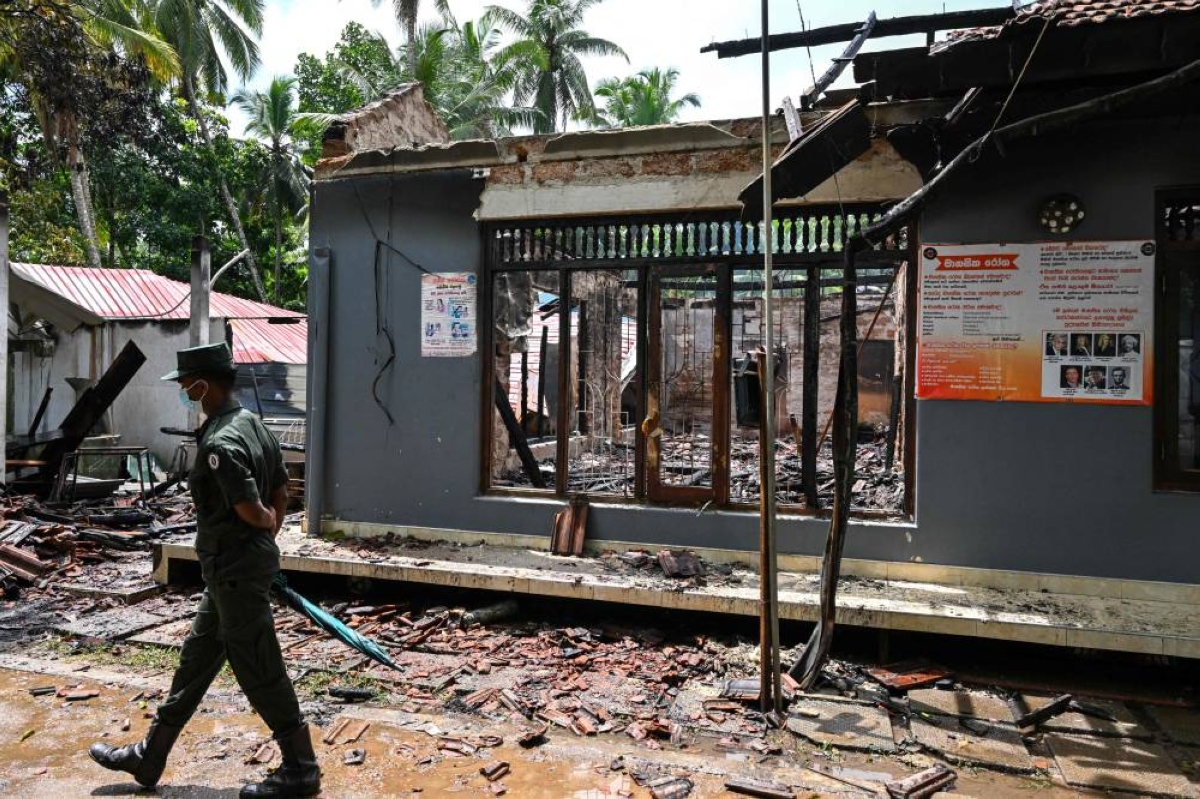
Sri Lanka on Monday raised prices of liquefied petroleum gas (LPG) by nearly a quarter, blaming higher global prices triggered by the Iran war.As well as gas, Sri Lanka also imports all of its oil and buys coal for electricity generation.Colombo has warned that a prolonged war in the Middle East could seriously undermine efforts to emerge from its economic meltdown of 2022.The increase in cooking gas prices on Monday is on top of an eight percent hike last month.A private company, which accounts for about a quarter of the domestic LPG market, raised its retail price by 23 percent to 5,700 rupees ($18.08), up from 4,630 rupees ($14.69).The state-owned Litro Gas, the main supplier of LPG used in cooking stoves, increased the price of a 12.5-kilogramme refill to 4,765 rupees ($15.62), up from 3,990 rupees -- an increase of 19.42 percent."We have supplies for the entire month of April," a Litro spokesman said, adding that higher global LPG prices and shipping costs had forced the latest revision.Last month, Sri Lanka raised both fuel and electricity prices by more than a third as US-Israeli strikes against Iran and retaliatory attacks drove up global energy prices.The Strait of Hormuz, a key waterway through which about 20 percent of global crude oil and gas exports pass in peacetime, has been effectively closed since the start of the conflict.

World
US satellite imagery firm announces blackout on Middle East war pics

US satellite imagery firm announces blackout on Middle East war pics

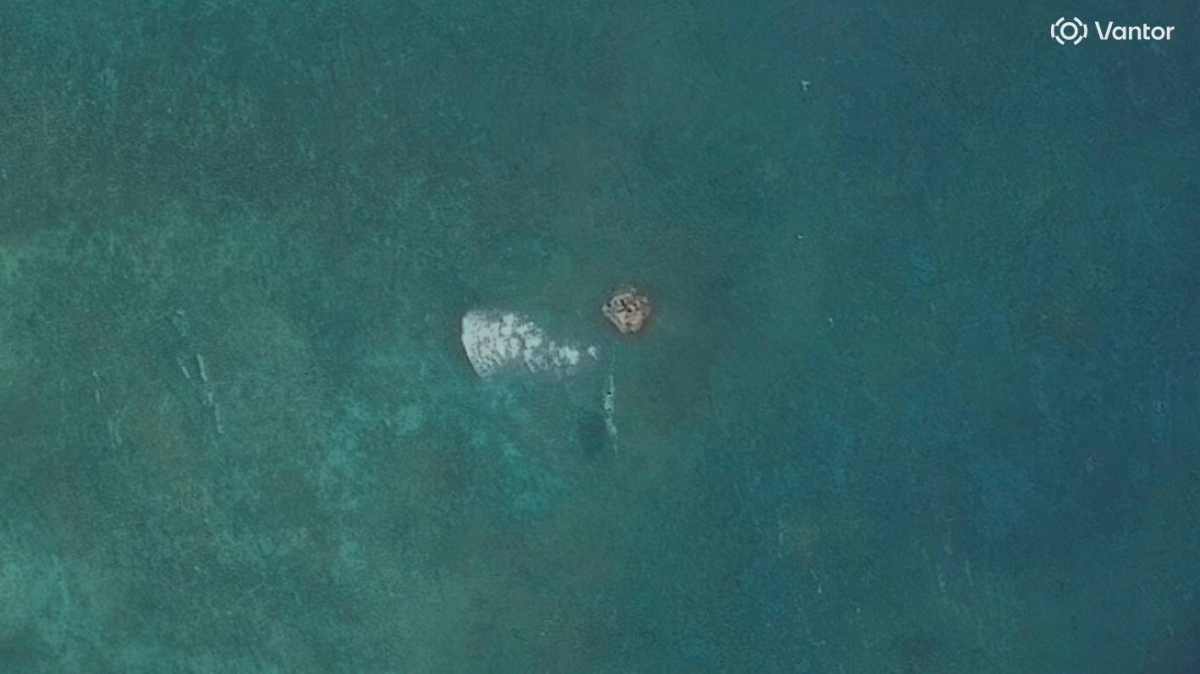
 US satellite imagery company Planet Labs said yesterday it will stop publishing high-resolution aerial pictures of the area involved in the Middle East war, following a request from President Donald Trump’s government. The US and Israel have conducted joint strikes against Iran since late February, prompting the Islamic Republic to retaliate with daily missile barrages targeting Israel and several neighbouring countries across the region. Planet said the US government had asked satellite imagery providers to implement an “indefinite withhold of imagery”. “Effective retroactively from March 9, 2026, Planet is moving to a managed access model, extending the publication delay for all new imagery within the designated AOI (area of interest), and releasing imagery on a case-by-case basis and for urgent, mission-critical requirements or in the public interest,” the company said in a message to clients received by AFP. This area was defined in a previous announcement as all of Iran and allied bases in the area, as well as in regional states and existing conflict zones. Planet, founded in 2010 by former Nasa scientists and whose images are widely used by media and researchers, said it expected the new policy to last until the end of the conflict. On March 10 the company said it would impose a two-week delay on access to its images of the Middle East because of the war, extending an initial 96-hour delay.Vantor, formerly Maxar, the other major provider of satellite imagery, had also announced major restrictions. Under normal circumstances, Planet’s images are available to its clients — including AFP — within hours of their satellites passing overhead, providing a valuable resource for businesses, researchers, and journalists, but also potentially for militaries seeking to target enemy military bases or radar sites. US law provides that any company headquartered in the US that commercially operates high-resolution satellite imagery may be subjected to restrictions for reasons of national security or foreign policy. In practice, satellite data providers, which operate under licence, put in place restriction protocols in order to avoid sanctions. 

World
Trump signs order to regulate college sports

Trump signs order to regulate college sports

 US President Donald Trump has signed an executive order aimed at regulating US collegiate sports in the wake of rule changes that allow student athletes to be compensated financially. The order, which is the second that Trump has issued on college sports, directs the National Collegiate Athletic Association (NCAA) to create rules that allow college athletes to play for “no more than a five-year period”. He also asked that rules be put in place that would allow them to transfer schools just once before they graduate without having to sit out a season.The changes are scheduled to go into effect on August 1, and institutions who allow athletes who don’t meet the criteria risk losing federal funding. Trump said that the loosening of “consistent rules or limits concerning eligibility, transfers, and pay-for-play schemes has created an out-of-control financial arms race... that is driving universities into debt”.Friday’s order came as the hugely popular NCAA basketball tournament reached its closing stages. The women’s semi-finals took place on Friday and the men’s Final Four semi-finals were scheduled for the weekend. In addition to demanding eligibility and transfer limits, it calls on governing bodies to ban “improper” financial arrangements and urges Congress to pass legislation to address the issues. It follows an order issued by Trump in July that sought to block some recruiting payments by third parties to college athletes in big-money sports like football and men’s basketball in order to preserve funds available for women’s and non-revenue sports. The president said last month that the rising value of name, image and likeness (NIL) contracts for players in high-visibility sports like football has created a burden for colleges that forces some to abandon other sports. Some of those sports – such as athletics, swimming and gymnastics – have long been pipelines for US Olympic teams. The NCAA long prohibited student athletes from accepting any compensation for use of their name, image and likeness, but after a 2021 Supreme Court ruling, the rules were changed so that some collegiate athletes could receive financial compensation. 

World
India-flagged LPG tanker crosses Strait of Hormuz

India-flagged LPG tanker crosses Strait of Hormuz

 An Indian-flagged tanker carrying LPG has safely passed through the Strait of Hormuz, India’s government said yesterday.Iran has effectively halted maritime traffic in the waterway, a critical route for global crude oil and gas, since US and Israeli strikes began on February 28. However, New Delhi, the world’s second-largest buyer of liquefied petroleum gas, has managed to secure passage for several Indian-flagged vessels over the past three weeks.The shipping ministry confirmed on Saturday that LPG carrier Green Sanvi had passed through the chokepoint. “Green Sanvi has safely transited the Strait of Hormuz, carrying 46,650 MT of LPG cargo with 25 seafarers on board,” a statement said, without giving further details of its final destination.It said 17 Indian-flagged vessels, carrying 460 Indian crew, “remain in the western Persian Gulf region”. Data from ship tracking company Marine Traffic’s website confirmed that the Green Sanvi was an Indian-flagged tanker.Public broadcaster All India Radio said it was the “seventh India-bound LPG tanker” to cross the Strait of Hormuz since the Middle East war began. India’s petroleum and natural gas ministry also said yesterday that Indian refiners were buying crude oil from Iran and other nations to help deal with the global energy crisis.“Amid Middle East supply disruptions, Indian refiners have secured their crude oil requirements, including from Iran,” it said in a post on X, adding that there was “no payment hurdle for Iranian crude imports”. That comes about two weeks after the US Treasury said it was temporarily lifting sanctions on Iranian oil already loaded onto vessels. The ministry also confirmed that an LPG vessel carrying around “44 TMT Iranian LPG” was berthed and “currently discharging” at the southwestern Indian port of Mangalore. India imports about 60% of its LPG needs and has been grappling with a gas crunch over the past month. The Indian government has imposed tighter controls over natural and cooking gas following import disruptions, prioritising supply towards households and limiting the amount available for industrial use. New Delhi maintains strong relations with Tehran but has steadily expanded cooperation with Israel in defence, agriculture, technology and cybersecurity. 

World
NASA releases first Artemis II Earth images

NASA releases first Artemis II Earth images

NASA published the first images of Earth taken by astronauts aboard Artemis II as the crew travels toward the Moon.The mission carries Christina Koch, Victor Glover, Reid Wiseman, and Jeremy Hansen, marking the first crewed journey toward lunar orbit since the Apollo program.The spacecraft Orion reached the halfway point, about 219,000 km from Earth, and continues toward a planned lunar orbit in the coming days.Launched from Florida earlier this week, the mission follows a free-return trajectory, looping around the Moon before heading back to Earth.Artemis II is a key step toward returning humans to the lunar surface and preparing for future missions to Mars.   Related Story

World
WHO urges urgent support for strained health systems in countries affected by Mideast conflict

WHO urges urgent support for strained health systems in countries affected by Mideast conflict

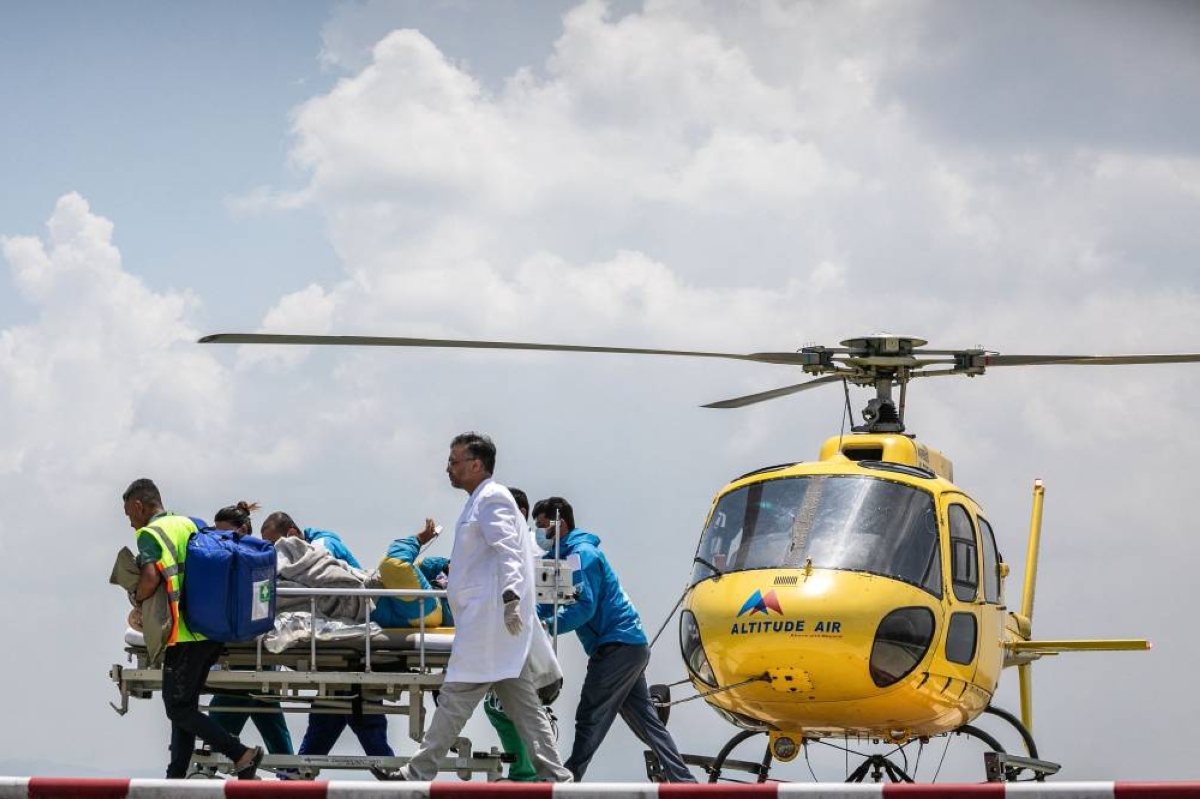
The World Health Organization (WHO) has called on donors to urgently support health systems in countries affected by the ongoing escalation in the Middle East, warning that services are under severe strain after weeks of intensified hostilities.WHO Director-General Tedros Adhanom Ghebreyesus said in a post on the X platform that health systems in Lebanon, Iran, Iraq, Syria and Jordan are facing mounting pressure amid rising casualties and displacement.The WHO has launched a $30.3 million flash appeal to sustain its health response across the five countries, covering the period from March to August 2026. The agency said the funding is critical to maintaining life-saving health services as hospitals grapple with surging trauma cases while struggling to continue routine care.According to WHO, the conflict has displaced more than 4.3 million people, with thousands killed and tens of thousands injured, placing unprecedented strain on already fragile health systems.The appeal will prioritize trauma and emergency care, ensure continuity of essential health services, and strengthen disease surveillance and early warning systems to prevent outbreaks. It will also support mass casualty management and enhance preparedness for chemical, biological, radiological and nuclear (CBRN) risks.