1. Home
  2. World

Category: World

World
US warns Ebola outbreak on scale of largest ‘is possible’

US warns Ebola outbreak on scale of largest ‘is possible’

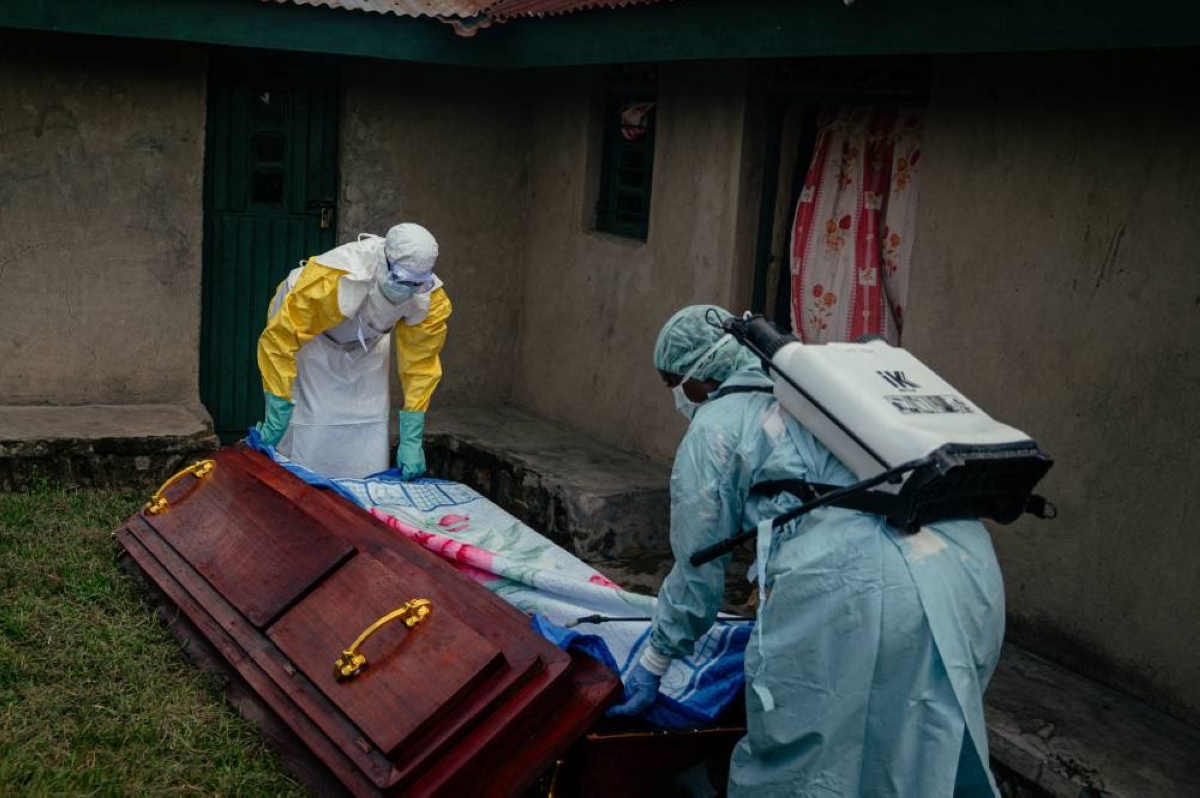
The US CDC urged strong public health interventions against the current Ebola outbreak, citing their models that show it could otherwise rival the scale of the 2014 West Africa outbreak. That eruption of the virus resulted in more than 28,000 cases and more than 11,000 deaths. “That scale is possible,” said Jason Asher, director of CDC’s Center for Forecasting and Outbreak Analytics, during a press briefing.The US projections from the Centers for Disease Control and Prevention were part of Morbidity and Mortality Weekly Report documents published Friday. The worst outcomes could be avoided if “a larger proportion of patients were identified, isolated, and treated,” the agency said in its reports. But “the public health response to control this outbreak will likely need to be of similar magnitude to the response for the 2014-2016 West Africa Ebola outbreak.” Asher emphasised the models were “not a forecast” but “a planning tool.” “They’re designed to support action, not to generate alarm.” They are based on four possible intervention scenarios ranging from poor (20%) to extremely high (95%) levels of isolation and treatment. If isolation levels are what the CDC would consider poor, with no other interventions there is a 65 percent chance cases will top 20,000 within three months, according to the agency.Satish Pillai, the CDC manager for the Ebola response, said “the total individuals that are infected and requiring isolation remains unclear.” But he said the situation on the ground would indicate levels of isolation are currently on the lower end. Also last week the World Health Organisation and the African Union’s public health agency said $518 million was needed across the next six months to combat the deadly Ebola outbreak in the DR Congo and its neighbors. The outbreak was declared on May 15 in northeastern DR Congo, but the rare Bundibugyo species of the Ebola virus is believed to have spread for some time beforehand. According to the WHO’s latest figures, there are 381 confirmed cases in the DRC, including 64 deaths. The outbreak has hit three provinces, with the epicenter in Ituri, which the Africa CDC says accounts for 90% of confirmed cases and 76% of confirmed deaths. Across the northeastern border in Uganda, there have been 16 confirmed cases, including one death. Seven Ebola patients in the DRC and two in Uganda have recovered. 

World
Indonesia’s Prabowo appoints new head of free meals agency

Indonesia’s Prabowo appoints new head of free meals agency

Newly appointed head of the National Nutrition Agency Nanik Deyang attends her inauguration ceremony at the Presidential Palace in Jakarta Monday. (AFP) Indonesian President Prabowo Subianto Monday appointed a new head of the agency responsible for implementing his flagship free meals programme, replacing the ‌previous office holder who was dismissed ​and arrested on graft charges ‌last week. Here are some key details ‌about the ⁠inauguration:At ‌the presidential palace, Prabowo ‌appointed Nanik Sudaryati Deyang as the new head of the ⁠National Nutrition Agency, replacing her predecessor Dadan Hindayana, who was arrested last week on allegations of corruption linked to the free meals programme.Indonesia's Attorney General's Office (AGO) also arrested two of the agency's deputy heads on charges of corruption leading to state losses.The three ​were accused of manipulating the selection of the foundations managing the programme's kitchens, and also artificially marking up the prices of ‌electric motorbikes, shoes, and ⁠televisions procured as ​part of the programme."Our concern is regarding ​budget efficiency so we will not burden the state budget, while at the same time maintaining the targets we have set," Nanik said after her inauguration.The efficiency measures include a moratorium on the establishment of new kitchens, "refocusing" the programme on new recipients and developing kitchens in remote areas through grants or CSR programmes from state firm or ‌private companies, rather than the ‌state budget, Nanik ⁠said.Prabowo also appointed two new deputy heads ⁠of the free meals ⁠agency: Agustina Arumsari, former deputy head of Financial and Development Supervisory Agency, and Major General Trenggono who has resigned from the Military.Prabowo also appointed the head of the Labour Party, Said Iqbal, as his new special adviser ​for manpower and labour welfare affairs.Prabowo's free meals programme, a key part of his election campaign launched in January 2025, has raised investor concerns about overspending and fiscal deficit risks.The programme has also sparked a public outcry about health and safety, with cases of food poisoning affecting at least 33,000 children as of April, ‌according to ​the Network for Education Watch, a non-government organisation.  Related Story

World
Korea should not give up on North's denuclearisation: president

Korea should not give up on North's denuclearisation: president

Republic of Korea should not give up on North Korea's denuclearisation, President Lee Jae-myung said Monday, as China's President Xi Jinping arrived in Pyongyang for a two-day visit.Lee made the remark at a press conference marking his first year in office, which he took after months of political upheaval triggered by his predecessor's martial law declaration.'We should not give up on the goal of denuclearisation because we cannot pursue nuclear armament ourselves,' he said.Xi makes the trip to the North after hosting US President Donald Trump and Russia's Vladimir Putin separately in Beijing recently and as North Korea's nuclear talks with Washington remain deadlocked.China, Washington's chief geopolitical rival, has been North Korea's main trading partner and a key source of diplomatic and economic support for the country, hit by multiple international sanctions.The White House said last month that Xi and Trump 'confirmed their shared goal to denuclearise North Korea' during their summit in Beijing.However, leader Kim Jong-un's powerful sister said on the eve of Xi's arrival that North Korea's nuclear weapons programme was 'the line of no retreat'.Lee said Seoul should not seek to acquire atomic weapons to counter Pyongyang's nuclear drive because of potential domino effects in the region.'If Republic of Korea were to pursue nuclear armament, do you really think Japan would stand still? Or Taiwan?' he said.'Everyone would end up going nuclear, and the entire region would turn into a nuclear flashpoint.'He said given Republic of Korea's heavy reliance on exports, they could not withstand severe global sanctions for attempting to go nuclear in violation of international rules.'We simply cannot afford to become like North Korea,' he said. 'We cannot survive under such sanctions.'On denuclearisation talks with Pyongyang, Lee said the country should first set 'limited short-term goals', such as securing a moratorium on further production of nuclear materials. 

World
UK PM Starmer set to ban ‘harmful’ social media for under-16s

UK PM Starmer set to ban ‘harmful’ social media for under-16s

Britain's Prime Minister Keir Starmer delivers a speech at London Tech Week in London Monday. (AFP) British Prime Minister Keir Starmer is set to announce a ban on "harmful" online platforms for children under 16 while maintaining ‌access to some safer forms of social ​media, the Times ‌newspaper reported Monday.Starmer, who is due ‌to ⁠make a ‌speech later Monday, ‌is said to have decided to proceed with restrictions ⁠after speaking to bereaved parents and considering evidence from Australia, which brought in a ban for under-16s last December.Asked about the report, a source at Downing Street said: "The prime minister is not afraid about taking on the tech companies ​and their bosses to protect young people."A source close to the matter said a formal ban was ‌unlikely to come this week.Worries over the impact of social media on mental health and online safety prompted Britain to hold a consultation on children's access to social media earlier this year, with curfews, time limits and curbs on addictive design features, all under consideration.France, ‌Denmark and Poland ‌are also considering ⁠tightening rules around social media use for children, while ⁠Greece in April ⁠announced it would ban access to those under the age of 15 from January 2027.Starmer is expected to focus on how the government can ensure technology brings positive change when he speaks later Monday, ​according to a statement released by his office on Sunday.Britain's online safety law already requires social media companies to take measures to protect children from illegal and harmful online content.Experts are divided on how effective a total ban would be, while a group of young people in London recently told Reuters they ‌were opposed ​to restrictions.  Related Story

World
US demands Iran give UN nuclear watchdog access: draft resolution

US demands Iran give UN nuclear watchdog access: draft resolution

The US is demanding Iran provide 'precise' information on its enriched uranium stockpile and give the UN nuclear agency access 'without delay', according to a draft resolution seen by AFP Monday.The draft resolution is expected to be submitted for a vote this week to the board of governors of the International Atomic Energy Agency (IAEA) that started meeting Monday.Last week, the IAEA in a confidential report reiterated that the lack of access to nuclear sites in Iran constituted a 'proliferation concern'.The draft resolution affirms that it is 'essential and urgent' that Iran 'without delay' provides the agency with 'precise information on nuclear material accountancy and safeguarded nuclear facilities in Iran'.Tehran must also 'grant the agency all access it requires to verify this information', it adds.To be passed, the draft resolution needs to be submitted and approved by the 35-member IAEA board of governors.In a press conference after opening the board of governors' meeting, IAEA head Rafael Grossi said he had 'sporadic contacts with the foreign minister (of Iran) and others, but basically the channel of communication is broken'.'Of course, when you have active shelling or bombing, inspections are not possible, but there are many things that can be done. And the important thing is this dialogue,' he said.The IAEA has not had access to some key nuclear facilities in Iran since Israel, joined by the US, launched a 12-day conflict in June 2025 that included strikes on nuclear sites.Nuclear facilities have also been hit in the latest war, which erupted on February 28. The IAEA has repeatedly urged access.Prior to US strikes in June 2025, the IAEA calculated that Iran possessed approximately 440 kilogrammes (970 pounds) of uranium enriched to 60 %.This is close to the 90 % needed to make a bomb and well above the 3.67-percent limit set by a now-defunct 2015 agreement with Iran.The fate of this stockpile is uncertain.Israel and the US have long accused Iran of wanting to build a nuclear weapon.Tehran has repeatedly denied having any military ambitions, insisting on its right to the technology for civilian purposes.On Saturday, Iran denounced as a 'tool of political pressure' the report by the IAEA expressing concern over its lack of access to Iranian nuclear sites. 

World
'So many of us!' Mexicans attempt world's biggest human wave

'So many of us!' Mexicans attempt world's biggest human wave

Just days before Mexico hosts the World Cup’s opening match, thousands of people packed the capital’s main thoroughfare Saturday in a bid to set a new record for the largest-ever human wave.The tradition of the wave was popularized in Mexico’s soccer stadiums during the 1986 World Cup to cheer on the home squad, and it has grown into a global phenomenon.Locals rallied to the cause early Saturday, donning national football jerseys and waving flags as they danced to loud music and stretched their arms and legs.Standing in the front row of a crowd stretching two kilometers (1.2 miles) down the iconic Paseo de la Reforma, a wide avenue that runs through the heart of Mexico City, Sally Aviles expressed confidence in a new record.“I say we’re going to break it. There are already so many of us, and we can do it!” said the 31-year-old content creator.“We’ll make it happen because we’ve always done it — at every game, in every stadium.”Joining the crowd were women dressed in lavish gowns and wearing skeleton masks in the style of “catrinas,” iconic figures tied to the country’s Day of the Dead holiday.Members of the La Sonora Santanera orchestra pumped out tropical rhythms while a master of ceremonies guided the mass movement.“Attention! We drop to our knees, bend and spring up as fast as we can. Hands way up!” she shouted.On cue, the front row stood with arms raised and then knelt, while those behind repeated the motion in succession until the entire crowd swayed like swells on an ocean.“I couldn’t miss out on being part of this wonderful event, on showing the world what Mexico is really like — the atmosphere, the love, the unity, the peace,” said Gloria Fragoso, 55, wearing a traditional headdress.Fragoso said Mexico is “more than ready” to welcome fans arriving for the World Cup, which is being co-hosted by Canada and the US.Gang violence has scarred Mexico for years, and authorities have vowed to boost security as the country hosts tournament matches in Mexico City, Monterrey and Guadalajara.Cultural authorities reported on social media later Saturday that the record for the largest human wave had been broken, without providing details.The Guinness World Records is to assess whether or not the record has been broken. 

World
US strikes Iranian sites after it targets Bahrain, Kuwait

US strikes Iranian sites after it targets Bahrain, Kuwait

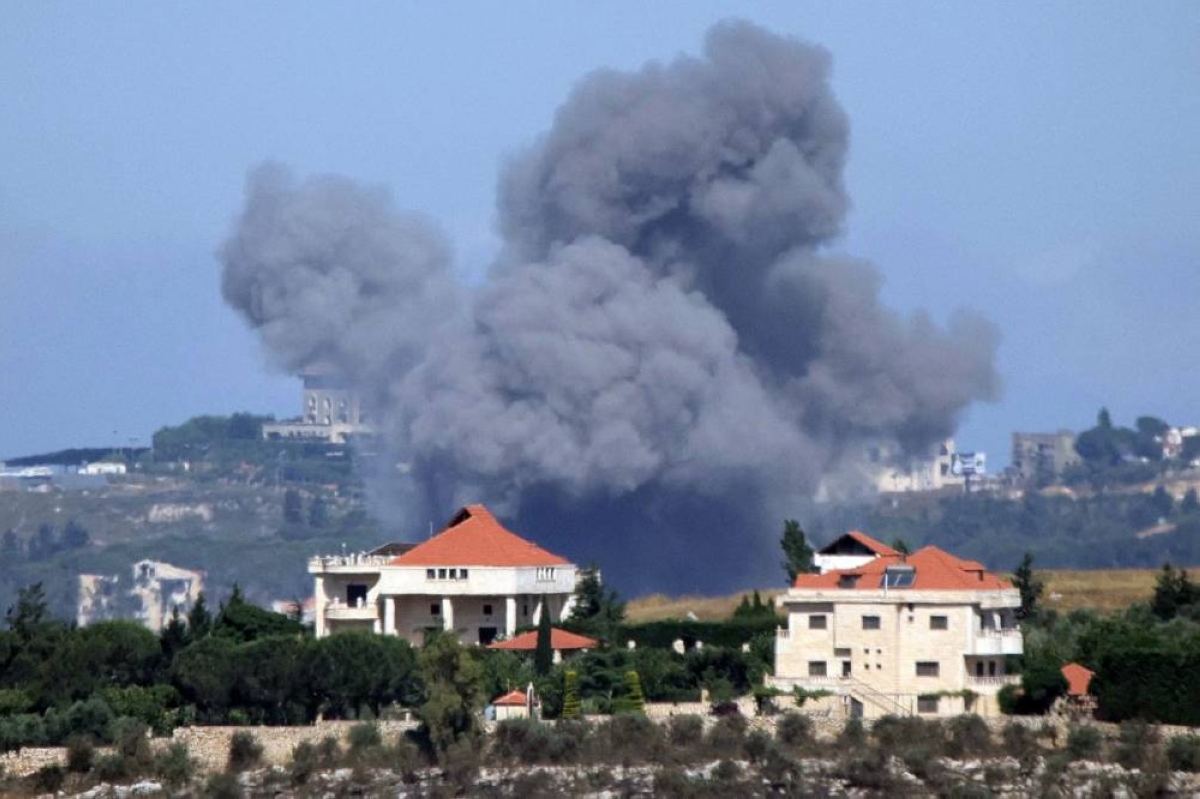
US forces struck Iranian coastal ‌radar sites yesterday after shooting down drones launched by Iran toward the Strait of Hormuz, the US military said, ​in the latest escalation complicating efforts to end ‌the war between the two countries. The US military believed the four Iranian drones were targeting regional maritime traffic, a ‌US official told Reuters. US Central Command said on X that ‌the US then struck Iran’s surveillance sites in Goruk and ‌Qeshm Island, both on the Strait of Hormuz. Iran’s foreign ministry said the US action broke an April 8 ceasefire, adding that such repeated violations showed Washington had no intention of reducing tensions. It warned that the United States would bear responsibility for the consequences of its “illegal actions”. Iran’s Revolutionary Guards said they had attacked US bases in Kuwait and Bahrain in retaliation for US strikes and fired at four tankers trying to cross the strait without its permission.Kuwait’s army said yesterday it engaged seven ballistic missiles that passed over residential areas, resulting in material damage but no casualties. In Bahrain, sirens sounded and residents were urged to seek shelter. Kuwait and Bahrain condemned the strikes. Iran later said it had hit US bases in both countries with ballistic missiles, but the U. military said six missiles were ​intercepted and a seventh did not reach its target. Iranian state media reported that Mohsin Naqvi, the interior minister of Pakistan, which has been mediating an end to the conflict, arrived in Tehran yesterday for talks with Iranian officials including Foreign Minister Abbas Araqchi. A Pakistani source said Naqvi would carry a message from Pakistan to the Iranian Supreme Leader Ayatollah Mojtaba Khamenei. US President Donald Trump is facing mounting domestic political pressure due to rising gas prices to bring the unpopular war to an end. He told NBC that while most of Iran’s drone and missile manufacturing facilities had been destroyed, the Iranians still had access to about a fifth of their missiles. “They have some missiles, they have some drones. I would say percentage wise, maybe 21%-22% of their missiles. It’s a lot of missiles, but it’s not what it was when we first attacked,” Trump told NBC News’ Meet the Press program, according to excerpts released ‌by the network on Friday. 

World
Dozens die of thirst in Sahara

Dozens die of thirst in Sahara

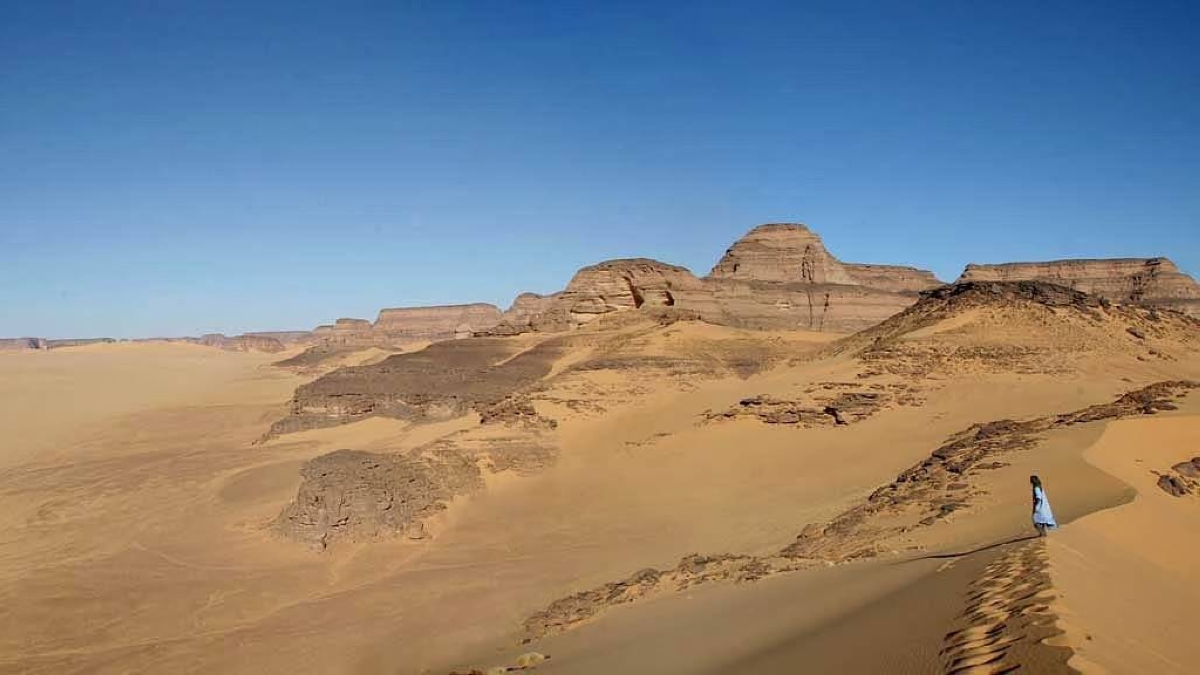
Nearly 50 people died of thirst after a truck carrying them from Mali to Niger broke down in the Sahara desert, local authorities said. The Nigerien nationals were returning home to their families when the truck carrying them got lost and later broke down in a remote area near the borders of Mali and Algeria, according to a statement published on Thursday by the governor of Niger’s Agadez region. “Stranded without water and unable to repair the vehicle... the travellers found themselves trapped in the middle of a hostile environment where extreme temperatures and the lack of supply points make survival extremely difficult,” the statement said. Two men walked dozens of kilometres to reach the nearest town and alert authorities about the incident.The bodies of 49 people were found under the truck and in the surrounding area by responders who buried victims in mass graves on site. The responders also provided assistance to another truck stranded for three days with more than 60 people on board after their car battery failed.Young Nigeriens travel to Mali for work at artisanal mining sites despite risks from militant groups. 

World
Ahead of midterm poll, Trump faces new Republican resistance

Ahead of midterm poll, Trump faces new Republican resistance

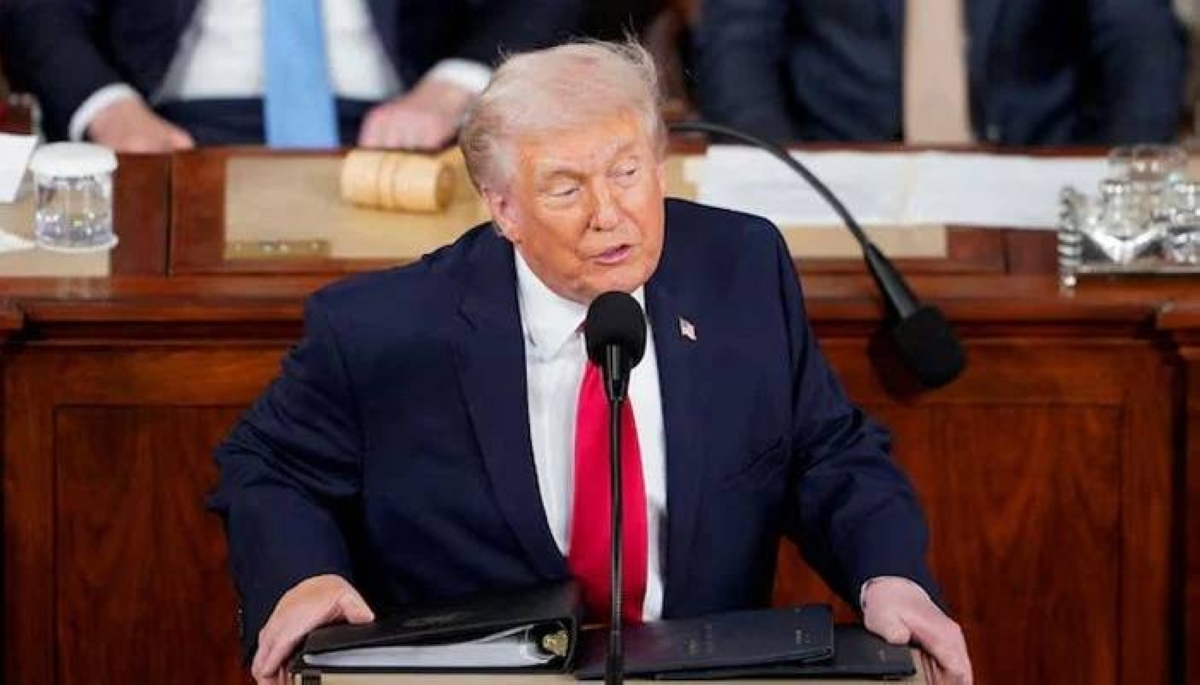
US President Donald Trump is facing widening opposition within his own party as Republican lawmakers in Congress, long reluctant to defy him, are showing a greater willingness to break ‌ranks with the US president. Just over the past week, multiple factions of Republicans in the Senate and House of Representatives have stepped forward to rebuke his ‌war against Iran, reject $1bn in funding tied to his White House ballroom, force a retreat on ‌his $1.8bn “anti-weaponisation” fund and block his legislation on domestic spying. The House ‌also defied Trump by passing a bill on ‌Thursday to provide aid to Ukraine and impose new sanctions on Russia, a measure that seems destined for a veto by the president. Republicans and Democrats are skeptical that Trump faces an actual revolt. But a growing coalition of Republicans is showing a willingness to break with him, including those Trump has personally helped to drum out of office, and could pose a threat to his most ambitious initiatives between now and Election Day. “I think what you’re seeing as you get closer to the election is that people are going to vote the way they think their constituents want them to,” said Republican Senator Thom Tillis, who announced his retirement from the Senate last year after opposing the president’s so-called One Big Beautiful Bill. Democrats largely dismissed the idea, saying there has been no evidence that the party at largeis willing to defy him on major issues. “The people that are breaking with him are ones that were put out by Trump,” said Senator John Fetterman, a Democrat who sometimes supports Trump-backed initiatives.“That actually demonstrates his absolute control over the party.” One White House ‌official, speaking on condition of anonymity, chalked Republican dissent up to “election-year politics.” “Not every single member will absorb the political cost on every single issue,” the person said. “While the media and Democrats attempt to sow nonexistent divisions, we look forward to continuing this close relationship to continue fulfilling President Trump’s agenda,” White House spokeswoman Abigail Jackson said. For years, Republican lawmakers have shown public fealty to Trump by backing controversial cabinet picks, showing little or no resistance to his executive orders and supporting his signature legislation despite misgivings about the ballooning deficit and cuts to the Medicaid healthcare program for low-income Americans. Lawmakers and aides say frustration and resentment have grown since Trump opposed the re-election bids of Republican Senators Bill Cassidy and John Cornyn and endangered the Republican agenda in Congress with a series of badly timed announcements. The inflection point came just before the US Memorial Day holiday, when Trump’s decision to oppose the re-election of Cornyn and the announcement of his “anti-weaponisation” fund forced Senate Republicans to abandon a $70bn immigration enforcement funding bill and leave town in a mood ‌of anger and frustration. “That was kind of like a ‌perfect storm of events,” a Senate Republican aide said. The Senate ultimately passed the immigration enforcement funding bill on Friday, and Republicans voted against a Democratic amendment to block the fund, even as some worry it could be used to pay January 6Capitol rioters and other Trump political allies. Trump seems determined to push to nominate loyalist Bill Pulte to replace Tulsi Gabbard as a temporary Director of National Intelligence, even though key Republicans have misgivings.Senator Mitch McConnell made it clear he would not back Pulte as a permanent DNI, saying the law required nominees with extensive experience. “No nominee who falls short of this requirement will earn my vote,” he said in a statement.Republican opposition on the floors of the House and Senate have been mostly symbolic to date. Three electorally vulnerable Senate Republicans — Susan Collins, Jon Husted and Dan Sullivan — joined an attempt by Democrats to ban Trump’s “anti-weaponisation” fund on Thursday in a measure that didn’t pass, along with two other Republican attempts to end the fund. “This whole exercise is to pass President Trump’s top agenda item to secure the border, fund ICE. What’s happening on the floor right now shows the solidarity that we have with the president,” Republican Senator Jim Banks, a Trump ally, said as lawmakers voted this week. Trump’s next big challenge is likely to be his expected nomination of his former attorney Todd Blance as permanent US attorney general, a move that could face an uphill battle in the Senate.The first stop would be the Senate Judiciary Committee, a panel that includes Trump retribution casualty Cornyn, who said his support would depend on how Blanche answers certain questions.“The ‌attorney general is not the president’s private lawyer,” Cornyn told reporters.“I want to make sure he understands the difference and is committed to making sure that the law is enforced.” 

World
Iranian, African journalists denied visas for World Cup

Iranian, African journalists denied visas for World Cup

Many Iranian and African journalists have been denied the necessary visas to cover the World Cup in the United States, according to the International Sports Press ‌Association. The association sent a letter on Friday to Bryan Swanson, ‌FIFA’s director of media relations, and Jochen Steinhoff, ‌the soccer governing body’s ‌head of media operations and ‌services.“We find ourselves facing a long-standing and unacceptable problem for us journalists: the denial of entry visas to regularly accredited colleagues,” association president Gianni Merlo wrote, per The Athletic. “There are many cases: Iranian colleagues, African colleagues, some of whom have been given single entries, so if their team goes to play in Canada or Mexico and they follow it, they can no longer return to the States. The cases are countless and, I repeat, ‌unacceptable. Politicians always say that sport unites and builds bridges between young people in countries in conflict, but in this case, we are going in the opposite direction. “We believe it is important to allow colleagues to attend the event and work, because their presence will be crucial to the image of sport and what itrepresents, especially in a country like the United States of America, where freedom of the press is a must. “I hope ‌FIFA can do ‌everything possible to secure visas. We’re already significantly behind schedule, and many colleagues have already lost the opportunity to use plane tickets booked on time, and they’ll also face significant additional expenses.” The 48-team FIFA World Cup begins Thursday and runs through July 19 with matches in the U.S., Mexico and Canada.Iran is competing in the tournament despite an ongoing armed conflict with the US. African teams in the field include Algeria, Cape Verde, DR Congo, Egypt, Ghana, Ivory Coast, Morocco, Senegal, South Africa and Tunisia. Several teams, including Ivory Coast and Tunisia, require multi-entry visas because they have games scheduled in the United States as well as in Canada or Mexico. As of yesterday’s ‌morning, the US State Department had not responded to a request for comment from The Athletic.