1. Home
  2. World

Category: World

World
Buffets, baristas, no briefings: journalists at US-Iran talks

Buffets, baristas, no briefings: journalists at US-Iran talks

They came from around the world: hundreds of journalists rushed to Islamabad's flagship convention centre — converted into a media hub by Pakistani authorities for landmark talks between the United States and Iran to end the war in the Middle East. But as negotiations began behind closed doors half a kilometre away, all the world's media could do was wait — and sip on an expertly brewed coffee while listening to live eastern folk music. Even the lattes had a tagline: "Brewed for Peace." Branding was a big part of the event, with Pakistan dubbing the process the "Islamabad Talks", and plastering a logo combining the Pakistani, US and Iranian flags all over the city.Early today, an overcast Islamabad felt like a ghost town, with almost no civilian traffic on its wide avenues. The few vehicles that moved were driven by armed, uniformed personnel who patrolled the city. Some journalists, accredited by the information ministry, were nonetheless held up for about an hour at a checkpoint outside the venue as a convoy of VIPs swept past. Inside, they found lavish surroundings, wedding-banquet style spreads of biryani, kebabs and gulab jamun, along with gourmet coffee blended from Brazilian and Ethiopian beans."We did the branding ('Brewed for Peace') just for the day," one person manning the stall said. Outside the hall, musicians played folk songs on a small stage. "I'm a professional musician, and also teach music," Amir Hussain Khan, a sitar player, told AFP. Staff had reserved seating with a clear view of the massive main stage for US media, directing correspondents from other outlets elsewhere. Iranian media went to the opposite side of the hall. Updates did not begin to arrive until after about 2pm, hours after US Vice President JD Vance touched down in the capital. On the large screen dominating the cavernous Jinnah Convention Centre, state television aired footage of his arrival and reception by Pakistani officials, prominently including Army Chief Field Marshal Asim Munir. When updates did come, they arrived not from media briefings — as would be the norm at an event of this scale — but from press statements released via WhatsApp. The foreign ministry said a "high-powered" US delegation, led by Vance and including Special Envoy Steve Witkoff and Jared Kushner, had been received by Foreign Minister Ishaq Dar, who commended Washington's "commitment to achieving lasting regional and global peace". Hours later, Pakistan's government said Prime Minister Shehbaz Sharif had met Vance, expressing hope the talks would serve as "a stepping stone toward durable peace in the region". Not exactly the kind of gripping, headline-grabbing quotes many of the journalists in the hall had flown thousands of miles for. The convention centre offered high-speed wireless internet that AFP clocked at more than 150 megabits per second, far above Pakistan's national average of 25 Mbps, according to Speedtest.net figures from February 2026. The gesture was not lost on reporters. "They say they have facilitated the media. No doubt they have given 5G internet speeds," said journalist Nadir Guramani. "But media teams deputed inside Jinnah Convention Centre do not know what's happening outside." Security measures added to the surreal atmosphere. An AFP journalist was told the coffee could not be taken into the main hall. "Foreign media is here, and they are watching," a guard said cryptically. By sunset, the "Islamabad Talks" had produced press releases, a memorable food spread and impressively fast internet in a country riven with tech challenges. Whether they produced anything more substantive remained, for those inside the hall, just beyond their reach.  Related Story

World
Saudi finance minister in Pakistan to show ‘economic support’

Saudi finance minister in Pakistan to show ‘economic support’

Prime Minister Shehbaz Sharif and Pakistan's Chief of Army Staff (COAS) Asim Munir during the meeting in Islamabad with Saudi Arabia’s Finance Minister Mohammed al-Jadaan. – Reuters The Saudi finance minister was in Islamabad Saturday in a show of "economic support", a source familiar with the matter told AFP.Saudi Minister Mohammed al-Jadaan had met with Pakistan’s Prime Minister Shehbaz Sharif a day earlier, according to the premier's office, which said Islamabad was committed to expanding co-operation "in trade, investment, and economic development".Jadaan's visit comes as Islamabad hosts US-Iran talks aimed at ending the Middle East war, which he is not attending.The trip was the latest sign of new alliances emerging in the Gulf amid the ongoing rift between the region's two powerhouses."He is there as a show of economic support for Pakistan," the source familiar with the matter said.Cash-strapped Pakistan recently said it would return more than $3bn in loans to the UAE that Abu Dhabi had been rolling over since 2018.Islamabad is dependent on International Monetary Fund (IMF) bailouts and loans from friendly countries such as Saudi Arabia and the UAE to service its huge debt, which swallows up half of its annual revenues.Pakistan, along with Saudi Arabia, Egypt and Turkiye, has been engaged in efforts to find an off-ramp to the US-Israeli war on Iran, which has seen the Gulf bear the brunt of Tehran's retaliatory strikes.The UAE has sustained more Iranian attacks than any other country.It has also shown a more hawkish posture towards Tehran, warning against solutions that stop short of addressing its full range of threats and securing freedom of navigation.Last month, Pakistan, Saudi Arabia, Egypt and Turkiye held talks about trying to end the war in the Middle East.The kingdom enjoys close military ties with nuclear-armed Pakistan, with which it signed a mutual defence pact last year.Saudi state media reported Saturday that Pakistani fighter jets had landed in the kingdom under the auspices of the defence pact.  Related Story

World
Five-star hotel becomes unlikely site for US-Iran talks

Five-star hotel becomes unlikely site for US-Iran talks

A security officer stands guard outside the media centre near the road leading to Serena Hotel in Islamabad. – Reuters The luxury five-star Serena Hotel in Pakistan's capital has become the unlikely venue for peace talks aimed at ending the Iran war, cementing its status as one of Islamabad's most heavily fortified buildings.The city is under unprecedented security ahead of the talks, with shops and offices shut for two days ahead of the arrival of US Vice-President JD Vance, who is leading the American delegation, and senior Iranian officials. An empty road in front of the Serena Hotel in Islamabad. – Reuters Thousands of security personnel, including paramilitary and army troops, have set up checkpoints and blockades across the capital, cordoning off the Red Zone where government offices and embassies are located.

World
US, Iran in make-or-break peace talks in Pakistan

US, Iran in make-or-break peace talks in Pakistan

Pakistan's Prime Minister Shehbaz Sharif shakes hands with US Vice President JD Vance during their meeting in Islamabad. (Reuters) US Iran peace talks in Islamabad American and Iranian officials are holding face-to-face talks in Pakistan today, the most significant since the 1979 Islamic revolution as the foes try to end a war that plunged the Middle East into violence and rocked the world economy.The trilateral direct negotiations were taking place with host Pakistan in capital Islamabad, a senior White House official said, a departure from recent practice where both sides held talks via a mediator while seated in separate rooms. Pakistan's Prime Minister Shehbaz Sharif meets with Iranian Parliament

World
Pakistan sends fighter jets to Saudi Arabia

Pakistan sends fighter jets to Saudi Arabia

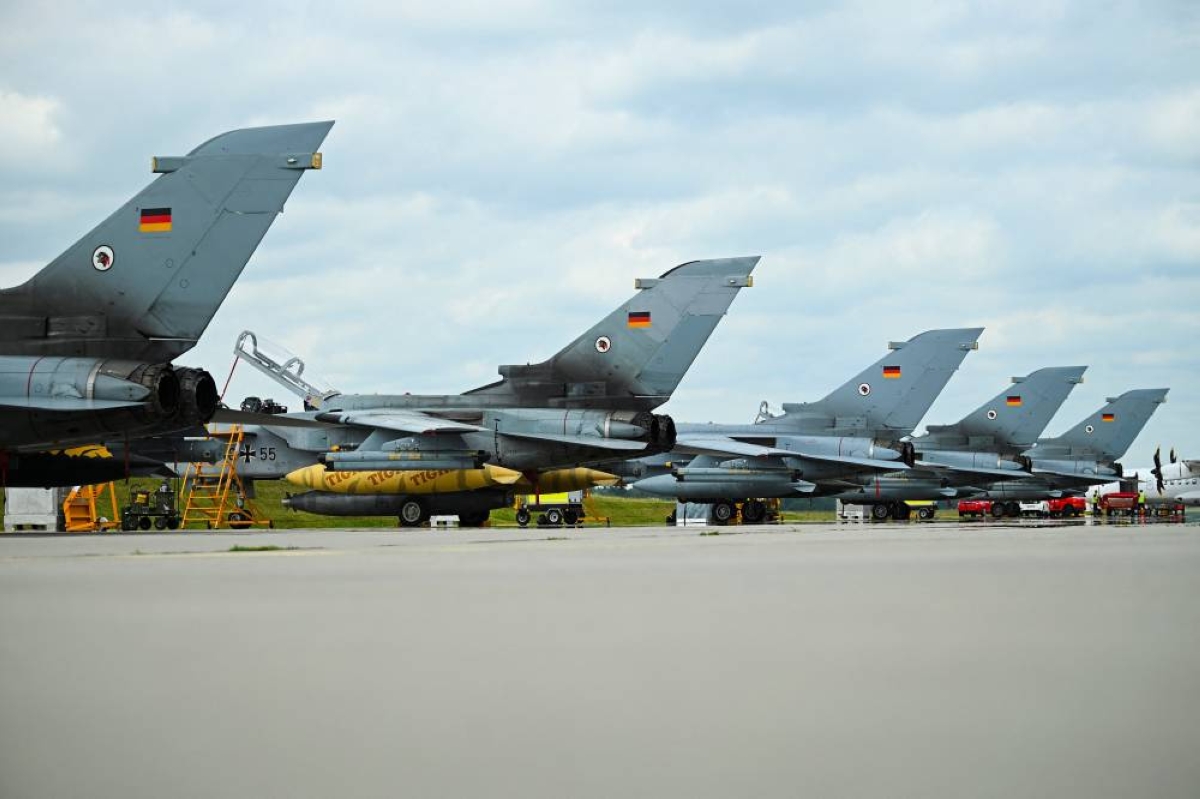
Pakistan has sent fighter jets and ‌other military ⁠forces to ‌Saudi Arabia to boost security ‌under a defence pact between the two countries, the Saudi defence ⁠ministry said today, as Islamabad hosted talks aimed at ending the Iran war.Saudi Arabia's defence ministry said in a statement that Pakistani fighter jets and support aircraft had arrived at the King Abdulaziz Air Base in the country's eastern province.It said the Pakistani deployment aimed to ​strengthen joint defence co-operation and support regional and international security and stability.The planes were sent after Iranian strikes hit key energy infrastructure and ‌killed a Saudi national, ⁠three sources, including a ​senior Pakistani government official, told Reuters.They were "not there ​to attack anyone", said the Pakistani official, who spoke on condition of anonymity.An Iranian strike on Saudi Arabia's sprawling Jubail petrochemicals complex on Monday had raised concerns in Pakistan that the Gulf kingdom might retaliate, potentially jeopardising the Iran peace talks, the three sources said.The Pakistani deployment aimed to reassure Riyadh that Islamabad would help defend the kingdom from any further attacks, the sources said.The ‌Saudi government media office ‌and Pakistan's military did not ⁠respond to requests for comment.Riyadh and Islamabad ⁠signed a mutual defence ⁠pactin September 2025, committing both sides to treat any aggression against either country as an attack on both. That significantly deepened a decades-old security partnership.Pakistan has long provided military support to the kingdom, including training and advisory deployments, while Saudi Arabia has repeatedly ​stepped in to support Pakistan financially during periods of economic stress.Saudi Arabia's finance minister Mohammed Al-Jadaan was in Pakistan on Friday to demonstrate economic support for the country, a source familiar with the situation said.In 2018, Riyadh announced a $6bn support package for Pakistan, including a $3bn deposit at the central bank and $3bn worth of oil supplies on deferred ‌payment.  Related Story

World
Pakistan, Italy PMs talk recent Mideast developments by phone

Pakistan, Italy PMs talk recent Mideast developments by phone

Pakistani Prime Minister Shehbaz Sharif on Friday spoke by phone with Italian counterpart Giorgia Meloni to discuss the latest regional developments. The Pakistani News Agency reported that both sides expressed their deep concern over the ongoing hostilities in Lebanon and agreed on the need for coordinated international efforts to prevent further escalation and streamline lasting peace in the region. During the call, the Italian Prime Minister commended Pakistan's successful diplomatic efforts to achieve a ceasefire between the United States and Iran and to resume dialogue. For his part, Shehbaz Sharif affirmed Pakistan's commitment to achieving peace and stability in the region, welcoming the joint statement issued by prominent European and international leaders in support of Pakistan's peace efforts. The Pakistani capital, Islamabad, is scheduled to host delegations from the United States and Iran on Friday for negotiations aimed at reaching a final agreement.

World
US Vice President JD Vance expects positive Iran talks ahead of Islamabad negotiations

US Vice President JD Vance expects positive Iran talks ahead of Islamabad negotiations

US Vice President JD Vance said on Friday he expects upcoming negotiations with Iran in Islamabad to be positive, as he departed Washington for Pakistan.“We’re looking forward to the negotiation. I think it’s going to be positive,” Vance told reporters. He said the US is open to engaging in good faith, adding, “If the Iranians are willing to negotiate in good faith, we’re certainly willing to extend the open hand.” Vance, however, warned that Washington would not respond favourably if Tehran fails to engage seriously, stating that if Iran attempts to “play us,” the negotiating team “is not that receptive.”

World
All eyes on Islamabad as US, Iran set for talks

All eyes on Islamabad as US, Iran set for talks

The world's attention will turn Friday to Islamabad, Pakistan, which will host the first public direct talks between the United States and Iran in many years.These talks are described as difficult and crucial due to the tense atmosphere, but according to observers, they represent a historic opportunity that could change the entire map of the Middle East, or could return the region to a spiral of tensions and conflicts if they fail.Delegations are expected to arrive in Islamabad Friday before negotiators formally sit down at the negotiating table Saturday, amid reports confirming that the 30-member US negotiating team has already arrived in Islamabad to review security arrangements.The White House stated that Vice President J.D. Vance would lead the American delegation in these negotiations, along with envoys Steve Wittkopf and Jared Kushner, while Tehran announced that its Foreign Minister Abbas Araghchi and Parliament Speaker Bagher Ghalibaf would lead the discussions in Islamabad, in the presence of mediators and several other figures.These negotiations come in the wake of a two-week ceasefire agreement between Washington and Tehran, brokered by Pakistan, which was announced early Wednesday. The truce, which averted imminent US strikes on Iran, was based on a ten-point Iranian proposal that Washington accepted as a general framework for talks.This round of negotiations will also take place in the wake of an unprecedented military escalation between the two sides, marked by mutual threats and attacks that have directly affected the security of the region and global shipping traffic.Despite the announcement of a temporary truce, events on the ground quickly deviated from the diplomatic messages. Within hours, the agreement was severely undermined, as Israeli warplanes launched what was described as the largest wave of airstrikes on Beirut, the Bekaa Valley, and southern Lebanon since the start of the conflict, targeting nearly 100 sites within minutes, resulting in the death and injury of hundreds of unarmed civilians. Hezbollah responded by targeting the Manara settlement in northern Israel with missiles, while Tehran threatened to retaliate against the Israeli attacks, signaling the collapse of the truce. Tehran declared that the issue of reopening the Strait of Hormuz would depend on full compliance with the ceasefire, including in Lebanon.Pakistan has condemned in the strongest terms the ongoing Israeli aggression against Lebanon, stressing that Israeli actions undermine international efforts to establish peace and stability in the region and constitute a flagrant violation of international law and basic humanitarian principles. Pakistan urged the international community to take urgent and concrete steps to end the Israeli aggression against Lebanon.While the White House confirmed that the ceasefire was limited to direct hostilities between the United States and Iran, and that Lebanon was not included, Iranian officials rejected this interpretation, stressing that a partial ceasefire was unacceptable, and Tehran threatened that it would withdraw from the ceasefire agreement if Israeli attacks on Lebanon continued.Iran had previously rejected a 15-point US list of demands, stating that it imposed broad restrictions on its nuclear program, missile capabilities, and regional alliances. Instead, it presented a 10-point counter-proposal emphasizing its sovereignty and calling for a broad de-escalation.The Iranian proposal also called for recognition of its right to uranium enrichment, the removal of primary and secondary US sanctions, the termination of UN resolutions, compensation for war damages, and a cessation of hostilities in all fronts, including Lebanon.On Wednesday, Qatar welcomed the ceasefire announcement between the United States and Iran, considering it an initial step towards de-escalation and stressing the urgent need to build upon it to prevent the spread of tension in the region.The Ministry of Foreign Affairs expressed, in a statement, Qatar's appreciation for the efforts of Pakistan, particularly those of Prime Minister Shahbaz Sharif and Chief of Army Staff, Field Marshal Asim Munir as well as all parties involved in mediation and good offices that contributed to achieving a ceasefire. The ministry emphasised the importance of full adherence to the ceasefire declaration to ensure the consolidation of the truce and create the conditions for dialogue.The ministry also stressed the necessity for Iran to immediately cease all hostile acts and practices that undermine regional stability and respect for the sovereignty of states, thereby preventing the recurrence of such violations. Furthermore, the Ministry emphasised the importance of guaranteeing the security of maritime routes and the freedom of navigation and international trade in accordance with international law, which contributes to maintaining regional stability and global supply chains.Despite the diplomatic momentum surrounding the Islamabad negotiations, observers warn that these talks face significant obstacles, as fundamental disagreements persist between the two sides. They consider this a historic opportunity to defuse a crisis that threatened to destabilise the Middle East and the global economy. They believe that the wide gap between Tehran's demands, as outlined in its ten-point plan, and Washington's strategic objectives makes reaching a final and comprehensive agreement within the two-week timeframe an extremely difficult task.They also noted that the success of this round of negotiations will depend heavily on the Pakistani mediator's ability to bridge the gaps and on both sides' willingness to make potentially difficult concessions to avoid sliding into a full-blown military confrontation.Pakistan declared an official holiday to facilitate the US-Iranian talks, and imposed strict security measures in the capital, Islamabad, deploying hundreds of police and paramilitary forces to secure the city before the two sides sit down at the negotiating table, awaiting results that could reshape the landscape in the Middle East and the world as a whole, whether towards complete detente or further complications.These are fears that observers and analysts can hardly deny, describing the Friday and Saturday round as a "decisive round" due to its profound and sensitive impact on the geopolitical and security situation in the region, and on the global economy, which is severely affected by the energy supply crisis caused by Iran's halting of navigation in the Strait of Hormuz.   Related Story

World
Turkish ship docks for Somalia’s first offshore oil drilling

Turkish ship docks for Somalia’s first offshore oil drilling

Turkish drilling vessel Cagri Bey, which is set to conduct Turkiye's first deep-sea drilling operation abroad, docks in the Indian Ocean near the Mogadishu sea port in Somalia, yesterday. (Reuters) A Turkish drilling ship docked at the port of Mogadishu yesterday ahead of Somalia's first offshore oil drilling project, the two countries announced.A hydrocarbon development deal signed in 2024 granted Turkiye's state-owned energy company the right to explore three offshore blocks of around 5,000 square kilometres each.In late 2024, another Turkish vessel carried out seismic surveys in the three blocks to identify drilling sites.The Cagri Bey, featuring a red bow emblazoned with a white star and crescent and topped by a drilling derrick, arrived in Somali waters Thursday and docked in the capital's port yesterday."It docked this (Friday) morning... the ship is very big, we have never seen anything like this at the port before," said Abshir Yare, a port employee.The vessel will carry out "Somalia's first-ever offshore drilling operations", the African nation's state news agency Sonna reported Thursday.It will also conduct Turkiye's "first overseas deep-sea drilling" operations outside its own waters, Turkish Energy Minister Alparslan Bayraktar said on X.Bayraktar was due to attend a ceremony at the Mogadishu port yesterday alongside Somali President Hassan Sheikh Mohamud, according to Sonna.Turkiye is one of Somalia's main military and economic partners, with Ankara inaugurating its largest overseas base in Mogadishu in 2017. 

World
Chinese, Taiwanese will unite, Xi tells Taiwan opposition leader

Chinese, Taiwanese will unite, Xi tells Taiwan opposition leader

Kuomintang Chairperson Cheng Li-wun (left) shaking hands with Chinese President Xi Jinping at Great Hall of the People in Beijing, yesterday.(AFP) China's President Xi Jinping met Taiwan's opposition party leader Cheng Li-wun in Beijing yesterday, telling the visiting delegation he had "full confidence" that Taiwanese and Chinese people would be united.Kuomintang (KMT) chairwoman Cheng is the party's first leader to visit China in a decade, but her trip has sparked debate in Taiwan with critics accusing her of being too pro-Beijing.China severed high-level contact with Taiwan in 2016 after Tsai Ing-wen of the Democratic Progressive Party (DPP) won the presidency and rejected Beijing's claims that the self-ruled island is part of its territory.Xi told Cheng as the two met yesterday that "the general trend of compatriots on both sides of the Strait getting closer, edging nearer and becoming united will not change"."This is an inevitable part of history. We have full confidence in this," Xi said during the talks carried by Taiwanese media.He also said China was willing to strengthen dialogue with groups in Taiwan, including the KMT, on the "common political foundation of... opposing Taiwan independence".The KMT supports closer relations with China, which claims Taiwan is part of its territory and has threatened to use force to seize it.Cheng echoed Xi's stance at a press conference after their meeting, stressing the need for younger generations to understand "what challenges we face at this stage" and "how, by adhering to the 1992 Consensus and opposing Taiwan independence, we can avoid war".The so-called consensus suggests there is "one China" without specifying which is its rightful representative.Earlier, she told Xi that the Taiwan Strait would "no longer be a focal point of potential conflict" and "both sides should transcend political confrontation".She also said Xi had responded "positively" to her proposal that the sides work toward Taiwan participating in international organisations such as Interpol and regional trade agreements.A spokesman for Taiwan's ruling DPP said China should respect Taiwan's "commitment to freedom and democracy, rather than interfering in the choices of the Taiwanese people through division and inducement"."Differences between the two sides must be handled through peaceful and equal means, rather than by using suppression and intimidation," spokesman Lee Kuen-cheng said.Beijing has ramped up military pressure around Taiwan in recent years, conducting near-daily deployments of fighter jets and warships near the island and regular large-scale military drills.Taiwanese lawmakers have been at loggerheads over the government's plan to spend NT$1.25tn ($39bn) on defence, which has been stalled for months in parliament, controlled by opposition parties including the KMT.Cheng's trip comes a month before US President Donald Trump is scheduled to visit Beijing for a summit with Xi.The US has been piling pressure on Taiwanese opposition lawmakers to back a proposal for defence purchases, including US weapons, to deter a potential Chinese attack.Cheng has railed against the government's proposal, insisting "Taiwan isn't an ATM" and instead backing a KMT plan to allocate NT$380bn ($12bn) for US weapons with the option for more acquisitions.While KMT party members regularly fly to China for exchanges with officials, its last leader to visit was Hung Hsiu-chu in 2016.Cross-strait relations have worsened in particular since the election of Tsai's successor, Lai Ching-te, who Beijing considers a separatist.Lai said in a Facebook post yesterday that "China's... military threats in and around the Taiwan Strait and the island chain have severely undermined regional peace and stability".Cheng landed in Shanghai on Tuesday evening, saying shortly after her arrival that "the two sides of the Taiwan Strait are not doomed to war, as the international community has feared".