1. Home
  2. World

Category: World

World
North Korea says Xi’s visit produced ‘far-reaching blueprint’ for ties

North Korea says Xi’s visit produced ‘far-reaching blueprint’ for ties

The leaders of North Korea and China adopted a "far-reaching blueprint" for bilateral ties during Xi Jinping's recent visit to Pyongyang, the state-run Korean Central News Agency (KCNA) said Wednesday.China's president made a rare visit to diplomatically isolated North Korea on Monday after hosting a series of world leaders, including US President Donald Trump and Russian leader Vladimir Putin, in Beijing.The trip also came at a time of unusually warm relations between North Korea and Russia, where Pyongyang has sent soldiers and munitions to assist Moscow's invasion of Ukraine.Kim and Xi "expressed satisfaction and deep emotion over the fact that they provided a far-reaching blueprint for the development of the relations", KCNA reported.During the two-day trip, "the countries further deepened the revolutionary friendship and close comradely relationship and affirmed their steadfast will to develop the traditional DPRK-China friendly ties into a model of the most powerful and strategic relations", it added.Xi and Kim toured the Central Cadres Training School of the Workers' Party, where they discussed the training of party officials and planted a commemorative tree, before visiting the Friendship Tower memorial honouring Chinese soldiers who fought in the Korean War.Xi was afforded a lavish welcome on the trip, which he took with his wife and other senior officials.Afterwards, he thanked Kim in a letter, saying the leaders had "made an in-depth exchange of views on the issues of mutual interest and achieved a series of important common understanding", according to KCNA.The talks "showed the firm determination of both sides to add lustre to the traditional friendship, promote development and prosperity together and defend peace and stability in the region and the rest of the world", Xi reportedly wrote.On Tuesday, China's state-run Xinhua news agency reported Xi as saying he had reached "an important consensus with Kim on developing China-DPRK relations in the new era", using North Korea's official acronym.Xi pushed to strengthen diplomatic, law enforcement and military ties, according to Beijing's state media.By sharing information in the military sector, China appears to want to "directly assess technological changes within the North Korean military and the status of Russian technology transfer", said Hong Min, an analyst at the Korea Institute for National Unification.China may also hope to "collect intelligence for the purpose of monitoring trends in pro-Russian and pro-Chinese human networks within the North Korean military", he added.Nuclear silenceXi's trip came after last month's talks with Trump, during which the White House said the leaders "confirmed their shared goal to denuclearise North Korea".But official media reports from both China and North Korea made no mention of denuclearisation in their coverage of the Xi-Kim summit.Analysts said that suggested Beijing was tacitly accepting Pyongyang's status as a nuclear-armed state.Kim has repeatedly vowed never to give up his nuclear arsenal, and his powerful sister said before Xi's visit that the programme was Pyongyang's "line of no retreat".Despite being historically highly reliant on political and economic support from China, Kim has drawn North Korea closer to Russia in recent years.He has boosted an alliance with Putin by sending troops to fight alongside Russian forces against Ukraine.Still, Beijing remains an economic anchor for North Korea, whose economy has been hobbled for years by international sanctions over its nuclear programme.China accounted for $2.6bn of North Korea's foreign trade — nearly 98% of the total — in 2024, according to Republic of Korea's Ministry of Economy and Finance.  Related Story
World
Trump threatens to attack Iran ‘very hard’

Trump threatens to attack Iran ‘very hard’

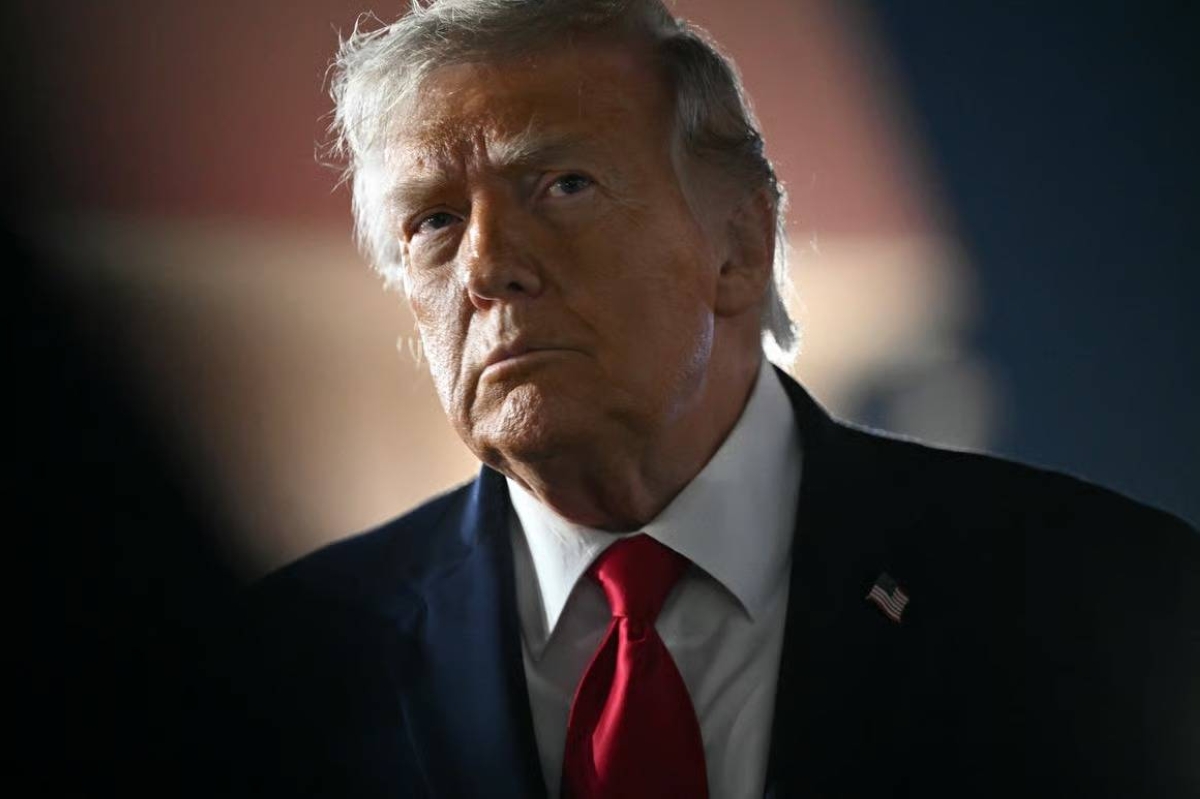
President Donald Trump speaks at the White House Wednesday. (Reuters) President Donald Trump Wednesday ‌said the United States would strike Iran again if no peace deal is secured, ​threatening further escalation following one of ‌the most significant exchanges of hostilities in two months. "We're going to be attacking ‌them, attacking them ⁠very hard," Trump told reporters ‌at the White House, saying the ‌strikes were coming.The US and Iran have traded fire several times since a ⁠tentative ceasefire took hold in early April, even as negotiators have sought an end to the three-month-old war. Trump has repeatedly said a deal is close, though there has been no sign of a breakthrough. In the latest such incident, the US military targeted air defenses and radar sites around the Strait of Hormuz after a US attack helicopter was downed near the strategic waterway. Iran responded with missile and drone attacks on US bases in Jordan, Kuwait and Bahrain. ​A US official said there was no significant damage.Iran said the US had violated international law by striking reservoirs that supplied drinking water to 10 villages. "This is not collateral damage — it is a calculated war ‌crime and a flagrant violation of ⁠human rights," Foreign Ministry spokesperson ​Esmaeil Baghei said.Trump, who has threatened before to destroy Iran's civilian infrastructure, did ​not say whether the coming strikes would target power plants and bridges.The head of the Iranian parliament's national security committee, Ebrahim Azizi, warned in response that the "war won't be limited to the region."Despite the belligerent language from both sides, there were signs of continuing diplomatic efforts.A delegation from Qatar, which has been mediating between the US and Iran, landed in Tehran Wednesday to hold talks on the latest developments, Iranian media reported.The war has killed thousands and disrupted roughly one-fifth of the world's supply of oil and natural gas, sending prices sharply higher. Iran has blocked traffic through the Strait ‌of Hormuz, while the US has maintained ‌its own blockade on Iranian ports.Oil prices ⁠rose nearly $3 following Trump's threat of escalation, to $94 per barrel. Trump said vessels carrying 100mn barrels ⁠of oil have defied Iran to travel ⁠through the strait as part of a secret military mission. He said oil prices would be much higher without the effort.Separately, the US military said it disabled an oil tanker transporting Iranian crude in the Gulf of Oman on Tuesday for a second consecutive day.Fighting in a parallel war between Israel and Iran-backed Hezbollah militants in Lebanon has continued. Israeli airstrikes in southern Lebanon killed ​at least 13 people Wednesday, Lebanese security sources said, while Hezbollah claimed fresh attacks against Israeli forces. Tehran's demands include an end to Israel's attacks in Lebanon, the lifting of sanctions on Iran, the release of billions of dollars in frozen assets, and recognition of its control of the strait.Trump says Iran must end its restrictions on shipping through Hormuz. He also says any peace deal must ensure Iran cannot develop a nuclear weapon.Iran denies any such ambition. The UN nuclear watchdog's 35-nation Board of Governors passed a US-backed resolution Wednesday telling Iran to declare its remaining enriched ‌uranium stocks and let ​inspectors verify them. Iran branded the resolution as "political".  Related Story

World
Beijing castigates US move to blacklist Chinese companies

Beijing castigates US move to blacklist Chinese companies

Beijing said yesterday it “firmly opposed” the US blacklisting of Chinese companies, after Washington added tech giants Alibaba and Baidu to a list of firms it says are aiding the Chinese military.The Pentagon update on Monday came months after it released, and then quickly withdrew, an earlier version of the list without explanation. “China has consistently and firmly opposed the United States’ generalisation of the concept of national security... and its unreasonable suppression of Chinese companies,” foreign ministry spokesman Lin Jian told a news briefing. Lin urged Washington to “correct its erroneous practices”, warning that Beijing may “take necessary measures to firmly safeguard the legitimate rights and interests of Chinese companies”. The new list includes 80 companies and their subsidiaries, and is largely similar to the version momentarily published in February, although two memory chipmakers were reinstated after having been removed at the time. The re-added companies are ChangXin Memory Technologies and Yangtze Memory Technologies.The Pentagon’s release marks the latest test of relations between the world’s two top economies, whose leaders met in Beijing last month for a highly anticipated summit. That meeting saw US President Donald Trump and Chinese counterpart Xi Jinping seek to stabilise bilateral relations. Trump has invited Xi to pay a reciprocal visit to Washington in September.The companies targeted in the US Defense Department’s latest list include some of China’s top tech giants involved in artificial intelligence, including Alibaba, Baidu and Tencent. Tencent had already been designated in the blacklist.Alibaba called its inclusion “a mistake”, while Baidu said on social media “there is no credible justification” for adding it to the list. Electric vehicle giant BYD, which was also added, reacted by saying in a statement posted yesterday to the Hong Kong Stock Exchange website that the US decision had “no justification”. The determinations have few immediate legal implications for many of the companies, although it is seen as a move that could precede more punitive measures.Other companies on the list include pharmaceutical firm WuXi AppTec and start-up Unitree, which makes humanoid robots. A spokesperson for WuXi AppTec told AFP that its inclusion was “clearly a mistake”, adding that it is “not owned or controlled by or affiliated with any” Chinese military or government entity, nor does it “provide services” to the military. 

World
University students across Korea to protest in ballot shortage row

University students across Korea to protest in ballot shortage row

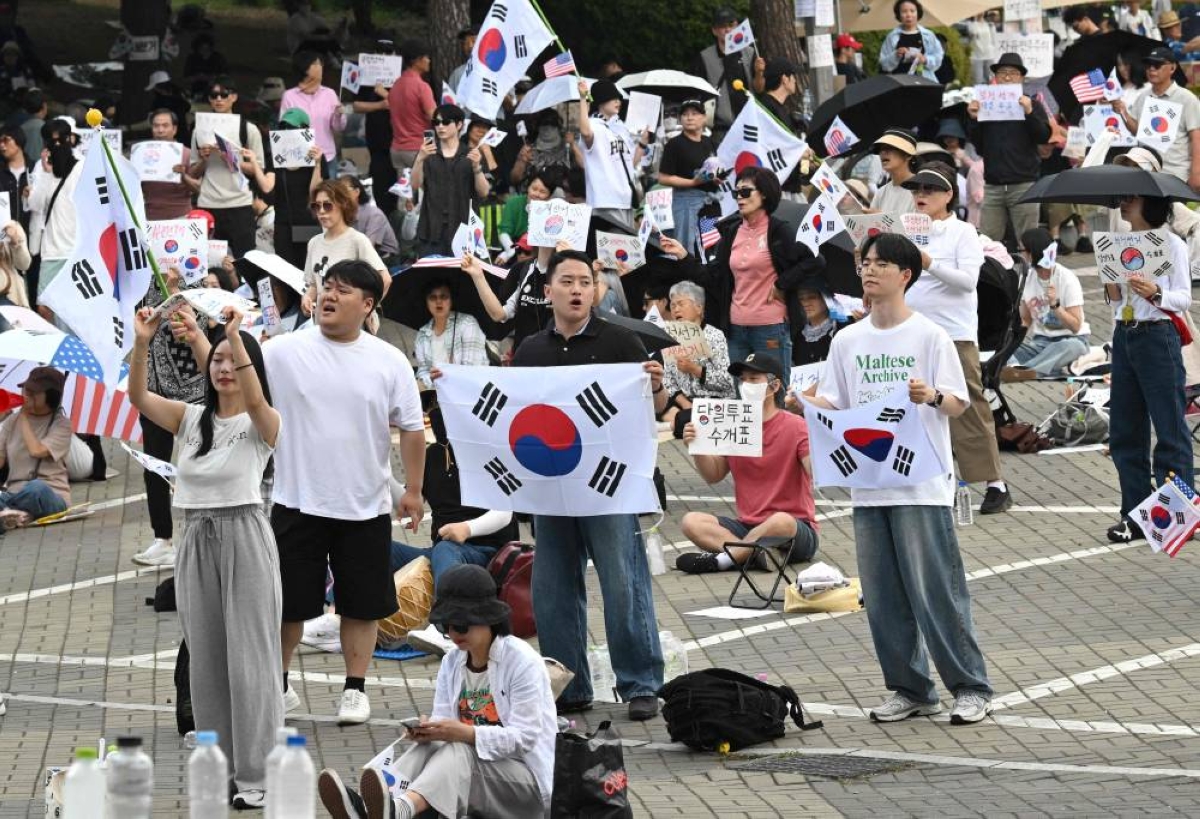
Korean protesters wave the national flags outside a vote-counting centre in Seoul Wednesday, to call for a rerun of the local elections due to a shortage of ballot papers. (AFP) University students across Republic of Korea staged protests Wednesday as anger grew over ballot paper shortages at recent local elections.Dozens of polling stations nationwide were short of around 7,000 ballot papers on June 3 election day, official data showed.The supplies were eventually replenished on voting day, but the mishap fuelled fury in a nation where unfounded claims of vote tampering have found a growing audience.The local election was the first nationwide vote since President Lee Jae-myung took office following conservative Yoon Suk-yeol's ouster over his brief martial law declaration in late 2024.Lee's ruling liberal Democratic Party won most races in the vote for mayors, local government officials and assembly members, but failed to flip the critical Seoul mayoral seat.The head of the election watchdog has resigned over the ballot paper row, but authorities have not offered to hold a new vote, sparking huge protests at the weekend.Student unions at 18 universities said they will hold new demonstrations from 6pm Wednesday."We are determined to protest because people are universally outraged regardless of political affiliation," Hwang In-seo of Yonsei University's student council, told AFP.Analysts say the National Election Commission, a constitutional body with limited external oversight, has long faced gaps in internal discipline and review mechanisms.A Seoul court this week ordered evidence from an affected polling station in the capital be preserved for investigation, while local media reported prosecutors and police had agreed to set up a joint investigation team.The evidence includes ballot boxes and CCTV footage, a representative of the Seoul Eastern District Court told AFP.  Related Story

World
Indonesian military court jails four officers involved in acid attack on rights activist

Indonesian military court jails four officers involved in acid attack on rights activist

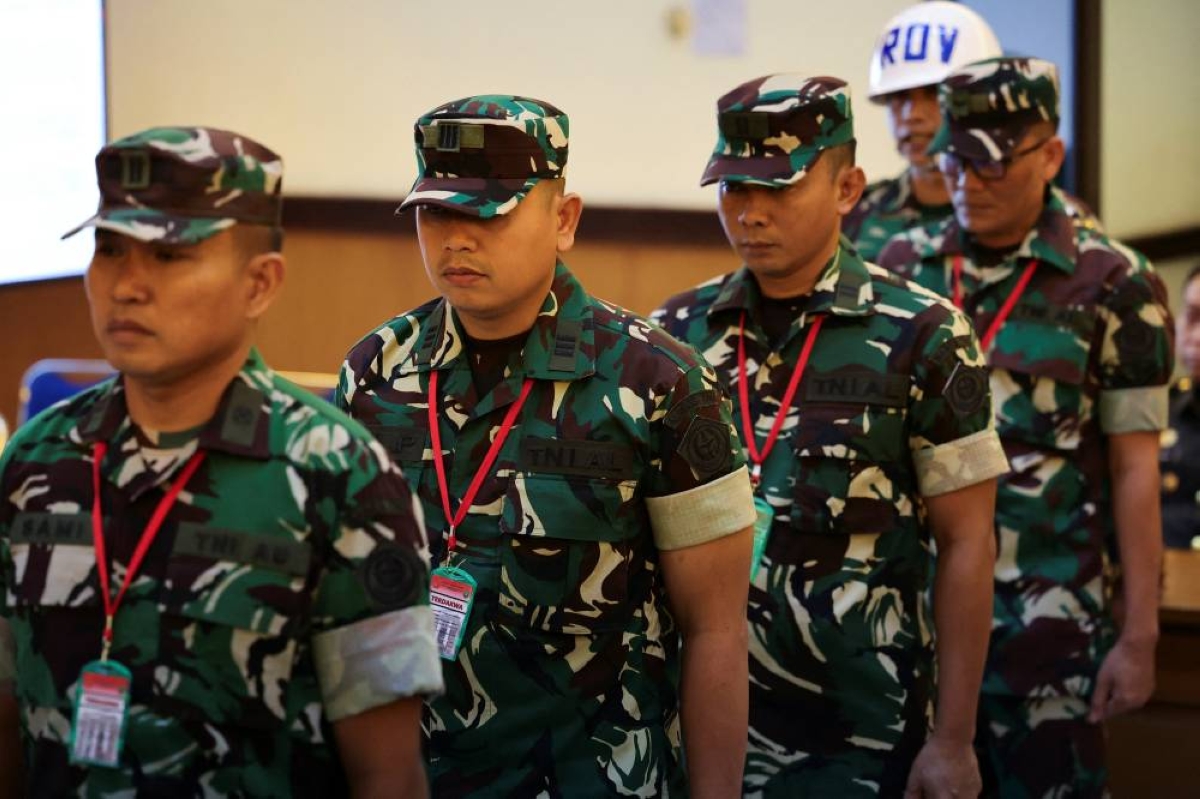
Indonesian military personnel Sami Lakka, Nandala Dwi Prasetya, Budhi Hariyanto Widhi Cahyono, and Edi Sudarko, charged over an acid attack on human rights activist Andrie Yunus, a ‌deputy co-ordinator with the rights group KontraS, arrive

World
Six Western Nations sanction Israeli individuals, groups over West Bank violence

Six Western Nations sanction Israeli individuals, groups over West Bank violence

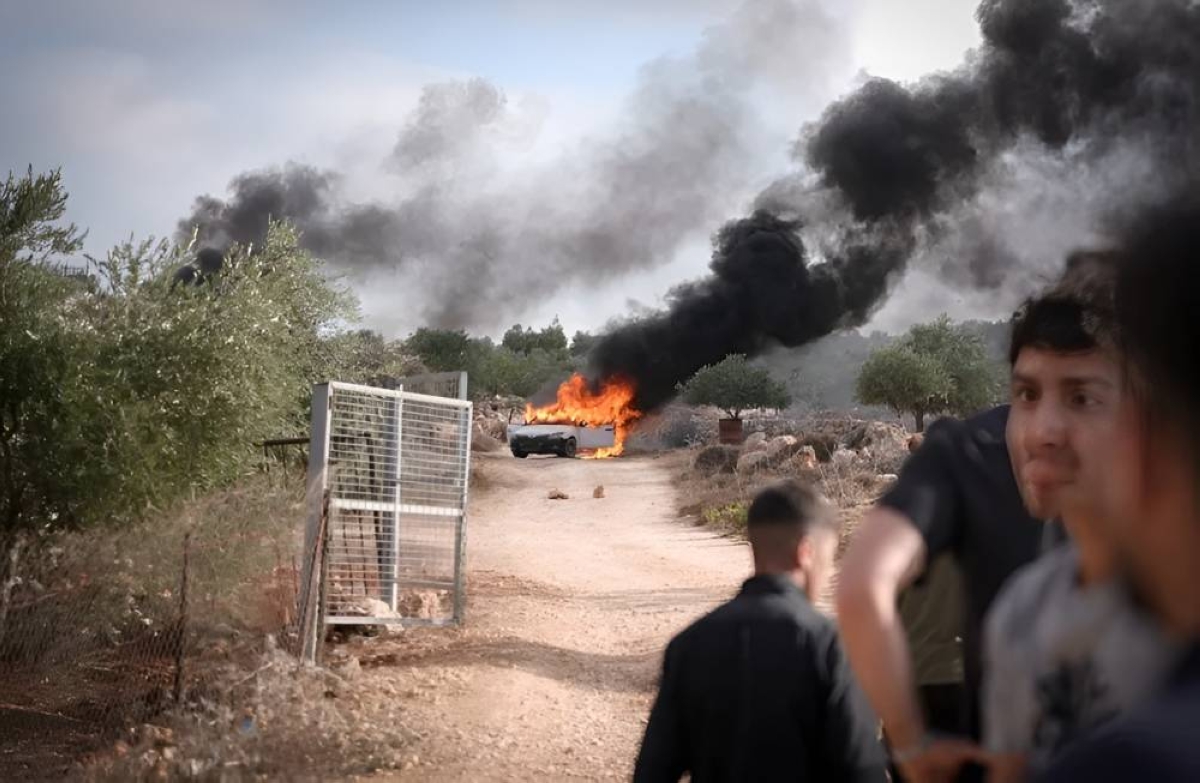
The United Kingdom, Canada, France, Norway, New Zealand, and Australia announced coordinated sanctions against Israeli individuals and organizations accused of financing, supporting, and carrying out settler violence in the occupied West Bank. In a joint statement, the countries said the measures aim to hold extremist settlers accountable for violence against Palestinian civilians and urged the Israeli government to ensure meaningful accountability. They also warned of further action if urgent steps are not taken to address the situation. Separately, the United Kingdom called on British companies to end activities linked to Israeli settlements, while France announced entry bans on Israeli Finance Minister Bezalel Smotrich, several settlement leaders, and a number of settlers, reaffirming its support for a two-state solution. The move comes amid growing international concern over escalating settler violence and its impact on prospects for a future Palestinian state. Related Story

World
Trump says peace deal with Iran in final stages

Trump says peace deal with Iran in final stages

US President Donald Trump on Tuesday said negotiations over a peace deal to end the Middle East war were in their final stages, after Iran and Israel halted attacks that threatened to reignite the months-long conflict.Iran fired missiles at Israel on Sunday in response to strikes against Lebanon's Hezbollah in the southern suburbs of Beirut, before Israel struck back despite Trump's efforts to dissuade Israeli Prime Minister Benjamin Netanyahu from doing so.Iran and Israel "were going back and forth and now they both agreed through me to stop and we're in the final throes of what will be a very, very good deal," the US leader told reporters on his return from an NBA Finals game.When asked whether a deal would be a matter of days or weeks, he said it would take "two or three days." The flare-up came after weeks of negotiations seeking to bring about a definitive end to the regional war sparked by US and Israeli strikes on Iran on February 28, with Tehran insisting a halt to the conflict must include a truce in Lebanon. Trump, who has reportedly grown increasingly exasperated with Netanyahu, had earlier urged both sides to stop "shooting" and said that "final negotiations" towards peace would proceed "subject to ignorance or stupidity getting in its way". US Vice President JD Vance told Fox News on Monday that while the United States and Israel shared interests, their positions did not always align."The Israelis and the United States, we have a lot of shared interests," Vance said. "But we also have some situations where our interests diverge." 

World
Southern Philippines earthquake leaves 41 dead, over 450 injured as rescue operations continue

Southern Philippines earthquake leaves 41 dead, over 450 injured as rescue operations continue

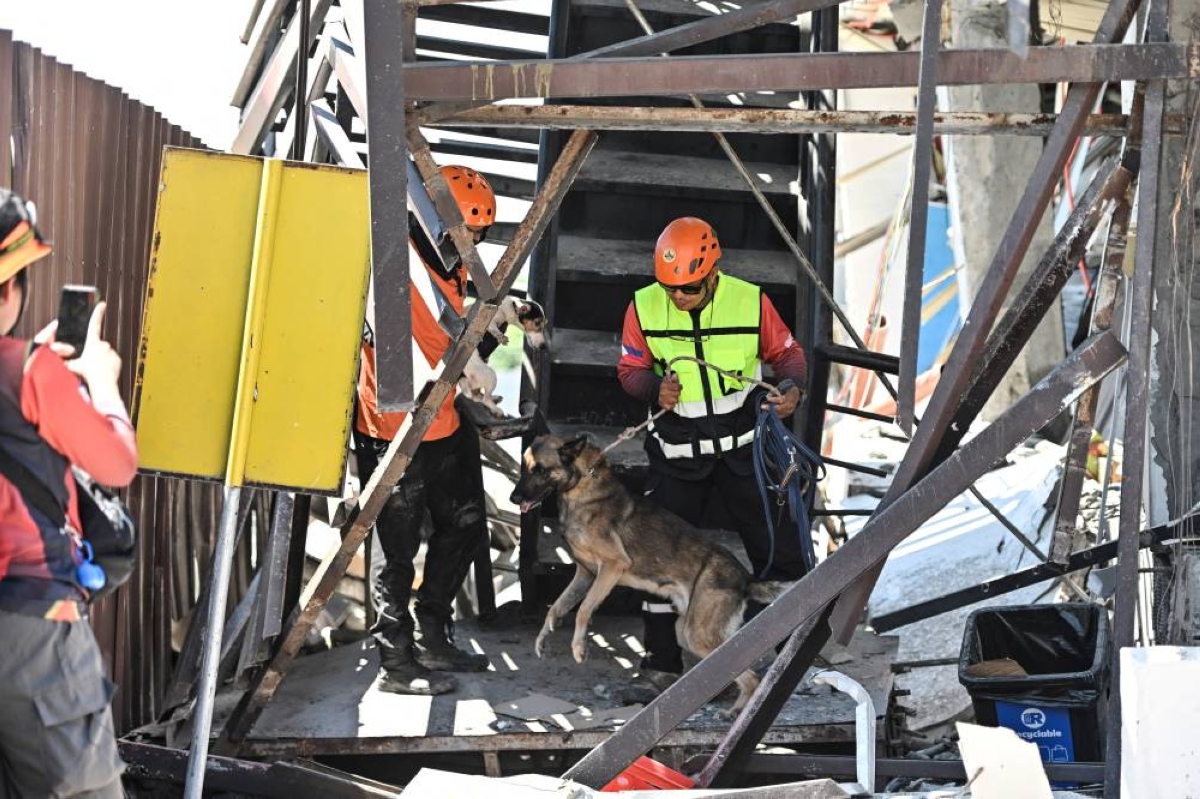
Rescue workers use search-and-rescue dogs to look for trapped people at a collapsed grocery store a day after the magnitude 7.8 quake in Calumpang, General Santos, southern Philippines, June 9, 2026. REUTERS/Noel Celis The death toll from the powerful earthquake that struck southern Philippines has risen to 41, with more than 450 people injured so far.Four people remain missing as search and rescue operations continue and the extent of damage across affected areas becomes clearer.The 7.8 magnitude earthquake struck offshore near the coast of Sarangani Province in the southern part of the country, close to Mindanao, on Monday. The quake caused the collapse of residential and commercial buildings, triggered widespread landslides, and prompted tsunami warnings in the Philippines and several neighbouring countries before the alerts were later lifted.Authorities reported that rescue teams are continuing operations in General Santos City, one of the hardest-hit areas, searching for people believed to be trapped beneath the rubble. Two individuals were rescued from a collapsed building, while the body of a third victim was recovered.In Sarangani Province, landslides and building collapses resulted in a large number of casualties. Some areas remain isolated and can only be reached by helicopter due to severe damage to roads and bridges.The earthquake forced more than 20,000 people to evacuate their homes and seek shelter in emergency evacuation centers, while approximately 88,000 people were directly affected by the disaster. Extensive damage also disrupted electricity, water, and telecommunications services in several impacted areas.The Philippine Institute of Volcanology and Seismology has recorded more than 138 aftershocks since the main quake, the strongest measuring 6.7 magnitude. As a result, many residents spent the night in evacuation centers and temporary tents.According to preliminary assessments, around 2,000 homes and 117 government buildings and facilities were damaged across the affected provinces. Operations at General Santos International Airport were temporarily suspended before partially resuming.The Philippines lies along the Pacific Ring of Fire, one of the world's most seismically and volcanically active regions. This makes the country particularly vulnerable to powerful earthquakes, volcanic eruptions, and tsunamis. Hundreds of earthquakes occur in the country each year, ranging from minor tremors to destructive events that cause significant loss of life and property. Related

World
Xi vows unwavering support for North Korea in rare visit

Xi vows unwavering support for North Korea in rare visit

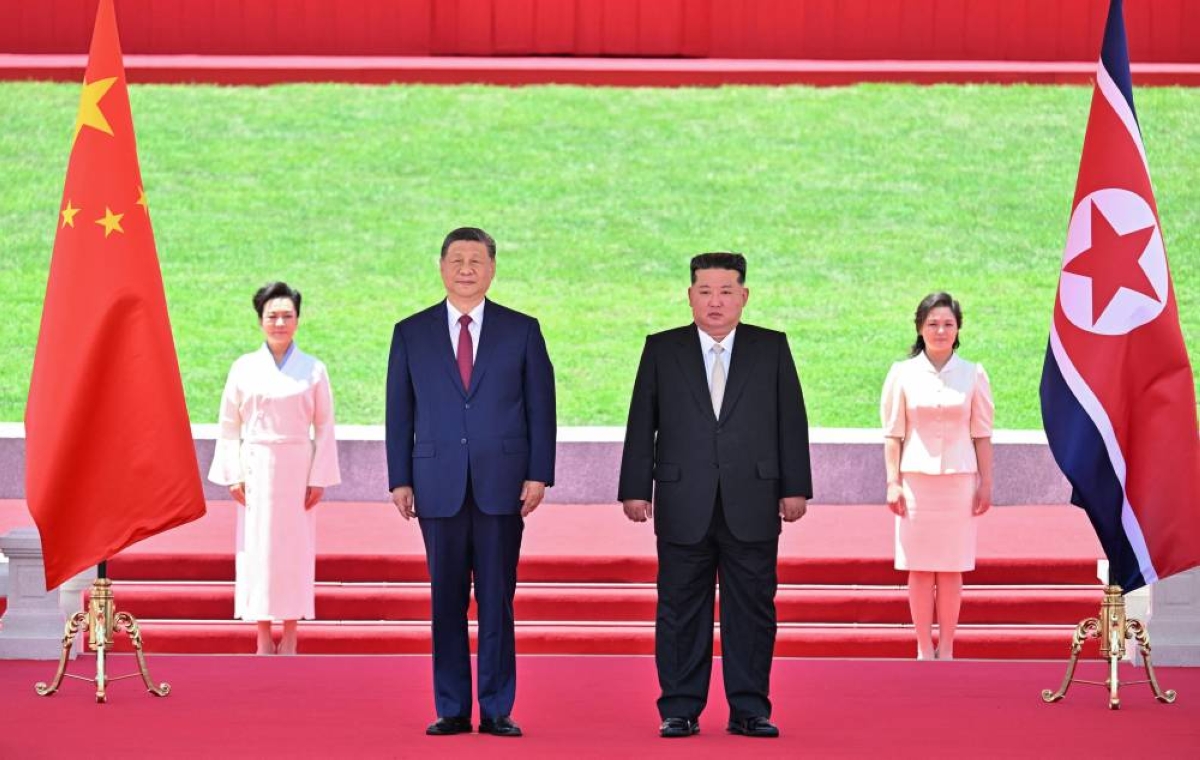
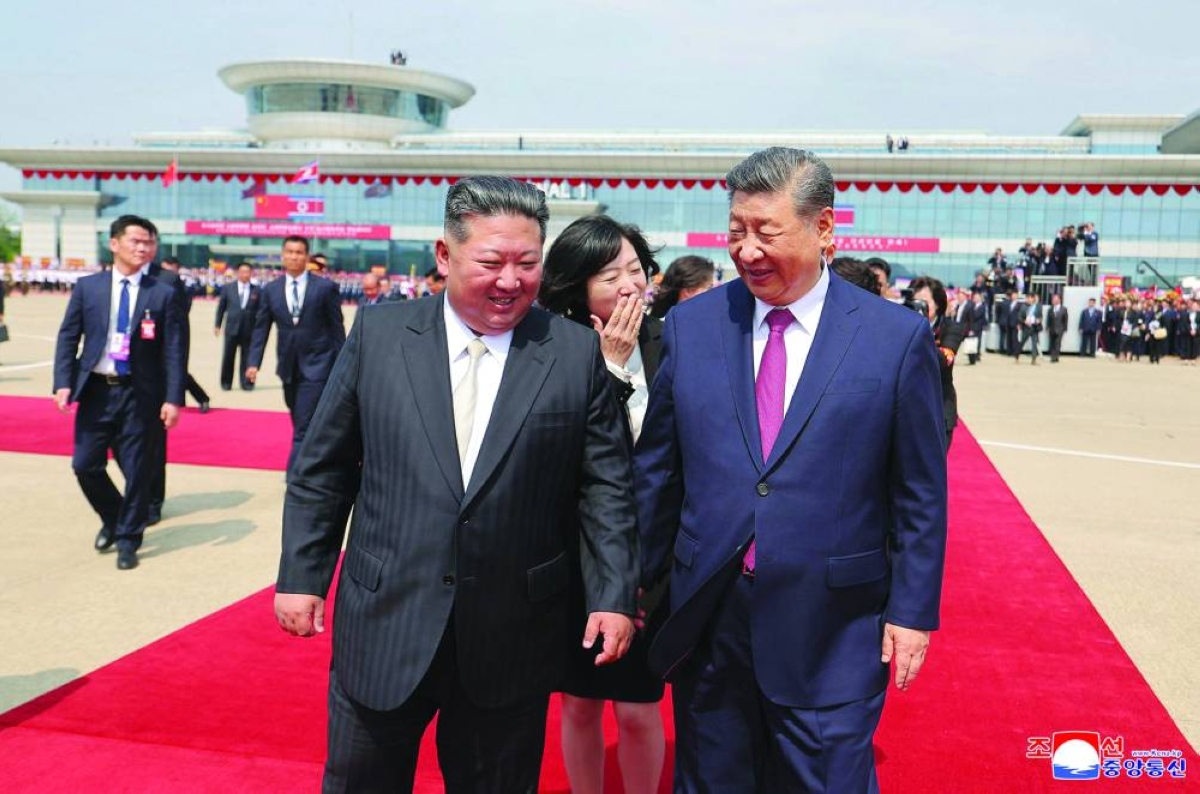
Chinese President Xi Jinping and North Korean leader Kim Jong-un watch a march-past as Kim holds a welcome ceremony for Xi at Kim Il Sung Square in Pyongyang, yesterday. (Reuters) China will not swerve from its commitment to safeguarding common interests ‌with North Korea or waver in its support for Kim Jong-un, President Xi Jinping told Pyongyang’s leader ​yesterday during a rare summit. The ‌neighbours should strengthen strategic ties and firmly protect their sovereignty, security, and development interests, Xi told ‌Kim, an official Chinese summary of the meeting showed, as ‌Beijing looks to draw Pyongyang closer. Xi’s two-day visit, ‌his first in seven years to China’s reclusive neighbour, comes at a time when its economy, strengthened by growing trade and military ties to Russia, could boost Kim’s confidence in talks.“I am deeply pleased and also feel a special sense of closeness,” Xi told Kim on his first international trip this year. No matter how the international situation changed, he reaffirmed to Kim, China would continue to highly value its traditional friendship with North Korea, the summary showed. “The firm support for Comrade General Secretary Kim Jong-un’s leadership of the DPRK socialist cause will not change, and the firm determination to safeguard common interests and good strategic environment... will not change,” Xi added. He was referring to ​the North’s formal name, the Democratic People’s Republic of Korea.The Chinese leader arrived to a red-carpet welcome from Kim and wife Ri Sol Ju, alongside a guard of honour, while children presented bouquets of flowers, video from Chinese state media showed. A 21-gun salute was fired ‌at the capital’s Kim Il Sung Square, a site of military parades ​and state celebrations, as spectators dwarfed by huge portraits of the leaders chanted slogans and released ​balloons, the Xinhua news agency said. Ties were at a “new historical starting point”, Xi said earlier, before urging stronger exchanges in areas from diplomacy, law enforcement and the military to agriculture, trade, technology and construction.Xi had called on Kim to “oppose hegemony, authoritarianism and all attempts and conspiracies to revive militarism that endanger regional security and stability” in remarks published in the North’s state media yesterday. “The Xi-Kim summit is a reminder that Beijing still sees Pyongyang as a strategic asset,” said Craig Singleton, a senior China fellow at the Foundation for Defence of Democracies.The neighbours, along with Russia and Iran, share an interest in blunting US power and straining its alliances, he added. Xi also pledged to work with North Korea to promote fair and orderly multilateralism and inclusive economic globalisation, with long-term regional ‌peace and stability a common pursuit.“His visit ‌is about keeping the tradition alive in very different conditions than his last trip,” John Delury, a senior fellow of the Asia Society, said in a post on X. Flags of both countries lined the main avenues of the North Korean capital in a video issued by Xinhua.Xi is accompanied on the state visit by his wife Peng Liyuan, de facto chief of staff Cai Qi, Foreign Minister Wang Yi, Defence Minister Dong Jun and Commerce Minister Wang Wentao. Both should capitalise on the restored links as “an opportunity to expand people-to-people exchanges,” Xi told Kim during their meeting. 

World
Iran, Israel halt strikes for now

Iran, Israel halt strikes for now

Iran and Israel said yesterday they had halted attacks ‌on each other after an appeal from US President Donald Trump that they immediately “stop ‘shooting’”, though Tehran said it would resume ​strikes if Israel continued to hit Hezbollah in ‌Lebanon. The wave of attacks over 24 hours were the most direct confrontation between Iran and Israel since an April ceasefire, threatening ‌to wreck Washington’s efforts to reach an agreement with Tehran to ‌end their more than three-month-old war. A source briefed on the matter said Israel had also decided to halt its attacks on Iran. Tehran fired missiles towards Israeli territory late on Sunday, calling them retaliation for Israeli attacks on strongholds of the Iranian-backed Hezbollah militia on the outskirts of Beirut. Israel then hit a petrochemical plant in southwest Iran that it said was used to produce ballistic missiles. Iran’s Islamic Revolutionary Guard Corps (IRGC) said it had retaliated with a strike aimed at a similar Israeli plant in the city of Haifa. Iran’s military said it had “delivered a painful response” against Israel for its attacks on Lebanon. “Accordingly, the operations of the armed forces are hereby declared halted; however, ​it is emphasised that if the aggressions and acts of mischief continue — including in southern Lebanon — much more severe and crushing actions than before will follow.” Hours after Iran’s announcement, sirens sounded in the Zar’it area of northern Israel when a projectile was identified as falling in an area of southern Lebanon where Israeli forces are operating.