1. Home
  2. World

Category: World

World
North Korea’s Kim oversees navy cruise missile test

North Korea’s Kim oversees navy cruise missile test

The destroyer Choe Hyon conducting a test-fire of a missile at an undisclosed location in North Korea on Sunday. (AFP) North Korean leader Kim Jong-un oversaw new tests of strategic cruise missiles and anti-warship missiles launched from a naval destroyer, state media reported Tuesday.The weapons tests occurred on Sunday, the state-run Korean Central News Agency (KCNA) said, and are the latest in a string of recent missile launches by the nuclear-armed nation.Two strategic cruise missiles each flew for just over two hours, according to KCNA, while the anti-warship missiles flew for 33 minutes.The missiles flew "along the flight orbits set in the sky above the West Sea of Korea and struck the targets with ultra-precision hit accuracy", KCNA said, using its preferred name for the Yellow Sea.The tests were carried out from the Choe Hyon, one of two 5,000-tonne destroyers in the North's arsenal, both launched last year as Kim seeks to ramp up the country's naval capabilities.A photo released by KCNA showed a missile in its initial flight stage after being launched from the warship, with an orange flame trailing from its tail.KCNA said Kim was also briefed on planning for the weapons systems of two more destroyers under construction, referred to simply as "Nos 3 and 4".Kim reportedly "expressed great satisfaction over the fact that the preparedness of our army's strategic action has been strengthened".He reiterated that bolstering the North's nuclear deterrent was the "most important priority task".  Related Story

World
Prince Harry and Meghan arrive in Australia to a muted welcome

Prince Harry and Meghan arrive in Australia to a muted welcome

Prince Harry and Meghan, the Duke and Duchess of Sussex, visit the Royal Children's Hospital in Melbourne, Tuesday. (Reuters) Britain's Prince Harry ​and wife Meghan landed in ‌Australia Tuesday for a four-day visit with engagements covering ‌sport, mental ⁠health and veterans' affairs. The ‌Duke and Duchess of Sussex ‌began their trip at the Royal Children’s Hospital in Melbourne, where they ⁠took part in an activity in the hospital's therapeutic garden spaces."It was a genuinely meaningful visit for our staff and for the young people receiving care," said Dr Peter Steer, the hospital's CEO.Harry, wearing a navy suit and white shirt, spoke to children and posed for photographs with patients in the foyer of the hospital, calling one of ​the handmade signs welcoming the couple "beautiful".Meghan, who wore a matching A$1,250 ($885) navy dress by Sydney-based designer Karen Gee, later helped serve food at a women's domestic violence shelter ‌in the city.The Sussexes stepped ⁠down as working ​members of the British royal family and moved to the ​US in 2020, citing a desire to be financially independent and to escape what they characterised as media intrusion into their private lives.They last visited Australia in 2018 while still working royals, announcing Meghan's first pregnancy hours after arriving in Sydney.Their latest visit has captured public attention in Australia, where Britain's King Charles is the head of state, though a sizeable minority supports becoming a republic. But there was little sign of the ecstatic reception that ‌greeted them on the 2018 ‌trip. Television networks aired footage ⁠that they said showed the couple arriving in Melbourne on a commercial flight ⁠from Los Angeles, before ⁠being taken from the tarmac in a vehicle convoy.The couple's travel is being privately funded, though local media reported some policing costs associated with the visit would be paid by Australian taxpayers, sparking a protest petition signed by more than 45,000 people.The couple will travel to the capital, Canberra, Wednesday to ​meet military veterans, attend a mental health summit in Melbourne Thursday and round off the joint leg of their trip with sailing and rugby events in Sydney on Friday.In contrast to their previous visit, the Sussexes will also undertake commercial activities while in Australia, with Meghan remaining in the country to host a wellness retreat at a luxury beachside hotel in Sydney over the weekend.Tickets for the event, which includes yoga, ‌manifestation and sound healing, ​start at A$2,699 ($1,912) per person.  Related Story

World
Turkiye voices concern over Hormuz Strait tensions amid stalled US-Iran talks

Turkiye voices concern over Hormuz Strait tensions amid stalled US-Iran talks

Turkiye’s foreign minister Hakan Fidan has expressed concern over emerging proposals by Iran and the United States to introduce new rules governing passage through the Strait of Hormuz, warning of significant challenges surrounding efforts to secure the vital shipping route.Speaking to Anadolu Agency on Monday, Fidan said reopening the strait should be achieved through diplomacy, following the failure of weekend talks between Washington and Tehran to reach an agreement on ending the ongoing conflict.He suggested that progress could still be made within weeks if negotiations move in a constructive direction, noting that Tehran is expected to review and respond to a US proposal. However, he cautioned that disagreements over uranium enrichment remain a key obstacle.If the issue of uranium enrichment becomes an all-or-nothing matter, we may face serious difficulties, Fidan said, adding that both sides appear committed to securing a ceasefire and recognize its urgency.The Strait of Hormuz is one of the world's most critical oil shipping routes, and any disruption has far-reaching implications for global energy markets.Fidan also warned that broader regional tensions risk escalating further. He described the situation in Lebanon as part of what he called expansionist policies by Israel, cautioning that the crisis could draw the region into a wider conflict.He emphasized the need for a regional security framework, calling for the establishment of a new alliance aimed at building trust among neighboring states and preventing further instability. 

World
ASEAN states call for maritime security, regional stability, renewed US-Iran talks

ASEAN states call for maritime security, regional stability, renewed US-Iran talks

The member states of the Association of Southeast Asian Nations (ASEAN) called for a final agreement between the US and Iran, welcoming the two-week ceasefire announced on April 8, 2026, affirming the need to build on it to reduce escalation in the region.ASEAN stressed in a statement the importance of maintaining maritime safety and security and preserving freedom of navigation and overflight over international straits, in accordance with international law, particularly the 1982 United Nations Convention on the Law of the Sea, and the standards adopted by the International Civil Aviation Organization (ICAO) and the International Maritime Organization (IMO), calling for the restoration of safe and unimpeded passage for ships and aircraft in the Strait of Hormuz, and ensuring the safety of seafarers and ships in accordance with relevant international agreements.The member states also urged Washington and Tehran to continue negotiations leading to a permanent end to the conflict and stability in the region, praising the efforts of Pakistan and the parties concerned in facilitating dialogue between the two sides.ASEAN affirmed the need for the full and effective implementation of the ceasefire, which would contribute to reducing human losses, ensure the safety of navigation and freedom of passage for civilian ships and aircraft, reduce disruptions in energy and commodity supplies, and mitigate their impact on the global economy.It also called on all parties to strictly adhere to the terms of the ceasefire, exercise maximum restraint, cease hostilities, avoid any steps that would escalate tensions, and work collectively to reach a comprehensive and sustainable solution in accordance with international law, the UN Charter and UN Security Council resolutions.ASEAN reaffirmed the importance of maintaining regional peace, stability and prosperity, and promoting dialogue and diplomacy as a key means of addressing conflicts.It also reaffirmed the commitment of states to resolve their disputes by peaceful means, respect the sovereignty and territorial integrity of states, protect civilians and civilian infrastructure, and ensure the safety of peacekeeping forces and humanitarian workers, in accordance with international law and the UN Charter.  Related Story

World
Australian Prime Minister calls for resumption of US-Iran Peace Talks

Australian Prime Minister calls for resumption of US-Iran Peace Talks

Australian Prime Minister Anthony Albanese on Monday called for the resumption of peace negotiations between the United States and Iran, and for an end to the ongoing conflict in the Middle East.The call by Albanese came during a television interview with the Australian Broadcasting Corporation (ABC), where he expressed hope for achieving lasting peace, comprehensive de-escalation, and ending the tragedy of civilian casualties and the destruction of civilian infrastructure - most importantly, reopening the Strait of Hormuz to ensure freedom of navigation.The Australian Prime Minister reaffirmed that his country has not received any request to participate in the US blockade of the Strait of Hormuz, emphasizing the need to restore freedom of navigation in this vital trade route. 

World
Singapore refuses to negotiate with Iran on Hormuz tolls

Singapore refuses to negotiate with Iran on Hormuz tolls

Singapore has flatly rejected any suggestion it would pay transit fees to Iran for passage through the Strait of Hormuz, with Foreign Minister Vivian Balakrishnan telling parliament the right of free navigation is enshrined in international law — not a toll concession for Tehran to extract. Responding to a parliamentary question, Balakrishnan said Singapore would continue engaging Iran diplomatically but ruled out any negotiation over safe passage fees. "It is not a privilege to be granted by the bordering state, it's not a licence to be supplicated for, it is not a toll to be paid," he said. The remarks come as Iran has imposed what shipping sources describe as a de facto toll system — administered by the Iranian Revolutionary Guard Corps — in the wake of US and Israeli strikes on Iranian infrastructure. Reports suggest demands of up to $2mn per vessel, payable in cryptocurrency or yuan, ostensibly to fund reconstruction. Traffic through the strait plummeted by an estimated 90% during peak hostilities, with only partial recovery following a tentative ceasefire. Tehran, which signed but never ratified the UN Convention on the Law of the Sea (UNCLOS), maintains it is not bound by its transit passage provisions and retains the right to regulate movement through its territorial waters on security grounds. Balakrishnan dismissed that argument, saying non-ratification was not a "get-out-of-jail-free card" and that the principle of free transit applied universally as customary international law. Singapore's hard line is rooted as much in strategic interest as legal principle. Balakrishnan drew an explicit parallel with the Strait of Malacca and the Strait of Singapore — chokepoints that carry roughly a quarter to two-fifths of global seaborne trade, including nearly half of China's oil imports. Were Hormuz tolls to go unchallenged, he warned, similar demands could follow on the very waterways Singapore depends on for its economic existence. The shipping industry has broadly backed Singapore's stance, with insurers and major operators advised against payment to avoid legitimising the practice. A clip of Balakrishnan's remarks, posted to social media on April 11, drew more than 3mn views and sharp debate over the tension between legal norms and geopolitical realities. Related Story

World
Japan calls for swift US-Iran agreement, stresses Strait of Hormuz security

Japan calls for swift US-Iran agreement, stresses Strait of Hormuz security

Japan hopes a "final agreement" will be concluded swiftly between the US and Iran to de-escalate the Middle East situation, after Washington-Tehran weekend peace talks failed to reach a deal."What is most important is that de-escalation, including securing the safety of navigation through the Strait of Hormuz, is actually achieved," Chief Cabinet Secretary Minoru Kihara said in a press conference Monday, adding that Tokyo is closely watching developments and will continue to work with the international community.Kihara also said no decision has been made about whether Japan plans to send its Self-Defense Forces for minesweeping operations in the strait, a chokepoint for global energy transportation.Japan relies on the Middle East for more than 90% of its crude oil imports. Most transit the strait, which Iran has effectively closed since the US and Israel began attacking the country in late February. 

World
S. Korea to expand FTA with emerging markets to diversify supply chains

S. Korea to expand FTA with emerging markets to diversify supply chains

South Korean Finance Minister Koo Yun-cheol said Monday that South Korea aims to expand its free trade agreement (FTA) network with emerging markets, such as Latin America and Africa, in its latest effort to diversify supply chains."Rather than simply responding to trade issues, the government will expand its FTA network to support export growth," Yonhap News Agency quoted the finance minister as saying.He noted that the global trade environment is undergoing a structural change due to the weakening of multilateral trade norms and increasing competition among major countries.In response, the government sees a need to continuously expand and strategically upgrade its FTA network."In the future, we will broaden our FTA map to emerging markets, such as Southeast Asia, Latin America and Africa, to diversify global supply chains," he said.South Korea has signed 21 free trade deals covering 59 countries, the finance ministry said. 

World
Of Asha’s versatility and enduring legacy — a personal recollection

Of Asha’s versatility and enduring legacy — a personal recollection

Playback singer Asha Bhosle passed away Sunday, in Mumbai at the age of 92, after being hospitalised at Breach Candy Hospital. The news, confirmed by her family, brings to a close a career that remained inseparable from the soundscape of Indian cinema for over seven decades.I have written about Asha Bhosle on several occasions over the years — most often around moments of celebration. This time, the context is different. Yet, what returns immediately is not just the scale of her work, but the clarity with which she spoke about music in every interaction I had with her.One of the most prolific and versatile voices in Indian music history, she recorded over 11,000 songs across more than 20 languages, including Hindi, Marathi, Bengali and Gujarati. Her repertoire moved effortlessly between cabaret numbers, classical compositions and ghazals. Songs such as Piya Tu Ab To Aaja, Dum Maro Dum, Chura Liya Hai Tumne, Dil Cheez Kya Hai, Mera Kuch Saamaan and Rangeela Re continue to define multiple eras of film music. Over the years, she received the Dadasaheb Phalke Award, the Padma Vibhushan and several National Film Awards.In Indian households, her music rarely arrived as a discovery — it was already present. I grew up hearing her songs without being able to trace a first memory of them; they existed as part of the everyday, cutting across generations and spaces.Her own relationship with music, as she once recalled in a televised conversation, was shaped early. Speaking about her father, Deenanath Mangeshkar, she described a moment from childhood when he told his children that he could not offer them luxury — only his tanpura — and that it would be their responsibility to carry forward the legacy of music. She would later describe that as the point at which she understood she would live for music.When I met her in Mumbai in 2017, what stood out was her clarity. Asked about the changing soundscape, she acknowledged the role of technology but was firm about its limits. Technology, she said, could assist a singer, but it could not create soul. At the same time, she did not resist change — she spoke about the need for younger artists to engage with new tools, while maintaining rigour.That balance between openness and discipline remained consistent in later conversations.In 2019, when I spoke to her on her birthday while she was in Dubai, she sounded both overwhelmed and quietly amused by the affection she continued to receive. Yet, the conversation quickly returned to practice. Riyaaz, she told me, was not a routine but a way of life — something she continued every morning, carrying her tanpura with her wherever she went. There were no shortcuts.By 2020, during an interaction around her digital debut, there was a noticeable lightness in her tone. Speaking about the many actors she had sung for, she immediately mentioned Helen, laughing about how she would sometimes pause mid-recording just to watch her perform.But even in that moment, the focus returned to craft. She spoke about sharing work with younger musicians and releasing songs she had done with RD Burman, reflecting a willingness to pass things on rather than hold back.What stayed consistent across all these interactions was her relationship with singing itself. Not performance, not applause — but the act of recording. Standing in front of the microphone, she said, remained the purest moment of her life — the point where creation happened. Decades into her career, that experience had not changed.Looking back, there was no single version of Asha Bhosle that defined her. In different moments, I encountered precision, discipline and playfulness — but always anchored in music.Her passing marks the close of an era that shaped the evolution of playback singing in India. Few artists have adapted as seamlessly across decades, composers and styles while retaining a distinct identity.During the pandemic, in a brief exchange, I had mentioned to her how difficult the stillness felt. She responded instantly:“Areh areh! ye kya baat hui beta, mein kitne saare gaane gaye — Piya Tu, Sharara Sharara, Rangeela re... Ghar par baith ke dukhi nahin hona, mere gaane pe dance karo na, dekho kitna achha lagega. Na rona, na dukhi hona, zindagi hai beta, jeena padta hai.”("Oh come on now! What's all this, my dear — I've sung so many songs — Piya Tu, Sharara Sharara, Rangeela Re... Don't sit at home feeling sad, come dance to my songs, you'll see how wonderful it feels. No crying, no sadness — this is life, sweetheart, and life must be lived.")It is a sentiment that, in many ways, reflects the spirit of her music — resilient, expansive, and always moving forward.Asha Bhosle’s legacy lies not only in the scale of her work, but in its range and endurance — a voice that travelled across generations, staying relevant even as it evolved. 

World
Trump slams Pope Leo over criticism of war and suffering

Trump slams Pope Leo over criticism of war and suffering

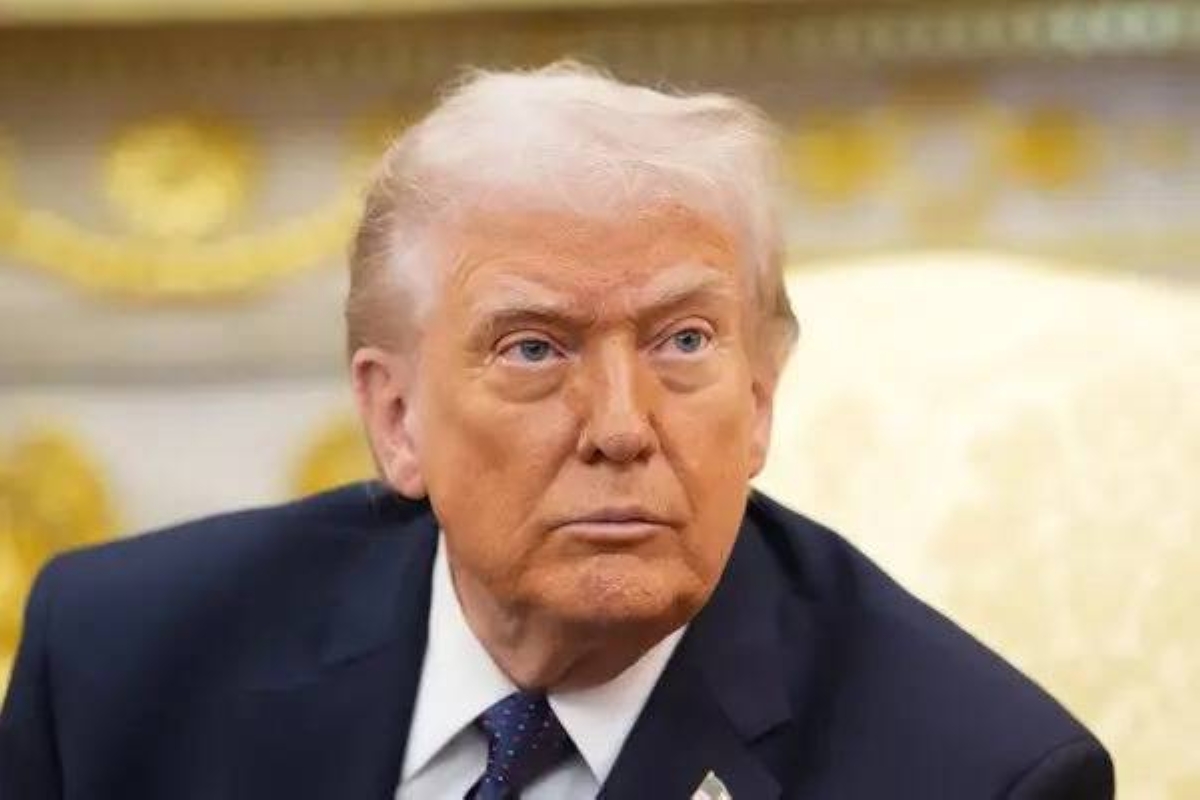
US President Donald Trump has criticised Pope Leo XIV as "terrible" in an unusual, direct attack on the Pontiff, who responded by vowing to continue denouncing war and suffering.The president's comments came after the Pope had spoken out, with growing force, against the US-Israeli war on Iran and the Trump administration's hardline immigration policies."Pope Leo is WEAK on Crime, and terrible for Foreign Policy," Trump wrote in a post on Truth Social late on Sunday.Pope Leo, the first Pontiff from the US, responded Monday by saying that he would continue to denounce war, adding that the Christian message, rooted in the primacy of peace, was being "abused"."I will continue to speak out loudly against war, looking to promote peace, promoting dialogue and multilateral relationships among the states to look for just solutions to problems," he told Reuters aboard a papal flight to Algiers, where he is embarking on a 10-day tour to four African countries."Too many people are suffering in the world today," Leo said. "Too many innocent people are being killed. And I think someone has to stand up and say there's a better way."Catholics on social media lambasted Trump for attacking the leader of the 1.4bn-member Catholic Church."There is no ambiguity about the situation now," Massimo Faggioli, an expert on the papacy, told Reuters.He compared the comments to efforts by the leaders of Germany and Italy during World War II to draw the late Pope Pius XII to support their causes."Not even Hitler or Mussolini attacked the pope so directly and publicly," said Faggioli.Archbishop Paul S Coakley, president of the US Conference of Catholic Bishops, said that he was disheartened by Trump's comments.Italian Prime Minister Giorgia Meloni condemned Trump's criticism of Leo’s comments as "unacceptable", saying that "it is right and normal for (Leo) to call for peace and to condemn all forms of war".Leo, originally from Chicago, is known for choosing his words carefully.He has emerged as an outspoken critic of the conflict with Iran in recent weeks and decried the "madness of war" in a peace appeal on Saturday.Last year, he questioned whether the Trump administration's hardline immigration policies were in line with the church's pro-life teachings, and called for a "deep reflection" about the way migrants are being treated in the United States.Trump wrote in his post on Sunday that "Leo should get his act together as Pope", later telling reporters he was "not a big fan" of the Pontiff.Trump's broadside against Leo also accused him of being "weak on nuclear weapons", several days after the Pope said the US president's threat to destroy Iranian civilisation was "truly unacceptable".In a speech on Palm Sunday last month in St. Peter's Square in the Vatican, the Pope said God rejected the prayers of leaders who start wars and have their "hands full of blood", calling the conflict in Iran "atrocious".Leo has also called on Trump to find an "off-ramp" to end the conflict and "decrease the amount of violence".In his post, Trump suggested that Leo was only elected to lead the Catholic Church last year "because he was an American, and they thought that would be the best way to deal with President Donald J Trump".Leo said Monday that he was not a politician and did not want to be drawn into a debate with Trump.Trump also had a rocky relationship with Leo's predecessor, Pope Francis, who criticised Trump's immigration policy proposals when he first ran for president and suggested Trump was "not a Christian".Trump had called Francis "disgraceful" in early 2016.  Related Story