1. Home
  2. World

Category: World

World
Burkina, Mali troops kill more civilians than religious militants do: HRW

Burkina, Mali troops kill more civilians than religious militants do: HRW

Government and allied forces in Burkina Faso have killed more than twice as many civilians as religious militants have since 2023, according to a tally of incidents documented in a report published Thursday by Human Rights Watch (HRW).The pattern is broadly consistent with data shared with Reuters by Armed Conflict Location & Event Data (ACLED), a conflict monitoring group, and also applies to neighbouring Mali.In that country, which like Burkina Faso is ruled by a military-led government that seized power in a coup, government forces and their partners have been responsible for three to four times as many civilian killings as religious militants over the last two years, according to ACLED's data.Violence involving religious militant groups in Burkina Faso, Mali and Niger has surged since 2021, making the Sahel region a global terrorism hotspot.Widespread deaths of civilians at the hands of government forces could bolster the political legitimacy of militant groups and fuel recruitment, analysts said.They could also complicate steps by the United States to improve relations with Sahel governments, which expelled French and other Western forces after their respective coups.Burkina Faso's security forces and allied militias 'appear to be more brutal and violent' than militant groups like the local Al Qaeda affiliate, Jama'at Nusrat al-Islam wal-Muslimin (JNIM), said Ilaria Allegrozzi, senior Sahel researcher at HRW.The Burkinabe forces' behaviour is part of a regional pattern, raising concerns about military indiscipline and its consequences for counterinsurgency efforts, she said.Spokespeople for the Mali and Burkina Faso governments did not immediately respond to requests for comment from Reuters.The Burkina Faso government and JNIM's Sharia Committee in Burkina Faso did not respond to requests for comment from HRW.Mali and Burkina Faso have previously denied allegations of extrajudicial killings, saying instead that their forces had killed 'terrorists'.Covering the period between January 2023 and August 2025, the HRW report documents 57 incidents in which at least 1,837 civilians were killed.Of those, 33 were committed by government forces and their allies, resulting in 1,255 civilian deaths, according to the report, which details widespread abuses by all parties to the conflict.The ACLED data shows that in 2025 alone, the Burkinabe military and forces from the pro-government Homeland Defence Volunteers militia killed 523 civilians while JNIM and Islamic State Sahel Province (ISSP), another militant group, killed 339.In Mali, the military, together with Russian paramilitary groups Wagner and Africa Corps, killed 918 civilians in 2025, while JNIM and ISSP killed 232, according to ACLED.JNIM could not be reached for comment.Russia's defence ministry, which runs Wagner and Africa Corps, did not immediately respond to a request for comment.ACLED sources its data from social media, press reports and statements from governments, armed groups and non-governmental organisations.It says it provides conservative estimates of fatalities.HRW based its report on 450 interviews and verified social media and satellite imagery.It also says the incidents it has documented are not exhaustive.Because JNIM controls large swathes of territory, security forces are sometimes called on to escort humanitarian or supply convoys in rural areas – but in many cases they kill civilians they encounter along the way, Allegrozzi said.One resident of eastern Burkina Faso, who asked to remain anonymous for fear of reprisals, told Reuters that he was travelling in a civilian convoy under military escort in July 2024, and many of the villages they passed had been abandoned.Then they reached the village of Sakoani, 30km (19 miles) west of the town of Kantchari.'When the army arrived in this village and saw that it was populated, they surrounded the entire village and they exterminated everything – every living being,' he told Reuters. 'People tried to flee, but if you run, they shoot at you.”He estimated that he saw at least 100 dead bodies.In Mali, meanwhile, many civilian killings have been carried out by drone strikes, according to ACLED.Drone warfare there has surged since the government began purchasing Turkish-made drones in 2022.Drone or airstrikes on civilians by Mali's armed forces jumped from four incidents that year to 66 incidents in 2025, resulting in 155 deaths, the ACLED data shows.In July 2024, government drone strikes killed at least 50 civilians at the Inatiyara artisanal gold mining site in northern Mali, according to ACLED.Three eyewitnesses described the attacks to Reuters.'We were surprised by the strikes, we were so scared,' said a 30-year-old gold panner from Niger who worked at Inatiyara and asked not to be identified. 'It was pure panic... I'm still reeling from the shock.'HRW and ACLED also documented grave abuses by JNIM, including the killing of at least 133 civilians in Barsalogho, Burkina Faso, in August 2024 and 19 civilians in Diallassagou, Mali, in May 2024.The group has nonetheless been able to position itself as a defender of marginalised communities like the Fulani, a widely dispersed pastoralist group whose members are often accused of being affiliated with JNIM, analysts have told Reuters.'As state responses increasingly rely on retaliation and collective punishment, more civilians find themselves trapped in areas under religious militant control, where JNIM is consolidating its influence through coercion and strategic engagement with local populations,' said Heni Nsaibia, ACLED's senior analyst for West Africa. 

World
Anti-imperialist youth march in Havana

Anti-imperialist youth march in Havana

Cubans on electric tricycles decorated with Cuban flags ride past the US embassy during the anti-imperialist youth march in Havana on April 2, 2026. (AFP) Cubans on electric tricycles decorated with Cuban flags ride past the US embassy during the anti-imperialist youth march in Havana Thursday.   Related Story

World
Brazilian researchers remix coffee varieties to confront climate challenge

Brazilian researchers remix coffee varieties to confront climate challenge

Different varieties of coffee are displayed at the Campinas Agronomy Institute during an interview with Brazilian researchers in Campinas, Brazil. (Reuters) Under a baking sun, agronomist Oliveiro ‌Guerreiro Filho meanders through a hodgepodge of coffee plants at the ​Campinas Agronomy Institute where, unlike the ‌uniform rows on most Brazilian coffee farms, each cluster is ‌different from the ⁠next.This menagerie ‌of coffee species — some squat, others soaring — ‌includes 15 uncommon and non-commercial breeds such as racemosa, liberica and stenophylla, the ⁠genes of which could shore up future supplies of arabica coffee, researchers hope.Scientists warn that crops of arabica — the world's most common coffee bean — will be severely affected by a rapidly changing climate, with output from countries including No 1 grower Brazil expected to decline.Climate change could make 20% of areas now growing arabica globally unsuitable for coffee crops by 2050, a report ​from lender Rabobank said this week.By introducing genetic material from more rustic coffee species into new hybrids, scientists at the research institute in Sao Paulo state aim to create ‌more resistant arabica varieties.For example, liberica's ⁠hardiness in the ​face of hotter and drier conditions has drawn praise from farmers ​in Indonesia and Malaysia planting small plots of the species to see how they hold up against drought."Liberica can tolerate heat and high temperature environments very well, and it is disease-resistant," Jason Liew, the founder of My Liberica, a coffee plantation in Malaysia's Johor state, told Reuters.While farmers prize those qualities among less common species, the Brazilian researchers have specialised in bringing those traits to more productive and popular arabica plants."We've been working at the institute for many years to transfer drought tolerance genes from the ‌racemosa species to arabica," Guerreiro Filho ‌said. "We're trying to create drought-tolerant ⁠arabica varieties."That can take decades of research. Scientists must produce cross-bred saplings and ⁠expose those hybrid varieties to ⁠harsh conditions in order to evaluate and identify the most robust plants, he said, a process that can take 20-30 years.Hybrids are also tested for increased resistance to pests and diseases, as well as improved quality. Arabica crossed with liberica has proven more resistant to coffee rust, a fungal infection, for instance, while ​arabica bred with racemosa does better against larvae of coffee leaf miner moths, Guerreiro Filho noted.That makes research like the studies underway at the institute key to the future of coffee, said Rodolfo Oliveira, head of Brazilian state research agency Embrapa's coffee unit."Working with alternative species of coffee ... is vital because arabica has an extremely narrow genetic base, making it highly vulnerable to pests, diseases, and climate change," Oliveira said, underscoring the value of introducing new, "wild" genetic material from ‌less common species. 

World
US lifts sanctions on Venezuelan interim leader Delcy Rodriguez

US lifts sanctions on Venezuelan interim leader Delcy Rodriguez

Venezuela's acting president Delcy Rodriguez meets with US Secretary of Energy Chris Wright (out of frame) at the Miraflores Presidential Palace in Caracas. (AFP/ File Photo) The United States on Wednesday lifted sanctions against Venezuela's interim President Delcy Rodriguez, who took power after Washington ousted her predecessor Nicolas Maduro in a military operation in January.Rodriguez's name was deleted from the "Specially Designated Nationals List," according to a post on the US Treasury's Office of Foreign Assets Control website.Rodriguez welcomed the decision, writing on X that it was part of the "normalisation and strengthening" of bilateral relations."We trust that this progress will allow for the lifting of the sanctions currently in force against our country, and make it possible to build and guarantee an effective binational cooperation agenda for the benefit of our peoples," she added.Ties between Washington and Caracas have warmed since Maduro's ouster, with Rodriguez complying with US President Donald Trump's demands for Caracas to open up its energy industry to American companies.Rodriguez served as Maduro's deputy and was sanctioned by Washington for being a key official in his government, alongside officials including former defence minister Vladimir Padrino Lopez and Interior Minister Diosdado Cabello.Rodriguez fired Lopez in mid-March, but she has been walking a fine line between demands from Washington and those from her own backers since Maduro's toppling.Cabello, who remains in office, is seen as one of her key backers.On Monday, the US embassy in Caracas resumed operations after being closed for seven years, the State Department said.The reopening came after the US military operation that seized Maduro and his wife Cilia Flores from Caracas on January 3, taking them to New York to face drug trafficking charges that they deny.The operation killed around 100 people in Venezuela, according to authorities there.  Related Story

World
Trump sacks attorney-general, replaces with ex-personal lawyer

Trump sacks attorney-general, replaces with ex-personal lawyer

US President Donald Trump, alongside Attorney-General Pam Bondi (right), speaks during a news conference. (AFP/File photo)) US President Donald Trump fired Attorney-General Pam Bondi Thursday and named his former personal lawyer to serve as the acting chief of the Justice Department.The move, which the Republican president announced in a social media post, comes amid criticism of Bondi's handling of the Epstein files and her failure to successfully prosecute several perceived Trump political foes."Pam Bondi is a Great American Patriot and a loyal friend, who faithfully served as my Attorney General over the past year," Trump said on Truth Social. "Pam did a tremendous job overseeing a massive crackdown in Crime across our Country."Bondi "will be transitioning to a much needed and important new job in the private sector to be announced at a date in the near future," the president said, and will be replaced on an interim basis by Deputy Attorney General Todd Blanche.Bondi has been a staunch ally of the president but has drawn fire from some Trump supporters for her handling of the release of the Justice Department files on convicted Jeffrey Epstein.The Epstein affair has been a major political liability for Trump, who was a longtime friend of the disgraced financier.Bondi has also reportedly drawn Trump's ire by falling short with efforts to prosecute perceived Trump opponents such as former FBI director James Comey and New York Attorney-General Letitia James.According to The New York Times, Trump may name former Republican congressman Lee Zeldin, the head of the Environmental Protection Agency (EPA), to be the next attorney-general.In the meantime, the post will be filled by Blanche, who was one of the personal lawyers who defended Trump in the multiple criminal cases he faced after he left the White House in 2021.Bondi's ouster comes nearly a month after Trump fired Kristi Noem as the head of the Department of Homeland Security.Democratic lawmakers welcomed Bondi's firing."Good riddance," said Senator Elizabeth Warren of Massachusetts."Under Attorney-General Pam Bondi, the Department of Justice (DOJ) became a cesspool of corruption," Warren said. "Bondi will be remembered for blocking the release of the Epstein files (and) weaponising the DOJ to go after Trump's political opponents."Senator Mark Warner of Virginia said Bondi's "botched handling of the Epstein files" had "denied victims transparency and further undermined trust in our justice system.""Americans deserve a Justice Department that is actually focused on delivering justice, not on serving a president's agenda of personal and political self-interest," Warner said.Bondi joined Trump's legal team during his first term impeachment trial, in which he was alleged to have pressured Ukrainian President Volodymyr Zelensky to find political dirt on Democrat Joe Biden.Trump was impeached by the Democrat-controlled House of Representatives but acquitted by the Republican-majority Senate.Bondi helped push Trump's false claims of voter fraud after he lost the 2020 election to Biden.She made television appearances on behalf of Trump and pushed to delegitimise vote counting in battleground states as part of the push by the former president to overturn the results of the vote.Bondi also criticised the criminal cases brought against Trump, appearing in solidarity at his New York trial, where he was convicted of falsifying business records to cover up hush money payments to a porn star.Bondi served as a prosecutor for 18 years before being elected Florida's attorney-general in 2010, the first woman to hold the post. She was re-elected to a second term in 2014.  Related Story

World
Trump scaling up tensions with European allies in series of jibes

Trump scaling up tensions with European allies in series of jibes

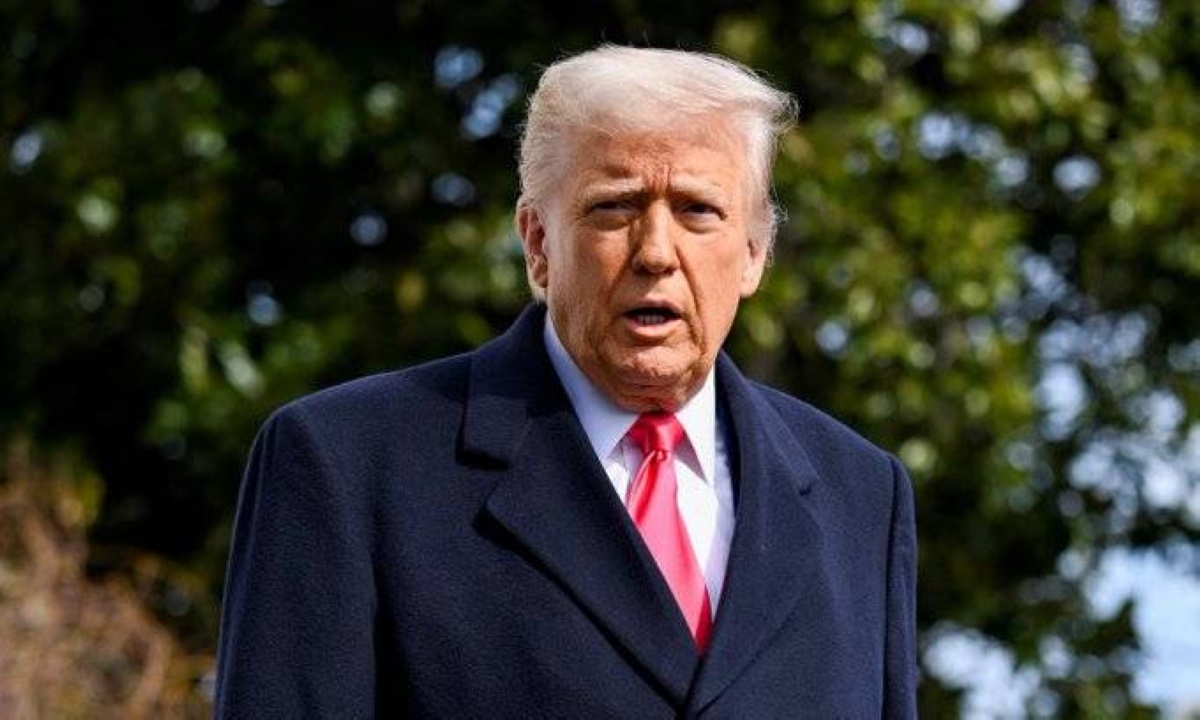
Trump’s remarks came just hours after his Defense Secretary Pete Hegseth declined  to reaffirm the US commitment to Nato’s collective defenceTensions between the US and Nato ‌allies flared up as President Donald Trump said he was considering pulling the US out of the military alliance ​due to its European members’ refusing ‌to send ships to unblock the Strait of Hormuz. Nato, which includes European countries, the US and Canada, ‌was formed in 1949 with the aim of countering ‌the risk of Soviet attack and has been the cornerstone ‌of the West’s security ever since.Trump told Reuters yesterday that he would state in an address to the nation later in the day that he was “absolutely” considering withdrawing the US from the Nato alliance. “I’ll be discussing my disgust with Nato,” he said of the speech. Asked if he was thinking about pulling out of Nato, he said: “Oh, absolutely without question. Wouldn’t you do that if you were me?” Trump’s remarks came just hours after his Defense Secretary Pete Hegseth declined to reaffirm the US commitment to Nato’s collective defence, a concept that lies at the heart of the alliance. Experts have long warned that remarks suggesting that the US might not honour its Nato commitments could encourage Russia to test Nato members’ readiness to ​enforce the alliance’s Article 5, which states an armed attack against one member state is an attack on all. France was among the first European Nato members to react to similar comments by Trump to Britain’s Daily Telegraph published earlier in the day, in which Trump called Nato a “paper ‌tiger” and said he was considering exiting the alliance after allies failed to back ​US military action against Iran. “Let me recall what Nato is,” French junior army minister Alice Rufo said — ​though without directly addressing Trump’s threat to leave Nato.“It is a military alliance concerned with the security of territories in the Euro-Atlantic area. It is not intended to carry out an operation in the Strait of Hormuz, which is not in accordance with international law.” In Poland, Defence Minister Wladyslaw Kosiniak-Kamysz called for calm. “I hope that amid the emotions surrounding the President of the US today, a moment of calm will come,” he said. “And why? Because there is no Nato without the US, and it is in our interest that this calm comes. But there is also no American power without Nato.”Nato had no immediate comment. A German government spokesperson, when asked to react to Trump’s comment, said Germany remained committed to Nato. “This isn’t the first time he’s done this, and since it’s a recurring phenomenon, you can probably judge the ‌consequences for yourself,” the spokesperson told a regular ‌government press conference, speaking of Trump. British Prime Minister Keir Starmer said he would act in his country’s interest, whatever the “noise”. The instability caused by the Iran war meant Britain should pivot to focus on closer economic and defence ties with Europe, he said. The Iran war has exacerbated tensions between the US and Europe that have mounted since the start of Trump’s second term in office over everything from trade to his demands for ownership of Greenland, an autonomous territory of Nato ally Denmark. Europe is also nervously watching Trump’s efforts to broker an end to the war between Russia and Ukraine, with some senior European officials concerned Trump appears to support an agreement in Moscow’s favour. Asked on Tuesday if the US was still committed to Nato’s collective defence, Hegseth said: “As ​far as Nato is concerned, that’s a decision that will be left to the president. But I’ll just say a lot has been laid bare.”“You don’t have much of an alliance if you have countries that are not willing to stand with you when you need them,” Hegseth said. France has refused to allow Israel to use its airspace to resupply a flight carrying American weapons being used in the war against Iran, and Italy denied permission for US military aircraft to land at the Sigonella air base in Sicily before heading to the Middle East, sources told Reuters. Both France and Italy said it was standard policy and nothing had changed.Spain, however, said publicly it had fully closed its airspace to US planes involved in attacks on Iran.Trump has also ‌repeatedly blasted Britain for not joining the ​United States when it launched the war. 

World
Trump signs order on mail ballots, escalating election overhaul push

Trump signs order on mail ballots, escalating election overhaul push

President Donald Trump signs an executive order, in the Oval Office of the White House in Washington, DC. (Reuters/File Photo)  President Donald Trump signed an executive order on Tuesday aimed at tightening mail-in voting rules nationwide, ‌including by directing his administration to create ​a list of ‌confirmed US citizens eligible to vote in ‌each state, and ‌said he did not ‌see how the measure could be challenged. The order would use federal data to help state election officials verify who is eligible to vote in their jurisdictions. It would also require absentee ballots to be sent only to voters on each state’s approved mail-in ballot list and mandate secure ballot ​envelopes with unique tracking barcodes. Any move to force changes to state-run election systems is likely to face immediate ‌legal challenges. Trump said only a judge ​could block the order and complained that ​there were many “rogue” and “very bad” judges. “I don’t see how they can challenge it,” he said about the executive order. The Republican president for years has held to his false claim that his 2020 election defeat was the result of widespread voter fraud and has called for a tightening of rules for voting by ‌mail ahead of the ‌November midterm elections, when his party will be trying to defend its narrow majorities in Congress. His vocal opposition to voting by mail did not stop Trump from casting his own vote that way in a special election in Florida last week. Asked about it, he said he ​cast a ballot by mail recently “because I’m president” and “I had a lot of different things” to do. 

World
Nasa's Moon flyby mission primed for launch

Nasa's Moon flyby mission primed for launch

Four astronauts are set to embark on Wednesday on the first crewed journey around the Moon since 1972, an odyssey that aims to launch the US into a new era of space exploration.The Nasa mission dubbed Artemis 2 has been years in the making after facing repeated setbacks and massive cost overruns, but is finally scheduled to take off from Florida as early as 6:24pm (2224 GMT).Under bright Florida sunshine, the rocket's giant tanks started filling with liquid hydrogen and oxygen at 8:35am.The team featuring Americans Reid Wiseman, Victor Glover and Christina Koch along with Canadian Jeremy Hansen will set forth on the approximately 10-day mission and hurtle around Earth's nearest celestial neighbour without landing — much like Apollo 8 did in 1968.The journey marks a series of historic accomplishments: it will send the first person of colour, the first woman and the first non-American on a lunar mission.It is also the inaugural crewed flight of Nasa's new lunar rocket, dubbed SLS.The mammoth orange-and-white rocket is designed to allow the US to repeatedly return to the Moon, with the goal of establishing a permanent base that will offer a platform for further exploration.'It's a stepping stone to Mars, where we might have the most likelihood of finding evidence of past life, but it's also a Rosetta Stone for how other solar systems form,' Koch told reporters on the weekend.The mission was originally due to take off as early as February.But repeated setbacks stalled the mission and even necessitated rolling the rocket back to its hangar for analysis and repairs.As of Tuesday afternoon, Nasaofficials voiced confidence that engineering operations and final preparations were proceeding smoothly.If Wednesday's launch is cancelled or delayed, there are more liftoff opportunities through Monday, although weather later in the week was looking slightly less favourable.Melinda Schuerfranz, a retiree from Ohio, traveled to Florida for the launch.'We're looking forward to it, we've never seen anything like this,' the 76-year-old swimsuit-clad beachgoer told AFP.But Schuerfranz remembers the Apollo era, and thinks some of the magic might be lost in today's more fragmented media environment.'I think it was way more exciting then,' she said. 'Everybody tuned into it.'Artemis is facing pressure from President Donald Trump, who has pushed the pace of the ambitious program that's aiming to see boots hit the lunar surface before his second term ends in early 2029.Artemis 2's objectives include verifying that both the rocket and the spacecraft are in working order in the hopes of paving the way for a Moon landing in 2028.That deadline has raised eyebrows among experts, in part because Washington is relying on the private sector's technological headway.The astronauts will require a second vehicle to descend to the moon's surface, a lunar lander that remains under development by rival space companies owned by billionaires Elon Musk and Jeff Bezos.This contemporary era of American lunar investment has frequently been portrayed as an effort in competition with China, which is currently aiming to land humans on the Moon by 2030.For Nasa head Jared Isaacman, it's a multi-pronged pursuit related to scientific discovery, national security and economic opportunity — as well as some less tangible goals.'I guarantee after these astronauts fly around the moon, you're going to have more kids dressing up as astronauts for Halloween,' Isaacman said during a recent television interview.'And that's going to inspire the next generation to take us further.' 

World
Japan, France agree to step up co-ordination on Hormuz

Japan, France agree to step up co-ordination on Hormuz

Japan and France agreed yesterday to co-ordinate closely in pushing ‌for an end to the U.S.-Israeli ​war with Iran ‌and the reopening of the Strait ‌of Hormuz to ‌oil and gas tankers, ‌Prime Minister Sanae Takaichi said. “Because the international situation is so challenging, I believe there is great significance in the leaders of Japan and France deepening their personal ties and making our co-operation even stronger,” Takaichi said after talks with French President Emmanuel Macron ​in Tokyo on security ties and industrial co-operation. With the Middle East conflict now in its fifth ‌week, Japan, France and other countries ​are grappling with rising energy costs. Unless ​the conduit for about a fifth of the world’s oil and liquefied natural gas flows reopens, they could face shortages of petroleum products. Japan, which normally gets around 90% of its oil from the Middle East, has begun drawing on its oil reserves to cushion the economic ‌blow.Speaking alongside Takaichi, ‌Macron said he shared her position on the need to restore freedom of navigation in the strait. France has held talks with dozens of countries as it seeks proposals for a mission to reopen the waterway once the conflict ends. Japan has said it ​could consider dispatching minesweepers, though the scope of any role would be constrained by its pacifist constitution. The two leaders also said they would pursue closer security ties in the Indo-Pacific and signed agreements on co-operation in critical mineral supply chains. 

World
Kast putting conservative stamp on Chile in first 30 days

Kast putting conservative stamp on Chile in first 30 days

Chile’s President Jose Antonio Kast speaks next to a group of soldiers near the Chacalluta border post along the Chile-Peru border. (AFP/File photo) Just three weeks into his term, Chile's new President Jose Antonio Kast has lost no time in tilting the rudder sharply to the right as he looks to slash spending and crack down on immigration, both policies a major about-turn on predecessor Gabriel Boric.Kast, a lawyer of 60, has promised not to shrink from making radical policy choices to revive the economy but also bring illegal immigration under control.This week saw Kast's team cancel leftist Boric's plans to grant legal status to tens of thousands of migrants who entered the country without permission.Boric had prepared a decree giving the green light to 182,000 people who applied for legal status.But after Kast campaigned with a pledge to crack down on the issue, Migration Service director Frank Sauerbaum told AFP "we are not going to proceed with a massive granting of residency papers as proposed by the Boric government."Kast had already ordered the start of construction of new barriers on the Peruvian border to crack down on people sneaking in. The border with Bolivia will also be tightened.He blames a rise in murders, kidnappings and extortion on undocumented immigrants.He has also axed more than 40 environmental decrees which he sees as holding back economic activity and cut ministry budgets by some three %.One of the new government's most controversial measures is the scaling back of government schemes designed to cushion the impact of fluctuations in fuel prices, which have soared by 30% for petrol and 60% for diesel in a country heavily reliant on imports.Kast's election brought the most right-wing president to power in Chile since the military dictatorship of Augusto Pinochet from 1973-1990.But the opening gambits of the professed Pinochet admirer have shocked some."They're undoing everything the left has achieved, and I don't think they understand how ordinary people feel," complains Rodrigo Araya, a 27-year-old chef from Santiago.For political scientist Rodrigo Espinoza, the change of direction was at least expected.Espinoza points out that "reversing certain decisions made by the previous administration was part" of Kast's campaign pledges.Measures such as the migration clampdown were largely introduced by decree, bypassing congress, where the president lacks a majority."These are tough measures," Kast concedes."But we cannot buy popularity with money we do not have."The government cites a budget deficit running at 3.6% and public debt topping 40%, both as a portion of GDP.Kast's embrace of austerity measures has already sparked protests, chiefly by students and environmental activists.Gonzalo Mueller, director of the Centre for Public Policy at Chile's private University of Development, says the goal is to rectify controversial decisions rather than to "dismantle a legacy" of what went before Kast arrived.Kast has sought to hit the ground running on policy yet his approval rating has slumped from 57% to 43% since he took office on March 11, says a recent poll by the Cadem institute.Some of that loss of support is a reaction to scaling back Boric's environmental protections.One focused on the protection of species such as the Humboldt penguin, which is endemic to the Chilean coast and classified as 'vulnerable' by the International Union for Conservation of Nature.The measure proposed designating the creature a 'natural monument' and extending its protection to the whole of Chile, prohibiting any activity likely to affect it."This sends the wrong signal," warns Chilean scientist Alejandro Simeone, a specialist in the species."We are in a situation where everything is so negative, so complex, that it is likely" the species will disappear within a few decades.According to a study he led, the population of the bird slumped 63% between 2022 and 2025, due to the combined effects of avian flu, the El Nino weather phenomenon and pressure from industrial fishing.Cristina Dorador, a specialist in salt desert conservation, said austerity and conservation are not mutually exclusive."It is a mistake to frame the issue as a stark dichotomy: protecting nature does not mean giving up all economic activity."  Related Story