admin
admin 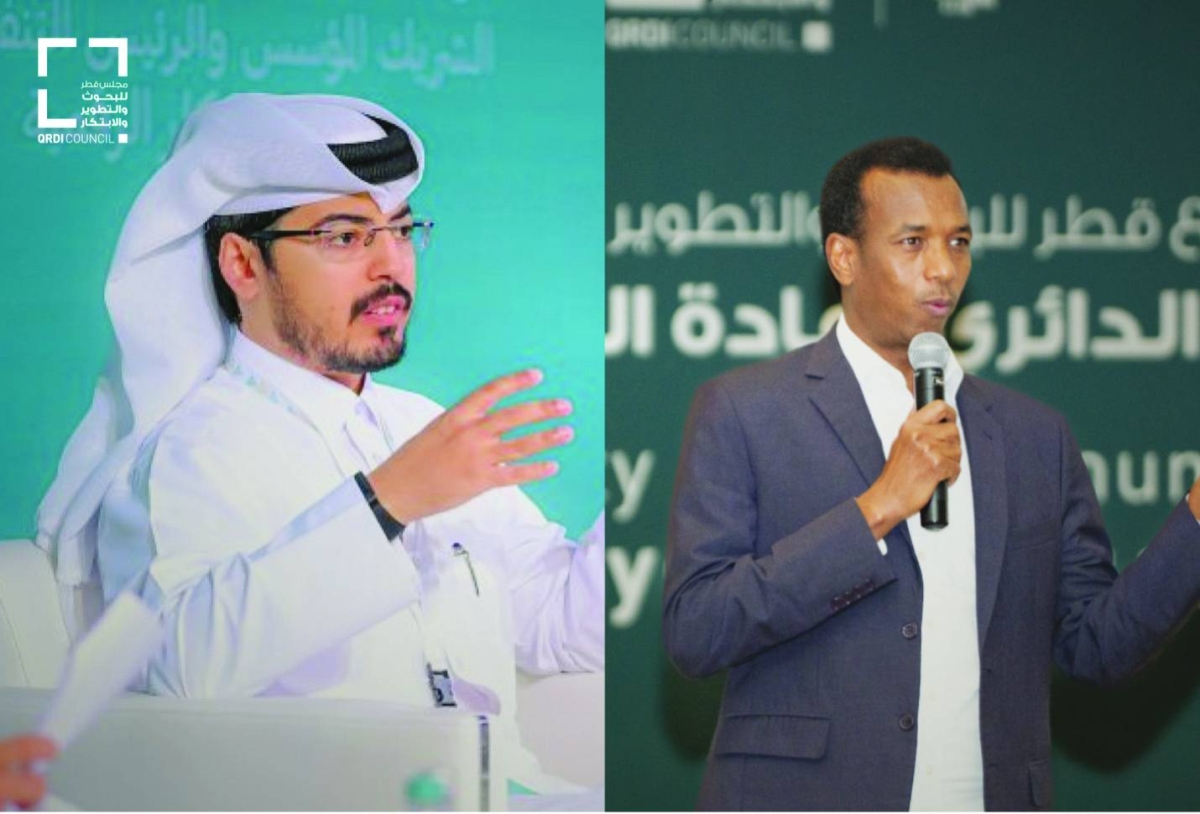
For too long, research, development and innovation have been treated in many places as a long-term ambition that can be delayed when pressure rises. That view is wrong. RDI is not a luxury for favourable times. It is a strategic capability that matters in every phase of national development. In times of peace, it drives economic transformation, diversification and productivity. In times of crisis, it becomes an operational tool for resilience, continuity and the realization of long-term national goals.
This distinction matters now more than ever for the GCC states and for Qatar in particular. As geopolitical instability grows and the regional environment becomes more volatile, the countries that endure are those with the technological capability, institutional depth, and innovation capacity to adapt under pressure. That capacity is built through sustained investment in RDI.
RDI builds the foundation
RDI plays a fundamental role in national development. It strengthens technological capability, raises productivity and supports long-term competitiveness. Countries with advanced RDI ecosystems are better able to diversify their economies, create high-value industries and reduce dependence on narrow sectors. More importantly, they are better equipped to respond when the external environment changes suddenly.
That is the central strategic point. RDI builds the systems, talent base, institutions and knowledge networks that make future resilience possible. It creates the conditions for faster adaptation when shocks arrive. Without that base, countries are left reacting with limited tools and little room to manoeuvre. The real value of RDI is not only in what it produces during stable periods. It is in the capability it creates before crisis hits.
When disruption hits, RDI becomes operational
When crisis arrives, whether through war, pandemics, natural disasters or major supply disruptions, RDI shifts from a long-horizon agenda to a core instrument of response. It enables rapid problem-solving, system adaptation and economic continuity. It helps states and institutions respond faster, reconfigure operations and maintain performance under stress. Crises expose the difference between countries that can innovate under pressure and those that cannot. The gap is rarely determined in the moment. It is usually the result of decisions made years earlier about whether RDI was taken seriously.
This is where the strategic value of RDI becomes clearest. Crisis is precisely the moment when innovation capability matters most. The question is not whether a country can afford RDI during disruption. The question is whether it can afford to operate without it.
History is clear
History offers repeated evidence that major technological breakthroughs are accelerated in periods of crisis but made possible by capabilities developed over time. World War II accelerated advances in computing, radar and aviation. The Cold War drove major leaps on the internet, GPS and satellite systems. During Covid-19, mRNA vaccines and digital platforms moved from scientific promise to global deployment at extraordinary speed. This is precisely when countries should deepen, not defer, their investment in RDI, because crises reward those that have already built the capacity to respond at speed.
Crisis compresses innovation timelines and concentrates attention and funding. But breakthrough performance in crisis does not come from improvisation alone. It depends on pre-existing research depth, talent, infrastructure and institutional co-ordination.
The same principle applies today. Many of the technologies shaping current conflicts in the region, including artificial intelligence, autonomous systems, satellite communications and cyber capabilities, are not short-term inventions. They are the result of decades of sustained RDI investment. That is the lesson policymakers should not miss. Crisis performance is determined by the investments made much earlier.
Leading countries do not retreat from RDI in crisis
In periods of heightened external pressure, research, development and innovation become more closely tied to national strategy, with investment directed toward resilience, strategic sectors and long-term economic security.
For instance, during Covid-19, Singapore accelerated diagnostics innovation and later strengthened vaccine and biologics manufacturing as part of national preparedness.
In response to semiconductor supply-chain vulnerability, South Korea expanded support for semiconductor R&D, testing infrastructure and production capacity. After the Great East Japan Earthquake and Fukushima disaster, Japan embedded science, technology and research into long-term reconstruction efforts. In each case, crisis did not push RDI to the margins. It moved it closer to the centre of national response.
This is what strategic RDI looks like under stress. It does not disappear from the agenda. It moves closer to the centre of national decision-making. Qatar enters this moment with a stronger RDI base than many regional peers due to consistent focus from the country’s leadership.
Over the last two decades, it has built significant capacity through deliberate policy and sustained commitment. It was the first in the region to establish a research funding agency. It has a clear national strategy through QRDI 2030. Qatar has world-class research infrastructure, strong universities, global talent attraction and active international partnerships. It also has a growing private sector innovation base, driven by local startups and international players expanding their footprint in the country.
For that reason, strategic RDI should be understood as part of Qatar’s national response to a more uncertain environment. This is fully consistent with the Third National Development Strategy (NDS3), which places resilience, diversification, productivity and future capability at the centre of the next phase of development. In that setting, RDI is not a supporting issue. It is a national capability.
The biggest risk is strategic hesitation
The immediate disruption to markets, logistics and supply chains is serious, but the deeper risk is a gradual erosion of innovation capacity and long-term competitiveness. When RDI is deprioritised during crisis, countries lose technological momentum. Innovation ecosystems weaken, global competitiveness declines, talent starts leaving. Capabilities built patiently in times of peace begin to erode. Once that erosion starts, recovery is slow and expensive. This is a risk Qatar will need to guard against. A strong RDI system is most valuable when continuity, adaptation and resilience matter most.
The shift: capacity to capability
Qatar does not need to build an RDI system from scratch. It already has one. The strategic task now is to protect it, prioritise it and leverage it more aggressively. In stable periods, institutions often focus on capacity building. In crisis, the emphasis must shift to capability: the ability to deploy knowledge, technology and partnerships toward urgent national needs.
That means focusing on areas that strengthen both resilience in crisis and competitiveness in peace. Strategic technologies such as AI, advanced computing and semiconductors must move higher up the agenda. So must cybersecurity, digital infrastructure, energy and industrial resilience, supply-chain and logistics innovation, dual-use technologies, and water and food security. These are not disconnected priorities. They are directly aligned with resilience needs today and with Qatar National Vision 2030 and NDS3 goals for long-term national development.
The policy choice is clear
Countries that underinvest in RDI during peace are unprepared in crisis. Countries that deprioritise RDI during crisis fall behind. Countries that protect and refocus RDI emerge stronger, more competitive and more resilient.
That is the real policy choice facing Qatar and others like it. The question is not whether to invest in RDI. The question is whether to sustain it and position it as a core national capability across both stability and disruption. RDI is not a luxury. It is part of how nations protect their future.
- Dr Mohammed al-Housani is a senior policy leader shaping Qatar’s RDI agenda and strengthening its position as a globally competitive innovation hub.
- Dr Abdellahi Hussein has nearly two decades of experience in areas such as research management, higher education, STEM education, RDI policy, and social science research methods.