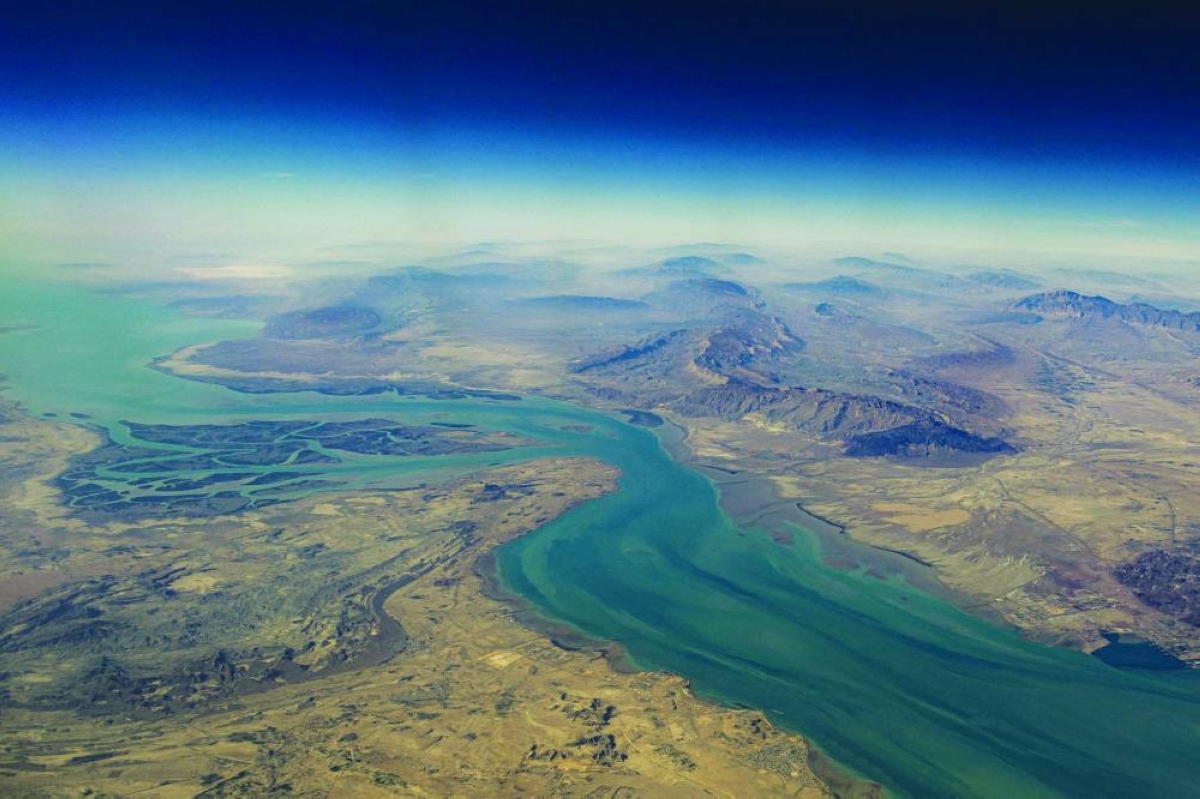
Roudi Baroudi The past few days have served up multiple reminders of why armed conflict is almost never a good option, let alone the best one: war is dangerous, expensive, and unpredictable, making it the last resort for prudent leaders. The entire region is on edge, with Iran seeking to internationalize the conflict so that other states will put pressure on the United States and Israel to halt their air and missile offensive. We are now on the precipice, however, of developments whose impacts will effect virtually everyone, everywhere. I refer, or course, to the Strait of Hormuz, the narrow, shallow, and uniquely vital waterway that connects the Gulf to the open seas and haunts the dreams of risk analysts everywhere. About a fifth of the world’s oil — worth more than half a trillion dollars annually — transits this passage, and while Saudi Arabia and the United Arab Emirates have pipelines that avoid the strait, they can’t handle nearly the same volumes. In addition, approximately the same share of the world’s liquefied natural gas (LNG) passes through the same corridor, most of it Qatari LNG outbound for Asia. For good measure, Hormuz is also the route by which some 200mn people, including most of the six-nation Gulf Cooperation Council (GCC), receive most of their food and other imports. For decades, the Iranian government has claimed the right, boasted the ability, and vowed the willingness to close this waterway in response to various forms of military or other pressure from the US. Then as now, its reasoning has been both subtle and brutal. Outwardly, Iranian officials have denied targeting GCC and other states with missiles and drones, insisting that their forces were aiming instead at US military assets on their soil, even though most of these countries have not allowed their airspace to be used for the US/Israeli offensive. Even if it were true, the Iranian interpretation would certainly be a distinction without a difference for those mourning lost loved ones, but there have now been countless drone and missile attacks on homes and residential buildings, port facilities, oil and gas infrastructure and other civilian targets in several GCC countries. Either way, the Iranians seem to have calculated that inflicting some degree of pain on their neighbours will cause more voices — in this case from within US-allied countries — to demand an end to the war. Energy pricesA similar arithmetic makes Hormuz the world’s ultimate choke point. The mere possibility of lasting disruption there has caused energy prices to rise on countless occasions, including the current crisis, and an actual closure for any length of time would be highly corrosive to the global economy. And since energy prices get baked into virtually everything else, the pain would be felt virtually everywhere. The number of countries that Iran can hit with missiles or drones is relatively limited. But close Hormuz and no country on earth would be immune to the consequences, causing many of them to demand a return to diplomacy. The fact of the matter is that Iran administers only a small section of the strait, specifically a strip of the northern channel usually used for entering the Gulf, and international law gives it no legal authority to suspend shipping there for more than a few hours without compelling reasons. Article 44 of the 1982 Law of the Sea specifically mentions that innocent passage cannot be denied. This is one reason why Tehran has been so cagey about its intent, for instance by having its parliament pass and illegal legislation supposedly authorizing closure, but then leaving the activation to the executive branch. In legal terms, then, it is difficult to conceive of circumstances in which Iran could justify closing the strait and imposing so much hardship on so many people around the world. Whatever its stated intentions, its actions would amount to little more than sabotage and extortion. In reality, Iran is already getting some of what it wants. Information published by Navionics and other ship tracking services indicates that until the current interruption, increasing numbers of ships were avoiding Iranian waters altogether, sailing entirely or almost entirely in Omani waters. But several ships have already been damaged, putting instant upward pressure on insurance rates and convincing most shipping companies that the risk is too great. Dozens of hulls — carrying oil, LNG, and all manner of general cargo — are now waiting to leave the Gulf, and dozens more are piling up outside it. Prices are already starting to rise, and each day that passes makes energy scarcer and more expensive. It won’t take long for the consequences of this kind of disruption to grow in size and severity. Traders and speculators may be able to stave off the full impact for a few days, and other oil producers can pump more to compensate, but eventually most of the GCC states will run out of storage and have to halt production. The situation for LNG could be even worse because there are so few producers, and Qatar has already halted production over safety concerns, idling almost a fifth of global output. For all of these reasons, this war involves far more than the official belligerents. The region’s geography and geology mean that anyone who uses energy in any way has a direct stake in the outcome. Even countries that export oil and gas have a vested interest in a return to stability: rising prices might be tempting in the short term, but they inevitably damage economies and weaken demand over time. For this reason in particular, all responsible participants, willing or otherwise, need to be pushing for a negotiated solution. Dialogue and diplomacy are never wasted efforts. Even when they fail to prevent or end a conflict, discussions carried out in good faith can leave behind the building blocks for a future understanding. The mere fact of direct or indirect contacts can also attenuate the intensity of operations — therefore limiting potential casualties and renewed impetus for more war — as planners start considering the repercussions for diplomacy. As human beings, therefore, we should never give up on the possibility of peace. but nor can we sit and say nothing as Iran lashes out at peoples and countries who have nothing to do with this conflict, destabilizing the entire region and undermining standards of living the world over. This is especially true of Qatar and Oman, both of which have left no stone unturned in trying to keep Iran out of a war in the first place. (Roudi Baroudi is the author of several books about maritime boundaries and has worked in the international energy business since the 1970s. He currently serves as CEO of Energy and Environment Holding, an independent consultancy based in Doha.)


admin