1. Home
  2. Opinion

Category: Opinion

Opinion
Fuel costs hit classrooms in the US

Fuel costs hit classrooms in the US

Soaring diesel prices since the onset of the Iran war are draining already tight US school district budgets, making it more expensive to bus students and run generators in a shock officials ‌say they will not be able to afford for long. School districts from Yakima, Washington to Waco, Texas are tapping emergency funding ​reserves to keep buses running. In remote Alaska, officials ‌are scrambling to secure enough fuel to keep the lights on, according to Reuters interviews. “It’s more than a straw ‌on the camel’s back, it’s like a haystack,” said Yakima Superintendent ‌Trevor Greene. The stress reflects one of many knock-on impacts of ‌the US-Israeli war on Iran, which has disrupted the flow of around a fifth of the world’s oil supplies. Since the war started in late February, fuel prices have posted one of their most rapid climbs on record. The spike has upended economies around the globe. It has caused enough pain in the US to be a political liability for President Donald Trump ahead of November midterm elections when his Republican party is trying to maintain slim majorities in the US Congress. US school bus operators are major buyers of diesel, consuming more than 800mn gallons of diesel annually, according to the American School Bus Council. Since December, the price US fleets of all types pay for diesel fuel has jumped 67% to $5.52 a gallon, an increase that would add about $1.8bn to the annual cost of operating those school buses, according to a recent ​analysis by fleet management technology provider Samsara. That’s a huge challenge for schools already facing tight budgets, said James Rowan, executive director of the Association of School Business Officials International. “Districts can plan for higher costs, but rapid swings in prices make it very difficult to budget accurately,” he said. “Even districts that have been able to ‌absorb costs this year through reserves or temporary measures - they may not have that same flexibility ​going forward.” Close to a third of US school districts are now siphoning money away from other funds or programs ​to cover their increased fuel costs, while almost a fifth are tapping reserves or rainy day funds, according to a survey of 188 school officials commissioned by the School Superintendents Association known as AASA and conducted during the week of May 4. School officials are trying to save money by consolidating bus routes, enforcing anti-idling measures, changing fuel purchasing practices, deferring maintenance work and reducing administrative spending and staffing, according to the survey, the results of which were shared exclusively with Reuters. Washington State’s Yakima School District executives said the price they pay for diesel was recently up 64% year-on-year to $6.30 a gallon. At that price, the district would need to pay $213,000 more a year on fuel to operate its 60 buses - roughly the equivalent of salaries for two teachers, said Greene. That is a big burden in an agriculture-dominated school district that has a poverty rate of 86%, and which is already “tremendously underfunded,” he said. In the meantime, the district is making piecemeal purchases for ‌its 30,000-gallon diesel tank on days when prices ‌dip, instead of filling it up, as it “limps through the end of the year,” district CFO Jacob Kuper said. Christopher Mills, superintendent of Thief River Falls Public Schools in northwestern Minnesota, said diesel costs tied to transporting as many as 800 students are up around 30% since the Iran war began. The district is working to limit direct impacts on classrooms, Mills said, “but if the prices continue to increase we could be in a position of reducing support services to students.” 
Opinion
In Beijing, choreography outran the substance

In Beijing, choreography outran the substance

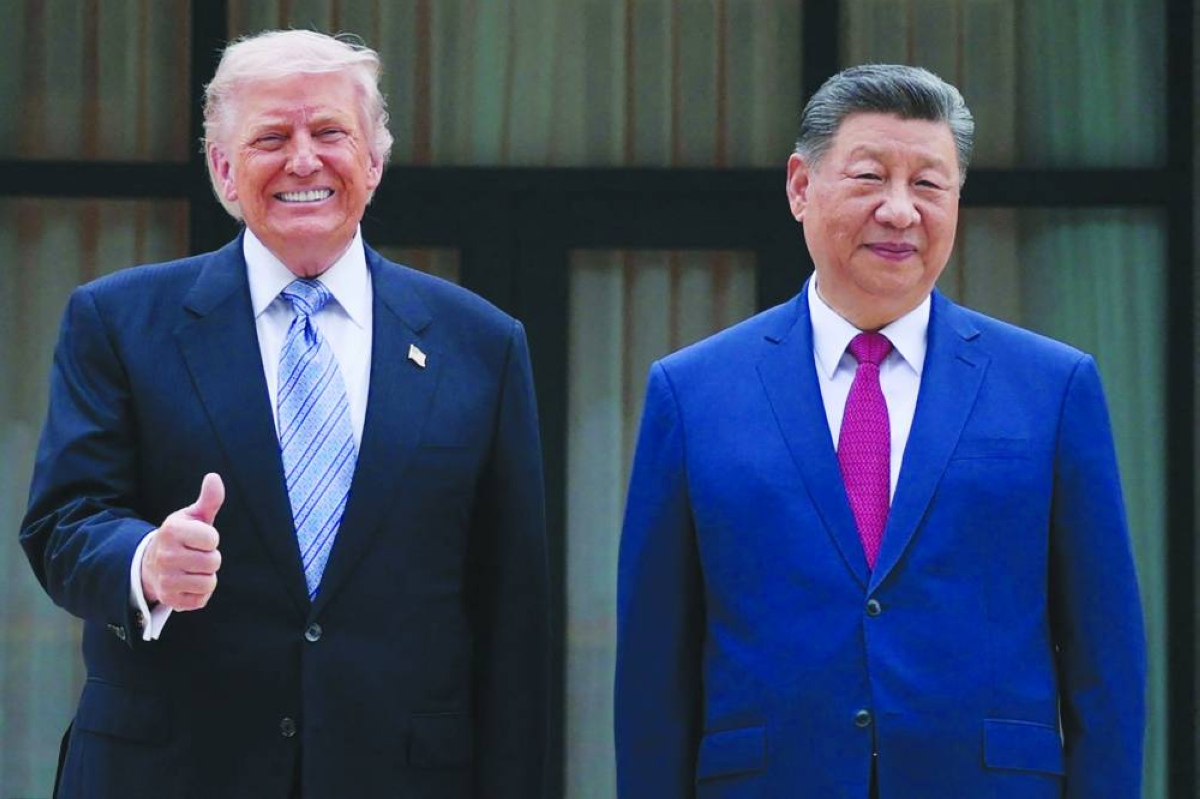
When the red carpets were rolled up in Beijing on Friday, what Donald Trump carried home from his two-day audience with Xi Jinping was less a diplomatic harvest than a bouquet — handsome enough to display, but already cut. The American president pronounced the summit a triumph, toasted “my friend” across the banquet table, and paraded a list of half-formed commercial wins: Boeing aircraft, soybeans, beef, an opening for US capital. By Saturday, Beijing was already deflating the largest of those claims, with Foreign Minister Wang Yi noting only that the working teams were still talking. What was on offer in the Chinese capital was, in the end, not so much an agreement as an atmosphere.  That, in itself, is no small thing. With the Strait of Hormuz still half-strangled by the unresolved Iran war the United States set in motion, with energy markets jittery and supply chains brittle, the world’s two most consequential capitals chose pageant over provocation. Both leaders had every reason to want it so. Xi is preparing to seek a fourth term while stewarding an economy on which an estimated 10-20mn Chinese jobs hinge on trade with America. Trump, his attention pulled in too many directions at once, needed Beijing not to add to the disorder. Stability of a kind was duly produced. Whether it is durable — or merely tactical — is the question worth asking.  The cameras captured a study in mismatched temperaments. Xi played host as a man who knew his guest’s weaknesses: the Temple of Heaven, the Great Hall of the People, the rose gardens of Zhongnanhai, and, as a parting flourish, a promise to send seeds for the White House lawn. He conceded almost nothing. Trump, for his part, performed his admiration in public — tall, very tall, the most beautiful roses anyone had ever seen — and came away with little beyond the goodwill itself. Susan Shirk, the veteran China hand, observed with diplomatic restraint that the flattery was not working. In truth it was working — for Xi.  Beneath all this lies a story of leverage, and how decisively it has shifted since Trump last flew into Beijing in 2017. China has spent the intervening years tightening its grip on the unglamorous machinery of modern power: rare-earth extraction and processing, magnet manufacture, active pharmaceutical ingredients, the workaday plumbing of the green-tech supply chain.  When Washington escalated tariffs last year, Beijing answered with export controls on critical minerals, and it was the American side that blinked. That single episode rewired the diplomatic muscle memory of both governments. As one analyst put it bluntly this week, China now handles the United States by deterrence rather than concession, willing and able to meet escalation with escalation of its own. The Beijing summit was the culmination of that shift, not a deviation from it.  Nowhere was the new arithmetic more exposed than on Taiwan. Xi opened the talks by warning that any mishandling of the island could plunge the entire relationship into crisis; Trump, by his own admission, made no comment in the room, said nothing publicly until Air Force One had cleared Chinese airspace, and then — astonishingly — recast a $14bn defensive arms package long awaited in Taipei as a “negotiating chip” whose fate “depends on China”. It is difficult to overstate how unsettling that single phrase will read in Taipei, in Tokyo, in Canberra, in Manila.  Within hours of leaving Beijing, an American president had publicly converted a commitment to a democratic partner into bargaining material for soybean orders. Whether or not the package is ultimately approved, the signal has been sent, and allies have heard it. So has Beijing.  Xi’s other gambit was conceptual, and shrewder than it first appears. By invoking the Thucydides Trap — the warning, drawn from the chronicler of the Peloponnesian War, that a rising power and an established one slide too readily into catastrophe — he draped the meeting in the language of statesmanship while quietly assigning the United States the role of the anxious incumbent. He then proposed a new formulation, “constructive strategic stability”, which Chinese state media duly reported as jointly agreed. The phrase is studied vagueness. It works as a set of guardrails Beijing can later accuse Washington of breaching whenever it suits — rules of a game written on a chalkboard the other side does not own.  And yet a case can be made — most thoughtfully by those urging a “cold peace” — that this is precisely the moment for stalemate rather than showdown. Decoupling the world’s two largest economies remains a fantasy. Japan, with 15 years of effort, has only pared its rare-earth dependency on China from above 90% to around 60%. More than a third of American active pharmaceutical ingredients come exclusively from Chinese suppliers. The interdependence is mutual, structural, and impervious to the rhetoric of decoupling. If the Beijing meetings did no more than keep the channels open, slow the deterioration, and give moderates on both sides a little room to breathe, that is not nothing.  But it is also not what was advertised. The president went to Beijing speaking of fantastic deals; he came back with promises whose specifics his hosts immediately declined to confirm. He went hoping, by his own account, for Chinese pressure on Iran to reopen the Strait of Hormuz; he came back with sympathy and no commitment. He went carrying the leverage of America’s chip alliance; he came back having mused aloud that Taiwan had stolen the industry it built.  Here, then, is the food for thought. The Beijing summit will be remembered less for what was agreed than for what it revealed: a Chinese leadership confident enough to receive flattery without returning it, and an American presidency increasingly willing to mistake atmosphere for achievement. The roses, one suspects, will bloom. The harder question is whether anything else planted this week will. • The writer is Deputy Managing Editor, Gulf Times.

Opinion
Starmer’s troubles a sign of fractured times

Starmer’s troubles a sign of fractured times

A week where everything and nothing seemed to happen in British politics left Sir Keir Starmer hanging on as prime minister, in office but not in power, as one of his predecessors at 10 Downing Street, John Major, was famously taunted back in 1993. While a threatened leadership challenge from Wes Streeting, the ambitious former Health Secretary, never materialised, Starmer remains under intense pressure to set a date for his departure. Less than two years into a premiership that began with a landslide election victory in July 2024, Starmer’s travails illustrate the difficulty of governing in an intensely populist age. From almost the moment he entered No. 10 as the first Labour Prime Minister in 14 years, Starmer has faced one political crisis after another. Many of them have been self-inflicted, such as the appointment of Peter Mandelson as ambassador to the US, while others reflect the challenging economic legacy that Starmer inherited from the Conservative Party.There is also the paradox of the 2024 election in which Labour won a 174-seat majority in the House of Commons, almost as large as Tony Blair’s record-breaking 179 majority in 1997, yet did so on the back of just 33.7% of the vote, 10 points lower than the previous general election in 2019 which delivered Boris Johnson’s Conservatives a majority of 80 seats. Starmer’s ponderous style of decision-making and wooden manner of speaking have not helped him connect with a public that is increasingly tired of the two-party system – Labour and the Conservatives – that has dominated politics for 100 years. This shone through in the disastrous results of the local elections in England on May 7 which saw Labour lose control of 38 councils and shed 1,498 councilors. Labour also performed badly in the elections to the Scottish Assembly, held the same day, and finished in a distant third place in the Senedd (Welsh Assembly) vote after having been the largest party in Wales for decades. Across the board, voters made it clear they had tired of Labour as well as the Conservatives. The results of the May 7 elections also suggest that the political landscape in Great Britain has fragmented in ways that make further volatility very likely. Politics in England has moved beyond the traditional two (or three, if you include the Liberal Democrats) party system to become a five-party affair as Reform and the Greens enter the mix. Nigel Farage’s Reform UK were the biggest winners of the local elections even if they finished 4% down on their vote share in the 2025 elections. Reform and the Green Party showed they can outflank Labour and the Conservatives from both the left and the right. Meanwhile, the fact that nationalist parties — Reform in England, the Scottish National Party, and Plaid Cymru — topped the vote in England, Scotland, and Wales, respectively, suggests that the union is fraying as voters in the constituent nations go their own ways. And yet, the Labour inquest into what went wrong and what should be done about it has descended into farce and looks set to dominate headlines for months and leave the UK effectively leaderless over the summer. Starmer’s unpopularity, with the public as well as his own MPs, generated an expectation that he would face a leadership challenge, likely from Streeting, who duly resigned from the Cabinet on May 14. However, Streeting failed to challenge Starmer, likely because he could not get the support of the 81 members of parliament needed to trigger a leadership contest under Labour Party regulations. Andy Burnham, the relatively popular Mayor of Manchester, duly declared his intent to re-enter the House of Commons as Josh Simons, hitherto a Starmer loyalist, resigned his seat to trigger a by-election in the Makerfield constituency that will likely take place in June or July. What happens next is anyone’s guess. While Makerfield has returned a Labour MP ever since the seat was created in 1983, Reform came a strong second in the 2024 election and won every local council seat in the constituency on May 7, finishing 28 points ahead of Labour. It is therefore not a shoo-in for Burnham and previous efforts to parachute figures into parliament have not always gone well. A cautionary tale is that of Patrick Gordon Walker, Foreign Secretary in Harold Wilson’s government who had surprisingly lost his seat in the 1964 general election, whereupon a Labour MP was elevated to the House of Lords to create a vacancy only for the Conservatives to defeat Gordon Walker in what had been a safe seat. Should Burnham win the seat, he would demonstrate that he is capable of taking on and defeating Reform in precisely the northern industrial heartland that Labour will need to retain if they are to have any chance of staying in office after the next general election. The fact that the by-election is essentially a vote on a potential prime minister makes it unique in recent political history. If Burnham does return to the House of Commons, where he sat from 2001 to 2017 and served in Gordon Brown’s cabinet, Starmer will face a choice of contesting a leadership election, which could take months, or stepping down to allow a swift coronation. The two Conservative Party leadership elections of 2022 provide a template for the choices Starmer must make. Nearly two months elapsed between Boris Johnson announcing he would resign as prime minister, on July 7, and Liz Truss winning the leadership election, on September 5. Following Truss’s ignominious exit after 49 days in office, however, the party decided not to hold a protracted second election in a matter of months and coalesced around Rishi Sunak who was elected unopposed just four days after Truss stood down. For Starmer, the tragedy is that there has rarely been a more highly qualified prime minister who was so unsuited to the style of retail politics all successful leaders must practice. • The writer is a leading scholar specialising in Gulf politics and international political economy, and a fellow at the Baker Institute and co-director of the Middle East Energy Roundtable.  Related Story

Opinion
Fibre-optic drones have exposed Netanyahu’s Hezbollah pipe dream

Fibre-optic drones have exposed Netanyahu’s Hezbollah pipe dream

In the ruined townships of southern Lebanon, a new kind of war has emerged — one that no Iron Dome can intercept and no electronic warfare suite can blind. A small quadcopter, guided not by radio waves but by a hair-thin fibre-optic cable unreeling silently behind it, skims rooftops before slamming into an Israeli Merkava tank with the precision of a surgeon’s scalpel. Israel’s multibillion-dollar defence architecture is, in this moment, rendered irrelevant by a spool of cable and a repurposed commercial drone. This is the battlefield arithmetic that confounds Benjamin Netanyahu’s proclaimed ambition to disarm Hezbollah — what his critics call his greatest pipe dream. Battered by a year of Israeli bombardment, stripped of key commanders, its Syrian supply corridor severed by Assad’s fall, the Party used fifteen months of fragile ceasefire not to disarm, as Beirut and Washington demanded, but to rearm — and to innovate. Israeli officials acknowledge that Hezbollah’s drone unit has launched over 160 FPV sorties since early March, 90 guided by fibtr-optic cables that defeat every electronic countermeasure in Israel’s inventory. When a medevac helicopter raced to evacuate the wounded at Taybeh, Hezbollah launched a second drone at the aircraft. Soldiers pointed their rifles at the sky. On May 7 and 8, FPV drones struck Iron Dome launchers, footage showing maintenance crews fleeing moments before impact. Netanyahu’s answer? A solution “will take time.” In the interim, front-line troops hang nets over their positions, hoping a drone snags on fabric before it finds flesh. Against this backdrop, the demand for disarmament assumes the quality of a theatre of the absurd. Behind closed doors, Lebanese officials have quietly conceded to American envoys that disarmament within any near-term horizon is not feasible. The Lebanese Armed Forces, underfunded and structurally compromised by decades of Hezbollah influence, have neither the firepower nor the political will to confront an organisation that has threatened civil war should anyone try. Secretary General Naim Qassem has warned that seizing the Party’s weapons will mean “no life in Lebanon.” In the vocabulary of Lebanese politics, that is not a threat — it is a constitutional fact. The Party’s negotiating position is a masterpiece of circular logic that happens to be tactically airtight: it will consider disarmament when Israel withdraws from all Lebanese territory — an outcome no Israeli leader, least of all Netanyahu, will accept before Hezbollah disarms. Israel retains forces at five strategic points along the border; Prime Minister Salam has noted that Israel effectively controls sixty-eight Lebanese villages in the south. The 1949 Armistice line, Lebanon demands as a baseline, remains a distant aspiration. The land Israel has seized by force shows no sign of returning for free. Washington pushes Aoun and Salam toward peace and mutual recognition with Israel — a proposition the Party categorically rejects, and that much of the Lebanese political class regards as surrender dressed in diplomatic language. The 1949 Armistice border is not merely a cartographic line; it is the architecture of national dignity. The Lebanese question cannot be understood apart from the larger battle between the US-Israel Axis and the Axis of Resistance. When American and Israeli strikes killed Khamenei on February 28, they did not merely decapitate a theocracy — they pulled the trip wire that brought Hezbollah back into combat after fifteen months of enforced restraint. Tehran, even in the convulsive aftermath, has not relinquished the Hezbollah card. It never will. The Party is the crown jewel of the IRGC’s four-decade investment in the Levant — trained, financed, and strategically directed by the Quds Force from its inception. To imagine Tehran surrendering that asset for diplomatic pleasantries is to misunderstand the Islamic Republic’s strategic grammar entirely. Now, with Trump dangling olive branches and threatening “massive maximum pressure” in the same breath, the most consequential variable hangs unresolved: what emerges from the Trump-Xi summit in Beijing? Regional sources have told CNN that progress in the Iran nuclear talks “will depend on the results of President Trump’s visit to Beijing.” Iran has already warned of ninety-percent uranium enrichment should a second round of US-Israeli strikes materialize.15 Should diplomacy collapse, and the bombs fall again, Hezbollah will unleash its remaining arsenal against northern Israel — where more than a million Israelis have already abandoned their homes, a demographic hostage to an impasse that no one in Washington, Jerusalem, or Beirut dares to resolve. Lebanon is, as it has always been, the theater in which larger powers rehearse their conflicts without suffering their consequences. The scorched villages, the families in schools north of the Litani, the iron-nerved drone operators threading quadcopters through bombed-out alleyways — all of this is the bill Lebanon pays for a geopolitical argument it did not author and cannot conclude. Disarming Hezbollah is not a policy question. It is a civilisational reckoning — with Iran’s ambitions, Israel’s appetite for security-through-dominance, America’s capacity to translate pressure into outcomes, and Lebanon’s chronic inability to imagine itself as a sovereign state rather than a corridor for other people’s wars. Netanyahu’s pipe dream of a disarmed Hezbollah will remain precisely that — a dream — as long as Iranian strategic interests, Lebanese political paralysis, and fiber-optic quadcopters make the alternative unenforceable. The Party has used every ceasefire to rearm, every setback to innovate, and every ultimatum to consolidate its base. The question no one in the triumvirate of Washington, Jerusalem, and Beirut dares answer aloud: if sixteen years of UN resolutions, three major wars, and the killing of Iran’s Supreme Leader have not disarmed the Party — what, exactly, will? • The writer is a news anchor, programme presenter and media instructor.  Related Story

Opinion
As Social Security withers, Congress dithers

As Social Security withers, Congress dithers

Americans who might agree on little else share a common interest in preserving Social Security and Medicare.Nearly all of us are either enrolled in those universal programs or expect to be as we get older.

Opinion
‘Why do people love me? I’m bad thing a person can be’

‘Why do people love me? I’m bad thing a person can be’

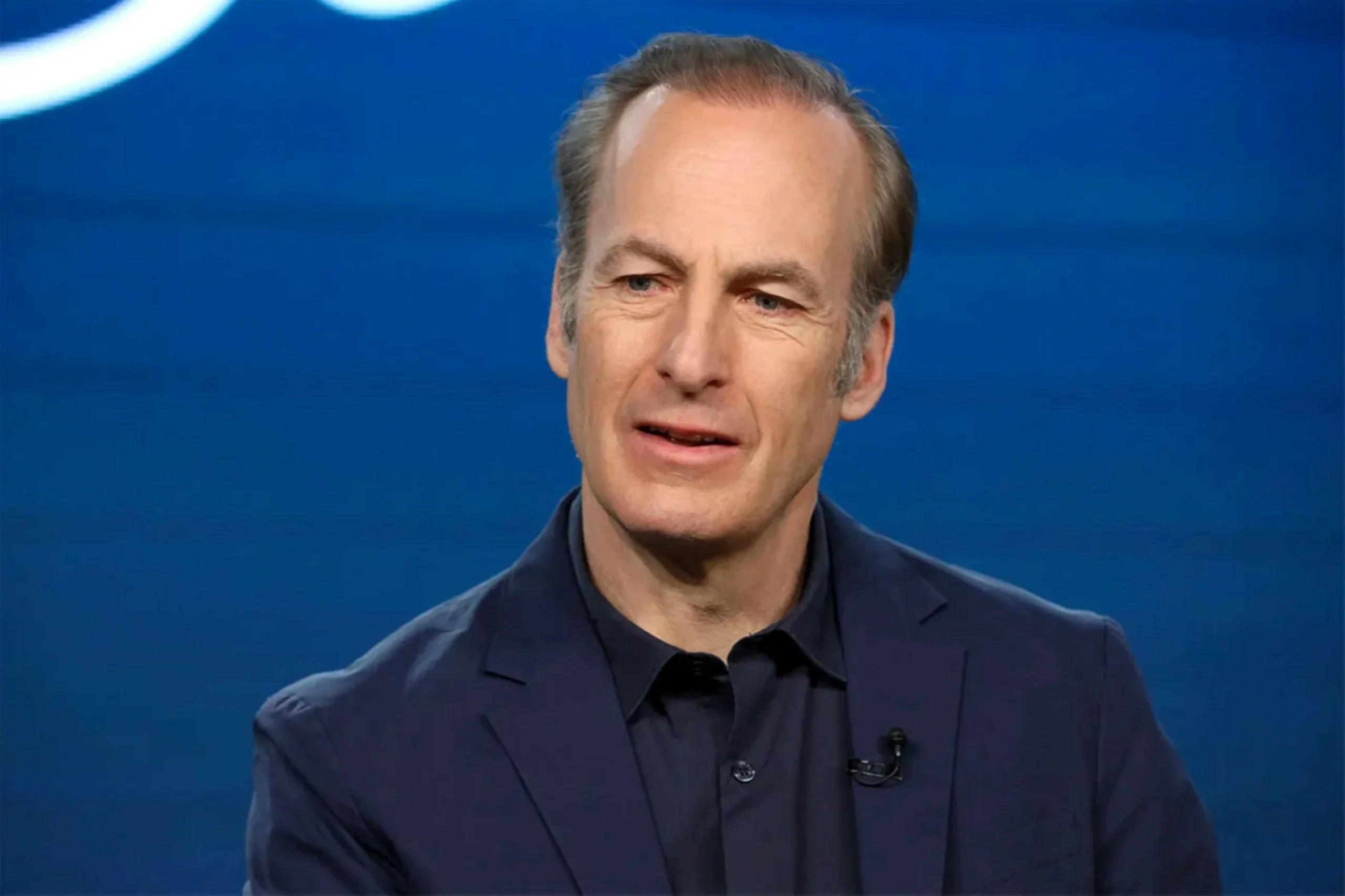
Louis Chilton, The IndependentI'm very earthbound," says Bob Odenkirk, looking, for want of a better word, entirely normal. Gone are the garish off-the-rack suits he paraded as Breaking Bad's unscrupulous shyster Saul Goodman; in their

Opinion
California’s online tool aims to revive democracy

California’s online tool aims to revive democracy

Jeffery Marino and Micah Weinberg, Tribune News ServiceIn the months that followed last year’s Altadena and Pacific Palisades fires, something quieter but no less consequential has happened in those same neighbourhoods. More than 900 people

Opinion
Official version

Official version

It seems that the world is often quick to judge a successful and flourishing real-life love story, such as the rock-solid bond between Emmanuel Macron, 48, and his wife Brigitte Macron, 73 (“Brigitte Macron denies

Opinion
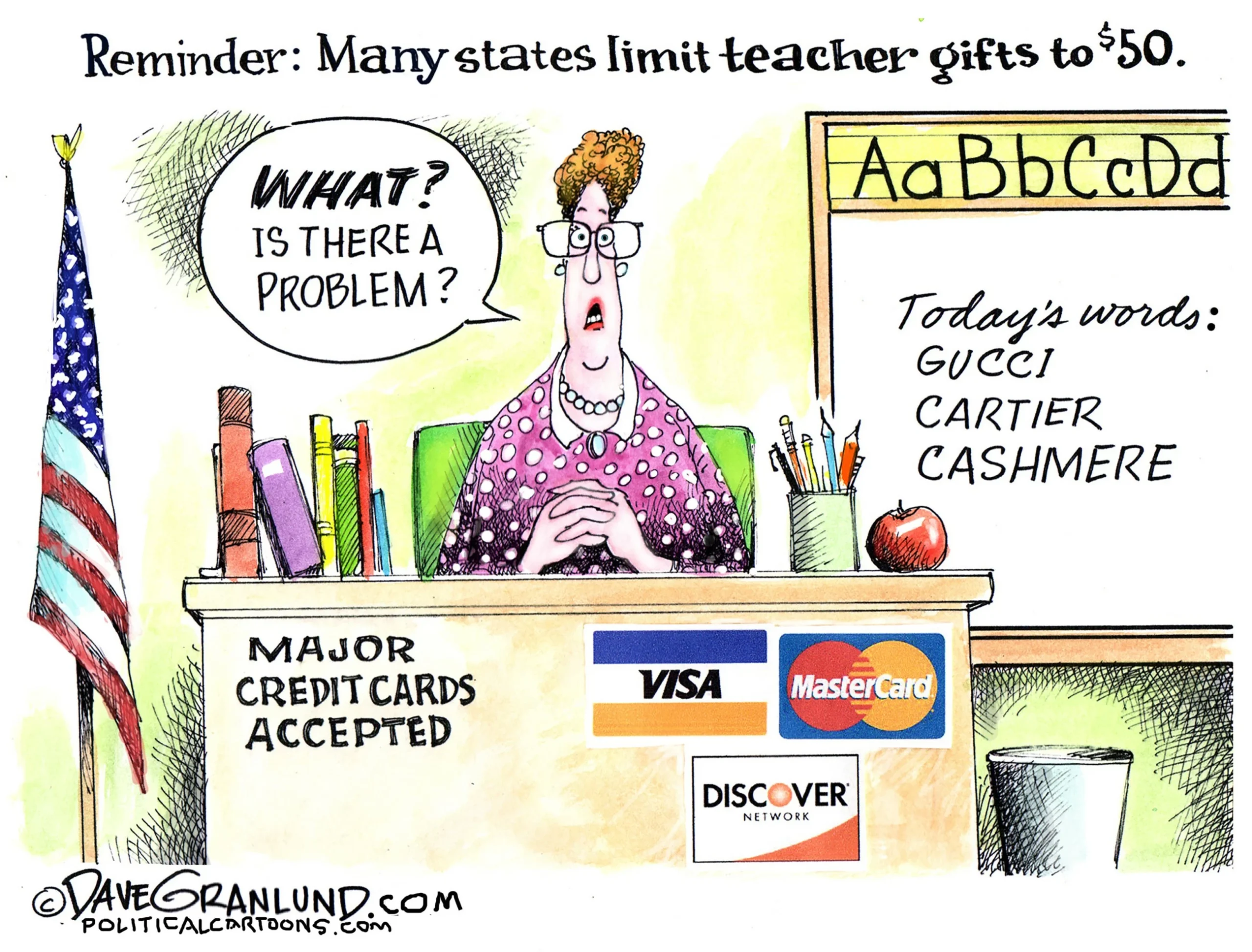
Gift problem

Gift problem

Gift problem

Opinion
Fatima Sana’s world record caps journey of courage, poise

Fatima Sana’s world record caps journey of courage, poise

On Friday, Pakistan’s 24-year-old captain Fatima Sana created a new world record for the fastest T20I fifty in the women’s game against Zimbabwe. The record was no fluke. Walking in at No. 6 with Pakistan 152 for 4, Fatima reached 50 in 15 balls — eclipsing the 18-ball mark jointly held by Sophie Devine, Phoebe Litchfield and Richa Ghosh — and finished unbeaten on 62 off 19, with 10 fours and two sixes. Fatima has already lived through the kind of emotional highs and personal devastation that shape sporting legends. To Pakistan cricket followers, she is the pace-bowling all-rounder who rose from Karachi’s narrow streets to captain the national women’s side. But behind the headlines lies a story of sacrifice, grief, stubborn resilience and a father’s unwavering belief in a daughter who refused to surrender to circumstance. Born in Karachi, Fatima did not emerge from Pakistan’s traditional elite cricketing pipeline. She came from a modest household where dreams were often larger than means. Cricket itself was not initially seen as a straightforward path for girls, especially in conservative social settings where sporting careers for women still carry social pressures. Yet her father became the central force behind her journey. Little-known among casual fans is how personally invested he was in her cricketing ambitions. He would accompany her to training sessions, encourage her when others questioned the practicality of women’s cricket, and shield her from the discouragement that many aspiring female athletes in South Asia encounter. Those close to Fatima have often described her father not merely as a parent but as the emotional architect of her career. She began by playing street cricket with boys in Karachi, where toughness mattered more than reputation. Competing against boys sharpened her competitive edge and aggressive bowling temperament. Coaches quickly noticed her natural seam movement and ability to bowl with surprising pace. What made her stand out even more was her temperament: calm under pressure, fiercely disciplined and emotionally mature beyond her years. Her rise was remarkably swift. By her late teens, she had entered Pakistan’s domestic structure. Then came international recognition. In 2021, she was named the ICC Women’s Emerging Cricketer of the Year — a major breakthrough for Pakistan women’s cricket and a symbolic moment for a player who had climbed from obscurity without glamour or privilege. Yet the defining chapter of her life was not written in triumph, but in tragedy. During the 2024 ICC Women’s T20 World Cup campaign, Fatima received news that shattered her world: her father had passed away back home in Karachi. Pakistan’s captain immediately left the tournament in the UAE to attend his funeral. The image of a grieving young captain walking away from the biggest stage in women’s cricket became one of the tournament’s most emotional moments. What many admired was not only her grief, but her sense of duty. Despite unimaginable emotional pain, she later returned to rejoin the Pakistan squad during the tournament. That decision transformed public perception of her. She was no longer merely a promising cricketer; she became a symbol of emotional endurance. Teammates and observers noted how deeply attached she had been to her father. In many ways, every milestone in her cricket career carried his fingerprints. His death was not simply a personal loss; it was the loss of the person who had believed in her before selectors, headlines and awards ever did. On the field, Fatima combines sharp seam bowling with lower-order hitting ability, making her one of Pakistan’s most valuable multi-dimensional players. Off the field, however, she remains strikingly grounded. She avoids excessive celebrity culture, speaks modestly about achievements and frequently credits family support for her journey. Her leadership style also reflects her background. Unlike louder, more flamboyant captains, Fatima’s authority comes through composure and example-setting. Many younger players reportedly see her as approachable precisely because she understands struggle firsthand. In a cricket ecosystem where Pakistan women’s cricket still fights for visibility and institutional support compared to the men’s game, Fatima Sana’s story resonates beyond statistics. It is the story of a daughter carrying forward her father’s dream, a young woman from humble origins breaking barriers through discipline, and an athlete who continued standing even after life delivered its cruellest blow.