1. Home
  2. Opinion

Category: Opinion

Opinion
Bond markets gripped by inflation fear, prompting rate-cut bets to fall

Bond markets gripped by inflation fear, prompting rate-cut bets to fall

Government bond markets from the ‌euro zone to the United States and Britain sold off sharply as the war ​in the Middle East drove oil ‌and gas prices higher and rekindled inflation fears. Sustained higher inflation would likely force central banks to turn ‌more hawkish. Traders lowered their bets on near-term rate ‌cuts from the Bank of England and the ‌Federal Reserve and priced in a small chance of a European Central Bank hike by year-end. Bond yields rose as equities sold off, underscoring that bonds rarely maintain their safe-haven status during episodes of high inflation. Chief Economist Philip Lane told the ‘Financial Times’ in an interview that a prolonged Middle East war could cause a substantial spike in euro zone inflation and reduce economic growth. The price of rate-sensitive two-year notes fell globally as their yields surged. Britain’s two-year gilt yield rose 15 basis points to 3.80%, bringing the increase since Friday’s close to 28 bps, setting it up for its biggest two-day jump since August 2024. German two-year yields rose 10 bps on Tuesday and are ​up 18 bps since last Friday, the most in a year. US two-year yields were up 6bps on the day. “Investors are basically going back to the 2022 energy-shock template. That is very fresh in our minds. We saw how large and persistent ‌the inflation shock was,” said Rohan Khanna, head of euro rates strategy ​at Barclays, referring to the initial impact of Russia’s full-scale invasion of Ukraine. He said bond market ​moves reflected the jump in energy prices, but the selloff was exacerbated because investors had previously been positioned for bonds to rally on worries about AI-driven disruption to the underlying economy. Europe imports the bulk of its oil and gas. Prices have surged as shipping through the Strait of Hormuz, which carries around one-fifth of oil consumed globally and large quantities of liquefied natural gas, has ground to a near halt. Brent crude rose to $84.42 a barrel yesterday. Over the past week, benchmark European wholesale gas prices closed around 35-40% higher on Monday, and were up another 36% on Tuesday. Benchmark 10-year yields also surged, with Britain’s up 16 bps to 4.53%, Germany’s up 8 bps to 2.79% and the US up nearly 5 bps to 4.10%. The selloff was deepest in Britain, where ‌the BoE is due to meet later this ‌month. Policymakers are divided over whether to prioritise inflation or growth. Traders see just a 20% chance of a cut, versus 75% last week. Elsewhere, markets no longer fully price in a Federal Reserve rate cut until September. Traders price in around a 40% chance of an ECB hike by year-end, having bet on a similar chance of a cut late last week. Euro zone inflation rose more than expected to 1.9% year-on-year, last month, data on Tuesday showed, while a market gauge of euro zone inflation over the next two years jumped to just over 2% on Tuesday from around 1.8% last Friday. Analysis by the ECB suggests that a permanent oil price spike of this magnitude could lift inflation by 0.5 percentage points. Monetary ​policy acts with long lags, so the focus for policymakers will be how long energy prices remain elevated and whether that has second-round effects on wages and prices of other goods. The ECB is likely to say it is too early to tell what impact the conflict will have when it meets later in March, Pictet Wealth Management’s head of macroeconomic research Frederik Ducrozet said. For now, short-term bonds have taken the brunt of the selloff. But that could change later in the year if governments have to respond to a sustained rise in energy prices with more spending, Ducrozet said. Another supply shock when fiscal policy remains supportive showed investors should demand more compensation to hold long-term bonds, TS Lombard analysts said.”This episode could easily push ‌up term premium again and today’s ​co-movement in equities and bonds - both down - is further evidence of why that should be the case.”    
Opinion
For Mexico’s security chief, the El Mencho killing was personal

For Mexico’s security chief, the El Mencho killing was personal

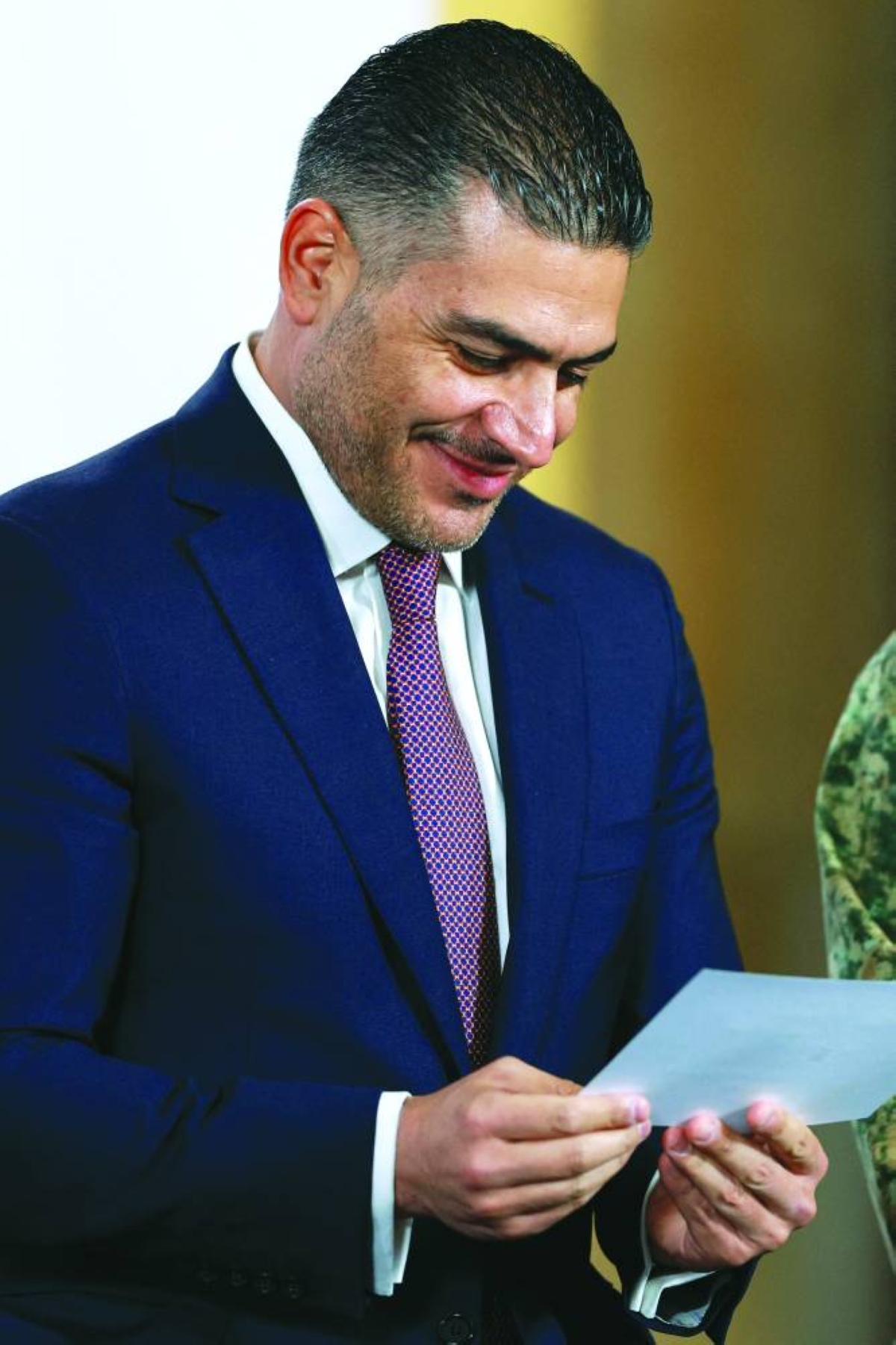
Mexico’s security chief, the man who helped lead the operation that killed the drug lord known as “El Mencho,” spends his days and nights inside fortified office buildings, including a one-bedroom apartment in the security ministry built for him. His quarters — inside a modern complex beside a busy thoroughfare — include a bedroom, gym, kitchen and a conference room that seats 25. From the living room, ‌guests can hear the crack of gunfire from a firing range within the building complex, according to a high-ranking government official who has visited the apartment. A red telephone on ​his desk provides a direct line to the president. Omar Garcia Harfuch, 44, ‌has lived this way since 2020, when on his commute to work a truck cut off his armored Suburban and gunmen disguised as road workers sprayed his vehicle ‌with more than 400 bullets. Harfuch returned fire and survived with three gunshot wounds. Two of his ‌bodyguards and a bystander were killed. The security chief blamed the assassination attempt on Nemesio Oseguera, 59, ‌better known as El Mencho, leader of the brutal Jalisco New Generation Cartel, one of Mexico’s largest and bloodiest crime groups. Six years later, bringing down the cartel leader was a deeply personal moment for Harfuch, who friends say was devastated by his security guards’ deaths. Harfuch declined to comment for this story. The account is based on interviews with a dozen friends, colleagues and security analysts. Those close to Harfuch say that he’s unlikely to let his guard down now that El Mencho is gone. But the death of the kingpin has lifted the profile of Mexican President Claudia Sheinbaum’s Minister of Security and Citizen Protection, who’s credited with spearheading her more muscular approach to fighting cartels, so much so he’s considered an early frontrunner for the presidency when her six-year term ends in 2030. “Omar Garcia Harfuch is the number one presidential candidate today,” said Armando Vargas, the top security expert at the think tank Mexico Evalua. “He is the most visible leader of this new strategy.” The approach is not without risks: El Mencho’s death triggered a wave of violence across Mexico that killed 25 National Guard members and could fuel deadly feuds as rival cartel factions fight for control. It’s also a marked departure from former President Andres Manuel Lopez Obrador’s “hugs not ​bullets” philosophy, under which cartels grew in power and reach to control vast swaths of territory and diversified from drugs into extortion, human trafficking, and contraband fuel. TRUSTED BY THE PRESIDENTHarfuch rose to prominence within the Mexico City government when now-President Sheinbaum was the capital’s mayor. Rodrigo Canales, who advised Sheinbaum on her security strategy, said Harfuch helped her navigate a difficult period early in her mayoral tenure when high-level police officers were accused of corruption. “He has Claudia’s absolute trust and ‌earned it by being extremely loyal and effective in key moments early in her mayorship,” Canales said. Sheinbaum promoted Harfuch to ​head of the city’s police in 2019 after sacking his predecessor over a money laundering scandal. Harfuch had been in the job for under a year when assassins made the ​attempt on his life. After initially returning fire, he scrambled into the back seats of his armored SUV and crouched down until reinforcements could arrive, he recalled in interviews after the attack. Twelve alleged members of the Jalisco cartel were arrested and given life sentences. Following the ambush, he moved out of his house and into Mexico City’s police headquarters. His inner circle, already small, became even tighter. He sees his children in fleeting moments. “He went from someone who could go to a restaurant, meet friends, attend a colleague’s birthday party, to being guarded in an office, spending practically 90 percent of his life inside police buildings,” said a friend who has known Harfuch for 20 years. Like the cartel bosses he hunts, one misstep could cost him his life. FOLLOWING IN FAMILY FOOTSTEPSHarfuch comes from a line of Mexican top brass. His grandfather, Marcelino Garcia Barragan, was defence minister in the 1960s while his father, Javier Garcia Paniagua, was a senator and presidential contender who led a federal security agency in the 1970s. That mix of police and military heritage is rare in Mexico and puts Harfuch in a unique position to lead the country’s heavily militarized public security structure, two sources who’ve worked with him say. “Garcia Harfuch was sort of destined to follow in his father and grandfather’s footsteps,” said Gladys McCormick, a professor and historian of US-Mexican relations at Syracuse University. But that same legacy is regarded with suspicion in parts of the ‌ruling leftist Morena party. Both his grandfather and father oversaw periods of military ‌abuses and repression of social movements by security forces. Critics also highlight Harfuch’s links to the infamous disappearance of 43 students from the Ayotzinapa teaching college in 2014. A 2022 truth commission report cited him-then a mid-level federal police officer-as having attended meetings where officials crafted a version of events that masked the role of security forces in the disappearances. Harfuch, who was never accused of wrongdoing, has previously said he only attended meetings to help coordinate the search for the missing students. No local or federal officials have been sentenced in the case. For the United States, Harfuch has emerged as the linchpin in security collaboration with Mexico at a time when US President Donald Trump is piling pressure on his southern neighbour to aggressively combat cartels, and threatening US military force if Mexico can’t show results. Derek Maltz, former acting administrator of the US Drug Enforcement Administration, said he met Harfuch last year shortly after Mexico transferred 29 suspected high-level cartel members to the US in what was then the largest such handover in history. “He looked me in the eyes, and he said, ‘This is only the beginning,” Maltz recalled. Maltz had his doubts, but in the coming months Mexico handed over another 63 suspected cartel leaders and took down the country’s most-wanted drug lord. “I’m very impressed with what I’m seeing,” he ​said. The prisoner transfers underscore what officials from both countries say is an unprecedented level of co-operation and intelligence sharing as they seek to dismantle cartels through military confrontations, money laundering investigations, and drug and firearm seizures. HUNT FOR EL MENCHOThe hunt for El Mencho gained urgency in November, when the Jalisco cartel kidnapped two of Harfuch’s investigators in the city of Zapopan, a cartel stronghold, according to the high-ranking Mexican official. Soldiers raided houses of suspected cartel members and interrogations produced information that helped tighten the net around El Mencho. Reuters is the first outlet to report the role of the kidnappings in the search for El Mencho. The agents were released after a week. The breakthrough came when authorities tracked one of El Mencho’s multiple girlfriends to his villa, Mexico’s Defence Minister Ricardo Trevilla has said. A new US-military-led task force confirmed the exact location of the house, Reuters reported. But the government official said the real slip wasn’t the romance; it was that the 59-year-old cartel leader wanted to see his two children with the woman. Mexican troops swooped in after the girlfriend and El Mencho’s children left. After a shootout, El Mencho died on a military helicopter en route to a hospital. Eight of his bodyguards were also killed. Two soldiers died during the raid; another two died later ‌from injuries. Harfuch received a confirmation text with an image of ​El Mencho’s body, still clad in a flak jacket, the Mexican official said. “I spoke with him Sunday morning after El Mencho was killed,” said Eduardo Clark, a top health official in Mexico who is close to Harfuch. “He told me, ‘this is a huge relief.’”   

Opinion
Vietnam is booming, but foreign cash is fleeing from equity market

Vietnam is booming, but foreign cash is fleeing from equity market

Vietnam is on the cusp of joining the emerging-markets club and stocks have notched their biggest rally in years, but foreigners have been sellers and say investing is handicapped by tariff risks, ownership limits and ‌one firm’s dominance of the index. That could hold back global capital from Southeast Asia’s fastest-growing economy at a time when ​money is flowing to smaller markets, even after ‌a likely bump from FTSE Russell’s upgrade of Vietnam’s market from frontier into secondary emerging status, expected to be effective ‌from September. A confirmation of the upgrade could come in March or ‌April, when FTSE publishes its review of Vietnam’s regulatory progress. Another potential ‌boost may follow if index provider MSCI adds Vietnam to its watchlist - a step JP Morgan says could happen as early as June - although an actual upgrade is not expected before the end of the decade. Vietnam’s benchmark index gained 41% in 2025, its strongest rise in eight years, as the export-reliant nation expanded 8%. Flows of overseas capital can lift Vietnamese companies’ stocks and lower their funding costs, supporting economic growth and the currency.” But foreign investors are leaning toward other markets, worried that Vietnam’s growth, in part due to trade re-routed from China, is at risk from fickle US trade policy and of the contribution that developer-to-carmarker conglomerate Vingroup has made to the market gains. “Foreign investors were cautious on Vietnam heading into the Trump presidency due to concerns around potential tariffs,” said Sean Taylor, chief investment officer at San Francisco-based asset management firm Matthews Asia. “We ​felt there were many opportunities to make money in more liquid and transparent markets in the index like Taiwan, South Korea and China.” Net equity outflows hit a record $5.1bn in 2025, according to LSEG data, and extended in January and February to leave foreigners holding roughly 14.5% of the shares on issue in a market ‌worth $332bn, government figures show. London-listed Vietnam Enterprise Investments Limited, Dragon Capital’s flagship closed-end fund, ​also had a rush for the exits, with more than two-thirds of shareholders voting to participate in a tender offer ​to cash out some of their holdings. The fund, which counts the Gates Foundation Trust and hedge fund manager Boaz Weinstein among investors, has long traded at a discount to the value of its assets - a symptom of the illiquidity of the local market. Vietnam’s market regulator told Reuters in a statement that “several of the world’s largest global investment institutions ... have actively prepared to invest in Vietnam,” but did not name anyone in particular. Foreign exchange, access and ownership caps have also long tempered overseas interest in Vietnamese stocks, but last year’s rally has also bent a lopsided market further out of shape. A benchmark dominated by banks and developers is being increasingly driven by a single stock, Vingroup, which rose 736% last year. It is Vietnam’s most valuable company and together with subsidiaries comprises more than 20% of the benchmark. “For foreign funds that care about diversification and liquidity, that makes it harder to add exposure without taking on too much single-stock risk,” said Tran ‌Thi Mong Tuyen, a researcher at the Hawaii-based Pacific ‌Forum. Owned by Pham Nhat Vuong, a businessman who made his first fortune selling instant noodles in Ukraine, Vingroup was founded in 1993 and has expanded from real estate into a conglomerate spanning railways, steel, energy, entertainment and space. Now it’s almost a $50bn behemoth despite a recent slide. Vingroup’s stock last year drove up the broader market amid government support and a pledge from the ruling Communist Party for “preferential policies” for private domestic firms. “A few related stocks account for a disproportionate share of the index and exert outsized influence over market movements,” said Thu Nguyen, deputy head of Vietnamese fund VinaCapital. Vingroup, which floated loss-making electric vehicle maker VinFast on the Nasdaq in 2023, said last year’s stock price gains reflected supportive government policies and its units’ achievements. Its net profit doubled last year, however the stratospheric stock price move means it currently trades at a lofty price-to-earnings multiple of 96. That valuation “is ​quite challenging for a fundamental investor like ourselves to get comfortable with at the present moment, when there remain significant uncertainties about the timing of the future cash flows from the many projects it is involved with,” said Craig Martin, Singapore-based chairman of Dynam Capital, which manages a London-listed Vietnam fund. Eight brokers and other fund managers contacted by Reuters either said they did not advise clients to buy Vingroup stock or declined to talk about the company, with some citing fears of reprisals. To be sure, Vietnam has loosened funding and trading rules, making access easier and making progress toward a market upgrade. Global investors aren’t wholesale bearish about Vietnam either, with some buying companies listed elsewhere, but doingbusiness in Vietnam, in order to gain exposure. But with prices for locally-listed firms sometimes at 20-30% premiums for international buyers, due to caps on foreign holdings, few see the value in rushing in ‌just yet. “A lot of managers have ​mentioned stocks have potential, but the liquidity needs to be there,” said Hunter Beaudoin from research firm Morningstar. “Foreign ownership limits are creating some constraints.” 

Opinion
Pentagon got it, NATO wants it too

Pentagon got it, NATO wants it too

For months, business buzz has been about the white collar jobs disappearing in the wake of extended use of Artificial Intelligence (AI) across many sectors. What came as a surprise in the last week has

Opinion
A world of words appreciated by all

A world of words appreciated by all

Abigail Covington, Earl Hopkins, Tribune News ServiceSouth Philly’s Mark Abadi has had a way with word games since he was old enough to pick up a Scrabble board. By 10, he would complete large-print mini

Opinion
The toxic friendship that built modern Hollywood

The toxic friendship that built modern Hollywood

Patrick Smith, The IndependentGeorge Lucas should have died. It was 1962; the 17-year-old had just crashed his yellow Autobianchi convertible into a walnut tree, in Modesto, California. The car rolled, bounced and came to rest

Opinion
Declining federal aid threatens lead cleanup in cities

Declining federal aid threatens lead cleanup in cities

Halle Parker, Tribune News ServiceTighter regulations and an influx of federal money in recent years have helped communities across the US initiate efforts to clean up lead contamination in soil, drinking water, and older homes.

Opinion
Self-care significant before selfies

Self-care significant before selfies

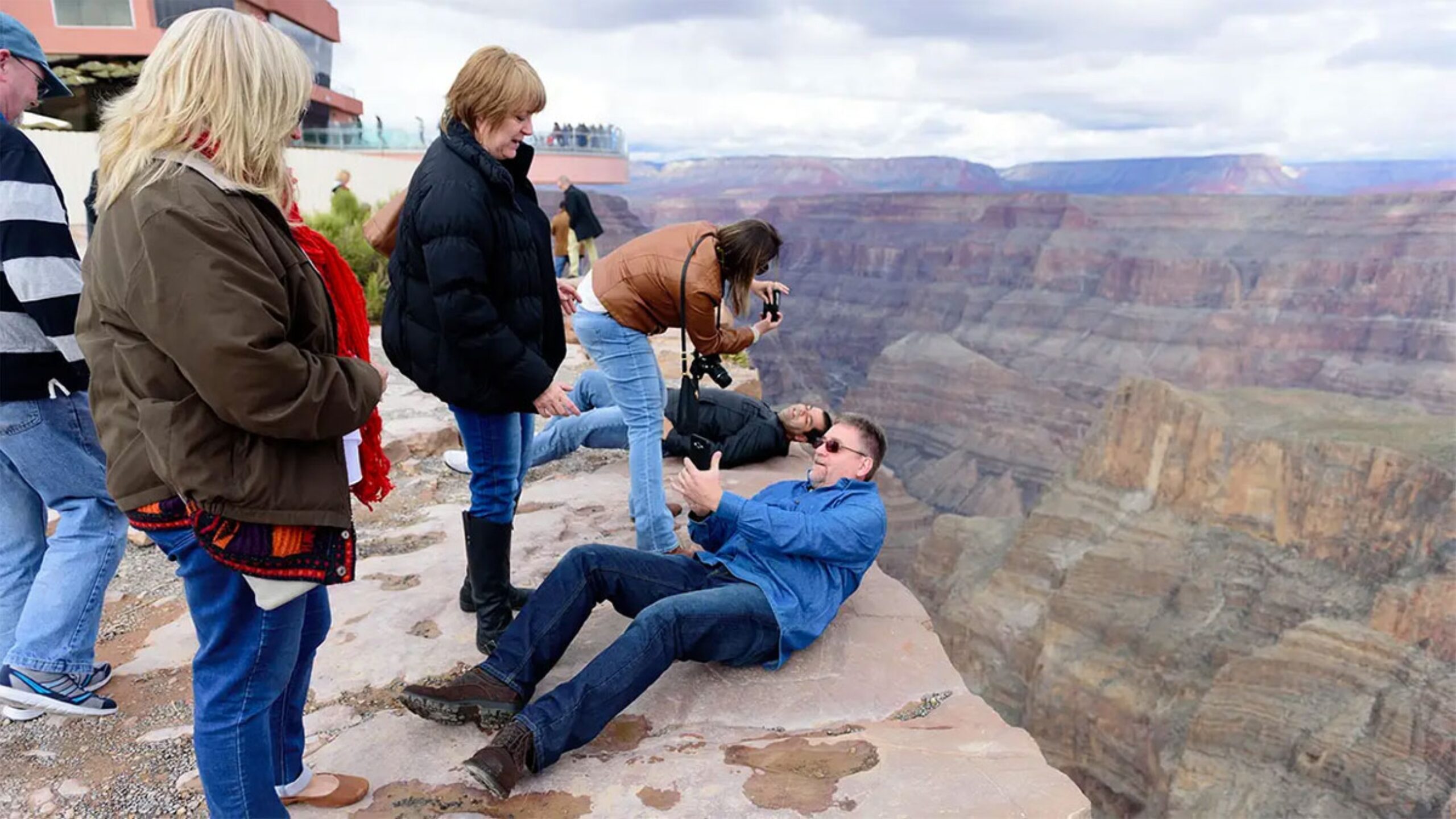
A man was visiting Bangladesh recently and decided to stop for a selfie right on top of a train track. Shortly after taking it, he was instantly killed by a train. Earlier in the month,

Opinion
Ramadan days

Ramadan days

Ramadan this year feels exclusive calmer, more intentional, and surprisingly productive. With my current work schedule running from 10 am to 5 pm, handling customer service quality and development from home, I’ve revealed something I

Opinion
Global tragedy

Global tragedy

Global tragedy