1. Home
  2. Opinion

Category: Opinion

Opinion
War on oil: Asia faces energy crunch amid supply disruption

War on oil: Asia faces energy crunch amid supply disruption

Asia’s energy-importing economies are scrambling to contain the impact of a widening Middle East war that has upended oil and gas markets and is now battering ordinary buyers. Oil and gas markets have been rocked by disruption to supply out of the Arabian Gulf. Prices of both commodities have jumped as the US and Israel continue to strike Iran, and the Islamic Republic retaliates with missiles and drones across the Middle East. On Monday, oil prices topped $100 a barrel for the first time since 2022, when they spiked in the aftermath of Russia’s full-scale invasion of Ukraine. The Strait of Hormuz, which is in near-paralysis now, is a chokepoint for the bulk of oil exports from the Gulf. Almost 90% of the crude and condensate transported through the waterway last year went to Asia. During an emergency meeting on Monday, South Korea’s President Lee Jae Myung became the latest to call for a swift cap on fuel prices. Taiwan, which also depends almost entirely on energy imports, has already set a weekly limit on oil-price increases, while Japan’s prime minister has said the country is examining measures to ensure gasoline prices do not exceed acceptable levels. South Asia’s price-sensitive buyers are among the worst hit. At least one province in Pakistan has curbed civil servants’ travel and the government has directed officials to draw up an austerity and savings plan within 48 hours. India has benefited from a US waiver providing access to Russian crude, but has struggled to alleviate pressure in liquefied petroleum gas, used for cooking, and liquefied natural gas, used from power production to manufacturing. The historic energy crunch has left some countries, including South Korea, to consider the option of drawing on petroleum reserves. Japanese refiners have also asked for such a measure. Group of Seven nations are preparing scenarios for the release of emergency oil stockpiles. Such co-ordinated drawdowns are rare, though there were two in the immediate aftermath of Russia’s invasion of Ukraine. Asia’s governments will have to stretch their budgets or risk unleashing an inflation shock as the deepening conflict in the Middle East pushes oil prices past $100 a barrel. That could raise new credit risks for emerging markets, warned Fitch Ratings, as higher oil prices bloat subsidy and import bills and disrupt remittances, tourism and investment flows. It tagged India and the Philippines as among the most at risk, with net fossil fuel imports exceeding 3% of their gross domestic product. According to Fitch, the strain is most acute in countries with thin financing buffers or wide current account deficits, such as Pakistan, and in economies that subsidise fuel. Tourism and remittance flows from the Gulf — a critical source of foreign inflows for South Asia — also face disruption risks. Surging oil prices following the Iran war are expected to impact China less than in past years as the country has built large crude stockpiles and diversified its energy sources, including renewables. Oil tumbled yesterday after US President Donald Trump said the Iran war will end soon, while the conflict continues to disrupt crude production and refining in the Middle East. Still, prices remain up by more than 50% this year as fears a conflict would hinder supplies from the Middle East increasingly materialise. A sustained increase in energy costs could trigger a surge in inflation and squeeze economic growth, raising fears of stagflation. International Monetary Fund Managing Director Kristalina Georgieva said on Monday a 10% rise in oil prices, if persistent through most of the year, would result in a 40-basis-point increase in global inflation. An inflation shock triggered by the US-Israel attack on Iran could wreck a fragile global economic recovery that had been expected to gain momentum this year.    

Opinion
Asian economies move to limit Mideast war’s impact at home

Asian economies move to limit Mideast war’s impact at home

Faced with soaring prices and disruptions to their oil and gas supplies, Asian countries heavily dependent on fossil fuels from the war-struck Gulf are moving to protect their domestic markets. South Korean President Lee Jae Myung has said the manufacturing powerhouse, the world’s eighth-largest consumer of crude oil, is moving towards instituting fuel price caps to alleviate pressure on the country’s energy supply. “We should swiftly introduce and decisively implement a price ceiling system for petroleum products that have recently seen excessive price increases,” he told a Monday cabinet meeting. His chief of staff said Friday the country had already secured the “emergency delivery” of 4mn barrels of crude oil from ports in the United Arab Emirates. Vietnam has prepared a draft decree that would slash import tax rates to zero on certain petroleum products in a bid to “stabilise the domestic market”, its finance ministry has said. Current tariffs of 10 percent on unleaded petrol and 7% on diesel, aviation fuel and kerosene would all be temporarily removed under the decree. According to Japanese news agency Kyodo, Tokyo is considering drawing on its national oil reserves to protect itself against possible prolonged supply disruptions — a measure being demanded by the country’s refiners. The government said last week that Japan had stocks equivalent to 254 days of crude oil consumption — including reserves held by the private sector — and three weeks of liquefied natural gas (LNG) consumption. Government departments in the Philippines, a country heavily dependent on oil imports, began adopting a four-day working week Monday to cope with soaring fuel prices. President Ferdinand Marcos has also ordered all government agencies to reduce their fuel and electricity consumption by 10 to 20 percent, while police have warned against hoarding as queues were seen forming at some petrol stations. India has been pushing ahead with imports of Russian oil, after the United States issued a temporary waiver allowing New Delhi to buy Moscow’s oil if it was currently stranded at sea. An Indian government source, however, said that New Delhi does not need any country’s permission to source the fuel from Russia, its largest crude supplier.The source also said India was “well stocked” with more than 250mn barrels of crude and petroleum products to “handle short-term disruptions”. Taiwan, a country dominated by the tech industry and highly dependent on hydrocarbon imports, is moving swiftly to compensate for missing LNG from Qatar. “We need to organise the supply of about 22 shipments of LNG for March and April,” economic affairs minister Kung Ming-hsin said Monday, while noting 20 of those shipments had already been secured. The government was also seeking to keep prices “as stable as possible” for consumers via “a fuel pricing formula” that would take into account neighbouring markets, he said. According to financial outlet Bloomberg News, China, the world’s second-biggest economy, has asked its main refiners to suspend exports of diesel and gasoline to prioritise domestic needs. The Middle East accounted for about 57% of China’s direct imports of crude transported by sea in 2025, according to the analysis firm Kpler. Indonesia, under pressure due to a fiscal policy that worries the markets, warned of the limits of its room for manoeuvre. “If the budget can no longer cope with (oil price increases), there is no other solution than to share... the burden with the population,” Finance Minister Purbaya Yudhi Sadewa said Friday. “This means that fuel prices will have to rise and the budget can no longer support” increased energy subsidies, he said. Cambodia’s commerce ministry set retail fuel prices higher for a three-day period to Tuesday, noting the increase was due to the spike in global oil prices. The Southeast Asian country, which relies completely on imported diesel and petroleum for its consumer fuel needs, has enough reserves to last for about three weeks, its energy minister has said. Thailand said last week it had secured two months’ worth of oil supplies but was suspending exports to conserve its holdings. The government also capped the price of diesel at just under 30 baht ($0.94) per litre for a 15-day period.    

Opinion
The Gulf’s neutrality tested under fire

The Gulf’s neutrality tested under fire

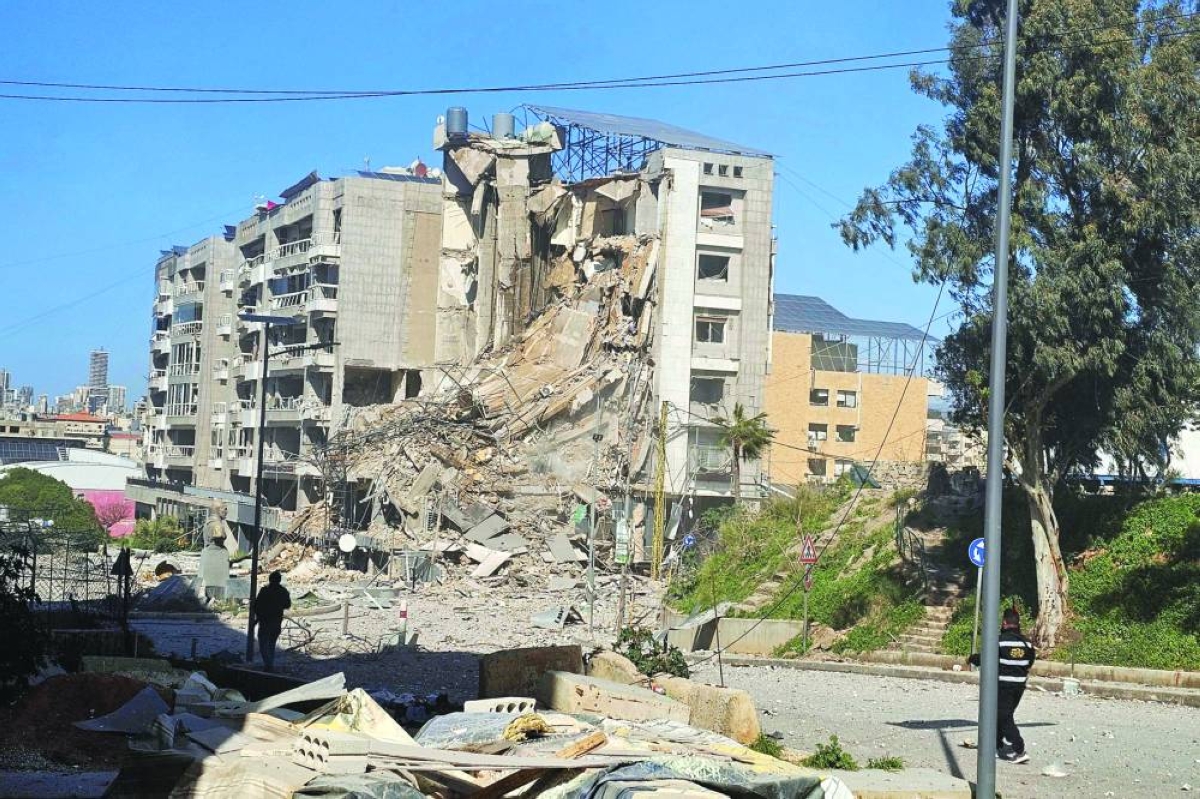
Destruction is seen at the site of an Israeli airstrike that targeted the airport road that goes through Beirut’s southern suburbs. Lebanon was drawn into the Middle East war last week when Hezbollah attacked Israel

Opinion
Artificial intelligence enters the world of cinema

Artificial intelligence enters the world of cinema

Netflix, the big OTT streamer, has acquired award-winning Hollywood actor-director Ben Aflleck’s InterPositive, set up in 2022, which will enable film production processes with the use of AI technology. The terms of the deal are

Opinion
Obsessive saving disorder turning money into fear

Obsessive saving disorder turning money into fear

Radhika Sanghani, The Independent“I used to compare prices obsessively,” says Annie Robinson, 39, reflecting on her past. “Money was just for survival and rent. If friends asked me to go to a live music show,

Opinion
‘It’s a lot harder, isn’t it, to just live a long life?’

‘It’s a lot harder, isn’t it, to just live a long life?’

Louis Chilton, The IndependentFor a moment, I’m worried I’ve offended one of our greatest living country artists. Emmylou Harris has hung up on me, less than a minute into our call. A moment later, though,

Opinion
UK’s free museums are in trouble, should tourists start paying?

UK’s free museums are in trouble, should tourists start paying?

Annabel Nugent, The IndependentIn Britain, free entry to most museums and galleries is a point of national pride, up there with the NHS, properly brewed cups of tea and David Attenborough. But the fact is,

Opinion
Ask not what AI can do for you

Ask not what AI can do for you

Kevin Frazier, Tribune News ServiceJust about 250 years ago, young Americans risked everything to fight for a better future--one in which their loved ones, neighbors, and progeny could exercise individual liberty and collective prosperity. Their

Opinion
Shocking act

Shocking act

The recent news about a gunman opening fire at the Los Angeles home of pop superstar Rihanna is deeply shocking and condemnable.Such a violent act not only threatens the life of a famous artist but

Opinion
The journey

The journey

The journey