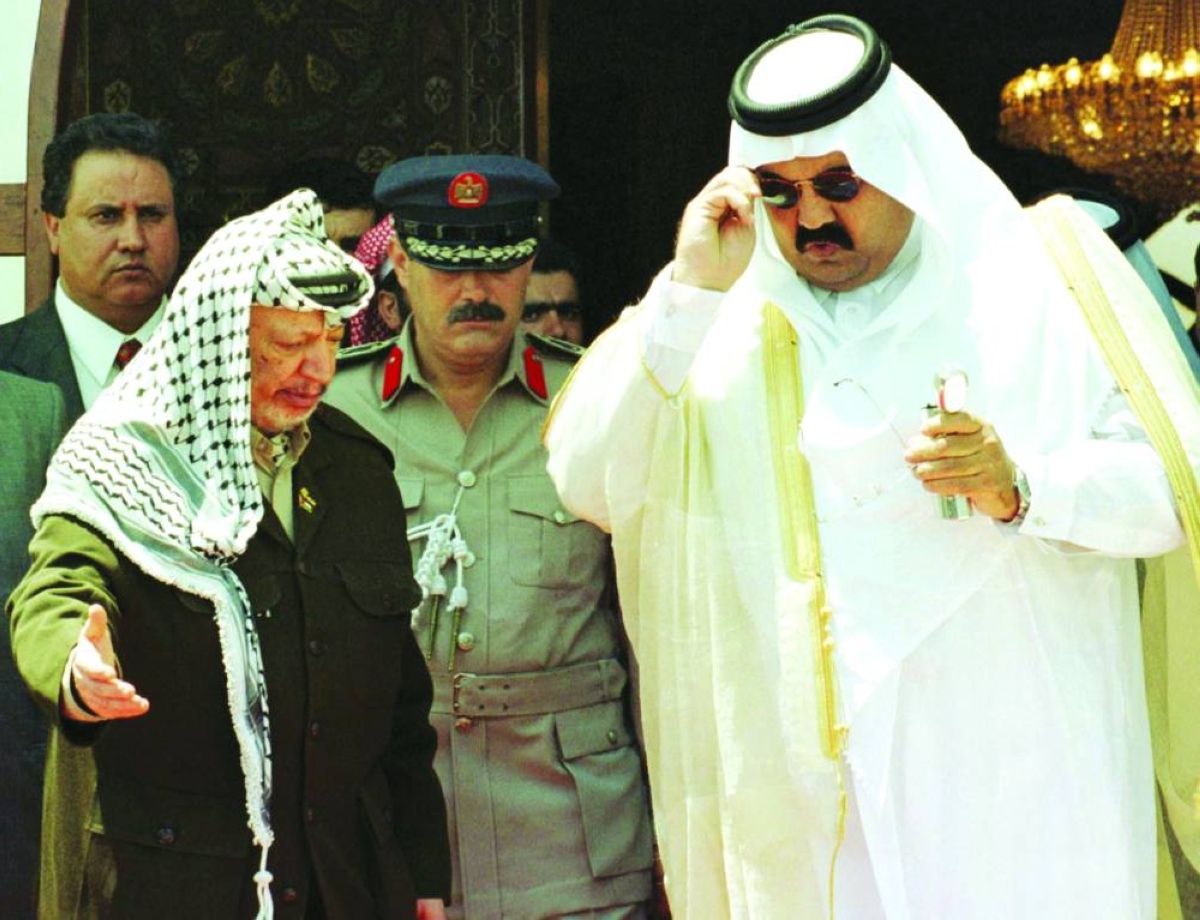
Palestinian officials, media figures, and researchers said that the late His Highness the Father Amir Sheikh Hamad bin Khalifa al-Thani left an enduring legacy of support for the Palestinian cause and the protection of Islamic holy sites in Palestine, describing him as an exemplary Arab leader whose contributions will remain etched in the memories of history and the Palestinian people.In statements to Qatar News Agency (QNA), they highlighted the late Father Amir's distinguished leadership, steadfast political positions, and humanitarian and development initiatives, which had a profound impact on Palestinians, particularly in the Gaza Strip. They said his legacy will remain present through the positions he championed and the projects launched during his reign that contributed to strengthening Palestinian resilience.They added that the passing of HH the Father Amir represents the loss of an Arab leader whose name became synonymous with unwavering support for the Palestinian cause, saying that the legacy he left behind reflects the deep ties between Qatar and Palestine and a political and humanitarian approach whose impact remains evident today. They noted that Qatar has continued to stand alongside the Palestinian people through humanitarian and relief aid, as well as political support for their legitimate national rights, including freedom, independence, and statehood.For his part, Director of the Government Media Office in the Gaza Strip, Ismail al-Thawabta, praised the humanitarian and historic role played by the State of Qatar during the era of the late HH the Father Amir, particularly in helping break the siege imposed on the Gaza Strip. He said that amid the historic turning points and major challenges faced by the Palestinian people, the humanitarian and principled positions adopted by Qatar represented significant milestones, reflecting the pioneering role led by the State through initiatives launched and sponsored by the late HH the Father Amir.No Palestinian or Arab can overlook the strategic contributions and profound humanitarian interventions established by Qatar’s vision during the era of the late HH the Father Amir. That vision served as a key pillar in strengthening the resilience of Palestinians and helping them remain steadfast on their land, he added.He noted that the historic and unprecedented visit by the late HH the Father Amir to the Gaza Strip in 2012 represented the first official and practical declaration of breaking the political and economic siege imposed on the Strip. He said the visit was a bold step and a strong message of Arab solidarity that challenged efforts to isolate Gaza, restored hope among Palestinians, and paved the way for a new phase of reconstruction and development in the face of destruction and aggression.Al-Thawabta said Qatar’s genuine political will translated into concrete action through the launch of the Qatar-funded reconstruction grant, which brought about a significant transformation in the Strip’s infrastructure. He highlighted several major development projects implemented under the initiative, including the construction of Hamad City residential complex, the rehabilitation and expansion of vital roads in Gaza, including Salah al-Din and al-Rashid streets, as well as the establishment of major medical facilities, most notably the Sheikh Hamad bin Khalifa Al Thani Hospital for Rehabilitation and Prosthetics, which he described as a lifeline for those injured in conflicts and people with disabilities, among other projects.The Director of the Government Media Office in the Gaza Strip stated that Qatar’s vision during the era of the late HH the Father Amir extended beyond rebuilding infrastructure to strengthening human resilience. He added that the initiatives and projects launched under his leadership, and later continued and expanded under the patronage of HH the Amir Sheikh Tamim bin Hamad al-Thani, created a genuine social safety net.Al-Thawabta pointed out that these projects and initiatives included support for the energy sector, the provision of fuel needed to operate Gaza’s power plant, and regular financial assistance to hundreds of thousands of vulnerable families to help them cope with extreme poverty resulting from the blockade. They also covered support for education, agriculture, and the fishing sector, as well as the provision of temporary employment opportunities to assist young people and graduates.Concluding his remarks to QNA, he emphasized that these development projects and relief interventions have had a profound and direct impact on the lives of Palestinians, forming a key pillar in aiding civilians living under occupation and siege, and representing a unique model worthy of emulation internationally.Editor-in-chief of Safa News Agency Mohammed Abu Qamar, said Palestinians remember with great pride the late HH the Father Amir Sheikh Hamad bin Khalifa al-Thani's stances and support he provided to strengthen the resilience of the Palestinian people, particularly in the Gaza Strip.Abu Qamar said, in exclusive statements to QNA, that these positions went beyond political statements and were reflected in practical projects that had a clear impact on the lives of Palestinians. He noted that His Highness was among the most prominent Arab leaders who defended the rights of the Palestinian people and translated that support into strategic projects, including Hamad Residential City, infrastructure initiatives, road network development, and support for the health sector. He said these projects continue to have an impact today, reflecting a practical commitment based on an understanding of Palestinian needs.Abu Qamar stressed that the approach established by the late HH the Father Amir during his rule has continued under the patronage of HH the Amir Sheikh Tamim bin Hamad al-Thani, becoming an established Qatari policy whose benefits remain visible and ongoing. He added that Qatar continues to be a true partner of the Palestinian people and a supporter of their resilience, standing by them through humanitarian and relief assistance, as well as political positions supporting their legitimate national rights, foremost among them the right to freedom, independence, and the establishment of an independent state.He concluded his remarks by saying that the passing of HH the Father Amir brought widespread sadness among Palestinians, particularly in Gaza, as they recognise the scale of his historic positions in support of their resilience and hold deep appreciation for the genuine support he provided to their cause.Writer and political analyst Mohammed Mustafa Shaheen observed that HH the Father Amir is present in the Palestinian consciousness as one of the most prominent supporters of the Palestinian cause.In remarks to QNA, Shaheen said the late HH the Father Amir's initiatives in support of Palestinians in Gaza came at a time when the Strip was facing an escalating siege and worsening humanitarian conditions. He said these initiatives carried a political and moral message affirming that Palestine was a permanent Arab and Islamic responsibility.The writer and political analyst added that HH the late Father Amir's visit to the Gaza Strip constituted a historic milestone that broke the political isolation imposed on the Strip, bringing hope to the Palestinians.He noted that the name of the late HH the Father Amir remains engraved in the Palestinian national memory due to the reconstruction projects, roads, hospitals, housing, and everything that alleviated the effects of the siege and wars.Researcher and political analyst Wissam Afifa affirmed that Palestinians remember a great leader whose name is synonymous with sincere support for the Palestinian cause and who left a political and humanitarian legacy still evident in the Gaza Strip to this day.Afifa said that the Palestinian cause during the reign of His Highness was integral to Qatar's foreign policy. This support included defending Palestinian rights, sponsoring reconciliation efforts, hosting dialogues between factions, and working to keep the issue present on both the Arab and international agendas.He recalled several key milestones during the late HH the Father Amir's era, particularly his call for an emergency Arab summit during the Israeli aggression on Gaza in late 2008, despite the political pressures facing Doha at the time. He emphasized that the late HH the Father Amir insisted that the events in Gaza required an Arab position that went beyond traditional statements of condemnation.He described His Highness's visit to the Gaza Strip in 2012 as "the most vivid memory for Gazans", explaining that it was not a mere protocol visit, but rather one that carried with it a reconstruction program and a political message affirming that Gaza was not an isolated area and that its siege should not become a fait accompli.The Palestinian researcher and political analyst pointed out that the impact of that visit was not limited to its political dimension, but extended to sustainable projects, most notably Hamad Residential City, major road projects, development initiatives, and the Sheikh Hamad bin Khalifa al-Thani Hospital for Rehabilitation and Prosthetics. These projects contributed to providing housing, services, and stability for thousands of Palestinian families, changing Gaza's landscape. Related Story


admin