1. Home
  2. World

Category: World

World
N Korean leader, daughter visit munitions factory

N Korean leader, daughter visit munitions factory

North Korean leader Kim Jong-un and his daughter Kim Ju-ae inspecting the production of a new type of handgun at an important munitions factory at an undisclosed location in North Korea, on Wednesday. (AFP) North ‌Korean leader Kim Jong-un ​visited a munitions ‌factory on Wednesday, state ‌media ⁠KCNA reported, ‌releasing photographs that showed ‌him touring the facility with his teenage ⁠daughter and the pair test-firing handguns.During the visit, Kim oversaw firearms production and called for modernisation of the process, KCNA said.The factory is "playing a very important role in ​increasing the combat efficiency of the army," Kim was quoted as saying.He emphasised a ‌need to expand ⁠the production ​capacity of the factory "in a far-sighted ​way," according to KCNA.Kim, who frequently tries to show off the nuclear-armed state's military prowess, was recently shown overseeing the test-firing of a strategic cruise missile on a newly launched destroyer, according to KCNA.Kim's daughter, known as Ju-ae, accompanied her ‌father during the ⁠visit to the munitions factory, state ⁠media photographs ⁠showed. They were both clad in black leather jackets, with Ju Ae shown participating in a shooting drill alongside military officials.There has been speculation that Ju ​Ae is being groomed as a potential leadership successor.South Korea's National Intelligence Service (NIS) last month told lawmakers there were signs that Kim's daughter was providing input on policy matters, reflecting that she "was in the stage of being internally ‌appointed ​successor." 

World
China-North Korea train arrives in Pyongyang after 6-year halt

China-North Korea train arrives in Pyongyang after 6-year halt

A passenger train from China arrived in the North Korean capital Thursday, state media said, after a six-year hiatus since the service was suspended during the Covid-19 pandemic.China is North Korea's largest trading partner and a vital source of diplomatic, economic and political support for the isolated nuclear state.Train journeys between the East Asian neighbours were halted in 2020 under strict border closures to prevent the coronavirus from spreading.China's state news agency Xinhua said a train that departed from Dandong, a city in the northeast bordering North Korea, arrived in Pyongyang on Thursday evening.South Korea's Yonhap news agency reported earlier that a train had been seen crossing the Sino-Korean Friendship Bridge over the Yalu River.China Railways said in a separate statement that regular train services would also resume between Beijing and Pyongyang on Thursday evening.AFP journalists aboard the K27 train departing from Beijing and bound for Pyongyang Thursday saw carriages reserved only for passengers travelling to North Korea.Several people at the station gathered around the departures board to take photos of the 'Beijing to Pyongyang' listing.The overnight train is set to make a few stops, including at the port city of Tianjin, and then head northeast to Dandong on the border.A railway enthusiast at the station told AFP he was taking the train only one stop and would disembark at Tianjin.'It's great that this line is reopening, because there are very few international rail connections in China,' he said, before being subjected to an ID check by plainclothes police officers.Wagons from Beijing holding Pyongyang-bound passengers are then attached to another train in Dandong, taking them across the border to the nearby North Korean city of Sinuiju, said Rowan Beard from Young Pioneer Tours, a company specialising in North Korea travel.Those wagons, as well as North Korean domestic carriages, will then be attached to a new train heading to Pyongyang, he added.Trains will run in both directions between Beijing and Pyongyang every Monday, Wednesday, Thursday and Saturday, China Railway said.The Dandong-Pyongyang service would operate daily, it said.Travel agents for an official ticketing booth in Beijing told AFP on Tuesday that anyone with a valid visa can now buy train tickets to the North.That includes Chinese people working and studying in North Korea, as well as North Koreans working, studying and visiting family abroad.Entry and exit procedures would be completed at the Dandong border crossing and at Sinuiju in North Korea, China Railway said.Tickets are currently available for offline purchase in several Chinese cities, it added.The resumption of the train link symbolised a return to a stronger bilateral relationship, said Lim Tai Wei, a professor and East Asia expert at Japan's Soka University.It signalled greater access to 'the largest trading nation on Earth' for North Korea, Lim told AFP, while it was also important for China's 'periphery diplomacy'.A spokesman for China's foreign ministry said Thursday that 'maintaining regular passenger train services is of great significance for facilitating personnel exchanges' between the two countries.Beijing has been a crucial lifeline for North Korea's moribund economy.China has fully reopened its borders since the pandemic, but North Korea has proceeded more slowly. Direct flights and train services with Russia resumed last year.While the resumption suggests a 're-normalisation' of contact between China and North Korea, it does not necessarily mean increased support from Beijing, said Associate Professor Chong Ja Ian from the National University of Singapore.'A lot of the previous limit on contact seems to be due to Pyongyang's apprehensions about broader contact, which have diminished,' Chong told AFP. 

World
Chile’s Smiljan Radic Clarke wins Pritzker architecture prize

Chile’s Smiljan Radic Clarke wins Pritzker architecture prize

Chilean Architect Smiljan Radic (centre) gives a press conference from inside the 2014 Serpentine Pavillion at the Serpentine Gallery in Hyde Park, central London. (AFP/File Picture) Chile's Smiljan Radic Clarke, whose modern buildings can sometimes appear "deliberately unfinished," is the recipient of this year's Pritzker Prize, considered the Nobel of architecture, organisers announced Thursday.The 60-year-old Radic, a native of Santiago, creates "optimistic and quietly joyful" structures, the jury said in its citation.Radic is best known for his Serpentine Gallery Pavilion in London — a translucent donut-shaped fibreglass shell resting on locally sourced rocks — and the Vik Millahue Winery in his home country, set among the Andes mountains and the vineyards.The Teatro Regional del Biobio in Concepcion, Chile resembles a paper lantern."If architecture gives shape to the ways in which people live, Radic's work produces spatial experiences that feel at once surprising and entirely natural," the Pritzker jury said."His buildings may appear temporary, unstable, or deliberately unfinished — almost on the point of disappearance — yet they provide a structured, optimistic and quietly joyful shelter, embracing vulnerability as an intrinsic condition of lived experience."The panel hailed Radic — who has created buildings and installations across Europe and at home in Chile — for "reminding us that architecture is an art."First awarded in 1979 to modernist Philip Johnson, the Pritzker Prize has honoured many of the profession's most influential figures including IM Pei, Oscar Niemeyer, Frank Gehry, Rem Koolhaas and Zaha Hadid.It honours a living architect for "significant achievement" in the field.Last year's award went to China's Liu Jiakun, who lives and works in his birth city of Chengdu. His projects — known for their minimalism and use of designs that fit local context — include the Museum of Clocks in that city. 

World
Brazil scraps taxes on diesel, imposes levy on oil exports

Brazil scraps taxes on diesel, imposes levy on oil exports

Brazil's Finance Minister Fernando Haddad. (Reuters/File Photo) Brazil's government scrapped taxes on ‌diesel while imposing a levy on oil exports in a ​move Thursday that ‌could affect state-run oil firm Petrobras, as the country ‌seeks to ⁠soften the ‌blow of the recent spike in ‌global oil prices. President Luiz Inacio Lula da Silva's administration said the temporary ⁠measures would reduce the impact of price swings related to the US-Israeli war with Iran on local fuel prices, particularly diesel.The South American country cut the PIS and Cofins federal taxes levied on diesel to zero and imposed a 12% tax on crude oil exports, as well as a 50% levy on diesel ​shipments."Oil prices are getting out of control," Lula told a press conference announcing the measures in Brasilia.The spike in diesel prices has emerged as ‌a threat to Brazil's powerful farm ⁠sector, raising ​costs for producers who are harvesting a record soybean crop ​and planting corn they cannot afford to delay. While Petrobras has not raised local fuel prices, Brazil is still partly reliant on imported diesel, and distributors have been reluctant to sell it at Petrobras' prices, concerned about a possible price hike in the near future.The government expects diesel prices at the pump to fall by 0.64 reais ($0.1227) per litre due to the tax cut and a direct subsidy program that will provide payments to ‌diesel producers and importers.The export ‌tax is aimed at ⁠increasing domestic refining and securing internal supply, the government said in ⁠a statement, though it remains ⁠unclear how much refining capacity Brazil has available to boost local diesel output.Petrobras was operating its refineries at around 91% of capacity last year and aimed to increase it to 95% in the first quarter. The company's near $3bn net profit in the fourth quarter was due in ​part to record exports during the period. Sales to international markets grew 41.7% year-on-year to 42bn reais, while domestic sales dropped 6.8% to 85.4bn reais.Finance Minister Fernando Haddad said the measures would not affect Petrobras's own fuel-pricing policy. Haddad added they are set to run until the end of the year, but that the government hopes for a short-term solution to the Middle East conflict.  Related Story

World
Ukraine, Romania beef up defence ties on Zelensky trip

Ukraine, Romania beef up defence ties on Zelensky trip

Romanian President Nicusor Dan and Ukrainian President Volodymyr Zelensky hold signed documents about joint drone production in Romania, in Bucharest, Thursday. (Reuters) Ukraine and Romania Thursday signed a statement of intent to produce drones together in Romania during a visit to Bucharest by President Volodymyr Zelensky aimed at deepening defence co-operation.Zelensky also offered to develop anti-drone defence systems with Kyiv's European allies.The visit – followed by a trip to Paris today – comes at a time of uncertainty over planned peace talks between Kyiv and Moscow that have been spearheaded by the United States and derailed by the US-Israeli war with Iran.Zelensky and Romanian President Nicusor Dan signed an agreement on the joint production of defence products in Romania, and another on energy co-operation, the two sides said."We discussed our military co-operation, and one of the documents signed refers to the joint production of drones in Romania," Dan said during a joint press conference.Both countries will consider drone production in Romania in the "shortest possible time," according to the statement of intent.The project would be partially funded through the EU's SAFE Initiative with up to 200 million euros ($230 million), it added.Nato-member Romania – an important ally of Kyiv's – has seen repeated violations of its airspace, including drone fragments falling onto its soil, following Russia's invasion of Ukraine in February 2022.Zelensky, who has dispatched teams to the Gulf to help allies fend off Iranian drones, offered Thursday to work with European allies to develop their defensive systems."I think it would be quite good to develop all of this together with European countries, our neighbours, our friends," Zelensky said.The Ukrainian leader also said the two Black Sea countries were deepening energy ties, noting the construction of two new electricity supply lines.Ukraine has become increasingly dependent on electricity imports from its European neighbours since the start of Russian attacks on its power grid.  Related Story

World
Tens of thousands march against Belgian austerity reforms

Tens of thousands march against Belgian austerity reforms

Protesters hold signs as they take part in a demonstration during a national day of action against the austerity plan of the federal government, in Brussels Thursday. (AFP) Tens of thousands of people thronged the streets of Brussels Thursday in the latest mass protest against austerity reforms brought in by Prime Minister Bart De Wever's conservative government.Police said the march drew 80,000 people — matching the turnout at the last such demonstration in October — while unions put the figure at more than 100,000.Public transport and government services were also widely disrupted by strike action, with Belgium's two main airports cancelling all scheduled departures due to a shortage of security staff and baggage handlers.Belgian unions have been mobilised since De Wever took office early last year against government reforms to the pension and unemployment systems."This shows people are strongly determined, but also that they are anxious about the geopolitical situation," Marie-Helene Ska, secretary-general of the Christian CSC, one of three unions that called the day of action, told AFP."It shows that making ends meet is going to become really difficult with prices going up for basic goods like petrol, diesel, heating products," she said.Many banners at the march displayed a crossed-out number 67 — the age at which both public and private sector employees will be able to draw a full pension by 2030, as early retirement options are phased out.The reform is accompanied by a new system of penalties and bonuses that unions say is highly unfavourable to people with stop-start careers, particularly women."At 25, I want to plan my life — not just how to survive," read a placard held aloft by a young woman demonstrator.Belgium's parliament last year also approved a flagship reform limiting unemployment benefits in most cases to two years — after which recipients are switched onto much lower social security payments.Unions warn it will push thousands of Belgians into poverty, especially in the French-speaking south where the jobless rate is twice as high as in the Dutch-speaking north.Addressing parliament Thursday, De Wever vowed the government would not back down."It's our duty to stay the course," he said. "Failure to do so would be an act of selfishness towards our children and our grandchildren," he told lawmakers.Dozens of associations joined the march, including the Belgian branch of anti-poverty group ATD Quart Monde — which voiced alarm about the impact of reforming unemployment benefits."We fear a huge increase in poverty rather than a return to work," volunteer Baptiste Boulbes told AFP, who said the training offered to get people back into employment was "often extremely limited".Police said the demonstration passed off peacefully for the most part, although 50 people were briefly detained after "troublemakers" vandalised a bank branch in the city centre. 

World
G7 Energy ministers ready to take ‘All Necessary Measures’ on oil reserves

G7 Energy ministers ready to take ‘All Necessary Measures’ on oil reserves

Energy ministers of the Group of Seven (G7) on Wednesday affirmed their readiness to take "all necessary measures" regarding oil reserves, hours before a meeting of G7 leaders, amid sharp volatility in crude prices caused by the ongoing war in the Middle East.In a statement issued after a virtual meeting on Tuesday with Executive Director of the International Energy Agency (IEA) Fatih Birol, the ministers said that "G7 members will carefully consider the recommendations issued during these discussions."They added that they support in principle the implementation of proactive measures to address the situation, including the use of strategic reserves, noting that coordination is ongoing within the G7 as well as with IEA member states and other partners."We agreed to stand ready to take all necessary measures in coordination with IEA Members," the statement said.The discussions followed a meeting of G7 finance ministers on Monday, which was followed by a meeting of energy ministers on Tuesday, to examine the option of using emergency oil reserves.Leaders of the G7 countries -- Britain, Canada, France, Germany, Italy, Japan and the United States -- are scheduled to hold a meeting later Wednesday, at the request of French President Emmanuel Macron, focusing on the war in the Middle East, with discussions expected to include the issue of strategic oil stockpiles.Emergency oil stocks held by IEA member countries currently exceed 1.2 billion barrels, in addition to about 600 million barrels held by industry under government mandates.

World
S. Korea announces precautionary measures to maintain stable electricity price fluctuations

S. Korea announces precautionary measures to maintain stable electricity price fluctuations

The South Korean government announced on Wednesday its intention to prepare a package of precautionary measures to maintain the stability of electricity prices, amid amid recent volatility in global energy prices following tensions in the West Asia.The Ministry of Climate and Environment in South Korea explained that Climate Minister Kim Sung-hwan presented this plan during a meeting with state-run utility companies, including Korea Electric Power and Korea Gas, to discuss ways to deal with the sharp rise in energy prices.Kim explained that the country has so far experienced only a limited impact on electricity prices as a result of the recent increase in global oil and natural gas prices, but that it will likely face financial pressures in the future if supply chains are disrupted further.Officials said the government measures will include restarting nuclear power plants undergoing maintenance in a timely manner, in addition to coal-fired power plants that were temporarily shut down to manage the seasonal fine-dust problem.The ministry also announced that it will work to enhance the growth of the renewable energy market, which is less affected by global energy prices, noting that it is the optimal solution to reduce the impact of volatility in South Korea's energy system. 

World
UK maritime trade operations reports cargo ship targeted in the Strait of Hormuz

UK maritime trade operations reports cargo ship targeted in the Strait of Hormuz

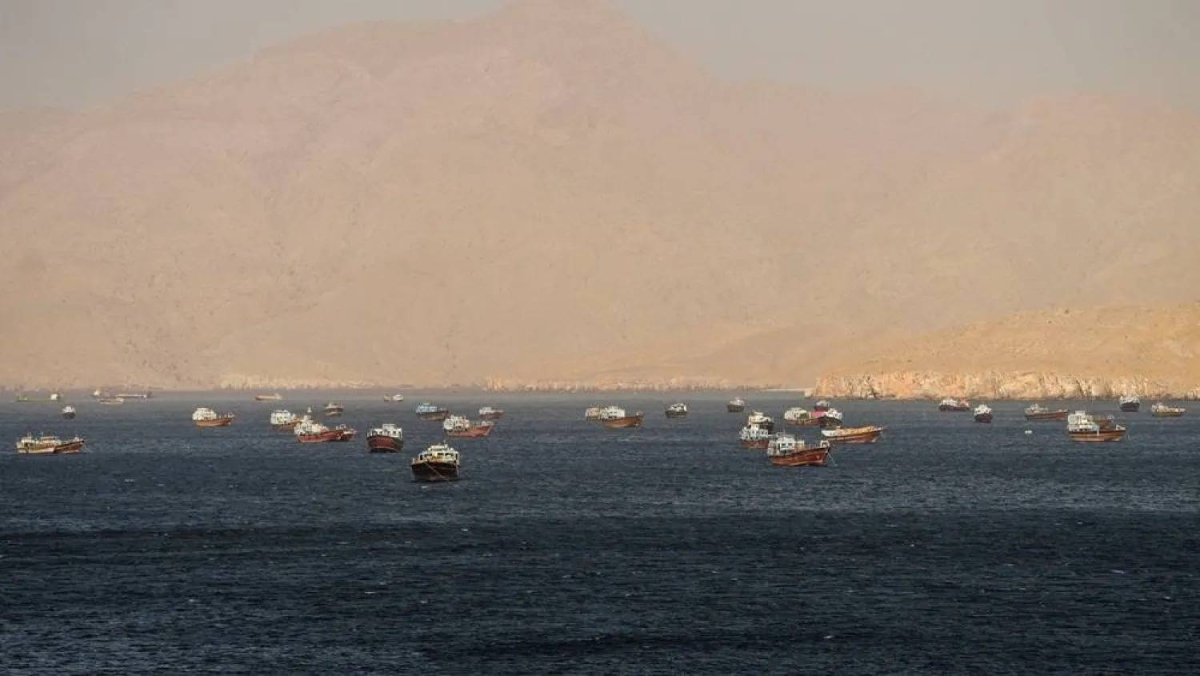
The UK Maritime Trade Operations (UKMTO) reported on Wednesday that a cargo ship sustained damage from an unidentified projectile in the Strait of Hormuz.The authority added that the extent of the damage is still unknown, but the crew is currently investigating the incident. All crew members are safe, according to the ship’s captain.Approximately 10 vessels in or near the Strait of Hormuz have been attacked since Iran closed this vital waterway, in response to the US-Israeli strikes that began on February 28 against Iran. 

World
Seoul says can deter threats from North if US weapons shifted to Mideast

Seoul says can deter threats from North if US weapons shifted to Mideast

A launch vehicle of the THAAD system at a US military base in Seongju last week. (AFP) South Korea said Wednesday it could deter threats from the North even if the US relocated some of its military assets to the Middle East amid the war in Iran.Washington, Seoul's key security ally, stations about 28,500 troops and a range of air and missile defence systems in the South to help deter aggression from the nuclear-armed North.The Washington Post reported this week that the US was moving parts of its Terminal High Altitude Area Defence (THAAD) system from South Korea to the Middle East, citing unnamed officials."Regardless of whether certain USFK assets are deployed overseas, there is no issue whatsoever with our deterrence posture against North Korea, given the level of our military capabilities," the defence ministry said in a statement to AFP Wednesday, referring to the US Forces Korea command.It declined to confirm the report.The THAAD missile defence system is designed to intercept short, medium and intermediate-range ballistic missiles using hit-to-kill technology.It was installed in South Korea in 2017, a move that sparked strong protests from China.President Lee Jae Myung has said his government is unhappy with the reported asset move but acknowledged there was little it could do about it."The government is opposing the USFK's withdrawal of some air defence weapons for its own military needs," he said on Tuesday."But the stark reality is that we are unable to fully implement our opinions."A photo taken by Yonhap news agency last week and released on Tuesday appeared to show parts of the THAAD battery being dismantled in Seongju County, about 220 kilometres (136 miles) south of Seoul.A presidential official told AFP it was "inappropriate" to comment on questions regarding any military asset redeployment and cautioned against media speculation."Speculative reports on militarily sensitive matters are undesirable in light of our security interests... and our relations with key Middle Eastern countries," he said.  Related Story