1. Home
  2. World

Category: World

World
Seized weapons on display after India declares end to Maoist insurgency

Seized weapons on display after India declares end to Maoist insurgency

Weapons seized from Maoist rebels and fighters upon their surrender are displayed at a police facility in Dantewada in Chhattisgarh state's Bastar division Tuesday. (AFP) Indian police Tuesday displayed large caches of arms and ammunition seized from Maoist rebels, a day after officials declared the six-decade-long insurgency was over following a sustained security crackdown.Over the last two years, India stepped up its campaign against the last remnants of the Naxalite rebellion, named after the village in the Himalayan foothills where the Maoist-inspired insurgency began nearly six decades ago.The rebellion controlled nearly a third of the country with an estimated 15,000 to 20,000 fighters at its peak in the mid-2000s.It has since been dramatically weakened, with most remaining armed cadres confined to the Bastar region of central Chhattisgarh state — a vast, mineral-rich expanse of dense forests and hills.In Bastar's Dantewada district Tuesday, police laid out a haul of weapons ranging from crude, country-made mortars to carbine rifles looted from security forces.Rather than marking victory with a parade, officials said the display was intended to signal the rebels were "joining the mainstream".Five former insurgents were presented copies of India's constitution during the event.Bastar police chief P Sundarraj told AFP the strength of the insurgency had fallen to "single digits", down from nearly 4,000 fighters less than half a decade ago."Mission 2026 is coming to an end," Sundarraj said, referring to the government's long-promised deadline of defeating the rebellion by March 31, 2026."There will be a new beginning from April 2026 onwards."Sundarraj said the surrendered rebels were being given new civilian identities through vocational training and rehabilitation programmes."Earlier someone was in the armed squad (but now) they will be identified as a tractor driver or an electrician," he said. "Our focus is to get their violent past to be changed into a new identity."At one such rehabilitation centre, women were seen knitting blouses while men welded metal salvaged from discarded electric rickshaws to build park benches."I will hopefully set up my own tailoring shop back in the village," said 19-year-old Kope Madvi, who quit the insurgency after six years as an armed fighter.Others said they longed for a simple life away from conflict."I just want to go back home, farm and feed my family," said Vijay Oyam, 26.More than 12,000 rebels, soldiers and civilians have died in the conflict since a handful of villagers rose up against their feudal lords in 1967.The Maoists said they were fighting for the rights of marginalised indigenous people in forest regions, where mining companies also eye valuable resources.  Related Story

World
Spain busts ‘maze-like’ drug tunnel to Morocco

Spain busts ‘maze-like’ drug tunnel to Morocco

A person works inside a tunnel that was used to bring tonnes of hashish from Morrocco into Spain, in Ceuta, Spain, in an undated picture released Tuesday. (Reuters) Spanish police Tuesday said they had uncovered a technologically sophisticated and "maze-like" underground tunnel used to smuggle tonnes of hashish from Morocco to Spain's North African exclave of Ceuta and Europe.The investigation found the site in Ceuta concealed under an industrial warehouse that was protected by pumping and soundproofing systems to avoid detection, police said in a statement.The bottom of the three-level tunnel, which led directly to Morocco, resembled "a maze typical of a mine", equipped with trolleys "that moved on a rail system of complex construction and characteristic of perfectly designed feats of engineering".The bales of hashish were prepared and stored on the middle level, from where they were lifted "thanks to a system of cranes and pulleys designed to move heavy loads", the police said.The entire structure is 19 metres (62 feet) deep, but investigators cannot determine how long the tunnel is "because it is flooded", the officer responsible for the operation, Antonio Martinez, explained at a press conference.The tunnel, measuring 1.2 metres high and 80 centimetres wide, was "well-equipped" and "purpose-built" by "an extremely powerful organisation" that contacted other groups to transport the drug in speedboats and fishing vessels, he added.Police began their investigation in February 2025, seizing more than 17 tonnes of hashish and 1.4 million euros ($1.6 million) in cash in various operations in Ceuta and mainland Spain over several months.They also made 27 arrests, including the network's two suspected leaders.One of them, based in Morocco and held on March 26, is also suspected of running another drug tunnel police dismantled in Ceuta last year.Spain's close ties with Latin America and proximity to Morocco, a top cannabis producer, make it a key entry point for drugs into Europe.Its small Mediterranean coastal exclaves of Ceuta and Melilla, adjacent to Morocco, share the European Union's only land borders with Africa.  Related Story

World
London mayor asks diplomats to push back against Trump’s ‘lies’ about UK capital

London mayor asks diplomats to push back against Trump’s ‘lies’ about UK capital

Mayor of London and co-chair of C40 Cities, Sadiq Khan, speaks during an interview as he attends the COP30 Local Leaders Forum at the Museum of Modern Art in Rio de Janeiro, Brazil. (Reuters/File Photo)

World
UK’s King Charles III to pay state visit to US in late April

UK’s King Charles III to pay state visit to US in late April

US President Donald Trump shakes hands with Britain's King Charles, as Trump departs Windsor Castle, in Windsor. (Reuters/File Photo) King Charles III will visit the US in late April, Buckingham Palace announced Tuesday, despite some calls for the trip to be cancelled or delayed amid strains over the Iran war.Confirmation of the monarch's first state visit to the US comes at a rocky time for the so-called US-UK "special relationship", with US President Donald Trump repeatedly criticising Prime Minister Keir Starmer's reticence over the US-Israel war against Tehran.But Trump, whose mother came from Scotland and is a big fan of the British monarchy, welcomed news of the visit as "TERRIFIC".The US leader posted on his Truth Social platform that the trip would take place on April 27-30 and include a "beautiful Banquet Dinner at the White House on the evening of April 28th"."I look forward to spending time with the King, whom I greatly respect. It will be TERRIFIC!" he added.The visit will come as the US marks its 250th anniversary of independence and will be followed by an official visit by the king to Bermuda, a British Overseas Territory.Washington's envoy to Britain, Warren Stephens, warned last week it would be a "big mistake" for the US visit to be cancelled.Trump has repeatedly railed against Starmer since the start of the war, accusing him of not doing enough to support the US."This is not Winston Churchill that we're dealing with," Trump said earlier this month, after Starmer initially declined to let US warplanes fly from UK bases to strike Iran."I'm disappointed with Keir," Trump has also said, slamming Starmer's "big mistake".Trump also caused offence with recent remarks about UK troops' participation in Afghanistan.The visit will be Charles's first trip to the US as king, after he hosted Trump for a lavish state visit last September.The mercurial US president has frequently expressed admiration for Britain's royal family, which treated him to a full state dinner at Windsor Castle, military parades and a flyover during last year's visit.— Soft power diplomacy —It was an unprecedented second state visit for Trump, who was also hosted in 2019 by the late queen Elizabeth II before her death.But in his latest broadside aimed at Starmer's government, Trump told countries like Britain to secure the Strait of Hormuz themselves because "the USA won't be there to help you anymore, just like you weren't there for us".A YouGov poll published on Thursday found nearly half of British citizens opposed the king's visit to the US, with only a third saying it should go ahead.Emily Thornberry, a senior MP in Starmer's ruling Labour party, said earlier this month it would be "safer to delay" the trip.She warned Charles and Camilla could be left feeling "embarrassed" because of the ongoing conflict."Why are we rewarding Donald Trump with a state visit from our king?" asked Ed Davey, leader of the minority opposition Liberal Democrats party.The last British monarch to make a state visit to the US was Queen Elizabeth II in 2007.That visit was the last of four made by the late queen whose visit in 1991 included an address to Congress.The royal family's soft power diplomacy is viewed as an important way of engaging with Trump.Charles helped smooth Starmer's visit to the White House last year by signing a letter inviting Trump to visit the UK which the prime minister handed to the president in the Oval Office.In front of the TV cameras a beaming US president read the invitation and declared the king "a beautiful man, a wonderful man".  Related Story

World
Detained Niger president’s fate unclear nearly three years on

Detained Niger president’s fate unclear nearly three years on

File Picture: Niger's President Mohamed Bazoum holds a press conference with Ivorian President after a meeting at the presidential palace in Abidjan, on June 23, 2022. The term of Nigerien President Mohamed Bazoum, overthrown in

World
Ukrainian drones strike Russia’s Ust-Luga port again, sources say oil terminal hit

Ukrainian drones strike Russia’s Ust-Luga port again, sources say oil terminal hit

A satellite near-infrared image shows smoke rising from oil storage tanks at Russia's Baltic Sea port of Ust-Luga, which was struck multiple times in Ukrainian attacks, in Ust-Luga, Russia. (Reuters) Ukrainian ​drones Tuesday struck Russia's ‌Baltic Sea port of Ust-Luga for the fifth time in ‌10 days, ⁠and industry sources ‌told Reuters an oil loading terminal ‌was hit, likely adding to Russia's difficulties in exporting crude.Kyiv has stepped ⁠up attacks on Russia's oil export infrastructure over the past month, launching its heaviest drone strikes of the more than four-year war against the Baltic ports of Ust-Luga and Primorsk.At least 40% of Russia's oil export capacity has been halted due to drone attacks, a disputed strike on a major pipeline and the seizure of tankers, according to ​Reuters calculations based on market data.Ukrainian President Volodymyr Zelensky said on Monday that some of Kyiv's allies had sent "signals" about the possibility of scaling back its long-range ‌strikes on Russia's oil sector ⁠as global energy prices ​have surged due to the Iran war.Regional governor Alexander Drozdenko said three people, including two children, were treated for injuries, and several buildings had been damaged in the overnight attacks.In a message on Telegram at 0409 GMT, he said air-raid alerts in the region had been lifted but gave no details on damage to the port.He later said that the aftermath of the attack on Ust-Luga had been "eliminated" or dealt with. He said the supply of hot water and heating to residential and other ‌units in the region were ‌restored.Kremlin spokesman Dmitry Peskov called ⁠the strikes "terrorist attacks," adding that Russia was working on protecting its critical ⁠infrastructure."This doesn't mean these ⁠facilities can be 100% protected from such terrorist attacks. However, intensive work is being carried out, and this applies not only to the port... but to all other critical infrastructure facilities," he told a daily conference call with reporters.Three industry sources told Reuters Ukrainian drones struck crude oil loading facilities operated ​by Russian pipeline monopoly Transneft in the latest attack. Transneft did not immediately reply to a request for comment.Ust-Luga, on the south-eastern shore of the Gulf of Finland, is a sprawling complex of oil-processing facilities and export terminals handling crude oil and oil products.According to source-based data, the port exported 32.9mn metric tonnes of oil products last year. It typically handles about 700,000 barrels of crude oil per day.Authorities say Ust-Luga ‌was hit on ​March 22, 25, 27, 29 and 31, forcing suspensions of export operations.  Related Story

World
Japan to co-ordinate on energy with Indonesia as Iran war disrupts supplies

Japan to co-ordinate on energy with Indonesia as Iran war disrupts supplies

Indonesian President Prabowo Subianto and Japanese Prime Minister Sanae Takaichi announce their statements after their talks at the Akasaka guesthouse in Tokyo, Japan, Tuesday. (Reuters) Japan and Indonesia have agreed to ‌step up coordination on energy ​security, Japan's Prime Minister ‌Sanae Takaichi said Tuesday, ‌as the ⁠US-Israeli ‌war on Iran squeezes oil ‌and gas supplies vital to Asia."In light ⁠of the Iran situation, the strategic importance of resources and energy security is once again being recognised globally. Indonesia is a major resource-rich nation," Takaichi said alongside Indonesia's President Prabowo Subianto after they met for talks ​in Tokyo.The summit comes amid mounting concern over the widening Middle East conflict, which has disrupted ‌shipments of oil and gas ⁠through the ​key Strait of Hormuz.Indonesia is the ​world's biggest exporter of thermal coal for power generation, supplying about half of global exports. It is also a major liquefied natural gas exporter, with roughly a quarter of its shipments bound for Japan.Japan said on Friday it will allow utilities to increase the use of ‌coal-fired power plants from ‌next month to ⁠cushion any disruption to liquefied natural gas ⁠imports caused ⁠by the war in the Middle East.Japan has also opened up its oil stockpiles, rolled out gasoline subsidies and is seeking energy supplies beyond the Middle East.Japan and Indonesia would "make their best ​efforts to convince all parties (in the Middle East) to de-escalate" the conflict, Prabowo said. He also invited "Japan’s participation" in the Indonesian economy, including in critical minerals, rare earths, industrialisation and nuclear energy.Neither leader gave details of how the two countries would coordinate in economic security.  Related Story

World
US airports returning to normal as TSA staff get their salaries

US airports returning to normal as TSA staff get their salaries

Travelers walk through near empty TSA screening corridors at Ronald Reagan International Airport in Washington, DC, yesterday. – AFP  Major US airports that suffered massive disruptions for weeks after 50,000 Transportation Security Administration (TSA) security officers went unpaid since mid-February say operations are returning to normal. Airports in Baltimore, Houston, New York, New Orleans and Dallas, which have all experienced massive delays in recent weeks, all reported very short lines yesterday. The standoff brought chaos and in some cases security lines topping four hours, the longest in the TSA’s nearly 25-year history. President Donald Trump signed an emergency directive on Friday ordering TSA workers to get paid despite a failure of Congress to end the 45-day-old partial government shutdown and the Department of Homeland Security (DHS) said workers are to be paid from the start of the week. Some workers reported on social media that paycheques arrived in their bank accounts early yesterday. Yesterday the union that represents federal workers said pay had started flowing.“They haven’t received all their back pay, but they have started seeing their payments,” said Johnny Jones, secretary-treasurer of the American Federation of Government Employees TSA Council 100. Absences on Friday hit a high since the shutdown began with about 3,560, or 12.4% of workers, not showing up, and massive lines were reported at many major airports.More than 500 airport security officers have quit since February. More than a third of workers did not show on Friday at New York JFK.Baltimore, Atlanta and New Orleans and 45% of workers did not show up on Friday at Houston’s two airports. Democrats in Congress have held up funding for the DHS while demanding changes in rules governing its immigration operations, after agents in Minneapolis shot and killed US citizens Renee Good and Alex Pretti. Congressional Democrats had proposed funding the TSA separately while negotiating over reforms on how Immigration and Customs Enforcement (ICE) agents operate. Republican leaders in the US House of Representatives on Friday rejected a bipartisan Senate compromise to end the six-week deadlock over DHS funding and passed a bill to fund all of the DHS. Airports are grappling with a school spring-break travel surge with about 5% higher volume than last year’s. Hundreds of US immigration agents and Homeland Security Investigations (HIS) officers began deploying at 14 US airports last week to aid security screening and the White House said they would remain in place until operations returned to normal.The DHS funding lapse entered its 45th day yesterday, a record in the United States, although government shutdowns typically impact broader segments of the federal workforce. 

World
France’s Macron arrives in Japan for talks dominated by Mideast war

France’s Macron arrives in Japan for talks dominated by Mideast war

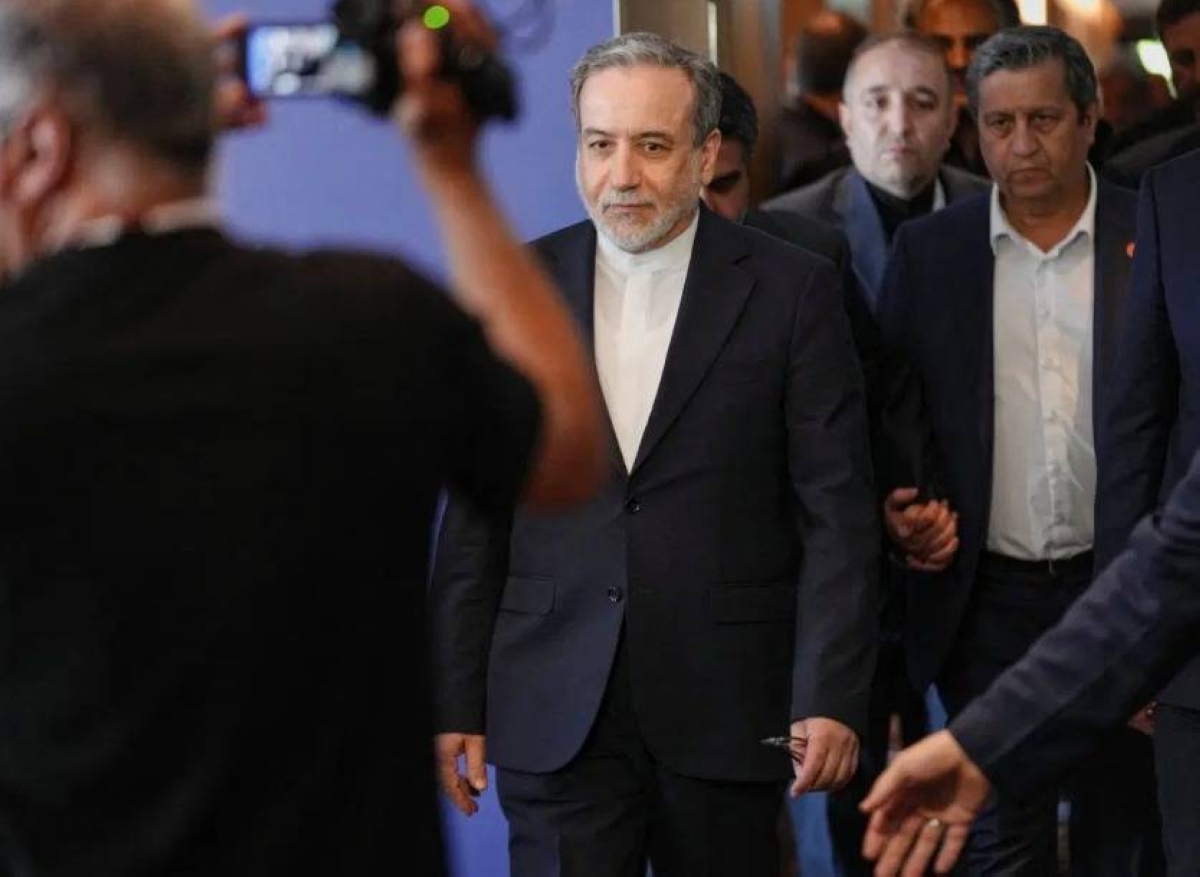
French President Emmanuel Macron (third left) and his wife Brigitte Macron (second left) attend a dinner at Happo-en in Tokyo Tuesday. (AFP) French President Emmanuel Macron arrived in Japan Tuesday for a visit that initially aimed to strengthen partnerships in nuclear energy and space innovation but will now be dominated by the Middle East war.Macron landed shortly before 5:30pm (0830 GMT) in rainy and windy Tokyo, ahead of an expected evening meeting with several cultural figures including a renowned kimono painter.He will then hold talks with Prime Minister Sanae Takaichi today, and "the crisis in the Middle East will be at the heart of discussions", the Elysee said ahead of his Asia trip, which will also include a visit to South Korea.The two leaders will discuss "how we can try to find common solutions", it added.Japan depends on the Middle East for 95% of its oil imports and has had to dip into strategic stockpiles to temper the impact of rising fuel prices since the start of the war.Iran has virtually closed the vital Strait of Hormuz — through which a fifth of global crude and gas flows — since the US and Israel began striking the country on February 28.Economy and finance ministers of G7 countries, which include France and Japan, said on Monday they stood ready to take "all necessary measures" to ensure the stability of the energy market as they tackled the economic consequences of the war.Wednesday will be Macron's "first full-fledged meeting" with Takaichi, according to a Japanese foreign ministry official, though the two met on the sidelines of the G20 summit in November.Among expectations for the talks was "continued communication" with a view towards the "calming down of the situation in Iran", the official said.The two countries are also expected to discuss security and partnerships in the space sector, and intend to sign a roadmap on nuclear power in Japan, the Elysee said.Macron's visit, his fourth to the country, comes as China-Japan ties worsen following Takaichi's suggestion in November that Tokyo might intervene militarily in any Chinese attempt to take Taiwan.Macron visited China in December.He and his wife Brigitte are due to have lunch with Emperor Naruhito and Empress Masako on Thursday but a hoped-for viewing of Japan's famous cherry trees in full bloom could be spoiled by rain forecast for the next three days in the Japanese capital.He will be in Japan until April 2, and he will then visit South Korea at the invitation of President Lee Jae Myung."Macron will be the first European leader to make a state visit to South Korea since the launch of (our) new administration," the South Korean presidential office said earlier this month.  Related Story

World
Australia halves fuel excise to counter global energy turmoil

Australia halves fuel excise to counter global energy turmoil

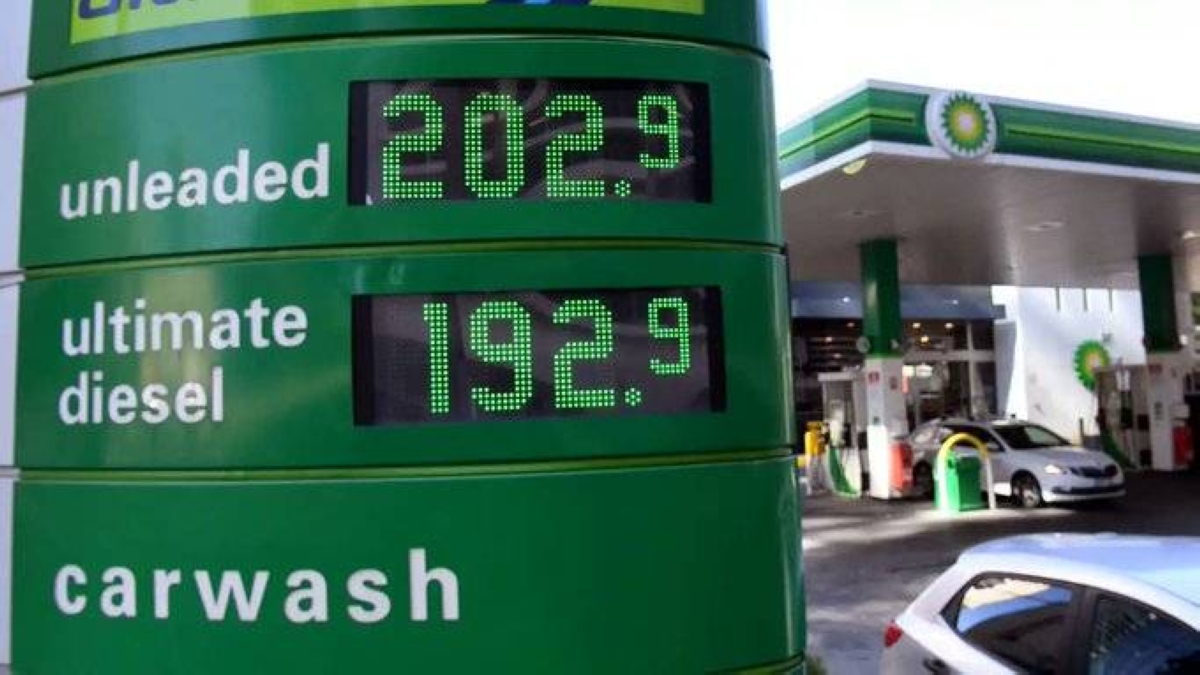
Australian Prime Minister Anthony Albanese announced on Monday a 50 per cent reduction of the fuel excise, a move aimed at mitigating the impact of the global fuel crisis stemming from the escalating military conflict in the Middle East.In a statement, Albanese explained that the decision will reduce the cost of fuel by approximately 26.3 cents per liter. He urged citizens who can afford to use public transport to do so, in order to support fuel availability in the most vulnerable sectors and regions.The reduction, which will take effect next Wednesday and last for three months, will cut the excise from 52.6 cents to half.The Australian Treasury estimates that this measure will reduce the cost of filling a 65-liter tank by approximately $19.This step is part of a broader package of measures included in Canberra's new National Fuel Security Plan, which also includes a three-month reduction in heavy vehicle tolls.Albanese noted that Australia has entered the second of four phases of the plan, which focuses on planning and preparedness by monitoring global developments and ensuring the continued flow of fuel within the country.Australian Treasurer Jim Chalmers revealed that reducing the fuel tax would cost the federal budget about $2.55 billion, in addition to $53 million as a result of reducing road tolls for heavy vehicles.