1. Home
  2. World

Category: World

World
WHO condemns targeting of health workers in Lebanon

WHO condemns targeting of health workers in Lebanon

The World Health Organization (WHO) has denounced the killing of 14 health workers in southern Lebanon over the past 24 hours, demanding the necessity of protecting medical personnel and health facilities at all times.In a press statement, Director-General of the WHO, Dr. Tedros Adhanom Ghebreyesus, said that these losses of life represent a tragic development amid the escalating crisis in the Middle East, emphasizing the need for urgent measures to de-escalate the crisis and protect the health of people across the region.Ghebreyesus noted that these incidents highlight the ongoing attack on the healthcare system in Lebanon, which serves as a vital pillar for the population.The WHO confirmed the deaths of 12 doctors, paramedics, and nurses in an attack that occurred last night on the Burj Qalaouiyeh Primary Healthcare Center in southern Lebanon, while two paramedics were killed in attacks on a health facility.Since the situation in Lebanon worsened on March 2, amid continuing Israeli attacks on various areas, the WHO has documented 27 attacks on healthcare facilities, resulting in 30 deaths and 35 injuries.According to international humanitarian law, medical personnel and health facilities must never be attacked or militarized. Related Story

World
Hungary’s feuding parties stage big rallies

Hungary’s feuding parties stage big rallies

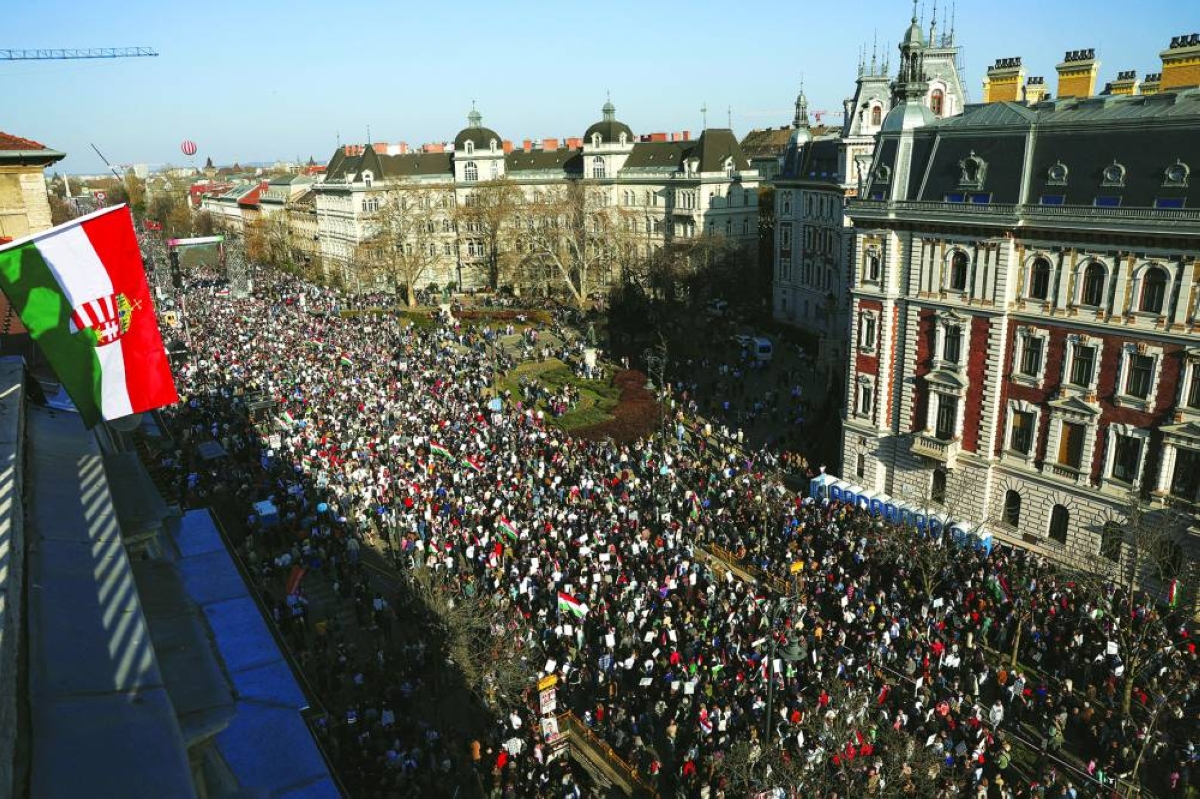
Hungarian Prime Minister Viktor Orban sought Sunday to mobilise voters for what he called a "historic" vote on April 12, while opposition supporters hoping to end the nationalist leader's 16-year rule turned out in droves at a rival rally.Huge crowds joined rival marches in Budapest Sunday, as both Orban and Magyar push allegations of foreign interference just four weeks before tightly fought elections.Tens of thousands of people attended both rallies, according to AFP journalists on site.Orban faces what could be his toughest bid for re-election after three years of stagnation, a surge in the cost of living and a pro-EU rival seen by many as a viable alternative.Both Orban's right-wing Fidesz and centre-right challenger Peter Magyar's Tisza used Hungary's March 15 national day for a show of force as the campaign enters a pivotal stage.Most surveys put Tisza ahead by a wide margin.Orban has cast the vote as a choice between war and peace, accusing his rivals of plotting to drag Hungary into the war raging in neighbouring Ukraine since Russia's February 2022 invasion, accusations which the opposition denies.Dismissing his rival's poll lead, Orban said Fidesz should aim to exceed its 2022 election landslide."We must win not like we did four years ago but better. We need not as many votes as four years ago but more," he said. "We must score a historic victory, because the next government will have a historic responsibility."Orban said his supporters' rally was the largest of its kind, filling a main square outside parliament.Opposition supporters thronged a majestic avenue stretching from near the Danube River to Heroes' Square in one of the largest rallies against Orban, exposing deep rifts in Hungary.A Fidesz supporter called Orban "Europe's best politician" while some attending Magyar's rally wondered if they had a future in Hungary if Orban gets re-elected."There is unrest all over the world, and here in our little country we want to preserve peace, calm and security. And Viktor Orban ensures that for us," said Sandorne Pista, 60, who came from the southern university town of Pecs.Orban has long been at loggerheads with the EU over a range of issues, including Ukraine.Defying Brussels, he has maintained cordial ties with Moscow, refuses to send weapons to Ukraine, and says Kyiv can never join the EU.While most polls have shown a Tisza lead, Fidesz points to surveys showing it on course to victory, though its opponents say these have mainly been conducted by institutes with financial or personal ties to the ruling party.Magyar has dismissed Orban's campaign as laughable "propaganda", but Tisza has trodden cautiously on Ukraine, saying that it opposes any fast-track EU accession for Kyiv and that it would put the issue to a binding referendum if it wins power.Magyar, speaking in a venue where Orban shot to fame in 1989 by calling for the withdrawal of Russian troops from the country, said Hungary's place was squarely in the European Union and the North Atlantic Treaty Organisation (Nato)."Holding onto power at all costs. It is all that matters to him now," Magyar said of Orban. "Provoking with war, threatening with war, stoking war. This is his ultimate weapon against the Hungarian people."Some opposition supporters also thought the election would be a watershed moment."I think this country cannot bear four more years of Fidesz rule," Noemi Szemerszki said.  Related Story

World
France picks mayors in test of political mood ahead of 2027 polls

France picks mayors in test of political mood ahead of 2027 polls

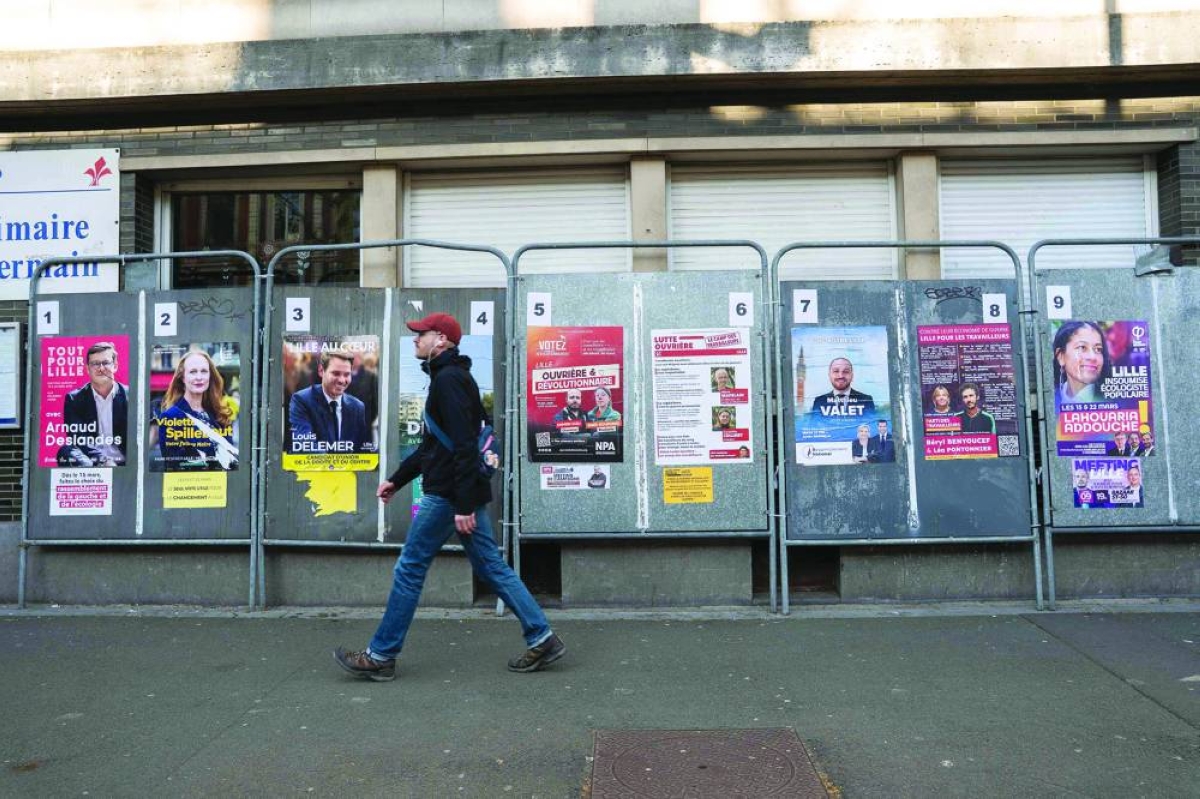
French voters cast votes Sunday to pick mayors and councillors in elections widely seen as a barometer of France's political mood ahead of the high-stakes 2027 presidential race.Mayors lead nearly 35,000 municipalities in the country, from major cities to villages with only a few dozen residents.Local results can shape national momentum, especially so close to a presidential election, which opinion polls show the far-right National Rally (RN) could potentially win.Voting started at 8am (0700 GMT) and ended at 8pm with preliminary results to be released shortly after. In many medium to large cities there will be a second round on March 22.By 5pm, voter turnout was less than 49%, up from the roughly 39% at the same stage in the last mayoral elections in 2020, which were held during the coronavirus (Covid-19) pandemic, but lower than the 55% turnout in 2014.Marine Le Pen's ascendant far-right party views next year's contest as its strongest chance yet to take power, with centrist President Emmanuel Macron constitutionally barred from running again.While nearly 90% of France's communes are small rural constituencies where local elections are traditionally depoliticised, the races could nonetheless reveal key trends and dynamics, said political scientist Nonna Mayer."In large towns, national issues will matter more, and they can give some hints on the electoral dynamic of the main parties," Mayer, who is affiliated with Sciences Po university and scientific research centre CNRS, told AFP.Who wins cities like Paris, Lyon, Marseille and Nice will matter, she added.Clarisse Bremaud, a 26-year-old exhibition producer, was among the voters trickling in and out of a polling station in central Paris."For me it's important to take part in every election," she told AFP. "I feel it's even more crucial today with what's happening in France – particularly with the evolution of politics in France and the world."Historically, France's major cities have been governed either by centre-left parties or the right-wing Republicans.By contrast, Le Pen's far-right National Rally, the hard-left party of firebrand Jean-Luc Melenchon and Macron's centrists have struggled to establish a strong local footprint.The National Rally (RN), which currently governs only one major city of more than 100,000 inhabitants, Perpignan, hopes to strengthen its local presence by capturing urban centres such as Toulon and Marseille, France's second largest city.At a polling station in Marseille, construction worker Serge said he was neither worried nor hopeful about the RN."They are not worse than the others. It won't change anything. Nothing changes, and that is the problem," said the 61-year-old, who declined to give his last name, adding that security is a priority for him in this election.A strong performance would mark an important milestone in the RN's longstanding effort to gain broader acceptance in the political mainstream.The anti-immigration party sees the elections as an opportunity to show it can govern at the local level."France's recovery begins this Sunday," RN chief Jordan Bardella, 30, told voters, urging them to turn out en masse.In one of the highest-profile contests, former prime minister Edouard Philippe is hoping to keep his seat as mayor of the northern port city of Le Havre, a role he has held since 2014.A loss by 55-year-old Phillipe, seen by some as the strongest candidate to take on Le Pen or Bardella, in the 2027 polls, will deplete his political capital.All eyes are also on the battle for Paris, where Rachida Dati, a combative former culture minister and one-time protégé of now convicted ex-president Nicolas Sarkozy, hopes to wrest control of the city from the left, which has run the French capital for the last quarter-century.Dati goes neck-to-neck with left-wing candidate Emmanuel Gregoire, 48, and the loss of Paris would be a blow to the Socialist Party ahead of the presidential campaign."I had zero hesitation on who to pick," Anne Torregrossa, a 65-year-old civil servant, told AFP in Paris, adding her priorities included "the environment, civil liberties, and living together in harmony", though she declined to reveal her choice.Many mayoral candidates have distanced themselves from political parties, reflecting voters' exasperation with the elites and the paralysis that has gripped the country ever since Macron called snap elections in 2024."Turnout will tell us about the health of French democracy," said Mayer, the political scientist, pointing to "political distrust and disaffection".The week between the two rounds is expected to see political parties negotiating deals with rivals and joining forces against strong opponents."The pattern of tactical voting will offer a preview for next year," said Mujtaba Rahman, Europe director at risk analysis firm Eurasia Group.He said the election results would indicate whether a strategy to contain the far right was "dead or might still be revived".A second round of voting will be held in all cities where no single list wins more than 50% of the vote.  Related Story

World
Kazakhstan votes on constitution overhaul

Kazakhstan votes on constitution overhaul

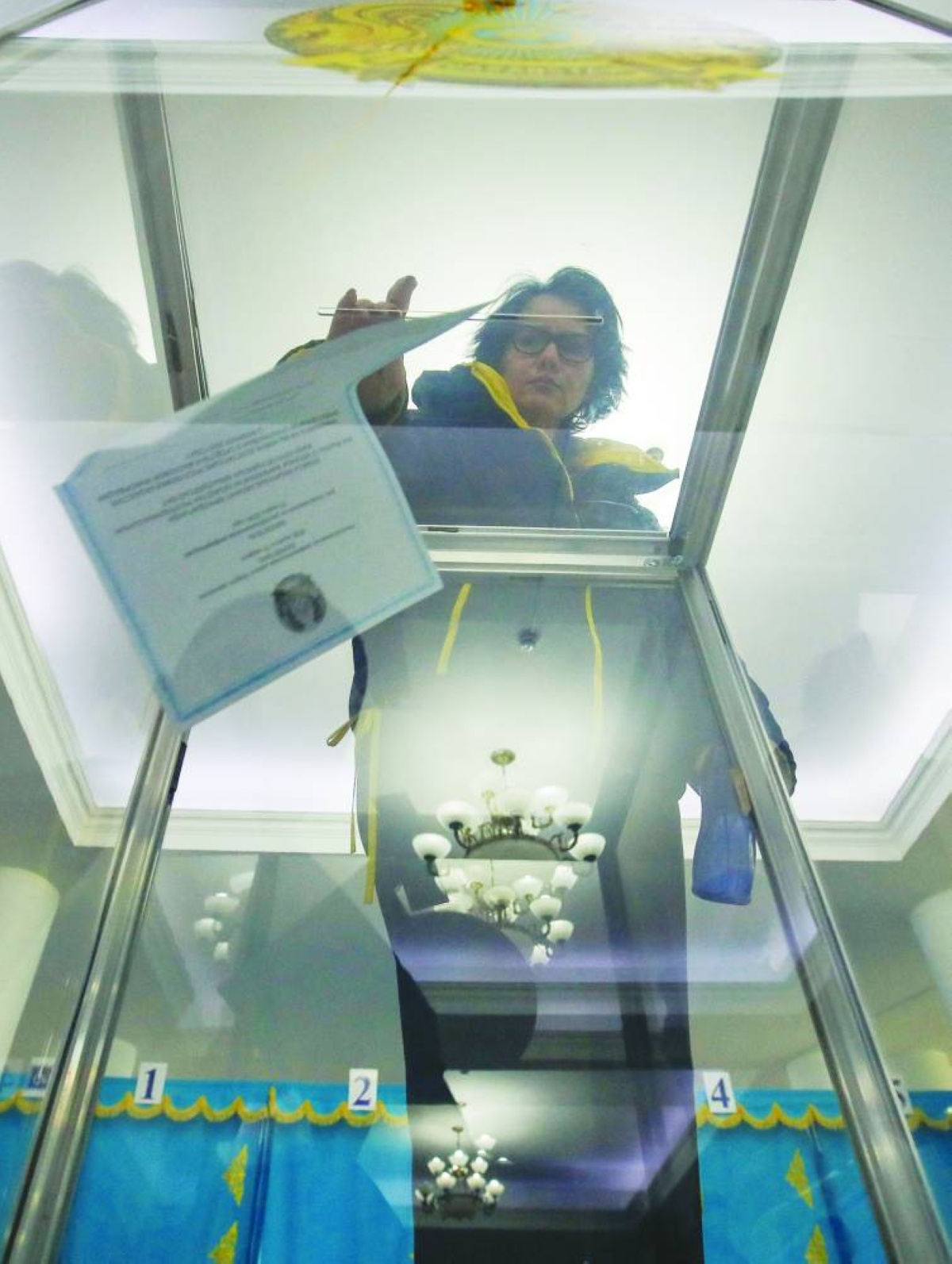
A woman votes at a polling station in Almaty during a referendum on a new constitution. – Reuters Kazakhs began voting Sunday in a constitutional referendum that authorities brand as democratising – though several proposed amendments appear to strengthen presidential powers in Central Asia's richest country.The vote on changing around 80% of the country's basic law has been pushed by President Kassym-Jomart Tokayev, who seeks to balance the resource-rich former Soviet republic's ties between the European Union, Russia and China.More than half of the country's approximately 12.5mn registered voters had cast their ballots by 2pm local time (0900 GMT), according to electoral authorities.After 2022 protests over the cost of living escalated into riots and left 238 people dead, the president pledged to liberalise the political system to build a "just Kazakhstan".Announcing the amendments in February, he said: "Kazakhstan is once and for all moving away from a super-presidential form of rule and transitioning to a presidential republic with a strong parliament."Tokayev, a Soviet-educated former diplomat who speaks fluent Chinese, said his proposals would essentially create a "new system of state governance" that would "allow for the redistribution of power" and "strengthen the checks and balances system".However, several proposals indicate the opposite: the president would be able to appoint top officials such as the heads of the central bank, the intelligence services and the constitutional court.The positions currently require approval from the Senate, the parliament's upper chamber, which would be abolished under the amendments.Instead, a new single-chamber assembly, the Kurultai, would be created.However, the head of state would be able to dissolve it and rule by executive orders if the parliament refuses to approve presidential nominees to key posts twice.The amendments provide for a further tightening of freedom of speech, stating that it must not "undermine the morality of society or violate public order", according to the draft text.Demonstrations – already rare in Kazakhstan – could also face further limitations.The sweeping constitutional overhaul was proposed just a month ago and then rushed through a hasty two-week campaign that saw little criticism.International observers say that elections in Kazakhstan are often predictable and tend to ratify decisions taken by the leadership, as across much of post-Soviet Central Asia.Tokayev brands himself as a reformer seeking to break with the country's authoritarian past, but rights groups say democratic institutions remain tightly controlled.To boost turnout and support for the referendum, authorities have involved famous athletes and mobilised workers in mining and oil industries – two important sectors in the Kazakh economy.Several critics of the reforms have been summoned by police or briefly detained, while journalists who published independent opinion polls have been fined. 

World
Egypt, EU underline need for practical plan to end war in region

Egypt, EU underline need for practical plan to end war in region

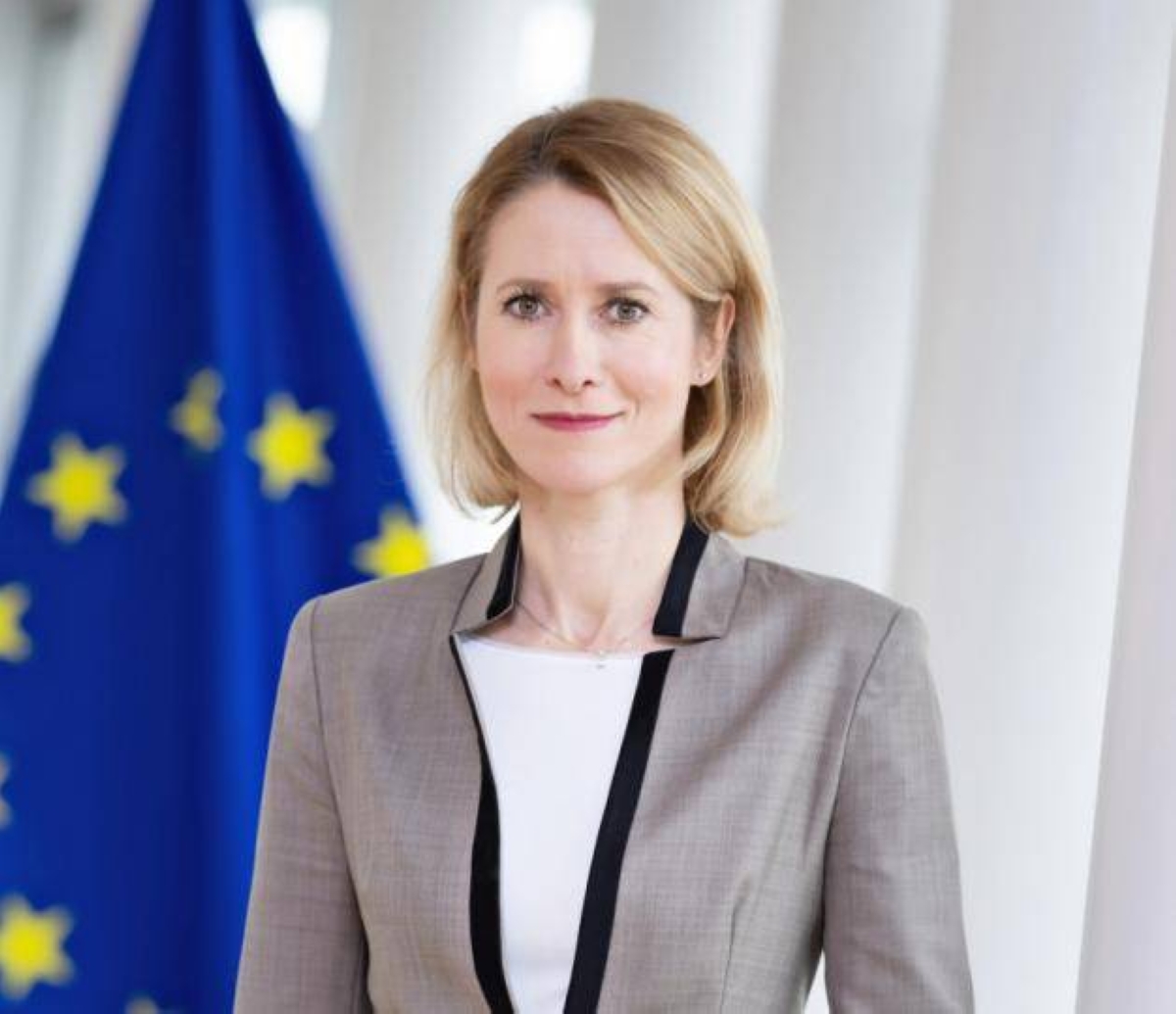
Egyptian Foreign Minister Badr Abdeltty and High Representative of the European Union for Foreign Affairs and Security Policy, Kaya Kallas, in a telephone call today, condemned the attacks on Arab countries stressing the importance of halting them and ending the ongoing war in the region.The Egyptian Ministry of Foreign Affairs stated in a press release that the two sides agreed, during the call, on the urgent need for joint action to end the war as quickly as possible, and the necessity of concerted regional and international efforts to develop specific ideas and a practical plan in this regard to prevent the conflict from escalating.They also emphasized, in this context, the paramount importance of continued joint coordination between Egypt and the European Union to de-escalate tensions and advance the diplomatic track and political solutions. They stressed the need for concerted efforts to reduce tensions in the region and work towards a swift end to the war, resorting to the diplomatic track as the only way to spare the region the risks of sliding into further instability and to preserve regional and international peace and security. 

World
Death toll from Kenyan floods rises to 62: Police

Death toll from Kenyan floods rises to 62: Police

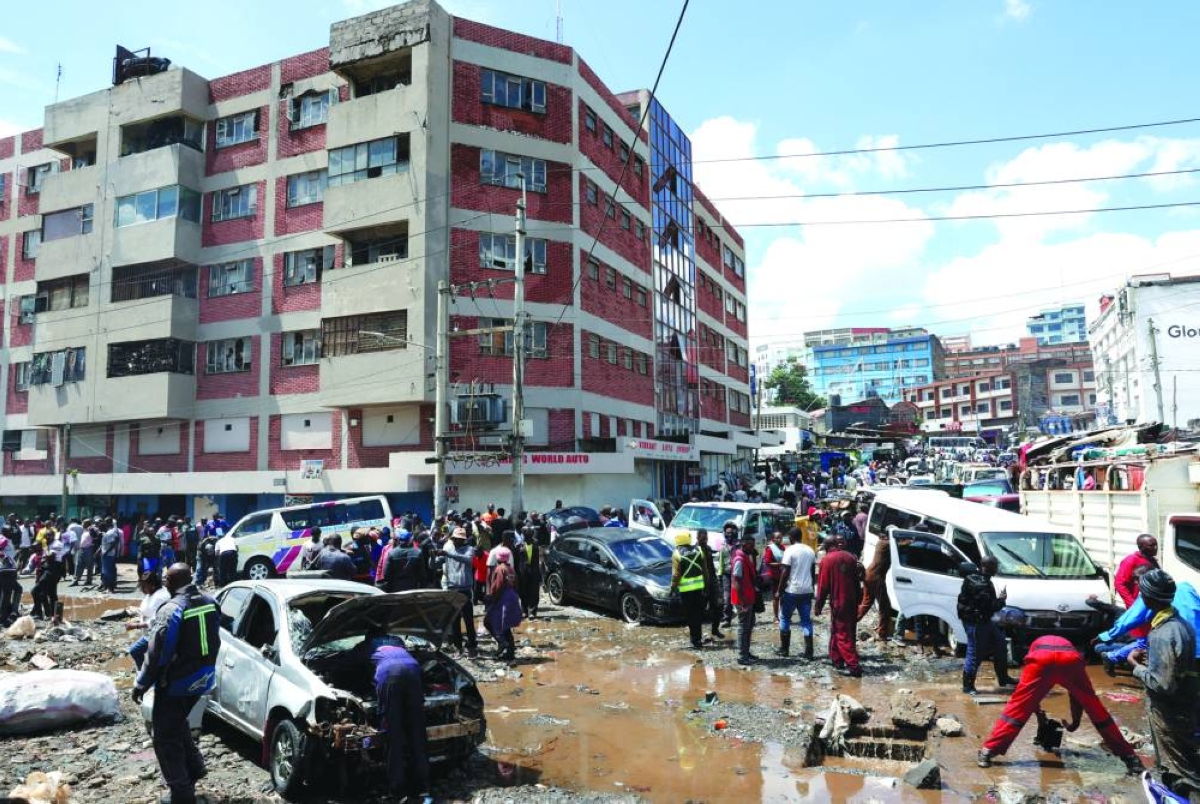
File Picture: People stand around destroyed vehicles following flash floods caused by heavy rainfall in the Grogan area, in downtown Nairobi, Kenya. (Reuters) A total of 62 people including eight ‌children have ​died since ‌heavy rains ‌and ⁠flooding ‌hit Kenya's ‌capital Nairobi and ⁠other areas late last week, police said Saturday.The capital was the worst hit ​with 33 deaths, the force said in a ‌statement on ⁠X ​that updated the ​official tally of casualties. More than 2,000 families have been displaced across Kenya and intense rain was continuing in ‌several regions, ‌it added.Aid ⁠workers started ⁠pulling ⁠bodies from floodwaters across Nairobi last Saturday after overnight flash floods swept ​away dozens of cars and disrupted flights at East Africa's biggest airport.A tally issued last Sunday put the death ‌toll ​at 42.  Related Story

World
Oil stays above $100 – Gulf Times

Oil stays above $100 – Gulf Times

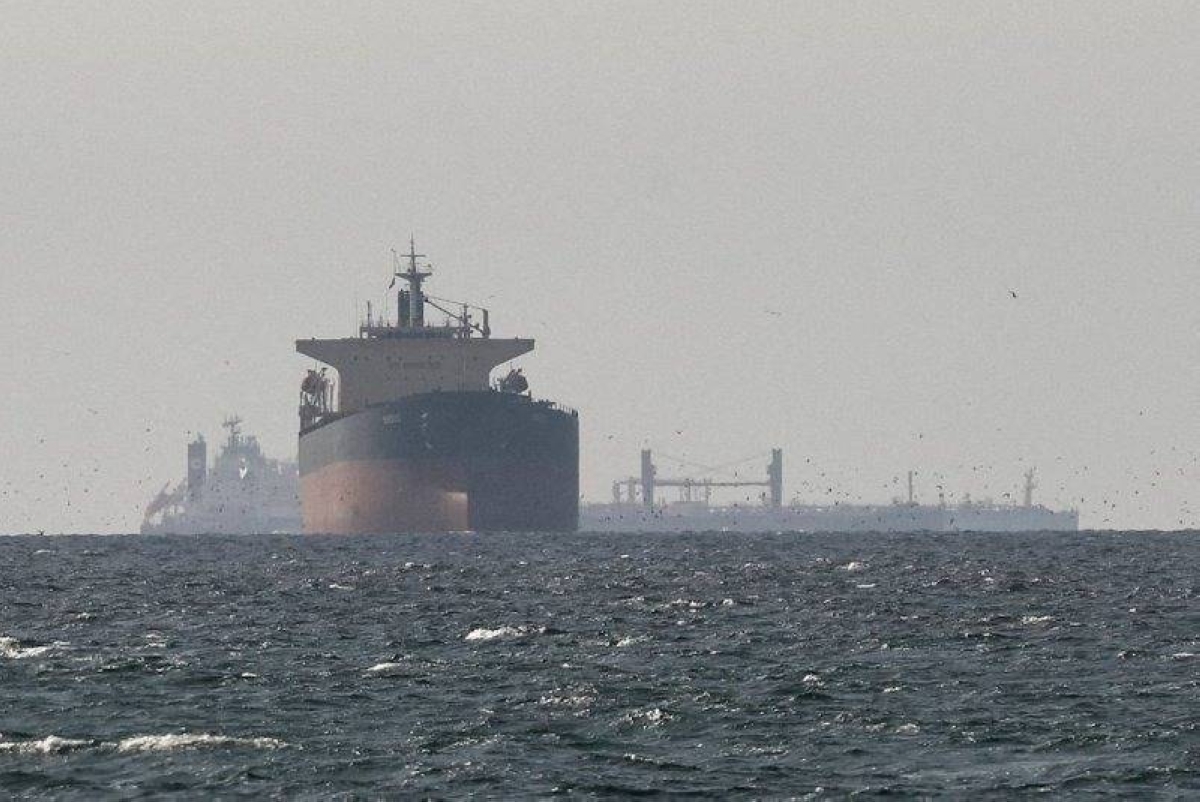
 Oil prices stayed over $100 per barrel yesterday with no end in sight to the disruption in supplies of crude, while stock markets slid lower. With the conflict heading towards its third week, equity markets fell further amid investor worries about an extended crisis that could fan inflation and hammer the global economy.The price of Brent crude, the benchmark international oil contract, dipped below $100 during the day, sending equities briefly higher.But stocks slid back into the red as Brent climbed back above the $100 mark. "Crude oil is continuing to dictate direction for markets as we head towards the end of a volatile week... the pressure remains with no end in sight in the Middle East conflict," said Fawad Razaqzada, market analyst with Forex.com."Traders are trying to figure out what a fair value for crude oil is right now, given the big release of emergency oil reserves, and the temporary relaxation of sanctions on Russian oil sales that's already at sea," he added.Iran's closure of the Strait of Hormuz -- through which a fifth of global crude oil and liquefied natural gas passes -- has sent energy prices soaring. That in turn is causing worries of rising prices rippling through the economy. "Fears of a burgeoning energy crisis remain front and centre for investors," noted Joshua Mahony, chief market analyst at Scope Markets."Inflationary fears are particularly prevalent with each day that passes," Mahony added. Major central banks, which prior to the war's outbreak were heavily forecast to keep cutting interest rates, are now widely expected next week to freeze borrowing costs or even hike them to keep a lid on inflation. 

World
US raises flag over embassy in Venezuela after 7-year hiatus

US raises flag over embassy in Venezuela after 7-year hiatus

The US flag was raised above its embassy in Venezuela Saturday for the first time in seven years, following the US capture of authoritarian leader Nicolas Maduro and the restoration of diplomatic relations.'A new era has begun. We're staying with Venezuela,' the US charge d'affaires Laura Dogu, the embassy's most senior diplomat, wrote in a post on X with a photo of the Stars and Stripes being raised outside the embassy.Dogu wrote that she and her team raised the flag 'exactly seven years after it was removed' on March 14, 2019, two months after Caracas severed ties over Washington's refusal to recognise Maduro's flawed re-election in 2018.Earlier this month, the United States and Venezuela restored diplomatic ties amid a rapid thaw in relations since the US special forces raid in January that left around 100 people dead and saw Maduro and his wife flown to New York for trial on drug trafficking charges.US President Donald Trump's administration says it effectively runs Venezuela and controls the country's vast natural resources after toppling Maduro.Trump and Venezuela's interim leader Delcy Rodriguez, formerly Maduro's deputy, have signed energy and mining agreements that open the door to private investment and US access to what are the world's largest oil reserves.On Friday, Rodriguez urged Trump to totally lift the sanctions imposed on her country.Since January, the United States has eased a seven-year-old oil embargo on Venezuela and issued licences allowing a handful of multinationals to operate in the country under certain conditions. 

World
Air raid sirens sound at Incirlik Air Base in Southeastern Turkiye

Air raid sirens sound at Incirlik Air Base in Southeastern Turkiye

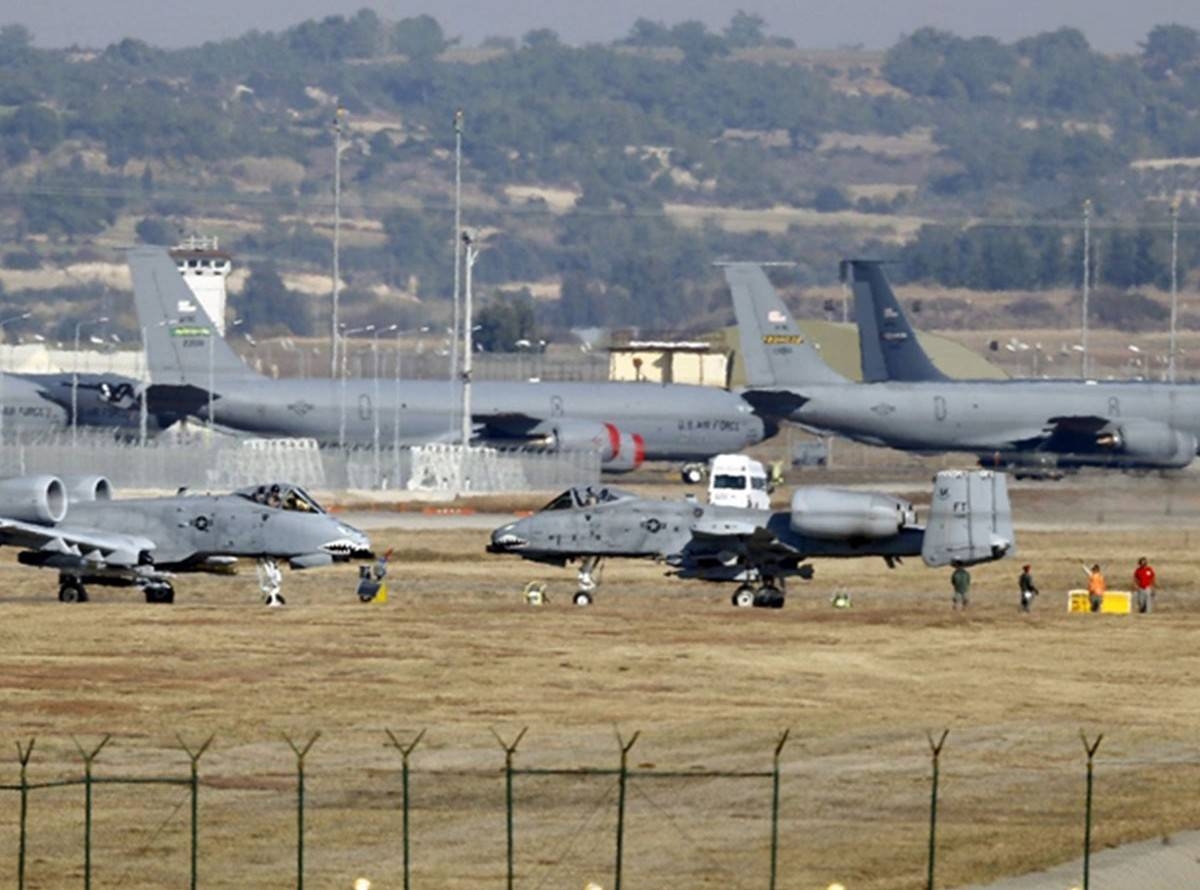
 Air raid sirens sounded Friday at Incirlik Air Base, a major facility belonging to the North Atlantic Treaty Organization (NATO), according to the official Anadolu Agency. The base is located near the city of Adana in the southeast of the country, where U.S. forces are stationed.No official comment has been issued so far regarding the incident, and the reason for the activation of the sirens remains unknown. Four days ago, NATO air defenses intercepted a ballistic missile in Turkish airspace that had been launched from Iran, the second such incident within five days. Last Monday, the United States announced the closure of its consulate in the city of Adana and urged all American citizens to leave southeastern Turkiye.

World
American refueling aircraft crashes in Western Iraq : US Central Command

American refueling aircraft crashes in Western Iraq : US Central Command

 United States Central Command said that one of its aerial refueling aircraft, a KC‑135, crashed in western Iraq, while a second aircraft involved in the incident landed safely.In a statement issued on Thursday, the command said, "One of the two aircraft went down in western Iraq, and the second landed safely. This was not due to hostile or friendly fire."The command added that it is conducting rescue efforts following the crash.