1. Home
  2. Opinion

Category: Opinion

Opinion
Qatar seeks to consolidate itself as a regional hub for innovation

Qatar seeks to consolidate itself as a regional hub for innovation

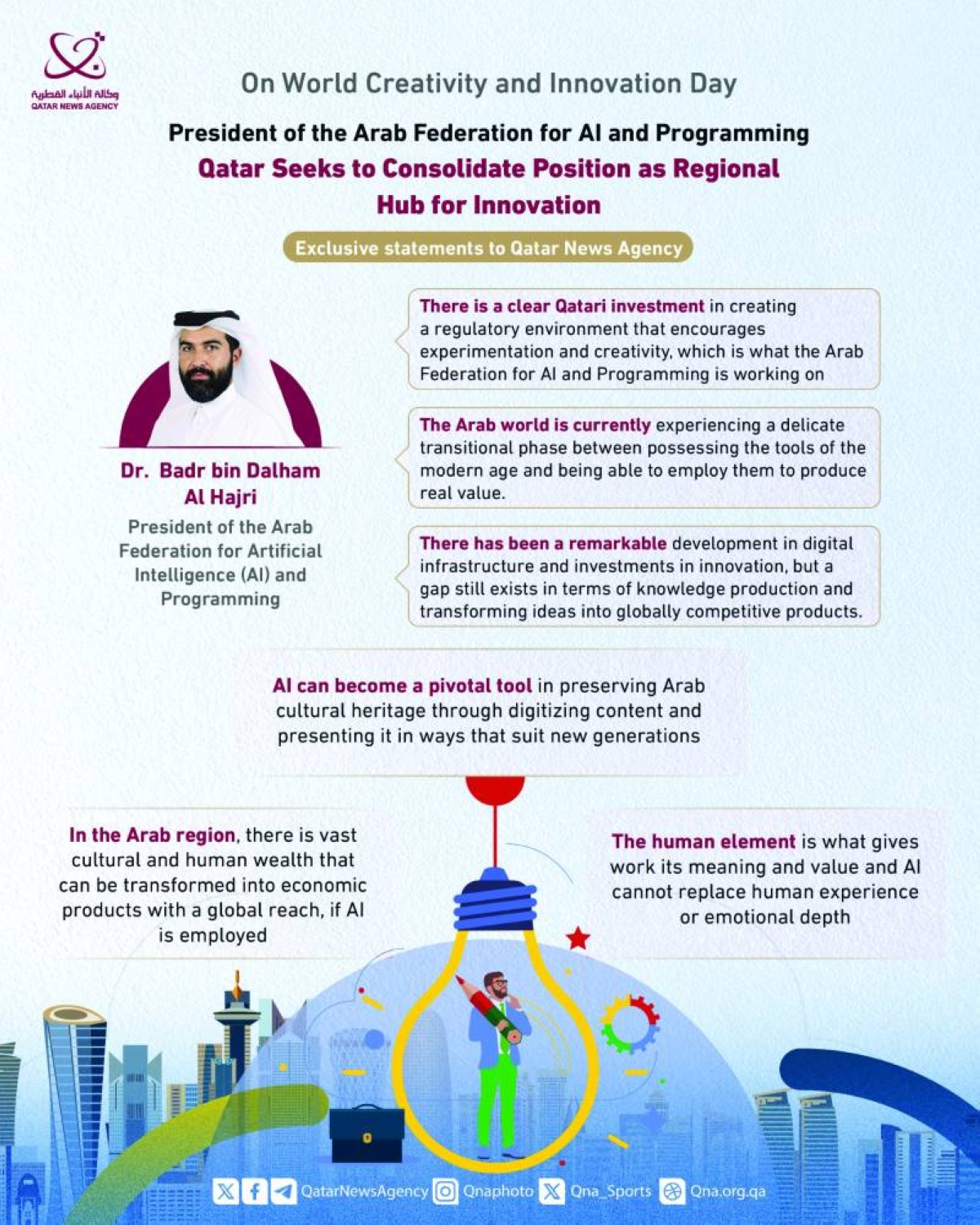
The world celebrated World Creativity and Innovation Day yesterday as the United Nations designated April 21 of each year as a global day to highlight the use of creative thinking and technology towards achieving the Sustainable Development Goals. On this occasion, President of the Arab Federation for Artificial Intelligence (AI) and Programming Dr Badr bin Dalham al-Hajri confirmed in an exclusive statement to Qatar News Agency (QNA) that the Arab world is currently experiencing a delicate transitional phase between possessing the tools of the modern age and being able to employ them to produce real value. There has been a remarkable development in digital infrastructure and investments related to innovation, he added, noting that a gap still exists in terms of knowledge production and transforming ideas into globally competitive products. Dr al-Hajri said that Qatar is presenting an advanced model, as it has moved from adoption to the initiative stage, and is now seeking to consolidate its position as a regional centre for innovation, not only through investment in technology, but also through building an integrated system that links education with scientific research and industry, which is what the federation is currently working towards. Advanced infrastructureRegarding the role of cultural and creative infrastructure in Qatar in this direction, Dr al-Hajri affirmed that the country possesses an advanced infrastructure at the regional level, whether in terms of cultural institutions or initiatives supporting innovation. There is a clear investment in education and research, along with a regulatory environment that encourages experimentation and creativity. These are very significant efforts that cannot be overlooked, he added. Regarding the role that AI can play in protecting Arab cultural diversity, he explained that AI can become a pivotal tool in preserving Arab cultural heritage through digitising content, analysing cultural data, and presenting it in ways that suit new generations. It can also support Arabic languages ​​in all their diversity, and provide wider and more interactive access to cultural content. However, this role requires clear policies that ensure the use of technology in the direction of protection and promotion, he pointed out. Regarding whether AI can redefine the concept of creativity itself, especially in the fields of arts and cultural industries, Dr al-Hajri pointed out that AI does not redefine creativity as much as it expands its boundaries and changes its tools. He added that there is a qualitative shift from individual, talent-based creativity to collaborative creativity that combines human sensibility with the immense computational capabilities of machines. In the arts and cultural industries, it has become possible to produce more diverse and complex works, he added. He said that the human element is what gives work its meaning and value, and therefore, AI frees the creator from technical constraints, but it cannot replace human experience or emotional depth. Regarding the relationship between the creative economy and smart technologies, Dr al-Hajri described it as a relationship of strategic integration, where technology represents a tool to increase efficiency and expand markets, while creative content provides added value. He pointed out that in the Arab region, there is vast cultural and human wealth that can be transformed into economic products with a global reach, if AI is employed in fields such as digital production, marketing, and audience behavior analysis. He said that the challenge lies in building flexible work systems that accommodate integration and sustainable investment, and even achieve economic benefits capable of competing and asserting themselves in global circles, which can be achieved in the future thanks to the Arab efforts currently being made to be part of this path. Young creatorsRegarding the possibility of employing AI in supporting young creators in the Arab world, President of the Arab Federation for Artificial Intelligence (AI) and Programming Dr Badr bin Dalham al-Hajri affirmed to QNA that AI plays a prominent role in empowering young creators by providing low-cost production tools and smart platforms that help them reach a wider audience, and analytical techniques allow for a more accurate understanding of market trends and audience needs, which enhances the chances of success and continuity. It can also contribute to reducing the gap between talent and opportunity, which is one of the most prominent challenges facing young people in the region. Regarding the policies necessary to integrate AI into the creative economy without harming its human nature, he stressed the importance of the need for a balanced legislative and ethical framework that guarantees the protection of creators’ rights, promotes transparency in the use of AI technologies, as well as investing in education and training to build a generation aware of the dimensions of this technology and capable of employing it responsibly. He said that preserving the human character of creativity does not mean rejecting technology, but rather directing it in a way that serves cultural and social values, indicating that it cannot be assumed that modern technologies, which have become an urgent necessity in the current era, will come at the expense of humanity, but rather they will only exist with the presence of humanity itself, which leads and directs them. Regarding whether AI can contribute to reshaping Arab cultural identity, he explained that AI may influence the tools for expressing identity, but it does not have the ability to formulate it in the first place, pointing out that cultural identity is formed through history and societal experience, not through algorithms. The real challenge lies in using this technology to enhance the presence of Arab identity in the digital space, rather than leaving it vulnerable to being absorbed into dominant global cultural models, al-Hajri added. Regarding how cultural institutions can benefit from AI to achieve the Sustainable Development Goals, he affirmed that these institutions can employ AI in developing cultural education, expanding access to knowledge, and supporting initiatives aimed at empowering women and youth, and it can also be used in analysing the cultural and social impact of projects, which helps improve their efficiency and sustainability, and all of this makes AI a means to promote cultural justice and equal opportunities. On the other hand, he stressed the importance of the need for an integrated partnership model, in which roles are distributed between humans and machines in a way that enhances the capabilities of both parties, expressing that humans will remain the visionary and imaginative ones, while the machine will take over the tasks of implementation, analysis, and expansion. He noted that this relationship will not be based on replacement as much as it is based on co-operation, which may open new horizons for creativity that were not possible in the past. World Creativity and Innovation Day is celebrated on April 21 of each year, pursuant to a resolution of the UN General Assembly issued on April 27, 2017, to contribute to turning ideas into reality and finding solutions to the challenges facing societies around the world. It is an occasion to celebrate new and innovative ideas that promote social, economic and environmental development towards building a sustainable and prosperous future for humanity. World Creativity and Innovation Day is also an invitation to think outside the box and go beyond the usual boundaries. It encourages taking tangible risks and exploring new opportunities, making them available to everyone, including women and young people. It also helps in finding solutions to important crises and problems such as eliminating poverty and hunger. The Arab Federation for AI and Programming is affiliated with the Council of Arab Economic Unity in the League of Arab States, and aims to promote Arab co-operation in the fields of AI and programming, and to support digital transformation and sustainable development efforts in the region. 
Opinion
EU is at ‘a critical point’ in ensuring new drug access

EU is at ‘a critical point’ in ensuring new drug access

Europe is at a critical juncture for ensuring future access to new ‌drugs as US pricing policies shake the sector, the head of the European Medicines Agency ​Emer Cooke said yesterday, ‌urging regional authorities to work together more closely. The number of drug launches in Europe ‌has fallen by more than a third, an ‌analysis of data found, potentially hindering patient access ‌to the latest innovative medicines, since US President Donald Trump last May introduced a new drug pricing policy. “I think we’re at a very critical point at the moment,” Cooke told the Reuters Pharma Europe 2026 event in Barcelona, Spain. “Everybody’s struggling with what the impacts of the US policy on pricing will be. And that’s not just on pricing, it’s on where you do your clinical trials, where you market, where you launch.” As of April 2, 2026, President Trump imposed 100% tariffs on many imported patented pharmaceuticals and active ingredients under Section 232 to bolster national security and domestic manufacturing. These tariffs, which take effect for large firms on July 31, 2026, and others on September 29, 2026, can be reduced or eliminated if companies enter onshoring and pricing deals with the US government. Targeted Products: The tariffs apply to patented pharmaceuticals and their active ingredients (APIs) listed in the FDA’s Orange or Purple Book. Exemptions: Generic drugs, biosimilars, and officially designated orphan drugs (for rare diseases) are currently excluded. Trump’s “most-favoured-nation” policy aims to cut US medicine prices by linking them to lower ones paid in other wealthy countries, including ​in Europe, but analysts and executives say it has led drugmakers to push for higher prices there or delay launches. “MFN is creating a huge hesitation to launch in Europe if it exposes price in the US, which, ‌of course, is the major driver of profit for the ​entire industry,” Bill Coyle, global head of biopharma at consulting firm ZS, told the ​conference. Asked about drugmaker complaints Europe no longer offers attractive enough returns, Cooke said she met senior industry leaders at the EMA last week to discuss how the regulator could support innovation and speed medicines to market. Europe is the second biggest market for pharmaceuticals and has universal healthcare, putting it in a “very strong place in terms of access” overall, Cooke noted, while urging measures such as collective procurement negotiations within the EU. European regulators have faced growing criticism from the pharmaceuticals industry, which says companies are increasingly likely to invest and conduct research in the United States and China rather than Europe, where prices are lower, regulation burdensome and incentives to innovate weaker. Cooke defended Europe as ‌a base for business and research. She ‌said the region was working on reforms, including pharmaceutical legislation that covers joint procurement for the bloc to access newly approved drugs and a life sciences strategy focused on innovation and competitiveness. “We have a lot of very positive things going on in Europe,” she said. Cooke also said in the interview that the EU regulatory review of the first of a new generation of weight-loss pills would be concluded “very soon”, indicating it would be in the coming weeks or months ahead of the northern hemisphere summer when institutional decision-making generally slows. Two new oral drugs by Eli Lilly’s ​LLY.N and rival Novo Nordisk , which could shake up the lucrative weight loss market, have been cleared for a US launch this year. Referring to upheaval at the US Food and Drug Administration since the start of Trump’s second administration last year, Cooke said Europe was also attracting some scientific talent from the United States. “I think we’re getting some already - quietly,” she said. Cooke said ties with the FDA remained strong, but leadership changes meant the EMA was having to build new relationships with counterparts there. In the interview, she also addressed Europe’s efforts to prevent drug shortages and said it was important for the ‌EMA to train its staff to ​use artificial intelligence responsibly, with human oversight and without weakening the judgment needed for regulatory decisions.  

Opinion
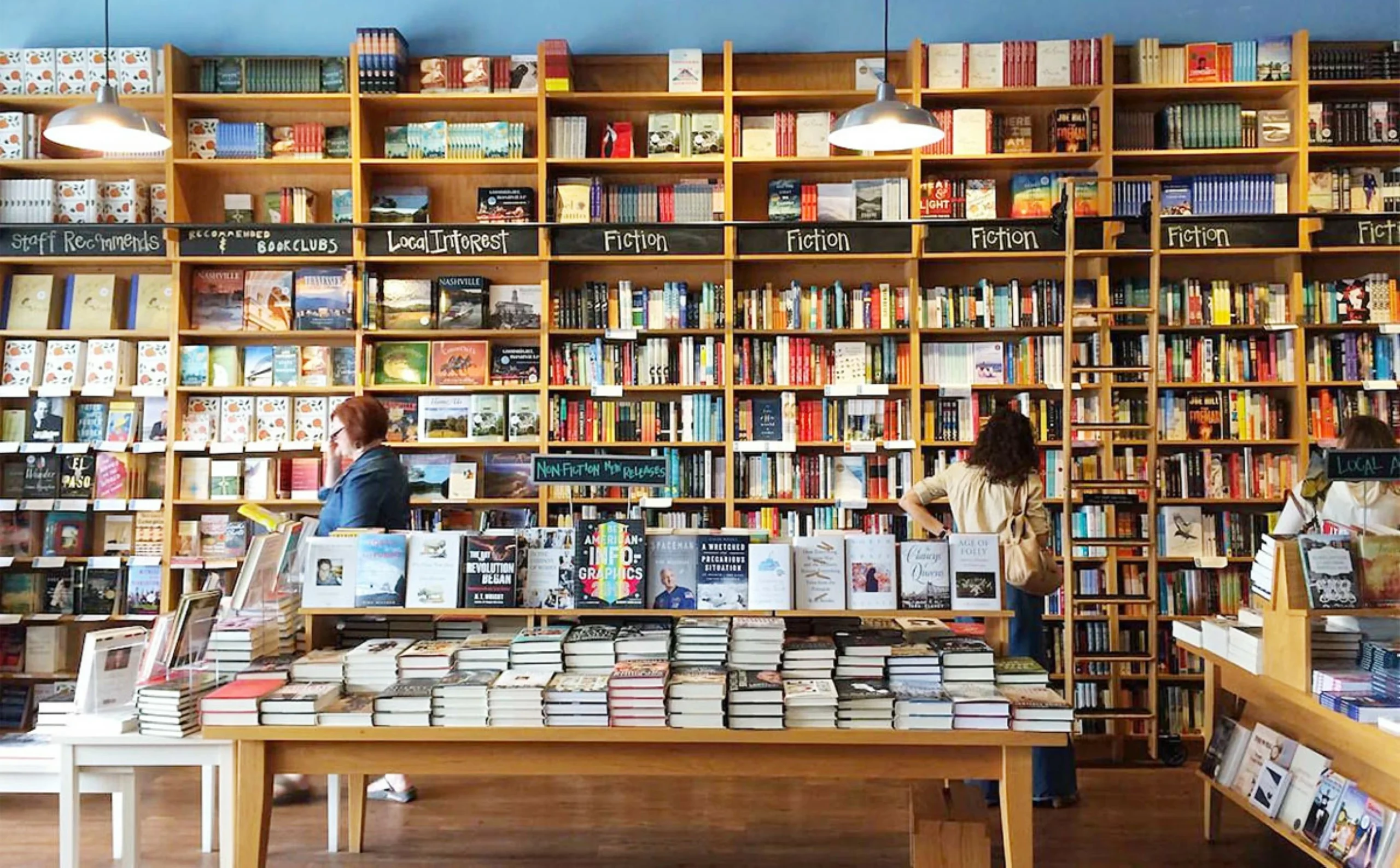
A boom of bookstores, when we need them most

A boom of bookstores, when we need them most

As a blizzard blasted the East Coast in late February, a thousand booksellers from independent bookstores across the US packed their winter gear, changed flights and braved snow to get to Pittsburgh by any means

Opinion
Hollywood still isn’t ready for women to take risks

Hollywood still isn’t ready for women to take risks

Nicole Ackermann, Tribune News ServiceThere’s a good chance you’ve never actually seen a film from a woman’s point of view. For decades, mainstream storytelling has been shaped by a largely masculine narrative logic: linear progression,

Opinion
Heatwave and hotspots increase across India

Heatwave and hotspots increase across India

Heatwaves (HWs) in India have intensified significantly over the past two decades, with projections of further increase in frequency and duration, according to a recent study published in the journal ‘Scientific Reports’.The Introduction to the

Opinion
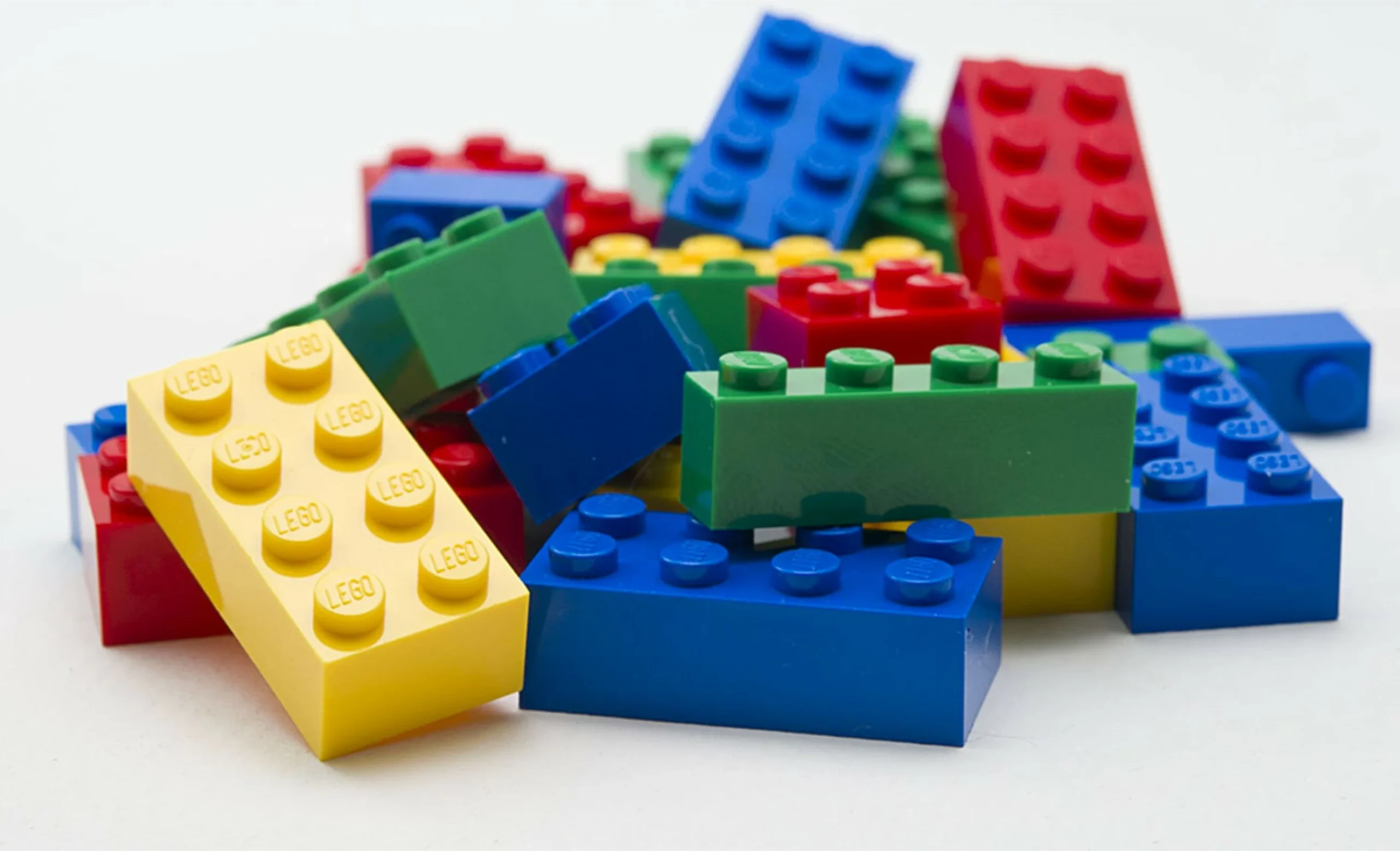
A lost childhood toy

A lost childhood toy

Everyone will remember playing with Lego blocks in their childhood, with those a bit older remembering only different coloured blocks, without the thousand extra pieces that allow battle cruisers to be built.Most will also remember

Opinion
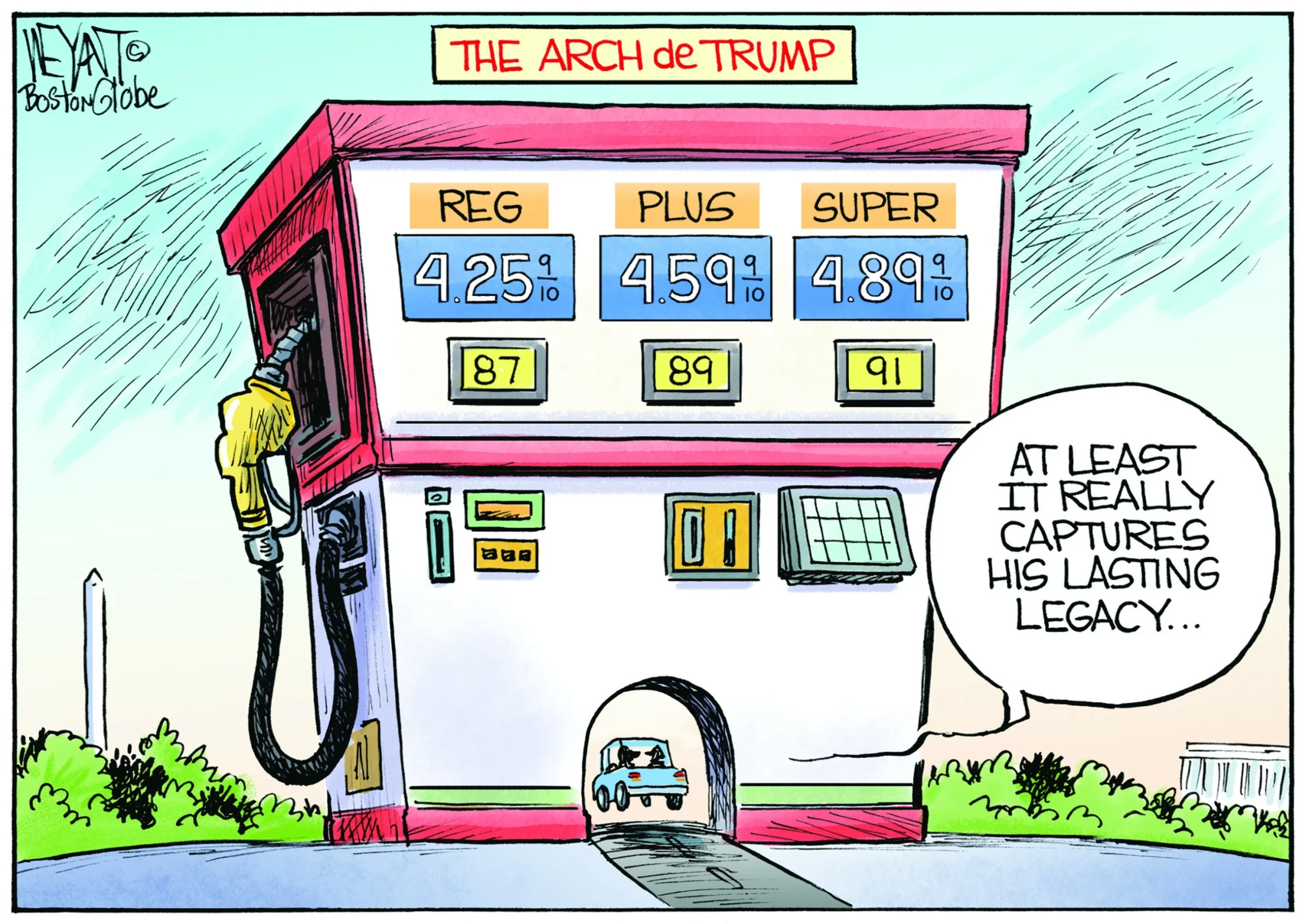
Lasting legacy

Lasting legacy

Lasting legacy

Opinion
Election Eve gimmicks

Election Eve gimmicks

This is in reference to the West Bengal Chief Minister, Mamta Banerjee statement that our Prime Minister’s “Sweet Stop” is a scripted one and is an election gimmick. Yes, she is cent per cent right.

Opinion
Lasting impact: A food crisis due to fertiliser crunch is not far behind

Lasting impact: A food crisis due to fertiliser crunch is not far behind

There is now a growing consensus across public panels and private discussions among policy makers and experts that the impact of the conflict in the Middle East on the global economy is likely to get significantly worse before it gets better — even if a lasting peace is negotiated soon. And a food crisis stemming from a fertiliser crunch won’t be far behind. The World Bank, International Monetary Fund and the UN World Food Programme warned last week that sharp increases in oil, natural gas and fertiliser prices triggered by the war will inevitably cause rising food prices and food insecurity. In a joint statement, the leaders of the global institutions said the burden would fall most heavily on the world’s most vulnerable populations, particularly in low-income, import-dependent economies. They said their institutions would continue to monitor developments closely and “coordinate the use of all available tools to support those impacted by the crisis.” IMF Managing Director Kristalina Georgieva has said the Fund is engaging with the United Nations’ Food and Agriculture Organisation on food security. The WFP said in mid-March that millions of people will face acute hunger if the war continues into June. The conflict in the Middle East could push millions more towards hunger as its economic fallout reverberates further around the globe, according the World Bank’s chief economist. “You have about 300mn people who suffer from acute food insecurity already,” Indermit Gill said. “That’ll go up by about 20% very, very quickly,” as knock-on effects grow. The blocking of the Strait of Hormuz, a key oil supply route, has sent fertiliser prices soaring since they rely on oil-based inputs. Higher prices for fertilisers, which are used in agriculture, may entice countries to halt food exports and hoard more food for themselves, further driving up food prices. Low-income people across the world tend to spend a larger share of their earnings on basic needs like food and fuel. After downgrading its forecast and predicting the slowest growth the world has seen since the pandemic on Tuesday, the IMF’s chief economist, Pierre-Olivier Gourinchas, foreshadowed more downgrades to come. “Even if the war ends tomorrow, it would take quite some time for the recovery to kick in,” Georgieva told Bloomberg Television. “The impact is already baked in.” The price of fossil fuels and fertilisers are intimately linked, says the UN Conference Trade and Development: Oil and gas processes provide inputs to its manufacture. Natural gas is used in the Arabian Gulf region to create urea, used in the nitrogen fertiliser that is critical to boosting agricultural yields. Hormuz is a key choke point for exporting it. This latest crisis – after the Ukraine war energy shock and the global health emergency of Covid – is also hitting “at a time when many developing economies struggle to service their debt”. Rising global interest rates, in response to soaring inflation expectations, could exacerbate that struggle – making it hard for governments to take action to cushion the blow for vulnerable consumers. Import-dependent countries in Asia, Africa, and Latin America are particularly exposed to fertiliser shortages and rising input costs, according to the FAO. While farmers in rich nations can count on support from their governments, concerns are mounting over some of the poorest economies. Higher food prices will complicate efforts by central banks to get a post-pandemic wave of inflation back under control. The situation also presents a challenge for politicians, especially in emerging-market economies where food eats up a greater proportion of household incomes than it does in more industrialised nations. As many as 45mn more people could face acute hunger if the conflict in Iran doesn’t ease by the middle of the year, taking the total number to a record high, the WFP has warned. 

Opinion
Climate-warming gas bubbling from global reservoirs

Climate-warming gas bubbling from global reservoirs

Methane, the second-biggest contributor to climate change, is spewing into the atmosphere from the oil and gas industry, landfills and dairy farms. It’s also coming from another lesser-known source: reservoirs.As plants break down underwater, they