Beauty reworked
As someone who loves make-up and fashion, it is really interesting to watch how beauty trends change over the seasons. This week, we are taking a look at the current trends in make-up which look
A regulatory move allowing smaller, everyday investors to engage in more day trading could spur impulsive, high-risk “YOLO”, or “you-only-live-once,” trades and allow eager individual traders to take an even bigger role in driving markets. The US Securities and Exchange Commission late this week approved a proposal to remove restrictions that limited accounts under $25,000 to three day trades — defined as the buying and selling of the same security within the same trading day — within five business days, known as the “pattern day trader” rule. The decision was a win for brokerage firms like Webull and Robinhood and retail traders who now have a much greater ability to buy and sell frequently — but may also take on higher risk with YOLO trades driven by conviction or impulse rather than by research and careful portfolio planning. “Removing the restriction makes it easier for undercapitalized traders to take more ‘YOLO’ shots intraday,” said Ophir Gottlieb, chief executive of Los Angeles-based Capital Market Laboratories. “That can mean more freedom to lose money faster,” Gottlieb added. Gottlieb noted that there will still be some guardrails on retail trading under the new rules, where instead of the $25,000 minimum account size, customers would need to meet certain margin requirements based on their market exposure. “Retail traders have been a large part of this market since Covid and it’s time to allow more flexibility rather than a hard gate,” he said. Prior to 2020, individual investors with small accounts at brokerages like Charles Schwab, Fidelity Investments and other firms accounted for about 15% of trading on US exchanges daily, according to several academic studies. But the Covid-19 pandemic, together with big leaps in technology and the advent of new trading platforms, helped retail traders to boost that share as high as 25%, and become key players on particularly volatile days. Retail investors have especially been drawn to trading as markets rallied from their recent slump, and there has been heightened buzz around stocks that attracted retail interest such as footwear-to-AI firm Allbirds, which saw a surge of buying. “The pattern day trader rule really still restricted the ability of our smaller clients to participate in the markets and reduced their opportunities to take advantage of big market moves,” said Anthony Denier, group president and US CEO at Webull, whose stock soared 11% on Wednesday. Denier said the average Webull client has about $5,000 in their trading account, far below the $25,000 in assets that, under the pattern day trader rule, would entitle them to engage in more than three day trades within a five-day period. The Financial Industry Regulatory Authority, or FINRA, created the PDT rule following the popping of the dot-com bubble in 2000, as a way to rein in speculation and limit losses for traders with brokerage accounts that allow them to buy stocks on margin. Denier and others who have pushed for overturning the rule argued that imposing a $25,000 minimum balance requirement was arbitrary and tilted the playing field in favour of wealthier investors. The new rules will come into effect 45 days after they are posted on FINRA’s website. FINRA did not immediately respond to a Reuters query on the precise timing. “This is certainly going to open up opportunities for our smaller customers and democratize access to the markets,” Denier said. Still, some analysts were wary that the move would nudge investors into taking on more risk. “I think it will push some of these traders toward riskier bets,” said Garrett DeSimone, head quantitative analyst at OptionMetrics, adding that it would be logical for small investors with limited capital to seek out more bang for their buck. Higher transaction volumes, particularly among retail investors, tend to translate into greater losses, DeSimone said. “Someone with a few thousand dollars won’t just be able to open up a brokerage account and start day-trading options contracts,” he said, noting that traders will still have to meet certain thresholds in terms of knowledge or skills. “It just wouldn’t be Big Brother saying, ‘You’re not rich enough,’ anymore.”
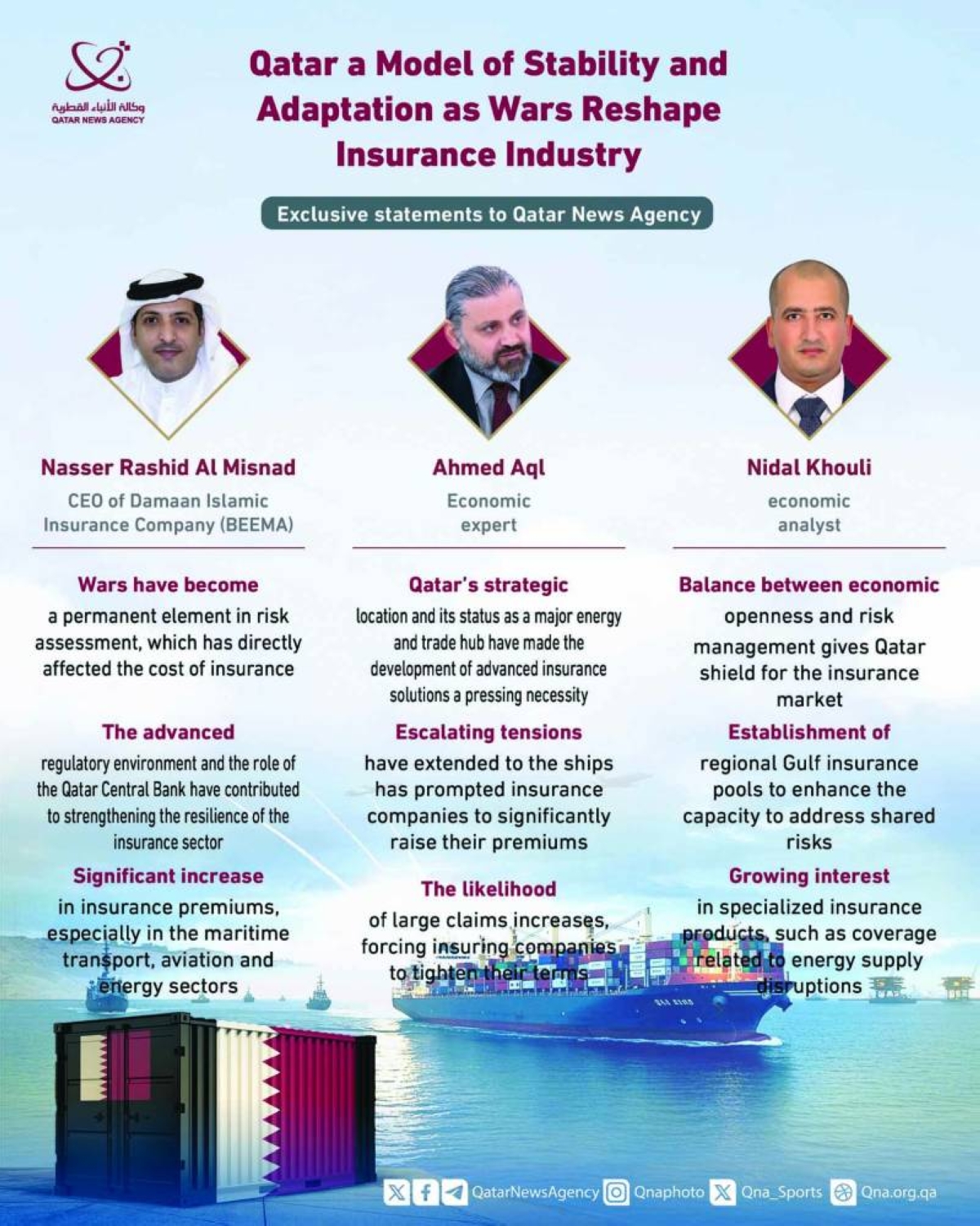
The insurance sector is facing one of the most complex challenges in its history as geopolitical conflicts escalate and wars are no longer exceptional events but a permanent element in the global risk equation, all of which are forcing companies to reformulate their models and methods of operation. Amidst escalating tensions, there is a growing demand for specialised insurance solutions to address unconventional risks, including attacks on infrastructure, disruptions to supply chains and transport , and damage to goods. As these risks persist, insurance costs rise significantly. Increases in transport, energy, and basic commodity premiums are reflected in the prices of products and services, making the consumer part of the risk equation. Meanwhile, insurance companies bear the responsibility of managing compensation in an unstable environment. International reports from Swiss Re and Lloyd’s of London revealed a radical shift in the sector, characterized by an almost complete exclusion of damages resulting from armed conflicts from traditional policies, in contrast to the growing reliance on war risk insurance. Sensitive sectorExperts point out that the insurance sector has become one of the most sensitive sectors to the developments of wars, with a significant increase in the cost of coverage and a widening scope of risks to include supply chains, business disruption, transport and global trade. In contrast, reinsurance companies play a pivotal role: undertaking the task of distributing risks on a global scale, thereby reducing the likelihood of local insurance companies collapsing in the event of large losses. In a special statement to Qatar News Agency (QNA), CEO of Damaan Islamic Insurance Company (BEEMA) Nasser Rashid al-Misnad confirmed that the insurance sector is facing increasing challenges that have forced it to reformulate its business models and risk management mechanisms. He pointed out that wars are no longer exceptional events, but have become a permanent element in risk assessment, which has directly affected the cost of insurance and the nature of the coverage provided. Risk management within insurance companies is no longer limited to monitoring traditional indicators, al-Misnad pointed out, adding that it has become a pivotal function that drives the decision-making process through the continuous evaluation of possible scenarios and preparation for developments that may be unexpected in a highly volatile environment. The BEEMA CEO explained that the recent period witnessed a significant increase in insurance premiums, especially in the maritime transport, aviation and energy sectors, as a result of the increased likelihood of losses and the complexity of the risk environment. He pointed out that the impact of these increases extended to the cost of goods and services, making the consumer part of this equation. Al-Misnad referred to the emergence of a need for insurance products that were previously of limited use, most notably insurance against the risks of war, business disruption, and supply chains, in addition to insurance against cyber risks, which have become one of the dimensions of modern wars. Reinsurance companies form a key pillar in supporting the stability of the sector by distributing risks on a global scale, which limits the impact of large losses on local insurance companies, especially in light of the high volume of potential claims, he added. Al-Misnad noted that insurance companies today increasingly rely on scenario analysis, where different developments of conflicts and their impact on supply chains, energy and transportation are envisioned, and then the financial and operational impact of each scenario is measured, which helps to make more flexible and proactive decisions. He explained that stress tests have become an essential tool, where companies simulate harsh conditions such as a sudden surge in claims or widespread market disruptions, with the aim of ensuring their ability to continue and meet their obligations even in the most difficult circumstances. Some companies resort to what is known as reverse testing, which begins with the assumption of a severe scenario that could lead to the company’s failure, and then work backward to understand how this could happen, which helps to discover weaknesses before they occur, he added. Al-Misnad pointed out that insurance companies are moving towards developing more specialized solutions that rely on advanced data analysis and real-time risk management, enabling them to respond quickly to changes, adapt, and improve their ability to accurately price risks. On the local level, the BEEMA CEO noted that Qatar stands out as a model of economic and financial stability. The advanced regulatory environment and the role of the Qatar Central Bank have contributed to strengthening the resilience of the insurance sector, enabling it to deal with regional and international challenges efficiently. This stability is not limited to economic factors alone, but also reflects the development of risk management practices within institutions, and the keenness of regulatory bodies to promote a culture of proactive preparedness, not just crisis response. Concluding his statement to QNA, al-Misnad confirmed that the next phase will witness further expansion in specialized insurance products, and perhaps a move towards group or regional solutions to cover high risks, in light of the increasing reluctance of reinsurance companies to cover some types of risks. Economic expert Ahmed Aql supports this view, stating in an interview with the Qatar News Agency (QNA) that the Qatari model for achieving economic security relies on diversifying production sources and enhancing self-sufficiency, particularly in vital sectors such as food and water. Within the framework of Qatar National Vision 2030, the country has succeeded in increasing self-sufficiency rates in several areas, including dairy, meat, poultry, fish, eggs, and vegetables. This reduces its direct vulnerability to disruptions in global supply chains, alleviates pressure on the insurance sector, and ensures the uninterrupted supply of essential goods to the local market. Aql added that Qatar’s strategic location and its status as a major energy and trade hub have made the development of advanced insurance solutions a pressing necessity, especially in the areas of energy and critical infrastructure insurance, marine insurance related to natural gas exports, and insurance for major projects and infrastructure. He pointed out that despite this stability, the Qatari market is not without its challenges, as it remains linked to regional and international developments. The rise in global reinsurance costs is reflected in the local market, and reliance on foreign markets to cover some major risks presents an additional challenge. Marine transportAql explained that insurance for transport operations, particularly marine transport, has become more important than ever, given the length of supply chains and the increased likelihood of risks related to cargo damage or loss, or geopolitical risks. With escalating tensions in the region, risks are no longer limited to cargo alone, but have extended to the ships themselves and their crews. This has prompted insurance companies to significantly raise their premiums, in some cases by three or four times, reflecting a fundamental principle in the insurance sector, which is the cost of coverage increase with the probability of risk. Aql concluded by saying that insurance companies today operate in a complex environment, where the likelihood of large claims increases, forcing them to tighten their terms and impose additional restrictions on transport operations, especially in areas classified as high-risk. However, these challenges also open up the field for the development of more accurate and advanced insurance options, based on digital data analysis and real-time risk tracking, making the insurance industry better equipped to deal with unforeseen events. In the same vein, financial and economic analyst Nidal Khouli affirmed that the insurance sector was among the most affected by the military escalation in the Middle East. He pointed out that the Gulf region in general, and Qatar in particular, had enjoyed long periods of regional and local stability, which meant that insurance risks were primarily concentrated in areas related to natural factors and economic activities. Khouli added that the outbreak of war led to a renewed need for insurance coverage that was previously excluded or considered less important, most notably war risk insurance, maritime disruption insurance, and business interruption insurance. He explained that these products were not among the priorities of customers or even insurance companies before the war, but they have now become central to the concerns of all parties. He added that the coming period will witness a growing interest in specialized insurance products, such as business interruption insurance during conflicts, supply chain insurance, coverage related to energy supply disruptions, and insurance related to radioactive or environmental pollution, reflecting the expanding scope and increasing complexity of risks. Khouli also pointed out that if the conflict is prolonged, the need may arise to establish national insurance or funds to provide partial or compensatory coverage for sectors that may be unable to obtain coverage from international reinsurance companies, given the potential reluctance of these companies to assume high risks. He also suggested that the current phase might necessitate the establishment of regional Gulf insurance pools to bridge the coverage gap and enhance the capacity to address shared risks. On the other hand, he pointed out that cyber risk insurance has become an increasing priority, given the transformation of modern warfare into multidimensional conflicts that include cyberspace. He emphasized that this type of coverage will witness significant growth in the coming period.

On Andy Corriher's farm in North Carolina, planting and preparations are underway for his corn and soybean crops — but fertilizer costs have surged on war in the Middle East, and orders he placed weeks
Ayose Naranjo, ReutersThe sun is setting in Pálpite, a small town on the edge of Cuba's vast Zapata Swamp, when suddenly the road swarms with activity. But not with the red land crabs that once
Lucy Papachristou, ReutersWhen anti-government protests began in Georgia in late 2024, Luka Mishveladze started sleeping on the floor at his university building to be closer to student rallies. Some 18 months later, the 20-year-old student
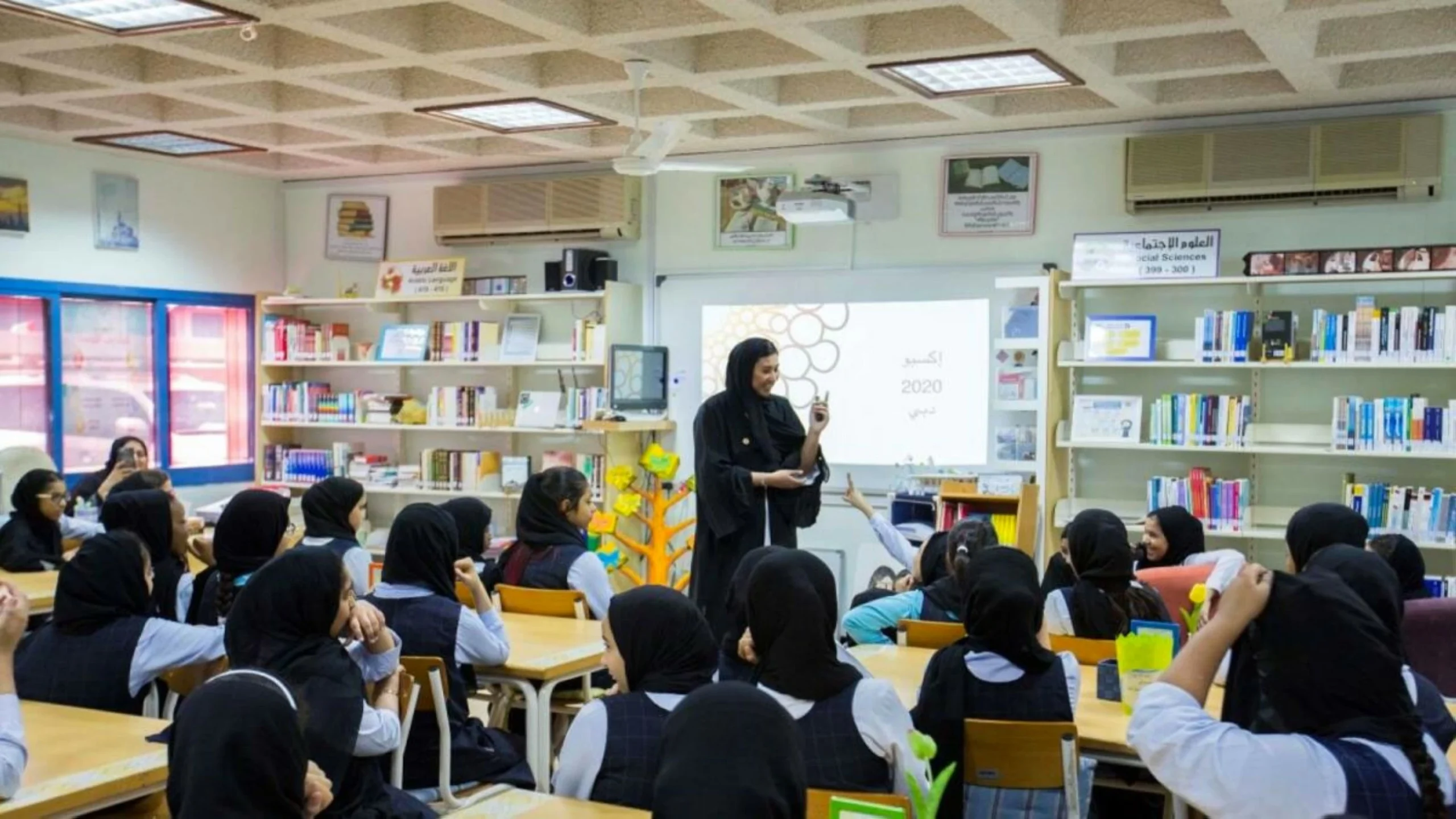
Students in the UAE are eagerly awaiting the reopening of their schools. They want to return to their campus as early as possible to meet their friends and teachers. Campus life has its own charm.
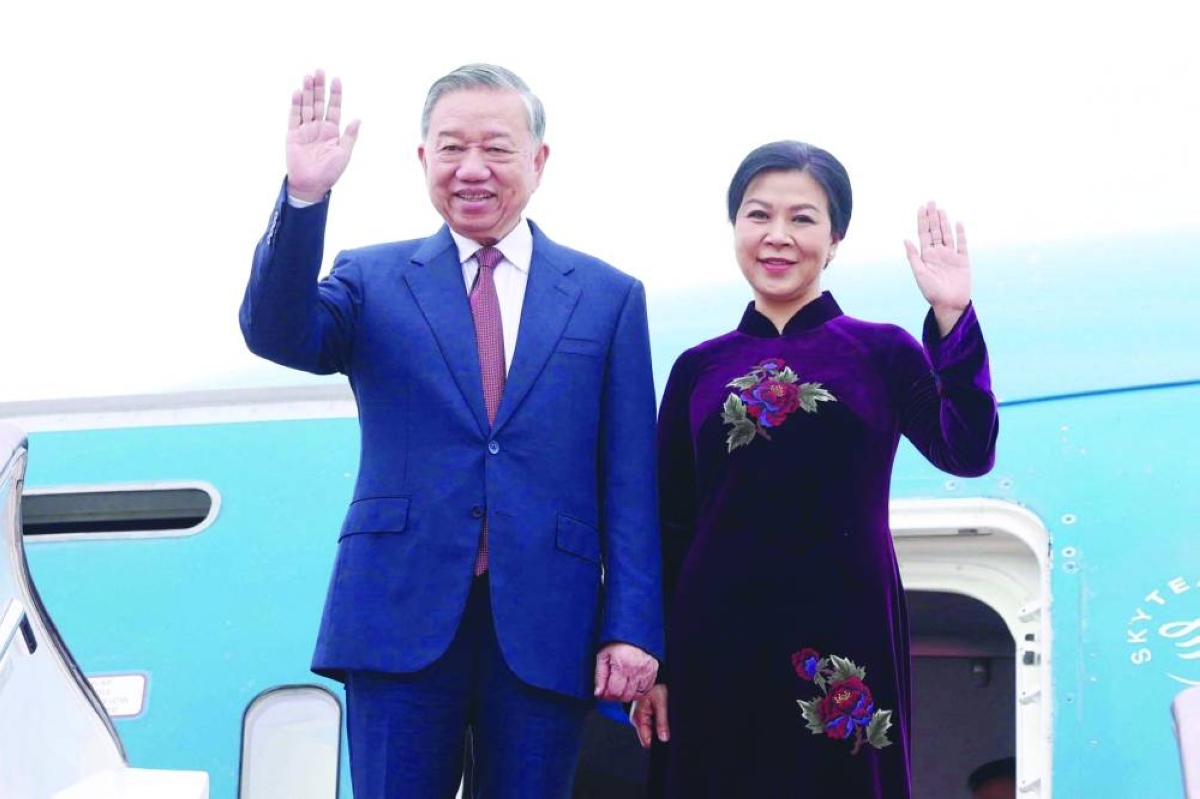
Vietnam is increasingly edging closer to China’s model of governance, tightening state control while embracing Chinese technology and regulation as its most powerful leader in decades heads to Beijing today, according to internal documents, public policy plans and sources. The two Communist neighbours have swung between conflict and co-operation over centuries. Now, Vietnam is leaning more openly toward Beijing, as China-friendly security figures rise in Hanoi under party chief To Lam, a former public security boss. Lam will meet China’s leader Xi Jinping today on his first overseas trip since becoming state president on April 7, a move that formally unites two of Vietnam’s most powerful roles, echoing Xi’s own concentration of authority and breaking from Vietnam’s traditional emphasis on collective leadership. “Vietnam-China relations have entered a new stage, marked by higher political trust, more substantive defence and security co-operation, deeper and more practical co-operation across sectors,” Lam said in a joint statement with Xi after they last met in April 2025. This week’s visit is expected to yield dozens of co-operation agreements, people briefed on the plans said. While such documents are often non-binding, the relationship is becoming more tangible: China’s exports to Vietnam are at record highs, and Chinese investment in manufacturing south of the border is booming. The people spoke on condition of anonymity due to the sensitive nature of the topic. Vietnam is still hedging geopolitically, analysts say, keeping doors open to Washington and others. But at home, it is moving closer to China’s governance model - particularly control-driven regulation despite Western misgivings, underscoring how China’s influence is deepening as Lam reshapes the state. Vietnam has “a dual approach of actively learning from the Chinese model while selectively resisting its influence,” said Nguyen Khac Giang, a visiting fellow at Singapore’s ISEAS Yusof Ishak Institute. Alexander Vuving of the Asia-Pacific Center for Security Studies in the US, said that closer ties with China without adequate guardrails “will have a negative impact not only on Vietnam’s security, prosperity, and autonomy, but also on its relations with the US and the West.” Vietnam’s foreign ministry did not immediately respond to a request for comment. TECH AND CONTROLTechnology has emerged as one of the clearest markers of warming ties. Vietnam has dropped earlier concerns about the use of Chinese equipment in its 5G network, while the country’s largest internet provider FPT announced investments in an undersea cable to be built by a Chinese vendor that the US considers linked to sanctioned telecom giant Huawei. A telecom company under Vietnam’s public security ministry is in talks with Chinese companies for additional 5G deals. Chinese firms are simultaneously exploring investments in Vietnamese data centres, a strategic asset, according to people familiar with the discussions. “Chinese interest in Vietnam’s data-centre market has increased noticeably over the past 18-24 months,” said Mickael Driol, head of investment advisory firm Mekong Partners. He said much of that is driven by manufacturers who moved operations to Vietnam from China. Hanoi is prioritising state control in data regulation, similar to China. Western tech companies and the US government have repeatedly raised concerns over data protection rules drafted by Vietnam’s security ministry that limit cross-border data transfers. Draft documents seen by Reuters show Vietnam plans to establish state-run data-trading exchanges overseen by the public security ministry - mirroring China’s centralised data model and expanding the state’s ability to deploy information for surveillance and strategic goals. In Western markets, such platforms are typically privately run. Vietnam is also expanding a national electronic identification system, enabling authorities to identify individuals through AI camera networks that are being rolled out nationwide - another parallel with China’s surveillance architecture. “The police’s rising power (in Vietnam) may partly explain a growing interest in Chinese-style social control tactics,” said Giang. MODELLING CHINA’S ECONOMYUnencumbered by public opinion that has grown less critical of China, the Vietnamese Communist Party is also advancing a more China-style economic model centred on subsidies, public investment and large infrastructure projects, sometimes in direct co-operation with Beijing on sensitive projects including high-speed rail links. The shift has been reinforced by TikTok’s popularity in Vietnam, where positive narratives about China often dominate, and by Hanoi’s increasingly muted criticism of Beijing’s actions in the disputed South China Sea. Vietnam remains more open than China to foreign investors and still depends heavily on external capital. But China’s share of total investments is rising, and Chinese brands are gaining popularity at home. China’s influence is also visible in finance. Vietnam relies on unconventional monetary policy tools such as lending mandates to banks reminiscent of China’s policy, maintains tight foreign ownership caps in key sectors, and is grappling with a property bubble that echoes China’s experience. Now Hanoi is considering deeper intervention in equity markets. Proposed measures include a government-backed stabilisation fund to buy stocks during downturns - an idea explicitly modelled on China. “China created one and succeeded in reassuring investors,” said an internal security ministry document reviewed by Reuters. — Reuters
Wars cause large and persistent economic losses in countries where fighting takes place, with output declining by roughly 7% over five years on average, and economic scars lasting for more than a decade, according to the International Monetary Fund. In 2024, the latest year for which data is available, more than 35 countries experienced conflict in their territory and about 45% of the world’s population lived in countries affected by conflict. “Beyond their devastating human toll, wars impose large and lasting economic costs, and pose difficult macroeconomic trade-offs, especially for those countries where the fighting is taking place,” the IMF said. The Middle East and North Africa region is expected to have a sharply slower growth this year as oil-exporting countries grapple with the fallout from the Iran war, the IMF said on Tuesday. The region’s real GDP growth forecast was slashed to 1.1% in the IMF’s latest World Economic Outlook, 2.8 percentage points lower than its January projection. Growth is expected to rebound to 4.8% in 2027. The IMF said, however, that its estimates for 2027 assumed energy production and transportation in the region are normalised over the next few months. It noted that this assumption may need to be revised if the conflict drags on. Tehran’s attacks on its Gulf neighbours, in response to US-Israeli strikes that began in late February, have damaged major energy facilities and disrupted shipping through the Strait of Hormuz, which would normally handle about 20% of global oil and liquefied natural gas flows. The IMF downgraded global growth projection for the year after the war triggered a major oil shock and included the possibility of a downturn if the conflict drags on and energy infrastructure is severally damaged. Global gross domestic product is now expected to rise 3.1% this year, compared with 3.3% predicted in January, the Washington-based fund said in its latest World Economic Outlook. That’s assuming a relatively short-lived conflict and moderate gain in energy prices this year. Developing economies are expected to take the biggest hit. Growth in emerging markets was cut to 3.9% this year, from a 4.2% forecast just a few months ago. The impact will be smaller in developed countries including the US, an oil exporter. The war sparked by the joint US-Israeli attack on Iran and which spread across the Middle East has cost Arab countries $186bn, a top UN official has said. “We estimate that the loss to the Arab region’s GDP as a result of one month of fighting will be around 6%... 6% of GDP means the region has lost around $186bn from its economy in a single month,” UN assistant secretary-general Abdallah al-Dardari said earlier. At the same time, World Bank President Ajay Banga is sounding the alarm about a bigger, looming crisis: a huge gap in jobs for the 1.2bn people who will reach working age in developing countries in the next 10 to 15 years. At current trajectories, those economies will generate only about 400mn jobs, leaving a deficit of 800mn jobs. The spring meetings of the World Bank and the International Monetary Fund are being held under the shadow of the US-Israel war on Iran that threatens to slow global growth and jack up inflation. The extent of the hit to the economy will depend on the durability of the two-week ceasefire announced last week. The ceasefire has halted most attacks. But it has not ended Iran’s effective blockade of the Strait of Hormuz, which has caused the biggest-ever disruption to global energy supplies. “The Middle East conflict halted growth momentum,” IMF Chief Economist Pierre-Olivier Gourinchas said in a blog post. “The shock’s ultimate magnitude will depend on the conflict’s duration and scale — and how quickly energy production and shipment normalize once hostilities end.”