1. Home
  2. Opinion

Category: Opinion

Opinion
Conflict, contracts and uncertainty: Why force majeure clauses matter more than ever

Conflict, contracts and uncertainty: Why force majeure clauses matter more than ever

When conflict erupts, the first disruptions are often measured not only in geopolitical headlines but also in legal notices. Within just two days of the current crisis in the Middle East, contractors involved in major infrastructure projects in Qatar had begun issuing and receiving force majeure notices.This rapid response reflects a deeper reality about doing business in a region impacted by global politics. Large-scale infrastructure projects, from transport networks to energy facilities, are often planned years in advance and involve billions of dollars in investment. Yet geopolitical events can change the operating environment overnight. When they do, one contractual mechanism quickly moves from the fine print to the forefront: force majeure.The term ‘force majeure,’ meaning ‘superior force,’ originates in French civil law but has become a standard feature in international construction contracts. It allows a party to suspend or avoid certain contractual obligations when extraordinary events beyond its control, such as war, natural disasters or terrorism, prevent performance.For contractors and developers operating in the Middle East today, reviewing these provisions is not merely a legal technicality. It is an urgent commercial necessity. In the absence of an explicit force majeure clause, parties may find themselves with limited protection when external events disrupt their ability to perform a contract.Under English common law, for example, the doctrine of frustration may excuse performance if an unforeseen event fundamentally changes the nature of the contract. However, this doctrine applies only in narrow circumstances. By contrast, the Qatar Civil Code expressly recognises the concept of force majeure under Article 188. Even so, most construction contracts include their own detailed force majeure provisions to clarify how risk will be allocated when extraordinary events occur.At the heart of every force majeure clause lies a definition of what qualifies as a force majeure event. Some contracts adopt a broad formulation, referring to any event beyond the reasonable control of the affected party. Others rely on more detailed lists of qualifying events such as war, floods, earthquakes, or terrorist attacks. Both approaches have advantages and risks.A narrowly drafted list may fail to capture unforeseen crises, leaving parties exposed if a disruption falls outside the specified categories. On the other hand, overly broad definitions can create uncertainty about when the clause should legitimately apply. As a result, many modern construction contracts combine the two approaches: listing anticipated events while also including broader ‘catch-all’ language to capture similar circumstances that the parties may not have predicted. But identifying a qualifying event is only the first step.To rely on force majeure, a party must usually demonstrate several key elements. The event must have prevented, hindered, or delayed performance of contractual obligations. It must be beyond the party’s control. And the party must show that it could not reasonably have avoided or mitigated the consequences. This last requirement is particularly important.Force majeure is not a remedy for commercial inconvenience. A contractor cannot rely on the clause simply because a project has become more expensive or difficult. Courts and arbitral tribunals will typically expect evidence that reasonable steps were taken to mitigate the impact of the disruption.Equally critical are the procedural requirements contained in most contracts. Force majeure clauses usually require the affected party to notify its counterparty within a specified timeframe. These notices must explain the nature of the event and how it is preventing performance. In practical terms, this means that failing to comply with the notice requirements, even during a crisis, may prevent a party from relying on force majeure at all. In fast-moving situations such as regional conflict, this can create significant legal risk.When properly invoked, the most common consequence of force majeure is the temporary suspension of contractual obligations. In effect, the contract is paused while the disruptive event continues to prevent performance. If the disruption persists for a prolonged period, however, termination may follow.Many construction contracts allow either party to terminate the agreement after six to twelve months of sustained force majeure. In those circumstances, contractors are typically paid for work completed and may recover certain costs, such as demobilisation expenses, but they rarely receive compensation for lost profits. These scenarios frequently give rise to disputes, particularly regarding the valuation of completed work and the costs incurred before termination, so careful documentation of project progress and costs can be critical evidence if disagreements later arise.The current regional crisis serves as a stark reminder that even the most carefully negotiated contracts operate within a broader geopolitical environment. Infrastructure development across the Middle East continues to accelerate, but global tensions mean that disruption can never be entirely ruled out.In this context, force majeure clauses are far more than standard boilerplate. They are essential tools for managing risk in an unpredictable world. For companies operating in the region’s construction sector, understanding how these clauses work, and ensuring they are drafted and invoked correctly, may ultimately determine whether a crisis results in a manageable delay or a costly legal dispute.Matthew Williams is Counsel at Crowell & Moring in Doha. With more than a decade of experience in Qatar, he advises on construction, project finance and arbitration matters across the region.  Related Story

Opinion
Danish PM bids for third term in general election

Danish PM bids for third term in general election

Denmark votes on Tuesday in a tight general election, with Prime Minister Mette Frederiksen seeking a third term after a campaign focused on domestic issues and set against tensions with the US over Greenland. Frederiksen,

Opinion
Trump faces serious challenges over Iran war

Trump faces serious challenges over Iran war

Washington: Donald Trump has sent mixed messages about Washington's commitment to the war on Iran. While he is considering “winding down” the conflict, he has rejected a ceasefire and has stepped up offensive actions. Trump

Opinion
French elect mayors in key cities including Paris

French elect mayors in key cities including Paris

Voters cast their ballots for mayors in major French cities on Sunday, with the left battling to keep Paris while the far right eyes gains ahead of next year's presidential election. Most of the country's

Opinion
Spain’s youth prisons provide a model for Britain

Spain’s youth prisons provide a model for Britain

Holly Bancroft, The IndependentLabour's radical plans to modernise youth prisons will take inspiration from Spain, where inmates are given schooling, train horses, make mosaics and play sport. Minister for youth justice Jake Richards last week

Opinion
Africa’s solar power market faces challenges

Africa’s solar power market faces challenges

China's decision to end value-added tax rebates on solar panel exports and phase out incentives for making battery storage equipment could push up the cost of solar installations in Africa, which relies heavily on imported

Opinion
Reflect and reset

Reflect and reset

Ramadan this year feels exclusive calmer, more intentional, and surprisingly productive. With my current work schedule running from 10am to 5pm, handling customer service quality and development from home, I’ve revealed something I didn’t fully

Opinion
The situation!

The situation!

The situation!

Opinion
Russia tightens the screws on the Internet

Russia tightens the screws on the Internet

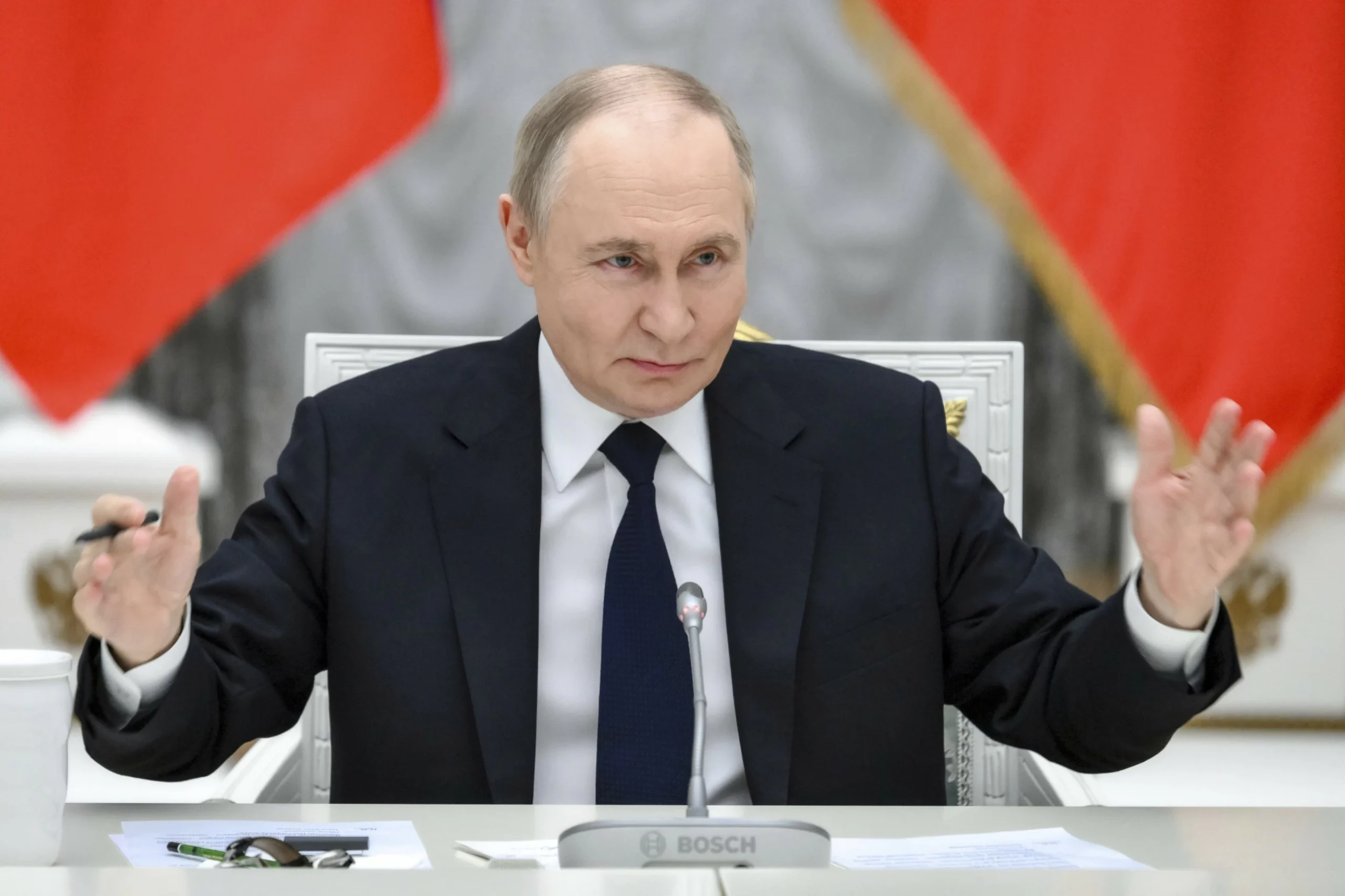
Office workers toiling with blocked Internet. Teenagers continually forced to switch VPNs. Taxi drivers struggling to find their way around Moscow without online navigation. The Kremlin is flexing its muscles over the Internet. The government is periodically jamming the web in regions across Russia, while restricting messaging services Telegram and WhatsApp and ‌taking down dozens of virtual private networks that can be used to swerve bans on sites and apps. Over the past week, mobile Internet ​has been completely down every day in parts of ‌central Moscow, St Petersburg and other major cities, according to Reuters reporters in those areas and eight senior foreign diplomats in Russia. “These ‌measures are taking place,” Kremlin ⁠spokesman Dmitry Peskov told Reuters when asked about ‌restrictions to messaging apps and Internet service. “They are partly related to the ‌fact that a number of foreign companies refuse to comply with the norms of Russian legislation, and partly due to security measures against the threat of Ukrainian drones.” Attack ⁠drones can use cellular networks to aid navigation. Russia’s online clampdown this year has been accompanied by the introduction of new laws which oblige mobile operators to cut off any client at the demand of the Federal Security Service and give the agency powers to create a network of pre-trial detention centres under its own jurisdiction. The broader aim of the bolstering of online powers is to help the Kremlin shore up domestic control in the context of the war against Ukraine, according to the diplomats who requested anonymity to discuss sensitive matters. Should the conflict drag on, it could increasingly strain popular support, the envoys said. Should the war end, Russian officials are likely keen to prepare for any dissent that may ensue, they added. One said Moscow had assembled powers that gave it ​the option to enact a “great crackdown” online. The end of Moscow’s war in Afghanistan in 1989 caused major social ructions in Russia with returning veterans fuelling a wave of lawlessness that blighted the 1990s. The chaos was compounded by the collapse of the Soviet Union in 1991. “Russia’s leaders and security services remember 1991 and they remember what happened to Russia and ‌what happened to them when Moscow stopped a big ⁠war in Afghanistan: the country collapsed, the ​security services were split apart — it was a disaster,” said Andrei Soldatov, a Russian investigative journalist who is an expert on the ​security services. “What is happening now is that the security services are trying to create a situation in which — if Putin signs a peace deal or if Putin goes for a protracted war — it would not destroy the whole thing.” Two Russian sources with knowledge of the online clampdown said Moscow had studied the experience of other countries, particularly China and Iran, and had tasked authorities with developing a way to block swathes of the Internet, both mobile and fixed, while controlling online communications. KREMLIN TARGETS MESSAGING APPSAfter the 2022 invasion of Ukraine, Russia imposed the most repressive laws seen since Soviet times, bolstering censorship powers and the influence of the FSB, the main successor to the Soviet-era KGB. This year, Moscow has further ratcheted up security. President Vladimir Putin, who served as a KGB officer from 1985-1990, marked the fourth anniversary of the Ukraine war on February 24 by attending the FSB’s annual meeting in Moscow. He told the agency to step up the fight against terrorism — in which he included attacks from Ukraine — while strengthening the “information and digital space”. Kremlin spokesman Peskov said that all measures were lawfully ‌taken to ensure security amid the Ukraine conflict, which Putin casts ‌as a confrontation with the West.Two Russian officials close to ⁠the Kremlin disputed that the moves against the Internet and messaging apps were repressive, casting them as essential to improve security and ensure national unity against an attempt ⁠by the West to sow discord. Russia’s state digital and communications watchdog, Roskomnadzor, did ⁠not reply to a request for comment. The eight diplomats said Moscow’s Internet crackdown this year went much further than they had seen before in the country. Mobile Internet has been periodically shut down in some Russian regions for months, often after major Ukrainian drone attacks. By mid-January, Russia has blocked from than 400 VPNs, 70% more than late last year, according to Kommersant newspaper. In recent weeks, the crackdown has intensified in Moscow, according to the diplomats and Reuters reporters, and the government has also moved against Dubai-based Telegram and US service WhatsApp. Last month, Russia slowed down Telegram, which has more than 1bn active users and is widely used in both Russia and Ukraine, and ​investigated its billionaire founder Pavel Durov as part of a criminal case involving accusations of terrorism. Russian officials said Telegram had been penetrated by Ukraine and Nato member intelligence agencies, and that Russian soldiers had died as a result. Telegram has denied it has been penetrated and said Moscow is trying to force Russians to use Max, a state-backed messenger app that schools and universities have been told to use for parent and student chat groups. “Each day, the authorities fabricate new pretexts to restrict Russians’ access to Telegram as they seek to suppress the right to privacy and free speech,” Durov told Reuters. “A sad spectacle of a state afraid of its own people.” The Kremlin also completely blocked WhatsApp last month for failing to comply with local law. The app’s owner, tech giant Meta, decried the move as a backwards step for people’s security in Russia. Some young Russians vowed to evade the clampdown by switching to different VPNs as services were banned, not for politics but simply to engage ‌with Western apps such as Instagram and Snapchat, ​which are restricted in Russia. “If these quite old politicians want to block everything, why have they not made any Russian apps that are interesting?” said Andrei, who declined to give his second name due to the sensitivity of the situation.  

Opinion
Solar lights in Johannesburg provide South African women safer nights

Solar lights in Johannesburg provide South African women safer nights

Johannesburg boasted grand public buildings and luxury hotels, ​but decades of state neglect and the exodus of wealthy residents and businesses have left the inner-city crime-ridden and crumbling.South Africa experiences some of the world’s highest