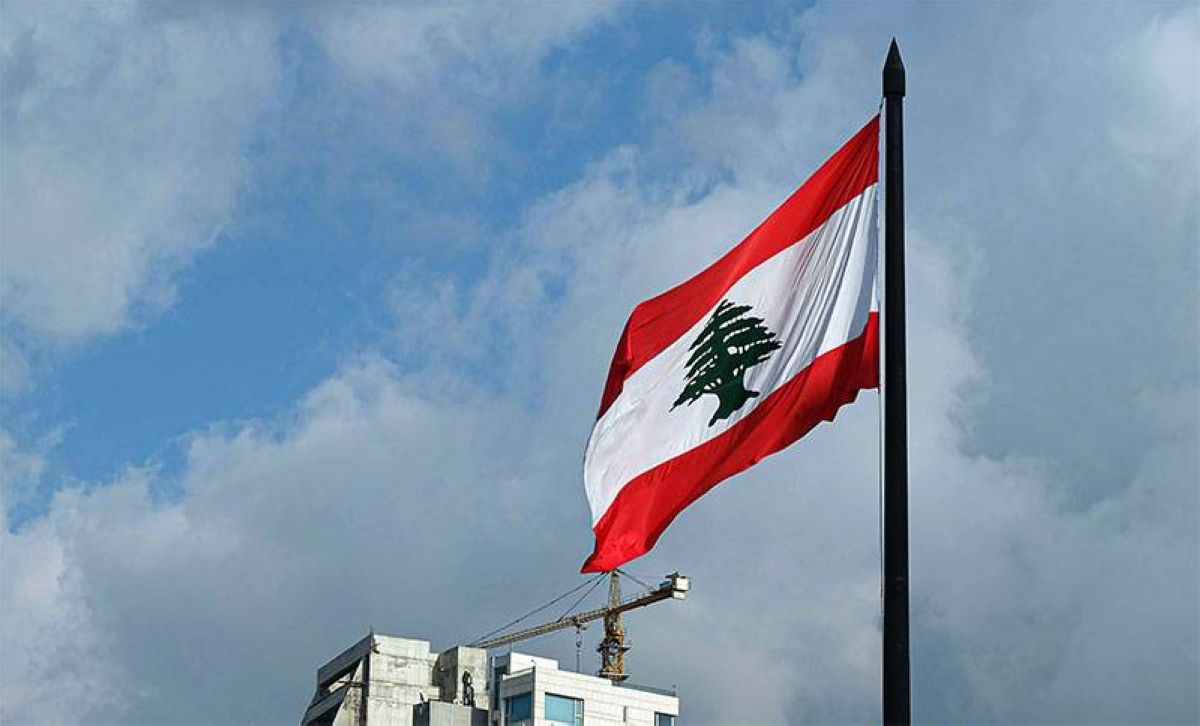
Lebanon has a talent for debating the architecture of its future while the foundations crumble beneath it. For two years, the most urgent conversation in Lebanese political circles — in Beirut salons, diaspora forums, and the offices of international mediators — has centred on a question of constitutional design: Should Leba non restructure itself as a federal state, granting its communities formal governing sovereignty? Or should it rebuild as a reformed unitary republic, concentrating authority at the centre and delivering it, this time, with competence and accountability? It is a genuine question. But the way it is being asked is wrong, and the frame in which it is being conducted is worse. The federal-versus-unitary debate is almost invariably a sectarian debate wearing constitutional clothes. Federalism’s advocates are communities that want to govern themselves because they no longer trust the state to govern them fairly. The unitary state’s defenders fear federalism as a prelude to partition, or a mechanism for rivals to entrench territorial control behind a constitutional warrant. Both sides are having a real argument. But it is the wrong argument. The wrong argument produces the wrong diagnosis. Lebanon’s crisis is not, at its root, a crisis of sectarian incompatibility. It is a crisis of institutional collapse — what Émile Durkheim called “anomie”: the condition that arises when the normative frameworks holding a society together break down faster than new ones can be built. Lebanon is not a country whose communities cannot coexist. It is one whose institutions have so thoroughly failed that citizens have retreated to communal solidarity as the only available social insurance. The sect did not destroy the state. The state’s failure made the sect indispensable. This distinction matters enormously. If Lebanon’s problem is sectarian incompatibility, the solutions are communal: redraw the boundaries, renegotiate power-sharing, allocate sovereignty by identity group. These are the solutions currently on offer, and they have a long record of failure. If the problem is institutional collapse, the solutions are civic and administrative: rebuild the courts, the civil service, the fiscal architecture, the rule of law. That is a harder project. It is also the right one. Lebanon’s confessional system was not an indigenous tradition; it was a French Mandate administrative tool, designed to make a diverse population legible to a colonial authority. What its founders did at independence was nationalise that tool — converting a mechanism of foreign control into the operating system of self-governance. The National Pact allocated the highest offices of the republic on a confessional basis calibrated to a 1932 census that has never been updated. The country’s population has quadrupled since. Its citizens are more educated, more urbanised, and more furious at an arrangement that has delivered only economic ruin. The scaffold meant to be temporary became the building. Into this structure came external shocks a functional state might have managed and Lebanon’s dysfunctional one could not: the Palestinian presence and the wars it brought; Syrian tutelage that systematically prevented Lebanese institutions from developing autonomous capacity; Hezbollah, which arose precisely in the space the state had vacated in the south, and which understood that schools, hospitals, and roads were the most effective instruments of political loyalty. Each exploited vacuums they did not create. The Lebanese state did — through neglect, corruption, and the chronic inability to reform an arrangement from which its political class profited. Against this background, the case for federalism deserves a sober rather than ideological assessment. Decisions made closer to communities are more responsive to local needs; local governments are, in principle, more accountable. But federalism’s benefits are conditional — they materialise only when functioning sub-national institutions exist to exercise devolved authority. In Lebanon today, constitutional federalisation would more likely entrench existing sectarian power structures behind federal sovereignty than dismantle them. The regional strongmen become governors. The patronage networks become administrative systems. The dysfunction acquires a constitution. There is a better path that does not require resolving the federal question first. The substantive goals behind the federalism argument — local accountability, community control over services, protection from arbitrary central interference — are achievable through administrative and fiscal decentralisation within a reformed unitary framework: elected regional councils with guaranteed funding and genuine authority over service delivery; municipal governments with real budgets and direct democratic accountability; a constitutional court with the independence to protect local governance from central override. These describe the normal operation of functional states — achievable without a constitutional convention and without crystallising Lebanon’s confessional map into permanent federal units. What makes this urgent is Lebanon’s human capital catastrophe. The diaspora — 15mn people, three times the resident population — is one of the developing world’s most extraordinary concentrations of global talent. Diaspora Lebanese who consider returning or investing ask a single question: is there a functioning legal system? The answer depends on governance quality — not constitutional architecture — and reads the same whether the state is federal or unitary. The October 2019 uprising offered a lesson the political class has not absorbed. For weeks, Lebanese citizens from every confessional community stood in the same squares, chanting the same slogans, demanding the same thing: a state that works. That solidarity was not an aberration. It showed what Lebanese civic identity looks like when people have an institutional space in which to express it. The uprising failed not because Lebanese citizens are incapable of transcending sectarian politics, but because no institutional mechanisms existed to convert civic energy into governing authority. Lebanon’s choice is not between a federal and a unitary state. Those are second-order questions about how authority is distributed within a functioning republic. The first-order question — the one that must be answered before any constitutional architecture makes sense — is whether Lebanon will build a real state at all: courts that enforce the law against the powerful and powerless alike; a civil service recruited on merit; a fiscal framework transparent and not subordinated to the financing needs of political patrons. A real state or a simulation of one: that is Lebanon’s actual choice, and no constitutional formula can make it on Lebanon’s behalf. Jamil K Mroue is a Lebanese writer and former editor of Al-Hayat in London and The Daily Star in Beirut.

admin