1. Home
  2. Opinion

Category: Opinion

Opinion
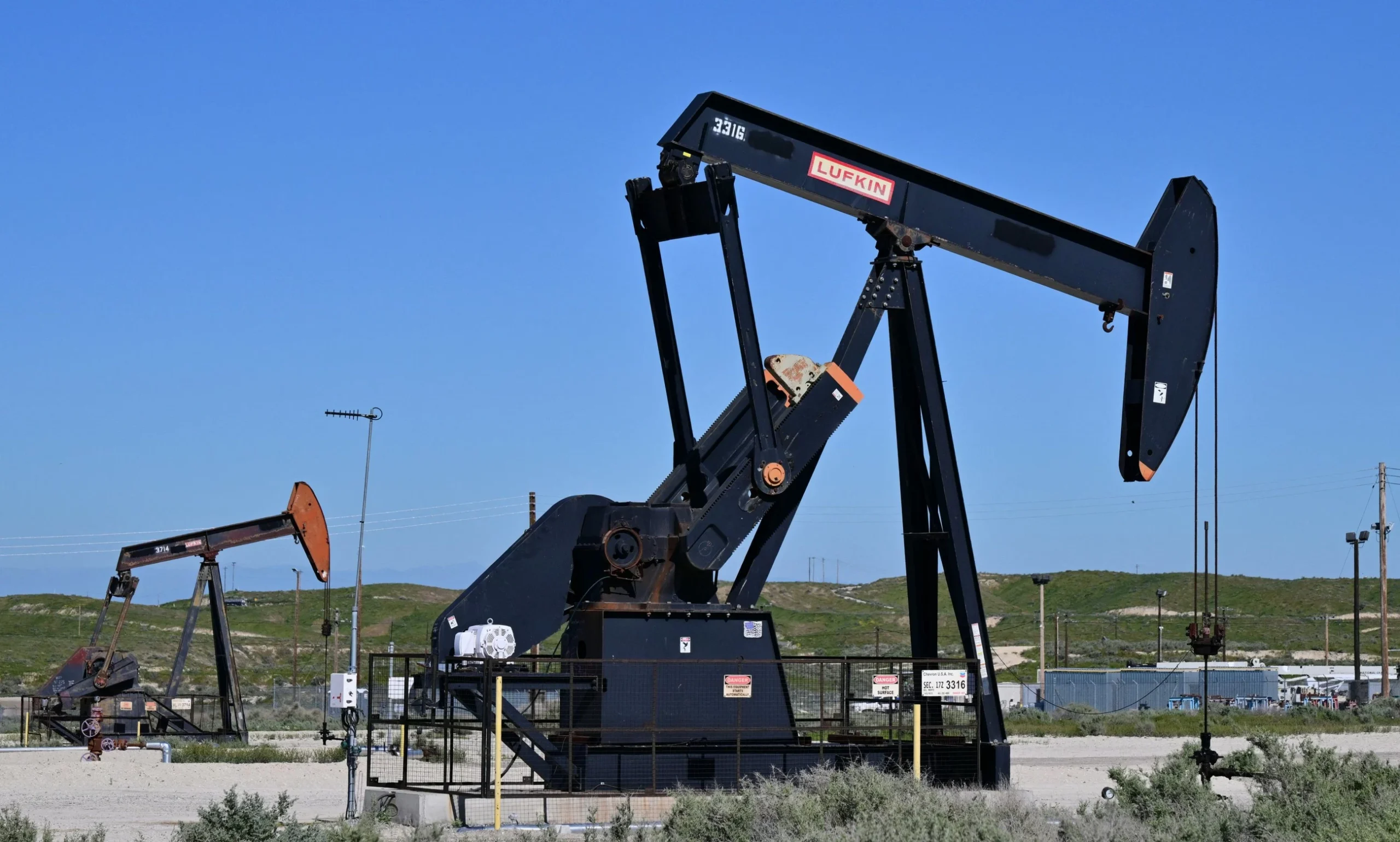
Surging oil drives worries for US stock investors

Surging oil drives worries for US stock investors

A stunning surge in oil prices is rattling US stock investors, as they brace for an even sharper rise in energy prices that could stagger the economy and further damage equities, reported Reuters. The 50%

Opinion
Chinese electric trucks are going to take over Europe

Chinese electric trucks are going to take over Europe

Nick Carey and Marie Mannes, ReutersANTWERP: Chinese electric freight trucks are rolling into Europe at pace this year, following the trail blazed by Chinese EVs and threatening to upend the market with better technology and

Opinion
Bolsonaro brand fuels Flavio’s rise in election polls

Bolsonaro brand fuels Flavio’s rise in election polls

Fran Blandy, Agence France-PresseEven Flavio Bolsonaro didn't seem to take his presidential candidacy very seriously when his father, Brazil's former president Jair Bolsonaro, tapped him as a political heir from behind bars. However the bespectacled

Opinion
Meloni bets on a lottery to curb Italy’s judicial clans

Meloni bets on a lottery to curb Italy’s judicial clans

Italy has tried random selection before. Ancient Romans used to cast lots to decide who governed in distant provinces while Renaissance Florence pulled names from bags to avoid powerful families gaining a stranglehold on power.

Opinion
Kyrgyz want the world to love their bovine beauties

Kyrgyz want the world to love their bovine beauties

Bruno Kalouaz, Agence France-PresseDozens of white yaks frolicked in the pristine snow of the vast Kyrgyz mountains, butting heads and locking horns as their herders watched on from their horses. The Akmatov family have been

Opinion
Great country

Great country

The way the UAE is managing this unprecedented situation is amazing. Despite having a challenging time, everything looks normal here. People are going to office. Children are enjoying Iftar in the park with their parents.

Opinion
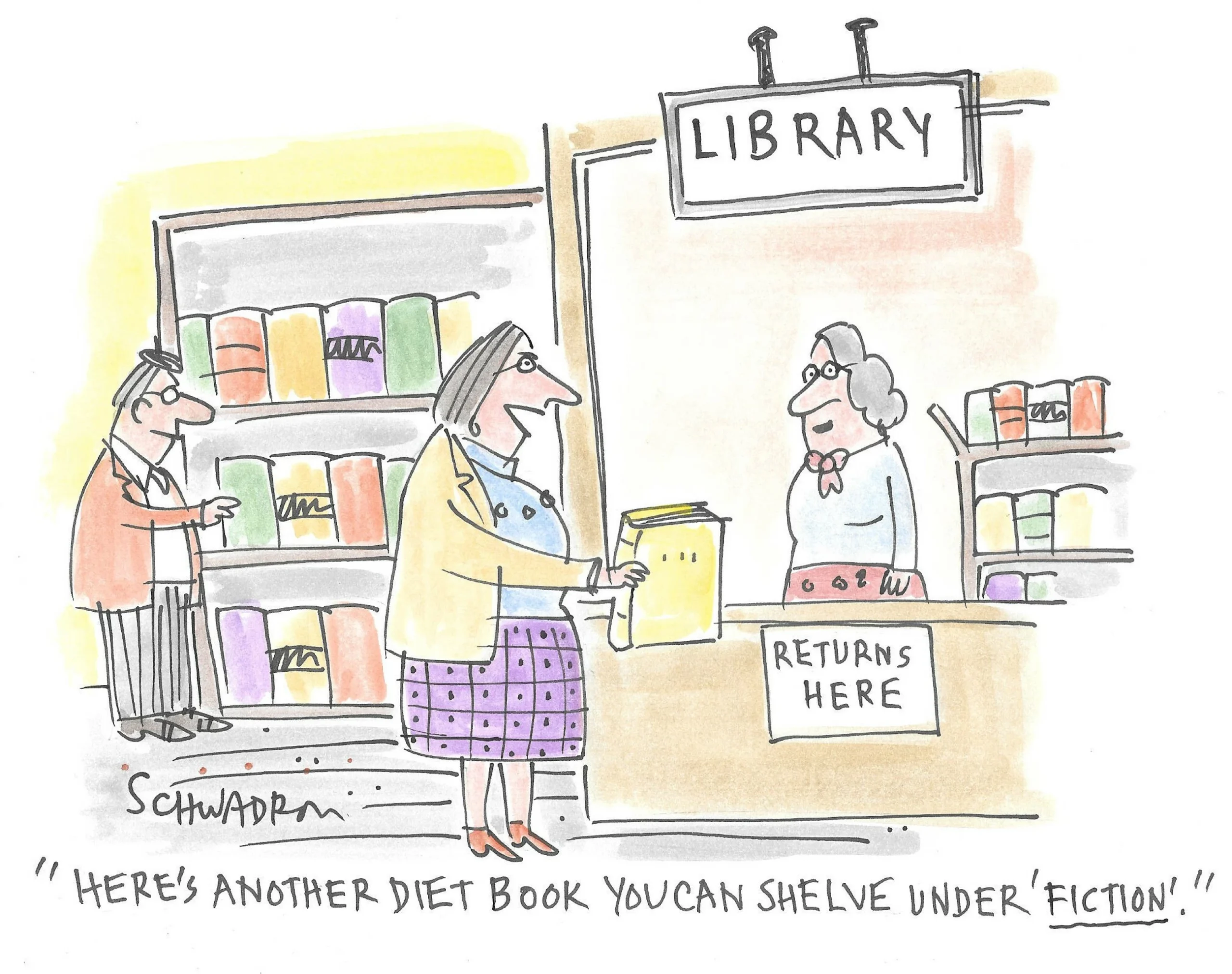
Diet and fiction

Diet and fiction

Diet and fiction

Opinion
Between restraint, retaliation: Gulf’s test of strategic patience

Between restraint, retaliation: Gulf’s test of strategic patience

In moments of escalating regional tension, a central question inevitably arises: what might compel the Gulf states to move from deterrence to direct retaliation against Iran — and what would mark the decisive turning point? The answer begins with a crucial clarification: the confrontation unfolding today is fundamentally an Iranian–American–Israeli conflict, not a Gulf war. Yet the Gulf finds itself precariously caught between both sides. Israeli escalation risks widening the conflict, while Iran’s retaliations often unfold unpredictably. The region thus remains exposed to the fallout of a crisis not of its own making. For years, the Gulf — and particularly His Highness the Amir Sheikh Tamim bin Hamad al-Thani — has championed dialogue as the essential path to stability. From UN speeches to international forums, Qatar’s leadership has repeatedly urged diplomatic engagement on Iran. Even in the tense weeks preceding this war, Qatar pursued direct talks with all stakeholders, including Tehran, in a bid to de-escalate.A critical question now looms: can the world sustain wars of this nature? Modern conflicts reverberate far beyond the battlefield, disrupting global markets, transport, and energy flows. The evidence is already stark. Aviation analytics firm Cirium reports over 23,000 flight cancellations since February 28 — more than half of the 36,000 scheduled Middle East flights — cutting some 4.4 million passenger seats. All GCC states experienced temporary airspace closures, dealing a severe blow to regional tourism during Ramadan and causing projected losses of $40 billion.   Hamad International Airport in Doha logged over 2,000 cancellations, Dubai International endured an evacuation after being hit, and Abu Dhabi’s Zayed International scrapped more than 1,000 flights since the war began. Even perceived threats to maritime corridors have triggered market shocks far beyond regional shores. The energy shock has been no less dramatic. Oil prices surged about 50% following the initial strikes on Iran, with Brent crude briefly topping $119 a barrel — the first time since Russia’s 2022 invasion of Ukraine that prices crossed the $100 mark. Qatar’s Energy Minister HE Saad bin Sherida al-Kaabi warned that Gulf producers could be forced to halt output if tankers cannot transit the Strait of Hormuz, a scenario that could push prices toward $150 a barrel and “bring down the economies of the world.” Rystad Energy analysts predict that unless the war eases, Brent could average $135 within four months. Amid this volatility, a strategic question arises: are US–Israeli objectives in this conflict aligned with those of the Gulf? The Gulf’s enduring priorities are clear — regional stability, secure energy flows, and economic continuity. Diplomacy, led by states such as Oman, once brought Iranian engagement to an advanced stage. But the current escalation risks unravelling that delicate progress. Nonetheless, the Gulf has shown professionalism and preparedness in managing security risks. Defence co-ordination across the region — from co-ordinated air operations to joint intelligence — reflects growing institutional maturity. As of March 10, 2026, Qatar’s Ministry of Defence reports that national defence systems intercepted approximately 138 ballistic missiles, seven cruise missiles, and 53 drones since the onset of Iranian attacks. Yet an irony remains: Qatar — a state that has consistently played mediator, including during Gaza ceasefire efforts — has sometimes faced criticism or even threat despite its diplomatic overtures. Such contradictions underscore the volatility and polarisation of the present moment. Across the Arab world, recent days have revealed divided reactions. Social media commentary in the Gulf has shown frustration toward some Arab states perceived as unresponsive or muted in the face of crisis. Whether justified or not, this sentiment highlights a deeper truth: Gulf states represent one of the few remaining zones of Arab political and economic success. Their stability rests on decades of governance reform, diversification, and institutional consolidation. But success brings responsibility. The Gulf must now move beyond economic integration toward strategic co-ordination. A unified foreign policy posture — even if imperfect — would amplify collective influence and reduce vulnerability in future crises. Divergent diplomatic messaging risks weakening Gulf voices at precisely the moment when unity matters most. The region’s potential is extraordinary: young populations, deep financial reserves, and globally pivotal geography. With critical infrastructure bridging the Red Sea, Arabian Gulf, and Indian Ocean routes, the Gulf is indispensable to global logistics. Middle East airports handle 14% of all international transit, so disruptions here ripple through global connectivity networks within hours. Security architecture is equally vital. International bases across the Gulf have long provided deterrence, but recent events are a reminder that lasting stability depends on regional unity first. A shared missile defence grid, tighter joint drills, and institutionalised crisis-response mechanisms would strengthen collective resilience and reduce reliance on external actors. The Gulf’s influence, however, extends far beyond defence. Its energy exports power entire continents — from LNG shipments in Qatar lighting Japanese cities, to Saudi and Kuwaiti oil sustaining economies in China and India. The Strait of Hormuz alone handles about 20% of global oil and LNG flows, and roughly 16% of the world’s fertilisers. Even brief disruptions there can send commodity shocks from Tokyo to Frankfurt. Hence, Gulf stability is not simply a regional imperative — it is a global necessity. Iran has often spoken of “strategic patience” as its guiding principle. But today, it is the Gulf’s patience that is most tested. The war has already disrupted 20% of global oil supply — more than double the losses seen during the Suez Crisis of 1956-57 — and the clock is still ticking. Despite provocations, Gulf diplomacy continues to stress restraint. The realities of war are unforgiving: ruined economies, displaced populations, and shattered infrastructure. Oxford Economics estimates international arrivals across the region could drop 11–27% in 2026, meaning a loss of 23–38 million visitors and $34–56 billion in tourism revenue. The longer-term reputational damage to the Gulf’s hard-won image as a safe, global hub could be even costlier. History repeatedly shows that conflicts launched with limited aims often spiral into crises far beyond their original scope.This is why the Gulf must remain cautious and avoid being drawn into a conflict fundamentally not its own. Maintaining open lines with Tehran remains indispensable. However tense the moment, diplomacy is always preferable to irreversible escalation. The Gulf states have the wisdom and institutional experience to navigate these challenges. Their leaderships have steered the region through regional wars, energy shocks, and global recessions — always with stability and development as guiding ideals. That continuity has preserved their credibility and strategic weight.Today’s moment demands renewed adherence to those same guiding principles: unity at home, restraint abroad, and an unwavering belief in dialogue. For in the end, the Gulf’s greatest strength lies not in war, but in stability, co-operation, and the pursuit of peace.

Opinion
Anthropic has strong case against Pentagon blacklisting: legal experts

Anthropic has strong case against Pentagon blacklisting: legal experts

Anthropic’s lawsuit challenging its Pentagon blacklisting is likely to test the reach of an obscure law aimed at guarding military systems against sabotage, and legal experts say the artificial intelligence lab appears to have a strong case that President Donald Trump’s administration overstepped. Anthropic said in its lawsuit filed on Monday that the Defense Department’s decision to exclude ‌the company from military contracts by designating it as a supply chain risk violated its free speech and due process rights and was aimed at punishing ​the company for its views on AI safety in warfare. The ‌designation could cut Anthropic’s 2026 revenue by multiple billions of dollars and cause reputational harm, company executives said Tuesday. In labeling Anthropic as a supply ‌chain risk, the Pentagon invoked a rarely used law that allows it to bar companies ‌from certain contracts if they risk exposing military information systems to enemy infiltration. The ‌law has never been tested in court or used against a US company, according to a Reuters review of legal databases. Courts often defer to the executive branch’s judgment on national security, and that will likely be the centerpiece of the government’s defence. But five national security law experts told Reuters the Pentagon may have overstepped. “It’s not at all clear that the statute can even apply to an American company where there’s no foreign entanglement,” said University of Minnesota Law School professor Alan Rozenshtein. The Defense Department said it does not comment on pending litigation. ‘EXQUISITE’ TECHNOLOGYAnthropic, which is incorporated and headquartered in the US, said it is not an “adversary,” which the Trump administration has defined in executive orders to mean China, Russia, Iran, North Korea, Cuba and Venezuela, according to Anthropic’s lawsuit. The company also said Defense Secretary Pete Hegseth gave no explanation for how Anthropic’s Claude AI tool constituted a supply chain risk despite its continued use by the US military and Hegseth’s own praise of Claude as “exquisite” technology that the Defense Department would “love” to work with during a February 24 meeting with ​Anthropic cited in the lawsuit. The military has used Claude as recently as last month during strikes on Iran, according to Reuters reports. Hegseth designated Anthropic a national security supply chain risk on March 3 after the company refused to lift restrictions on Claude that prohibit the military from using it for autonomous weapons or domestic surveillance. In a February 27 social media post announcing the designation, Hegseth accused Anthropic ‌of cloaking itself in the “sanctimonious rhetoric of ‘effective altruism’” to “strong-arm the United States military into submission.” Anthropic has said ​AI is not reliable enough for autonomous weapons and that it opposes domestic surveillance as a matter of principle. The Pentagon has said that Anthropic’s ​restrictions could endanger American lives. ‘SURVEIL, DENY, DISRUPT’Under US law, a supply chain risk is a threat that an adversary could sabotage, infiltrate or disrupt a federal information technology system or network. The law, known as Section 3252, invoked by the Pentagon, allows the defense secretary to exclude companies from certain contracts to guard against the risk that an “adversary” may “sabotage, maliciously introduce unwanted function” or otherwise “subvert” a military information system to “surveil, deny, disrupt, or otherwise degrade” its function. The Pentagon separately designated Anthropic a supply chain risk under a similar law that could eventually broaden contract exclusions to the civilian government. Anthropic filed a separate legal challenge to that designation on Monday. The Pentagon can only exclude companies under 3252 as a last resort, and other defense contractors are not required to stop working with them entirely. Reuters could not identify any other companies that have been publicly designated supply chain risks under 3252, although the obscure government procurement statute does not require public disclosure of designations. ‘BAD BLOOD’Amos Toh, a national security law expert at the left-leaning Brennan Center for Justice, said nothing about Claude’s usage policies appeared to pose foreign sabotage or subversion risks. “These are basically safety protocols. You can debate whether these protocols are acceptable or not, but they ‌run directly counter to the risk that the law is designed ‌to regulate,” Toh said. Anthropic’s lawsuit said that the supply chain risk designation punishes the company for its views on AI safety in violation of the First Amendment of the US Constitution, which protects free speech and expression. Legal experts said Trump and Hegseth’s public attacks on Anthropic, including a social media post in which Trump called it a “RADICAL LEFT WOKE COMPANY,” could bolster this argument. “A lot of things Hegseth has said and the Pentagon has done undermine their case and suggest there was personal animus and bad blood between the parties, and that the Pentagon had it out for Anthropic,” said Joel Dodge, a law expert at Vanderbilt University. Anthropic also said Hegseth’s supply chain risk order violated its Fifth Amendment right to due process by imposing “draconian punishments” without any “meaningful process,” factual findings or opportunity for Anthropic to challenge them. SECOND-GUESSING THE PRESIDENTCourts are generally reluctant to question federal agency decisions but are especially deferential to the executive branch’s judgment on national security matters. This would likely be the centerpiece of the government’s defence, according to legal experts, who said Justice Department lawyers could cite a long line of cases ​where courts have found that it is generally not the place of judges to second-guess how the president and the military he commands defend the country. The government could similarly argue that the president and his cabinet secretaries have broad authority to choose suppliers and that the military cannot rely on a vendor whose usage policies constrain military action. The Justice Department could also cite legal precedent stating that contract decisions are not First Amendment violations if they are supported by legitimate policy or operational reasons. Eric Crusius, an attorney and government contract specialist who is not involved in the case, said the government is trying to impose the “death penalty” on Anthropic and will need to show “there was no alternative and that they meticulously considered other options prior to pulling the trigger.” ‘ARBITRARY AND CAPRICIOUS’Anthropic said in its lawsuit that Hegseth’s decision violated the Administrative Procedure Act, a law that allows courts to overturn actions that are found to be “arbitrary, capricious, an abuse of discretion, or otherwise not in accordance with law.” Legal experts said the apparent contradictions in the government’s position are strong evidence that Hegseth’s decision was arbitrary. “The government was simultaneously ‌threatening to use the (Defense Production Act) to force ​Anthropic to sell its services, using its services in active military operations, and saying it’s too dangerous to use them in government contracts,” said University of Minnesota Law School professor Alan Rozenshtein. “Not all of these things can be true,” he said. 

Opinion
US consumer inflation unchanged but price shocks from Iran war loom

US consumer inflation unchanged but price shocks from Iran war loom

Consumer inflation in the United States remained stable at 2.4 percent in February, official data showed Wednesday, with price shocks from the US-Israel war on Iran yet to be reflected in the data. US President Donald Trump has made lowering prices a key part of his agenda, with the world’s largest economy still battling years of higher-than-usual inflation after the Covid pandemic. The consumer price index (CPI) rose 2.4 percent year-on-year, the same increase as reported a month prior. The index rose 0.3 percent month-on-month, with both figures in line with market expectations. Energy prices jumped 0.6 percent between January and February, following a 1.5-percent fall the previous month. The White House was quick to laud the new data, saying it expected price shocks from the war to be “temporary.” “The American economy is strong and once we are past temporary disruptions from Operation Epic Fury, we will see even greater economic progress,” said White House spokesperson Kush Desai. But price shocks to global oil markets from the US-Israel war on Iran were not reflected in Wednesday’s data, as the strikes began the last day of the month. Markets will be buoyed by the steadiness in February’s figure, but investors are likely to treat it as more of a baseline to compare expected future price increases against. “February CPI readings as expected were subdued but given the disruption to energy supplies from the Iranian conflict the focus is on the extent and duration of the boost to inflation in the coming months,” said Kathy Bostjancic, chief economist at Nationwide. She said that Nationwide expected inflation to rise to more than four percent (year-on-year) “in the coming few months, before easing back in the following months.” Wednesday’s data released by the Labor Department showed price increases in medical care, education, apparel, airline fares and household furnishings. Prices for used vehicles and vehicle insurance, communications and personal care were down. Core CPI, which excludes volatile energy and food prices, rose 2.5 percent over last year in February. February’s year-on-year inflation figure was near its lowest levels over the past 12 months, but consumers in the United States continue to grapple with prices that have remained stubbornly high post-pandemic. US inflation hit a high of 9.1 percent in June 2022, and while it has dropped from those levels, years of elevated prices have battered households across the country. The Federal Reserve, which has a dual mandate to address inflation and unemployment, raised interest rates to control flaring prices and while it is now in a rate-cutting phase, they remain at elevated levels. The new CPI figure will be a factor in the Fed’s discussion at a meeting to set rates next week. The Fed’s preferred inflation gauge, the Personal Consumption Expenditures (PCE) price index, will be released later this week. The central bank has a long-term goal of two percent for US inflation, but is also battling weakness in the labor market. The United States unexpectedly lost jobs in February while unemployment edged up, government data showed last week, piling pressure on Trump’s economic agenda as crucial midterm elections approach. Affordability has been a key issue, and the weaker jobs numbers have turned up the heat on criticism of Trump’s economic policies. The US-Israel war on Iran has roiled global oil markets, with traffic through the key Strait of Hormuz almost at a standstill and strikes hitting oil facilities across the region. That pressure is showing at US pumps, with the national average price for a gallon of gasoline on Wednesday up by 22 percent compared to last month, according to motor club AAA. Still, analysts looked at February’s CPI figure as encouraging in the long term, saying it firmed the view that headline inflation was trending downwards, outside of geopolitical shocks. “This pre-war inflation reading isn’t entirely stale, as it shows that key pillars of disinflation are in place,” said Bernard Yaros, lead US economist at Oxford Economics.