1. Home
  2. Opinion

Category: Opinion

Opinion
Central banks’ inflation mood puzzle: more judgment than science

Central banks’ inflation mood puzzle: more judgment than science

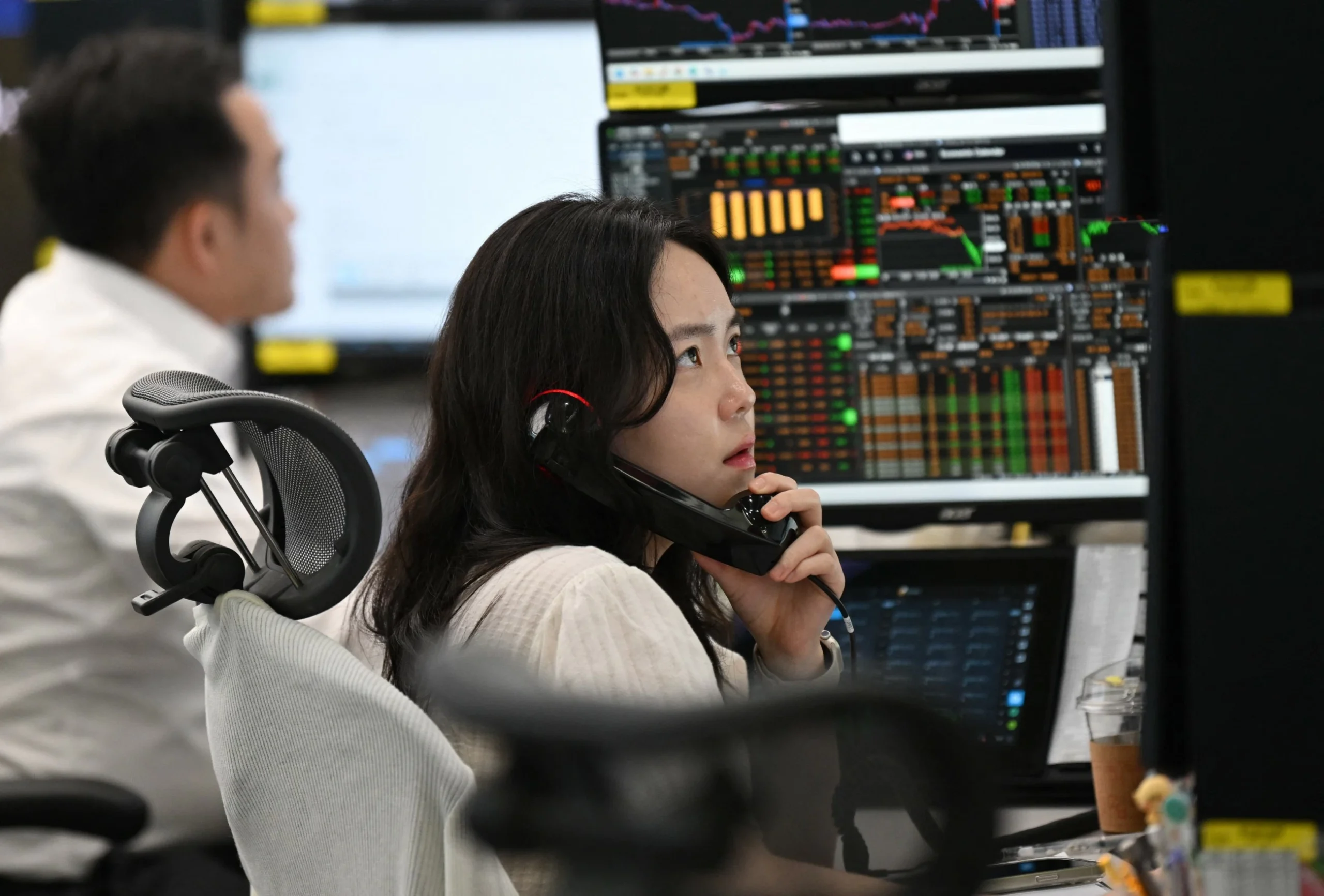
The world’s central bankers may be attempting the impossible: to get into the psyche of business executives, labour unions and ordinary households in real ‌time to understand how they are navigating their finances through yet another energy shock. Policymakers are contemplating whether to jack ​up interest rates to combat rising inflation. But they ‌will only pull the trigger if they think a surge in energy costs induced by the Iran war will filter ‌into other prices, lifting inflation expectations across the entire economy. The problem ‌is that measuring such expectations is notoriously difficult. Central banks have ‌a trove of surveys, gauges and indicators at their disposal but all of them have blind spots if not outright faults. Since the Covid-19 pandemic, they have developed new tools to fill gaps in data about behaviour. But measuring expectations remains more an art than an exact science. That could raise the bar for rate hikes as policymakers are wary of gut-feeling decisions and usually prefer to wait for more evidence to narrow the risk of a policy error. BEHAVIOURS HAVE CHANGED SINCE 2022 INFLATION SPIKEPolicy-makers at the Bank of Canada acknowledged that global uncertainty meant they “would need to rely on judgment more heavily than usual” to plot the path of economy, according to minutes of its March 18 meeting at which it kept rates on hold. Others describe the effort involved in the process. “I try hard to get into the thoughts of ​price-setters and how they are seeing it — trying to calibrate their confidence in pricing power,” Richmond Federal Reserve Bank President Tom Barkin told Reuters. “The ‘hike’ case would be around inflation expectations starting to finally move,” he said. “I don’t have a sense that they’ve broken out at this point.” One complication is that behaviours change. In 2022, consumers ‌and firms had little experience with rapid inflation, making price- and wage-setting a rather ​rigid exercise. “But now people have lived through a painful episode of inflation, and this may mean that inflation expectations are more ​fragile, and so they could be more sensitive to such an energy price shock,” European Central Bank board member Isabel Schnabel said in a university lecture earlier this week. For companies, changing their selling prices was a cumbersome process before the pandemic and so they limited adjustments, often to once a year. This became untenable and the frequency of changes sky-rocketed, Schnabel argued. This makes the frequency and not just the magnitude of such changes a good indicator that expectations are shifting. Traditionally, central banks relied on surveys and market indicators to assess expectations. But surveys are not done frequently enough to capture rapid changes and their time horizon is often out of sync with that of policymakers. Market indicators of expected inflation are also imperfect because they include the extra return, or risk premium, investors demand for holding a particular financial instrument. This changes with market sentiment, blurring shifts in actual price expectations. The stakes are high: investors now expect the ECB to raise rates two or three ‌times this year, the Bank of England twice, and have ‌given up on any Fed rate cuts in 2026. CENTRAL BANKS INNOVATE TO COVER KNOWLEDGE GAPSTo compensate for such information gaps, central banks have developed an array of new tools. They track expected wage changes, including via major pay deals announced by unions, which may be a signal to others negotiating their own pay. They survey firms directly and speak to executives to gauge expected behaviour, and they take on board ever-larger numbers of external surveys with forward-looking indicators. Central bank staff track the frequency of price changes, correct existing surveys to fill data gaps and have revised their own projection models to address shortcomings that missed 2022’s inflation surge caused by the pandemic and Ukraine war. Also key to their judgment call is trying to understand how this inflation shock differs from four years ago. The consensus on this seems firm: conditions are fundamentally different. Interest rates are already ​higher, government purses are tighter, there is growing slack in the labour market and - unlike during the pandemic, when they were unable to spend - households are not sitting on piles of cash. “We’re coming into this situation with the gradual disinflation that we were having, the labour market is softening (and) growth is a little bit below potential,” Bank of England Governor Andrew Bailey told Reuters. “And one of the consistent messages we get from businesses is, for most sectors of the economy, a real lack of pricing power.” Using their enhanced insight, central banks are for now confident that longer-term inflation expectations are holding firm around their targets. But the longer the war drags on, the longer energy prices will stay high — and as consumers see everyday costs like fuelling their cars rise, the more likely it is that inflation expectations will move upwards. When exactly this happens will not be clear, ‌leaving policymakers to judge for themselves. “Economics ​itself is not an exact science,” ECB policymaker Primoz Dolenc said. “It’s of course based on analytics but by definition there is also a perception and judgment element.”  

Opinion
Brazil enlists bank managers to combat deforestation

Brazil enlists bank managers to combat deforestation

After struggling for years to track and punish deforestation across the world's largest rainforest, Brazil is recruiting new allies in the battle to protect the Amazon: bank managers. A new rule taking effect on Wednesday

Opinion
Orban fuels anti-Ukraine mood ahead of Hungarian vote

Orban fuels anti-Ukraine mood ahead of Hungarian vote

Anita Komuves and Andrew R.C. Marshall, ReutersBUDAPEST: US conservatives have long pointed to Hungarian Prime Minister Viktor Orban as proof that a Western leader can crack down on immigration, defy global institutions and wage war

Opinion
AfD pushes for return to Russian energy imports

AfD pushes for return to Russian energy imports

John O'Donnell and Andreas Rinke, ReutersGermany's far-right Alternative for Germany (AfD) party has used surging energy prices to revive its longstanding call for Berlin to turn once more to Russia for cheap energy after scoring

Opinion
What is the controversy over McSweeney’s stolen phone?

What is the controversy over McSweeney’s stolen phone?

Helen MacNamara, The IndependentIn the ballad of Morgan McSweeney's stolen phone, the latest verse is a surreal one. Having taken the unusual step of publishing a transcript of the 999 call that Keir Starmer's former

Opinion
Chile’s new president Kast gets tough on immigrants

Chile’s new president Kast gets tough on immigrants

Paulina Abramovich, Agence France-PresseJust three weeks into his term, Chile's new President Jose Antonio Kast has lost no time in tilting the rudder sharply to the right as he looks to slash spending and crack

Opinion
Incredible effort

Incredible effort

I was pleasantly surprised when I woke up on Tuesday morning and saw the roads of Sharjah looking neat and clean. Despite so much rain, Sharjah Municipality managed to clean all the mess in very

Opinion
Comparison

Comparison

Comparison

Opinion
China was ready for an oil shock and now investors are reaping rewards

China was ready for an oil shock and now investors are reaping rewards

China’s readiness for an energy shock has helped its financial markets to turn in a world-beating month and has global investors looking to boost their exposure as the Iran ‌war drags on. Oil stockpiles and resilient energy supply chains have been behind the performance in stocks, bonds and ​the yuan and money managers and dealers ‌say it is starting to drive a positive view about the economy and buying tech and consumer ‌companies. Since the US and Israel’s ⁠war on Iran all but ‌stopped the movement of oil and gas from the ‌Arabian Gulf late in February, soaring oil prices have upended global markets. Over that period, China’s benchmark CSI300 equity index has fallen about ⁠4.6%, compared with losses deeper than 10% in India, Japan and South Korea and an almost 8% decline for the S&P 500. The yuan is the steadiest in Asia against the dollar — remaining flat through March — and China’s debt market is without peer, holding firm as other credit markets have sunk. By holding up in a month where there have been few places for investors to hide, the moves have added to the case for owning China as both a short-term shelter and longer-run ballast for global portfolios, which have taken a drubbing of late. “The uniqueness of China’s energy dependence is the differentiation factor,” said ​Jacky Tang, chief investment officer for emerging markets at Deutsche Bank’s Private Bank. “Because of this, investors prefer to allocate to Chinese assets at this point relative to other markets ... they realised the resilience.” Tang said his portfolio was slightly overweight on China and that some clients were gradually switching ‌some technology exposure to China from Japan and ⁠South Korea. Paradoxically, ​China is the world’s largest importer of oil that passes through the Strait of Hormuz and also ​one of the best placed to weather the waterway’s closure. Domestic production, a freeze on fuel exports and a pipeline network allow it to diversify away from seaborne imports and source oil and gas from Russia, central Asia and Myanmar. It also boasts an electric vehicle fleet about as large as the rest of the world’s combined, oil stockpiles estimated at seven months of imports and an electricity grid that is almost insulated from imports thanks to domestic coal and renewables. At the same time inflation is low — so the economy can absorb higher prices — while recent indicators have shown improvement. So relative to the rest of the world, what had been a steady growth outlook is suddenly looking impressive. “We feel (the) domestic China economy is going to stay robust, whatever happens,” said William Yuen, a Hong Kong-based investment director at Invesco, who added some exposure to ‌tech and consumer firms last month. “It may have ‌its little ups and downs, but comparing to ⁠a lot of other economies in the world, there will be some sort of buffer given how diversified, how self-sustaining the economy has become.” There are other attractive tailwinds and sectors. Investors have ⁠already scooped up stocks in China’s renewables industry, a bet on worldwide demand for solar panels, batteries and green energy equipment to reduce dependence on fossil fuels. The wall of household savings stashed in bank deposits has kept downward pressure on bond yields. And investors say they believe Chinese authorities are standing by to keep things steady, citing a recent regulatory crackdown aimed at market stability and selling from state investment funds last year, leaving them ready to prop up stocks if they fall. “The ‘slow bull market’ remains the mantra,” said Christopher Wood, Jefferies’ ​global head of equity strategy, in a note. “The goal remains clear: For the stock market to replace the deflating property market as the main source of wealth generation.”     

Opinion
Pakistan’s diplomatic tightrope in search of Middle East peace

Pakistan’s diplomatic tightrope in search of Middle East peace

In 1971, a specially arranged Pakistan International Airlines aircraft carried US National Security Adviser Henry Kissinger on a clandestine journey from Islamabad to Peking — an unpublicised flight that redrew the geometry of global power. That secret mission ultimately paved the way for President Richard Nixon’s historic visit to China, unlocking a realignment that defined the Cold War’s final decades.  More than half a century later, Pakistan again finds itself standing at a similar inflection point — this time in full public view. Its foreign minister, Ishaq Dar, retraced parts of that corridor to Beijing the other day amid a rapidly escalating conflict between the United States, Israel, and Iran that has disrupted global energy markets and strained great-power relations. The parallel is not just symbolic. It reflects a recurring structural reality: Pakistan’s unique ability — and perilous challenge — to act as a bridge in times of geopolitical fracture. Over the past week, Islamabad has quietly re-emerged as a convening point in the Middle East crisis. On March 29, Pakistan hosted a quadrilateral meeting of the foreign ministers of Saudi Arabia, Türkiye, and Egypt, marking a rare alignment among regional heavyweights. The meeting signalled not just concern over the war’s regional fallout but also a coordinated diplomatic push toward de-escalation. Following the talks, Dar revealed that both Washington and Tehran had expressed “confidence” in Pakistan’s capacity to facilitate engagement where both sides were prepared to consider “meaningful negotiations” hosted in Islamabad. The joint endorsement was unprecedented in recent Middle Eastern diplomacy, where mutual distrust has long blocked even indirect communication. “War benefits none,” Dar told reporters, stressing that “the unity of the Muslim world and the pursuit of peace through dialogue must take precedence over all else.” His statement followed consultations with visiting ministers who, discussed proposals to reopen the Strait of Hormuz, which Iran had effectively closed to shipping after US and Israeli strikes that began on February 28. Pakistan’s mediation credentials did not materialise overnight. They are rooted in precedent as much as proximity. From its secret facilitation of the US-China rapprochement in 1971 to its behind-the-scenes role during the US-Taliban negotiations in Doha five decades later, Islamabad has often served as a diplomatic bridge when formal pathways collapsed. Its geography — straddling South Asia, the Gulf, and Central Asia — gives Islamabad a natural vantage point. But geography alone does not guarantee influence. What has historically distinguished Pakistan is its ability to maintain working relations across ideological divides: deep strategic coordination with Beijing, a sometimes fragile but enduring relationship with Washington, pragmatic ties with Tehran, and strong security partnerships with Riyadh. Few capitals can claim that spread. Fewer still can exercise it amid simultaneous crises. The next step in Pakistan’s evolving role came two days later in Beijing. Dar’s one-day visit at the invitation of Chinese Foreign Minister Wang Yi culminated in the joint release of a five-point initiative for restoring peace and stability in the Gulf and Middle East. The plan called for an immediate ceasefire, a halt to attacks on civilians and critical infrastructure — including energy, desalination, and power facilities — and the reopening of the Strait of Hormuz to secure global energy supply lines. “The sovereignty, territorial integrity, and security of Iran and other Gulf states must be safeguarded,” the joint statement said. “Dialogue and diplomacy remain the only viable means to resolve disputes.” Wang Yi praised Pakistan’s “untiring efforts and mediation diplomacy,” emphasising that restoring freedom of navigation through Hormuz was not simply a matter of regional security but of global economic survival. He described the initiative as part of a growing “China-Pakistan community with a shared future,” hinting at a long-term alignment between Beijing’s economic imperatives and Islamabad’s regional influence. For China, whose economy depends heavily on Iranian crude imports and whose Belt and Road energy corridors traverse Pakistan, stable shipping routes are non negotiable. The inclusion of Hormuz in the framework’s language reflects that urgency. The underlying calculus is not only geopolitical — it is deeply economic. China’s dependence on Iranian oil, coupled with its dominance in rare earth processing, intersects with American vulnerabilities in supply chains crucial to defence, semiconductor production, and clean energy transition. A prolonged blockade of Hormuz threatens to derail both energy security and inflation control in Western economies, intensifying US pressure to find an off ramp. For Islamabad, this emerging energy security matrix provides both opportunity and risk. The ability to convey a US origin fifteen point ceasefire proposal to Tehran underscores Pakistan’s usefulness to both Washington and Beijing. Yet it also places the country in a cross current, balancing between competing strategic priorities while trying to avoid being turned into an instrument of either. Diplomatic signals suggest that time is increasingly scarce with military posturing continuing in the Gulf. Against this backdrop, Pakistan’s proposal for confidence building measures — including monitored energy shipments and humanitarian corridors — seeks to slow a slide toward full scale confrontation. But success depends on sequencing: trust must precede negotiation, and yet delays heighten the risk of irreversible escalation. That delicate balance is why both Beijing and Islamabad are pressing for early engagement, citing the symbolic power of initiating a ceasefire. “Every hour lost brings new dangers,” Dar reportedly told Wang Yi, according to diplomatic notes. “Peace is still possible — but the clock is ticking.” The historical echo is unmistakable. In 1971, Pakistan’s facilitation produced the Nixon Mao handshake — an act of creative diplomacy that redefined global power alignments for half a century. Today, Islamabad’s task is not to enable a rapprochement between two superpowers but to stabilise a multi actor conflict threatening vital global trade arteries. Whether this latest initiative succeeds may ultimately matter less than the fact that Pakistan is again attempting to operate within this narrow corridor of opportunity. The distinction between a facilitator and a true mediator will hinge on whether Islamabad can influence outcomes rather than merely transmit messages. Still, the optics alone are significant. A nuclear armed state of 240mn people, situated at the crossroads of Asia and the Middle East, is once again demonstrating its capacity to shape diplomatic currents far beyond its borders. It is a reminder of continuity: how Pakistan’s geography, its alliances, and its persistent diplomatic instinct to mediate place it at recurring pivot points of history. As the Gulf crisis deepens, Islamabad’s challenge is to transform that position from symbolic to substantive — to convert access into agency, communication into consensus. The writer is Deputy Managing Editor