World
The tiny, defiant Nile island caught in the heart of Sudan's war

The tiny, defiant Nile island caught in the heart of Sudan's war

For nearly two years, Al-Shubbak watched through ancient grey eyes as Tuti, the crescent-shaped island in the heart of the Sudanese capital she calls home, emptied of its inhabitants under a punishing paramilitary siege.She refused to leave.'I didn't even move for the English when they colonised us,' she told AFP through a toothless smile, a year after the army broke the siege, and 70 after the British occupation of Khartoum ended.She recited an old battle cry that her daughter, who doesn't know exactly how old her mother is, repeated: 'Our fathers resisted the occupiers with stones. Though they met them with gunfire, they still could not take Tuti the green.'Located where the White Nile, flowing from Uganda, meets the Blue Nile from Ethiopia, Tuti is across the river from where war first broke out in April 2023, between Sudan's army and the paramilitary Rapid Support Forces.In recent months, many residents have returned home to the island, besieged from June 2023 until March 2025, when the army recaptured the capital.Shops have reopened and farmers have come back to their land, which historically supplied much of Khartoum's fresh produce from its fruit orchards and vegetable fields.On a Friday afternoon, villagers flocked to the old red-brick mosque, where a rusted sign reads 'established 1480'.In times past, crowds would gather in plastic chairs at the edge of the island, sipping tea with their feet in the Nile, the very first spot where it becomes one river flowing north to Egypt.Now, authorities say that same spot is a minefield, and the islanders are scarred by their days living in an open-air prison.'Nothing could get in or out without the RSF saying so,' said 34-year old day labourer Salaheldin Abdelqader, who escaped seven months into the siege and returned last year.To get anything in -- food, medicine, fuel to power water pumps -- islanders had to pay off RSF fighters who controlled the only bridge. And they could only leave after forking out a toll for safe passage.For Abdelqader, that was 350,000 Sudanese pounds (now around $90), more than double a doctor's monthly salary. 'Guard our soil' Sheikh Mohamed Eid, a local elder who sounded the alarm over Tuti's plight on social media, said that during the war residents were 'forced to leave at gunpoint' and pay to do so 'with our own money'.In accordance with government media regulations, AFP was accompanied by an army officer, who stepped out of earshot during interviews.A stout man with a head wrap piled high on his brow, Eid spoke at length of the people's connection to their island, from which former president Omar al-Bashir's government repeatedly tried to relocate them to build luxury investments.'We're like fish in the water, we can't survive outside Tuti,' he told AFP in his home, the sky visible through a hole in the roof where an artillery shell tore through.After two months using donations to pay the RSF double or triple to get goods onto the island so people wouldn't starve, Eid was detained by the paramilitaries.Thrown into one notorious jail after another, he watched other incarcerated islanders die, one by one, before his release nine months later.The RSF's siege slowly choked the life out of Tuti. Eventually, of an estimated 30,000 people, only Shubbak's family remained, caring for the bedridden matriarch.'We stayed to guard our soil,' her daughter Najat al-Nour, a Quran professor in her fifties who lifted her chin high to admonish those who left.'A mistake,' she snapped.Bittersweet But Nosayba Saad had no choice. She and her family endured a year and a half of RSF rule, during which fighters repeatedly entered people's homes, demanding gold and phones and accusing them of spying for the army.When she tried to talk to the fighters, 'they told me to keep quiet or they'd empty their guns at me,' she said.At night, she would hear them in her neighbours' empty homes, firing seemingly at nothing. 'A lot of people died from stray bullets,' she said.By the time her family paid to leave in October 2024, the RSF had taken to stealing food and cash as well.She didn't think she would see her home again.'Now our street is almost full, and more people are on their way,' she said with an incredulous laugh, a bashful smile lighting up her face.But her joy was bittersweet. Two of her uncles are missing and presumed dead, while every family on the island has lost someone.'Still, being together with our people again, coming home is such a blessing,' she said, as the smell of incense wafted through her house, out towards jasmine trees in bloom.In the fields beyond, a squash farmer trudged home, a sack slung over his shoulder heavy with his harvest.To the south loomed the ruins of Khartoum, bombed out skyscrapers a constant reminder of the terror now past.But to the west, where the setting sun made the Nile glow orange, the island seemed as it once was.A fisherman packed up his rods next to a family picnicking on the waterfront.A couple, out for a stroll, asked an AFP journalist to take a photo of them, a memento of a nice date back on their island home. 

World
India strangles final Maoist bastion as mining looms

India strangles final Maoist bastion as mining looms

The Maoist rebellion that once held sway over nearly a third of India is being bulldozed into submission in its final forest fortress.Thick clouds of red dust billow skyward as earthmovers cut roads through the Abujhmad hills of India's central Chhattisgarh state, the last holdout of a nearly 60-year insurgency that has cost 12,000 lives.Security forces are strangling the final remnants of the revolt with a network of 450 fortified bases and surveillance hubs linked by roads driven deep into the dense forest.New Delhi said last month that it had effectively defeated the insurgency, which at its height held a large swathe of northern and central India with up to 20,000 fighters, after villagers rose up against their feudal lords."Roads were made and security forces opened camps inside the jungles," local police chief Sundarraj P, who spent years fighting the insurgency, told AFP.The last rebels, who had been forced into a pocket of hilly jungle about twice the size of London, said they were fighting for the rights of the marginalised Indigenous people in the mineral-rich region.Once all but inaccessible, Abujhmad has been put on what Home Minister Amit Shah calls "the path of development".It used to take three days to get to the nearest town of Narayanpur and back. Now "we take the morning bus, and return by the evening one", said 60-year-old farmer Dasrath Netam, from the forest village of Mohandi.But many locals worry that the roads may also open up the iron-rich hills to massively increased mining. 'All out on mining' "Big roads are being constructed to give a message that the (security) forces can move anywhere quickly," said Manish Kunjam, a former Chhattisgarh lawmaker and tribal rights activist."But they are also being built keeping in mind the mines," he insisted.Extraction began nearly 60 years ago, but the insurgency meant some of India's highest-grade iron ore was left untouched.Hundreds of trucks laden with ore now rumble from a newly operational mine on the forest fringes.Leaders from Prime Minister Narendra Modi's ruling Bharatiya Janata Party (BJP), which controls the state, say that is not what the new roads are about."There is nothing here that is about minerals," Chhattisgarh Deputy Chief Minister Vijay Sharma told AFP, adding the mining has been going on "for the last 50 years".But court records and corporate filings show significant expansion of the mining footprint.At least two mines on the edge of Abujhmad, stalled for years by Maoist violence, have become operational over the past five years.Extraction began at Amdai Ghat around 2021, and at Rowghat in 2023.More than 10mn tonnes of additional production has been approved in other existing mines in the last three years, stretching across roughly 900 hectares of forest."I really think the government is going to go all out on mining," said Shalini Gera, a lawyer who has worked with tribal communities in Bastar."This is the only development that they have in mind."For the region's marginalised tribes, who are almost entirely dependent on the forest for their livelihoods, it is an alarming prospect — even if most say the Maoists did them no favours either."We are glad they are finally gone, because they ruled by fear," said 25-year-old Sonuram Gutta, who said he was conscripted into the insurgency, but was allowed to leave after a few years of fighting."But mining will make everything around us dirty. Our forefathers taught us to protect the forest; it is everything to us."  'See the change' In the village of Tarlaguda, once a rebel hotbed, hopes are high that peace will bring change."We are 30 years behind the rest of the world because of the Maoists," said Umesh Sundam, whose brother was shot dead by the security forces, wrongly labelled as an insurgent."They would not let any government schemes come to the village — you can see the change finally," he added, standing beside a newly-erected phone mast and a granary being built for a government food aid programme.But he worries that few locals have formal land titles even though the tribes are recognised by India's constitution."It is ironic, but the issues that the Maoists claimed to fight for — our forest and land — will probably become even more relevant in the future," he said."If our land is taken over by some industry, there is no way for us to even seek compensation."Those who fought to crush the rebellion caution that the government must learn the lessons of the past."The insurgency started because of tribal exploitation — by landlords, government agencies, forest officials and police," said Chhattisgarh's former police chief, DM Awasthi.He warned that officials had to be transparent and empower locals.At a government training camp, former Maoist foot soldiers were learning new trades.Sukram Ursa, 21, who surrendered in December, said he had swapped his assault rifle for a government-gifted mobile phone."I held a phone for the first time in my life last month," he said, scrolling through social media videos on a break from learning to weld.Like other former guerrillas, he said he had renounced violence."We will fight for our rights within the framework of the Indian constitution."  Related Story

Sports
Eala sails into second round of Madrid Open

Eala sails into second round of Madrid Open

Filipina star Alexandra Eala enjoyed a strong start to her Madrid Open campaign Wednesday, moving past Russian qualifier Anastasia Pavlyuchenkova 6-3, 6-3 to reach the second round at the event for the third straight year.The 44th-ranked lefty needed one hour and 31 minutes to dismiss Pavlyuchenkova, who was a semi-finalist in the Spanish capital in 2021.The 34-year-old Pavlyuchenkova, a former French Open runner-up currently ranked 116 in the world, is 0-6 in tour-level main draw matches so far this season.Eala saved all four break points she faced and broke Pavlyuchenkova twice in a tightly-contested 54-minute opening set.The 20-year-old phenom briefly lost her advantage in the second set but swept eight points in a row to regain her lead and book a clash with 19th seed Elise Mertens.'I feel really great. I love Madrid, it's an amazing tournament,' said Eala, who has been training at the Rafa Nadal Academy in Mallorca for almost eight years.'Every time I come here, I feel very comfortable, I feel like I'm at home.'Pavlyuchenkova, who was playing with a heavily-strapped right upper thigh, committed close to 40 unforced errors in what was her first meeting with Eala.'Every match at this level is a battle, all of us players we fight until the end and she's been on the tour for many years. So I'm really happy with this win. She's a great player and I'm really happy to be in the next round,' Eala added.In ATP action at the Caja Magica, 2021 Madrid finalist Matteo Berrettini crashed out to Croatian qualifier Dino Prizmic 6-3, 6-4.'It's definitely a big thing for me and it's a pleasure to share the court with him,' said the 20-year-old former Roland Garros junior champion. Prizmic will next take on American fourth seed Ben Shelton.Meanwhile, former US Open champion Marin Cilic claimed his first Madrid Open win since 2022 with a hard-fought 4-6, 6-3, 6-4 performance against world number 44 Zizou Bergs.It was the 37-year-old Croatian's first top-50 victory on clay in four years and it earned him a second-round meeting with Brazilian teenager Joao Fonseca. 

World
Ukraine set to restart oil supplies to Europe

Ukraine set to restart oil supplies to Europe

The Druzhba oil pipeline between Hungary and Russia is seen at the Hungarian MOL Group's Danube Refinery in Szazhalombatta. (Reuters/File Photo) Ukraine has repaired the damaged Druzhba pipeline that carries Russian oil to Europe and is ready to resume supplies — unblocking what Kyiv hopes was the last hurdle to securing tens of billions of euros in support from Brussels. The pipeline has been at the centre of a standoff between Hungary and Slovakia, which still import Russian oil via the pipeline, Ukraine, and the European Union.Kyiv can restart pumping Russian oil to the two EU countries as soon as it gets a formal request, a source in Kyiv told AFP. Hungary’s outgoing nationalist leader Viktor Orban had held up a much needed 90-million-euro ($105mn) loan for Ukraine as leverage to pressure Kyiv to resume deliveries, accusing it of stalling repairs.His defeat in elections earlier this month was seen as paving the way for the money to be unlocked. “Ukraine has completed repair work on the section of the Druzhba oil pipeline that was damaged by a Russian strike,” Zelensky wrote in a statement published on social media.“The pipeline can resume operation,” he added. Ukraine said the pipeline was damaged late January by Russian strikes.Kyiv had vowed to repair it, but Zelensky warned yesterday that Moscow’s forces could attack the pipeline again. Hungary and Slovakia — among the most Kremlin-sympathetic EU member states — had accused Kyiv of dragging its feet over the repairs. Zelensky has made no secret of his staunch opposition to the fact that some EU members still buy Russian oil and gas — a key source of revenue for Moscow to fund its invasion launched more than four years ago.Shortly after confirming repairs had been complete, Zelensky spoke with EU Commission chief Ursula von der Leyen over the fate of the long-delayed 90-billion-euro loan. “It is important that we begin receiving them soon. All necessary steps on Ukraine’s side have been taken,” he said on social media after the call. Talking to reporters in Luxembourg, EU foreign policy chief Kaja Kallas said: “We expect an agreement in 24 hours. So I don’t want to jinx it. I hope that everything goes well.”“Hopefully all the obstacles are removed,” she added. A source in Zelensky’s office told AFP Kyiv could start pumping oil immediately.“It’s a technical matter — once there is a request for pumping, it will start working,” they said. Kyiv has also stepped up its aerial attacks on Russian energy sites in recent months with the aim of bleeding Russian exports — an effort Kyiv refers to as its own “long-range sanctions.”Kyiv needs the EU funds to plug looming holes in its budget, but has managed to secure enough money from other backers while Budapest stalled the loan. The bloc’s 27 members need to unanimously approve an amendment to its budget to get the loan going.EU chief Antonio Costa welcomed Zelensky’s announcement. “Thank you President (Zelensky) for delivering, as agreed: repairing the Druzhba pipeline and restoring its operation,” he said on social media.Despite announcing the reopening of the pipeline, Zelensky called on Ukraine’s allies to step up sanctions on Moscow and to source new energy suppliers. “We must continue systematic sanctions pressure on Russia over this war and work on further diversifying energy supplies to Europe,” Zelensky said in the statement.“Europe must be independent from those who seek to destroy or weaken it,” he added. 

World
Going electric: Iran conflict speeds up energy transition plans

Going electric: Iran conflict speeds up energy transition plans

A customer inspects an electric scooter of Chinese e-bike maker Yadea at a showroom in Dhaka on April 21, 2026 amid Bangladesh's fuel crisis triggered by the Middle East war. (Photo by Munir UZ ZAMAN

World
Minority rights resurface in Slovak-Hungarian relations

Minority rights resurface in Slovak-Hungarian relations

Peter Magyar speaks during a press conference in Budapest. (Reuters/File Photo) The ‌rights of Slovakia’s ethnic Hungarian minority have resurfaced as ​a thorn in bilateral issues ‌after Hungarian election winner Peter Magyar protested Slovak legislation ‌reinforcing post-World War Two ‌retribution acts in his first phone ‌call with Slovak Prime Minister Robert Fico. The dispute focuses on post-war decrees that applied collective guilt to take away property and citizenship from ethnic Germans and Hungarians living in what was then Czechoslovakia for alleged wartime wrongs. The “Benes Decrees”, named after Czechoslovak President Edvard Benes, periodically return to cloud relations between EU neighbours Hungary and Slovakia. The Hungarian minority makes up about 9% of Slovakia’s ​population of 5.5mn. Last year, Fico’s leftist-nationalist government tightened legislation around the decrees by making it a criminal offence to question them. Hungary’s outgoing leader ‌Viktor Orban, a close ally of Fico, let ​the issue lie but it was picked up by ​Magyar in the campaign before his landslide victory in the April 12 election. Magyar stuck to his views Tuesday in his first contact with Fico since the election. “I told him clearly that we would be able to negotiate on any policy issue if we received a guarantee that Slovakia would repeal the legislation that threatens Hungarians living in Slovakia with imprisonment,” Magyar told Fico. “And if it was stipulated that ‌in the future the ‌lands of our Hungarian compatriots in Slovakia would not be confiscated on the basis of the Benes Decrees based on collective guilt.” Fico said he told Magyar that Slovak-Hungarian relations had for years not been an issue of contention and that he wanted to focus on co-operation in energy. The two countries continue to rely on Russian oil and gas and have formed a common front ​in a dispute with neighbouring Ukraine over a damaged Soviet-era pipeline carrying Russian oil. “It clearly emerged from the discussion that Peter Magyar’s priority in Slovak-Hungarian relations are, and will be, the Benes Decrees, where we have fundamentally differing positions,” Fico said in a statement. The Slovak leader, who endorsed Orban before Hungary’s election, said he would meet Magyar at an EU summit in Brussels prior to ‌any bilateral visit. Magyar ​is expected to form a new Hungarian government by mid-May.  Related Story

Sports
Varma’s hundred injects life into MI’s IPL campaign

Varma’s hundred injects life into MI’s IPL campaign

Mumbai Indians’ Tilak Varma (right) and Hardik Pandya react during their IPL match against Gujarat Titans in Ahmedabad on Monday. (Reuters) Mired in a four-match losing streak, Mumbai Indians needed something special to revitalise their Indian Premier League (IPL) campaign ‌and batter Tilak Varma duly delivered with ​an unbeaten century ‌in Monday’s win over Gujarat Titans. The middle-order ‌batter smashed 101 off ‌45 balls to lead the ‌five-time champions to a 99-run win that hauled them off the bottom of the table and up to seventh in the 10-team league. Varma’s previous best this season was 20 and the 23-year-old said he had struck form at just the right time. “The first hundred will always be special - and to ​be honest, it was very important for us,” he added. “We don’t have much time from here. Every game is important ‌for us.” Batting at number five, Varma ​collected 19 from his first 22 balls ​before racing to his first IPL hundred in just 45 balls. After going five innings without a six, he launched seven against a potent Gujarat attack that included Mohammed Siraj, Kagiso Rabada and Rashid Khan. “In the last five games, I haven’t spent much time in the middle. So I was just thinking that in this game, I ‌want to spend time ‌in the middle,” he said. “If you see the first 20 balls, I was just going ball-by-ball. Later on, once I had faced a few balls, I knew what I am capable of. “I was stable, keeping my head still and following my basics. I’ve got all the fancy shots - when the team needs, ​I can use that.” Mumbai captain Hardik Pandya, who played a largely support role in an 81-run stand with Varma, never doubted his teammate’s talent. “The only thing I kept telling him (was) - you’re goint to just watch the ball and hit the ball because I genuinely believe the kind of (way the) ball travels from his ‌bat is ​something really special,” Pandya said.  Related Story

Opinion
Qatar seeks to consolidate itself as a regional hub for innovation

Qatar seeks to consolidate itself as a regional hub for innovation

The world celebrated World Creativity and Innovation Day yesterday as the United Nations designated April 21 of each year as a global day to highlight the use of creative thinking and technology towards achieving the Sustainable Development Goals. On this occasion, President of the Arab Federation for Artificial Intelligence (AI) and Programming Dr Badr bin Dalham al-Hajri confirmed in an exclusive statement to Qatar News Agency (QNA) that the Arab world is currently experiencing a delicate transitional phase between possessing the tools of the modern age and being able to employ them to produce real value. There has been a remarkable development in digital infrastructure and investments related to innovation, he added, noting that a gap still exists in terms of knowledge production and transforming ideas into globally competitive products. Dr al-Hajri said that Qatar is presenting an advanced model, as it has moved from adoption to the initiative stage, and is now seeking to consolidate its position as a regional centre for innovation, not only through investment in technology, but also through building an integrated system that links education with scientific research and industry, which is what the federation is currently working towards. Advanced infrastructureRegarding the role of cultural and creative infrastructure in Qatar in this direction, Dr al-Hajri affirmed that the country possesses an advanced infrastructure at the regional level, whether in terms of cultural institutions or initiatives supporting innovation. There is a clear investment in education and research, along with a regulatory environment that encourages experimentation and creativity. These are very significant efforts that cannot be overlooked, he added. Regarding the role that AI can play in protecting Arab cultural diversity, he explained that AI can become a pivotal tool in preserving Arab cultural heritage through digitising content, analysing cultural data, and presenting it in ways that suit new generations. It can also support Arabic languages ​​in all their diversity, and provide wider and more interactive access to cultural content. However, this role requires clear policies that ensure the use of technology in the direction of protection and promotion, he pointed out. Regarding whether AI can redefine the concept of creativity itself, especially in the fields of arts and cultural industries, Dr al-Hajri pointed out that AI does not redefine creativity as much as it expands its boundaries and changes its tools. He added that there is a qualitative shift from individual, talent-based creativity to collaborative creativity that combines human sensibility with the immense computational capabilities of machines. In the arts and cultural industries, it has become possible to produce more diverse and complex works, he added. He said that the human element is what gives work its meaning and value, and therefore, AI frees the creator from technical constraints, but it cannot replace human experience or emotional depth. Regarding the relationship between the creative economy and smart technologies, Dr al-Hajri described it as a relationship of strategic integration, where technology represents a tool to increase efficiency and expand markets, while creative content provides added value. He pointed out that in the Arab region, there is vast cultural and human wealth that can be transformed into economic products with a global reach, if AI is employed in fields such as digital production, marketing, and audience behavior analysis. He said that the challenge lies in building flexible work systems that accommodate integration and sustainable investment, and even achieve economic benefits capable of competing and asserting themselves in global circles, which can be achieved in the future thanks to the Arab efforts currently being made to be part of this path. Young creatorsRegarding the possibility of employing AI in supporting young creators in the Arab world, President of the Arab Federation for Artificial Intelligence (AI) and Programming Dr Badr bin Dalham al-Hajri affirmed to QNA that AI plays a prominent role in empowering young creators by providing low-cost production tools and smart platforms that help them reach a wider audience, and analytical techniques allow for a more accurate understanding of market trends and audience needs, which enhances the chances of success and continuity. It can also contribute to reducing the gap between talent and opportunity, which is one of the most prominent challenges facing young people in the region. Regarding the policies necessary to integrate AI into the creative economy without harming its human nature, he stressed the importance of the need for a balanced legislative and ethical framework that guarantees the protection of creators’ rights, promotes transparency in the use of AI technologies, as well as investing in education and training to build a generation aware of the dimensions of this technology and capable of employing it responsibly. He said that preserving the human character of creativity does not mean rejecting technology, but rather directing it in a way that serves cultural and social values, indicating that it cannot be assumed that modern technologies, which have become an urgent necessity in the current era, will come at the expense of humanity, but rather they will only exist with the presence of humanity itself, which leads and directs them. Regarding whether AI can contribute to reshaping Arab cultural identity, he explained that AI may influence the tools for expressing identity, but it does not have the ability to formulate it in the first place, pointing out that cultural identity is formed through history and societal experience, not through algorithms. The real challenge lies in using this technology to enhance the presence of Arab identity in the digital space, rather than leaving it vulnerable to being absorbed into dominant global cultural models, al-Hajri added. Regarding how cultural institutions can benefit from AI to achieve the Sustainable Development Goals, he affirmed that these institutions can employ AI in developing cultural education, expanding access to knowledge, and supporting initiatives aimed at empowering women and youth, and it can also be used in analysing the cultural and social impact of projects, which helps improve their efficiency and sustainability, and all of this makes AI a means to promote cultural justice and equal opportunities. On the other hand, he stressed the importance of the need for an integrated partnership model, in which roles are distributed between humans and machines in a way that enhances the capabilities of both parties, expressing that humans will remain the visionary and imaginative ones, while the machine will take over the tasks of implementation, analysis, and expansion. He noted that this relationship will not be based on replacement as much as it is based on co-operation, which may open new horizons for creativity that were not possible in the past. World Creativity and Innovation Day is celebrated on April 21 of each year, pursuant to a resolution of the UN General Assembly issued on April 27, 2017, to contribute to turning ideas into reality and finding solutions to the challenges facing societies around the world. It is an occasion to celebrate new and innovative ideas that promote social, economic and environmental development towards building a sustainable and prosperous future for humanity. World Creativity and Innovation Day is also an invitation to think outside the box and go beyond the usual boundaries. It encourages taking tangible risks and exploring new opportunities, making them available to everyone, including women and young people. It also helps in finding solutions to important crises and problems such as eliminating poverty and hunger. The Arab Federation for AI and Programming is affiliated with the Council of Arab Economic Unity in the League of Arab States, and aims to promote Arab co-operation in the fields of AI and programming, and to support digital transformation and sustainable development efforts in the region. 

News
Trump extends ceasefire to give Iran more time to negotiate

Trump extends ceasefire to give Iran more time to negotiate

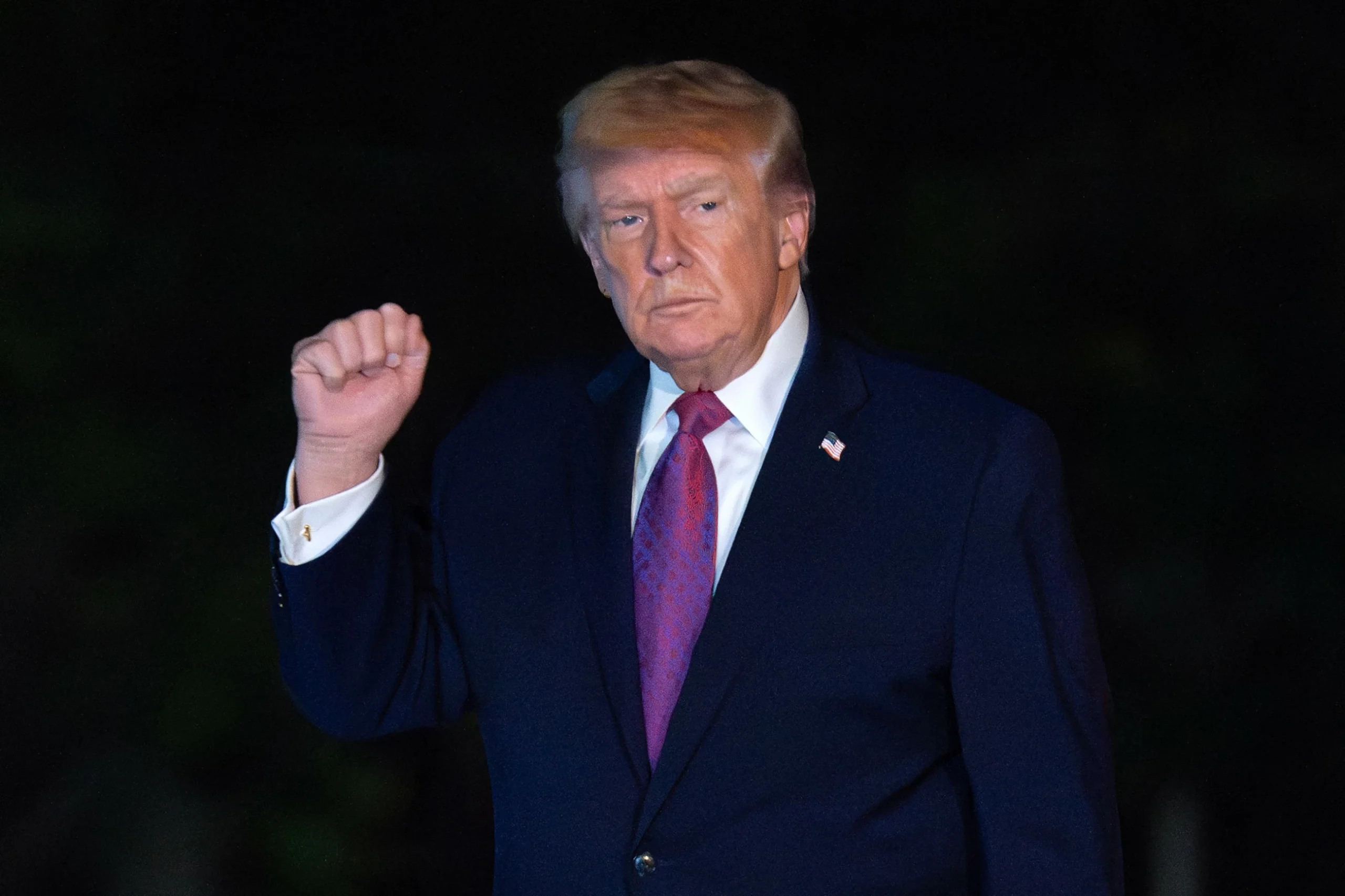
President Donald Trump on Tuesday said he was extending a ceasefire with Iran to give more time for negotiations, but would maintain a US naval blockade of the country's ports.Trump posted on social media that

Entertainment
Drake ‘Iceman’ Album Release Date Revealed After Streamer Cracks Viral Ice Stunt

Drake ‘Iceman’ Album Release Date Revealed After Streamer Cracks Viral Ice Stunt

Drake Streamer Cracks 'Iceman' Release Date ... Ice, Ice Payday! Published April 21, 2026 1:11 PM PDT Play video content Drake’s icy album rollout didn’t just melt ... it got smashed open by a streamer