admin
admin 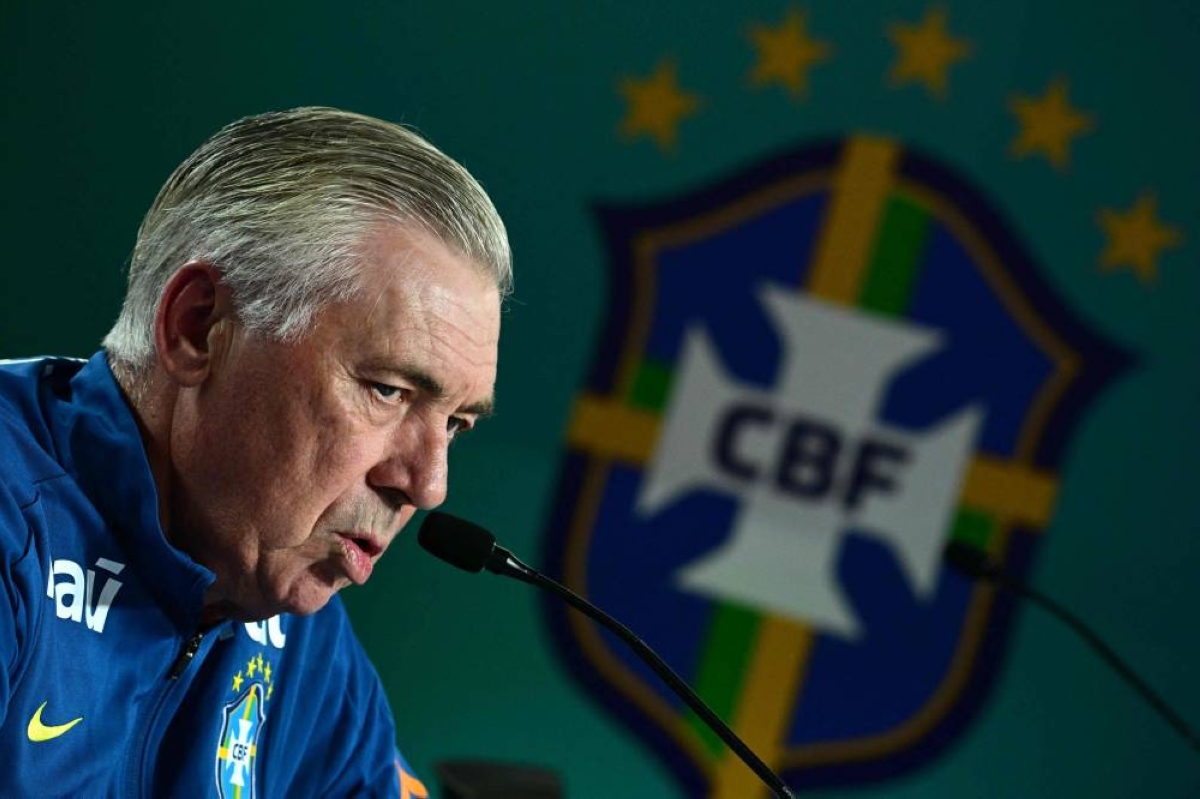
Carlo Ancelotti arrived in Brazil with five Champions League titles as a manager, league trophies from Europe's big five competitions and a reputation for making elite dressing rooms breathe a little easier.
One year on, he knows this job is something different: less club grind, more national obsession and perhaps his final gig.
In an interview with Reuters on Tuesday, he said he was close to signing a contract extension until 2030.
‘It's all sorted, we just have to sign it. I'd like to stay,’ he said.
Two days later, the Brazilian Football Confederation (CBF) confirmed the four-year extension.
‘Ancelotti’s continued tenure at the helm of the Brazilian national team – the most successful side in the history of world football – reflects not only the CBF’s backing for the work carried out by the manager, but also the trust he has earned from the squad and Brazilian fans since his arrival in late May 2025,” CBF said in a statement.
‘I see a squad with great potential for the future. We have top-class young players, a new generation coming through here, who are of a very high standard,’ Ancelotti told Reuters on Tuesday to explain why he wanted to stay.
DIFFERENT KIND OF TESTThe 66-year-old Italian took charge of Brazil after a glittering club career but preparing for the World Cup has brought a different kind of test – fewer training sessions, more emotion and the agony of choosing 26 names in a country where the iconic yellow jersey represents more than just a team.
Brazil will be missing key players including Rodrygo, Estevao and Eder Militao through injury, adding another layer of psychological strain before Ancelotti announces his squad in Rio de Janeiro on Monday. And there is also Neymar, whose inclusion (or not) in the squad has the country holding its breath.
Brazil, who are joint-fourth favourites with holders Argentina to win the World Cup behind European champions Spain, France and England, face Morocco, Haiti and Scotland in Group C.’It weighs heavily on me,’ Ancelotti said when asked about the human cost of cutting players from his squad.
‘I have to make a professional judgement about a player, a person with whom I get on very well personally, players who have been with us but who I might not be able to call up; ultimately, this has an impact. It affects my emotions.
‘It's a relief, to present the squad list. Although more than the relief you feel for having done your job, it's something tinged with the sadness you feel at having to make this decision.’Relief is a word Ancelotti returns to often. Winning, he said, does not bring pure joy so much as the easing of pressure before the next demand arrives.’When you win, what you feel isn't happiness, it's relief,’ he said. ‘And when you lose, it's real physical and mental suffering.’That understanding of suffering may be useful in Brazil, where recent World Cup failures have been treated as national autopsies. It is now 24 years since they last won the title.Ancelotti said he wants to create an atmosphere in the squad that is calm, humble and serious enough to carry the pressure rather than be crushed by it.
CHANGE OF RHYTHM
Moving from club football to a national team has also changed the rhythm of Ancelotti's life.
At his last club job with Real Madrid, the next match was always a few days away. With Brazil, there is more time to reflect – and perhaps more time for a manager who has spent three decades adapting to football's changing face.
‘It's a different job,’ Ancelotti said. ‘This job allows me more time to reflect, more peace of mind … Going back to a club? I don't think so. It may well be that this is my last job.’
The Italian's connection with Brazil stretches back to his playing days in the early 1980s at AS Roma, when playing alongside icons such as Falcao and Toninho Cerezo.
Also, there was the 1994 World Cup, when he was assistant to Arrigo Sacchi as Italy lost the final to Brazil on penalties.
Ancelotti said he could not have foreseen then that he would one day coach Brazil – or that Italy would be absent from another World Cup.
‘I couldn't have imagined a month or two ago either that Italy would be out of the World Cup and, unfortunately, this is now the third consecutive World Cup Italy has missed,’ he said.
The Italians lost in a penalty shootout to Bosnia and Herzegovina in their playoff final in March.
‘For an Italian, this is sad but it's an opportunity for Italians to support Brazil in this World Cup,’ added Ancelotti.
ANCELOTTI PLAYS MANY ROLES
The Italian said his greatest continuity as a coach has not been tactical, but human. He has changed with the game, helped by younger staff, but his relationship with players remains much the same as when he began coaching in 1995.
‘I feel like the manager, the friend, the team mate, many things; the father sometimes too, why not?’ he said.
Then came the Ancelotti twinkle. He recalled a Brazilian player – unnamed – who once told him he was due to marry in a week but did not want to go through with it.
‘I told him: 'Look, you have to make the decision that your heart tells you to make,'’ Ancelotti said, laughing. The player did not get married.’
‘So there are many aspects to my job: coach, father … sometimes even therapist,’ Ancelotti said smiling.
‘I enjoy it, I really do.’