admin
admin 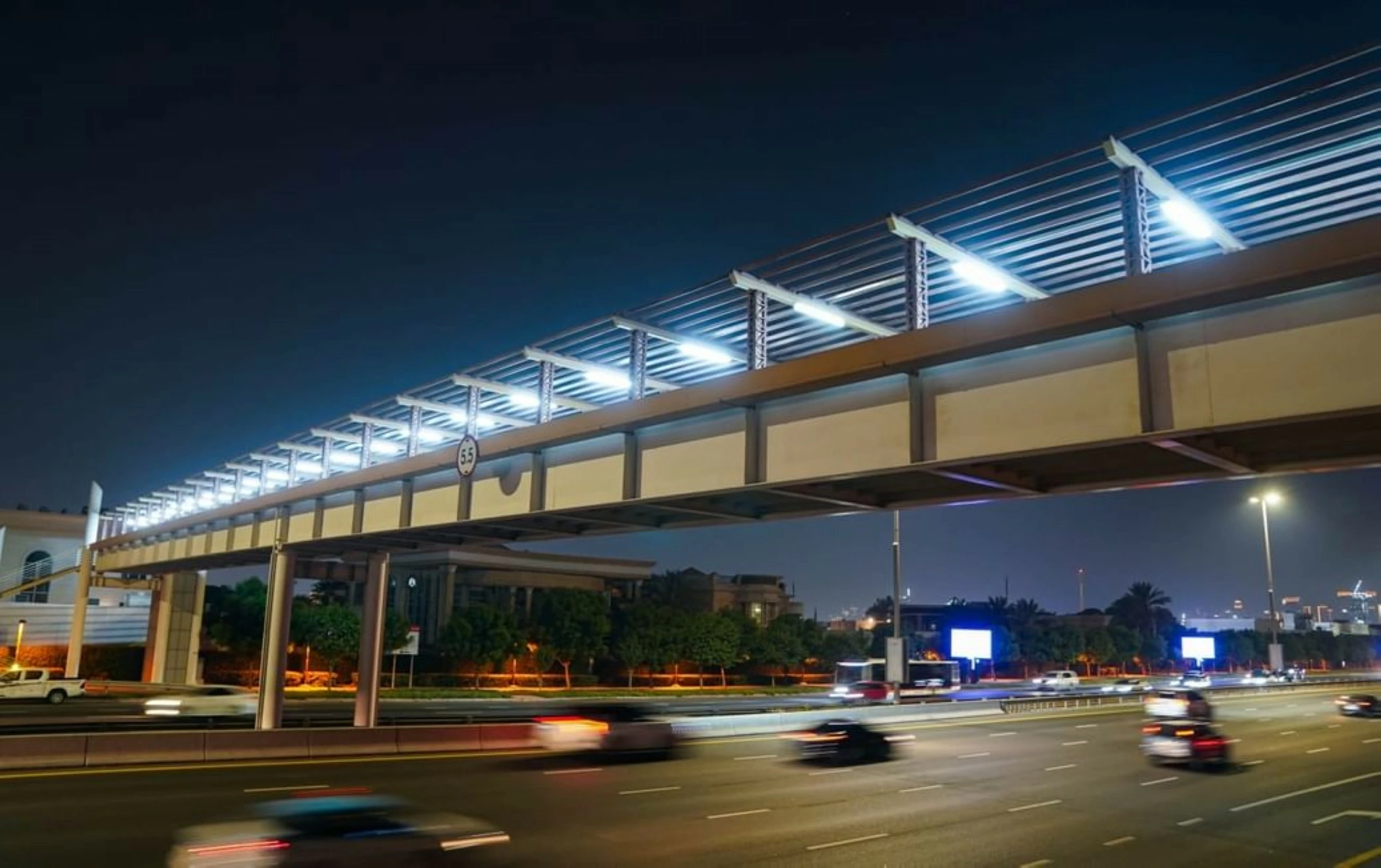
Dubai’s Roads and Transport Authority (RTA) has started a project to upgrade the lighting of pedestrian bridges at 30 key locations across Dubai.
The project forms part of RTA’s People Happiness initiative, which aims to provide a safer and more comfortable mobility environment for users of road facilities and enhance the customer experience.
It also supports RTA’s efforts to strengthen Dubai’s standing in the green economy and sustainable development, promote a clean environment, and optimise the use of RTA assets while extending their service life.
The project is expected to enhance pedestrian safety during evening hours and improve the experience of using pedestrian bridges, in line with Dubai’s vision to develop smart and sustainable infrastructure that places people’s happiness and quality of life at the forefront of its priorities.
The project involves equipping 30 pedestrian bridges with modern, energy-efficient LED lighting systems. RTA has adopted smart and sustainable solutions for the project, designing the lighting systems to operate using motion-sensor technology.
The lights switch on automatically when pedestrian movement is detected on the bridge, improving energy efficiency and reducing operating costs while maintaining high levels of safety and security.
To ensure the highest levels of pedestrian comfort, RTA carried out studies and site surveys of all bridges covered by the project to assess their condition and identify their technical requirements. Light meters were used to analyse current lighting levels and determine the requirements of each location, ensuring appropriate illumination in line with the highest approved standards and specifications, meeting user needs and enhancing infrastructure efficiency.
The first phase of the project covers lighting upgrades on 21 pedestrian bridges, with the full project expected to be completed in the fourth quarter of 2026.
RTA will continue to develop road lighting systems and related facilities across Dubai by adopting the latest technologies suited to local environmental conditions, while supporting environmental sustainability targets through the use of energy-efficient lighting solutions.
WAM