1. Home
  2. World

Category: World

World
Trump calls Nato allies 'cowards' over Iran

Trump calls Nato allies 'cowards' over Iran

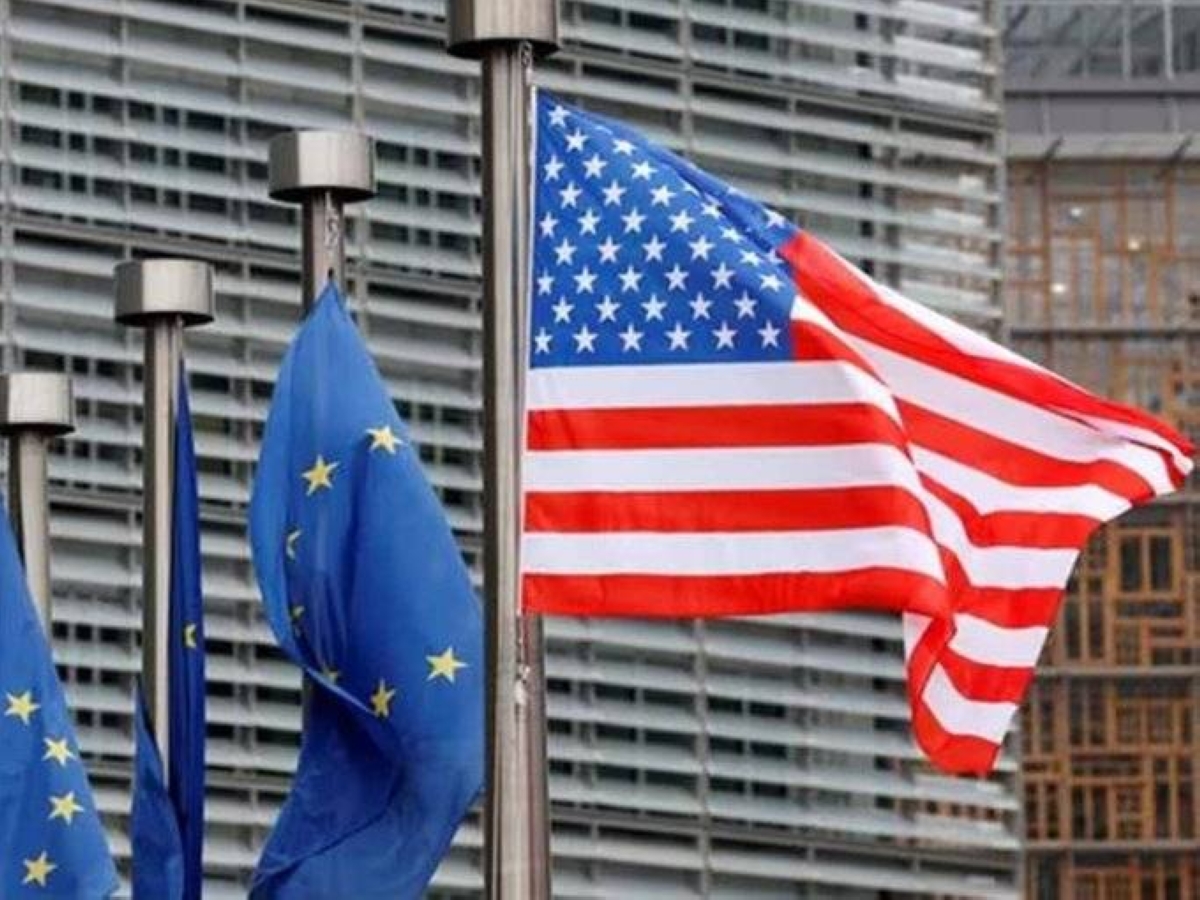
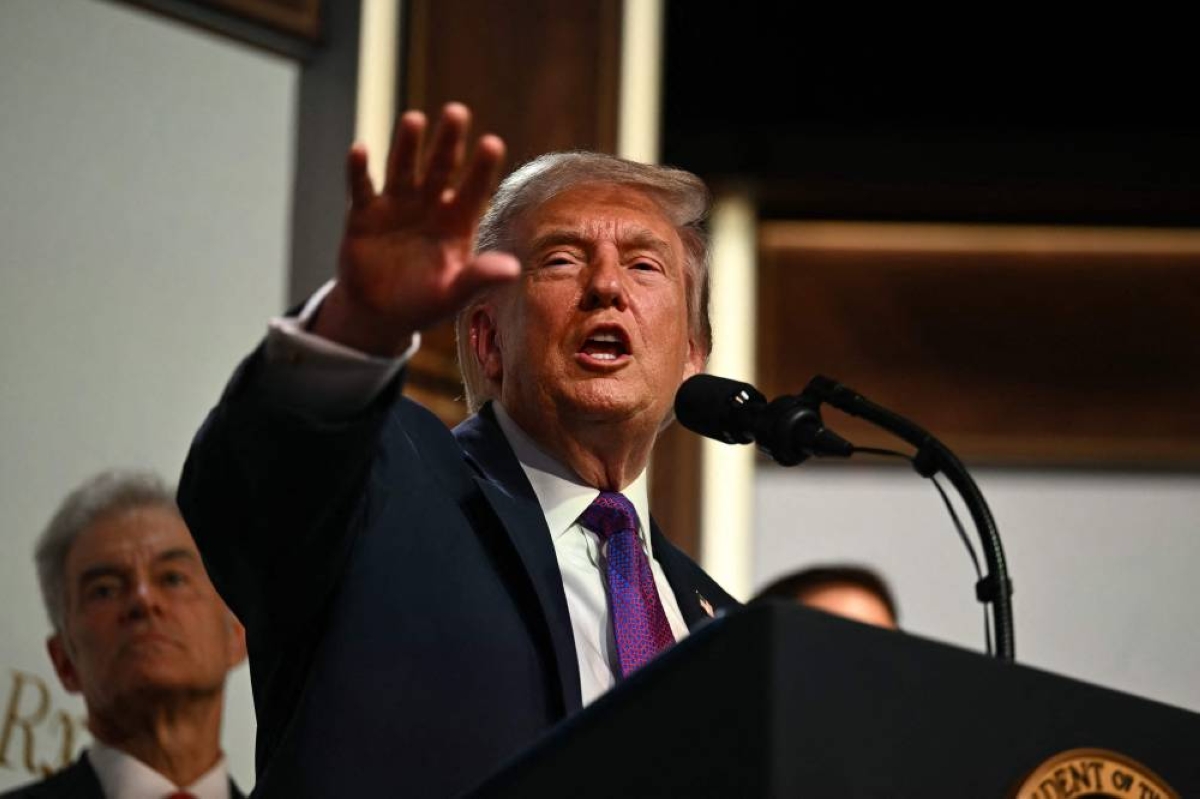
US President Donald Trump has branded Nato allies 'cowards' for not heeding his demand for military assistance against Iran to control the Strait of Hormuz shipping route.Trump has recently veered between saying that Washington needs no help to secure the vital waterway for oil tankers, and then lashing out at other countries for failing to help.'Without the U.S.A., NATO IS A PAPER TIGER!' Trump posted on his Truth Social network.'They didn't want to join the fight to stop a Nuclear Powered Iran. Now that fight is Militarily WON, with very little danger for them, they complain about the high oil prices they are forced to pay, but don't want to help open the Strait of Hormuz, a simple military maneuver that is the single reason for the high oil prices.'So easy for them to do, with so little risk. COWARDS, and we will REMEMBER!'The 79-year-old Republican, a long-term sceptic of the Western military alliance, has launched a series of diatribes against the North Atlantic Treaty Organisation (Nato) in recent days.On Thursday, six major international powers, including Britain, France, Germany and Japan said that they were ready to 'contribute to appropriate efforts' to secure the Strait of Hormuz.German Chancellor Friedrich Merz made clear that this presupposed an end to combat.French President Emmanuel Macron said after a European Union summit in Brussels that defending international law and promoting de-escalation was 'the best we can do,' adding: 'I have not heard anyone here express a willingness to enter this conflict – quite the opposite.'However, they have not formally committed to any mission to work in the crucial waterway – while other allies such as Germany and Italy have ruled out doing anything before a truce in the Middle East war.None of the countries Trump has called on to help was consulted before the US-Israeli mission started.An effective Iranian blockade has paralyzed commercial shipping through the crucial maritime chokepoint, which in peacetime sees a fifth of global crude oil and liquefied natural gas pass through it.Global oil prices have spiked as a result of the war, which erupted on February 28 when the United States and Israel began bombing Iran, leading Tehran to retaliate with strikes across the Gulf region. 

World
India’s proposal to preload national ID app Aadhaar on phones faced pushback

India’s proposal to preload national ID app Aadhaar on phones faced pushback

A woman goes through the process of finger scanning for the Unique Identification (UID) database system, also known as Aadhaar, at a registration centre in New Delhi. (Reuters/File Picture) India's government privately proposed in January that firms like Apple, Samsung and Google consider pre-installing ‌its biometric identification app Aadhaar on phones, a move opposed by a group representing ​the smartphone giants, industry letters show.The tussle ‌over preloading state-run apps has become a recurring flashpoint between Prime Minister Narendra Modi's government ‌and tech firms, ⁠with the Aadhaar request ‌one of six that Indian IT industry body ‌MAIT has pushed back against, according to the letters.Aadhaar is a unique 12-digit identity number tied to ⁠an individual's fingerprints and iris scans, held by nearly 1.34bn residents. It is widely used for verification purposes in banking and telecom services, as well as for faster airport entry.While the government maintains that the system is safe and secure, it has faced persistent criticism from privacy advocates, including for data leaks where personal details of hundreds of millions of holders surfaced on the dark web.According to an internal e-mail sent by MAIT on January 13, the government's Aadhaar ​body UIDAI asked the IT ministry in January to engage Google, Apple, and leading smartphone manufacturers to explore pre-installing the new version of its Aadhaar app.The request, while not an outright order, drew opposition from companies concerned that pre-installations raise ‌production costs and risks creating functional issues ⁠for users, according to the ​MAIT documents.Apple and Samsung in particular both had concerns with the proposal due to ​questions over safety and security, two industry sources said. The companies did not respond to Reuters requests for comment.UIDAI believed the pre-installation would allow citizens to "readily access essential Aadhaar functionalities without the need for separate downloads" and "enhance its reach and accessibility", according to an e-mail sent from MAIT to its members in January.MAIT's member companies, however, were of the view that pre-installation "would not drive greater public good", and that such mandates would require companies to maintain separate production lines for India and export markets, one of its January documents showed.It also argued that no other country apart from Russia mandates pre-installation of government apps on mobile phones.The new Aadhaar app, launched in January, allows users to update ‌their personal details, manage profiles of ‌their family members, and lock biometric details to ⁠prevent misuse.The pre-installation proposal "shows and evidences a greater amount of government desire of controlling smartphone usage from the ⁠very beginning," said Apar Gupta, founder of ⁠the Internet Freedom Foundation, a New Delhi-based digital advocacy group."It is clearly problematic."It was not immediately clear whether the proposal is still being pursued by the government or if it was dropped.In a statement to Reuters, MAIT said its internal communications are confidential, and use of such material in reporting "risks distorting the true context of industry discussions" and is likely to undermine its advocacy efforts.UIDAI CEO Bhuvnesh Kumar, India's IT ministry, and ​Google did not respond to requests for comment.In December, New Delhi faced criticism from opposition parties and activists over an order mandating smartphone makers to pre-install a telecom security app, forcing the government to roll back its decision within days.The letters reviewed by Reuters on the latest proposal show growing discontent among smartphone companies against app pre-installation requests by the Indian government.MAIT also wrote to Indian IT ministry official Ravinder Kumar Meena on March 10, opposing the government's request for pre-installation of another app, Sachet, a disaster alert service.Referring to the request to pre-install Aadhaar and five other government apps in ‌the letter, MAIT said ​that in each instance the industry "has been consistent in its recommendation against pre-installation".Meena did not respond to a request for comment.  Related Story

World
Sri Lanka ex-leader alleged to have received kickbacks over Airbus deal

Sri Lanka ex-leader alleged to have received kickbacks over Airbus deal

Mahinda Rajapaksa (AFP/File Picture) The former chief of Sri Lanka's main state-owned airline has admitted to paying the country's ex-president Mahinda Rajapaksa nearly half a mn dollars in kickbacks to wave through purchases of 10 Airbus planes, a court heard Thursday.Rajapaksa, who served as the island nation's president from 2005 to 2015, and his once-powerful family are the subject of several high-profile corruption allegations, which they deny and call politically motivated.The case heard at Colombo Chief Magistrate's Court Thursday chiefly centred on accusations against Kapila Chandrasena, the former CEO of national carrier SriLankan Airlines.Representatives for the bribery commission told the court that Chandrasena had admitted to paying Rajapaksa 60mn rupees in three instalments in 2013, while he headed the airline.The alleged transactions occurred as the airline sought to seal a $2.3bn deal with Airbus for 10 planes, which required approval from Rajapaksa's cabinet.Chandrasena disclosed the alleged kickbacks, worth $461,000 at the time, in a statement to the commission after his arrest last week, its representatives said.A spokesman for Rajapaksa denied the allegations and cast doubt on the commission's independence."You cannot rely on a statement from the main accused," Manoj Gamage told AFP."This is a political vendetta, and we will resist it."Chandrasena is accused of conspiring to accept $16mn from Airbus, though he allegedly only received around $1.7mn.The court heard that the money went into a Singapore bank account, from which he paid Rajapaksa and also sent 20mn rupees (then around $154,000) to the then-aviation minister Priyankara Jayaratne.Chandrasena remains in custody and has not commented publicly on the case. Jayaratne has not commented.SriLankan Airlines is saddled with debt, with estimated accumulated losses of 596bn rupees at the end of March last year.Attempts to sell the airline have so far failed to attract a buyer.Chandrasena was previously arrested and released on bail in a separate case in 2020. At the time, the US, Britain and France named him in a joint investigation into Airbus business deals.Earlier that year, a French court approved a fine of $4bn to be paid by the European aircraft manufacturer to France, Britain and the US to settle the probes.Investigators in Britain accused Airbus of failing to prevent people associated with the company from bribing directors or employees of SriLankan Airlines to "obtain or retain business or advantage".In June 2025, Nishantha Wickramasinghe, who was chairman of SriLankan Airlines when the carrier contracted to buy the aircraft in 2013, was arrested in an unrelated corruption case.Wickramasinghe was accused of bankrolling Rajapaska, who is his brother-in-law, in his failed bid for re-election. That case is still pending. 

World
Thai PM Anutin wins landmark re-election in parliament vote

Thai PM Anutin wins landmark re-election in parliament vote

Thailand's caretaker Prime Minister and Bhumjaithai Party leader Anutin Charnvirakul (centre) is applauded by fellow party members after the new parliament elected Anutin as prime minister Thursday. (AFP) Thailand's Anutin Charnvirakul sailed through a parliamentary vote Thursday to become the first re-elected ‌prime minister in two decades, a fresh mandate that could bring rare stability for ‌the turbulent politics of ⁠the southeast Asian nation.The ‌Bhumjaithai Party's Anutin led from the start ‌in rout of his biggest rival, Natthaphong Ruengpanyawut, leader of the progressive People's Party and the surprise ⁠runner-up last month in an election it had been widely expected to win.Anutin won the backing of 293 of parliament's 499 members Thursday, more than twice the 119 votes Natthaphong secured.He offered no immediate comment on his victory, but headed into a meeting on energy security."Thailand has no issues and is able to still buy oil," Anutin said after the meeting. "We will ensure public confidence."Earlier, dressed in Thai traditional attire in his party's hue of blue, a beaming Anutin ​had greeted a succession of allies in parliament, shaking hands and posing for photographs.In a stunning turnaround for a party that had struggled to make its mark in Thai politics, Bhumjaithai decisively won last month's election, riding ‌on a wave of nationalism unleashed ⁠by military clashes with ​neighbouring Cambodia last year.Much of Anutin's success comes from his opportunism in seizing on ​the decline of the once dominant Pheu Thai party, first by abandoning its coalition government and then manoeuvring swiftly to form his own after a court sacked a second prime minister in the space of just over a year.Bhumjaithai's coalition pact with the politically bruised Pheu Thai and a crew of small parties stood firm in Thursday's vote, as Anutin comfortably reached the necessary threshold of 51%.Earlier, Anutin, 59, had pledged to immediately start forming a cabinet and resolving Thailand's problems."Your voices are equally heard," he told lawmakers from outside his alliance. "I'm ready to accept suggestions ... We all have the same goals — the wellbeing of the people."Staunch royalist Anutin weathered two ‌decades of upheaval in tumultuous Thai politics ‌by strategically positioning his party between elites ⁠warring in an intractable power struggle to ensure its role in successive coalition governments.He now ⁠has his first clear mandate to ⁠lead a country with a long-stuttering economy shackled by massive household debt and facing headwinds from trade uncertainty and the fallout of the US-Israeli war on Iran.A political veteran and son of a former cabinet minister who once ran his family's construction firm, Anutin is a former deputy premier, interior minister and health minister who served as Thailand's Covid-19 tsar.Although seen as a conservative, Anutin gained notoriety for leading a successful campaign ​to legalise cannabis, which led to an unregulated surge of thousands of marijuana retailers.His survival instincts and ability to straddle political divides could prove his biggest asset, some analysts say, as Bhumjaithai escaped the wrath of Thailand's powerful military and judiciary, the engineers of the downfall of multiple governments and parties.Prospects for medium-term stability were good, with Bhumjaithai holding sway in both houses of parliament and Thailand's axes of institutional power appearing to be behind Anutin, said political scientist Napon Jatusripitak."It's the first time in a long while that the referee and the players are on the same side," added Napon, of ‌the ISEAS-Yusof Ishak Institute in ​Singapore."There's control," he said. "And we have a highly fragmented opposition."  Related Story

World
Philippine jeepney drivers protest as rising fuel prices cut their pay

Philippine jeepney drivers protest as rising fuel prices cut their pay

Jeepney drivers and activists display placards during a protest in support of a jeepney drivers' strike in Manila Thursday. (AFP) The ripple effects of the war in the Middle East are hitting home hard for Philippine jeepney driver Toni Prado, ‌whose daily earnings have been gutted by soaring ​fuel prices. He was ‌one of thousands of jeepney drivers who ‌took to ⁠the streets ‌across the country on Thursday ‌to protest a more than doubling of local diesel ⁠prices after global oil prices surged because of the U.S.-Israel war on Iran."We are losing our income. What we earn just goes to paying for diesel," said Prado."Before I could earn at least 1,000 pesos ($16.65) for three trips, now I only take home ​200 pesos," said the father of four. "How can I support my children? How can I send my daughter to school? ‌How do I pay ⁠for electricity, ​water, and food?"The Philippines relies heavily on ​Middle Eastern oil, and the surge in fuel prices is threatening to stoke inflation in the consumption-driven economy. Like many of its Southeast Asian neighbours, Manila has taken steps such as shortening the work week and providing fuel subsidies to counter the impact of rising costs. This week, Congress granted the president emergency powers to suspend or reduce fuel taxes.Mody Floranda, ‌who heads the ‌transport group leading the national ⁠strike, said those measures were not enough, and ⁠called for the repeal ⁠of a law that stripped the government of its authority to control fuel prices.Drivers said the pain of surging diesel prices was compounded by the suspension of a fare hike that could have provided some relief.Jeepneys, which were ​originally created from abandoned U.S. military jeeps after World War Two, are a vital mode of public transport across the Philippines.Reggie Manlapit, who has been a jeepney driver for two decades, said he needs to work longer hours but still gets less pay."Because of what's happening, we work longer hours and we're lucky if we ‌can take home ​200 pesos," he said.  Related Story

World
China-ruled Macau approves national security law allowing closed-door trials

China-ruled Macau approves national security law allowing closed-door trials

Chinese and Macau flags flutter at the Golden Lotus Square in Macau, China. (Reuters/File Photo) Lawmakers in Macau, a city under Chinese rule, unanimously approved a ‌bill Thursday that allows court ​proceedings to be ‌held behind closed doors when deemed ‌necessary ⁠to ‌protect national security ‌interests. The city enacted its first national security ⁠law in 2009 and tightened it with amendments in 2023. Last July, leading democrat Au Kam San was arrested for alleged collusion with foreign forces to endanger national security, the first ​known arrest under that law.The new legislation stipulates that judges must refer cases to the ‌city's Committee for ⁠Safeguarding National ​Security if they believe national security ​may be at risk during a public hearing.The committee has the ultimate authority to decide whether the matter pertains to national security and order that hearings be held behind closed doors. Its decisions are final, not subject to appeal or judicial review.The ‌law will ‌take effect a ⁠day after its publication in Macau’s official ⁠gazette.The ⁠Macau government said the approval had demonstrated the successful implementation of the principle of "patriots governing Macau".Unlike in Hong Kong, which saw big social movements challenge Chinese Communist Party ​rule in 2014 and 2019, the democratic opposition in the former Portuguese colony has always existed on the fringes amid tight Chinese control.After Au's arrest last year, rights groups have called for his unconditional release and urged authorities not ‌to suppress peaceful ​criticism. 

World
Nigeria ‘challenged by terrorism’, president says on UK state visit

Nigeria ‘challenged by terrorism’, president says on UK state visit

Britain's Prime Minister Keir Starmer greets Nigeria's President Bola Tinubu on the steps of 10 Downing Street in central London Thursday, ahead of their meeting on the second day of a two-day state visit to

World
Philippines' Marcos puts brakes on transport fare hike

Philippines' Marcos puts brakes on transport fare hike

Philippine President Ferdinand Marcos Wednesday put the brakes on a public transportation fare hike announced just a day earlier, promising the country's commuters free rides instead.The archipelago nation, which imports nearly all of its crude oil from the Middle East, has been scrambling to deal with eye-watering price increases triggered by the US-Israeli war with Iran.Since hostilities erupted, the Philippines has instituted a four-day workweek for civil servants, distributed cash handouts to tricycle drivers, and seen its sole refinery open discussions to buy Russian oil.On Tuesday, the country's transportation regulator announced fare hikes across an array of public transport, with rides in jeepneys, used by millions of Filipinos every day, set to jump about eight percent.'In my opinion... now is probably not the time to raise fares for the people,' Marcos said Wednesday in walking back the increase, citing the ongoing Middle East war.Instead, Marcos said he had ordered the country's transportation department 'to launch free rides all over the Philippines' along with discounts on light rail systems and toll roads.Marcos did not specify which forms of public transport would be made free.In a statement that followed shortly, the transportation department said it would suspend the fare hikes in line with the president's request while 'preparing' programmes, including free rides.Mody Floranda, president of a local jeepney drivers' union, told AFP that his group was unhappy with the decision.'We are dismayed that the president of our country had ruthlessly recalled what his government has granted to us,' he said. 

World
Chinese tourists ditch Japan for third month running

Chinese tourists ditch Japan for third month running

A visitor walks past scaled replicas of the US Capitol and Mount Rushmore, at the theme park Window of the World, in Shenzhen, Guangdong province, China, Wednesday. (Reuters) Chinese visitors to Japan tumbled 45.2% in February from a year earlier, official data showed Wednesday, as the fallout from the countries' diplomatic spat bit for the third month running.Previously, Chinese travellers were the biggest source of tourists to Japan, contributing to a boom in the land of cherry blossoms and Mount Fuji that was fuelled by a weak yen, making shopping cheap.But in January, South Korea overtook China as the largest contingent, a trend that continued in February, with visitors from the country jumping 28.2% to 1.1mn.That compared with 396,400 visitors from mainland China last month, the Japan National Tourism Organisation said.By comparison, 18 countries and regions set new records for the number of their nationals who visited Japan in February — including South Korea, Taiwan and the US, data showed.The number of visitors from Hong Kong also shot up by 19.6% compared to last year.While February is typically the low season for travel to Japan, this year, due to the timing of Lunar New Year, the number of visitors shot up, the tourism group said, noting a particular uptick from East Asia.Japan-China ties have deteriorated since Prime Minister Sanae Takaichi suggested in November that Japan might intervene militarily in any Chinese attempt to take Taiwan.China, which regards the democratic island as part of its territory and has not ruled out force to annex it, was furious over the comments.It summoned Tokyo's ambassador and warned Chinese citizens against visiting Japan.The number of Chinese visitors to Japan already tumbled 45% in December and nose-dived 60.7% in January.Instead, other countries, including South Korea, received an increase in the number of Chinese visitors.In January, 418,703 visited South Korea, up from 364,460 the same month last year, according to the Korea Tourism Organisation.The number of Chinese visitors to Thailand edged up 4.24% on average during the January-February period compared to the same period last year.Japan's cherry blossom season will be in full swing in late March and early April, but some local media reports suggest the decline in the number of Chinese visitors will continue.Contacted by AFP, one hotel in the Tokyo Bay area said the number of Chinese guests "had halved since November" and that will likely continue in March and April, although a handful of other hotels said they have seen no significant impact from the souring ties between Tokyo and Beijing.  Related Story

World
Samsung Electronics union votes for May strike

Samsung Electronics union votes for May strike

The logo of Samsung Electronics is seen at the company's store in Seoul, South Korea. Reuters Tens of thousands of Samsung Electronics workers said Wednesday they will strike in May over a wage dispute, raising concerns over chip production.The firm is one of two South Korean chipmakers, along with SK hynix, now crucial suppliers of advanced memory chips for booming AI infrastructure demand.The announcement is a blow to South Korea's bid to join the United States and China as one of the world's top three AI powers.Samsung announced last month that it had begun mass production of next-generation high-bandwidth memory chips, HBM4s, seen as a key component for scaling up the vast data centres driving the rise of artificial intelligence.More than 66,000 of nearly 90,000 unionised workers took part in a vote on whether to strike, the association of three unions said in a press release."Of those who voted, 93.1 percent voted in favour," it said."This result makes clear that the vast majority of Samsung Electronics workers reject the company's current proposal as failing to uphold the management principle of 'People First'," it said.The unions' demands include a seven-percent wage hike, the removal of a cap on bonuses and a more transparent performance-based bonus system.The will of the workers was a "strong warning to the leadership", it added.Samsung told AFP it remained "committed to reaching a smooth agreement" with the unions.Long staunchly anti-union, founder Lee Byung-chul once vowed never to allow unions "until I have dirt over my eyes". He died in 1987.Samsung Electronics' first labour union was formed in the late 2010s.  Related Story