1. Home
  2. World

Category: World

World
Thai navy says cargo ship attacked in Strait of Hormuz

Thai navy says cargo ship attacked in Strait of Hormuz

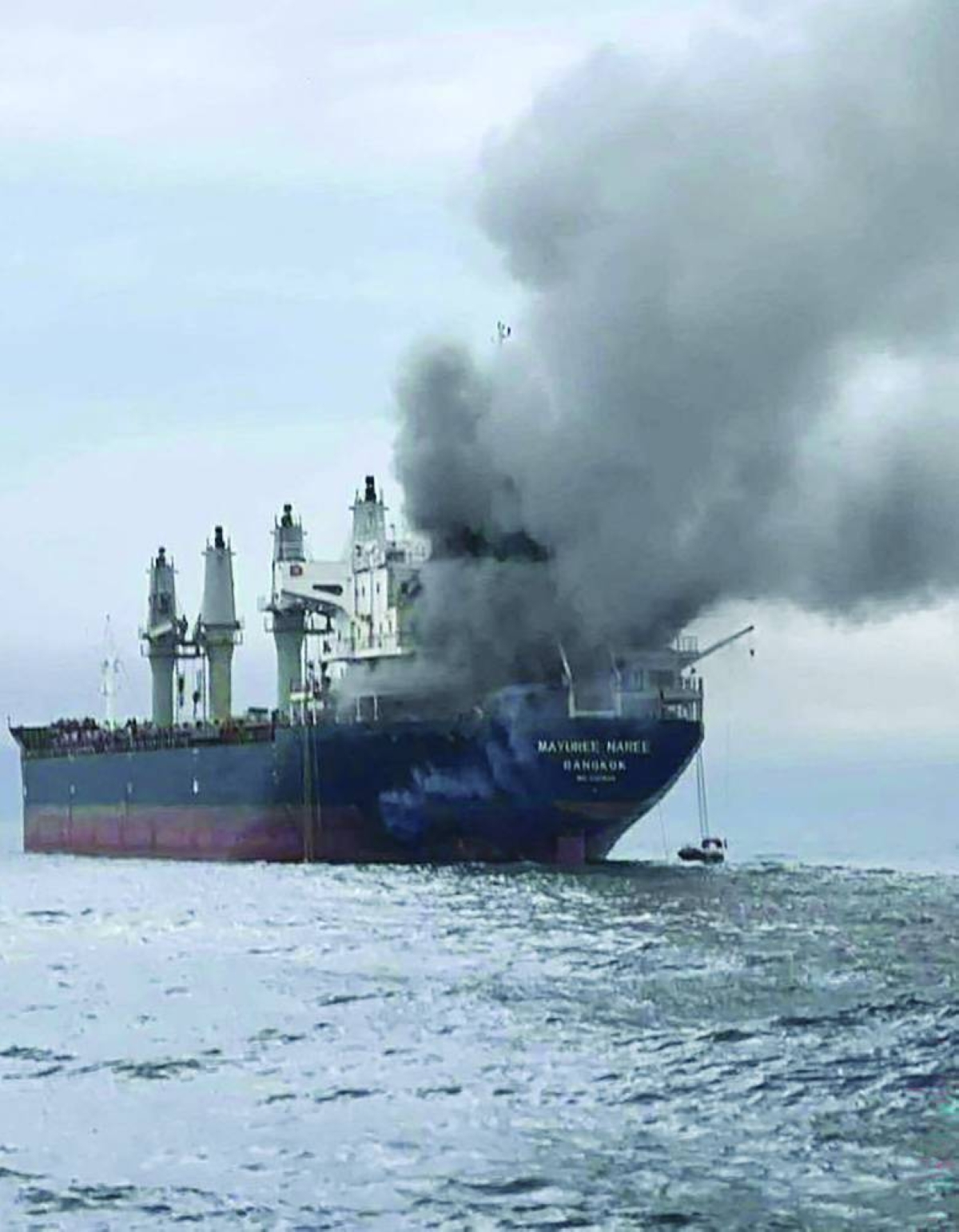
Smoke rising from the Thai bulk carrier 'Mayuree Naree' near the Strait of Hormuz after an attack Wednesday. (AFP) A Thai bulk carrier travelling in the crucial Strait of Hormuz was attacked Wednesday, with 20 crew members rescued so far, the Thai navy said.Photos shared by the Royal Thai Navy showed heavy black smoke billowing from the hull and superstructure of the Thai-registered Mayuree Naree, with life rafts floating in the water.The vessel "was attacked while transiting the Strait of Hormuz" after departing Khalifa port in the United Arab Emirates, the navy said in a statement."The specific details and cause of the attack are currently under investigation," it added.The Omani navy had rescued 20 sailors and "efforts are currently underway to rescue the remaining three crew members", it said.Iran has launched strikes against its oil-exporting neighbours, threatening shipping in the Strait of Hormuz and plunging the global energy economy into crisis.It was not immediately clear whether the incident was one of three commercial ships that the United Kingdom Maritime Trade Operations centre earlier said had been hit in the Gulf on Wednesday.Ship-tracking websites showed the Mayuree Naree just off the Omani coast in the Strait of Hormuz, moving slowly at little more than one knot.The carrier is 178m long and displaces 30,000 tonnes, they said, adding it was on its way to Kandla in India.The Thai navy said it is owned by a Thai transport company, Precious Shipping.AFP sought comment from the firm in Bangkok but did not receive an immediate response.  Related Story

World
Six die in Swiss bus blaze

Six die in Swiss bus blaze

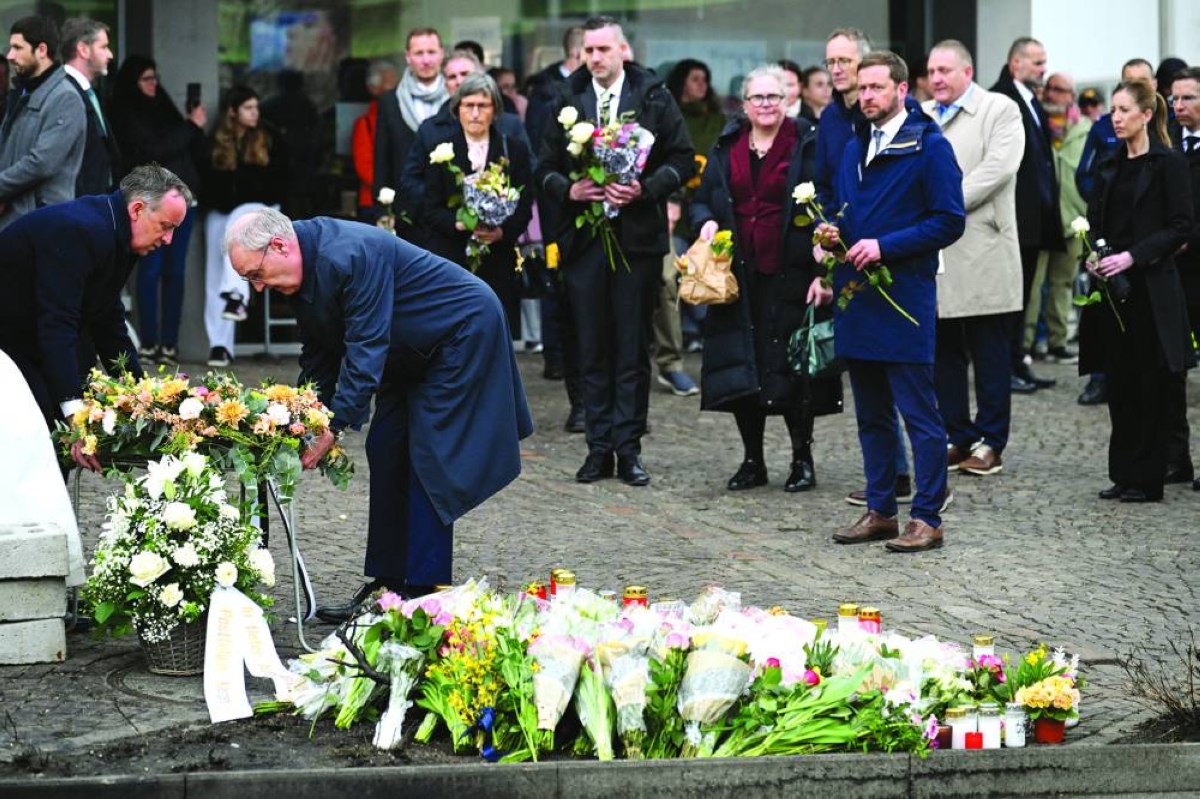
Swiss President Guy Parmelin lies flowers in tribute at the site of a deadly bus fire in Kerzers, Switzerland, Wednesday. (Reuters) Six people died and three were injured in a bus fire in ​a small Swiss town believed to have ‌been caused by a man on board who set fire to himself, authorities said ‌Wednesday.Swiss investigators said ⁠they saw no evidence ‌that the man, who one official described as "disturbed" ‌and was likely among the dead, had intended to commit any kind of terrorist attack.The bus was engulfed ⁠in flames on Tuesday evening on a road near the centre of Kerzers, a town of about 5,000 inhabitants in the western canton of Fribourg, about 20km (12 miles) from the Swiss capital Bern, police said."As for the motive, there is absolutely no evidence to suggest that this could be a terrorist act," said Raphael Bourquin, attorney general of the canton of Fribourg.A criminal investigation has been opened into homicide, arson, and endangering the lives of others, Bourquin said.The victims were aged between 17 ​and 65, the authorities said, without giving details on nationalities.The suspect, a man of Swiss origin who has not been identified, is believed to have boarded the bus with bags before dousing himself in flammable material ‌and starting the blaze, officials said. He ⁠was understood to be ​in his 60s and had been reported missing by his family, they added.Investigators were going ​through CCTV footage as well as social media posts to understand the man's motives, and further searches and interviews would take place, officials said.Three injured people were taken to hospital.Passengers were seen escaping from the burning bus, panicked and injured. Video after the flames were extinguished showed the charred remains of the yellow vehicle.Zeynel Teke, 61, was working at his food stall opposite when flames erupted from the bus and it stopped in front of him.Two or three people came out of the vehicle, and Teke ran to help, using his hand to put out flames on one woman. He went to get his fire extinguisher but the flames were too hot to get close enough ‌to douse them."It's so sad to ‌see people burning in front of your ⁠eyes. It could be my child, it could be yours," he said.Mina Gendre was about to ⁠close up the shop she works in ⁠when she saw the bus was ablaze inside. "It was so shocking," said Gendre. "I saw someone come running out of the bus on fire."Gendre shut the door of the shop to protect it as bystanders helped put out the fire on the person with a jacket, she said.One video of the fire circulating among Kerzers' residents showed what appeared to be a body in flames moving on the ground next to the burning bus.Nirosan ​Vickneswaran, 37, was waiting anxiously for news of his cousin who was on the bus."We don't know if he's injured or worse," he said. "All we know is that somebody set fire to themself."A memorial was quickly erected next to the site of the blaze.The head of the bus company Postauto, Stefan Regli, said it was a terrible tragedy and extended his condolences.Swiss President Guy Parmelin offered condolences and said the incident was being investigated."It shocks and saddens me that once again people have lost their lives in a serious fire in Switzerland," he said on X.  Related Story

World
South Africa deploys soldiers into Johannesburg crime hotspots

South Africa deploys soldiers into Johannesburg crime hotspots

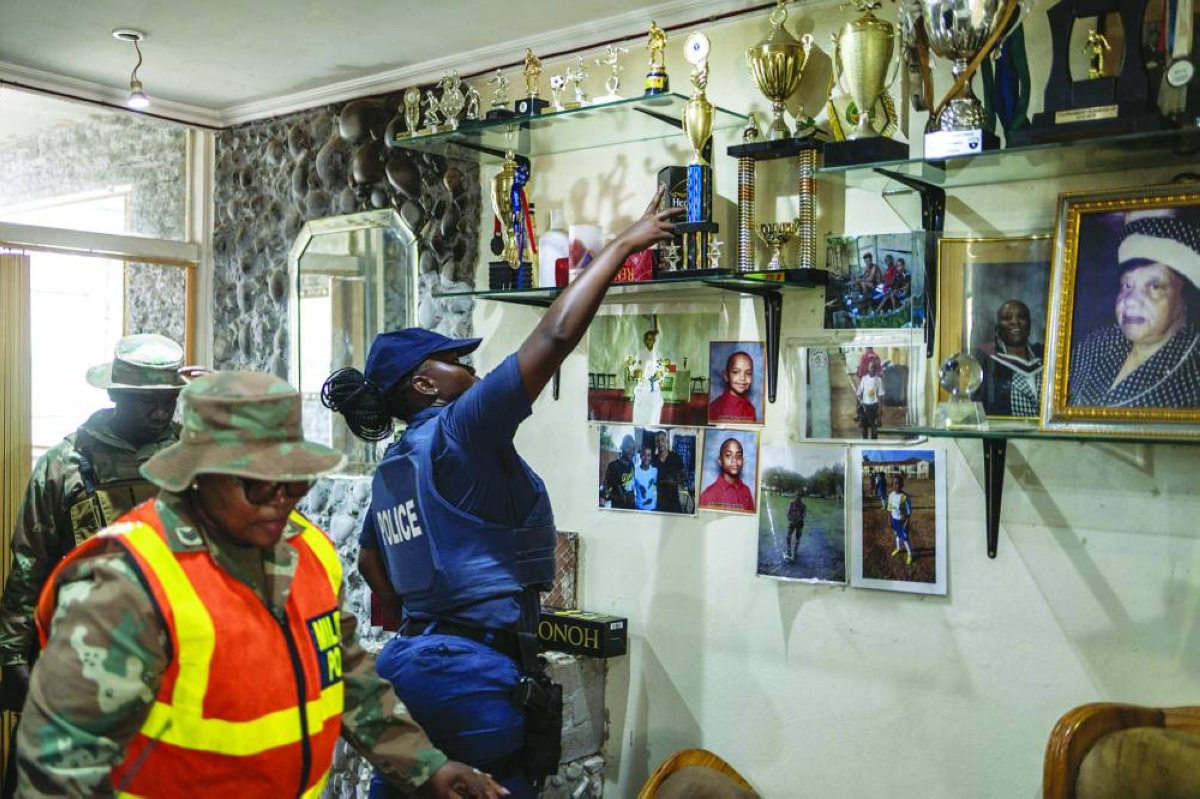
A South Africa Police Service (SAPS) officer searches a house during a joint operation with South African National Defence Force (SANDF) soldiers in Westbury, Johannesburg, Wednesday. (AFP) Soldiers moved into gang-violence hotspots in Johannesburg Wednesday to support police efforts to tackle rampant crime, described by President Cyril Ramaphosa as one of the biggest threats facing South Africa.Around a dozen armoured vehicles rolled into suburbs in western Johannesburg, South Africa's economic powerhouse, to kick off a deployment announced by Ramaphosa a month ago.Armed and uniformed soldiers backed by police conducted house-to-house searches, lifting mattresses and opening cupboards as they asked about drugs and weapons, AFP reporters saw.The areas — including Riverlea and Westbury — are plagued by regular shootings and murders linked to turf wars between gangs."It's a good thing! Now we can sleep in peace," smiled Cecil Witbooi, a 50-year-old resident of Westbury.His street — lined with small, run-down houses — was a regular battleground between rival gangs, he said."Is this the real deal?" an elderly man shouted at a passing army convoy in Riverlea. A woman was murdered in a nearby apartment block this week, he said.Dozens of residents gathered outside a block of crumbling apartment buildings to watch as the convoy pulled in and uniformed soldiers stepped out, some with their faces covered.Children ran around excitedly and even posed for photos inside armoured vehicles.Standing near a wall covered in graffiti of gang insignia, mother-of-three Shai-Anne Fisher, 31, said she hoped the deployment would "bring change"."There's lots of crime, shootings... Children are getting massacred," she said. "This is uplifting us."But others were doubtful. "It's nice they're here, but they're not going to do anything," shrugged 42-year-old Eugene, who only gave his first name for fear of reprisals."Once the criminals get caught, the judges let them out again," he said.A young woman showed a scar on her leg, where she was hit by a bullet two months earlier.Another resident, who asked for anonymity, said South Africa needed more than an army deployment."If they can give people jobs, it will help," she said, estimating that 90% of the block's residents were unemployed.The national joblessness rate hovers near 32%, according to government figures.With children as young as 12 recruited into gangs, stricter laws are needed to keep perpetrators in prison, she said, claiming some police officers were in cahoots with criminals.South Africa's high crime rate includes on average 60 murders a day, many linked to turf battles between gangs involved in drugs and illegal mining."Organised crime is now the most immediate threat to our democracy, our society and our economic development," Ramaphosa said in a state of the nation address last month.The military deployment will last a year and cover five of the nine provinces, including the Western Cape, home to tourist hub Cape Town, according to a plan presented to parliament.The measure has drawn criticism from experts and opposition politicians who say troops lack policing skills.  Related Story

World
Japan markets Fukushima in S.Korea for first time since 2011

Japan markets Fukushima in S.Korea for first time since 2011

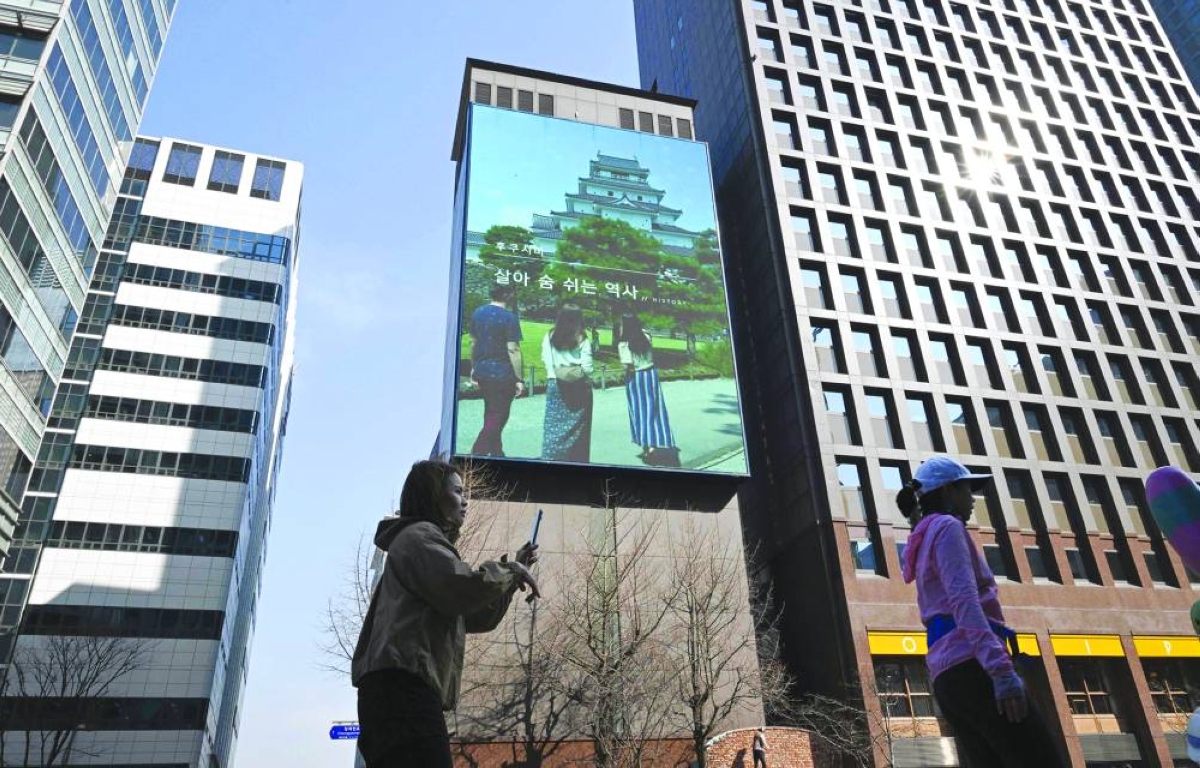
Pedestrians walk past a billboard showing a promotional video for tourism in Japan's Fukushima region, in downtown Seoul Wednesday. (AFP) A tourism video promoting Japan's tsunami-hit Fukushima region is airing on billboards across Seoul, in what a Japanese official called a first since the 2011 nuclear accident.The 30-second clip was produced by Japan's Reconstruction Agency, a government body that deals with the aftermath of the 2011 disaster.It featured several well-known sites and carried captions reading: "Now time to visit Fukushima with 15 years of recovery."The Fukushima catastrophe unfolded in March 11, 2011 when a powerful earthquake and tsunami that killed thousands of people triggered one of the world's worst nuclear accidents."As we reach the turning point marking the 15th anniversary of the earthquake, we hope this will showcase Fukushima's recovery and the appeal of its food and tourism," a representative of the Japanese embassy in Seoul told AFP Wednesday, adding it will run through to Sunday.More than 9.4mn South Koreans visited Japan in last year, making them the largest group among all foreign visitors to the country, according to official Japanese data.But overnight stays by South Koreans in Fukushima are still only about one-tenth of pre-tsunami levels, according to Japan's broadcaster NHK.Since 2013, South Korea has maintained a ban on seafood imports from eight Japanese prefectures, including Fukushima, due to concerns about radiation contamination.China banned imports of Japanese seafood in 2023 after Japan started releasing treated wastewater from the crippled Fukushima plant into the sea.Beijing later resumed some imports but then reportedly reversed course in November as part of an ongoing diplomatic rift with Tokyo. 

World
French aid worker killed in DR Congo air strike

French aid worker killed in DR Congo air strike

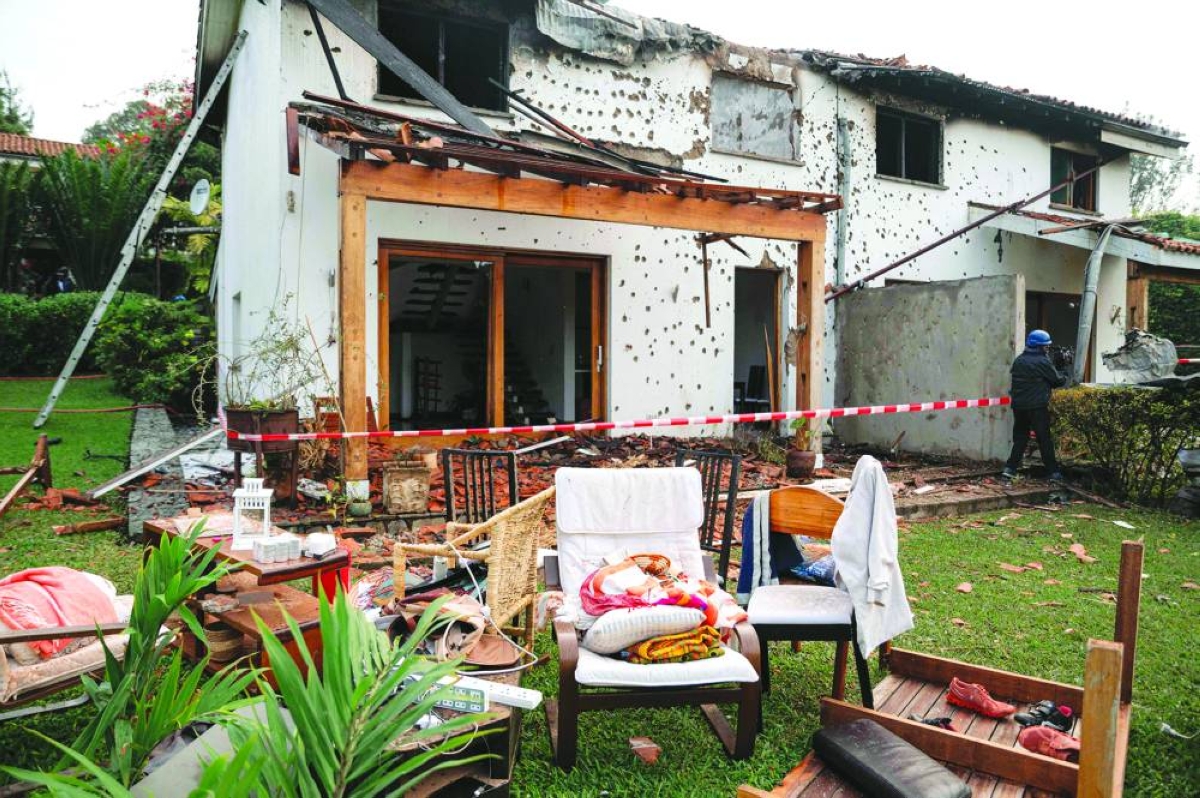
A general view of a private residence damaged by a drone strike, that killed aid worker Karine Buisset, a French national working for Unicef, in Goma, Wednesday. (AFP) A French aid worker for the UN children's agency has been killed in an air strike in the eastern Democratic Republic of Congo in a city controlled by the M23 militia.Since taking up arms again in 2021, the M23 has seized swathes of the mineral-rich Congolese east with Rwanda's backing, unleashing a fresh spiral of violence in a region long plagued by fighting.Despite Rwanda and the DRC signing a peace deal at US President Donald Trump's urging in early December, in the latest attempt to end the conflict, clashes between the M23 and Congolese army have continued.Humanitarian sources reported that several buildings had been targeted in overnight drone strikes, which UN peacekeeping force Monuscosaid also killed two civilians.The strikes' origin remained unclear.The Congolese army, stationed some several hundred kilometres from Goma, regularly launches long-range drone strikes on the M23's positions in the east.According to security sources, the M23 likewise makes use of explosive drones at the front.The sound of bomb blasts and buzzing drones rang out in several residential neighbourhoods of Goma, a large provincial capital near the border with Rwanda which the M23 seized in a lightning offensive in early 2025, witnesses said.European Union crisis management commissioner Hadja Lahbib said on X that "a drone strike hit a residential building in Goma" where aid workers and EU Civil Protection and Humanitarian Aid staff live.French President Emmanuel Macron said on X that "a French Unicef humanitarian worker has been killed in Goma. I extend the nation's support and sympathy to her family, loved ones and colleagues".He urged "respect for humanitarian law and for the personnel who are on the ground and committed to saving lives".Unicef Executive Director Catherine Russell said the agency was "devastated and outraged by the killing of our colleague Karine Buisset in a reported drone attack"."Civilians, including aid workers, must never be targeted," she said on X.HOUSE HITHumanitarian sources and rescuers at the site said Buisset was killed during an overnight strike on a house where she was staying.The building is in Himbi, a residential neighbourhood of Goma on the shores of Lake Kivu where many expatriates, staff members and headquarters of humanitarian organisations are based.Large residences in the area were requisitioned by M23 leaders after they seized the city.Security sources contacted by AFP said they believed the strikes were targeting officials or allies of the armed group and that the house where the aid worker was staying was hit by mistake.The sources said former president Joseph Kabila, whom Kinshasa has sentenced to death in absentia for his alleged M23 support, has a residence nearby.One humanitarian worker told AFP he heard two explosions: the first was preceded by the sound of drones, then a second one, followed by the sound of a drone moving away from the site.Firefighters, UN employees and officials from the M23 were present at the severely damaged and partially burnt-out site early Wednesday.No debris of a drone or projectile has yet been identified, emergency teams said.An M23 spokesman on X accused Kinshasa of carrying out the strike. Congolese authorities have yet to make a statement.For three decades, the mineral-rich Congolese east has been riven by fighting between dozens of armed groups, with foreign armies wading in from time to time.A half-dozen ceasefires hoping to end the M23 conflict have been brokered before being broken in short order.In early March, the M23 announced the death of one of its spokesmen, Willy Ngoma, in a drone strike near the Rubaya mine in North Kivu province.The mine is under the M23's control and a key source of revenue for the armed group.UN experts believe Rwanda uses the M23 to help control the Congolese east's rich veins of critical minerals, notably the coltan key to the manufacture of mobile phones and electric car batteries.In early March, the US announced sanctions against the Rwandan army as a result of its support for the M23.Rwanda denies backing the group but says it faces an existential threat from the presence in the eastern DRC of armed groups linked to the 1994 Rwandan genocide of the Tutsis.  Related Story

World
Egypt raises fuel, natural gas prices amid global energy pressures

Egypt raises fuel, natural gas prices amid global energy pressures

Egypt on Tuesday raised the prices of several petroleum products and natural gas for vehicles, citing exceptional conditions in global energy markets and rising import and production costs.In a statement, Egypt's Ministry of Petroleum and Mineral Resources said the price of 95-octane gasoline increased from EGP 21 to EGP 24 per liter, while 92-octane gasoline rose from EGP 19.25 to EGP 22.25 per liter and 80-octane gasoline from EGP 17.75 to EGP 20.75 per liter.The price of diesel was raised from EGP 17.5 to EGP 20.5 per liter, while the price of a 12.5 kg butane cylinder increased from EGP 225 to EGP 275. The price of natural gas for vehicles was also raised from EGP 10 to EGP 13 per cubic meter.The ministry the price adjustments come amid exceptional conditions in global energy markets, driven by geopolitical developments in the Middle East and their direct impact on energy supply and costs.It added that supply chain disruptions, elevated risk levels, and higher maritime shipping and insurance costs have contributed to a sharp rise in global crude oil and petroleum product prices, reaching levels not seen in energy markets for years.The ministry stressed that the measures are part of efforts to manage current global challenges responsibly, while ensuring energy security and maintaining the stability of the domestic market.According to data released by the Central Bank of Egypt on March 9, the average exchange rate of the US dollar against the Egyptian pound stood at EGP 52.72. 

World
Escalation in the Middle East threatens regional, global economic stability: AU Commission Chairperson:

Escalation in the Middle East threatens regional, global economic stability: AU Commission Chairperson:

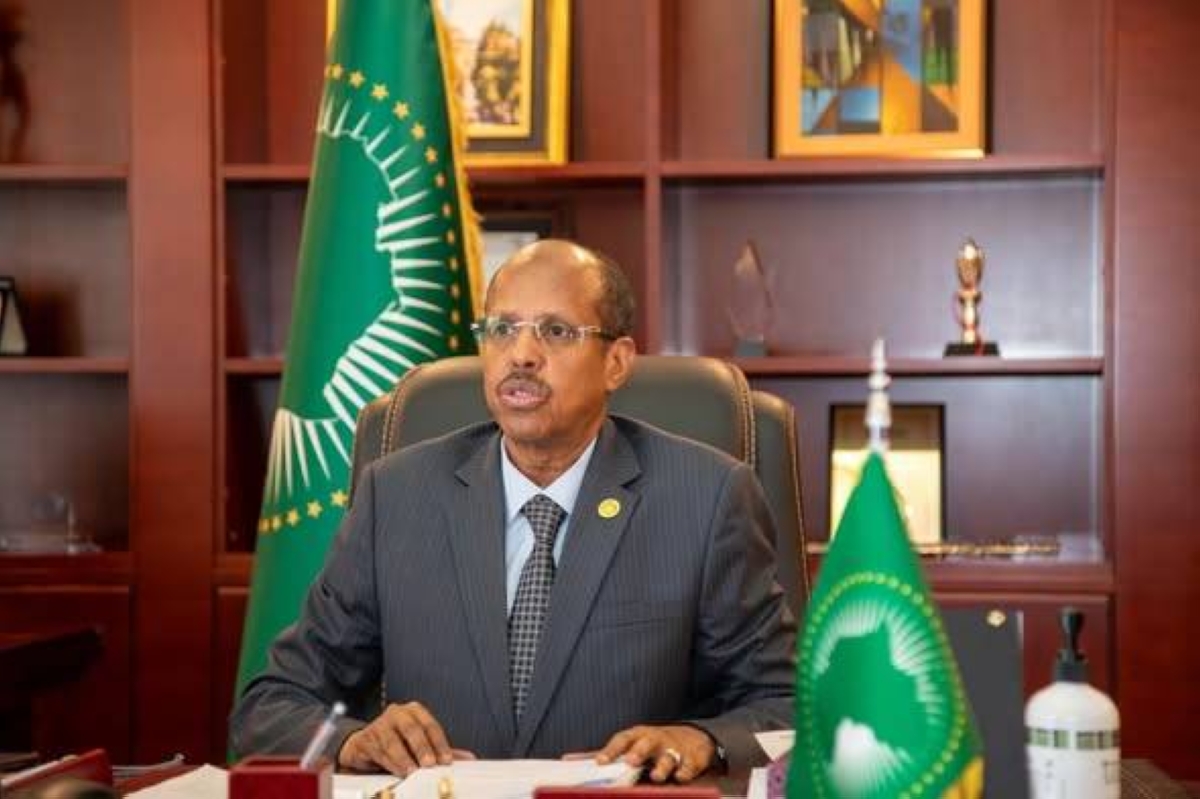
African Union (AU) Commission Chairperson Mahmoud Ali Youssouf warned that military escalation in the Middle East threatens regional and global economic stability. He expressed deep concern over recent attacks on critical infrastructure, including energy and transport facilities, which further heightened tensions and are threatening regional and global economic stability.​Highlighting that such actions are disrupting vital supply chains and have far-reaching implications for international trade and energy markets, he condemned any violation of international law, including infringements on the sovereignty and territorial integrity of states.​He called on all related parties to exercise maximum restraint, prioritize dialogue and diplomacy, and work toward a swift de-escalation of the situation, in accordance with the principles and objectives of the United Nations Charter.

World
Turkiye deploys patriot system as part of NATO defense

Turkiye deploys patriot system as part of NATO defense

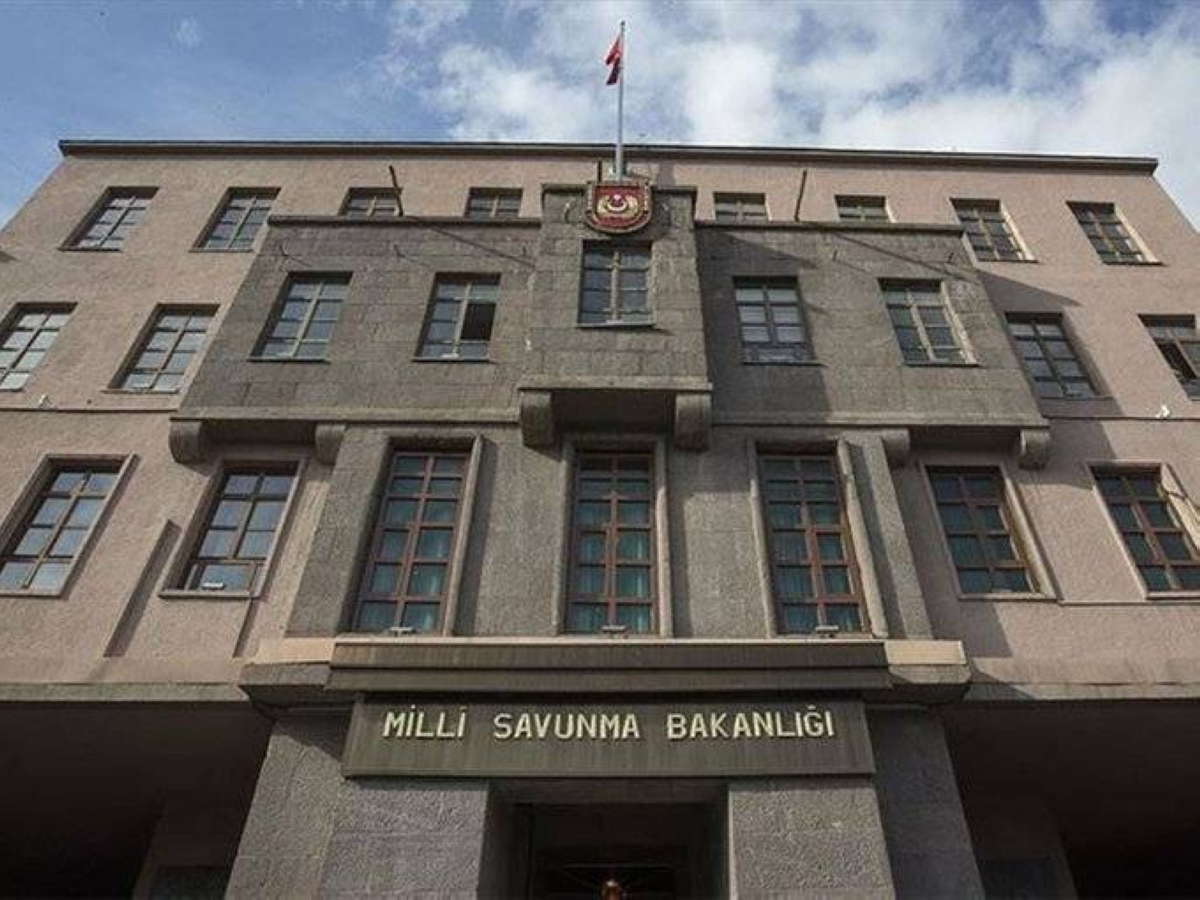
Turkiye on Tuesday announced the deployment of the US-made Patriot air defense system in the eastern province of Malatya as part of NATO's collective defense arrangements, in a move aimed at strengthening the country's air defenses amid rising regional tensions.In a statement, the ministry said the deployment is intended to enhance Turkiye's air defense capabilities in light of evolving security developments in the region and to safeguard the country’s airspace and critical infrastructure.The Malatya region represents a key component of NATO's missile defense architecture, hosting the alliance's Kurecik radar base, which is used for early warning and the detection of missile threats.The move comes amid escalating military tensions in the region, prompting Turkiye to bolster its defensive measures in coordination with NATO allies.The ministry added that NATO's air and missile defense forces had successfully intercepted a ballistic missile launched from Iran after it entered Turkish airspace on Monday. 

World
India tightens gas supplies over Mideast war, restaurants warn of closures

India tightens gas supplies over Mideast war, restaurants warn of closures

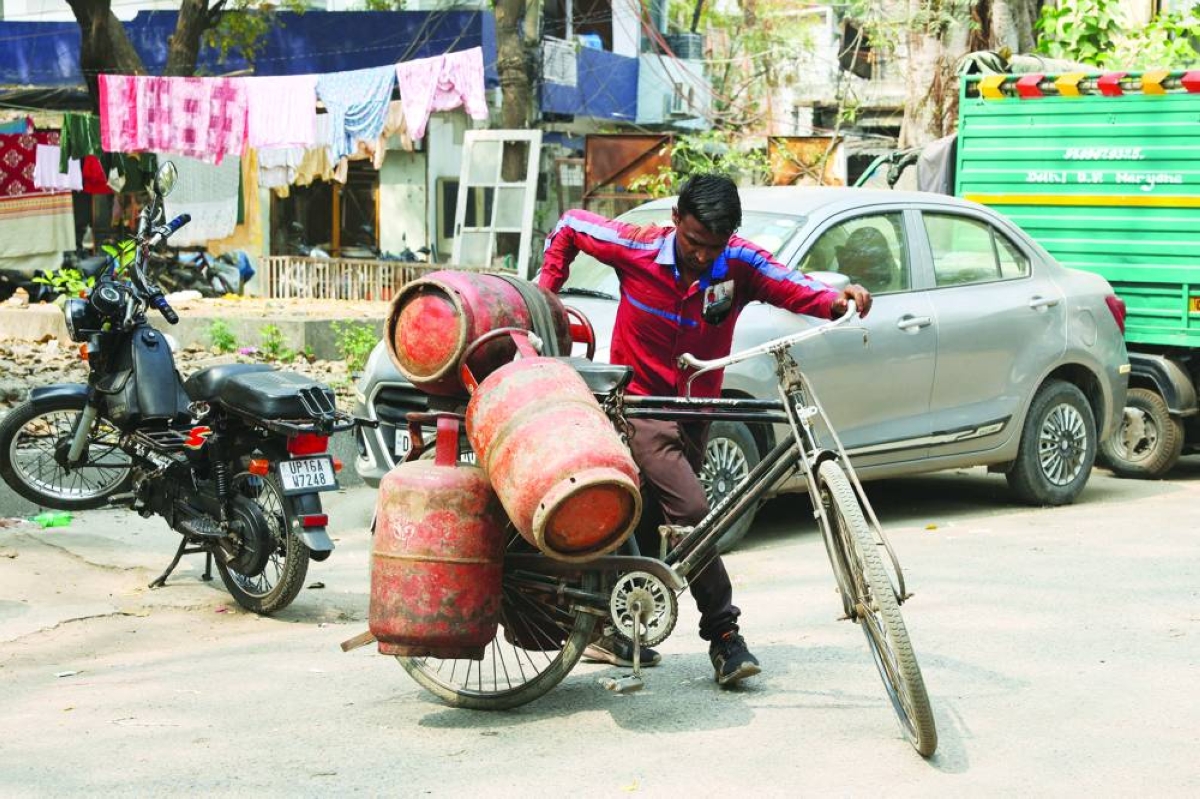
A delivery person carries LPG cylinders on a cycle, amid supply disruptions following the US-Israeli conflict with Iran, in New Delhi, Tuesday. (Reuters) India ordered tighter controls over natural and cooking gas Tuesday following import disruptions caused by the Middle East war, with restaurants warning it could spark widespread closures.The world's most populous nation is the fourth largest liquefied natural gas (LNG) buyer, and second-largest buyer of liquefied petroleum gas (LPG), such as that used for cooking — much of which is sourced from the Middle East."The ongoing conflict in the Middle East has resulted in the disruption of liquefied natural gas shipments through the Strait of Hormuz," the Ministry of Petroleum said in an order issued Tuesday.It said the new rules would "ensure equitable distribution and continued availability for priority sectors".The ministry ordered that LNG supplies be prioritised to supply households, transport sectors and production of LPG."We are committed to ensure uninterrupted supply of affordable energy to our domestic consumers," petroleum minister Hardeep Singh Puri said in a social media post, adding there was "no reason to panic".But other sectors, including fertiliser plants and tea industries, would receive 70 to 80% of consumption needs, "subject to operational availability", the ministry said.To meet the gap, gas supplied to petrochemical facilities and power plants would either be fully or partially curtailed.Indian industries including several ceramics and tile firms have already said they are facing a cutback in gas supplies that could impact production.Restaurants and hotels across India also warned of disruptions to operations, after a separate ministry order on Monday that prioritised domestic LPG supplies to households.The National Restaurant Association of India warned that the government order had resulted in LPG suppliers "across the country" signalling that supplies to eateries would be stopped."The restaurant industry is predominantly dependent on commercial LPG for its operations," it said in a statement. "Any disruption therein will lead to a catastrophic closure of majority of restaurants."PC Rao, head of a hotel industry association in the southern tech-city Bengaluru, said the "situation was dire"."Supply of gas has been hit and many of the smaller establishments only have one to two days of stock left," Rao told AFP."The big ones probably have about 10 days worth remaining. Now, people will look to change or restrict their menus bearing in mind the situation."  Related Story

World
Troops guard Bangladesh depots as fuel crunch hits Asia

Troops guard Bangladesh depots as fuel crunch hits Asia

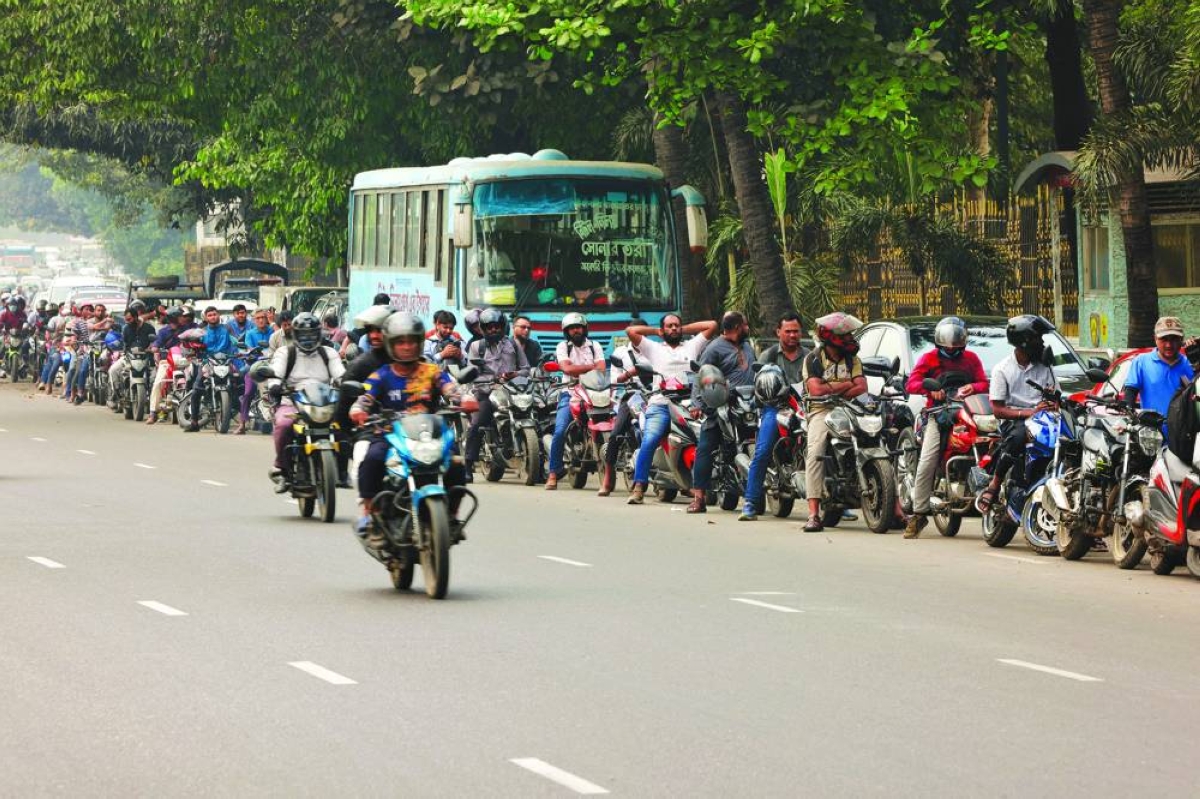
Motorists stand in a long queue at a fuel station, as concerns grow over fuel supply amid US-Israel conflict with Iran, in Dhaka, Tuesday. (Reuters) The oil price spike caused by the war in the Middle East has sparked unrest in Bangladesh and exasperation at petrol pumps around Asia, where many economies are heavily dependent on fossil fuel imports.Even as governments move to limit the impact on fuel prices, lines have formed at petrol stations in countries including Vietnam, Pakistan and the Philippines, although the situation remains stable elsewhere.In Bangladesh — which imports 95% of its oil and gas needs — the military has been deployed at major oil depots, as police patrol in and around filling stations."We haven't received supply from the depot, but the bike riders weren't convinced and vandalised the station," said petrol station worker Ashrafuzzaman Dulal told AFP, describing violence on Sunday.Tuesday his station Shahjahan Traders, one of the oldest in the capital Dhaka, had hung a banner apologising because its stock had run out.The South Asian nation of 170mn people has started fuel rationing, sent students home and scrapped celebratory light displays over the energy crunch.One man was killed on Saturday night in the southern Bangladeshi district of Jhenaidah after an altercation over refuelling with staff.Following the 25-year-old's death, angry crowds torched three buses and vandalised a filling station, police said.Tuesday, queues stretched for 1.5 kilometres (nearly one mile) through Dhaka's city centre."My boss left the car here and took a rickshaw to reach his destination," Kamrul Hasan, who was waiting in a vehicle almost at the end of the queue, told AFP.Filling station worker Akhtar Hossain said he had not stopped for hours."Even during the Gulf War, we didn't experience this sort of rush," Hossain told AFP.Oil prices fell Tuesday after US President Donald Trump said the US-Israel war on Iran could end "very soon".The previous day, the price of benchmark crude had rocketed past $100 a barrel — its highest level since Russia's invasion of Ukraine in 2022.The market instability came as Iran targeted the crude-rich Gulf with missile and drone barrages.Maritime traffic in the Strait of Hormuz — a key Gulf waterway through which a fifth of global crude passes — has also all but halted since the war broke out.Thousands of motorbike riders queued for fuel Tuesday in Vietnam, where prices for unleaded gasoline have surged more than 20%.Vietnam has so far avoided mass shortages, with the government scraping duties on many imported petroleum products.A 57-year-old who gave his name as Tuan told AFP at a Hanoi petrol station that he was "so, so angry"."I have been waiting in line for almost one hour. Then my turn came, and they said their system is down," he said as dozens of drivers waited but others gave up.Vehicles also lined up in scorching heat at Philippine petrol stations this week, as officials warned against hoarding fuel, with similar scenes unfolding in Pakistan and Sri Lanka.Enrico Guda, a gas station attendant in Metro Manila, said the station had double its usual daily workload as people rushed to fuel up before prices jumped.In Myanmar, which imports 90% of its fuel oil and has long suffered from a fragile energy supply chain owing to the civil war consuming the country, traffic curbs are in place.From Saturday, half of private vehicles have been ordered off the roads each day to preserve oil stocks."Some drivers depend on their vehicles for work and survival... the new system has made it harder for them to run their businesses," said Hla Htay, 56, a car rental business owner.In the Myanmar frontier town of Tachileik, an AFP reporter saw signs cross-border supplies from Thailand had been cut — with some petrol stations shut last week after an up-to threefold price spike the day before.In several other Asian countries, from Japan to Indonesia, as well as China, India and Afghanistan, panic appears not yet to have hit, apart from a few sporadic queues for petrol."I used to fill up regularly once a week, but now I try to fill up whenever I find a cheaper gas station," South Korean businessman Lee In-tae, 42, told AFP in Seoul.  Related Story