admin
admin 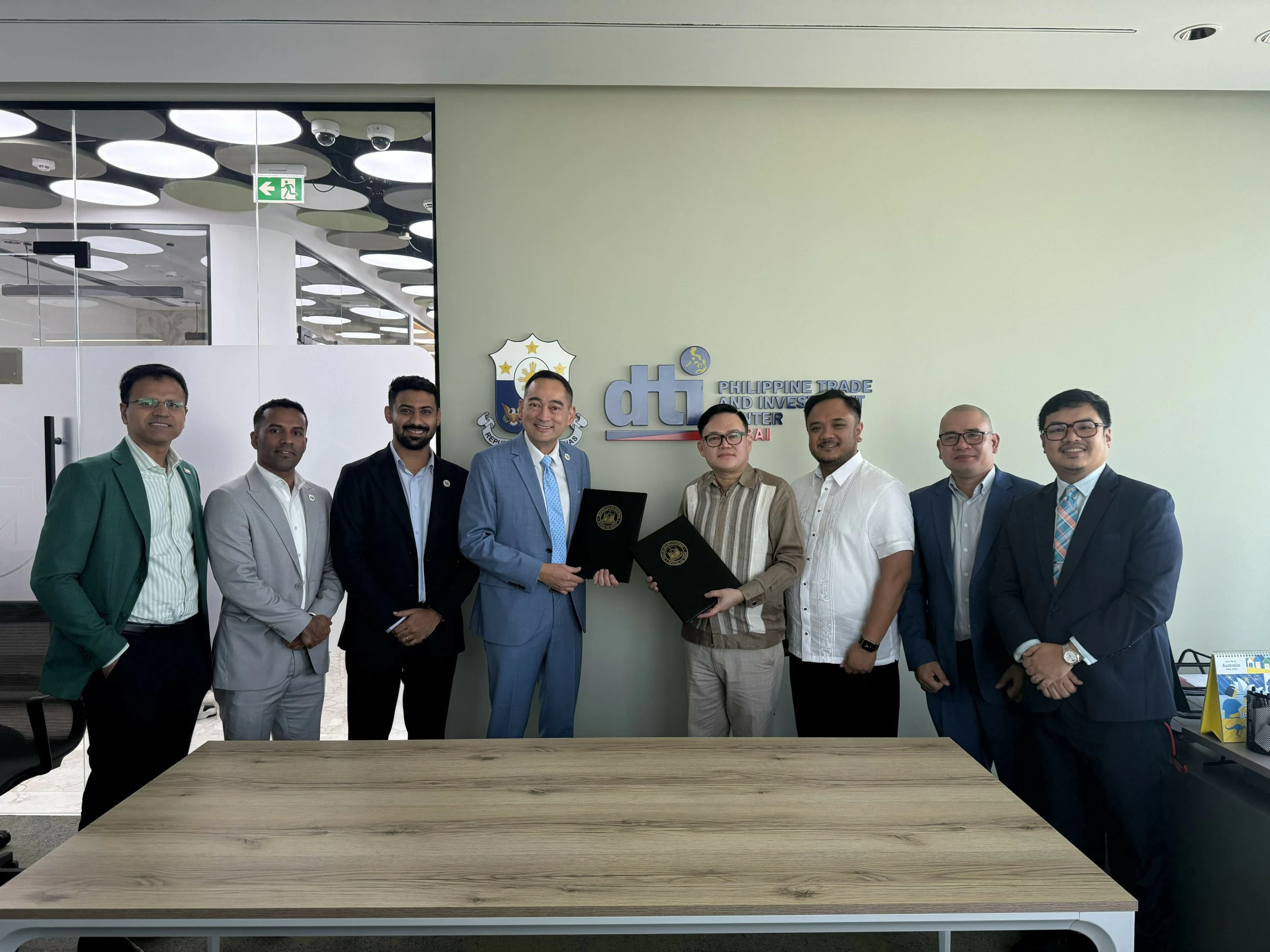
Rebound from the 2024 to 2025 sales slump of Philippine coconut products and by-products to the Gulf countries is expected as early as early next year with the activation of a Philippine Trade and Investment Centre-Dubai (PTIC-Dubai)-initiated flagship project in partnership with a UAE-based import and distribution company that operates under the Sharjah Cooperative Group.
“Project Cocobridge,” split into three phases – Market Readiness, Business Matching (Aug. 11-12), and Retail Activation and Consumer Engagement (Dec. 2026) – began on July 13.
The Memorandum of Understanding signing between Philippine Trade Commissioner Vichael Angelo Roaring and “competitive bidding” winner The Hub Trading and Logistics Services LLP SP (The Hub) Filipino Managing Director Aurelio III Suzara German took place on June 26.
Witness to the signing, held at the PTIC-Dubai headquarters. were Philippine Consul General in Dubai and the Northern Emirates Ambrosio Brian Enciso III, Agriculture Attache Michael Sollera, Philippine Consulate General-Economic/Cultural/Public Diplomacy Vice Consul Jim Jimeno. From The Hub were Marketing Manager Divyen Nitin Dhotre, B2B Purchase Manager Sharief Odvancad Hussain, and Sales Manager Anthony Morais Dolefy Antonio Morai.
According to Roaring, the project “was developed to address the gap between the Philippines’ position as one of the world’s leading coconut producers and the relatively limited presence of Philippine coconut brands in the UAE retail market.”
“We aim to go beyond the traditional trade promotion by supporting Philippine coconut enterprises in market preparation, connecting them with UAE buyers and retailers, and facilitating commercial opportunities that can lead to sustained growth,” he added.
Roaring continued: “The UAE is a strategic market because of its strong retail and distribution infrastructure and its position as a gateway to the wider GCC market.”
“Project Cocobridge” moreover is part of the Coconut Farmers and Industry Development Plan (CFIDP), the lead stakeholder of which is the 1973-established Philippine Coconut Authority. It is supported by the 2021 Coconut Farmers and Industry Trust Fund that manages and utilises the multi-billion coconut levy assets collected from the farmers since the 1970s and during the term of the late President Ferdinand Marcos Sr.
Under the CFIDP 2024-2028 that amended the CFIDP 2022-2026, are seven intervention measures for a much-structured pathway towards the Philippines’ coconut industry modernisation programme that shall increase the productivity and income of all the farming households, estimated at 20 million across the archipelago.
Enquired on the export capability and ability of the Philippines, as Gulf Today has observed the minimum presence or even the absence of coconut products and by-products, at least in Sharjah in the past several years, Roaring said: “The challenge has been less about the country’s ability to produce coconut products and more about strengthening market access, brand visibility, market readiness, and direct connections with overseas buyers and consumers.”
“The Philippines has significant production capacity, processing capabilities, and experience in supplying a wide range of export-quality coconut products,” he said. Established coconut enterprises have been exporting coconut water, coconut water, coconut oil, desiccated coconut, and coconut sugar worldwide, for decades.
Roaring provided the July 15, 2026 data from the Philippines’ Department of Trade and Industry-Export Marketing Bureau (DT-EMB) and the Philippine Statistics Authority. From Jan to May 2026, exports of food-based coconut products which includes various product categories, were at $1.70 billion; Gulf countries, $1.01 million and to the UAE, $478,182.
The global exports, from 2023 to 2025, rose from $1.73 billion to $2.85 billion in 2024 and $3.78 billion last year. The Gulf exports shrunk from $9.48 million in 2023 to $4.71 million in 2024 and $3.21 million in 2025. On the UAE side, it was $5.98 million in 2023 to $2.84 million in 2024 to $1.79 million in 2025.
Initial target for the “Project Cocobridge” are 20 to 30 CFIDP beneficiary brands. Roaring said: “It reflects the DTI’s commitment to creating sustainable market opportunities for Philippine products in the UAE.”
The Hub’s German said: “The UAE presents significant opportunities for Philippine coconut brands given its dynamic retail environment and strategic position as a gateway to the GCC market. We look forward to supporting Philippine enterprises in navigating the market, building partnerships, and establishing a stronger presence in the region.”
Consul General Enciso said: “Project Cocobridge is an important step in bringing Philippine coconut products closer to the UAE market. It ensures that our farmers and enterprises are better positioned to benefit from expanding trade opportunities.”