1. Home
  2. Author Blogs

Author: admin

admin

Entertainment
Alleged WHCD Gunman’s Lawyer Files Emergency Motion To Visit Him In Jail

Alleged WHCD Gunman’s Lawyer Files Emergency Motion To Visit Him In Jail

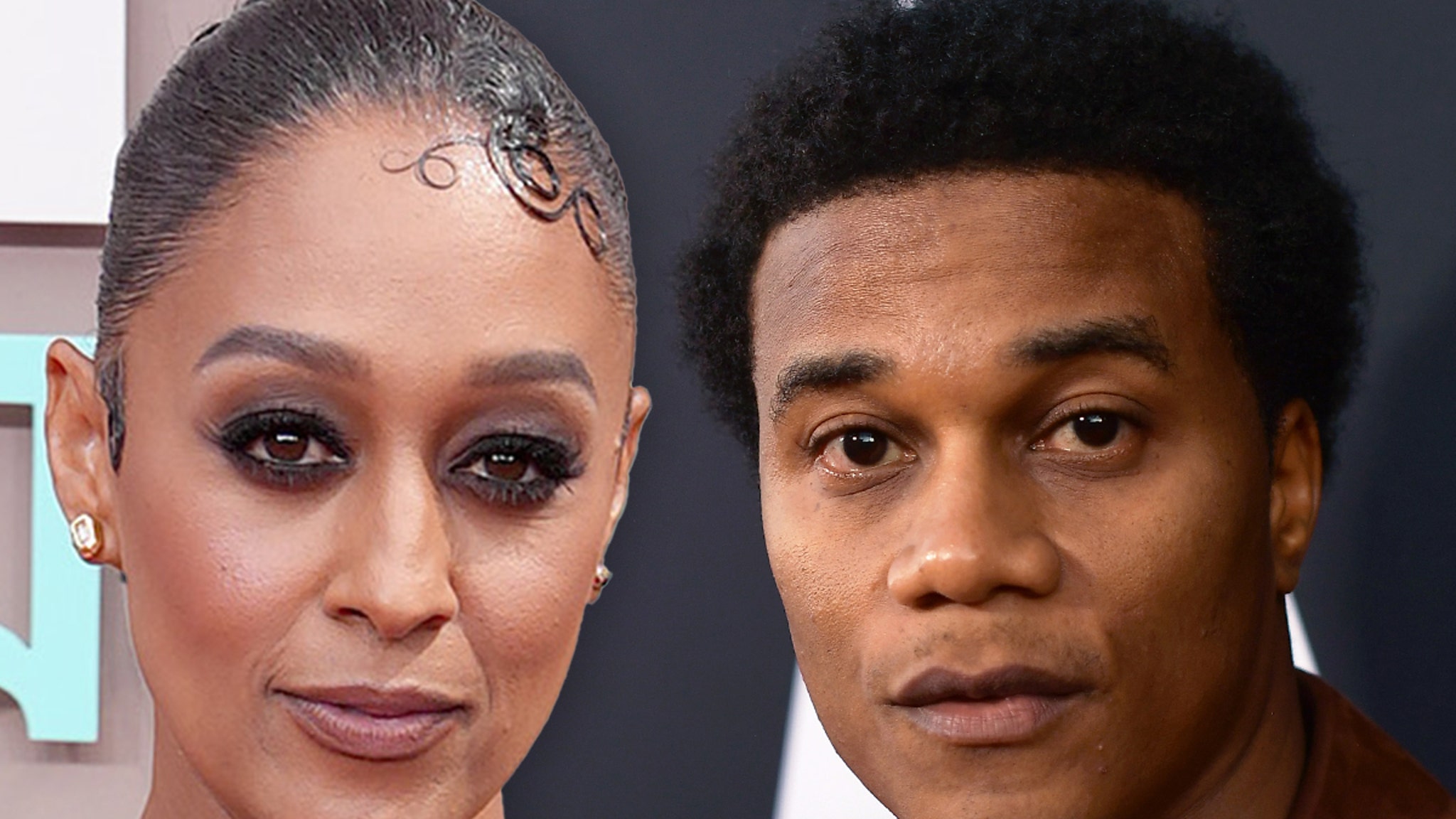
Alleged WHCD Gunman Lawyer Wants Private Visit With Him ASAP Published April 29, 2026 2:49 PM PDT The feds aren't allowing White House Correspondents' Dinner alleged gunman, Cole Allen, to speak with his attorney in

World
Families of Canadian mass shooting victims sue OpenAI, CEO Altman in US court

Families of Canadian mass shooting victims sue OpenAI, CEO Altman in US court

A woman visits a makeshift memorial on the steps of the town hall in the town of Tumbler Ridge, British Columbia, (Reuters/File Photo) Family members of victims of one of Canada’s deadliest mass shootings sued OpenAI and its CEO Sam Altman in US court Wednesday, alleging the ‌company identified the shooter as a credible threat eight months before the attack but did not warn police. The lawsuits, ​filed in federal court in San ‌Francisco, accuse OpenAI leaders of not alerting police because it would have exposed the volume of violence-related conversations ‌on ChatGPT and potentially jeopardised the company’s path to a ‌nearly $1 trillion initial public offering. The February shooting in Tumbler ‌Ridge, British Columbia left nine people dead, many of them children. An OpenAI spokesperson called the shooting “a tragedy” and said the company has a zero-tolerance policy for using its tools to assist in committing violence. “As we shared with Canadian officials, we have already strengthened our safeguards, including improving how ChatGPT responds to signs of distress, connecting people with local support and mental health resources, strengthening how we assess and escalate potential threats of violence, and improving detection of repeat policy violators,” the spokesperson said in a statement. The cases are part of a growing wave of lawsuits accusing artificial intelligence companies of failing to prevent chatbot interactions that plaintiffs say contribute to self-harm, mental illness and violence. They appear to be the first in the US to allege that ChatGPT played a role in facilitating a mass shooting. Jay Edelson, who is representing the plaintiffs, said he plans to file another two dozen lawsuits in the coming weeks against the company on behalf of other people impacted by the shooting. Jesse Van Rootselaar, ‌whose interactions with ChatGPT are at the center of the lawsuits, shot her ​mother and stepbrother at home before killing an educational assistant and five students aged 12 to 13 at ​her former school on February 10, according to police. Van Rootselaar, who was 18, then died by suicide. The plaintiffs include relatives of those killed at the school and a 12-year-old girl who survived after being shot three times but remains in intensive care. According to one of the complaints, OpenAI’s automated systems in June 2025 flagged ChatGPT conversations in which the shooter described gun violence scenarios. Safety team members recommended contacting the police after concluding she posed a credible and imminent threat of harm, said the complaint, which cites a Wall Street Journal article from February about the company’s internal discussions. But Altman and other OpenAI leadership overruled the safety team and police were never called, the lawsuit alleges. The shooter’s account was deactivated, but she was able to get a new account and continue using the platform to plan her attack, the lawsuit claims. Following ‌the publication of the Wall Street Journal article, ‌the company said the account was flagged by systems that identify “misuses of our models in furtherance of violent activities” but the issues did not meet its internal criteria for reporting to law enforcement. Last week, a local Tumbler Ridge newspaper published an open letter in which Altman said he was “deeply sorry” the account was not flagged to law enforcement. In a blog published Tuesday, OpenAI said it trains its models to refuse requests that could “meaningfully enable violence,” and notifies law enforcement when conversations suggest “an imminent and credible risk of harm to others,” with mental health experts helping assess borderline cases. The company said it continually refines its models and detection methods based on usage. The lawsuits seek an unspecified amount of damages and a court order requiring OpenAI to overhaul ​its safety practices, including mandatory law enforcement referral protocols. One of the victims originally filed her lawsuit in Canadian court but dismissed it to pursue her claims in California, Edelson said. The lawsuits over the Tumbler Ridge shooting come after multiple lawsuits against OpenAI have been filed in US state and federal court in recent months over claims ChatGPT facilitated harmful behavior, suicide, and, in at least one case, a murder-suicide. The lawsuits, which are still in early phases, will force courts to grapple with what role an AI platform can play in promoting violence and whether the company can be held liable for its actions or the actions of its users. OpenAI has denied the claims in the lawsuits, arguing in the murder-suicide case that the perpetrator had ‌a long history of mental illness. Florida Attorney General James Uthmeier announced earlier this month a criminal investigation into ChatGPT’s role in a 2025 shooting at Florida State University.  Related Story

Sports
Mainoo signs new five-year Man Utd contract

Mainoo signs new five-year Man Utd contract

Kobbie Mainoo has signed a new contract at Manchester United that will keep him at Old Trafford until 2031, bringing an end to months of uncertainty over his future.The 21-year-old, who joined United's academy in 2014, has already made 98 appearances for the club, scoring seven goals, including in the FA Cup final win against Manchester City in 2024.Mainoo fell out of favour under former boss Ruben Amorim and had a request to leave on loan in August rejected.He started just one game all season - the League Cup loss to Grimsby on penalties - under the Portuguese, who was sacked in January.That led to growing speculation that the future of the boyhood United fan could lie away from Old Trafford.But Mainoo has been rejuvenated under Michael Carrick, who was appointed as head coach until the end of the season after Amorim was fired.The midfielder has started all but one game since then, playing a key role as United have climbed to third in the Premier League, all but securing a return to the Champions League.'Manchester United has always been my home - this special club means everything to my family,' said Mainoo.'I have grown up seeing the impact that our club has on our city, and I relish the responsibility that comes with wearing this shirt.'He added: 'We can all feel the momentum building inside the club. I am determined to step up and play my role in helping Manchester United to regularly fight for major trophies in the years ahead.'Jason Wilcox, United's director of football, hailed Mainoo as one of the most 'naturally gifted young footballers in the world'.'His technical ability, dedicated professionalism and humble personality make him the perfect role model for our young players and a true credit to our outstanding academy system,' he said.'We are delighted that Kobbie has extended his stay here and have full confidence that he will develop into one of the best players in the world, ready to play a pivotal role in a Manchester United team challenging for the biggest honours.'Mainoo has also regained his place in the England set-up under Thomas Tuchel, featuring in friendlies in March against Uruguay and Japan. 

Sports
Atletico hit back to hold Arsenal in cagey semi-final

Atletico hit back to hold Arsenal in cagey semi-final

Atletico Madrid’s Marc Pubill (right) and Arsenal’s Piero Hincapie battle for the ball during the Champions League first leg semi-final in Madrid. (Reuters) Julian Alvarez’s penalty secured Atletico Madrid a 1-1 draw against Arsenal in a nervy Champions League semi-final first leg clash. Viktor Gyokeres sent the Premier League leaders ahead from the spot just before the interval after he was fouled, but Alvarez followed suit 10 minutes into the second half after Ben White’s handball. Arsenal were upset at a late penalty decision being overturned following a VAR review when David Hancko made contact with Eberechi Eze in the area. Atletico had the better for long periods but Arsenal’s solid defending helped them leave the Spanish capital in a good position to return to the Champions League final 20 years after their last appearance. “We were the team we have to be, if we play at this level we can win,” said Atletico captain Koke of his team’s second-half display. “From my point of view they didn’t create much danger against us... the team defended well and they just had that penalty.” What the game lacked in the dizzying goal rush of Paris Saint-Germain’s 5-4 win over Bayern Munich in the other semi-final the night before, it replaced with tension and a desperation not to fall behind. Toilet paper rained down from the stands of the Metropolitano stadium minutes before kick-off, in a striking – if wasteful – display, which invited cynical jokes from some quarters about the calibre of the spectacle ahead. In a tussle between arguably the continent’s two biggest teams never to lay a finger on the trophy neither wanted to blink first. Atletico still have an outdated defensive reputation but pinned Mikel Arteta’s miserly Arsenal back in the early stages, with David Raya tipping Alvarez’s shot around the post. The Gunners, a long way from Arteta’s eve-of-the-game demand they dominate proceedings, looked to smash and grab, with Marc Pubill blocking from Martin Odegaard on a quick breakaway. Noni Madueke, starting on Arsenal’s right flank with Bukayo Saka only fit for the bench, hammered just wide from distance as last year’s beaten semi-finalists sporadically emerged from their half. The next time they did, Gyokeres won a penalty. The Swedish striker, who might not have started if Kai Havertz was fit, exchanged passes with Martin Zubimendi and Hancko clumsily shoved him in the back from behind. Diego Simeone and Atletico veteran Antoine Griezmann begged for the decision to be reviewed but VAR saw no reason to intervene. Gyokeres took the spot-kick himself, walloping it past Jan Oblak, who dived the right way but stood no chance of keeping it out. Three-time runners-up Atletico, back in the semi-finals for the first time in nine years, came out guns blazing in the second half. Raya saved Ademola Lookman’s drive with Gabriel blocking Griezmann’s follow-up. The hosts pulled level from the penalty spot after White handled Marcos Llorente’s shot, the ball bouncing up and hitting his arm, which was away from his body. Alvarez took it, and having missed in Atletico’s Copa del Rey final shoot-out defeat earlier in April, this time made no mistake with an unforgiving blast rivalling Gyokeres’s first-half effort. MLS-bound Griezmann looped a shot off the crossbar and then sent the rebound off target as Atletico turned the screw in pursuit of an advantage to take into next Tuesday’s second leg. Nigeria international Lookman twice came close and could end up ruing his missed chances.  Related Story

Sports
Pogacar wins opening full stage to take Tour de Romandie lead

Pogacar wins opening full stage to take Tour de Romandie lead

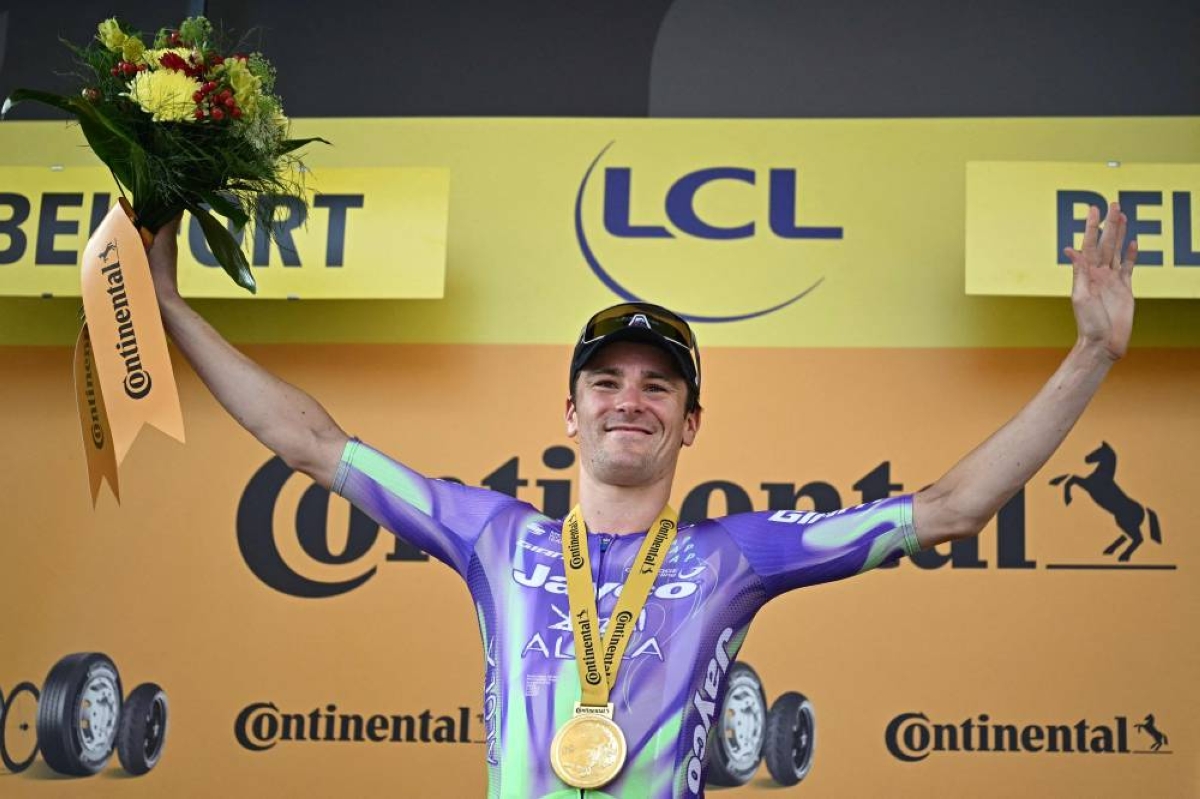
UAE Team Emirates-XRG’s Slovenian rider Tadej Pogacar celebrates as he crosses the finish line to win the first stage of the Tour of Romandie UCI cycling World tour, a 171.2 km loop from Martigny-Ville to

Sports
Qatar to host FIFA U-17 World Cup in November–December

Qatar to host FIFA U-17 World Cup in November–December

Qatar will host the FIFA Under-17 World Cup in November and December, the sport’s global governing body and local organisers have announced. The tournament will take place from 19 November to 13 December in the FIFA World Cup 2022 host nation and will be contested by 48 teams, a statement by the local organising committee in Qatar said Wednesday. The prestigious youth tournament returns to Qatar, marking the second of five consecutive editions that the country will host annually through 2029. Following a landmark 2025 tournament that saw Qatar hosting the first-ever FIFA competition to feature 48 teams, this year’s edition will continue the expanded format, welcoming tomorrow’s stars to compete for the coveted trophy. The final draw scheduled for 21 May in Zurich, Switzerland. Matches will be held at the state-of-the-art Competition Complex in Aspire Zone, which will once again transform into a vibrant football hub for fans and players. The tournament’s centralised hosting concept formed the cornerstone of the fan experience in 2025, with more than 197,460 spectators in attendance across 104 matches over 15 match days. A total of 130 football scouts from leading football clubs around the world also benefitted from the venue’s compact nature, allowing them to observe talents from a single venue. With the 2025 edition serving as a launch pad for rising stars, such as Egypt’s Hamza Abdelkarim, Mali’s Seydou Dembelé,Belgium’s Jesse Bisiwu and Nathan De Cat, and Italy’s Samuele Inacio among many others, all eyes will now be on the next generation of talents at the 2026 edition. The final will be held at the renowned Khalifa International Stadium, where Portugal was crowned champions last year in front of 38,901 spectators. This year, Khalifa International Stadium marks 50 years since its inauguration in 1976. As part of its illustrious legacy, the venue has hosted several premier sporting events, including matches of the historic FIFA World Cup Qatar 2022. The stadium is set to host the Amir Cup Final 2026 on May 9.  Related Story

World
Uganda kindergarten murderer sentenced to death

Uganda kindergarten murderer sentenced to death

This picture taken last month shows Christopher Okello Onyum escorted by Uganda Prison guards during his trial at the Ggaba Community Church Grounds in Kampala. AFP A Ugandan court has sentenced a man to death for killing four young children this month at a nursery school, in an attack that sparked public outrage and concern for pupils' safety in the East African country.The judge said an investigation of Christopher Okello Onyum's phone and laptop had found searches including "schools near me" and "ISIS beheading", a reference to the Islamic State group.However, it was not clear if there was any political or religious motivation for the attack.In the attack, which took place on April 2 at a nursery school in the capital Kampala, 39-year-old Onyum stabbed his four victims – toddlers aged two and three years old – before a guard subdued him, police said.Angry parents tried to lynch him before he was detained.Prosecutors said Onyum, who holds Ugandan and US citizenship, confessed to the crime, believing the "human sacrifice" would help him become rich, although he eventually pleaded not guilty in court.The court earlier heard chilling testimony, including from a staff member at the Ggaba Early Childhood Development Centre."At first I thought he was beating a child. When I asked him why he was beating our children, before he responded I saw Kaisha (one of the victims) against a wall in the pool of blood," she told the court at the start of the trial."He got up and he had a knife in his hand. He was so quick that he immediately grabbed another child."I got one of the bicycles the children used. I threw it at him."When I threw the bicycle at him he left the child and started running after me. I ran but I later fell down. When I got up I found out he had cut the second child."The victims' parents also gave evidence, describing their last morning with their children before taking them to kindergarten, the phone call informing them of the attack and the discovery of the bodies at the hospital.One of Onyum’s lawyers had argued that he should be acquitted because he had long been mentally unstable and had been committed to a psychiatric hospital."I have no doubt in my mind that the search for 'ISIS beheading' prepared the accused person to launch this fatal attack," Judge Alice Komuhangi Khaukha said while delivering the sentence.She rejected his lawyer's assertion that Onyum was insane, saying that his attack, which took less than seven minutes, had been carefully planned.Onyum was seen laughing in the dock during his trial, which his lawyer said showed he was mentally ill.Although Uganda still hands down the death penalty for serious offences such as murder, the last execution was carried out roughly two decades ago.  Related Story

World
Boat carrying stranded whale 'Timmy' reaches Denmark

Boat carrying stranded whale 'Timmy' reaches Denmark

A special barge carrying a humpback whale that was stranded in Germany had entered Danish waters by Wednesday afternoon and is expected to reach the North Sea in two days, local officials said.The whale, dubbed 'Timmy' by German media, was coaxed into the vessel in a last-ditch rescue attempt on Tuesday after a weeks-long struggle for survival on the Baltic Sea coast.The ship Fortuna B, which is towing the barge, was located between the islands of Langeland and Lolland in southeastern Denmark at around 1400 GMT, according to the VesselFinder website.'If everything goes well, he'll be in the North Sea in two days. The very worst is already behind him now,' Till Backhaus, environment minister for the state of Mecklenburg-Western Pomerania, told the Bild daily.Speaking to reporters on the island of Poel, where the whale was most recently stranded, Backhaus said the animal was 'doing well' and had made sounds during the night.Backhaus thanked rescuers for their 'wonderful' effort in 'an exceptional situation that is hardly comparable anywhere in the world in this form'.The whale had been struggling for more than a month around the German coast, getting stuck on sandbanks and then managing to free itself again several times.At the start of April, officials gave up on trying to rescue the animal, saying they believed it could not be saved.But this triggered an outcry and authorities were persuaded to approve a privately financed rescue plan proposed by two wealthy entrepreneurs.The barge idea was hatched after their initial attempt to save the whale with inflatable cushions and pontoons was unsuccessful.The rescue effort was seen as a long shot and criticised by experts who said it would only cause the animal more distress.The whale's ordeal has sparked a media frenzy — with non-stop coverage from TV channels, online outlets and social media influencers — but has also led to angry spats and conspiracy theories. 

Opinion
The race for the Nobel Peace Prize has begun

The race for the Nobel Peace Prize has begun

This year’s Nobel Peace Prize will be keenly watched as US President Donald Trump is said to be one of the contenders. Some 287 candidates will be considered for the 2026 prize, the Norwegian Nobel Committee said, including 208 individuals ‌and 79 organisations. Here is a look at how the award works. The Norwegian Nobel Committee ​consists of five individuals appointed by the ‌Norwegian parliament. Members are often, but not always, retired politicians. The current committee is ‌led by the head of the Norwegian branch ‌of PEN International, a group defending freedom of expression. ‌Another member is an academic. They are all put forward by Norwegian political parties and their appointments reflect the balance of power in Norway’s parliament. The short answer is: whoever fits the description set out in the 1895 will of Swedish industrialist Alfred Nobel. It says the prize should go to the person “who has done the most or best to advance fellowship among nations, the abolition or reduction of standing armies, and the establishment and promotion of peace congresses”. The more complicated answer is that the prize “needs to be placed in the current context”, according to Kristian Berg Harpviken, the award committee’s secretary, who ​prepares the work for the award body. He participates in the deliberations but does not vote. “They will look at the world, see what is happening, what are the global trends, what are the main concerns, what are the most promising processes ‌that we see,” he told Reuters last year. “And processes here can ​mean anything from a specific peace process to a new type of international agreement ​that is under development or that has recently been adopted.” Does the Norwegain government decide who gets the prize? No. Once the political parties appoint their respective candidates to the committee, they do not get involved in its work. Only the five members of the committee and its secretary participate in the meetings. No minutes are kept. The government finds out the name of the laureate, or laureates, at the same time as everyone else, when the chair announces it in October. Thousands of people worldwide can propose names: members of governments and parliaments; current heads of state; university professors of history, social sciences, law and philosophy; and former Nobel Peace Prize laureates, among others. Nominations closed on January 31. Members ‌of the committee can make their own ‌nominations too, no later than at their first meeting in February. The full list is locked in a vault for 50 years. The leaders of Cambodia, Israel and Pakistan have said they nominated US President Donald Trump for this year’s prize. Their nominations, if made, would have been done in spring and summer 2025 so they are valid for the 2026 prize. There is no way of verifying they have done as they have said. The committee discusses all the nominations, then establishes a shortlist. Each nominee is then assessed and examined by a group of permanent advisers and other experts. The committee ​meets roughly once a month to discuss the nominations. The decision tends to be taken in August or September, said Harpviken. The committee seeks to reach a consensus on its selection. If it cannot, the decision is made by majority vote. The last time a member quit in protest was in 1994, when Palestinian leader Yasser Arafat shared the prize with Israel’s Shimon Peres and Yitzhak Rabin. A gold medal, a diploma, 11mn Swedish crowns ($1.18mn) and immediate global attention. The announcement will take place on October 9 at the Norwegian Nobel Institute in Oslo and is made ‌by the committee’s chair. The ceremony takes ​place at the Oslo City Hall on December 10, the anniversary of Alfred Nobel’s death.    

Opinion
Europe’s energy crisis response avoids curbs on consumption, for now

Europe’s energy crisis response avoids curbs on consumption, for now

As the energy shock from the Iran war deepens, countries around the world from Australia to Egypt are looking to conserve fuel, be it through encouraging more remote work, limiting air travel, or promoting public transport. But not — ‌with a very few timid exceptions — in Europe. One reason is that the impact on the continent so far ​is not as severe as back in 2022, ‌when Russia invaded Ukraine and slashed gas supplies to Europe, triggering record-high prices and fears of shortages. Another factor is how ‌the cost of living and energy serve as political battlegrounds in ‌a region which saw the 2018 “yellow vests” protests in France ‌over a planned hike in diesel taxes, and where hard-right UK politicians have railed against local schemes to reduce emissions as “anti-car crusades”. For now, say analysts, governments are much keener to dish out money to shield households from rising fuel bills than to urge - or even require - them to use less energy. “Demand-reduction measures are kind of unpopular by essence, and policy-makers might not want to dedicate too much political clout to promoting this,” Phuc-Vinh Nguyen, head of the Paris-based Jacques Delors Energy Centre, told Reuters. Of the more than 180 policy measures pursued by European governments to address the energy shock, fewer than 10 largely voluntary ones are geared towards cutting energy consumption, Nguyen said of his centre’s findings. EU recommendations to governments published last week omitted measures to curb consumption — from organising car-free days to encouraging businesses to enforce more ​remote working — that were in an earlier draft seen by Reuters. A European Commission spokesperson did not immediately respond to a request for comment on the change. In total, European governments have so far committed nearly €14bn ($16.38bn) to measures responding to the energy crunch - a fraction of the roughly €500bn ‌they offered back in 2022 but still adding strain to overstretched public budgets. Moreover, the ​focus has been on blanket measures such as the fuel tax cuts seen in Germany, Spain, Poland and ​elsewhere, rather than targeting support to vulnerable households. In 2022 as gas prices hit record highs, EU and International Energy Agency (IEA) guidelines to curb energy use included home-working and reducing driving speed. Britain launched a public campaign on how to keep warm while saving energy in winter. But with European natural gas prices still far below 2022 levels and no fuel shortages so far, governments are holding back compared with Asian countries more dependent on Middle Eastern energy. “Hard measures and restrictions could lead to panic,” Poland’s Energy Minister Milosz Motyka ‌said this month of concerns such calls could spark ‌hoarding and so add to supply disruption. “We are making gentle suggestions and hope drivers will adapt to the current situation,” he said. That approach speaks both to how some Europeans bristle at being told to save energy rather than doing it voluntarily, and the need for well-crafted messages that resonate with people. In France, opinion polls taken before the current energy shock showed French drivers accept the rationale for driving slower to save fuel. But, noted Nguyen, enforced lower speed limits have tended to prove unpopular. “Unless you’ve got the public understanding the scale of some of the issues that we face as a nation ... you’re not really going to be able to land these messages about ‘now it’s the time to be frugal in the way we use fuel’,” Toby Harris, chair of Britain’s National Preparedness Commission, an independent advisory body, said. None of this means Europeans ​oppose energy conservation. An Irish energy curbs campaign in 2022 was associated with a 12% reduction in residential electricity use, the IEA says. In the winter after Russia’s invasion of Ukraine, one poll found that 90% of Germans were consciously saving heating energy. While governments may argue that the shock is not severe enough to go down the route of energy usage curbs, some say it would be prudent to do so anyway because it would lower prices now and help fill gas storage over the summer.