1. Home
  2. Author Blogs

Author: admin

admin

Opinion
The deliberate campaign to undermine Doha’s successful diplomacy

The deliberate campaign to undermine Doha’s successful diplomacy

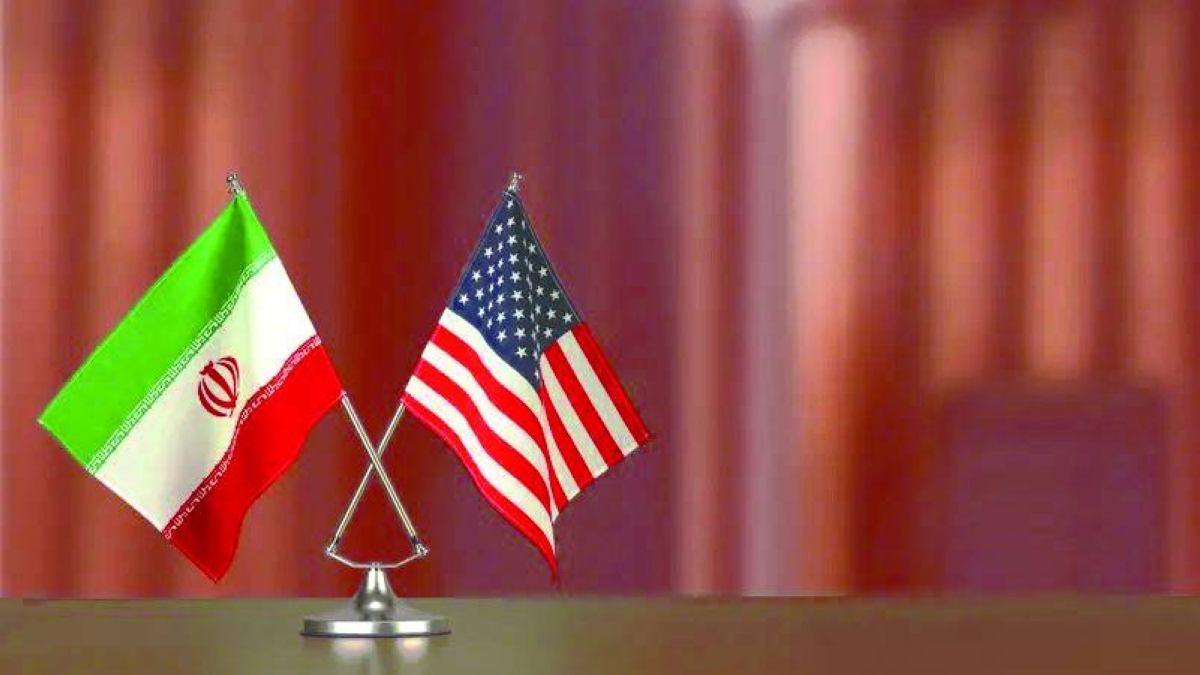
A coordinated political and media campaign has sought to discredit Qatar’s role as a regional mediator following its success in brokering the 2026 US-Iran ceasefire and advancing efforts to stabilise Lebanon, according to a new study published by the Arab Center for Research and Policy Studies (ACRPS). The study published on July, 16, 2026, “Don’t Shoot the Mediator: The Campaign to Undermine Qatar’s Role in the Iran and Lebanon Ceasefires,” argues that the attacks are aimed less at Qatar’s diplomatic performance than at the mediation model it has developed over the past three decades — one built on balanced relations, open communication with rival parties and sustained investment in dialogue and conflict resolution. According to the report, Qatar’s emergence as one of the region’s most trusted mediators is the product of a long-term foreign policy strategy rather than ad hoc diplomacy. By maintaining channels of communication with both state and non-state actors, Doha has repeatedly succeeded in facilitating negotiations in conflicts where other mediators have struggled to establish common ground. The study notes that Qatar did not initially seek to lead negotiations between Washington and Tehran. Instead, it supported mediation efforts led by other regional actors before assuming a central role after those initiatives reached an impasse. Despite suffering direct consequences from the conflict — including attacks on its territory and disruptions to liquefied natural gas production — Doha ultimately became the principal intermediary because it retained the confidence of both sides. Its previous diplomatic experience, including facilitating the 2023 US-Iran prisoner exchange, also helped build the trust needed to bridge differences over complex issues such as regional security arrangements, Iran’s frozen assets and navigation in the Strait of Hormuz. However, the study argues that Qatar’s diplomatic success triggered an intensified backlash. Rather than acknowledging Doha’s contribution to preventing a broader regional war, critics portrayed its broad regional relationships as evidence of bias, questioning its neutrality as a mediator. The report rejects that argument, stressing that successful mediation depends not on distance from the parties but on the ability to maintain dialogue with all sides. It argues that opponents deliberately sought to transform Qatar’s greatest diplomatic asset — its access to competing actors — into a liability by presenting engagement as collusion. The study places the campaign within the wider political context of the Gaza war, the US-Iran confrontation and regional efforts to contain escalation. It argues that criticism of Qatar intensified whenever its diplomacy contributed to ceasefires or political settlements that reduced prospects for continued military action. The report also highlights Qatar’s efforts to support stability in Lebanon by linking implementation of the US-Iran understanding with mechanisms to reinforce the Lebanon-Israel ceasefire. Doha worked to encourage Israeli withdrawal from occupied areas, strengthen ceasefire monitoring and help prevent renewed hostilities in southern Lebanon. According to the researchers, these efforts met strong resistance from Israeli political and media circles, which viewed the broader diplomatic framework as limiting Israel’s military options. The study further argues that Qatar’s previous initiatives in Lebanon —including reconstruction assistance following the 2006 war and sponsorship of the 2008 Doha Agreement —have increasingly been recast by critics as support for Hezbollah rather than efforts to preserve Lebanon’s stability and prevent state collapse. The report describes this interpretation as selective and politically motivated, arguing that it overlooks the broader historical and security dynamics behind Lebanon’s crises while disregarding Qatar’s long-standing support for dialogue and state institutions. A significant section of the study examines what it describes as a coordinated digital campaign targeting Qatar’s mediation efforts. Citing research by the fact-checking platform Misbar, it says more than 342,000 posts from over 160,000 accounts appeared on X during the decisive phase of the US-Iran negotiations in June 2026. The analysis found that much of the activity originated from a relatively small network of accounts repeatedly amplifying identical narratives, suggesting organised online coordination. Most posts were published in English and targeted audiences in the United States and Europe, with the principal voices linked to pro-Israeli activists, the American conservative right and monarchist Iranian opposition groups. Rather than debating the substance of the negotiations, the campaign focused on portraying Qatar as aligned with Iran or Hamas, supportive of terrorism or wielding undue influence over US decision-making, the report says. The study concludes that the campaign reflects a broader struggle over the future of diplomacy in the Middle East. It argues that opposition to Qatar’s mediation stems less from concerns about neutrality than from dissatisfaction with negotiated outcomes that constrain military escalation and promote political settlements. Ultimately, the report says the attacks on Doha underscore the growing importance of its diplomatic role. By preserving communication with opposing sides and facilitating dialogue where others have failed, Qatar has established itself as a key regional mediator — one whose effectiveness has increasingly made it the target of coordinated political and information campaigns. The writer is a staff reporter. 
Opinion
Can US-Iran diplomacy survive the palpable collapse of confidence?

Can US-Iran diplomacy survive the palpable collapse of confidence?

The resumption of military strikes between the United States and Iran has brought the spectre of conflict back to the region and laid bare the hollow nature of the Memorandum of Understanding reached in Switzerland in mid-June. A major weakness of the MoU was that Iranian and American officials did not even appear to share a common interpretation of the document they had negotiated and signed. Subsequent actions, on both sides, have merely added new layers of mutual distrust and acrimony to an already combustible situation and make the task of resuming dialogue all the more challenging. For agreements in politically sensitive settings to succeed, they require all participants to trust that the parties are negotiating with at least a baseline degree of good faith, accepting that in any dialogue there may be spoilers on both sides who want the talks to falter. It is for this reason that successful agreements often take months, if not years, of painstaking preparation, usually far away for the glare of publicity, that enables officials to take the measure of each other and build up relationships of trust. A relevant example is the Good Friday Agreement in Northern Ireland in April 1998 which was preceded by years of quiet outreach between British officials and the Irish Republican Army, followed by weeks of intense meetings which eventually produced a deal which has endured to this day. The Northern Ireland example is illustrative of several factors which are essential to diplomatic success. Decades of IRA attacks in Northern Ireland and on the British mainland, and acts of violent reprisal by British security forces, meant that few people expected a diplomatic breakthrough as the 1990s began. Bitterness and hostility characterised both sides and had built up over many years. The IRA had blown up the hotel in Brighton where Prime Minister Margaret Thatcher and most of her cabinet, were staying in 1984, in an audacious attempt to eliminate the British government, and had fired mortar rounds on Downing Street in 1991 during a cabinet meeting chaired by Thatcher’s successor, John Major, forcing them to seek emergency shelter under the cabinet table. And yet, while Tony Blair took the credit for the eventual passage of the Good Friday Agreement, it was John Major’s decision to respond to an initial ‘feeler’ from the IRA and begin a discreet dialogue which laid the groundwork for the talks which followed. This took political courage on the part of both sides, from the IRA to reach out in the beginning and for the British to engage, especially as there was no guarantee of success at the outset. A calculation that there was more to be gained by political means than violence was critical in creating the space for talks and for outflanking more hardline elements on both sides. The initial backchannel took place in secret, and survived setbacks such as major bombings in London in 1992 and 1993 and also of a shopping centre in Manchester in 1996, which broke a ceasefire agreed in 1994. Once the agreement was signed, the trust that had built up during the process meant that the deal was robust enough to survive the Omagh bombing in July 1998 by a splinter group opposed to the agreement, an attack on a busy shopping street on a Saturday afternoon which caused one of the highest losses of life in the entire history of the Troubles. Widespread revulsion at the Omagh attack helped to drain residual support for a return to violence and cement the peace process in Northern Ireland. Jonathan Powell was one of the key members of Tony Blair’s negotiating team in 1998 as the Prime Minister’s Chief of Staff (his brother, Charles Powell, had been Margaret Thatcher’s most trusted foreign policy aide in the 1980s). After leaving Downing Street, along with Blair, in 2007, Powell set up a mediation practice and engaged in hotspots such as Columbia before returning to government as Keir Starmer’s National Security Advisor in 2024. Media reports in the United Kingdom have suggested that Powell was tangentially involved in the Omani-led attempts earlier this year to secure a US-Iranian agreement over Teheran’s nuclear program that would avert the war which began on February 28. It will take far more than individuals of Powell’s calibre to restart the US-Iran talks and begin to rebuild confidence that has repeatedly been shattered and is now non-existent. Verbal jousting has taken place on both sides amid accusations that each party has used the period of the fragile ceasefire to take stock and plan for the next phase of conflict. Both in Iran and in the US policy hawks have taken succour from the failure of the memorandum of understanding to argue that it should have never been made. The hollowing out of the moderate middle ground has been years in the making, arguably stemming from the first Trump administration’s withdrawal from the Joint Comprehensive Plan of Action in 2018 and the Iranian regime’s ramping up on enrichment thereafter. The P5+1 negotiations with Iran that culminated in the JCPOA lasted for more than eighteen months and were themselves preceded by eight rounds of secret talks between senior US and Iranian officials in Oman. These took place in 2012 and 2013 and one of the U.S. officials involved, Bill Burns (who later became Director of the CIA in the Biden administration), recalled in his memoir (aptly entitled The Back Channel: American Diplomacy in a Disordered World) how the Iranian delegation, led by Abbas Araghchi, the current foreign minister, ‘would sometimes confide that they had a Supreme Leader who was just waiting to say “I told you so” and prove that the Americans could not be trusted’. Those words were written in 2019 and reflected a conversation held years earlier. So much has happened since to add fuel to the flames of accusations of bad faith on all sides. How to pull back from the brink is both an immediate and urgent challenge for the region and the world. The writer is a leading scholar specialising in Gulf politics and international political economy, and a fellow at the Baker Institute and co-director of the Middle East Energy Roundtable.

Opinion
Of Spain’s quiet conquest and the seismic celebrations

Of Spain’s quiet conquest and the seismic celebrations

Spain did not so much win this World Cup as quietly, methodically close the argument. In a tournament drenched in stardust — Lionel Messi chasing legacy, Kylian Mbappe hoarding goals, and a galaxy of elite forwards lighting up scoreboards — it was a team built on restraint, structure and collective discipline that walked away with the prize. Spain, efficient to the point of austerity, dethroned Argentina 1-0 after extra time and, in doing so, delivered a reminder that football still has room for the unspectacularly brilliant. The final itself felt almost subversive. This was meant to be Messi’s encore, perhaps even his coronation as the first man since 1962 to lead a defending champion to back-to-back titles. Instead, it became a masterclass in suffocation. Argentina did not manage a single shot on target. Messi, so often the author of footballing poetry, drifted through the night like a ghost in boots. At the heart of Spain’s triumph was not a prodigy or a headline-grabber, but Rodri — the tournament’s player of the competition, and a symbol of what this team represents. Control over chaos. Intelligence over impulse. Where others dazzled, Spain dictated. There is delicious irony in the fact that a World Cup boasting nearly three goals per game — the most prolific in over half a century — was ultimately decided by a team that scored just 14 times in eight matches. Spain did not chase the spectacle. They edited it. And yet, for all their restraint on the pitch, the celebrations off it were anything but measured. Spain quite literally shook. Seismometers across the country recorded tremors triggered not by tectonic shifts, but by Ferran Torres’ 106th-minute strike and the eruption that followed. In cities from Barcelona to Cadiz, fans jumping in unison generated measurable seismic activity — a scientific footnote that feels almost too perfect for a nation rediscovering its footballing heartbeat. By last morning, Madrid told its own story: streets glazed with confetti, glass and the residue of a night that refused to end. Some supporters had not slept; others simply surrendered where they stood, smiling into the pavement. A million were expected to gather again, because once was never going to be enough. There is, of course, a deeper significance to Spain’s victory. This was not a fleeting success or a fortunate run. It was the continuation of a footballing identity that has evolved without losing its core. Echoes of 2010 are unmistakable — a team anchored in defensive certainty, trusting that control would eventually yield opportunity. But this version of Spain is less romantic, more pragmatic. They no longer need to enchant to win. Even the much-hyped Lamine Yamal, the teenage sensation burdened with expectation, played a peripheral role. Spain did not depend on him — or anyone — to rescue them. That, perhaps, is their greatest strength. For Argentina, the night will linger as a quiet unravelling. Reduced to ten men, outplayed, and ultimately outlasted, their dream of defending the title dissolved not in drama, but in absence — of chances, of rhythm, of answers. For Spain, however, the future feels as compelling as the present. They are now both European and world champions once again, with youth embedded in their spine and a chance, tantalisingly, to defend their crown on home soil in 2030. And if this triumph proved anything, it is that football’s loudest stories are not always written by its brightest stars. Sometimes, they are written by the team that concedes almost nothing, waits for its moment, and when it arrives — makes the whole country jump at once.    

World
India bans march on parliament by ‘Cockroach’ activists, standoff looms

India bans march on parliament by ‘Cockroach’ activists, standoff looms

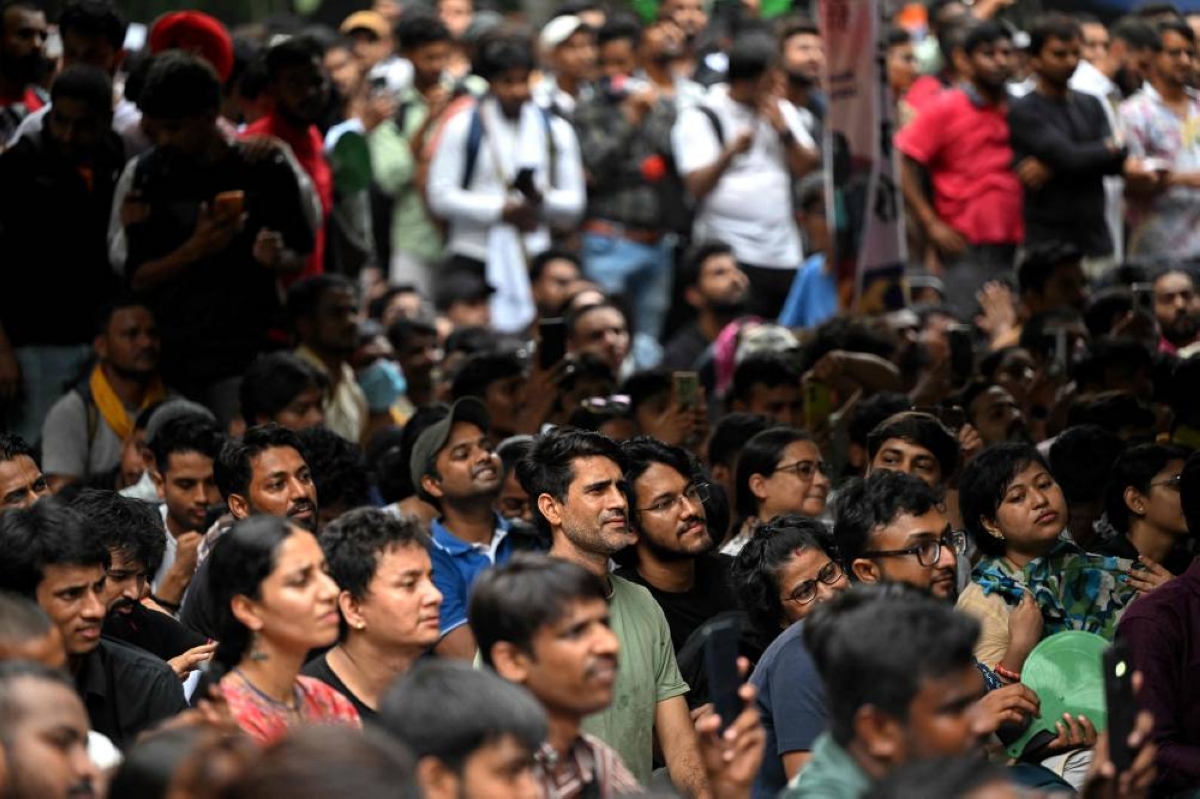
Cockroach Janta Party (CJP) supporters attend a sit-in protest demanding the resignation of India's Education Minister Dharmendra Pradhan over alleged NEET examination irregularities in New Delhi yesterday. (AFP) Police in India have denied permission for a march on parliament by supporters of the youth-led “Cockroach” movement today, risking a standoff as calls grow for the sacking of Prime Minister Narendra Modi’s education minister over exam paper leaks.The movement has been galvanised since police forcibly moved hunger-striking activist Sonam Wangchuk to hospital on Saturday, with hundreds of supporters gathering at a protest site ahead of a planned march on the opening day of parliament’s monsoon session.While the movement initially drew support largely online — amassing 22mn followers on Instagram within days of its formation in May after exam paper leaks affected millions — it has since broadened its appeal, presenting a major challenge for Modi.The 59-year-old Wangchuk said in a message posted by his wife on X yesterday that the planned march would be “India’s 2nd FREEDOM MOVEMENT” and would be for “freedom from injustice (like paper leaks)” and “freedom from fear (my illegal detention)”.But police said orders are in force in the New Delhi district prohibiting assemblies of five or more persons, except at a designated site — the Jantar Mantar observatory — where protesters have already been camping for more than three weeks.“As parliament session is commencing from 20 July, strict security arrangements are in place to ensure public safety, security of protectees, and the protection of vital government installations,” police said on X.The Cockroach Janta Party said the march would go ahead as planned.“The march is happening for sure. We are figuring out the rest,” a spokesperson said, asking not to be named before finalising their plans.Earlier in the day, a Delhi court said authorities were within their rights to move Wangchuk to a government hospital because he had not admitted himself despite his deteriorating health.Judge Mini Pushkarna said doctors had administered only oral fluids and supplements with Wangchuk’s consent, adding: “It cannot be said that any force is being used against Mr Sonam Wangchuk or that his bodily autonomy is being violated in any manner whatsoever.”Wangchuk’s wife, Gitanjali Angmo, had sought permission to transfer him to the privately run Medanta Hospital and her lawyers argued that she was entitled to have him treated at a hospital of their choice.The government opposed the request saying it had to be cautious about Wangchuk’s health and that his wife and close family members had been given round-the-clock access to him.Citing the heavy police presence in the hospital, Angmo said on X “it is not medical care. It is illegal detention”.Safdarjung Hospital said Wangchuk’s vital parameters were stable, although his blood parameters remained “marginally altered”, and he required round-the-clock monitoring.The rise of the Cockroach movement reflects frustrations among young Indians over issues like high youth unemployment and frequent exam paper leaks. 

World
US, Iran trade fire as truce collapses

US, Iran trade fire as truce collapses

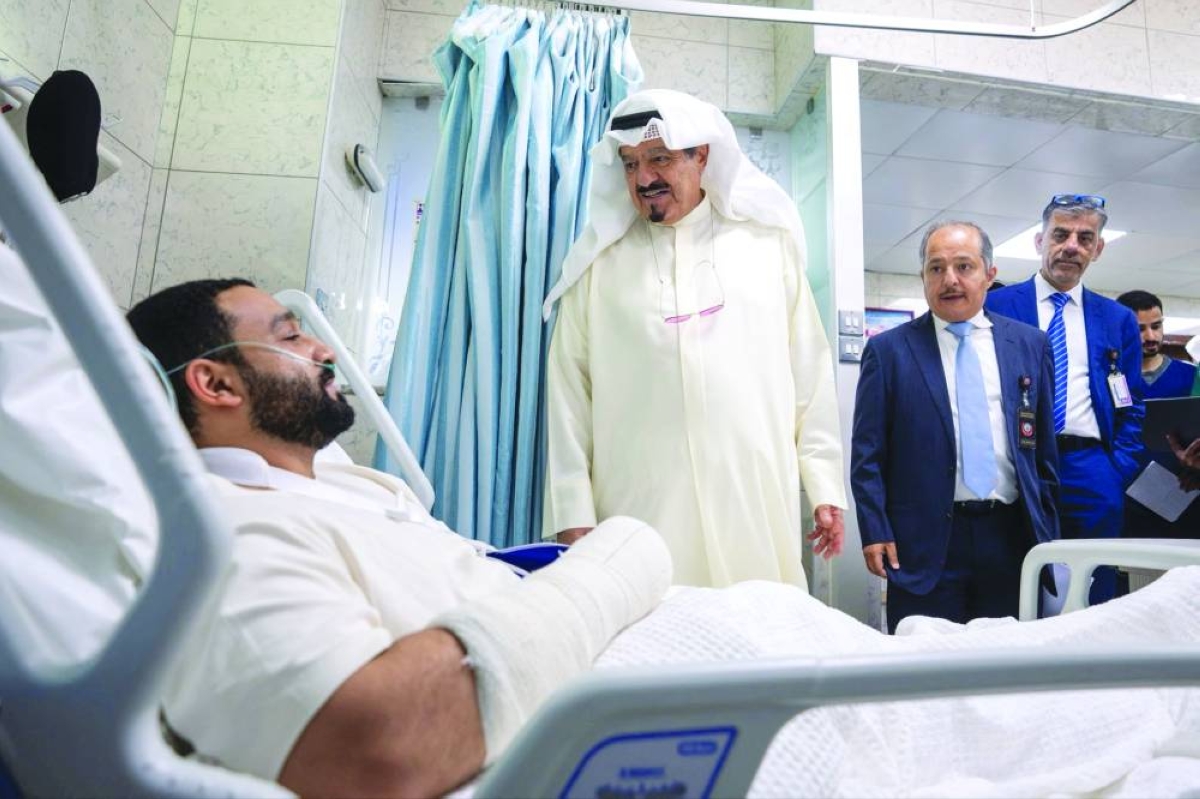
Kuwaiti Prime Minister Sheikh Ahmad Abdullah al-Ahmad al-Sabah visits an injured person receiving treatment at a hospital following the Iranian attack according to authorities in Kuwait City Sunday. (Reuters) The United States and Iran exchanged missile strikes and airstrikes Sunday, as an interim ceasefire signed a month earlier collapsed amid an escalating struggle for control of the Strait of Hormuz, the waterway that carries a fifth of the world's oil supply.The US military said it had completed an eighth consecutive night of strikes against Iran, aimed at degrading Tehran's ability to threaten shipping in the strait and to "swiftly punish" Islamic Revolutionary Guard Corps forces blamed for attacks on American troops in Jordan. Central Command said the latest wave hit Iranian coastal surveillance and air defence facilities.The escalation followed confirmation that two US service members were killed in Jordan on Friday, with a third listed as missing in action. That brought the confirmed US military death toll to 16 since the war began on February 28, when Washington and Israel launched strikes intended to disable Iran's nuclear and missile programmes.More than 420 US personnel have been wounded. US Defence Secretary Pete Hegseth said the deaths would only "stiffen" American resolve.Iran's health ministry said 50 people had been killed and more than 500 wounded by US strikes over the past three weeks alone. Thousands have died and several million been displaced across the wider conflict, which has also reignited fighting between Israel and Hezbollah in Lebanon.Iran said it targeted two US bases in Kuwait, at Al-Adiri camp and Ali Al Salem Air Base, in retaliation. Kuwait's electricity ministry reported a desalination and power plant had been struck for a second consecutive day, sparking a fire. Bahrain's air defences said they intercepted a separate Iranian attack, while Jordan's military said it shot down three missiles after air raid sirens sounded nationwide. Israel's military said it had detected missiles fired towards the Jordanian port city of Aqaba, near its border, and that Israeli and Jordanian forces intercepted at least one. Jordan summoned Iran's charge d'affaires to protest what it called "brutal and unjustified" attacks on its territory.Iran's Atomic Energy Organisation accused the US of striking the under-construction Darkhovin nuclear plant in the country's southwest, calling it unlawful. The IAEA said it was investigating but noted the site held no nuclear material and remained in early construction. Director Rafael Grossi renewed his call for military restraint near nuclear-related sites.The Revolutionary Guards said it had stopped two vessels attempting to transit the Strait of Hormuz via an "unsafe route," while two others abandoned the attempt, as Washington enforces a naval blockade on Iranian ports and Tehran polices shipping through the strait.In a statement carried by state media, Iranian Supreme Leader Ayatollah Mojtaba Khamenei — whose whereabouts remain unconfirmed since his father's killing in the war's opening strikes — said Washington's commitments were "utterly worthless" and warned of "even heavier costs" ahead. Senior military officials echoed the threat of a "decisive and devastating response" if US strikes continue. The White House did not respond to a request for comment.  Related Story

Opinion
Starring Burnham: What to make of his ‘circuit breaker’ promise

Starring Burnham: What to make of his ‘circuit breaker’ promise

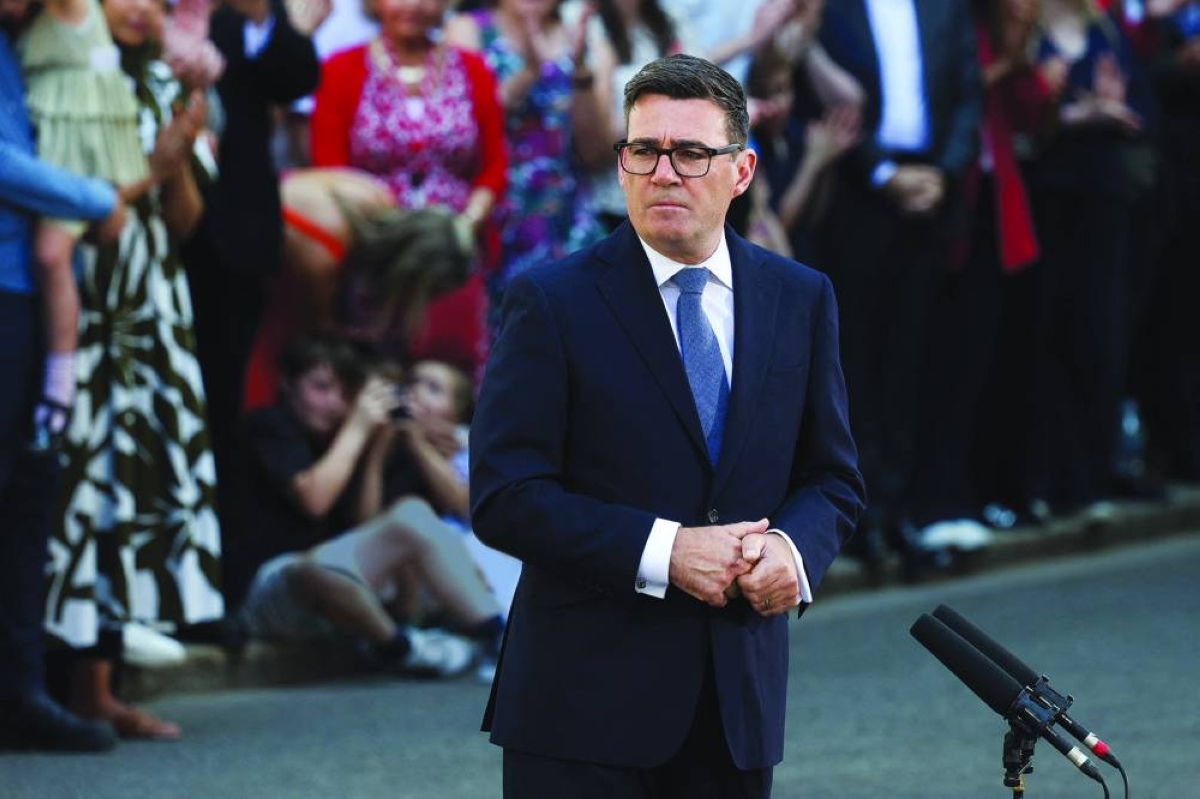
Britain’s newly appointed Prime Minister Andy Burnham delivers a speech outside 10 Downing Street after taking office, in London, yesterday. (Reuters) Britain now changes prime ministers at roughly the rate other nations lose patience with a long-running television series. Six of them in a decade; seven since 2016, if you start the tally at the referendum that blew the fuses on the entire arrangement. The lectern outside No 10 has been wheeled out and folded away so many times that it must qualify as the most well-travelled item of furniture in Whitehall: a small wooden monument to a governing class that keeps promising stability and then providing the opposite. The removal vans have practically worn a groove in the tarmac. Into this carousel steps Andy Burnham, the former mayor of Greater Manchester who engineered his own return to the Commons through a byelection whose only real purpose was to prise Keir Starmer’s fingers off the door of Downing Street. He stood on that over-familiar spot, watched by his wife and a scattering of allies, and did something none of his five immediate predecessors had thought to attempt. He opened not with a victory lap, but with a confession. The anatomy of an apologyTake the scalpel to the speech and the first thing you notice is the tone. Most incoming premiers arrive drunk on their own momentum, eager to tell the country how much better everything is about to become. Burnham began instead by counting himself into the long line of failure. “I am acutely conscious that I am the sixth person in the last 10 years to walk up this street, the seventh prime minister since 2016,” he said, framing his arrival not as a coronation but as a symptom. Then the admission proper: “We have not been good enough, and we need to be better.” This is calculated humility, and it is shrewd. A public that has watched the revolving door spin until it is dizzy does not want another saviour; it wants someone who will at least acknowledge the mess. By naming the rot up front, Burnham inoculates himself against the charge that he is simply the next in the queue. He also lowers the bar he will later have to clear — always sensible for a man who has just inherited a fiscal straitjacket. The centrepiece is the phrase he clearly wants stitched onto the era: a “circuit breaker” for Britain, promising “the biggest changes in the last 40 years. A new political model and a new economic model.” It is an Attlee-sized ambition dressed in the language of an electrician. He reaches back to the 1980s — “Britain took some wrong turns,” he says — and lays the blame on power centralised in Westminster, industry privatised, whole regions hollowed out and never rebuilt. The remedy, in his telling, is to push authority out of the capital and “into every postcode in the land.” For a man who built his brand on Manchester devolution, this is autobiography as manifesto. Then comes the boldest move of the morning: his first instruction in office is to end rough sleeping. It is brave to the point of recklessness, and the reason is written into his own record. Burnham set precisely this target as mayor and missed it; rough sleeping in his city rose across four consecutive years. Confronted with that awkward arithmetic, he did not duck. He argued that a single city cannot solve the problem alone — “you won’t be able to get the numbers down if you’re the only place and people are coming to Manchester” — and that the answer is everyone pulling together, as, he insists, the country managed during the pandemic. Most politicians, caught out by a failure, quietly change the subject. Burnham has chosen to double down on his in front of the nation. There is a ghost hovering over that pledge, too. Jeremy Corbyn once revealed that had he won in 2017, ending rough sleeping would have been his day-one order. Burnham has, in effect, discovered his inner Corbyn — a signal to the Labour left that will land warmly, and one he may need if, as expected, the party’s harder-edged home affairs instincts are about to be rewarded with the great offices of state. The list he cannot talk his way out ofContrition is cheap; the in-tray is not. Burnham takes charge of an economy that has been treading water since the 2008 crash, its ankles further weighted by Brexit and the pandemic. He has boxed himself in by honouring Labour’s promise not to touch the main rates of income tax, National Insurance or VAT — which leaves him the narrowest of ledges from which to fund anything transformational. His first concrete offerings, trailed for this week, are cushioning measures on energy bills and bus fares: breathing space now, the ten-year plan later. Abroad, the map is no kinder. The war in Ukraine grinds on, the Middle East smoulders, and the “special relationship” is fraying at the seams. Starmer cultivated the American president assiduously before infuriating him by declining to fully endorse the US-Israeli strikes on Iran. Washington remains Britain’s indispensable security partner; the current occupant of the White House remains deeply unloved on British streets. Squaring that circle — how much charm to expend on a mercurial ally — is now Burnham’s problem, and the retention of Starmer’s national security adviser suggests continuity rather than reinvention. Defence is its own trap. A predecessor’s defence secretary resigned over spending judged too meagre, only for a belated £15bn uplift to be announced with the crucial question — where the money comes from — left conveniently unanswered. That bill has now landed on Burnham’s desk, and someone’s budget will have to bleed to pay it. On immigration, the politics are treacherous precisely because the facts have moved. Net migration has fallen sharply, yet polling shows voters neither know it nor much care; the anxiety persists regardless. Burnham has signalled he will keep the tough line, even as it grates against his own backbenchers. And then there is welfare, where an ageing population, a rising tide of working-age mental-health claims and the sacred triple lock on pensions combine into a cost curve no one wants to bend in public. Starmer tried, and his own MPs mutinied. Where the money will actually come fromSo how does a man forbidden from raising the big three taxes find the cash for social housing and hope? By hunting where the manifesto still permits. Burnham has already declared that Britain “overtaxed labour and undertaxed” wealth — a sentence that points like a compass needle towards capital gains, council tax reform, and a rebalancing of business rates away from the beleaguered high street and onto the out-of-town sheds. The overall tax take is already forecast to reach its highest share of the economy since 1948, which tells you how little slack remains and how creative the Treasury will have to be. The confession at the door bought Burnham a moment of grace. The nation, weary and cynical, may even want to believe him when he says this is the moment “Britain starts to believe again.” But belief is the easy part to promise from a lectern. The hard part — the funding, the trade-offs, the backbench rebellions — is exactly where his six predecessors came unstuck. The street has seen this walk before. What it has not yet seen is anyone finish it. The writer is Deputy Managing Editor, Gulf Times.   

Opinion
Building green, by design – Gulf Times

Building green, by design – Gulf Times

There is a quiet revolution taking shape across Qatar’s skyline, and its scale deserves pause. As Gulf Times reported the day before, more than 3.1bn square feet of built-up area — some 2,700 projects — has now earned recognition under the Global Sustainability Assessment System (GSAS). This is no niche achievement confined to a handful of showcase towers. It spans stadiums and schools, hospitals and parks, residential communities and free zones. Sustainability, in other words, is ceasing to be an aspiration and becoming a habit. What makes the story significant is not the tally alone but what it signals about how Qatar builds. GSAS, developed locally by the Gulf Organisation for Research and Development, was the first green building rating system in the Middle East and North Africa. That a homegrown standard now measures the environmental worth of the nation’s infrastructure — from the World Cup stadiums to the Qatar Rail network — is a matter of some pride. It reflects a conviction that the region need not import every benchmark of good practice, but can author its own. Credit belongs, in large part, to public sector leadership. When bodies such as Ashghal and Qatar Museums make sustainability a condition of construction rather than an afterthought, the private sector follows. The spread of certification into luxury developments, corporate headquarters and healthcare facilities suggests the message has landed: environmentally responsible building is no longer a cost to be grudged but a mark of quality. That such momentum was sustained through 2025, with nearly 200 fresh projects recognised in a single year, shows this is a deepening commitment rather than a passing enthusiasm. The wider promise lies beyond Qatar’s borders. With the GCC Standardisation Organisation adopting GSAS as a regional standard, and frameworks already taking root in Kuwait and Saudi Arabia, a Qatari innovation is quietly becoming a Gulf one. For a region acutely exposed to the pressures of a warming climate, that shared direction of travel matters. Numbers, of course, are only a beginning. The true test is whether these standards endure through occupancy, maintenance and the decades that follow. But a benchmark has been set — and, encouragingly, it is one the country built for itself.  

World
China, people brave simulated typhoons to prepare for the real thing

China, people brave simulated typhoons to prepare for the real thing

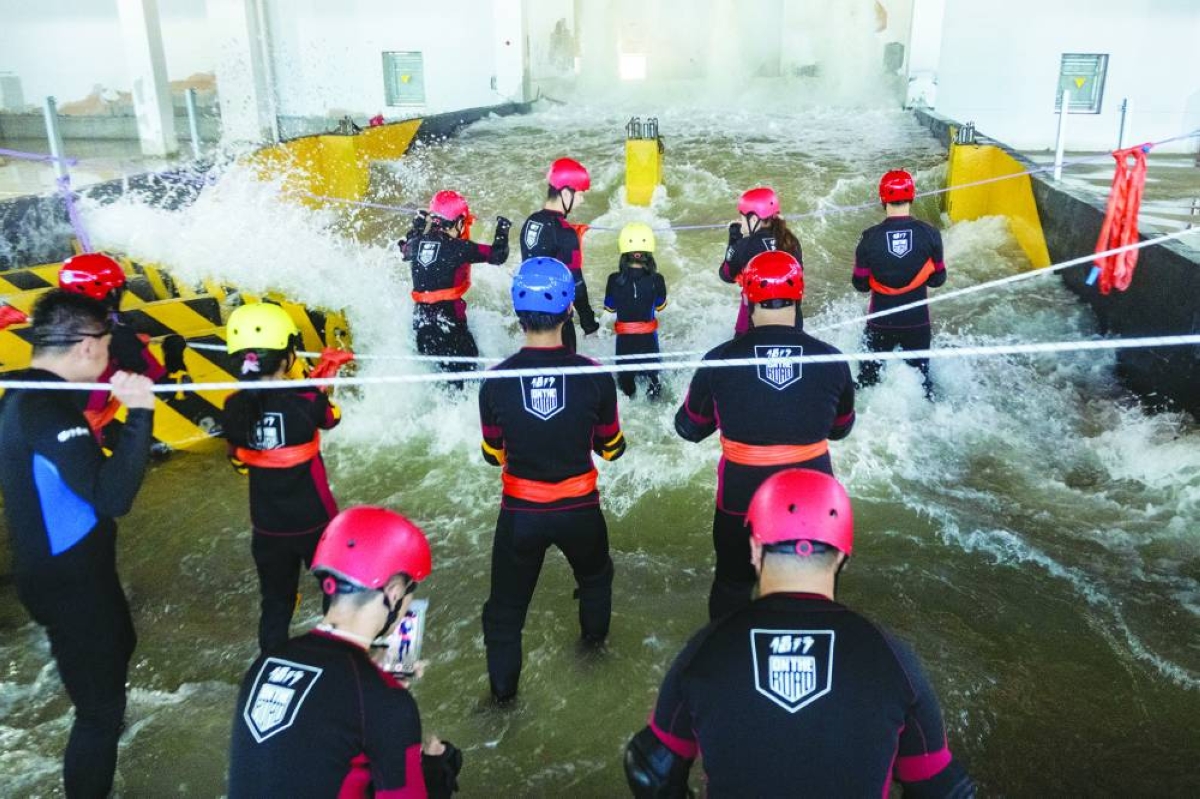
Huang Zhen, 34, shut his cafe for a day last week to be buffeted by surging waters and powerful winds that knocked him off his feet — training for extreme weather events that are increasingly afflicting China.Huang was one of a dozen people attending a session at the Lvxing Disaster Simulation Training Center in Hangzhou, eastern China. For 1,599 yuan ($235) per day, it offers a realistic experience of what it is like to be caught up in a typhoon or a flash flood, albeit with the advantage of wearing a wetsuit, a helmet and having a safety instructor to guide you.The centre says it the first of its kind in the world to provide typhoon training, with its simulated experience generating wind speeds of up to 165kph (103mph) alongside torrential rain.In a separate section, 900 metric tonnes of surging water are unleashed to mimic mountain flooding, while in another, participants must wade — sometimes thigh-deep, sometimes shoulder-deep — through 400 tonnes of water in a mock urban environment."Over the last two years, the weather has become increasingly unpredictable," Huang said. "An opportunity like this ... gives us a better idea of what different levels of disasters might actually be like, and helps raise our awareness of disaster preparedness."Climate change is increasingly exposing the world's second-largest economy to destructive weather events, scientists say. This year is of particular concern due to the emergence of the El Nino weather pattern, which can drive up temperatures and fuel more intense typhoons. China's National Climate Center has said it expects up to six typhoons to form in the Northwest Pacific and South China Sea in July, more than the average of 3.8.One of those was Typhoon Bavi, which brought severe floods and forced millions of Chinese to evacuate."Typhoon Bavi hit just a couple of days ago, making people realise that typhoon hazards are far more of a threat than we thought," said Wu Zijian, a 44-year-old freelance worker who travelled from nearby Shanghai to attend.More than 160,000 people have attended sessions at the centre since it opened in May 2025. Wang Kuanghan, the centre's chief instructor, said there are plans to open five more centres in China within the next three years. These will include simulations of other natural disasters such as fires and earthquakes.For those who can't make it there yet, Wang has a tip."If you ask me, the most important survival skill during a typhoon is simply not to go outside," he said. "Stay indoors and keep yourself safe at home."  Related Story

Entertainment
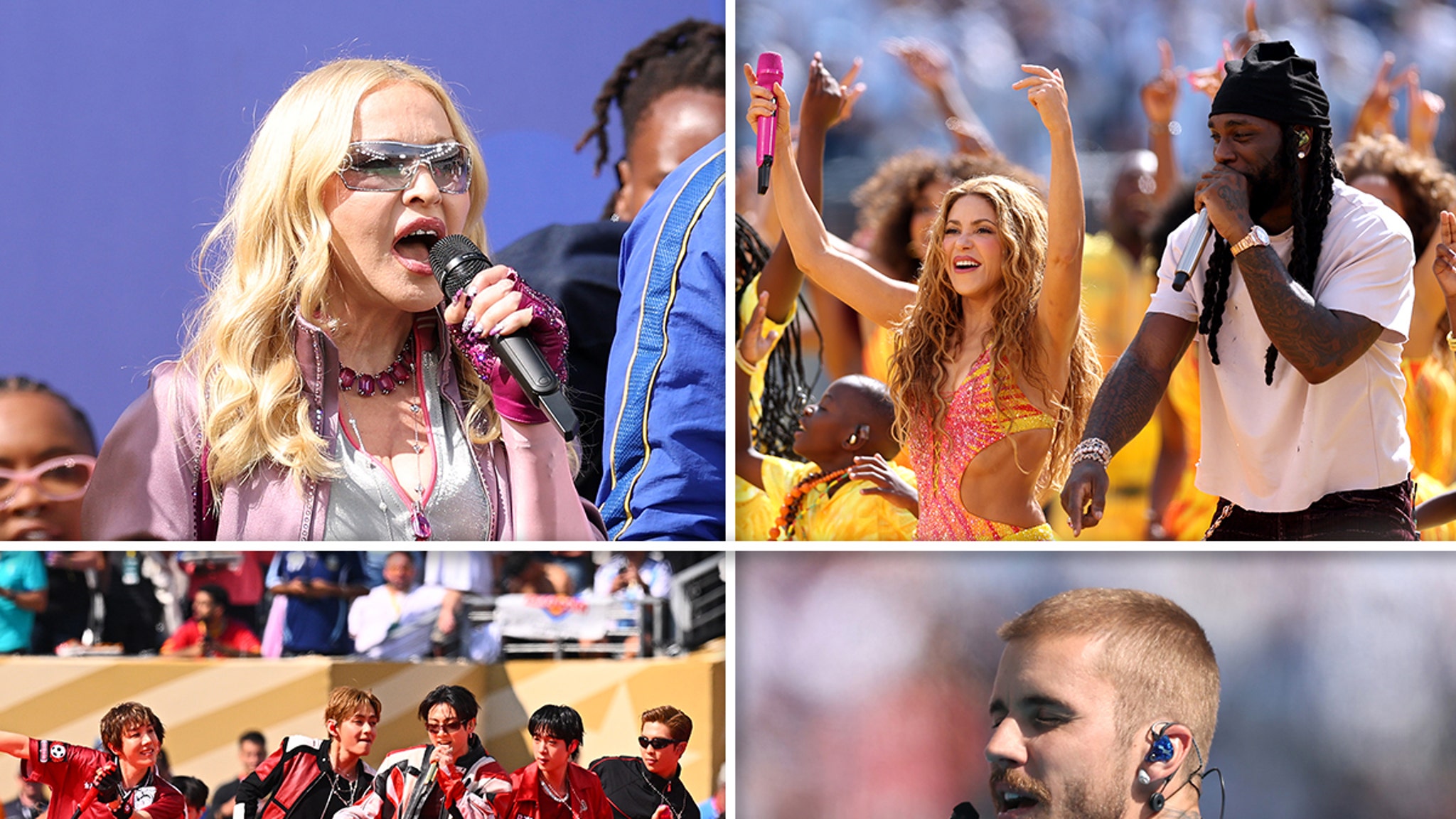
Justin Bieber, Madonna, BTS, Shakira Rock First World Cup Final Halftime Show

Justin Bieber, Madonna, BTS, Shakira Rock First World Cup Final Halftime Show

FIFA World Cup Final Bieber, Shakira, BTS, Madonna Light Up Halftime Show Published July 19, 2026 1:50 PM PDT The FIFA World Cup Final went full Super Bowl Sunday ... trotting out a halftime show

Lifestyle
Anniqa Meraj set for Pakistan’s historic Miss World debut

Anniqa Meraj set for Pakistan’s historic Miss World debut

Gulf Today ReportAnniqa Meraj has been crowned Miss World Pakistan 2026 and will represent the country at the 75th Anniversary Edition of Miss World Festival in Vietnam, marking Pakistan’s debut at the pageant.The festival is