1. Home
  2. Author Blogs

Author: admin

admin

Opinion
Hormuz crisis throws spotlight on world’s largest ‘chokepoint’ — the Malacca Strait

Hormuz crisis throws spotlight on world’s largest ‘chokepoint’ — the Malacca Strait

The closure of the Strait of Hormuz has forced policymakers in Asia to face questions over the security of other maritime chokepoints, including the Strait of Malacca, which is the world’s busiest waterway for international trade. The 900-km (550-mile) long Malacca Strait, bounded by Indonesia, Thailand, ‌Malaysia and Singapore, provides the shortest sea route from East Asia to the Middle East ​and Europe. It carries nearly 22% of the ‌world’s maritime trade, according to the Center for Strategic and International Studies. This includes oil and ‌gas shipments from the Middle East to ‌the energy-hungry economies of China, Japan and South Korea. Malacca ‌is the largest “oil transit chokepoint” in the world and the only one that outpaces Hormuz, according to the US Energy Information Administration. In the first half of 2025, some 23.2mn barrels of oil per day were transported through the Malacca Strait, accounting for 29% of total maritime oil flows. The next largest chokepoint, Hormuz, saw about 20.9mn bpd pass through. More than 102,500 ships, mostly commercial vessels, transited through the Malacca Strait in 2025, up from around 94,300 in 2024, data from Malaysia’s Marine Department showed. These include most tankers, but some very large vessels avoid the strait because of draught restrictions and go south around Indonesia instead. This ​route allows the Strait of Malacca to be bypassed if it were closed, but it adds to journey time that would delay shipments and drive up prices. At its narrowest point in the ‌Phillips Channel of the Singapore Strait, the Malacca Strait is only ​1.7 miles (2.7km) wide, creating a natural bottleneck, as well as potential for collisions, grounding, or ​oil spills. Some parts of the strait are relatively shallow, with a depth of 25-27m (82-90 ft), restricting the largest vessels, but even very large crude carriers (VLCCs) measuring more than 350m long, 60m wide, and with a draft of more than 20m, make the transit. For years, the strait has been a hotbed of piracy and attacks on merchant vessels. Last year saw criminal attacks spike to at least 104, but these have fallen off in the first quarter of this year, according to the ReCAAP Information Sharing Centre, an organisation established by regional governments to combat piracy. The narrow and congested waterway has been strategically important to Beijing, with around 75% of China’s seaborne crude oil imports passing through it from the ‌Middle East and Africa, data from tanker ‌tracker Vortexa shows. The Iran crisis has crystallised long-standing worries about how chokepoints such as Malacca could be affected if a conflict breaks out in the South China Sea or the Taiwan Strait, where another 21% of global maritime trade transits, according to CSIS. Malaysian authorities say the Malacca Strait is also a growing spot for illegal ship-to-ship transfers, where oil is shifted between tankers at sea to obscure its origin. Indonesian Finance Minister Purbaya Yudhi Sadewa made waves on Wednesday by openly musing about ways countries could impose tolls on ships as a way to monetize the strait, before noting that such an arrangement is not possible. When asked about the ​risks of tolls or other restrictions on movement in the strait, Singapore Foreign Affairs Minister Vivian Balakrishnan told CNBC that the nations along the strait share a strategic interest to keep it open, and have agreed not to collect tolls. He also said Singapore had assured the United States and China that the right of passage was guaranteed for all and it would not participate in any efforts to block the strait or impose tolls. Malaysian Foreign Minister Mohamad Hasan told a forum on Wednesday that no unilateral decisions can be made about the strait and that Malaysia is on the same page with Singapore, Indonesia and Thailand, and they conduct joint patrols to ‌ensure the waterway remains open.    

Sports
Lusail Circuit hosts enhanced edition of Mixed Training Day

Lusail Circuit hosts enhanced edition of Mixed Training Day

Lusail International Circuit (LIC) concluded a standout edition of its Mixed Training Day, drawing more than 1200 participants onto its iconic 5.38 km track in a fully enhanced and integrated sports and wellness experience. The event represents a significant evolution of the community initiative, and a clear validation of LIC’s commitment to making the circuit a destination for active living, not just world class motorsport. Open to runners, walkers, and cyclists alike, participants took to the same asphalt that hosts Formula 1, MotoGP and the Qatar 1812 KM - FIA World Endurance Championship (WEC), an experience that delivered a rare and energising perspective on one of the world’s most celebrated motorsport venues. Track access ran from 6pm to 9pm, offering a vibrant evening setting that drew individuals and families from across the community. The enhanced edition introduced a range of new features that elevated the on-ground atmosphere. A curated selection of food and beverage vendors offered healthy, performance-focused options to fuel participants before and after their sessions. Dedicated sports recovery stations were available throughout the evening, catering to participants of all fitness levels. Fitness activations and entertainment zones added further energy to the experience, ensuring the event was engaging for all ages. Beyond the physical activities, Mixed Training Day served as a vibrant gathering point, a space where sport, wellness, and social connection converged on one of the most iconic tracks in the world. The strong turnout reflected a growing community appetite for meaningful, active experiences that go beyond the ordinary. A regular on the circuit’s community events roster, Mixed Training Day, is free of charge and is open to all ages and fitness levels. Participants under 15 must be registered by a parent or guardian, and those under 18 must be accompanied by an adult on the day. Advance registration is mandatory and can be completed via the official portal at members.lcsc.qa. Upcoming dates are published on the LIC website at www.lcsc.qa. 

World
Norway plans to ban social media use by children under 16

Norway plans to ban social media use by children under 16

Norway said on Friday it would present a bill ‌in parliament by year-end ​to ban children from ‌using social media until they ‌turn ⁠16, ‌making technology companies responsible ‌for the task of age verification. Several ⁠European nations are seeking to rein in children's use of social media after Australia took the lead with a world-first ban on under-16s last December."We are introducing this legislation ​because we want a childhood where children get to be children," Prime Minister Jonas Gahr ‌Stoere said in ⁠a statement."Play, ​friendships, and everyday life must ​not be taken over by algorithms and screens. This is an important measure to safeguard children's digital lives."The government did not say which applications would be targeted.Australia's ban covers Meta apps such as Instagram and Facebook as well as TikTok, ‌Snapchat, Google's YouTube and ‌Elon Musk's X, ⁠formerly Twitter.YouTube in a statement ⁠on Friday ⁠said it had invested for over a decade in children's safety to ensure its platforms deliver age-appropriate experiences that also empower parents."That way, we preserve access ​to learning for millions and avoid pushing young people onto less safe places on the internet," the company said.Norway will introduce its bill in parliament by the end of 2026, the minority Labour government said. (Reporting by Terje Solsvik ‌and ​Gwladys Fouche; Editing by Essi Lehto, Clarence Fernandez and Sharon Singleton)Oslo, April 24, 2026 (AFP) -Norway said Friday it will present a bill this year making it the latest country seeking to ban social networks for under 16s, adding that technology companies will be responsible for verifying the age of its users."We are introducing this legislation because we want a childhood where children get to be children. Play, friendships, and everyday life must not be taken over by algorithms and screens," Prime Minister Jonas Gahr Store said in a statement."This is an important measure to safeguard children's digital lives," he added.Several European countries, such as France, Spain, and Denmark have already said they will introduce a digital age of majority for social networks and others like Australia and Türkey have already done so.The European Commission has also made clear its determination to take action to protect children and adolescents, notably by unveiling in mid-April an age-verification app that will soon be made available to European citizens."I expect technology companies to ensure that the age limit is respected. Children cannot be left with the responsibility for staying away from platforms they are not allowed to use," added Norwegian Minister of Digitalisation and Public Governance Karianne Tung."That responsibility rests with the companies providing these services. They must implement effective age verification and comply with the law from day one".The government said the number of children with phones or using social media had declined due to a host of measures it had already taken, including "national screen-time guidelines and recommendations for mobile-free schools."  

Opinion
Qatar adopts unique approach to promoting multilateral diplomacy

Qatar adopts unique approach to promoting multilateral diplomacy

The International Day of Multilateralism and Diplomacy for Peace is celebrated on April 24 each year and is considered an occasion for one of the most prominent aspects of international institutional work with diverse roles. In recent decades, it has occupied a large space in the area of ​​cross-border co-operation, where negotiated diplomacy aims to make efforts to establish peace and resolve conflicts in different parts of the world succeed and save the lives of millions. It represents an expression of a shared political and humanitarian commitment, stemming from a system of values ​​and principles agreed upon by those concerned with international affairs. The vocabulary of political consultation committed to international laws, along with openness to different viewpoints and bridging the gaps between them, and guaranteeing the rights of affected, fragile and weak groups, constitutes solid foundations upon which purposeful diplomatic interaction to defuse conflicts is based. Its path is guided by rules that ensure the continuity of co-operation, provided that the rules are applied equally to all parties, so that everyone achieves their rights and ensures the fulfillment of their duties through a fair distribution of responsibilities. World leaders adopted what became known as the Pact for the Future at the summit held at the United Nations headquarters in September 2024, reaffirming their commitment to peace, sustainable development and the protection of human rights. As the UN embodies the highest form of multilateralism, its Charter not only defines its structure and functions, but is also a pillar of the international system, which Secretary-General Antonio Guterres has described more than once as the “moral compass to promote peace, advance human dignity, prosperity and uphold human rights and the rule of law.” In December 2018, the UN General Assembly adopted a resolution on the International Day of Multilateralism and Diplomacy for Peace, calling on member states and stakeholders to celebrate this day and promote awareness of the benefits of multilateralism. The multilateral framework has witnessed remarkable development, with the number of countries under its umbrella increasing from 51 members in 1945 to 193 currently, in addition to the growing participation of non-governmental organizations and the private sector, with more than a thousand organizations having observer status at the UN. International praiseQatar adopts a unique approach to promoting multilateral diplomacy and plays a pivotal role through fruitful diplomacy that has proven effective in resolving many intractable conflicts. It also hosts numerous rounds of dialogue and negotiations between the parties to the conflict, and has received international praise for its consistent commitment to supporting the UN and its active partnership with humanitarian and development organizations operating under the UN’s umbrella, which has strengthened its active and responsible role as an influential member of the international community. The latest diplomatic efforts of the State of Qatar in the international arena included its request to include an emergency item on the agenda of the Inter-Parliamentary Union (IPU), which convened in Istanbul from April 15-19, in partnership with a number of countries and with the support of geopolitical groups. The emergency item was titled: “the urgent need for coordinated parliamentary efforts to uphold ceasefire agreements and support the achievement of peace in the Middle East and other regions.’ The emergency item submitted by the State of Qatar, represented by the Shura Council, won an overwhelming majority to be included on the agenda of the IPU’s 152nd General Assembly, held in Istanbul. This is the first time that an emergency item submitted by an Arab country has received the necessary votes to be included on the agenda of the General Assembly. In this regard, Research Assistant Professor of International Affairs, Security, and Defence at Qatar University Dr Ali Bakir said in an interview with QNA that the initiative of “Emergency Item” embodies a practical example of multilateral diplomacy, as it represents Qatar’s ability to mobilise international support for peace and stability issues. He noted that it is not possible to isolate this achievement from Qatar’s well-established approach, as this initiative depicts the culmination of over two decades of diplomatic efforts in mediation, trust building, and favouring political solutions over conflicts. Dr Bakir affirmed that Qatar played a pivotal role in bridging the gap between the conflicting parties across various regional and international issues, and contributed in lowering tensions and encouraging opportunities for dialogue. From this standpoint, this initiative comes to reinforce the role of Qatar as a responsible international actor seeking to entrench collective security and leverage international parliamentary tools in the service of peace. This underscores that Qatari diplomacy is not a situational response, but a steadfast policy with a long-term strategic vision. For his part, Editor-in-Chief of Al-Arab daily newspaper Faleh bin Hussein al-Hajri said in a statement to QNA that Qatar’s experience manifests as a mature expression of a political vision that has woven its presence through a steady and systematic accumulation, where mediation has evolved into a permanent fixture of its foreign policy, and dialogue has become a primary tool for navigating international complexities. In this context, the “Emergency Item” initiative proposed by Doha came to consolidate this trajectory, as it offers a vision that integrates parliamentary diplomacy into the efforts aimed at stabilising the ceasefire, protecting civilians, and entrenching the rules of international humanitarian law. Al-Hajri added that the broad approval and registration of the initiative mark an Arab precedent in placing an emergency item on the union’s agenda. This, he said, reflects the crystallisation of international credibility over two decades of active engagement in mediation, ranging from conflict resolution to managing complex humanitarian files. He pointed out that this credibility is rooted in a Qatari foreign policy that has turned de-escalation into a priority and made the bridging of perspectives an institutional practice, thereby strengthening regional and international stability. He emphasised that this approach, especially in an international environment characterised by accelerating and intertwined crises, stands out as a practical contribution to revitalise the international system through multilateral tools capable of transforming principles into executive mechanisms, thereby entrenching peace and establishing long-term stability. Qatar’s efforts in mediation and good offices have escalated gradually since 2004, gaining a distinct credibility that has propelled it into the arena of mediation with diverse objectives, such as ceasefires, restoring diplomatic relations, releasing hostages, exchanging prisoners, supporting national dialogues, ending border disputes, enhancing humanitarian efforts, and reaching peace agreements at both regional and international levels.    

Opinion
Iran economy looks set to withstand naval blockade

Iran economy looks set to withstand naval blockade

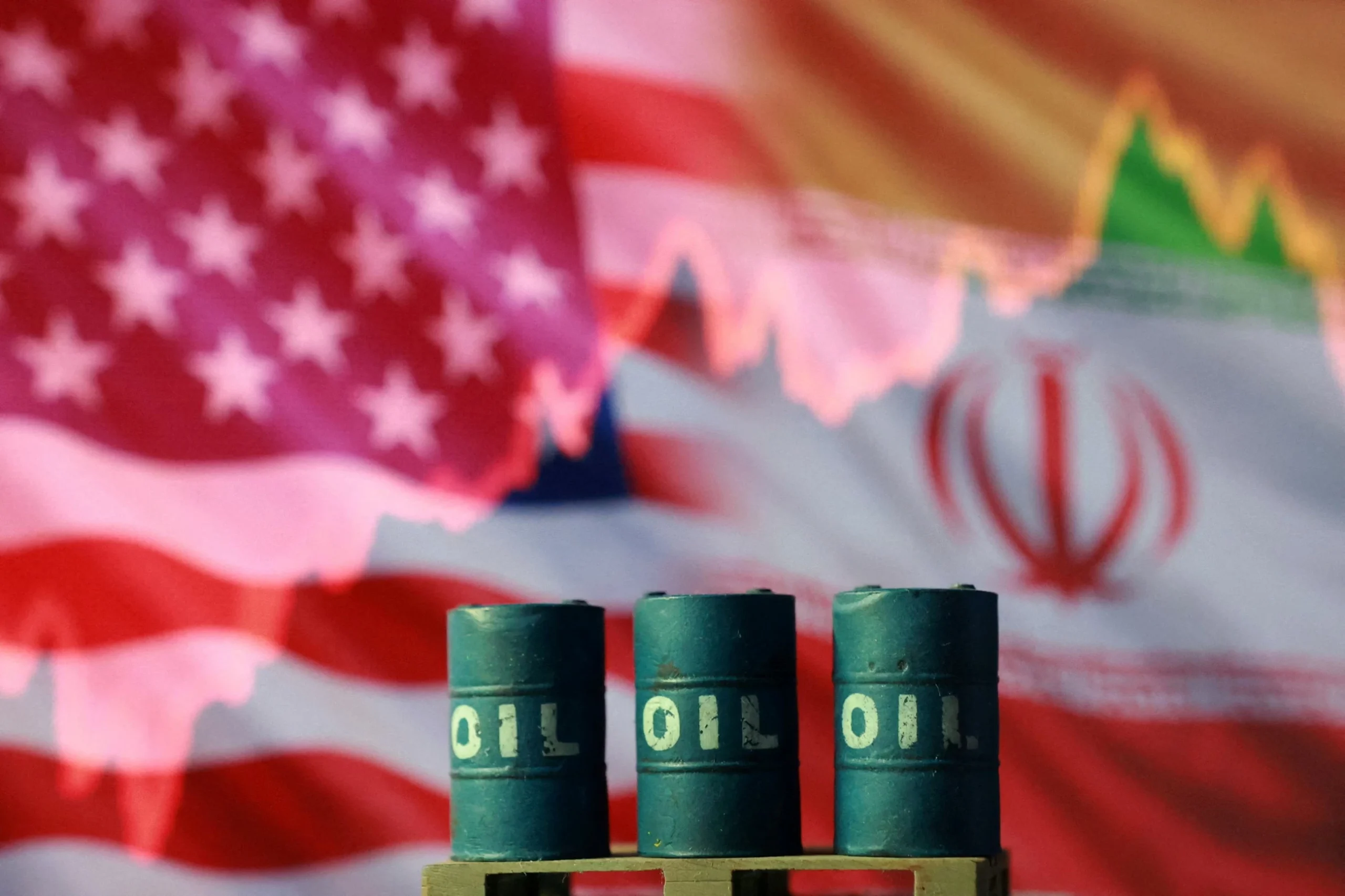
A US naval blockade of Iranian ports is likely to squeeze Iran’s oil output in the coming weeks but claims it will throw the Islamic republic into economic free fall remain premature, analysts say. After weeks of bombing and counter-strikes, focus has shifted to the standoff in the Strait of Hormuz, which ordinarily carries around a fifth of the world’s oil and liquefied natural gas. In response to Iran’s blockade of the strait since the start of the Middle East war, the US imposed a counter-blockade of the Islamic republic’s ports, a push to force its leaders into a compromise in peace talks. That bid, however, looks set to fail, at least in the short term. “If the blockade lasts for more than two or three months, it can cause more damage” to Iran, economic analyst and professor at Shahid Beheshti University in Tehran Saeed Laylaz told AFP. “If Iran suffers any damage, the damage to the countries in the southern Persian Gulf will definitely be greater,” he added. There’s a limit on how long Iran can bide its time, however. Arne Lohmann Rasmussen, chief analyst at Global Risk Management said Iran “was expected to run out of storage capacity within approximately one month, but it may already be forced to shut in part of its oil production within a couple of weeks”. Trump said Tuesday that Iran was “collapsing financially” under the blockade imposed by the US Navy on April 12, claiming that the country was “starving for cash”. Treasury Secretary Scott Bessent said the blockade meant storage at Iran’s Kharg Island, the main export terminal through which most of the country’s crude is shipped, “will be full and the fragile Iranian oil wells will be shut in”. Jamie Ingram, managing editor of Middle East Economic Survey (MEES), told AFP it was likely the timeline for Iran to hit its oil storage limits would be measured in “weeks rather than days”. He added it was likely that “Iran will slightly reduce production before getting to the stage where storage constraints start to bite”. According to analysis by oil expert Homayoun Falakshahi shared by energy intelligence firm Kpler, Iran’s crude production has already slowed since the start of the war. Output fell by around 200,000 barrels per day in March to 3.68mn bpd and is expected to drop a further 420,000 bpd in April to about 3.43mn bpd, reflecting “the broader impact of export disruptions and refining constraints linked to the ongoing conflict,” Falakshahi said. But Laylaz in Tehran said beyond the psychological effect of the blockade, the “real material effect has been small so far”. Ingram said Kharg Island “shouldn’t be a particular bottleneck,” for Iran. “This is the final storage facility used before oil is exported and Iran can divert crude oil to other facilities rather than straight to Kharg,” he said. The MEES expert also said Iran’s dependency on oil exports via Hormuz had “deepened due to the damage caused by US and Israeli strikes to other sections of the Iranian economy”. “But Iran has also proven its ability to withstand huge oil-revenue declines during previous rounds of sanctions. I would not underestimate the regime’s resilience in this regard,” he added. As the initial two-week truce between Iran and the US was set to expire Trump had said Tuesday he would maintain the ceasefire to allow more time for peace talks. Iran said it welcomed the efforts by mediator Pakistan but made no other comment on Trump’s announcement, while vowing not to reopen Hormuz so long as the US blockade remains in place. Ali Vaez, Iran project director at the International Crisis Group, said “Iran’s economy was battered before the war, is contending with added strains caused during it, and now faces the combination of sanctions, seizures and potential strikes”. “Iran’s leadership has previously shown a high threshold for pain even if the pressure on ordinary Iranians increases. It also likely calculates that its own efforts to subdue traffic through Hormuz act as a sort of mutually assured disruption,” he added. —    

World
10 countries are home to two-thirds of world's most hungry: UN-backed report

10 countries are home to two-thirds of world's most hungry: UN-backed report

Conflict, drought and shrinking aid will keep global hunger at critical levels in 2026, with food insecurity expected to worsen in some of the world's most fragile countries, according to the 2026 *Global Report on Food Crises.And two-thirds of people facing food crises globally last year lived in just 10 countries, with a third of them in Sudan, Nigeria and the Democratic Republic of the Congo (DR Congo), a UN-backed yearly report said yesterday.Conflict remained the main driver of acute food insecurity, according to the report, based on data from the United Nations, the European Union and humanitarian agencies.And with conflicts and climate extremes 'likely to sustain or worsen conditions in many countries', the outlook for 2026 is 'bleak', it said.'Acute food insecurity remains highly concentrated (in) 10 countries – Afghanistan, Bangladesh, the Democratic Republic of the Congo, Myanmar, Nigeria, Pakistan, South Sudan, Sudan, Syrian Arab Republic, and Yemen,' the report said.Improvements in some countries, such as Bangladesh and Syria, were 'almost fully offset by notable deteriorations' in Afghanistan, DR Congo, Myanmar and Zimbabwe, it said.For the first time in the report, which is in its 10th edition, famine was confirmed in two separate contexts – in Gaza and parts of Sudan – in the same year.In total, 266mn people in 47 countries and territories faced high levels of acute food insecurity in 2025, while 1.4mn people faced catastrophic conditions in parts of Haiti, Mali, Gaza, South Sudan, Sudan and Yemen.In 2025 alone, 35.5mn children worldwide were acutely malnourished, including nearly 10mn suffering from severe acute malnutrition.Looking at this year, the report said severity levels remained critical, with only Haiti expected to escape from the worst 'catastrophic' band thanks to a slight improvement in security and increased humanitarian aid.It also warned about the sharp decline in international aid and said the Middle East war risked aggravating existing crises by increasing the numbers of displaced in a region already hosting millions of refugees, and driving up fertiliser costs.The blocking of the Strait of Hormuz, a key oil supply route, has sent fertiliser prices soaring since they rely on oil-based inputs.'Now we're in planting season,' Alvaro Lario, head of the UN's International Fund for Agricultural Development (IFAD), told AFP. 'So for sure this current food shock – both with the energy prices going up and also fertilisers going up – I think it's going to have a massive impact in terms of production.'He called for more help to small-scale farmers, for example by investing in water- and climate-resilient crops.Crises could be eased by farmers producing fertiliser locally as well as improving soil health so that less of it is needed, he added.Even before the added stress of this latest war, West Africa and the Sahel looked likely to remain under heavy pressure this year from conflict and persistent inflation, particularly in Nigeria, Mali, Niger and Burkina Faso.Nigeria alone is projected to see one of the largest increases in food insecurity in 2026, with 4.1mn more people expected to face acute hunger.In East Africa, failed rains across much of the Horn of Africa are expected to deepen suffering in Somalia and Kenya, where drought, insecurity, high food prices and reduced humanitarian aid are likely to drive worsening conditions.The report also warned that humanitarian and development financing for food sectors in crisis fell sharply in 2025 and is projected to decline further.Humanitarian food-sector funding is estimated to have dropped by some 39% last year from 2024 levels, while development assistance contracted by at least 15%.The IFAD is also working on boosting investment by local private sectors.'Creating the instruments and incentives for the local private sector... is a very important way of making that sustainability and that development money go a longer way,' Lario said. 

World
Children’s lives at risk from US funding cuts to vaccine alliance: CEO

Children’s lives at risk from US funding cuts to vaccine alliance: CEO

(FILES) This photograph shows a board bearing the logo of Gavi, the vaccine alliance at their headquarters in Geneva, on April 11, 2025. The head of a global vaccine organisation told AFP on April 24,

World
Pentagon email floats suspending Spain from NATO

Pentagon email floats suspending Spain from NATO

An internal Pentagon email outlines options for the United States to punish NATO allies it ‌believes failed to support U.S. operations in the war with Iran, including suspending Spain from the alliance and reviewing the U.S. position on ​Britain's claim to the Falkland Islands, a U.S. official told ‌Reuters.The policy options are detailed in a note prepared by Elbridge Colby, the Pentagon's top policy adviser, who expressed frustration at some ‌allies' perceived reluctance or refusal to grant ⁠the United States access, basing and ‌overflight rights - known as ABO - for the Iran war, said the official, ‌who spoke on condition of anonymity to describe the email.Colby wrote that ABO is "just the absolute baseline for NATO," according to the official, who added that the options were ⁠circulating at high levels in the Pentagon.One option in the email envisions suspending "difficult" countries from important or prestigious positions at NATO, the official said.President Donald Trump has harshly criticized NATO allies for not sending their navies to help open the Strait of Hormuz, which was closed to global shipping following the start of the air war on February 28.He has also declared he is considering withdrawing from the alliance."Wouldn't you if you were me?" Trump asked Reuters in an April 1 interview, in response to a question about whether the U.S. pulling out of NATO was a possibility.But the email does not suggest that the United States do so, the official said. It also does not propose closing bases in Europe.The official declined to say whether the options included a widely expected U.S. drawdown ​of some forces from Europe, however.Asked for comment on the email, Pentagon Press Secretary Kingsley Wilson responded: "As President Trump has said, despite everything that the United States has done for our NATO allies, they were not there for us."The War Department will ensure that the President has credible options to ensure that our allies are no longer a paper tiger and instead do ‌their part. We have no further comment on any internal ⁠deliberations to that effect," Wilson said.TRUMP ​ADMINISTRATION SEES EUROPEAN 'SENSE OF ENTITLEMENT'The U.S.-Israeli war with Iran has raised serious questions about the future of the 76-year-old bloc and ​provoked unprecedented concern that the U.S. might not come to the aid of European allies should they be attacked, analysts and diplomats say.Britain, France and others say that joining the U.S. naval blockade would amount to entering the war, but that they would be willing to help keep the strait open once there was a lasting ceasefire or the conflict ended.But Trump administration officials have stressed that NATO cannot be a one-way street.They have expressed frustration with Spain, where the Socialist leadership said it would not allow its bases or airspace to be used to attack Iran. The United States has two important military bases in Spain: Naval Station Rota and Morón Air Base.The policy options outlined in the email would be intended to send a strong signal to NATO allies with the goal of "decreasing the sense of entitlement on the part of the Europeans," the official said, summarizing the email.The option to suspend Spain from the alliance would have a limited effect on U.S. military operations but a significant symbolic impact, the email argues.The official did not disclose how the United States might pursue suspending Spain ‌from the alliance, and Reuters could not immediately determine whether there ‌was an existing mechanism at NATO to do so."We do not ⁠work off emails. We work off official documents and government positions, in this case of the United States," Spanish Prime Minister Sanchez said when asked about the report ahead ⁠of a meeting of European Union leaders in Cyprus to discuss topics including ⁠NATO's mutual assistance clause.POSITION ON FALKLAND ISLANDS COULD BE RECONSIDEREDThe memo also includes an option to consider reassessing U.S. diplomatic support for longstanding European "imperial possessions," such as the Falkland Islands near Argentina.The State Department's website states that the islands are administered by the United Kingdom but are still claimed by Argentina, whose libertarian President Javier Milei is a Trump ally.Milei was upbeat about the prospects."We are doing everything humanly possible so that the Argentine Malvinas, the islands, the entire territory return to the hands of Argentina," Milei said in a radio interview he posted on his X account on Friday."We're making progress like never before."Britain and Argentina fought a brief war in 1982 over ​the islands after Argentina made a failed bid to take them. Some 650 Argentine soldiers and 255 British troops died before Argentina surrendered.A spokesperson for British Prime Minister Keir Starmer said the sovereignty of the islands rests with Britain."Sovereignty rests with the UK and the islands' right to self-determination is paramount. It's been our consistent position and will remain the case," the spokesperson told reporters on Friday.Trump has repeatedly insulted Starmer, calling him cowardly because of his unwillingness to join the U.S. war with Iran, saying he was "No Winston Churchill" and describing Britain's aircraft carriers as "toys."Britain initially did not grant a request from the U.S. to allow its aircraft to attack Iran from two British bases, but later agreed to allow defensive missions aimed at protecting residents of the region, including British citizens, amid Iranian retaliation.Addressing reporters at the Pentagon earlier this month, Defense Secretary Pete Hegseth said "a lot has been laid bare" by the war with Iran, noting that Iran's longer-range missiles cannot hit the United States but can reach Europe."We ‌get questions, or roadblocks, or hesitations ... You don't ​have much of an alliance if you have countries that are not willing to stand with you when you need them," Hegseth said. 

World
Nato ‘must remain united’, says Italy PM Meloni

Nato ‘must remain united’, says Italy PM Meloni

Italy's Prime Minister Giorgia Meloni on the day of a summit of the European Union and regional partners' leaders in Nicosia, yesterday. (Reuters) Italian Prime Minister Giorgia Meloni yesterday urged Nato allies to stick together, after a report that the US was mulling action against Spain over its refusal to support operations against Iran."Nato must remain united. I believe it is a source of strength," Meloni told reporters as she attended an EU summit in Nicosia, Cyprus.The Reuters news agency cited an anonymous US official saying the Pentagon had outlined potential measures to punish allies over their response to the Iran war, including suspending Spain from the alliance.There is no provision in the Nato treaty allowing for the suspension or expulsion of one of the alliance's members.US President Donald Trump has repeatedly railed against Nato allies for refusing to help out more with the Iran war, saying he viewed it as a betrayal.Some of them — France, Spain and Italy — did not allow US military aircraft deployed for the war to overfly their territories or to use bases.Britain initially also refused, but later allowed US flights from its bases for "defensive" missions in the conflict.Trump also tried, in vain, to get European Nato members to send warships to the Strait of Hormuz, which Iran has effectively closed with military threats and attacks.Spanish Prime Minister Pedro Sanchez, whose country was reportedly singled out for suspension, said yesterday he was "not worried", stressing his country was a "reliable member" of Nato.Meanwhile, as Trump deepens questions over whether Washington would help defend Nato allies, the EU is set to lay out a "blueprint" for how its own mutual assistance clause works if a country is attacked.Meloni insisted that Nato would remain central to Europe's defence, but that European nations needed to play a bigger role in their own security."We must work to strengthen Nato's European pillar which must clearly complement the American one," she added. 

Sports
Qatar’s beach volleyball teams advance to last 16

Qatar’s beach volleyball teams advance to last 16

Both Qatari men's beach volleyball teams have qualified for the Round of 16 at the Asian Beach Games – Sanya in China after securing two more victories yesterday in the preliminary stage.The first team, comprising Cherif Younousse and Ahmed Tijan, defeated Uzbekistan 2-0 (21-14, 21-9), while the second team of Mohamed Ehab and Moussa al-Khair maintained their winning run with a 2-0 victory over Macau (21-10, 21-5). Both teams will play their final group matches today to determine the top spot in their respective groups and confirm their Round of 16 opponents, with the knockout matches scheduled for tomorrow. The first team will face Iran, while the second team take on hosts China.Meanwhile, Qatar's women's teams suffered defeats in their opening matches. Malak Hashim and Nelly Shalabi lost to South Korea 0-2, while Haya Abu Issa and Laila Mohammed went down to Sri Lanka by the same scoreline.Qatar have previously enjoyed success in beach volleyball at the Asian Beach Games, winning bronze at the 2014 Phuket edition before claiming both gold and silver medals at the 2016 Da Nang Games, highlighting the steady progress of the sport in the country.Beach handball team overcome JordanQatar's beach handball team strengthened their position at the top of the group with a 2-0 victory over Jordan (22-18, 18-16) in their fifth match of the group stage. The win lifted Qatar to 10 points from five consecutive victories, underlining their consistent form and strong start to the competition.Qatar conclude their group-stage campaign against Thailand tomorrow before facing the Maldives on Monday, aiming to maintain their lead and secure qualification for the semi-finals.3x3 basketball teams begin campaignQatar's men's 3x3 basketball team open their campaign today against Bahrain before facing Kazakhstan later in the day. The women's team also begin their participation with a challenging match against China, one of the tournament favourites, before taking on Kazakhstan on Monday in their second group match.The men's squad includes Mohammed Bashir, Dejan Janic, Nadem Muslic and Osman Deng, while the women's team features Sama Jasser, Tania Al-Tawil, Mona Al-Sayed and Alaa Suleiman.In jiu-jitsu, Ahmed al-Qardaghi exited the competition after losing to Jordan's Alaa Aldin al-Khazai in the Round of 16 of the 77kg category.China lead medal standingsChina continue to top the medal table at the Asian Beach Games – Sanya 2026 with a total of seven medals - four gold, two silver and one bronze. The United Arab Emirates are second with four medals - two gold, one silver and one bronze - while the Philippines sit third with three medals - two gold and one bronze. Vietnam follow in fourth place with one gold and one silver, while the Republic of Korea are fifth with two silver medals.