admin
admin 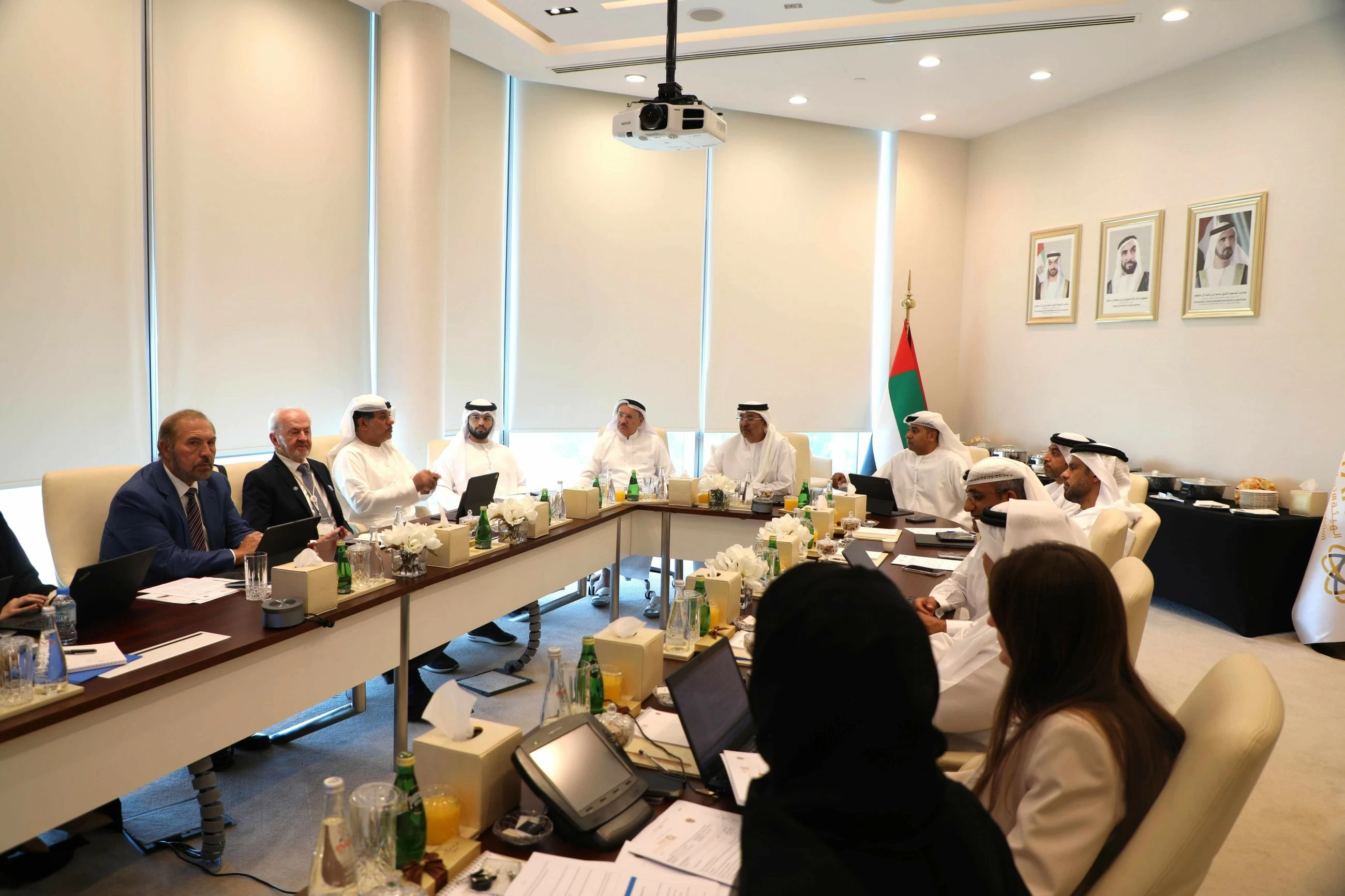
The Board of Management of the Federal Authority for Nuclear Regulation (FANR) held its meeting, during which members reviewed key regulatory developments and strategic priorities supporting the continued advancement of the UAE’s nuclear and radiation regulatory framework.
The Board was briefed on the outcomes of the recent visit of the Director General of the International Atomic Energy Agency (IAEA), Rafael Grossi, to the Barakah Nuclear Power Plant.
During the visit, Grossi commended the UAE’s peaceful nuclear energy programme and its continued commitment to the highest standards of nuclear safety, security, transparency and international cooperation.
The IAEA Director General also highlighted the UAE’s transparent, effective and coordinated response to the incident at the Barakah nuclear power plant. He praised the professionalism and resilience of the teams involved and highlighted the strength of the UAE’s nuclear safety, security and emergency preparedness arrangements.
Grossi reaffirmed the importance of protecting nuclear facilities from attacks and threats in accordance with international principles and standards. The Board noted that the visit reinforced international confidence in the UAE’s robust regulatory framework and highlighted the strength of the longstanding engagement between the UAE and the IAEA.
The Board also received an update on the operational status of the four units of the Barakah Nuclear Power Plant, including planned refuelling outages and maintenance activities. FANR continues to conduct regular inspections to verify the operator’s compliance with regulatory requirements and to ensure the continued safe and secure operation of the plant.
The Board was also briefed on the progress in the development of a new Regulation on Enforcement Actions by FANR (FANR-REG-18), a significant enhancement to the UAE nuclear regulatory framework. The Regulation will set out a framework for the implementation of enforcement actions, including corrective actions, administrative fines, and administrative penalties, applicable to persons engaged in the conduct of activities regulated under the Federal Law by Decree No. 6 of 2009. The Regulation will further strengthen the effectiveness and transparency of FANR’s regulatory oversight and further promote compliance in the UAE nuclear and radiation sector.
Furthermore, the Board approved new MoUs and agreements to be concluded in 2026, covering nuclear and radiation safety, nuclear security, emergency preparedness and response, as well as research and development initiatives. These collaborations remain a cornerstone of the UAE’s nuclear programme, supporting the exchange of expertise, strengthening regulatory effectiveness and promoting the adoption of international best practices.
The Board also approved FANR’s 2025 Annual Report, which highlights the Authority’s key regulatory activities, achievements and milestones during the year. The report reflects FANR’s continued efforts to ensure the highest standards of nuclear safety, security, safeguards and radiation protection while supporting the sustainable development of the UAE’s peaceful nuclear programme.
Meanwhile the Board of Management of the Federal Authority for Nuclear Regulation (FANR) convened in April to review key regulatory developments and discuss strategic priorities for the nuclear and radiation sector.
Members of the Board were briefed on the operational status of the four units of the Barakah Nuclear Power Plant, including planned refuelling and maintenance schedules for each unit. FANR continues to conduct regular inspections at the plant to verify the operator’s compliance with regulatory requirements and to ensure the continued safe and secure operation of the facility.
The Board also approved a number of research agreements with leading academic institutions, including Khalifa University and the United Arab Emirates University, under FANR’s Regulatory Research Programme, launched in 2025. The agreements cover research areas related to the safe operation of nuclear power plants, as well as the application of artificial intelligence and advanced technologies in radiation protection and nuclear facility operations, among other topics in the nuclear and radiation sector.
These agreements reflect FANR’s continued commitment to advancing scientific research in support of its regulatory mandate to protect the public, workers, and the environment, while underscoring the important role of academic partnerships in advancing the sector.
In addition, the Board approved FANR’s 2027 budget, which focuses on supporting regulatory operations, advancing strategic initiatives, strengthening national workforce capacity, and enhancing digital transformation and future readiness efforts to effectively fulfil its mandate.
WAM