admin
admin 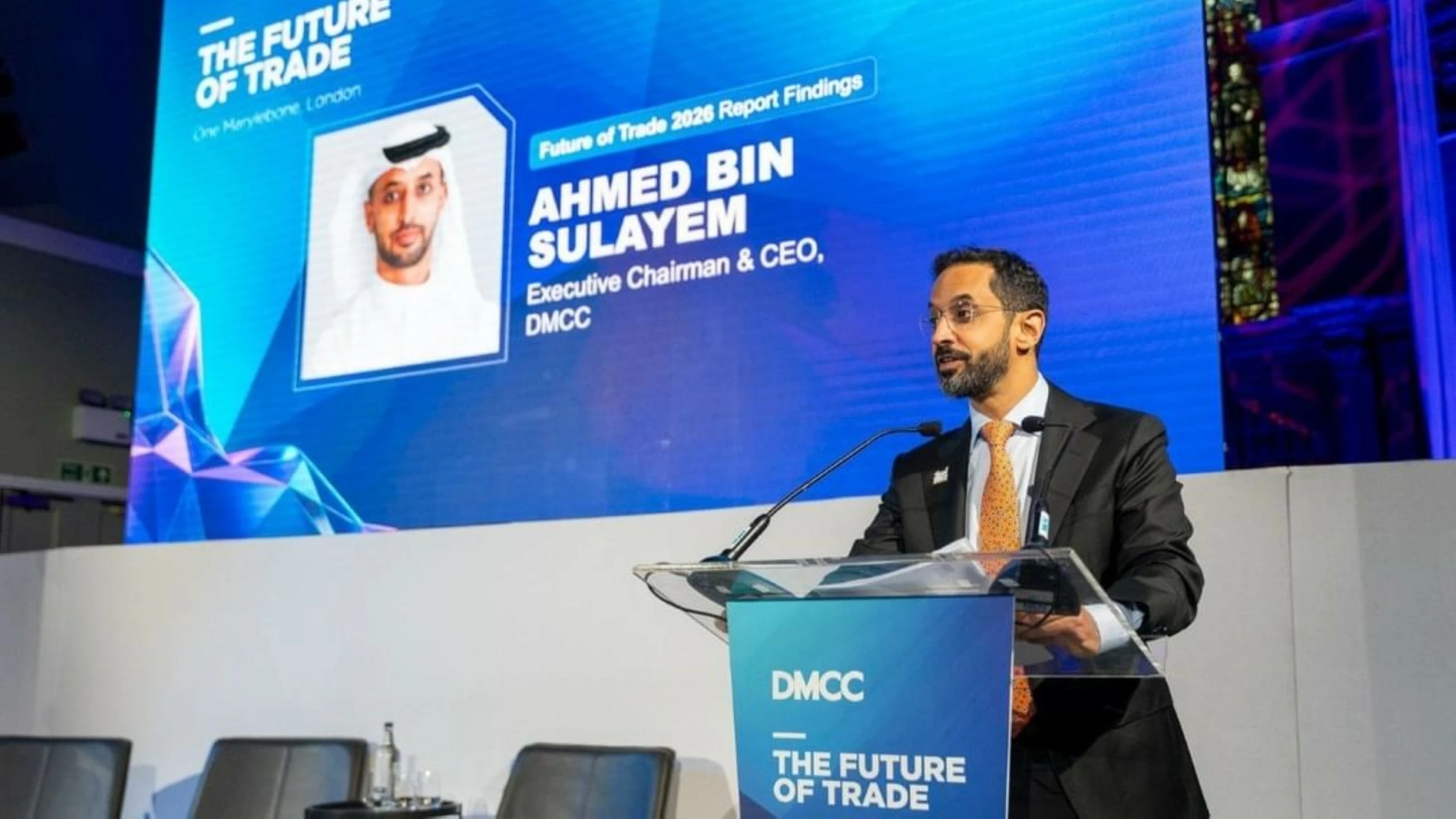
DMCC on Thursday launched its Future of Trade 2026 report, which found that global trade will remain resilient over the next two years but will be fundamentally reshaped by artificial intelligence, structural tariff volatility, supply chains designed for resilience, and a contest for industrial advantage in critical minerals and infrastructure powering global clean energy and technologies.
The report, Future of Trade 2026: Rebuilding Through Rupture, said that more than four in five business leaders surveyed by DMCC expect slow growth, continued supply chain disruption and prolonged geopolitical volatility in the coming years. Almost 12 per cent expect a worst-case scenario driven by escalating conflict, tariffs, sanctions and financial fragmentation. Only 4 per cent expect a best-case outcome.
Nearly 20 per cent of global merchandise imports are now subject to tariffs or similar restrictions, up from 12.6 per cent a year earlier.
At the same time, AI is rapidly emerging as the dominant driver of trade growth. Trade in AI-related goods, including semiconductors, servers and data-centre hardware, expanded by more than 20 per cent in the first half of 2025, compared with less than 4 per cent growth for non-AI goods. AI-related goods account for only 15 per cent of global trade by volume, according to the report.
The World Trade Organisation (WTO) estimates that sustained AI-related trade growth could add 0.5 percentage points to global export volumes.
The report forecasts merchandise exports to slow to 1.9 per cent in 2026, down from 4.6 per cent in 2025, before marginally recovering to 2.6 per cent in 2027. Services exports are forecast to continue outpacing goods.
Ahmed Bin Sulayem, Executive Chairman and Chief Executive Officer of DMCC, said, “AI-related goods accounted for 43 per cent of global trade growth in the first half of 2025, despite representing just 15 per cent of global trade by volume. This underscores where global trade is heading. We are entering a new phase in which competitiveness will be defined not only by cost or geography, but by technology, connectivity, energy access, and the ability to adapt quickly to disruption.”
He added, “Dubai has positioned itself at the centre of these shifts by remaining open, agile, and deeply connected to global markets. With almost 27,000 companies in our district, DMCC sees these changes unfolding in real time across commodities, technology, finance, and trade.”
Feryal Ahmadi, Deputy CEO and Chief Operating Officer of DMCC, said, “The trade environment is becoming more complex, but also more connected. AI is already improving efficiency across customs, logistics, compliance and trade finance, and we are now moving towards practical, operational deployment. Stablecoins, tokenisation and wholesale central bank digital currencies are beginning to support faster and more flexible settlement in certain corridors.”
Data regulation, cybersecurity and digital governance are becoming increasingly important considerations for businesses operating internationally, she added.
Ahmadi stated, “In this environment, trade hubs like DMCC have an important role to play in anticipating the needs of global businesses and ensuring they can continue to operate, grow and adapt through periods of disruption and change.”
WAM