Sports
Brook hails England coach McCullum’s impact in series win over India

Brook hails England coach McCullum’s impact in series win over India

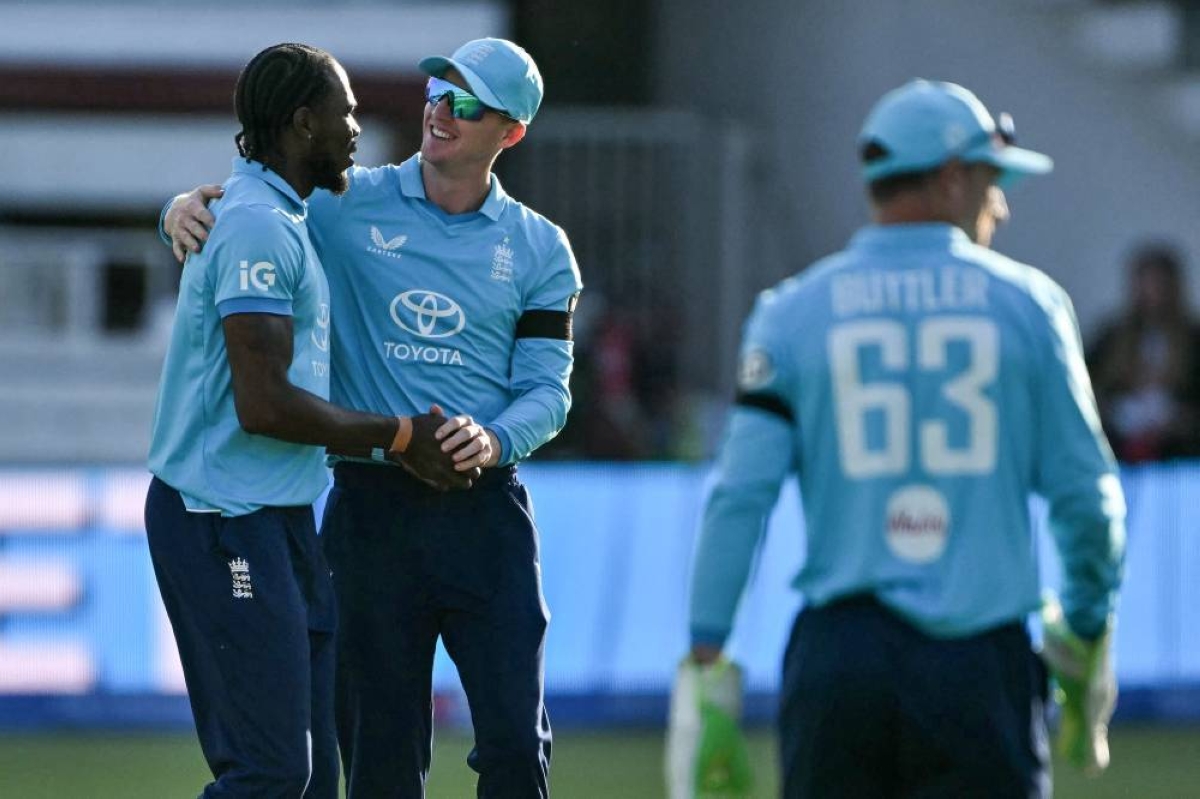
England's Jofra Archer (left) celebrates with England's Harry Brook (second left) after the dismissal of India's KL Rahul (not pictured) during the third one-day international at Lord's cricket ground in London on July 19, 2026.

Sports
Garcia departure leaves Belgium facing ‘generational change’

Garcia departure leaves Belgium facing ‘generational change’

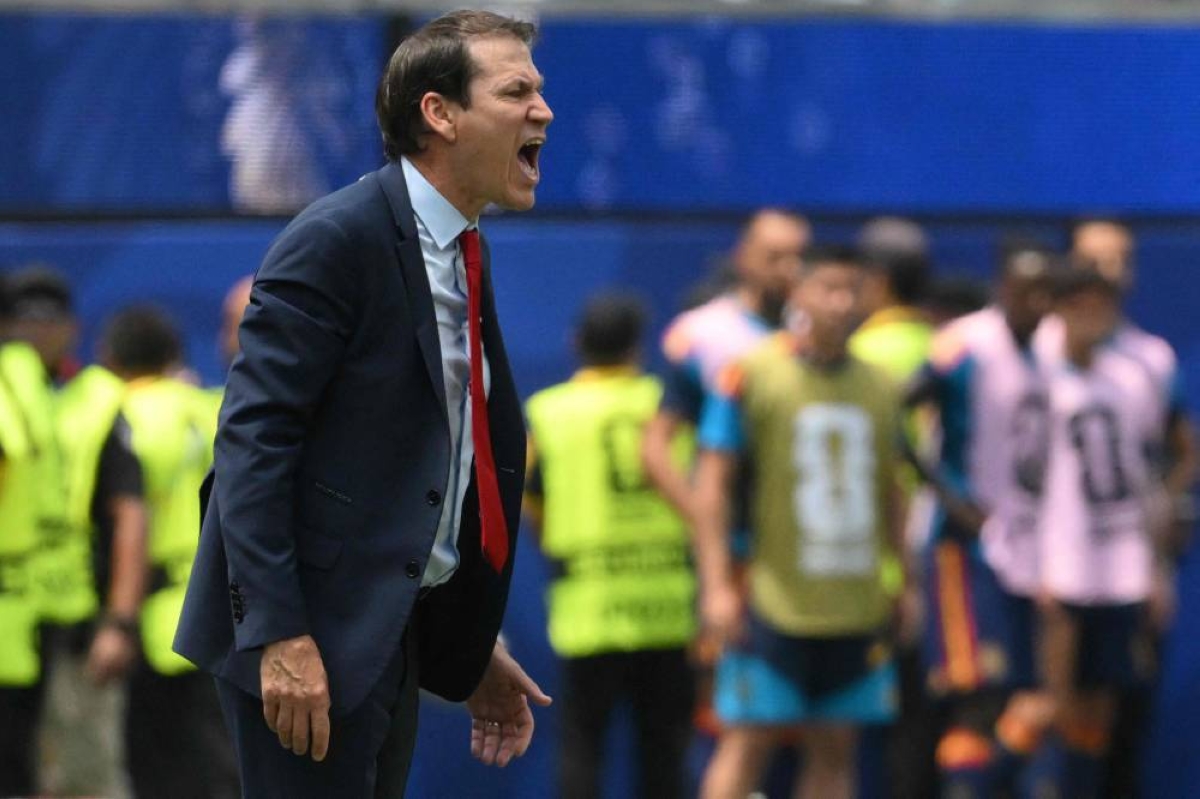
Belgium's head coach Rudi Garcia gestures on the touchline during the World Cup quarter-final against Spain at the Los Angeles Stadium in Inglewood on July 10, 2026. (AFP) Rudi Garcia has left his role as Belgium coach after his side were knocked out of the World Cup quarter-finals, the Royal Belgian Football Federation (RBFA) said on Monday.Garcia, 62, took over the Red Devils in January 2025 before guiding them to a last-eight loss to eventual tournament winners Spain.The Frenchman replaced Domenico Tedesco and also helped Belgium secure their place in Nations League A with an ageing generation of big names players such as midfielder Kevin De Bruyne, forward Romelu Lukaku and goalkeeper Thibaut Courtois."We sincerely thank Rudi Garcia and his staff for their dedication, professionalism and commitment over the past 18 months," the RBFA said."And wish them every success in the future," it added.Garcia's spell in charge was his first job in international football having had notable stints with Lille, Roma and Marseille.In 2023, he lasted just five months at Napoli before being sacked after only 16 games.At the World Cup, he was unable to take Belgium further than the last eight. Their third-place finish in 2018 remains their best performance at the competition.'Revival'Tedesco had only managed to take the squad to the last 16 of Euro 2024. His predecessor Roberto Martinez lost his job after a group stage exit at the World Cup four years ago."Rudi Garcia has undoubtedly contributed to the revival of the Red Devils," RBFA sporting director Vincent Mannaert said,"He was appointed national coach in a difficult sporting and financial context."Thanks in particular to his commitment and experience, team cohesion was restored and an excellent result was achieved at the last World Cup, Lannaert added.Belgium finished top of their group and hammered co-hosts the US 4-1 in the last 16 in a game overshadowed by President Donald Trump asking FIFA to suspend Folarin Balogun's red card ban."I leave Belgium in League A of the Nations League and among the 8 best teams in the world," Garcia said on Instagram."Only Spain, the new world champions, against whom we were the only team to score a goal in eight matches, prevented us from going even further in the most prestigious of competitions," the former Lille midfielder added.Garcia kept faith with the likes of de Bruyne, Lukaku and Courtois, all 33 or older for the competition, from their fabled "Golden Generation" which also included Eden Hazard and Vincent Kompany.He also placed faith in a younger generation of players such as attackers Jeremy Doku and Charles De Ketelaere and defender Nathan Ngoy."I'm ready once again, to pursue new ambitions with a national team or at club level," Garcia said."I wish Belgium all the best as they continue the generational change that I took pleasure in helping to start," he added.  Related Story

Sports
‘Legendary’ former Liverpool and England star Keegan dies aged 75

‘Legendary’ former Liverpool and England star Keegan dies aged 75

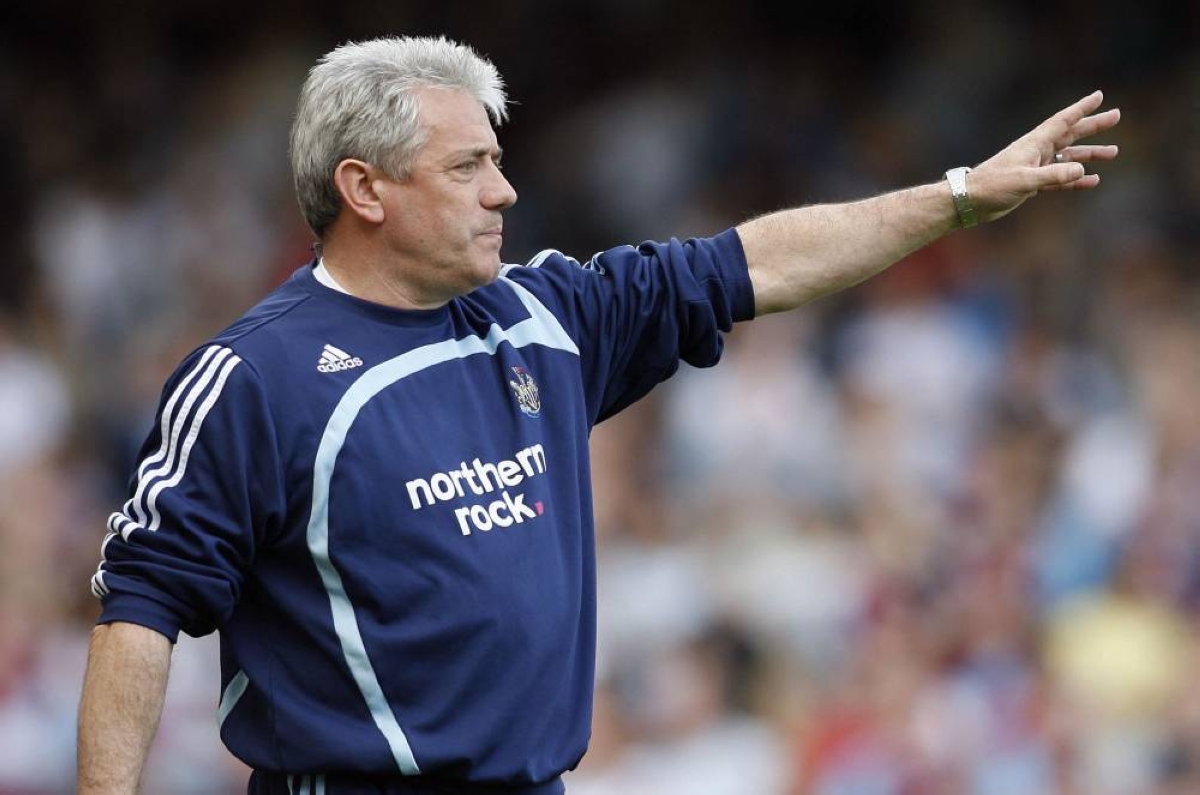
Former England star Kevin Keegan has died after battling cancer, his family announced on July 20, 2026. (AFP) Former Liverpool and England star Kevin Keegan has died aged 75 after battling cancer, his family announced on Monday.Keegan, regarded as one of the greatest players of his generation, was diagnosed with stage four cancer and underwent treatment in January."It is with immense sadness that we announce that Kevin Keegan has passed away at the age of 75," a statement from Keegan's family said."The former England player and manager had been battling cancer and was surrounded by his wife and daughters in his final moments."Keegan, a dynamic striker nicknamed "mighty mouse", won the English top-flight title three times with Liverpool after starting his legendary career with lowly Scunthorpe.He also won the European Cup in 1977 and the FA Cup in 1974 during an iconic six-year spell at Anfield before joining German club Hamburg in 1977.Keegan, who scored 21 goals in 63 games for England, won the Bundesliga title with Hamburg in 1979 and helped them reach the European Cup final the following year.He was voted the European Player of the Year in 1978 and 1979.Keegan returned to England to play for Southampton and Newcastle, retiring in 1984 after starring in the Magpies' promotion to the top tier."We are devastated to learn of the passing of Kevin Keegan, one of the most iconic, influential and deeply-loved figures in our club's history," Newcastle said in a statement."Kevin was more than a legendary footballer and manager. He was the beating heart of Newcastle United for generations of supporters."As a player, he brought world-class talent, ambition and belief to St James' Park, helping to transform perceptions of what Newcastle United could be."As a manager, he ignited our city. Kevin gave supporters hope and pride, and led a team whose style, spirit and passion captured the imagination of football fans around the world. He was so much more than an entertainer." Keegan's 'entertainers'Southampton added: "We are devastated to learn of the passing of Kevin Keegan. Kevin signed for the club in 1980 as the holder of the Ballon d'Or and brought great joy to fans at The Dell and across the football world."Turning to management in 1992, he led Newcastle to promotion to the Premier League in 1993.Keegan established them as a force in the top-flight, dubbed "the entertainers" as they finished runners-up to Manchester United after blowing a big lead in 1995-96 title race.His clashes with United manager Alex Ferguson - including his famous "I'd love it if we beat them" rant - took a toll on Keegan, who eventually resigned in 1997.He went on to manage Fulham before taking charge of England in a turbulent spell from 1999 to 2000, quitting the role of national team boss just hours after a 1-0 defeat against Germany at Wembley.England had failed to make it out of the group stage at Euro 2000 during Keegan's reign.Keegan also spent four years as Manchester City manager before finishing his managerial career with a brief return to Newcastle in 2008."Kevin, a double Ballon d'Or winner, was a much loved husband, father and grandfather. The family would like to thank Kevin's incredible medical team for all their support," his family's statement added."This is a hugely difficult time and they are requesting space and privacy."  Related Story

Opinion
Starring Burnham: What to make of his ‘circuit breaker’ promise

Starring Burnham: What to make of his ‘circuit breaker’ promise

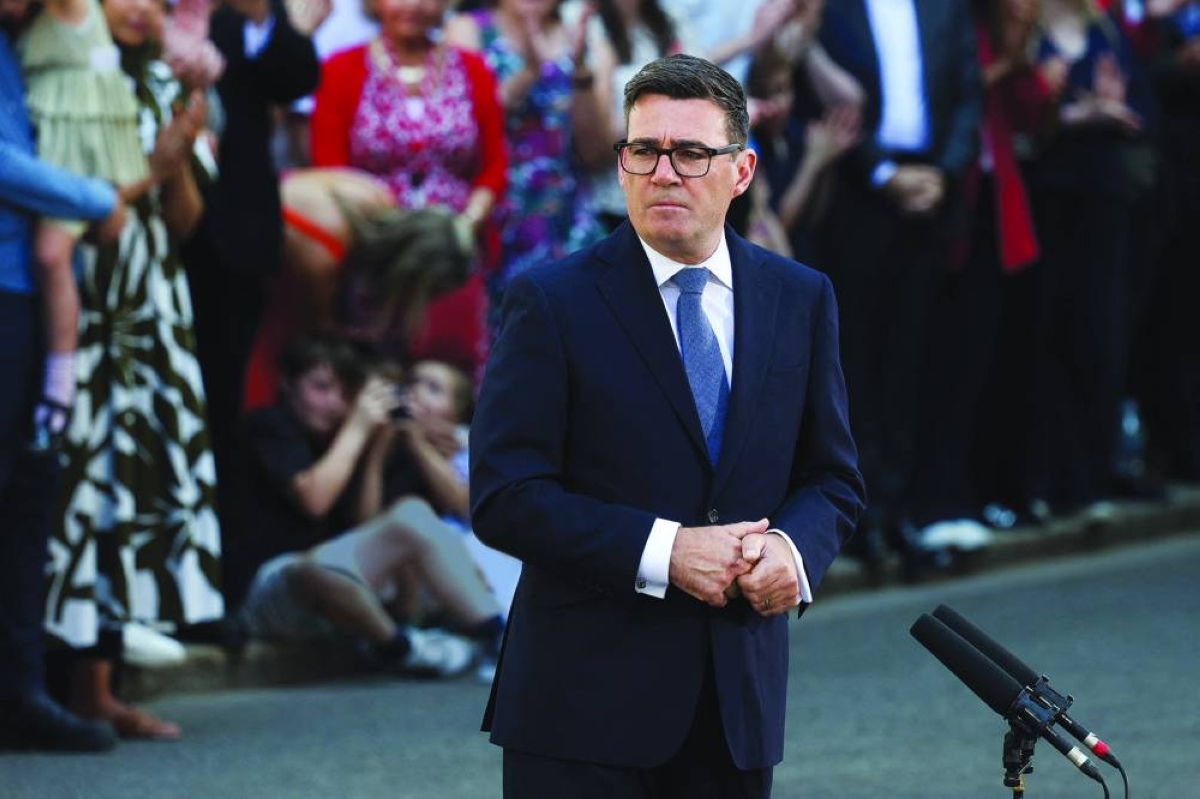
Britain’s newly appointed Prime Minister Andy Burnham delivers a speech outside 10 Downing Street after taking office, in London, yesterday. (Reuters) Britain now changes prime ministers at roughly the rate other nations lose patience with a long-running television series. Six of them in a decade; seven since 2016, if you start the tally at the referendum that blew the fuses on the entire arrangement. The lectern outside No 10 has been wheeled out and folded away so many times that it must qualify as the most well-travelled item of furniture in Whitehall: a small wooden monument to a governing class that keeps promising stability and then providing the opposite. The removal vans have practically worn a groove in the tarmac. Into this carousel steps Andy Burnham, the former mayor of Greater Manchester who engineered his own return to the Commons through a byelection whose only real purpose was to prise Keir Starmer’s fingers off the door of Downing Street. He stood on that over-familiar spot, watched by his wife and a scattering of allies, and did something none of his five immediate predecessors had thought to attempt. He opened not with a victory lap, but with a confession. The anatomy of an apologyTake the scalpel to the speech and the first thing you notice is the tone. Most incoming premiers arrive drunk on their own momentum, eager to tell the country how much better everything is about to become. Burnham began instead by counting himself into the long line of failure. “I am acutely conscious that I am the sixth person in the last 10 years to walk up this street, the seventh prime minister since 2016,” he said, framing his arrival not as a coronation but as a symptom. Then the admission proper: “We have not been good enough, and we need to be better.” This is calculated humility, and it is shrewd. A public that has watched the revolving door spin until it is dizzy does not want another saviour; it wants someone who will at least acknowledge the mess. By naming the rot up front, Burnham inoculates himself against the charge that he is simply the next in the queue. He also lowers the bar he will later have to clear — always sensible for a man who has just inherited a fiscal straitjacket. The centrepiece is the phrase he clearly wants stitched onto the era: a “circuit breaker” for Britain, promising “the biggest changes in the last 40 years. A new political model and a new economic model.” It is an Attlee-sized ambition dressed in the language of an electrician. He reaches back to the 1980s — “Britain took some wrong turns,” he says — and lays the blame on power centralised in Westminster, industry privatised, whole regions hollowed out and never rebuilt. The remedy, in his telling, is to push authority out of the capital and “into every postcode in the land.” For a man who built his brand on Manchester devolution, this is autobiography as manifesto. Then comes the boldest move of the morning: his first instruction in office is to end rough sleeping. It is brave to the point of recklessness, and the reason is written into his own record. Burnham set precisely this target as mayor and missed it; rough sleeping in his city rose across four consecutive years. Confronted with that awkward arithmetic, he did not duck. He argued that a single city cannot solve the problem alone — “you won’t be able to get the numbers down if you’re the only place and people are coming to Manchester” — and that the answer is everyone pulling together, as, he insists, the country managed during the pandemic. Most politicians, caught out by a failure, quietly change the subject. Burnham has chosen to double down on his in front of the nation. There is a ghost hovering over that pledge, too. Jeremy Corbyn once revealed that had he won in 2017, ending rough sleeping would have been his day-one order. Burnham has, in effect, discovered his inner Corbyn — a signal to the Labour left that will land warmly, and one he may need if, as expected, the party’s harder-edged home affairs instincts are about to be rewarded with the great offices of state. The list he cannot talk his way out ofContrition is cheap; the in-tray is not. Burnham takes charge of an economy that has been treading water since the 2008 crash, its ankles further weighted by Brexit and the pandemic. He has boxed himself in by honouring Labour’s promise not to touch the main rates of income tax, National Insurance or VAT — which leaves him the narrowest of ledges from which to fund anything transformational. His first concrete offerings, trailed for this week, are cushioning measures on energy bills and bus fares: breathing space now, the ten-year plan later. Abroad, the map is no kinder. The war in Ukraine grinds on, the Middle East smoulders, and the “special relationship” is fraying at the seams. Starmer cultivated the American president assiduously before infuriating him by declining to fully endorse the US-Israeli strikes on Iran. Washington remains Britain’s indispensable security partner; the current occupant of the White House remains deeply unloved on British streets. Squaring that circle — how much charm to expend on a mercurial ally — is now Burnham’s problem, and the retention of Starmer’s national security adviser suggests continuity rather than reinvention. Defence is its own trap. A predecessor’s defence secretary resigned over spending judged too meagre, only for a belated £15bn uplift to be announced with the crucial question — where the money comes from — left conveniently unanswered. That bill has now landed on Burnham’s desk, and someone’s budget will have to bleed to pay it. On immigration, the politics are treacherous precisely because the facts have moved. Net migration has fallen sharply, yet polling shows voters neither know it nor much care; the anxiety persists regardless. Burnham has signalled he will keep the tough line, even as it grates against his own backbenchers. And then there is welfare, where an ageing population, a rising tide of working-age mental-health claims and the sacred triple lock on pensions combine into a cost curve no one wants to bend in public. Starmer tried, and his own MPs mutinied. Where the money will actually come fromSo how does a man forbidden from raising the big three taxes find the cash for social housing and hope? By hunting where the manifesto still permits. Burnham has already declared that Britain “overtaxed labour and undertaxed” wealth — a sentence that points like a compass needle towards capital gains, council tax reform, and a rebalancing of business rates away from the beleaguered high street and onto the out-of-town sheds. The overall tax take is already forecast to reach its highest share of the economy since 1948, which tells you how little slack remains and how creative the Treasury will have to be. The confession at the door bought Burnham a moment of grace. The nation, weary and cynical, may even want to believe him when he says this is the moment “Britain starts to believe again.” But belief is the easy part to promise from a lectern. The hard part — the funding, the trade-offs, the backbench rebellions — is exactly where his six predecessors came unstuck. The street has seen this walk before. What it has not yet seen is anyone finish it. The writer is Deputy Managing Editor, Gulf Times.   

World
China, people brave simulated typhoons to prepare for the real thing

China, people brave simulated typhoons to prepare for the real thing

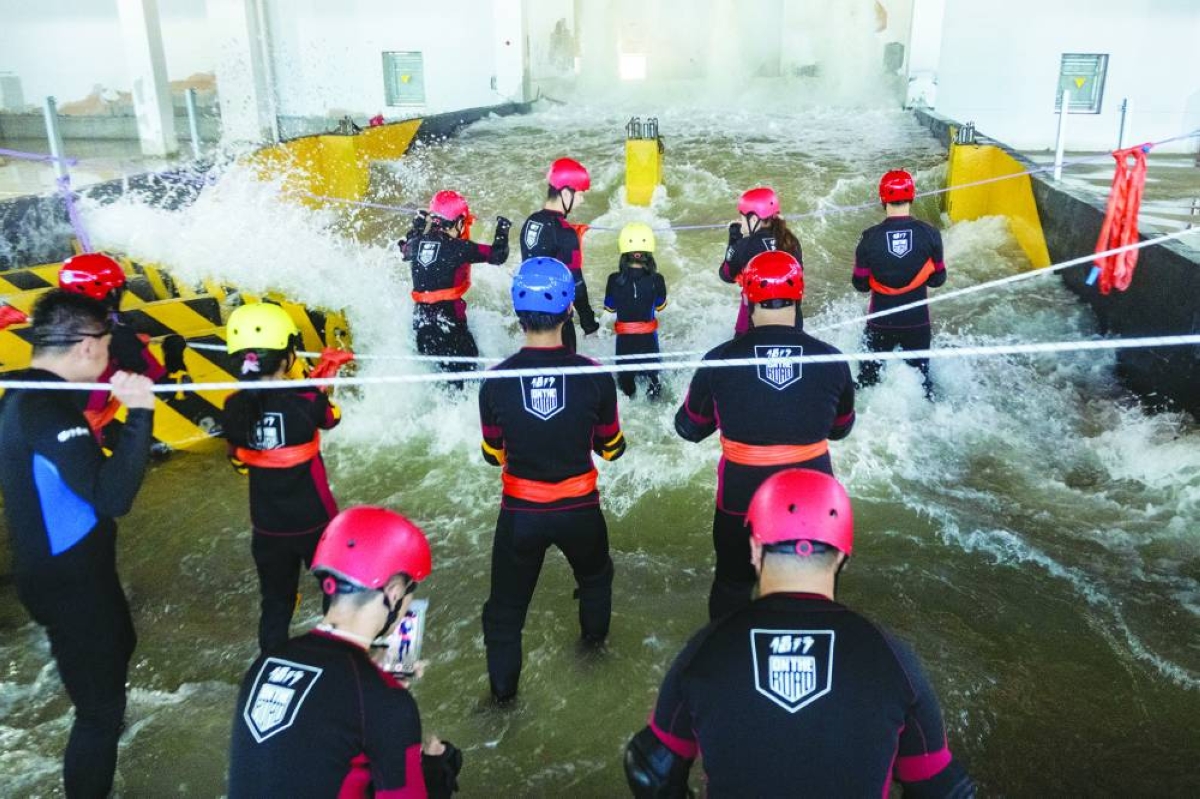
Huang Zhen, 34, shut his cafe for a day last week to be buffeted by surging waters and powerful winds that knocked him off his feet — training for extreme weather events that are increasingly afflicting China.Huang was one of a dozen people attending a session at the Lvxing Disaster Simulation Training Center in Hangzhou, eastern China. For 1,599 yuan ($235) per day, it offers a realistic experience of what it is like to be caught up in a typhoon or a flash flood, albeit with the advantage of wearing a wetsuit, a helmet and having a safety instructor to guide you.The centre says it the first of its kind in the world to provide typhoon training, with its simulated experience generating wind speeds of up to 165kph (103mph) alongside torrential rain.In a separate section, 900 metric tonnes of surging water are unleashed to mimic mountain flooding, while in another, participants must wade — sometimes thigh-deep, sometimes shoulder-deep — through 400 tonnes of water in a mock urban environment."Over the last two years, the weather has become increasingly unpredictable," Huang said. "An opportunity like this ... gives us a better idea of what different levels of disasters might actually be like, and helps raise our awareness of disaster preparedness."Climate change is increasingly exposing the world's second-largest economy to destructive weather events, scientists say. This year is of particular concern due to the emergence of the El Nino weather pattern, which can drive up temperatures and fuel more intense typhoons. China's National Climate Center has said it expects up to six typhoons to form in the Northwest Pacific and South China Sea in July, more than the average of 3.8.One of those was Typhoon Bavi, which brought severe floods and forced millions of Chinese to evacuate."Typhoon Bavi hit just a couple of days ago, making people realise that typhoon hazards are far more of a threat than we thought," said Wu Zijian, a 44-year-old freelance worker who travelled from nearby Shanghai to attend.More than 160,000 people have attended sessions at the centre since it opened in May 2025. Wang Kuanghan, the centre's chief instructor, said there are plans to open five more centres in China within the next three years. These will include simulations of other natural disasters such as fires and earthquakes.For those who can't make it there yet, Wang has a tip."If you ask me, the most important survival skill during a typhoon is simply not to go outside," he said. "Stay indoors and keep yourself safe at home."  Related Story

Opinion
Of Spain’s quiet conquest and the seismic celebrations

Of Spain’s quiet conquest and the seismic celebrations

Spain did not so much win this World Cup as quietly, methodically close the argument. In a tournament drenched in stardust — Lionel Messi chasing legacy, Kylian Mbappe hoarding goals, and a galaxy of elite forwards lighting up scoreboards — it was a team built on restraint, structure and collective discipline that walked away with the prize. Spain, efficient to the point of austerity, dethroned Argentina 1-0 after extra time and, in doing so, delivered a reminder that football still has room for the unspectacularly brilliant. The final itself felt almost subversive. This was meant to be Messi’s encore, perhaps even his coronation as the first man since 1962 to lead a defending champion to back-to-back titles. Instead, it became a masterclass in suffocation. Argentina did not manage a single shot on target. Messi, so often the author of footballing poetry, drifted through the night like a ghost in boots. At the heart of Spain’s triumph was not a prodigy or a headline-grabber, but Rodri — the tournament’s player of the competition, and a symbol of what this team represents. Control over chaos. Intelligence over impulse. Where others dazzled, Spain dictated. There is delicious irony in the fact that a World Cup boasting nearly three goals per game — the most prolific in over half a century — was ultimately decided by a team that scored just 14 times in eight matches. Spain did not chase the spectacle. They edited it. And yet, for all their restraint on the pitch, the celebrations off it were anything but measured. Spain quite literally shook. Seismometers across the country recorded tremors triggered not by tectonic shifts, but by Ferran Torres’ 106th-minute strike and the eruption that followed. In cities from Barcelona to Cadiz, fans jumping in unison generated measurable seismic activity — a scientific footnote that feels almost too perfect for a nation rediscovering its footballing heartbeat. By last morning, Madrid told its own story: streets glazed with confetti, glass and the residue of a night that refused to end. Some supporters had not slept; others simply surrendered where they stood, smiling into the pavement. A million were expected to gather again, because once was never going to be enough. There is, of course, a deeper significance to Spain’s victory. This was not a fleeting success or a fortunate run. It was the continuation of a footballing identity that has evolved without losing its core. Echoes of 2010 are unmistakable — a team anchored in defensive certainty, trusting that control would eventually yield opportunity. But this version of Spain is less romantic, more pragmatic. They no longer need to enchant to win. Even the much-hyped Lamine Yamal, the teenage sensation burdened with expectation, played a peripheral role. Spain did not depend on him — or anyone — to rescue them. That, perhaps, is their greatest strength. For Argentina, the night will linger as a quiet unravelling. Reduced to ten men, outplayed, and ultimately outlasted, their dream of defending the title dissolved not in drama, but in absence — of chances, of rhythm, of answers. For Spain, however, the future feels as compelling as the present. They are now both European and world champions once again, with youth embedded in their spine and a chance, tantalisingly, to defend their crown on home soil in 2030. And if this triumph proved anything, it is that football’s loudest stories are not always written by its brightest stars. Sometimes, they are written by the team that concedes almost nothing, waits for its moment, and when it arrives — makes the whole country jump at once.    

World
Survivors of Indonesia boat sinking found on island, floating at sea

Survivors of Indonesia boat sinking found on island, floating at sea

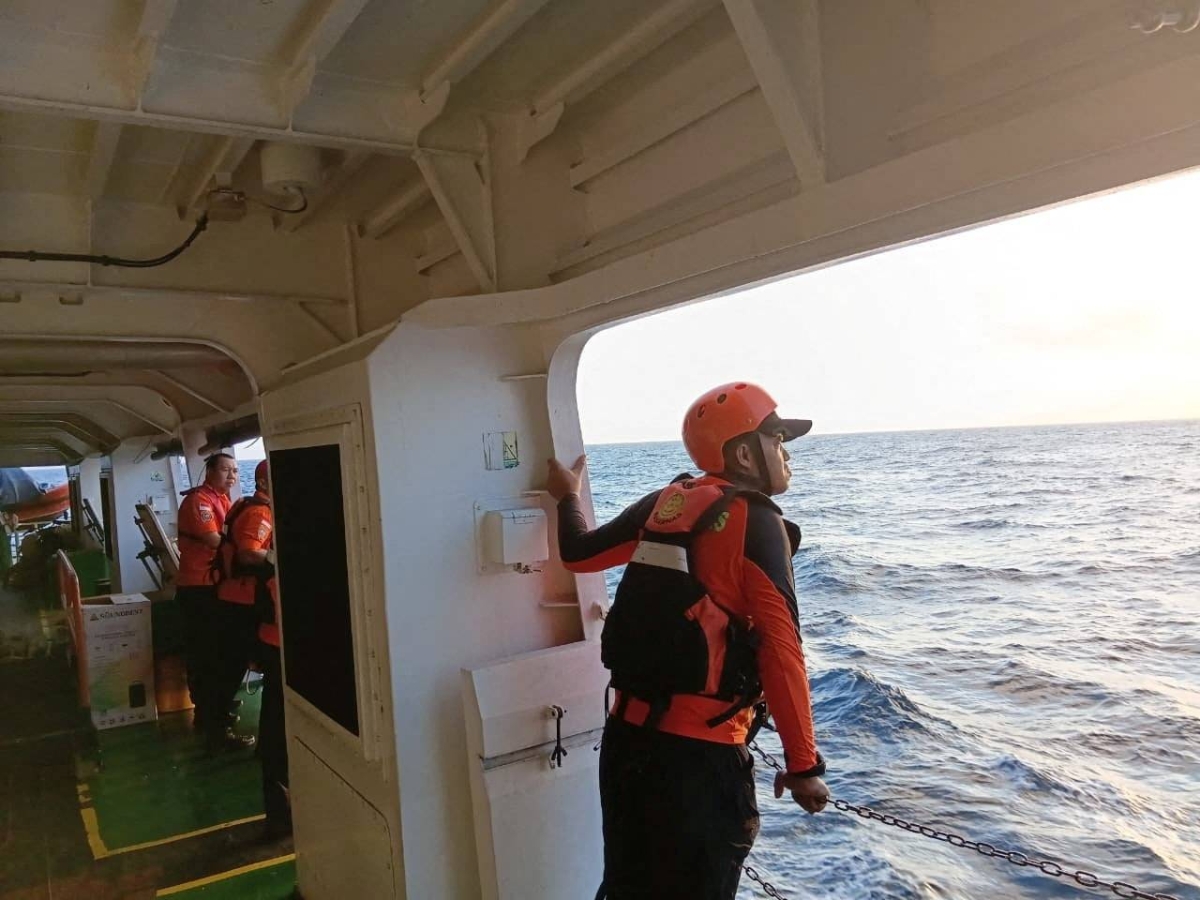
Rescuers search for missing people during an operation after a passenger boat KM Nurul Salsa sank off Selayar island in South Sulawesi, Indonesia,on Friday. (Reuters) Two survivors from a passenger boat that sank off eastern Indonesia were found on an uninhabited island yesterday, a rescue official said, a day after five others were rescued floating in the sea.The vessel, which was carrying more than 70 people, sank on Wednesday as it sailed near Selayar, a small island south of the larger Sulawesi.Yesterday, rescuers found a man and a woman who had made it to a tiny island by clinging to a makeshift flotation device.The duo said four others who had been with them had not made it.“Some of them became weak and could no longer hold on to the raft, and eventually drifted away,” local search-and-rescue official Muhammad Arif Anwar told AFP.“Hopefully we can still find their companions.”Five other survivors, including a seven-year-old girl, were rescued on Saturday after floating at sea for three days.“After the ship sank, each of them saved themselves using whatever equipment or makeshift flotation they could find,” Arif told AFP earlier yesterday.“They rigged together jerry cans and pieces of cork tied up with rope, then climbed on top of them.”The group was rescued on Saturday afternoon by local fishermen, who radioed officials for help, he said.The survivors, tired and weak after floating for days without enough food or water, had sustained themselves with packets of instant noodles and biscuits.Five large ships, a reconnaissance aircraft and a helicopter are being used in ongoing search efforts for 18 people still believed missing, Arif said.About 50 people were rescued on Thursday, officials said.Rescuers said the vessel listed only 50 people on board, but further verification found there were 78 on the ship.It is common in Indonesia for the number of actual passengers on a boat to differ from the manifest. Accidents are a regular occurrence, due in part to lax safety standards and inclement weather.Three Spanish tourists died when their boat sank off eastern Indonesia in January. A 10-year-old boy was listed as officially missing after authorities ended the search. 

World
India bans march on parliament by ‘Cockroach’ activists, standoff looms

India bans march on parliament by ‘Cockroach’ activists, standoff looms

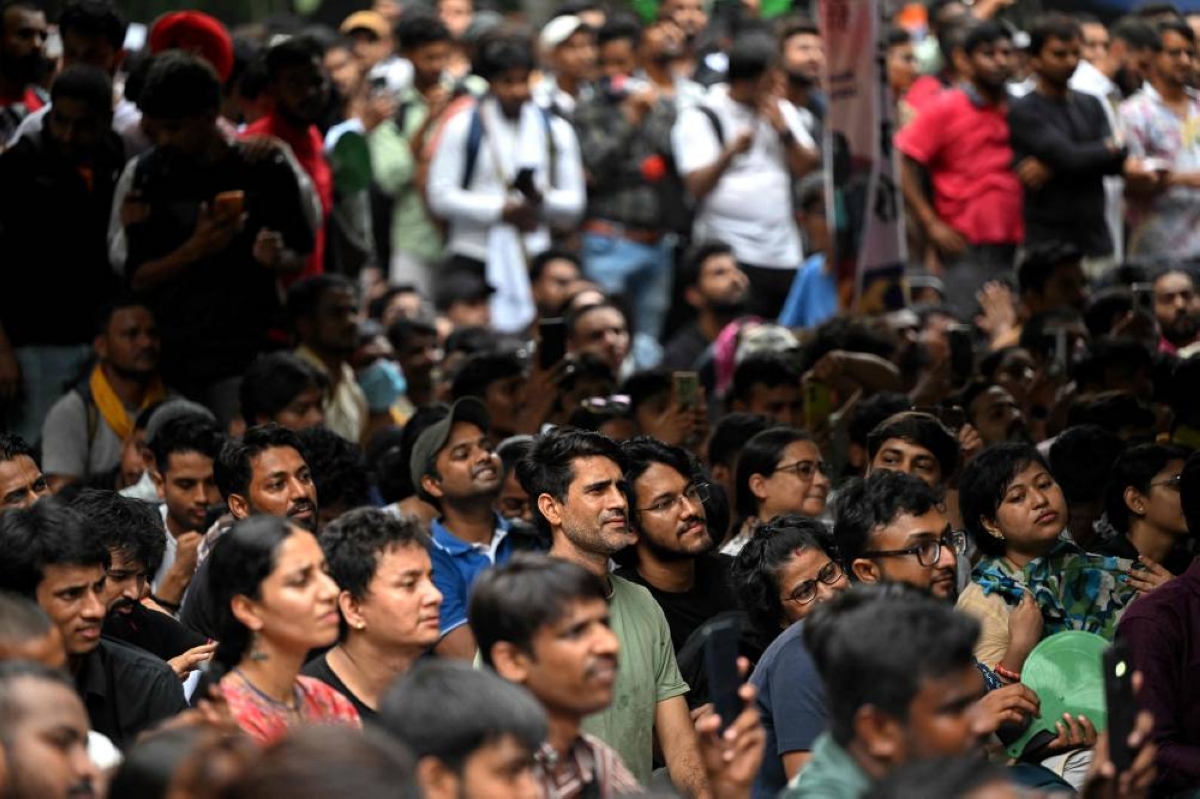
Cockroach Janta Party (CJP) supporters attend a sit-in protest demanding the resignation of India's Education Minister Dharmendra Pradhan over alleged NEET examination irregularities in New Delhi yesterday. (AFP) Police in India have denied permission for a march on parliament by supporters of the youth-led “Cockroach” movement today, risking a standoff as calls grow for the sacking of Prime Minister Narendra Modi’s education minister over exam paper leaks.The movement has been galvanised since police forcibly moved hunger-striking activist Sonam Wangchuk to hospital on Saturday, with hundreds of supporters gathering at a protest site ahead of a planned march on the opening day of parliament’s monsoon session.While the movement initially drew support largely online — amassing 22mn followers on Instagram within days of its formation in May after exam paper leaks affected millions — it has since broadened its appeal, presenting a major challenge for Modi.The 59-year-old Wangchuk said in a message posted by his wife on X yesterday that the planned march would be “India’s 2nd FREEDOM MOVEMENT” and would be for “freedom from injustice (like paper leaks)” and “freedom from fear (my illegal detention)”.But police said orders are in force in the New Delhi district prohibiting assemblies of five or more persons, except at a designated site — the Jantar Mantar observatory — where protesters have already been camping for more than three weeks.“As parliament session is commencing from 20 July, strict security arrangements are in place to ensure public safety, security of protectees, and the protection of vital government installations,” police said on X.The Cockroach Janta Party said the march would go ahead as planned.“The march is happening for sure. We are figuring out the rest,” a spokesperson said, asking not to be named before finalising their plans.Earlier in the day, a Delhi court said authorities were within their rights to move Wangchuk to a government hospital because he had not admitted himself despite his deteriorating health.Judge Mini Pushkarna said doctors had administered only oral fluids and supplements with Wangchuk’s consent, adding: “It cannot be said that any force is being used against Mr Sonam Wangchuk or that his bodily autonomy is being violated in any manner whatsoever.”Wangchuk’s wife, Gitanjali Angmo, had sought permission to transfer him to the privately run Medanta Hospital and her lawyers argued that she was entitled to have him treated at a hospital of their choice.The government opposed the request saying it had to be cautious about Wangchuk’s health and that his wife and close family members had been given round-the-clock access to him.Citing the heavy police presence in the hospital, Angmo said on X “it is not medical care. It is illegal detention”.Safdarjung Hospital said Wangchuk’s vital parameters were stable, although his blood parameters remained “marginally altered”, and he required round-the-clock monitoring.The rise of the Cockroach movement reflects frustrations among young Indians over issues like high youth unemployment and frequent exam paper leaks. 

Sports
Spain rule the world – Gulf Times

Spain rule the world – Gulf Times

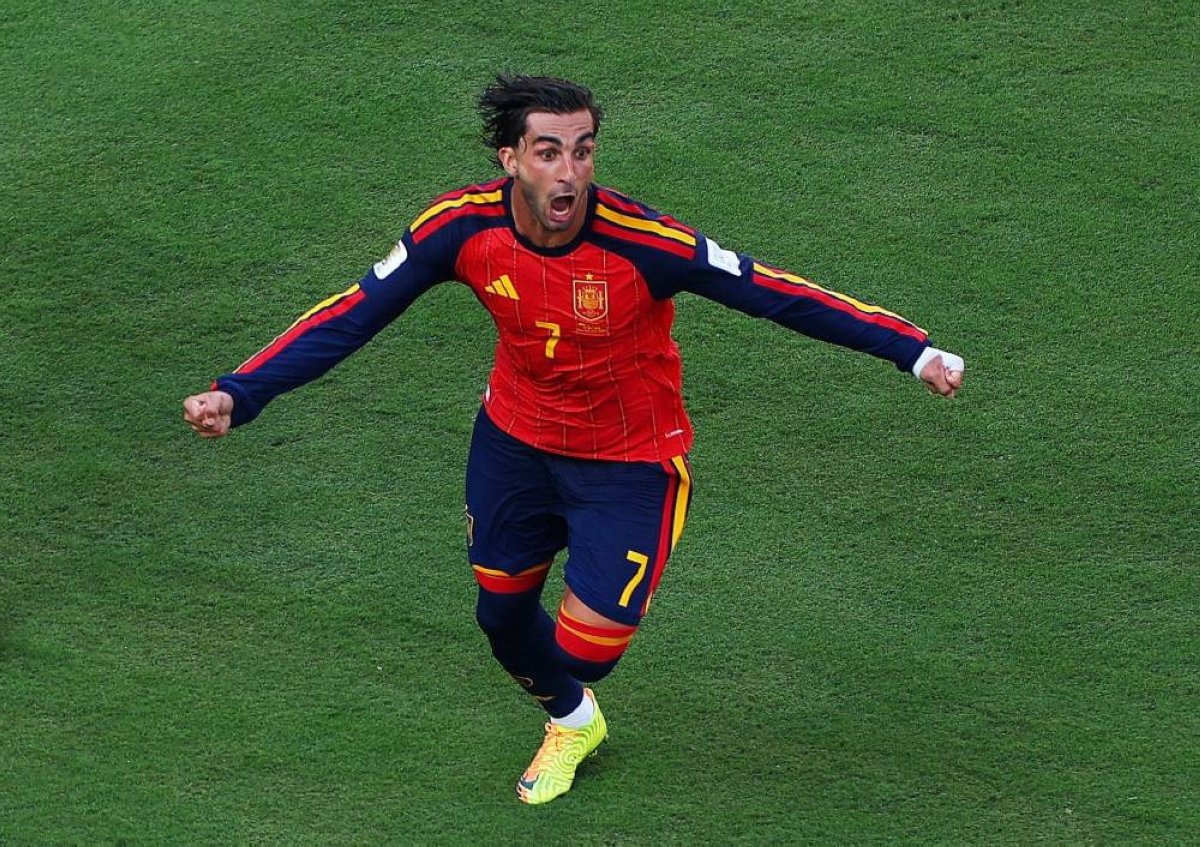
Ferran Torres scored an extra-time winner as Spain defeated holders Argentina 1-0 to win the World Cup yesterday and shatter Lionel Messi’s dreams of a triumphant farewell to football’s greatest stage.Barcelona striker Torres lashed home a thumping finish in the 106th minute to reward a dominant display by Spain against an Argentina team who failed to register a single shot on target in 120 minutes.A star-studded crowd of 80,663 that included US President Donald Trump packed East Rutherford’s MetLife Stadium to see if Argentina captain Messi could crown his glittering career with a second World Cup victory.But the 39-year-old maestro — almost certainly playing in his final World Cup game — was reduced to irrelevance as Spain took control early on against an Argentina team who committed a catalogue of cynical fouls throughout.The South Americans’ skullduggery ended with midfielder Enzo Fernandez being sent off after a brutal challenge on Spain defender Pau Cubarsi in injury time.For long periods though it looked as if Argentina may somehow hold on for a penalty shoot-out as Spain struggled to make the breakthrough.But after Nico Williams had a goal controversially disallowed in extra-time, Spain struck.A lofted cross to the back post by Pedro Porro found Williams who nodded into the path of Torres to crash home the goal that would clinch Spain’s second World Cup title after their maiden 2010 triumph.Earlier, a clear sign of Argentina’s frustration came in the 15th minute when Alexis Mac Allister went flying in with a studs-up challenge that struck Dani Olmo’s ankle.Mac Allister escaped an early yellow card although after Slovenian referee Slavko Vincic only awarded a foul. Sport Pages 1, 4Spain made their presence felt moments later though, with Alex Baena poleaxing Messi with an elbow to the back that again escaped sanction.Argentina continued to test referee Vincic’s patience with a series of niggly challenges, and Nicolas Tagliafico was lucky not to be cautioned after raking Lamine Yamal’s calf in a clumsy challenge.Spain meanwhile continued to probe for openings but Mikel Oyarzabal failed to seriously test Emi Martinez with a low shot that the Argentina goalkeeper gathered easily in the 39th minute.Eventually though Vincic did reach for a yellow card, with Lisandro Martinez booked for a cynical challenge on Oyarzabal.Martinez was substituted shortly afterwards with an apparent injury, veteran Nicolas Otamendi coming on in his place.The final’s controversial extended half-time show featuring the likes of Madonna, Shakira and Justin Bieber stretched to 27 minutes but did little to upset Spain’s rhythm.The Spanish piled on the pressure in a lopsided second half as Argentina hung on grimly.Spain coach de la Fuente sent on Pedri and Ferran Torres for Fabian Ruiz and Oyarzabal and the chances continued with Argentina in full siege mode.Yamal twisted away and chipped a cross for Torres, whose downward header was saved by Martinez.Pedri and Cubarsi both lashed long-range shots that Martinez failed to grasp at the first attempt but somehow Argentina continued to hold on.But the arrival of substitutes Williams and Mikel Merino gave fresh life to Spain’s attacking momentum, and the onslaught continued.Fernandez was booked for dissent in the 82nd minute before Torres and Rodri both fired long-range shots from Martinez.Fernandez’s dismissal left Spain down to 10 men heading into extra-time.Martinez had one last save deep in stoppage time when Yamal’s superb whipped free-kick was clawed wide.The Spanish dominance continued in extra-time, with Williams almost opening the scoring with a glancing header that Martinez got down well to save one-handed.Moments later it looked as if Spain had made the breakthrough when Williams slid a low finish into the net but referee Vincic blew for a marginal foul on Nicolas Otamendi.But the breakthrough came with Torres’s winner on 106 minutes. Argentina made a desperate last raid on Spain’s goal but La Roja held firm to seal victory. 

Opinion
The deliberate campaign to undermine Doha’s successful diplomacy

The deliberate campaign to undermine Doha’s successful diplomacy

A coordinated political and media campaign has sought to discredit Qatar’s role as a regional mediator following its success in brokering the 2026 US-Iran ceasefire and advancing efforts to stabilise Lebanon, according to a new study published by the Arab Center for Research and Policy Studies (ACRPS). The study published on July, 16, 2026, “Don’t Shoot the Mediator: The Campaign to Undermine Qatar’s Role in the Iran and Lebanon Ceasefires,” argues that the attacks are aimed less at Qatar’s diplomatic performance than at the mediation model it has developed over the past three decades — one built on balanced relations, open communication with rival parties and sustained investment in dialogue and conflict resolution. According to the report, Qatar’s emergence as one of the region’s most trusted mediators is the product of a long-term foreign policy strategy rather than ad hoc diplomacy. By maintaining channels of communication with both state and non-state actors, Doha has repeatedly succeeded in facilitating negotiations in conflicts where other mediators have struggled to establish common ground. The study notes that Qatar did not initially seek to lead negotiations between Washington and Tehran. Instead, it supported mediation efforts led by other regional actors before assuming a central role after those initiatives reached an impasse. Despite suffering direct consequences from the conflict — including attacks on its territory and disruptions to liquefied natural gas production — Doha ultimately became the principal intermediary because it retained the confidence of both sides. Its previous diplomatic experience, including facilitating the 2023 US-Iran prisoner exchange, also helped build the trust needed to bridge differences over complex issues such as regional security arrangements, Iran’s frozen assets and navigation in the Strait of Hormuz. However, the study argues that Qatar’s diplomatic success triggered an intensified backlash. Rather than acknowledging Doha’s contribution to preventing a broader regional war, critics portrayed its broad regional relationships as evidence of bias, questioning its neutrality as a mediator. The report rejects that argument, stressing that successful mediation depends not on distance from the parties but on the ability to maintain dialogue with all sides. It argues that opponents deliberately sought to transform Qatar’s greatest diplomatic asset — its access to competing actors — into a liability by presenting engagement as collusion. The study places the campaign within the wider political context of the Gaza war, the US-Iran confrontation and regional efforts to contain escalation. It argues that criticism of Qatar intensified whenever its diplomacy contributed to ceasefires or political settlements that reduced prospects for continued military action. The report also highlights Qatar’s efforts to support stability in Lebanon by linking implementation of the US-Iran understanding with mechanisms to reinforce the Lebanon-Israel ceasefire. Doha worked to encourage Israeli withdrawal from occupied areas, strengthen ceasefire monitoring and help prevent renewed hostilities in southern Lebanon. According to the researchers, these efforts met strong resistance from Israeli political and media circles, which viewed the broader diplomatic framework as limiting Israel’s military options. The study further argues that Qatar’s previous initiatives in Lebanon —including reconstruction assistance following the 2006 war and sponsorship of the 2008 Doha Agreement —have increasingly been recast by critics as support for Hezbollah rather than efforts to preserve Lebanon’s stability and prevent state collapse. The report describes this interpretation as selective and politically motivated, arguing that it overlooks the broader historical and security dynamics behind Lebanon’s crises while disregarding Qatar’s long-standing support for dialogue and state institutions. A significant section of the study examines what it describes as a coordinated digital campaign targeting Qatar’s mediation efforts. Citing research by the fact-checking platform Misbar, it says more than 342,000 posts from over 160,000 accounts appeared on X during the decisive phase of the US-Iran negotiations in June 2026. The analysis found that much of the activity originated from a relatively small network of accounts repeatedly amplifying identical narratives, suggesting organised online coordination. Most posts were published in English and targeted audiences in the United States and Europe, with the principal voices linked to pro-Israeli activists, the American conservative right and monarchist Iranian opposition groups. Rather than debating the substance of the negotiations, the campaign focused on portraying Qatar as aligned with Iran or Hamas, supportive of terrorism or wielding undue influence over US decision-making, the report says. The study concludes that the campaign reflects a broader struggle over the future of diplomacy in the Middle East. It argues that opposition to Qatar’s mediation stems less from concerns about neutrality than from dissatisfaction with negotiated outcomes that constrain military escalation and promote political settlements. Ultimately, the report says the attacks on Doha underscore the growing importance of its diplomatic role. By preserving communication with opposing sides and facilitating dialogue where others have failed, Qatar has established itself as a key regional mediator — one whose effectiveness has increasingly made it the target of coordinated political and information campaigns. The writer is a staff reporter.