Entertainment
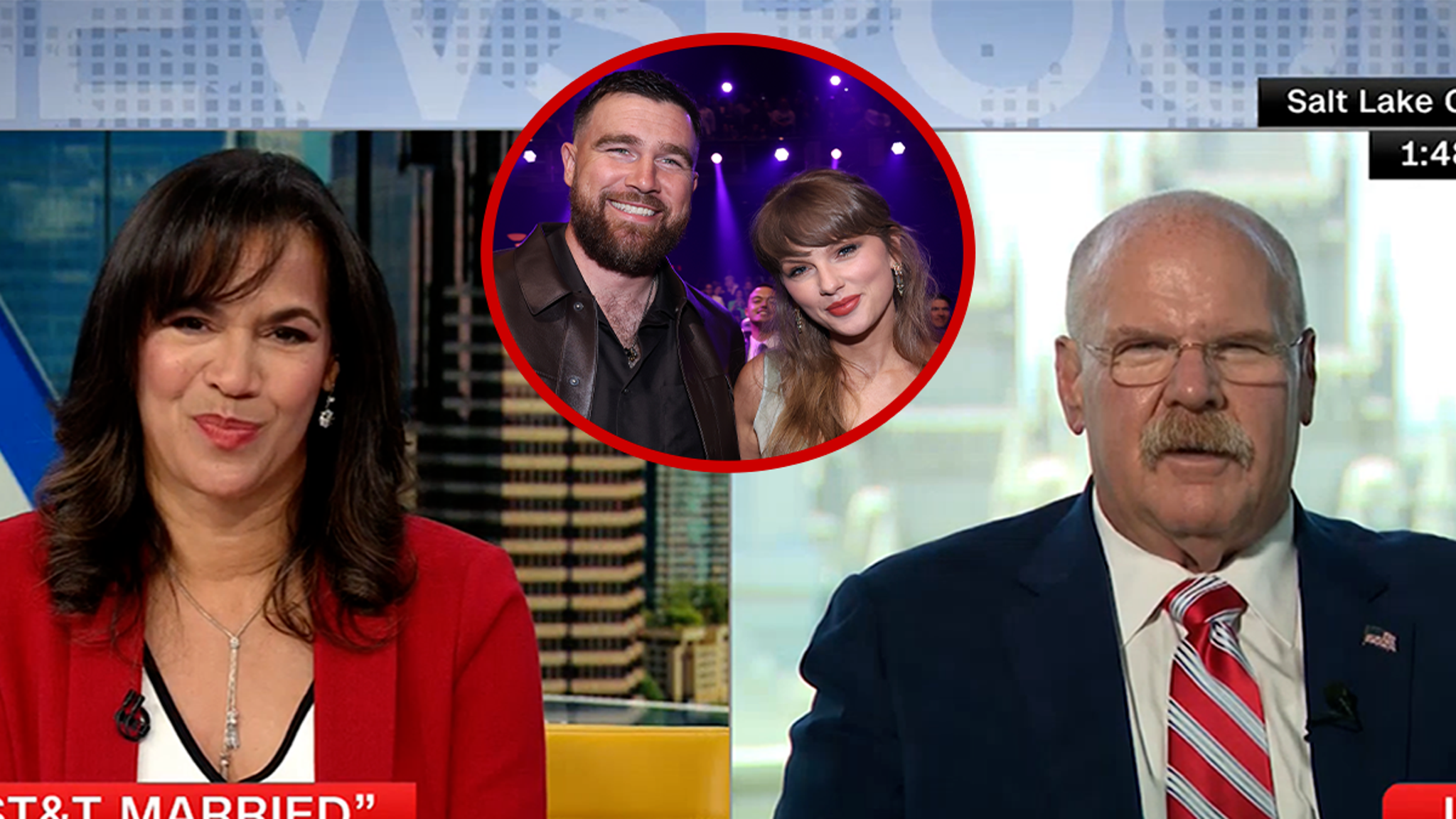
Andy Reid Reveals Adam Sandler’s Marriage Advice for Taylor Swift, Travis Kelce

Andy Reid Reveals Adam Sandler’s Marriage Advice for Taylor Swift, Travis Kelce

Taylor & Travis Wedding Adam Sandler Brought the Laughs & Love ... Chiefs' Andy Reid Reveals Published July 5, 2026 2:17 PM PDT Play video content Adam Sandler gave Taylor Swift and Travis Kelce something

World
Trump called FIFA chief to review Balogun red card

Trump called FIFA chief to review Balogun red card

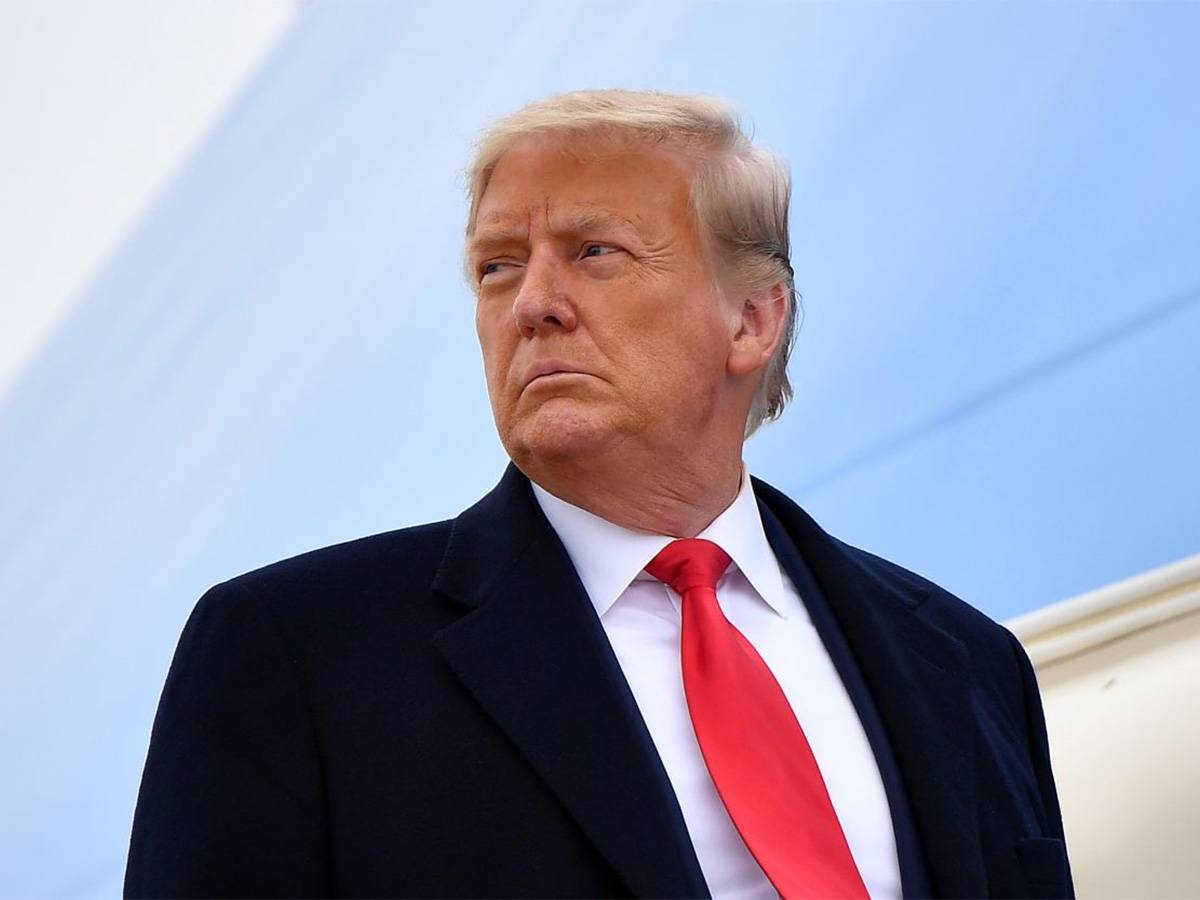
US President Donald Trump called FIFA President Gianni Infantino and asked him to review the World Cup suspension of USA striker Folarin Balogun, which was reversed by football's governing body on Sunday, the New York Times reported.Balogun had been sent off for inadvertently treading on Bosnia defender Tarik Muharemovic in the USA's 2-0 victory in the last 32 on Wednesday. Under FIFA rules, a straight red card automatically triggers a one-game ban that cannot be appealed by the player's team, meaning Balogun was ruled out of USA's last 16 match against Belgium to be played Monday.But Trump called Infantino on Wednesday asking him to review the decision, the New York Times reported, citing three unnamed people familiar with the decision.On Sunday, FIFA took the unusual decision to suspend the ban for one year. Trump quickly thanked the governing body in a social media post for 'reversing a great injustice.'Belgium's football association said Sunday it was 'astonished' at FIFA's decision.

Opinion
Quiet Pakistani diplomacy that turned a corner

Quiet Pakistani diplomacy that turned a corner

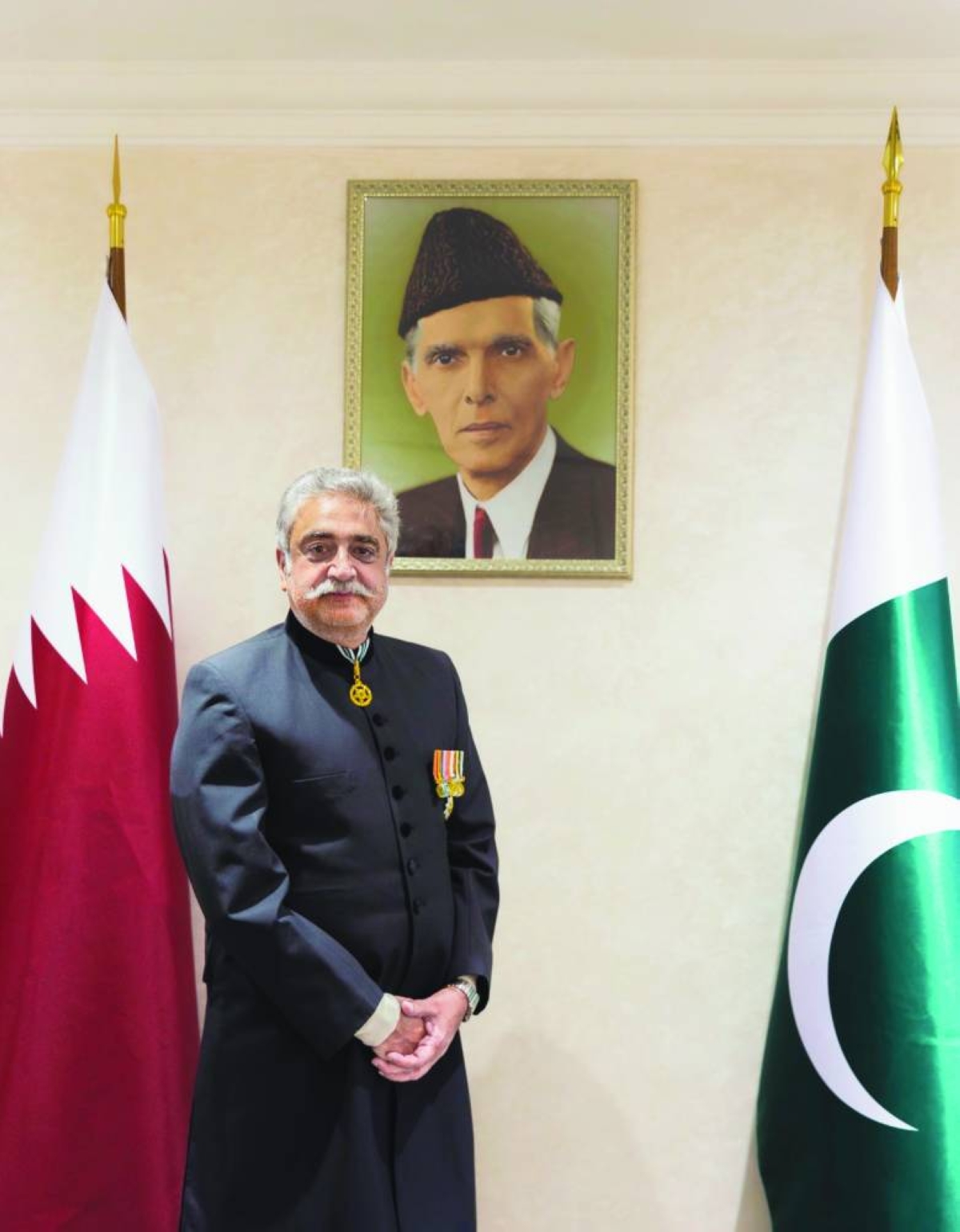
When the history of this year’s Gulf war is written, a podcast recorded in Doha may prove one of its more revealing primary sources. In a rare interview on the CIRS Long View, the podcast of Georgetown University in Qatar’s Center for International and Regional Studies, conducted by the university’s Maryam Daud recently, Pakistan’s ambassador to Qatar, Muhammad Aamer, offered the fullest account yet from a serving Pakistani diplomat of how Islamabad manoeuvred two implacable adversaries — the United States and Iran — into the same room for the first time since 1979. The conversation catches Pakistani diplomacy at the moment of its vindication, and the ambassador in a mood both expansive and studiedly prudent. The first puzzle put to him is the one that has exercised chancelleries everywhere: how did a country that exchanged missile strikes with Iran in 2024 become, two years later, the venue of which Tehran’s envoy could say, “We will negotiate nowhere else but Islamabad”? Ambassador Aamer’s answer was a deliberate widening of the lens. Pakistan’s position, he insisted, “is not a one-off thing which just propped up because of the circumstances”. He invoked geography, a 900-kilometre shared border, cultural affinity and — pointedly — “the power structure of Pakistan, being a nuclear state”. As for the 2024 turbulence: “We sat down, we ironed out the differences, and we moved forward from that. We came out of that difficult situation very amicably and with a lot of trust developed at the end.” The connoisseur will notice what is being done here. The 2024 clash is recast not as a liability but as a credential — proof that Pakistan and Iran possess a functioning machinery for de-escalation. In the grammar of mediation, having survived a crisis with one of the parties is worth more than never having quarrelled at all. Equally instructive was the ambassador’s treatment of the vacuum question. When pressed on whether Pakistan rose because the conventional mediators were caught in the crossfire or sidelined, he was gracious but unambiguous. Qatar, he said, is “a powerhouse of mediation and negotiations”, yet “the situation became such that Pakistan had to come in. Pakistan had to fill the vacuum.” Reading between the lines, the admission is significant: when Iranian strikes reached Gulf infrastructure, the region’s brokers became stakeholders in the war itself. Mediation migrated to the nearest credible actor standing just outside the blast radius — a nuclear-armed neighbour with equities on every side but wounds on none. The Pakistani envoy recalled the early 1970s, when “it was Pakistan which brought both the countries together” and an American president (Richard Nixon) “flew from Pakistan to China”. The analogy is not idle. Then as now, Pakistan’s utility lay precisely in the richness of its portfolio — a defence pact with Saudi Arabia, “people-to-people contact” and “cultural affinities” with Iran, security ties with Washington dating to the 1950s. “Diplomacy,” he observed, “is the game of maintaining balance and walking on the tightrope successfully.” On the mechanics of the talks themselves — three rounds, 21 hours, delegations facing each other across a table in April — the ambassador declined the invitation to storytell, and in declining delivered the interview’s most quotable arithmetic. “You mentioned about 21 hours, but you don’t know how many hours went in before that particular event,” he said, estimating “2,100 hours — maybe before that, and many more hours after that — which did not let the process die down.” What the visible hours produced, in his telling, was almost physical in its symbolism: the two sides “entered the same room, sat at the same table, looked eye to eye with each other, and even shook hands after decades.” His defence of the process against the charge of failure was equally deft. “I think negotiations never failed. I think the expectations of the people — and especially the detractors — they failed.” A conflict “rooted in history” and “layered” with technicalities was never going to be resolved “in one sitting... in a theoretical exercise, in a classroom”. Here he deployed Churchill: “Meeting jaw to jaw is better than war.” The line is doing real work. It reframes the metric of success from outcomes to contact — and by that metric, April 2026 was already historic before a word of the Accord was drafted. Perhaps, the most analytically interesting stretch concerned what one might call the political economy of the memorandum. A contrast was drawn with the JCPOA (Joint Comprehensive Plan of Action — the 2015 nuclear agreement between Iran and the US, UK, France, Russia, China, plus Germany, along with the EU) — a Western-led instrument backed by sanctions and the implicit threat of punishment. The Islamabad Memorandum, by comparison, is the product of a mediator with no coercive leverage whatsoever — and Ambassador Aamer embraced the distinction as a philosophy. “Why not mediate with sincerity? Why not mediate with frankness?... And why not mediate without getting any benefit out of this?” Diplomacy of equals, in other words, offered as a structural alternative to diplomacy of compulsion. Whether goodwill can substitute for enforcement over the long haul is the memorandum’s great untested proposition; but as an origin story, it is a genuine departure from the region’s recent treaty-making. The ambassador was careful, too, not to let the rise of the so-called Middle East Quadrilateral — Egypt, Pakistan, Saudi Arabia and Turkiye — whose foreign ministers have met in Riyadh, Islamabad and Antalya in a relatively short span of time — be read as an obituary for multilateralism. Regional powers stepped in, he argued, because “the regional stakes were important” and they acted “in proximity” and “indigenously”, but “it doesn’t mean that multilateralism has finished”. He reached for the famous consolation offered by Swedish diplomat and economist Dag Hammarskjöld, who served as the second Secretary-General of the world body: the United Nations “is not created to take mankind to heaven; it has been created to save us from hell”. It was a shrewd hedge — claiming the middle-power moment while keeping Pakistan’s UN credentials, including its own resolution on mediation, firmly in view. Nor did the ambassador flinch from the question of self-interest. With millions of Pakistanis in the Gulf and heavy energy dependence on the region, Pakistan’s stake in de-escalation is existential as much as ethical. He converted the point into a closing flourish: “If you say our skin is into it — well, not only our skin; our mind and heart are also into it. And that’s why we are successful.” His parting counsel to Washington and Tehran was that of a professional wearied by performative statecraft: open direct channels “rather than depending on somebody else, rather than using social media only for communication”, because diplomacy “needs a lot of thought before uttering even a single word”. The Islamabad Accord will be judged by whether it holds. But this interview already establishes something durable: a doctrine of mediation — patient, unglamorous, uncoerced — articulated from Doha by the ambassador of the country that made the handshake possible. Scan the QR code to watch/listen to the episode:https://youtu.be/4-zTjl9A7Hc?si=KoLH9DPhAgmP3OOL The writer is Deputy Managing Editor, Gulf Times 

Opinion
Ronaldo: The star endures, but the scrutiny never lets up

Ronaldo: The star endures, but the scrutiny never lets up

There is a particular cruelty reserved for the very greatest. The higher a star climbs, the more relentlessly the world seems determined to watch it fall — and few have understood this arithmetic more intimately than Cristiano Ronaldo. On the eve of what will be his final World Cup last-16 tie, a 41-year-old at the twilight of an extraordinary career chose not to plead for kindness but to hold up a mirror to those who have spent a generation waiting for him to stumble. “You have been trying to kill me for the past 23 years,” he told reporters in Texas, “but you must have seen that is not worth it, it’s a waste of time, but you try and try and try and try and try.” It is a remarkable sentence, and not only for its defiance. It is an indictment of an age in which scrutiny has curdled into something closer to bloodsport, where the appetite for pulling down what was once lauded has become a spectacle in its own right. Ronaldo did not pretend to be what he no longer is. “I am not the player I used to be,” he conceded — an admission that costs a proud man a great deal, and one that many of his critics would never grant themselves. Yet honesty about decline is treated, in the modern coliseum, not as grace but as an opening. The wounded lion draws the crowd. That he could add, in the same breath, “I am not doing too bad” — three goals into the tournament — speaks to a resilience that the daily churn of judgement rarely pauses to acknowledge. What is striking is how early the hunt began. “It’s been like this since I was 18,” he observed, “it is not going to change.” Here is the quiet tragedy beneath the glamour: the celebrated are never permitted an ordinary reckoning with time. Every ageing athlete, every fading performer, must conduct their decline in public, narrated by voices that profit from the drama of the descent. The question of when he will stop — asked again and again — he answered with weary precision: “(I will stop) when I choose, not when you choose.” There is wisdom in his refusal to be diminished by any single result. “I am not going to be more Cristiano Ronaldo or less because I win the World Cup,” he said, and in that line lies a rebuke to a media culture that measures a life’s worth by its final headline. “Age gives you maturity and experience to see how relative things can be.” One suspects his younger self could not have said it. Most disarming of all was his gratitude. “I even say thanks for the attacks I feel after I turned 40,” he offered. “The criticism is how you grow, so thank you for doing this.” It would be easy to read this as sarcasm; it is more generous, and more damning, to take it at face value. He has metabolised a lifetime of hostility into fuel, and in doing so exposes the futility of the enterprise ranged against him. The lesson is not that scrutiny should cease — accountability is the price of the platform. It is that we might learn to distinguish scrutiny from cruelty, and to remember that behind the caricature stands a person. Whatever unfolds against Spain, Ronaldo said he will leave “with a clear conscience.” His pursuers should ask whether they can say the same.

Opinion
Sixth in ten years: Will Burnham be able to buck the trend for PMs?

Sixth in ten years: Will Burnham be able to buck the trend for PMs?

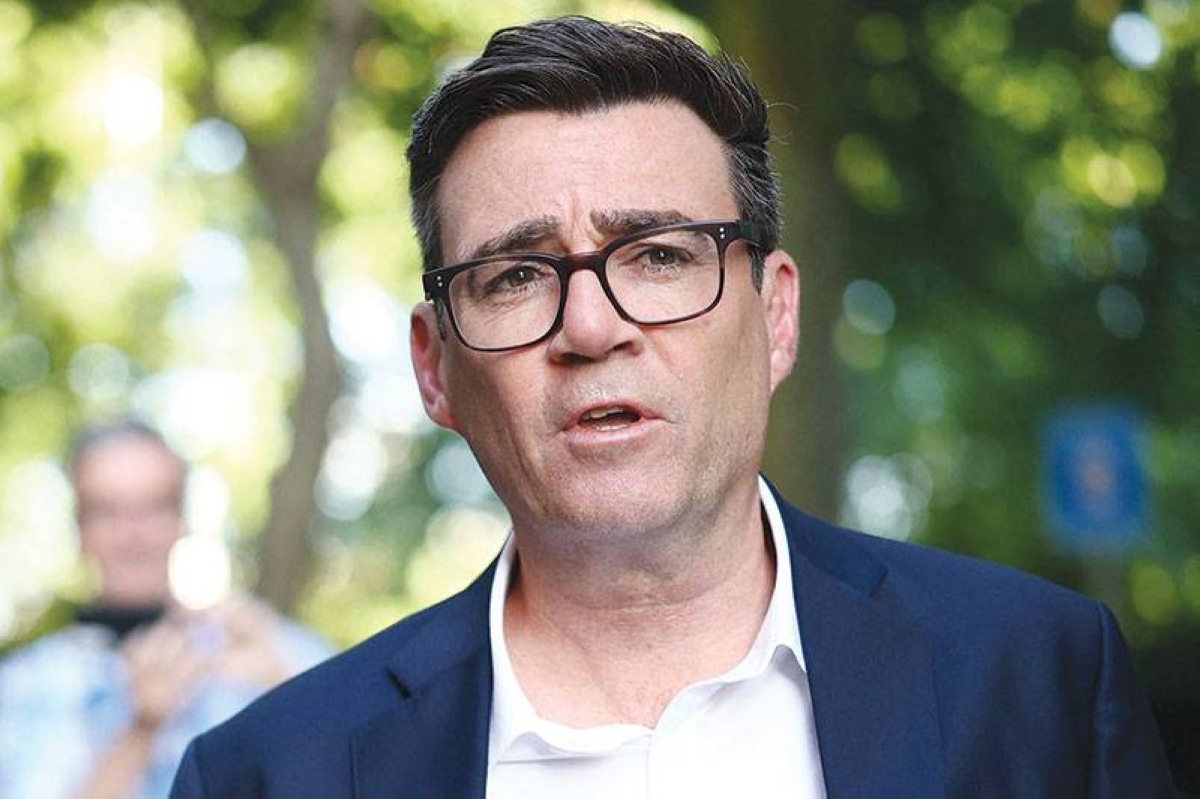
Labour MP and challenger for Leader of the Labour party, Andy Burnham. (AFP) Barring any unforeseen circumstances, Andy Burnham will become prime minister on July 20, almost ten years to the day since Theresa May became the first of the ‘Brexit era’ heads of government — on July 13, 2016. Remarkably, Burnham will become Britain’s sixth prime minister in ten years, or alternatively the fourth in the four years since Boris Johnson was forced from the job in the summer of 2022. Such a run of short-lived leaders is unprecedented in modern British political history and demonstrates just how disruptive the past decade has been. David Cameron announced in January 2013 his intent to call an in/out referendum on Britain’s membership of the European Union should the Conservatives win the next general election, which was held in May 2015. The vote took place on June 23, 2016 and, to Cameron’s surprise, resulted in a 52-48% decision to leave the EU. Cameron resigned as prime minister the day after the referendum, choosing to walk away from the issue which will forever define his political legacy which has overshadowed most of his six successors in 10 Downing Street. The fact that the question on the ballot paper was framed purely as a question of whether Britain should leave or remain in the EU meant that no direction was given as to the details of how and when that should happen, and this caused chaos for years. Brexit finally happened on January 31, 2020, under Johnson, but it was followed almost immediately by the Covid-19 pandemic, which ultimately contributed to Johnson’s political undoing two years later. Whereas Johnson and May had each served three years as prime minister, the tenure of their successors was shorter still: a historic 49 days for Liz Truss, 20 months for Rishi Sunak, and a little over two years for Keir Starmer. Not since 1922-24, when Andrew Bonar Law, Stanley Baldwin, and Ramsay MacDonald each held the premiership for less than a year, has there been such a rapid churn at the top of the British political tree. The era when Britain had a total of three prime ministers – Margaret Thatcher, John Major, and Tony Blair – in 28 years, from 1979 to 2007, seems unfathomable just two decades later. It now falls to Burnham, who must hold a general election by July 2029 at the latest, to see if he can buck the trend and restore a degree of stability to British politics. Burnham is an experienced politician who sat in the House of Commons from 2001 to 2017 and served as a junior minister under Tony Blair and as a Cabinet member in Gordon Brown’s government. Burnham left Westminster in 2017 and became the elected Mayor of Greater Manchester, a post he held until his return to parliament last month. He thus missed the intra-Labour Party feuding during and after the leadership of Jeremy Corbyn and he performed well in the job, presenting himself as a credible northern alternative to his counterparts in London. To an extent, Burnham has followed the path set by Boris Johnson who was also elected to the House of Commons in 2001, the year of Tony Blair’s second landslide victory. Johnson resigned from parliament in 2008 when he was elected Mayor of London and served two terms before returning to Westminster in 2015. Just as Burnham did in Manchester, Johnson used his time in charge of a major city to craft a reputation as an effective governor. Their shared experience indicates how there are multiple pathways to the top, especially in an age of devolved government where more powers are being delegated to regional authorities. As prime minister, Burnham will inherit a difficult set of tasks which include restoring credibility and direction to a Labour government which won a huge majority just two years ago, but which has been rudderless under Starmer. Although Starmer came to politics after a distinguished career in the legal profession, which included five years as Director of Public Prosecutions, his time as prime minister was marred by a series of political lapses which made him deeply unpopular with the public and ineffective within his own party. Burnham will need to restore a sense of party management if he is to energize a government which already looks exhausted and out of ideas only two years into office. Once in government, Burnham will also have to focus on the political threat posed by Nigel Farage and Reform UK. This is not only a threat to the Labour Party but also an existential challenge to the Conservative Party, which was reduced to winning 2.2% of the vote in the Makerfield by-election which brought Burnham back into the House of Commons. It may be that scrutiny from both the left and the right of Reform UK increases as the next general election draws nearer as Labour and the Conservatives seek to pre-empt the further draining of support to Reform. One of Burnham’s key calling cards to power was his ability to take on and defeat the Reform challenge in Makerfield as he increased Labour’s share of the vote from 45% in 2024 to 54% and swept to victory by 20 percentage points. Changes of leadership mid-parliament rarely work as intended as they signify that something has gone wrong in the governing party. Both James Callaghan, who took over from Harold Wilson in 1976 and Gordon Brown, who replaced Blair in 2007, went on to lose the next general election, whereupon Labour was out of power for 18 and 14 years, respectively. Burnham will hope to avoid the fate of his two predecessors as Labour prime minister and instead replicate that of Johnson, who replaced Theresa May two years into the 2017 parliament and called a snap election in December 2019 which he won easily. At the very least, Burnham looks to have the political skills Starmer so sorely lacked and this may give him an early bump in the opinion polls as he settles into life as Britain’s next prime minister. The writer is a leading scholar specialising in Gulf politics and international political economy, and a fellow at the Baker Institute and co-director of the Middle East Energy Roundtable.

World
On America’s big birthday, mixed emotions over legacy and future

On America’s big birthday, mixed emotions over legacy and future

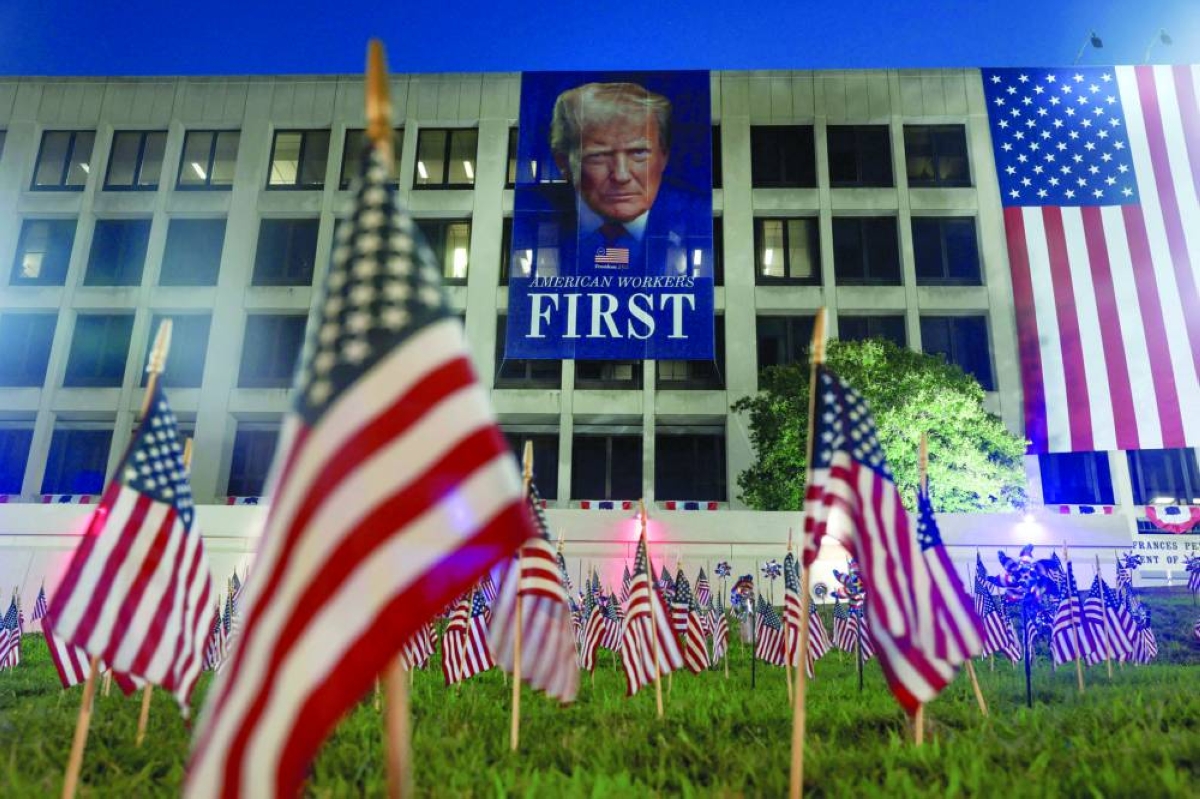
American flags are planted in the ground in front of a banner of President Donald Trump, hanging from the US Department of Labour building, ahead of July 4th festivities. (AFP) Americans celebrated 250 years of independence Saturday with conflicting emotions as pride, hope and patriotism battled with uncertainty and unease over the country’s direction. On Washington’s grassy National Mall, lined by monuments and museums, thousands sweltered in multiblock lines as temperatures neared 38C. With National Guard troops — controversially deployed across Washington by President Donald Trump — imposing crowd control, forklifts dropped pallets of bottled water which crowds clawed through in scenes evoking a disaster response. Still the mood was joyous, with chants of “USA! USA! USA!” breaking out in one set of lines near the National Gallery. Nearby, Iowa state congressman Eddie Andrews was hanging off the back of a farm tractor draped with stars-and-stripes livery, shouting “God bless America!” at the top of his lungs to crowds headed toward the Mall. “Really this day, 250 years ago, really marked the new modern day of freedom, and it’s why America leads the world in so many areas,” he told AFP, between laps through downtown DC.A few blocks away, Donna Dasher and her husband Albert were trying to get a photo of the White House. “I think it’s just the greatest event in our nation’s history,” Dasher said. “President Trump is trying to do everything he can to make it the greatest celebration, and some people say, ‘Oh, it’s about Trump.’ No, it’s not.” The Dashers traveled from Richmond Hill, Georgia to celebrate both America’s anniversary and their own, adding that they were holding military veterans — including some members of their family — in their thoughts during the festivities. As the afternoon sun continued to bake attendees, the National Guard rolled out more bottles of water. “Take two or three or as many as you guys want!” one soldier said. “You guys got any Stella?” one attendee joked. Inside the security perimeter more lines formed — specifically for the air conditioned pavilions of each state and the water stations dotting the vast lawn. The larger tents where companies like Micron and Mastercard have booths struggled to keep temperatures down. Underneath a large model of the proposed Trump Arch, dozens sheltered in the short midafternoon shadows as the roaring sound of military aircraft was heard overhead. While the crowd in the US capital may have represented America geographically, it did not appear to do so ideologically. Amid accusations that Trump co-opted the anniversary to celebrate his own achievements, his and his MAGA movement’s stamp was immediately clear on the clothing and accessories spotted around the Mall. In Atlanta, Georgia, music therapist Melissa Pate was far more somber about the holiday. “I guess in this current political climate, 250 years — it feels like we still have a long way to go,” she told AFP. “To think that we’re 250 years in and there are people in this country that are still not living in true freedom,” she added. “It’s kind of disappointing.” Yet she and her husband would still celebrate the holiday with a traditional barbecue — but later in the evening after the heat subsided. Pate said recent Democratic wins in regional and local elections had given her “hope that the little people — the working class — maybe are being heard.” William-Jose Velez Gonzalez, a Washington resident who is originally from Puerto Rico, had similar thoughts, saying that he felt a certain “sense of grief with the way that things are being handled, with the way that the country is being run.” He was planning a small gathering with friends to watch the fireworks.  Related Story

Opinion
The fortress that failed – Gulf Times

The fortress that failed – Gulf Times

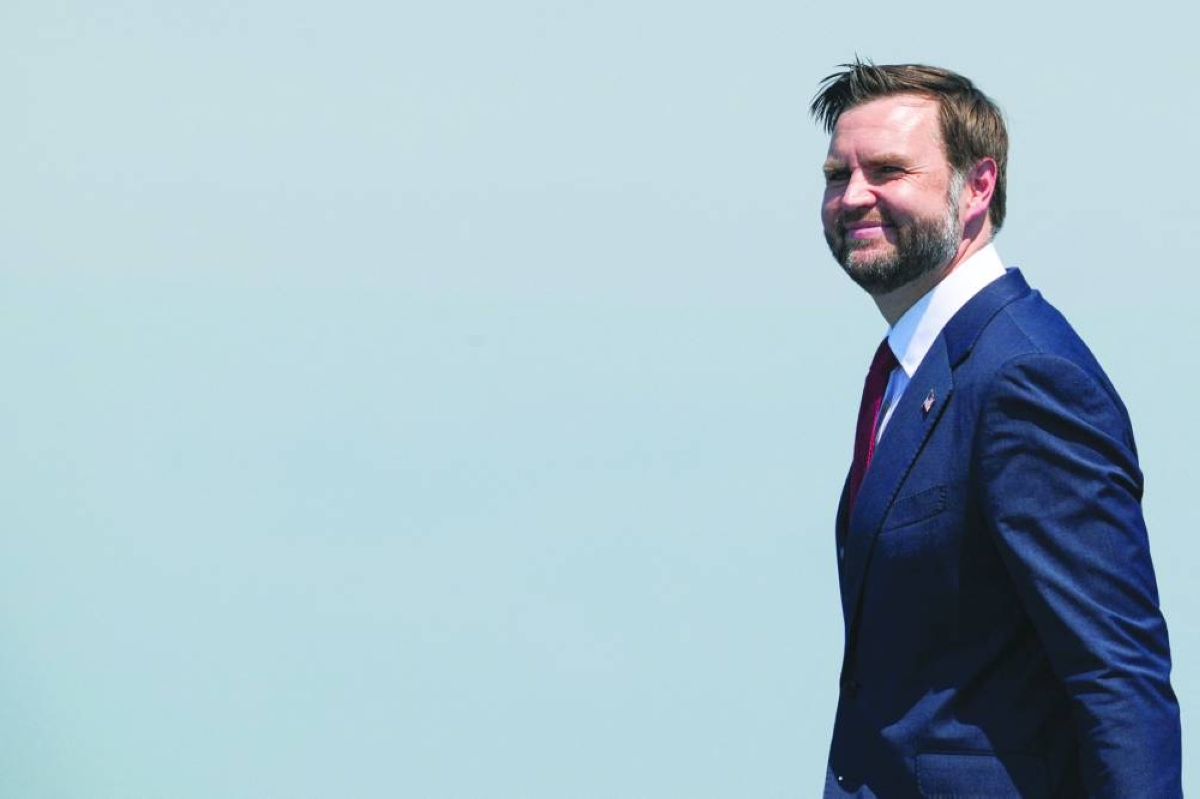
US Vice President JD Vance. (Reuters) Empires do not fall in a single hour. They erode in polling booths, in parliamentary chambers, and on the killing grounds where the wrong lesson was drawn too late. The State of Israel, whose founders promised their people a “villa in the jungle is now confronting what that metaphor always concealed: the jungle never agreed to its terms. A new Quinnipiac University poll conducted June 18–22, 2026, among 1,165 registered voters, finds that 48% of Americans now consider their government “too supportive” of Israel. This is the highest figure since the pollster first posed that question in 2017. Among Democrats, the number swells to 66%. Even more corrosive to Tel Aviv’s political calculus: only 20% of respondents hold a favourable view of Prime Minister Benjamin Netanyahu, compared with 48% who hold an unfavourable view. The Quinnipiac analyst Tim Malloy rendered his assessment with clinical precision: “Netanyahu gets poor marks from American voters as their appetite for supporting Israel wanes.” “After months of diplomatic fits and starts, global economic repercussions and a broad loss of life in the region, a majority of voters make their feelings clear: the Iran war was a bad idea.” — Tim Malloy, Quinnipiac University Polling Analyst The MOU signed on June 17 between Washington and Tehran has been the proximate trigger of Israel’s political panic, but the deeper wound is structural. Sixty percent of American voters now judge that military action against Iran was “not worth it.” The arithmetic is merciless and an eye-opener. Israel prosecuted a war it could not win without American blood and treasure, and the American public has rendered its verdict. On the battlefield, the verdict is no less damning. In southern Lebanon, the Israel Defense Forces are being bled, not by ballistic missiles or armor, but by a $300 drone. These drones are assembled in a workshop from Chinese components and 3D-printed parts, guided by a fiber-optic cable no thicker than dental floss. Hezbollah’s FPV drone campaign, which began in earnest after its second war with Israel erupted in March 2026, has exposed the most consequential gap in Israeli military doctrine since the anti-tank missiles of 1973. The Alma Research and Education Center acknowledged in a classified-grade public assessment that the operational deficit is “not limited to technology but to doctrine, procurement, and the Israeli defence establishment’s risk perception.” The fiber-optic tether makes these drones immune to Israel’s dual counter-drone defenses of electronic warfare and spectral jamming, exposing a critical gap in their architecture that Hezbollah is now exploiting. Hezbollah operators, some stationed within the occupied villages themselves, release footage with serene regularity: Merkava tanks, Namer armoured personnel carriers, logistics routes — all struck, all publicised, all corrosive to the mythology of IDF invincibility. A single asymmetric calculus haunts every Israeli commander in the south: a $300–$400 drone kills a soldier, grounds a battalion’s manoeuvre space, and wins a news cycle. “The operational gap between Hezbollah and the IDF in the small drone arena is the most significant gap that has opened in the current campaign.” — Alma Research and Education Center Those who comfort themselves with the notion that Netanyahu’s removal will alter the fundamental trajectory mistake the figurehead for the system. The core pathology is not one man’s political survival; it is what the political theorist Norman Finkelstein once called the “iron wall” logic — the conviction, inherited from Ze’ev Jabotinsky and codified through Moshe Dayan’s dictum that security demands “permanent superiority of force,” which any successor will be bound to maintain. Naftali Bennett has publicly faulted Netanyahu for insufficient aggression against Iran. Benny Gantz commanded the 2014 assault on Gaza. Gavi Ashkenazi authored the Dahiya Doctrine of deliberate disproportionality. The ideology does not change when the face does. Inside the Republican Party, the MOU has ignited ideological combustion of a kind not seen since the neoconservative ascendancy of the early 2000s. Vice President JD Vance, mobilising a conservative anti-war coalition, is actively selling the deal as a matter of strategic sanity. Vance’s message to Israeli officials was blunt: “If I were in the Cabinet of the Israeli government, I might not be attacking the only powerful ally that I have anywhere left in the entire world.” It is the kind of public rebuke that, once delivered, cannot be undelivered. The alliance is being renegotiated in real time, and Israel is not at the table. The foundational promise of Zionism — articulated by Theodor Herzl as a “rampart of civilisation against barbarism” and operationalised by successive governments as an impregnable sanctuary has not been delivered. The Iron Dome has prevented Iranian ballistic missiles from striking Israeli cities. Security, it turns out, is not a product of military supremacy alone. It requires political legitimacy, strategic restraint, and an enemy that has reason to stop fighting. Israel has cultivated none of these conditions. What remains is the arithmetic of exhaustion. A state that has mobilised its entire society for permanent war, that has burned its relationships with the European centre-left, that now generates majority disapproval inside its principal patron’s electorate, is not winning. It is spending. And the account, as every serious strategist from Clausewitz to Kissinger understood, must eventually be rendered. The fortress, as presently conceived, has failed. What replaces it is the only question that matters — and Israel’s current political class has not begun to ask it. The writer is a prominent news anchor, programme presenter and media instructor. 

World
Turkiye eyes fighter jet engines as Trump comes to town

Turkiye eyes fighter jet engines as Trump comes to town

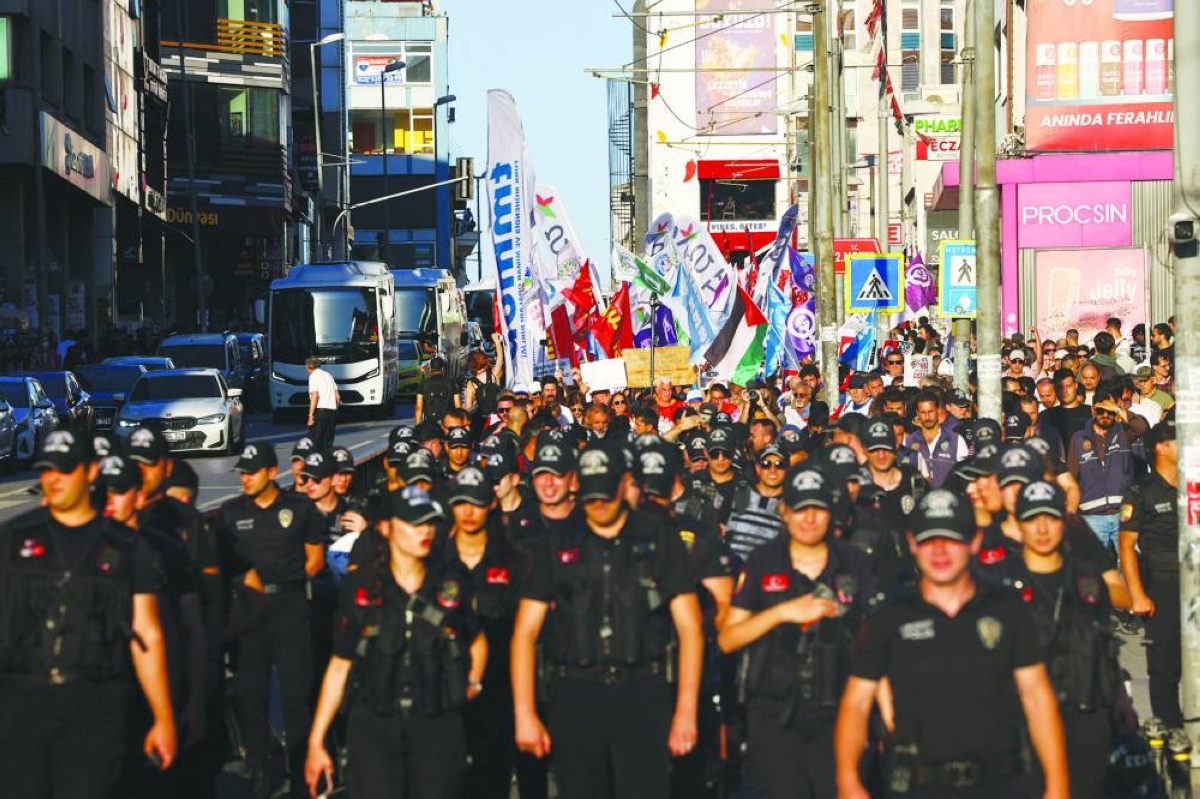
Police officers walk in front of demonstrators holding placards and flags during a protest ahead of Nato leaders’ summit, in Istanbul, Sunday. (Reuters) US President Donald Trump’s visit to Ankara for the Nato summit could help secure Turkiye’s acquisition of dozens of fighter jet engines, but won’t resolve the F-35 dispute that has soured ties, analysts say. The July 7-8 summit, which is being hosted by President Recep Tayyip Erdogan, will bring together leaders from the military alliance’s 32 member states. Last month, Trump promised to make Erdogan “very happy” when asked about Turkiye looking to secure F110 jet engines and being readmitted to the F-35 fighter jet programme. Analysts said it would likely mean freeing up fighter jet engines Turkiye wants to use in its flagship KAAN stealth fighter project. “It’s likely to be the green light for the F110 GE engines for the KAAN fighter plane, about 40 of them. There had been obstacles to that supply and very possibly those are now being removed,” Sinan Ulgen, director of the Istanbul-based Edam think tank, told AFP. “Turkiye has produced a couple of prototypes which are flying with the F110 engine, but it has been waiting for the supply of additional engines to increase the number of KAAN platforms,” he said. KAAN is a twin-engine stealth fighter being developed by Turkish Aerospace Industries (TAI) to replace the Turkish Air Force’s fleet of F-16s as Ankara seeks to join the exclusive club of nations producing fifth-generation combat aircraft, notably the US, China and Russia. Although Turkiye will eventually fit the fighter with its own domestically-produced engine — the F110s lacking stealth capability — that project is still in the preliminary design phase, Defence Minister Yasar Guler said in September. Turkiye received a first batch of 10 F110s in September, and talks with the US government to acquire 80 more were “ongoing”, he said. But that’s been held up by a lack of political clearance linked to Turkiye’s 2017 acquisition of a Russian S-400 missile defence system, Foreign Minister Hakan Fidan said in September. Infuriated, Washington expelled Turkiye from its F-35 fighter jet programme in 2019 and imposed CAATSA sanctions a year later, hampering Turkish defence projects and souring ties. “The CAATSA issue must be resolved. The US needs to take steps both regarding the F-35 and the engines for KAAN. KAAN’s engines are currently awaiting approval in the US Congress,” Fidan said, his remarks raising eyebrows back home as Turkiye had said the KAAN would be entirely domestically produced. Ankara’s F-35 exclusion has forced it to refocus on self-sufficiency. “Some argue we should not buy F-35s and invest that money into our own fifth-generation fighter jet programme. And that’s exactly what’s happening with President Trump’s decision to export jet engines,” Ozgur Unluhisarcikli, head of the German Marshall Fund in Ankara said. “Without those engines, Turkiye cannot produce the KAAN jet.” With a KAAN delivery date many years away, only Indonesia has placed an order, signing a $10bn contract to buy 48 fighters, although the Nato summit could generate further interest, Ulgen said. “Looking at the failure of the German-French FCAS initiative, there may be some interest. Spain could potentially become a partner and there may be interest from the Gulf as well... But there are more obstacles to be overcome for it to become a credible offer on the international stage,” he said. Experts expected little progress on the lingering F-35 dispute: for Congress to lift the CAATSA sanctions, Ankara would have to get rid of the S-400 — but selling it to a third country would require Moscow’s approval, and returning it to the Russians was not on the cards. “The US administration might wish to... put this issue behind it and sell Turkiye some F-35, but that will go to Congress and changing the congressional decision won’t be easy,” said Professor Mustafa Aydin, an international relations expert at Istanbul’s Kadir Has University. But Matthew Bryza, a retired US envoy and former senior White House and State Department official, said Trump could move to resolve the matter as the F-35 was an executive decision which he could easily reverse. “President Trump can certainly declare that the S-400/F-35 dispute is finished. It’s the CAATSA sanctions that require congressional action. Whether he can persuade Congress to do that, depends on how much political capital he’s willing to expend,” he told AFP of a move that could be “politically costly in the lead up to the midterm elections” due to Turkiye’s opponents in the Greek and Armenian diaspora.  Related Story

Opinion
Beneath the calm, a new diving frontier surfaces

Beneath the calm, a new diving frontier surfaces

Qatar has long been defined by what rises above the waterline — the towers of Doha, the sweep of the Corniche, the ambition written into stadiums, museums and a national carrier that carries the country’s name to every continent. Yet the discovery of a new dive site some three kilometres south of GMC Reef is a quiet reminder that this country’s most compelling story may lie not only in the heights it has built, but in the depths it has scarcely begun to explore. There is something fitting in that. A nation that has spent a generation projecting itself confidently onto the world stage now finds fresh promise by looking downward — into the calm waters of the Arabian Gulf, where shipwrecks, coral reefs and some of the sea’s most magnificent creatures have been waiting, largely unseen, all along. The case made by diving ambassador Khaled Zaki in our story published Sunday is persuasive precisely because it is unhurried. Diving, he reminds us, is far more than a recreational sport. It is an adventure, an education and a gateway to understanding the marine environment — and ourselves a little better. Qatar’s underwater portfolio is already richer than many residents realise: GMC Reef, the newly developed Club Reef, the Barj Wreck at some 20 metres, the Inland Sea site, the QAFCO Reef Balls. And then the great visitors — the seasonal aggregations of whale sharks, among the largest anywhere on earth, alongside dugongs, turtles and dolphins. These are living evidence of an ecological inheritance Qatar has every reason to cherish and every obligation to protect. There is a practical hurdle. Too few sites are reachable from the shore; most require a boat, and with that come cost and inconvenience that keep many would-be divers on dry land. Expanding shore-accessible sites would open the sport to schools, families and curious first-timers. The treasures beneath these waters, as Zaki puts it, are waiting to be explored. Qatar has the ingredients, the resolve and the responsibility to explore them well.

Entertainment
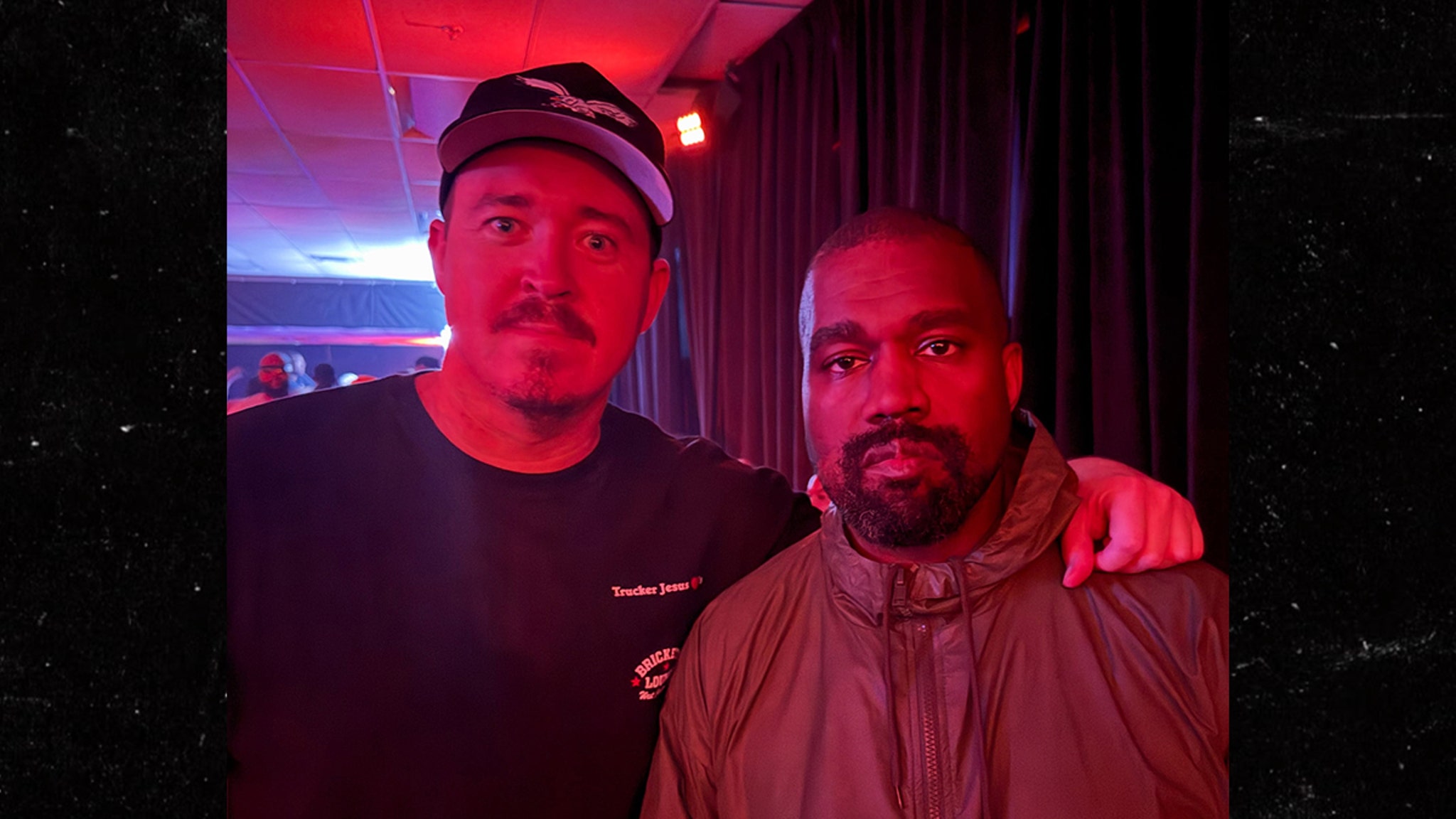
Kanye West Poses with Shane Gillis Backstage at San Antonio Concert

Kanye West Poses with Shane Gillis Backstage at San Antonio Concert

Here's a crossover you probably weren't expecting ... Kanye West and Shane Gillis hanging backstage after the rapper's Texas concert. The comedian gave fans a look behind the scenes by posting to Instagram a photo