admin
admin The US military said it completed the 11th night of strikes on Iran early on Wednesday as attacks across the Middle East overshadowed diplomatic efforts in Pakistan to salvage an interim ceasefire deal that has collapsed.
US Central Command said targets included aircraft hangars and drone storage sites.
The newest barrage came after President Donald Trump telegraphed that strikes would be intensifying.
Before the latest strikes, Iranian Interior Minister Eskandar Momeni visited Pakistan, a key mediator in the conflict, seeking to revamp diplomacy. But it was unclear what new arrangement might be reached to end the war, which lately has become a battle for control over the Strait of Hormuz, a waterway vital to world energy supplies.
Speaking from the Oval Office on Tuesday, Trump gave a dim view on possible talks, saying the US had “no interest in meeting.” He signaled that US forces could soon target an area of Iran close to one of its main sites for enriching uranium.
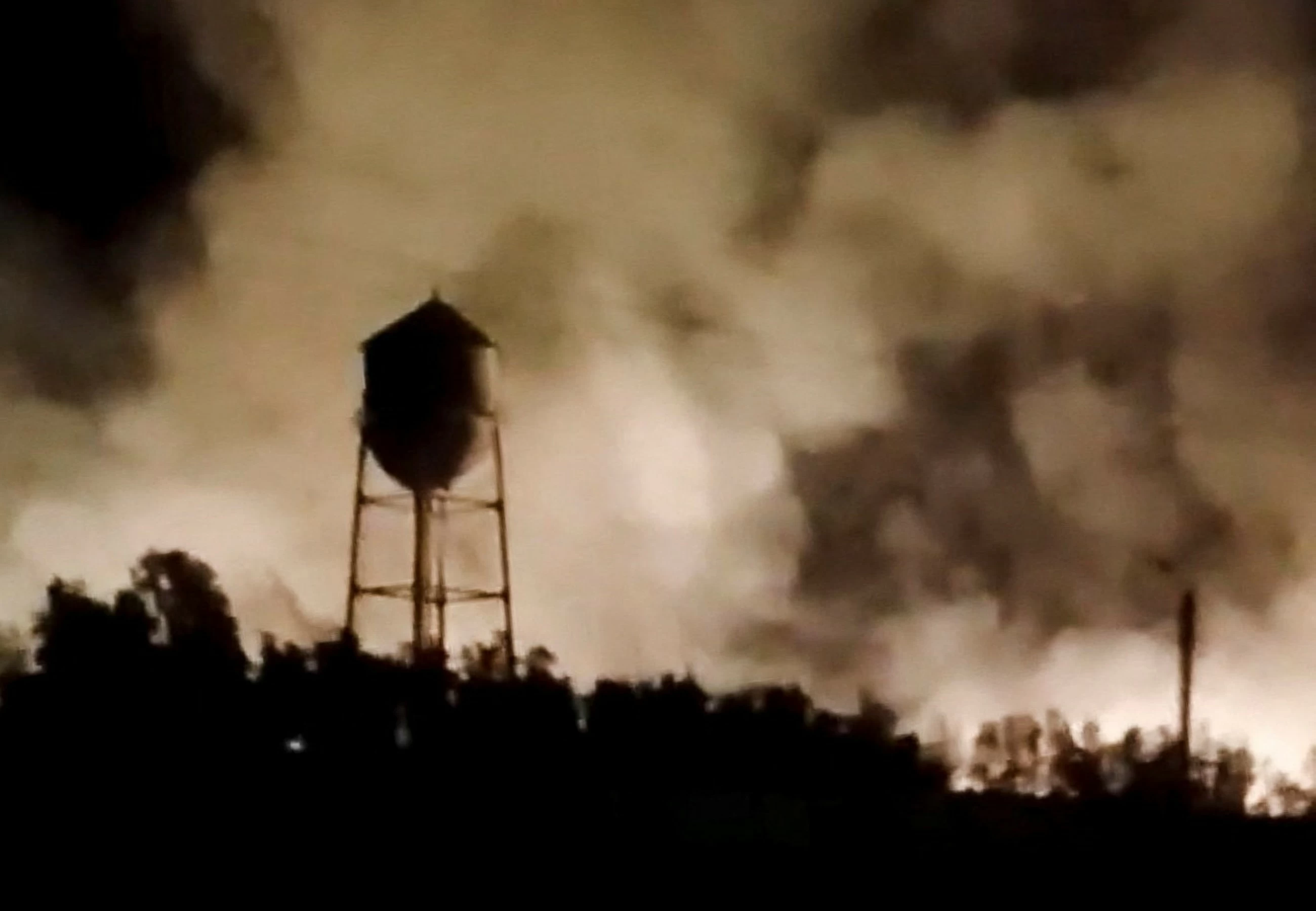
A water tower is silhouetted against smoke rising from a fire following a reported strike in Behbahan, Khuzestan Province, Iran. Reuters
With negotiations and shipping through the Strait of Hormuz largely stalled, both sides have sought to gain leverage by targeting civilian infrastructure in the region relied on by millions of people.
A barrage of US strikes hasn’t loosened Iran’s grip on the strait, through which about one-fifth of the world’s crude oil and natural gas was shipped before the war.
The US continued its airstrikes into Wednesday, with Iranian air defences activating near the capital, Tehran. Iran’s state-run IRNA news agency reported that explosions rocked Bushehr, East Azerbaijan, Hamadan, Hormozgan, Khuzestan and Sistan and Baluchistan provinces.
That came after Iran attacked a tanker in the strait on Tuesday, forcing the crew to abandon the ship. Iran also kept up attacks against US allies in the region. Iran also launched attacks against Bahrain, Jordan and Kuwait.
The escalation pushed energy prices higher. The international benchmark for crude oil traded Wednesday above $92 a barrel and regular gasoline in the U.S. climbed to an average of $4 a gallon.
Photo used for an illustrative purpose. WAM
With US midterm elections approaching in the fall, polls have pointed to the unpopularity of the war among Americans, who have felt the pain of pricier gas and seen new casualties in a conflict that weeks ago seemed to be winding down.
The number of wounded US personnel in the Iran war has grown to well over 500 troops, a US official told the media. The total is higher than the Pentagon’s official tally on the Defense Casualty Analysis System, which currently shows 482 wounded.
The US official, who was not authorised to discuss the matter with the media and spoke on condition of anonymity, said the system has a significant lag in reporting injuries. The official said that was a function of its design and not intentional.
In the Red Sea, Iran-backed Yemen’s Houthi rebels have opened a new front against Saudi Arabia by declaring a naval blockade of the kingdom, threatening the flow of global oil supplies and trade. With the Strait of Hormuz blocked up, Saudi Arabia has been relying on a pipeline to the Red Sea to get millions of barrels of oil out to market.
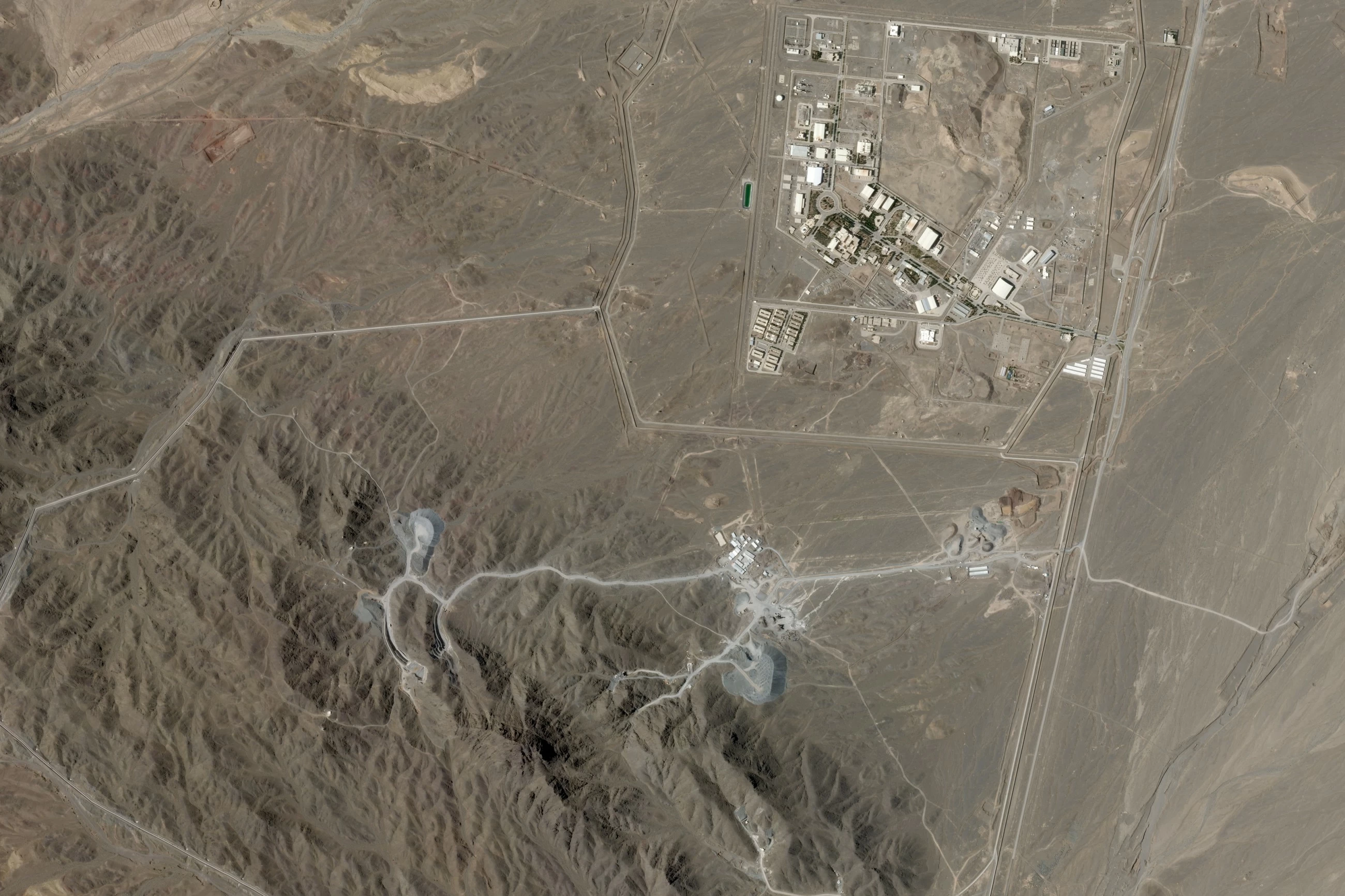
This photo shows Iran’s Natanz nuclear enrichment facility (upper right) and the under-construction at Pickaxe Mountain directly to the south of it. AP
A news agency in Yemen that is run by the Houthis, SABA, said on Tuesday that six ships in the Red Sea were forced to reroute after they received warnings from the rebel group. The media could not immediately confirm the claim.
Three Houthi officials said the group warned international shipping companies on Monday to avoid transiting through the Bab El Mandeb Strait, the gateway to the Red Sea on the opposite side of the Arabian Peninsula from the Strait of Hormuz. The officials spoke on condition of anonymity, saying they weren’t authorised to speak to journalists.
Associated Press