Opinion
How extreme climate change is affecting children’s wellbeing

How extreme climate change is affecting children’s wellbeing

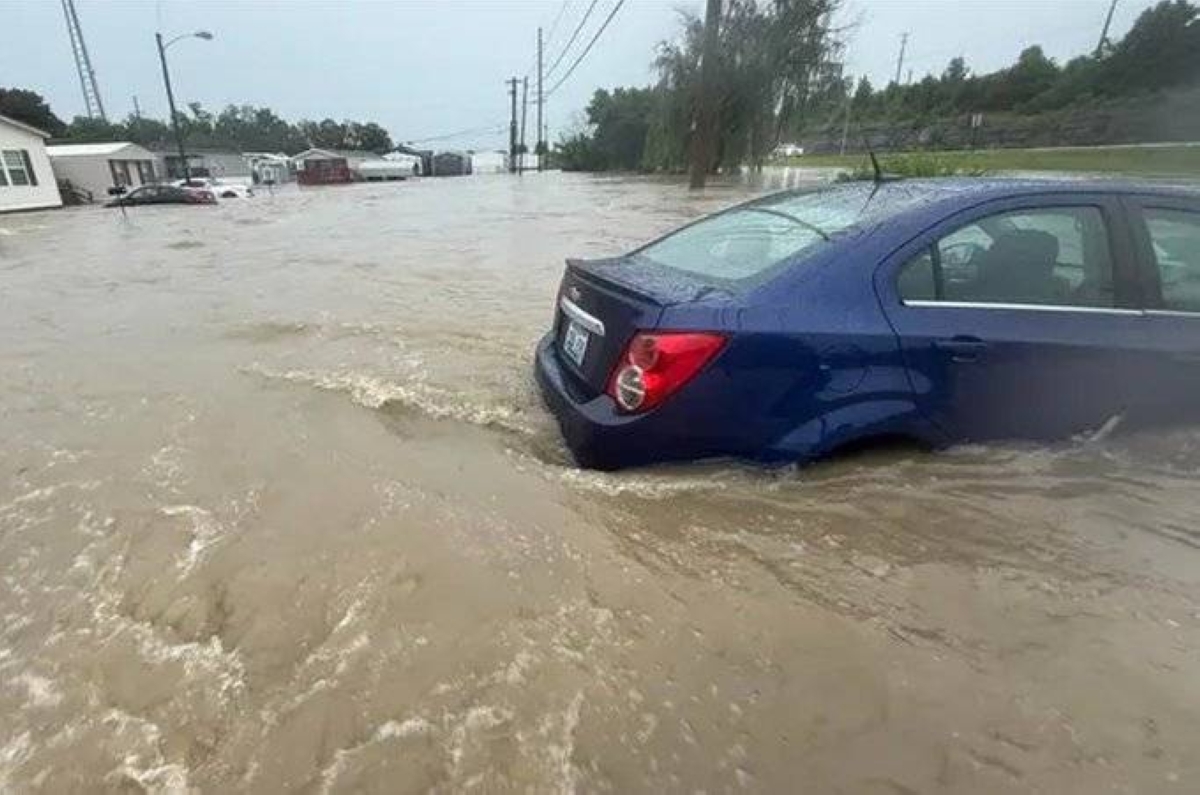
Children’s health constitutes the fundamental strongpoint for building resilient societies and securing a sustainable future. Accordingly, advanced nations accord special attention to this important matter through thought-out and synchronous measures that enable children to grow properly, augment learning, achieve upward mobility, and integrate successfully into society. These efforts are set in motion through coordinated strategies that square with the objectives of physical development, cognitive advancement, and disease prevention, supported by scrupulously implemented programs and sustained commitment. Against the backdrop of a world confronting an avalanche of challenges, ranging from climate volatility and digital pressures to mounting social strains, safeguarding children’s mental wellbeing and educational attainment has become an imperative rather than a mere window-dressing exercise. Such efforts are essential to foreclose any deterioration that could snowball into alarming proportions, while reinforcing healthy habits, balanced nutrition, and supportive family and school environments that enhance readiness for learning and reduce the long-term risk of chronic diseases. The world has witnessed remarkable progress over recent decades in reducing mortality among children under five years of age. Official figures released by the United Nations Children’s Fund (Unicef) show that 37 children per 1,000 live births died in 2022, compared with 93 in 1990. These developments eloquently indicate the effectiveness of advances in diagnosis, monitoring, medical intervention, and preventive healthcare, alongside the growing capacity of health systems to address complications associated with modern childbirth. Despite mounting evidence regarding the impact of climate change on children’s health and development, much of the existing research has hitherto been focused on the effects of individual hazards in societies facing climate-related hardships or intractable conflicts. Such conditions frequently trigger displacement and migration under circumstances that may culminate in humanitarian catastrophes. Among the principal threats are extreme heat, drought, wildfires, floods, storms, air pollution, and ecosystem disruption. A Unicef report issued earlier this week concludes that a combination of endogenous factors and exogenous factors -- including water scarcity and contamination, food insecurity, pollution, infrastructure damage, service disruption, and displacement -- affects virtually every aspect of children’s health, from pregnancy through adolescence. The report notes that harsh climatic conditions and the absence of a supportive environment can contribute to premature births and lower birth weights, while rendering newborns and infants more vulnerable to mortality associated with air pollution and extreme heat. Malnutrition, which remains responsible for approximately half of all deaths among children under five worldwide, together with infectious and communicable diseases such as malaria, dengue fever, and the Zika virus, continues to exact a staggering humanitarian toll. These conditions frequently emerge in polluted environments and unsanitary settings and may generate a lasting psychological and humanitarian malaise that extends well into adulthood. The antecedents of children’s vulnerability are rooted in the developmental stage of their organs and immune systems. As these systems continue to mature, children are less equipped to withstand climate-related stresses. They often lack immunity to certain diseases because vaccines may be unavailable, incomplete, or inaccessible. Moreover, the ongoing development of respiratory and cardiovascular systems leaves them particularly susceptible to climate-related hazards, exacerbating respiratory illnesses and undermining overall health outcomes. The risk of death among children under five in sub-Saharan Africa and South Asia is 80 times higher than in developed countries. Unicef’s Children’s Climate Risk Index, published in 2021, found that 1bn children were highly exposed to the consequences of the climate crisis, the report shared. Among them, 559mn children experienced severe heat exposure, a figure projected to exceed 2bn by 2050, underscoring the threat of an increasingly volatile climate future, it added. In 2022, approximately 953mn children worldwide were exposed to water stress, while 182mn people across 108 countries were affected by at least one climate-related disaster. The same year witnessed nearly 43.1mn cases of child displacement, meaning that close to 20,000 children were forced to leave their homes every day. Executive Director of Unicef, Catherine Russell, says that the Climate Risk Report eloquently indicates where these risks occur and the extent of their severity, and it can help governments and other decision-makers improve planning and investment in a more effective way in basic service systems. For his part, Executive Director of Unicef National Committee for Germany, Christian Schneider, said that children and young people are the least responsible for climate change, yet they are disproportionately the most affected. He urged the German government to take stronger climate action and provide more support to the most vulnerable countries. According to Unicef, climate risks often overlap and snowball into alarming proportions, compounding one another. Around 300mn children live in areas simultaneously exposed to drought, extreme heat, and heatwaves, while more than 115mn children face drought, extreme heat, and tropical storms together. The Sahel region in Africa is among the most affected areas, where more than 4mn children are exposed simultaneously to heatwaves, extreme heat, and sand and dust storms. In Asia, Bangladesh, Myanmar, and Pakistan are particularly affected by these factors. International reports indicate that the severity of harm is determined by factors of inequality and vulnerability to which children are exposed based on socio-economic status, gender, location, current health condition, the circumstances of the country concerned and its capacity, as well as vulnerabilities that had hitherto been associated with children throughout their lives. If these findings and causes are considered, then a question arises among researchers and experts regarding measures that can reduce these climate impacts and provide conditions for a more stable childhood, ensuring sustainable development and societies that come closer- even minimally-to internationally accepted standards, recognizing that what cannot be achieved in full should not be entirely abandoned. The first of these requirements is mitigating the burdens of climate change through reducing greenhouse gas emissions from fossil fuels, industrial smoke, and vehicle emissions so that global warming does not exceed the 1.5°C threshold. Wealthy, high-income countries must take thought-out and urgent mitigation measures to reduce emissions and provide support to low- and middle-income countries to assist their energy transition. In this context, the adoption of sustainable energy in sectors providing essential services for children comes into focus, along with the transition to green infrastructure and social awareness of its integration into daily life, and increasing the use of advanced mechanisms and modern technologies to accelerate efforts to augment the mitigation of climate impacts on children, including universal access to modern fuels and cooking technologies, in order to reduce emissions and child deaths caused by household air pollution. The extraction and excessive, unregulated use of natural resources, along with the widespread spread of infections due to pollution and waste, have exacerbated climate change, increased toxic pollution of water, air, and soil, led to ocean acidification, and destroyed biodiversity and ecosystems that sustain life in general. The Declaration of the 28th Conference of the Parties on Climate and Health recognises that it is significant to protect communities and prepare healthcare systems to address the health impacts of climate factors such as extreme heat, air pollution, and changing disease patterns. The participating parties have also agreed on international adaptation goals, specifically aiming to build resilience against climate-related health impacts and reduce climate-related morbidity and mortality.  

Sports
Subs Manzambi and Vargas help Switzerland crush Bosnia 4-1 in World Cup clash

Subs Manzambi and Vargas help Switzerland crush Bosnia 4-1 in World Cup clash

Switzerland's Johan Manzambi celebrates with Breel Embolo after scoring a goal as Bosnia and Herzegovina's Nikola Vasilj, Nikola Katic and Tarik Muharemovic look dejected during the FIFA World Cup Group B match in Los Angeles.

Opinion
G7 critical minerals alliance a safeguard from supply shocks

G7 critical minerals alliance a safeguard from supply shocks

The G7 nations are implementing a strategy to reduce dependence on Chinese critical minerals while aligning domestic stockpiles to address shortages. Additionally, a new supply chain platform will launch to enhance the role of the International Energy Agency. Western powers are racing to diversify ‌supplies of metals vital to defence, technology and renewable energy and reduce dependence on China. Beijing rattled global markets last year when export curbs on permanent magnets disrupted industries, exposing their reliance on a single source. Without naming China, the leaders said they aim to reduce dependence on any one supplier outside the G7 and partner countries for rare earths and permanent magnets to below 60% by 2030, with an ultimate goal of 50% “as soon as possible”. “We are committed to working towards establishing harmonised, interoperable mechanisms .... This would start with two pilot critical minerals - lithium and ​nickel - and aim to avoid undermining competitiveness or imposing excessive cost burdens,” the leaders said in a joint statement. The mechanisms would later expand to five new minerals each year with a focus on rare earth elements. The 60% target will be challenging, analysts said, especially in terms ​of processed rare earths and magnets where China controls 90% of global output. “The ​G7 statement is an important signal of intent, but the pace of diversification will ultimately depend on whether policy support translates into investment across the midstream and downstream parts of the value chain,” said Neha Mukherjee, research manager at consultancy Benchmark Mineral Intelligence. The G7 will also set up a platform to coordinate policy, data sharing and crisis response, working with the IEA to monitor markets and flag risks, as first reported by Reuters. The platform will draw on the agency for analysis and “early warnings of market distortions”, the group said. G7 countries and allies face the challenge of building full supply chains from mining to end-product, requiring ‌billions of dollars of investment. The leaders ‌said G7 development finance institutions and export credit agencies should work together, including with the private sector, to back projects and infrastructure. So far, countries have announced 195 projects since the start of 2026 with €64bn ($74bn) in investment. The statement added that countries would explore “price-gap subsidies, joint procurement instruments and trade-related instruments such as quotas and price floors”, including through “plurilateral trade agreements”. The US is expected to propose legally binding deals with Japan and the EU this month. The lack of commitment on elements such as price floors reflected what diplomatic sources told Reuters ahead of the meeting was scepticism by ​G7 allies about the Trump administration’s push to boost critical minerals production by regulating prices. The G7 committed to boost domestic stockpiling of critical minerals in both the industrial and public sectors. The US launched its $12bn critical minerals reserve, Project Vault, earlier this year and said in April the first funding tranche was due to close soon. The EU has shortlisted tungsten, rare earths and gallium for its first joint stockpile of critical minerals, sources told Reuters last month. The statement also pledged to boost recycling of critical materials, aiming to increase the joint G7 ‌recycling capacity to account for ​a “significant share” of annual consumption by 2030.     

Entertainment
Comedian Carlos Mencia Charged By L.A. Business Tax Fraud Unit, Watch Live

Comedian Carlos Mencia Charged By L.A. Business Tax Fraud Unit, Watch Live

Carlos Mencia Charged By L.A. Tax Fraud Unit Watch Live! Published June 18, 2026 1:59 PM PDT Play video content Carlos Mencia is getting hit with criminal charges in Los Angeles today ... and TMZ

Sports
Qatar’s Ghadimi, al-Harith impress at Asian Gymnastics Championships

Qatar’s Ghadimi, al-Harith impress at Asian Gymnastics Championships

Qatar’s artistic gymnastics team delivered an impressive performance at the 2026 Asian Artistic Gymnastics Championships, with both Mehrdad Ghadimi and Rakan al-Harith securing places in the finals of the continental event held in Zunyi, China. Ghadimi advanced to the rings final after producing an outstanding display during the qualification round. Al-Harith also booked his place in the pommel horse final following a confident and technically accomplished routine, continuing the progress he has demonstrated on the international stage and underlining the growing strength of Qatari gymnasticsThe Qatari delegation travelled to China under the leadership of Ali al-Hitmi, President of the Qatar Gymnastics Federation and First Vice President of the International Gymnastics Federation (FIG). Commenting on the achievement, al-Hitmi praised the performances of both gymnasts and described their qualification for the finals as a major accomplishment for Qatari sport.“Qualifying two gymnasts for apparatus finals at a championship of this level is a remarkable achievement and reflects the progress being made by Qatari gymnastics,” he said. “The competition includes some of the best gymnasts in the world and Asia, making this result even more significant.” He added: “This success is the outcome of the hard work and commitment shown by our athletes, coaches and administrative staff, as well as the long-term development programmes implemented by the Federation. We are proud of what has been achieved and look forward to seeing both gymnasts perform strongly in their respective finals.” Al-Hitmi also acknowledged the continued support provided by the Qatar Olympic Committee, emphasizing its important role in helping national federations develop athletes capable of competing successfully at the highest regional, continental and international levels.  

Entertainment
Fitness Influencer Dies 3 Months After Revealing Cancer Diagnosis

Fitness Influencer Dies 3 Months After Revealing Cancer Diagnosis

Fitness Influencer Carly Douglas Dead at 36 After Cancer Battle Published June 18, 2026 1:05 PM PDT Fitness influencer Carly Douglas is dead ... just 3 months after announcing that she'd been diagnosed with cancer.

Sports
Zverev wins all-German duel with Hanfmann to reach Halle quarters

Zverev wins all-German duel with Hanfmann to reach Halle quarters

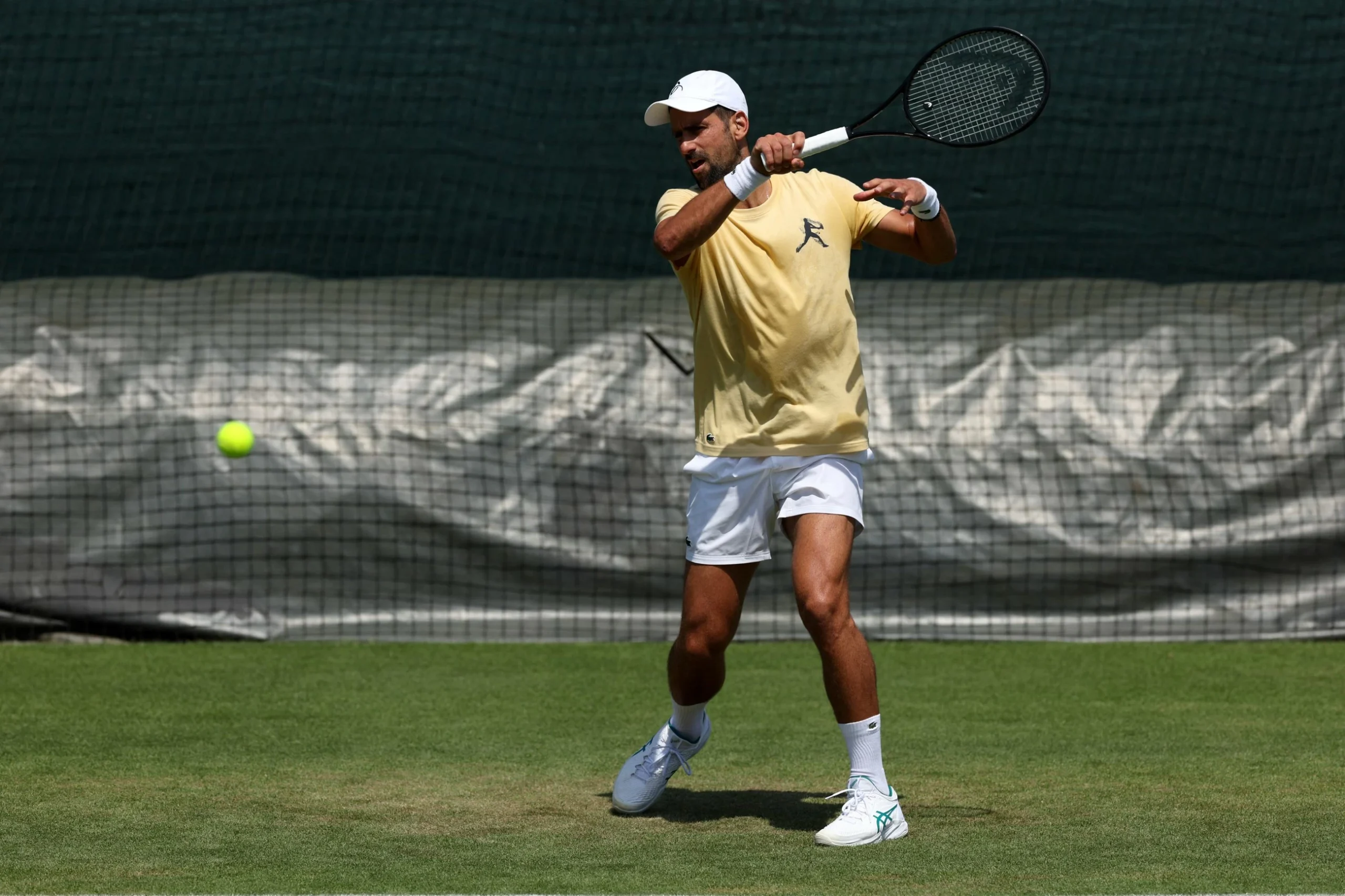
Germany's Alexander Zverev returns the ball to compatriot Yannick Hanfmann during their Halle Open match on June 18, 2026. (AFP) World number three Alexander Zverev advanced to the final eight of the Halle Open grass-court tournament on Thursday, continuing his winning run since his French Open victory on clay earlier in June. Welcomed by a supportive crowd, top seed Zverev beat Yannick Hanfmann 6-3, 7-6 (7/4) in an all-German duel to keep his hopes alive of a first grass court title in his career.Zverev broke Hanfmann once to take the opening set. In the second, both players held firm on their own serve to force a tie break, which Zverev won comfortably.The top seed said he was still adjusting from clay, his preferred surface, to grass, saying he wanted to improve his return, which "is the most important shot on grass"."I've only been on a grass court for a couple of days but I'm through to the quarter-finals, so I'm happy with that," Zverev added.The 29-year-old beat Italy's Flavio Cobolli in a seesawing five-set Roland Garros showpiece to break through for a first ever Grand Slam title.The former Olympic gold medallist had come agonisingly close but had never broken through, losing three Grand Slam finals.On Wednesday, Cobolli got a modicum of revenge for the Roland Garros defeat by eliminating Zverev in the doubles on the Halle grass.Zverev, who made the final at the Wimbledon warm-up tournament in 2016 and 2017, will face Belgian Raphael Collignon on Friday for a place in the semi-finals.Earlier on Thursday, world number five Ben Shelton beat fellow American Ethan Quinn 6-4, 5-7, 6-4 to set up a quarter-final meeting with Taylor Fritz, who he beat in the final of Sunday's ATP event in Stuttgart.In the other quarter-finals, Canadian world number four Felix Auger Aliassime will face American Frances Tiafoe while 2021 US Open champion Daniil Medvedev takes on German Daniel Altmaier.  Related Story

Sports
Wildcard Eala shocks Rybakina in Berlin

Wildcard Eala shocks Rybakina in Berlin

World number two Elena Rybakina crashed out of the Wimbledon warm-up WTA tournament in Berlin on Thursday losing 7-5, 6-4 to Filipino wildcard Alexandra Eala."I'm a little foggy now. I'm still shaking. I was shaking on the match point," said an emotional Eala after booking her ticket to the quarter-finals of the grass-court tournament."She's an amazing player ... she's the one to beat. I'm happy to have been able to share the court with her again," added the 21-year-old Eala who lost to Rybakina on clay at the Italian Open in May.Rybakina -- the 2022 Wimbledon champion and reigning Australian Open winner -- had burst out of the blocks to take a 4-1 lead but Eala fought back, breaking the Kazakh's usually strong serve twice to take the opening set.World number 35 Eala stayed in control during the second, breaking her heavily favoured opponent once to storm to an upset victory.Eala, the first Filipino player to break into the top 50, is in fine form, having beaten newly minted Queen's Club champion Donna Vekic in the opening match in Berlin.Eala will face world number eight Elina Svitolina, who beat German Eva Lys in straight sets 6-3, 6-2 earlier on Thursday, in the quarter-finals.In the other quarter-finals, world number one Aryna Sabalenka takes on Nikola Bartunkova, world number four Jessica Pegula faces Madison Keys and Linda Noskova is up against Paula Badosa.  Related Story

News
UAE sets July 9 deadline to fix visa status for those str…

UAE sets July 9 deadline to fix visa status for those str…

The Federal Authority for Identity, Citizenship, Customs and Ports Security (ICP) has announced a 30-day grace period for individuals affected by the exceptional circumstances previously experienced in the region and who had been exempted from

Sports
FIA President Ben Sulayem says Macau conference can help shape future of motorsport, mobility

FIA President Ben Sulayem says Macau conference can help shape future of motorsport, mobility

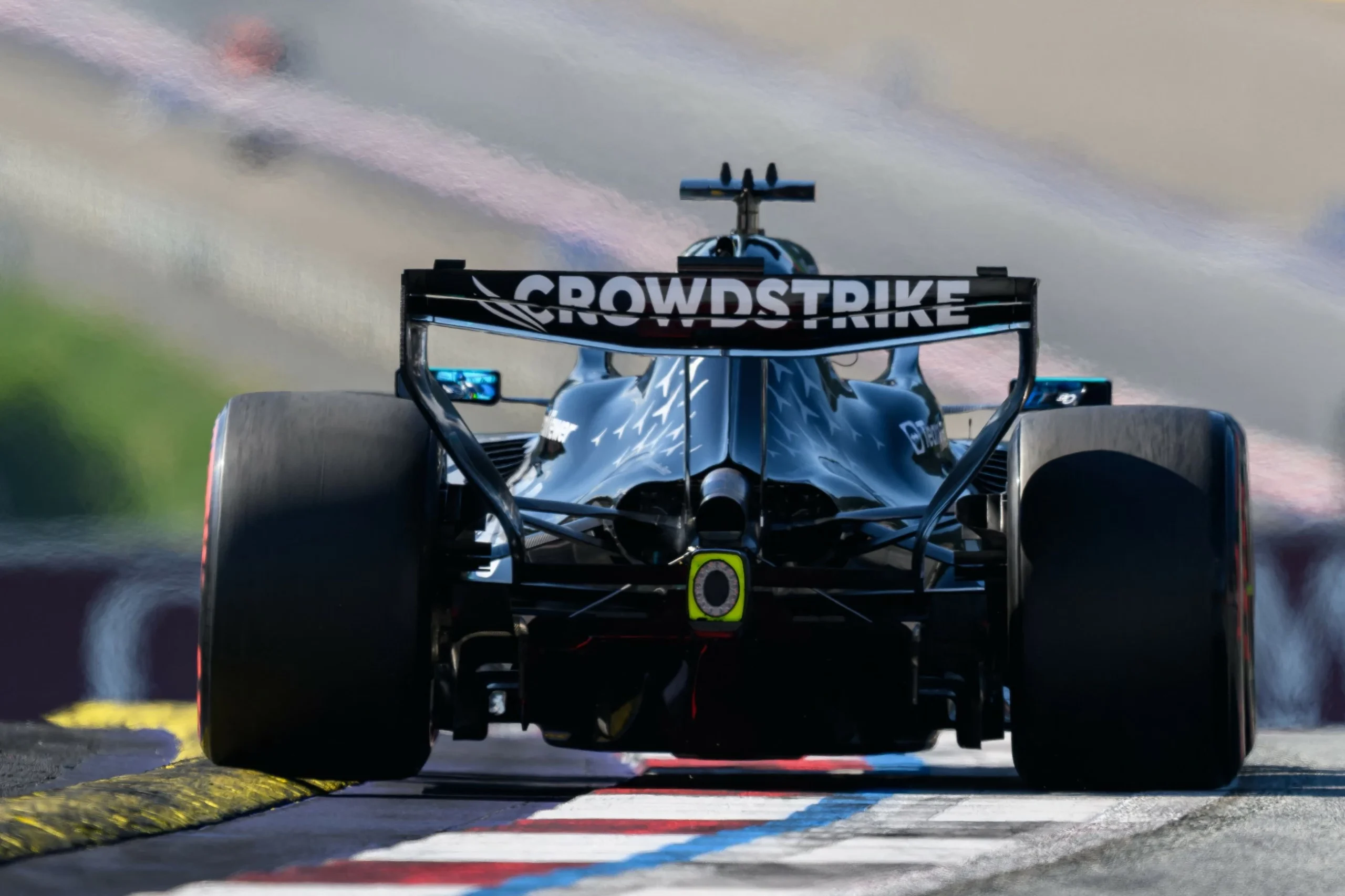
FIA President Ben Sulayem Mohammed Ben Sulayem, President of the FIA, says the federation’s Extraordinary General Assembly and annual conference in Macau next week has an important part to play in guiding the future of motorsport and mobility.Hosted in partnership with the Automobile General Association Macao-China (AAMC) and Galaxy Entertainment Group, and held at the Galaxy International Convention Centre, the three-day event starting on Tuesday will welcome over 450 senior FIA delegates across mobility and motorsport from 149 countries.It offers opportunities for the Fédération Internationale de l'Automobile (FIA), the global governing body for motorsport and the federation for mobility organisations worldwide, to address key initiatives in regional sporting growth, road safety, sustainable mobility, and innovation in transport.Macau is an iconic location for motorsport fans, playing host to the Macau Grand Prix at the Guia Circuit since 1954. Now, the event welcomes competitors across four FIA categories and is notorious for its demanding course, combining fast straights and tight corners.Speaking ahead of his return to Macau, Mohammed Ben Sulayem said: “This conference provides a valuable opportunity to bring together our community and help shape the future of global motorsport and mobility. As we continue to grow participation, advance innovation and improve road safety worldwide, these discussions are more important than ever.“I am delighted to be returning to Macau, a truly iconic location for motorsport fans and a fitting location for the FIA to host one of the most important weeks of our calendar. My thanks to our hosts, the AAMC, Chairman Chong Coc Veng, and President Roberto Carlos Osorio.”Chong Coc Veng, Chairman of the AAMC, said: “We are honoured to welcome the FIA and our fellow Members from across the world back to Macau. The Annual Conference provides a valuable opportunity to reflect on the progress we have made together over the past year and shape the priorities that will drive our Federation forward. We look forward to welcoming delegates for what promises to be a productive few days.”The conference will be attended by representatives from the 245 FIA Member Clubs who represent motorsport and mobility at a global scale. This structure forms the backbone of the federation’s governance and operations, with each full Member Club holding voting rights across the FIA’s elections and regulatory decisions.  Clubs are grouped into two primary categories, with some serving in both roles. Mobility Clubs provide mobility services and represent the interest of road users, with a focus on road safety, travel and tourism, consumer rights, and sustainable mobility. National Sporting Authorities (ASNs) govern and develop motorsport at a national level, are responsible for sporting events, issuing licenses, and engagement across regulations.  Related Story