World
Pentagon raises threat of Israeli spying to ‘critical’

Pentagon raises threat of Israeli spying to ‘critical’

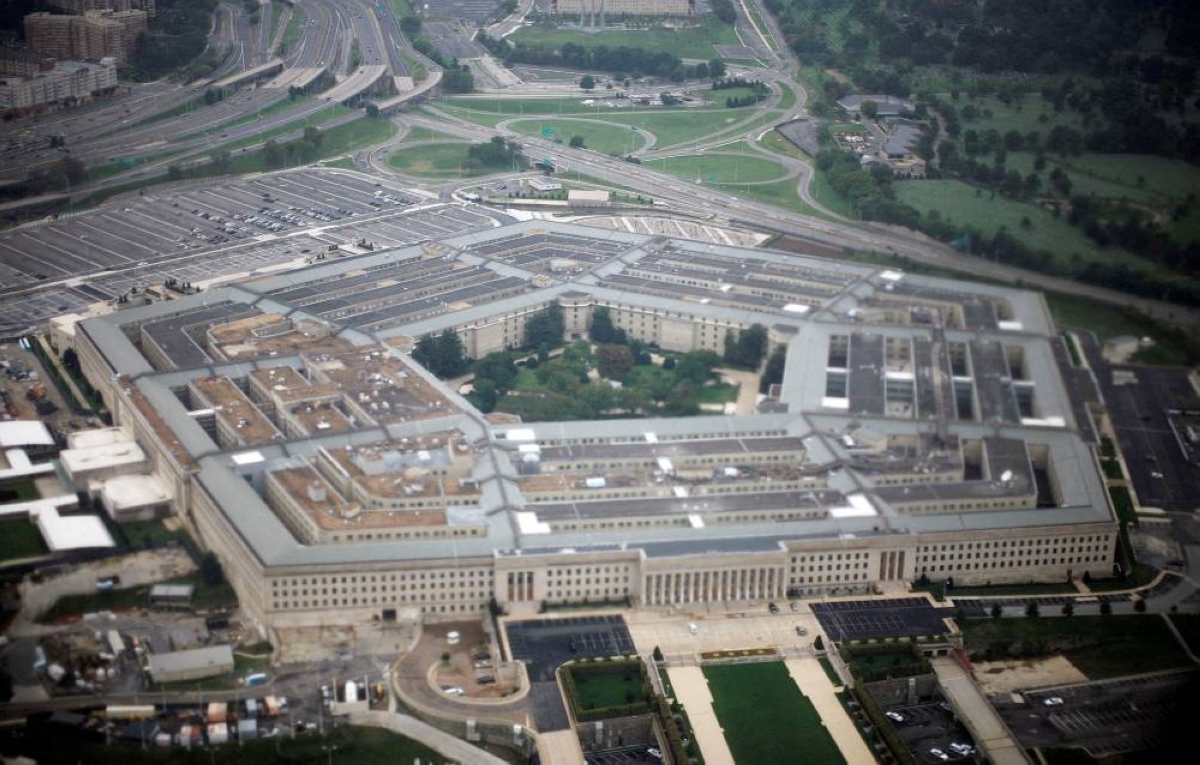
FILE PHOTO: Aerial view of the United States military headquarters, the Pentagon, September 28, 2008. REUTERS/Jason Reed/File Photo The Pentagon has raised its counterintelligence threat level for Israel to its highest level, US media reported.The Pentagon’s Defence Intelligence Agency (DIA) said Israel’s “ability to conduct human espionage and technical collection is at a ‘critical level’,” NBC News said, citing US officials. The move came after concerns that Israel had been attempting to spy on top US officials to get information on “the Trump administration’s internal deliberations and decision-making on the conflicts in the Middle East,” the American network said. The New York Times cited reports of Israeli efforts to eavesdrop on senior officials, including President Donald Trump’s top negotiator, Steve Witkoff, and the Pentagon’s top policy official, Elbridge Colby.The United States and Israel launched joint strikes on Iran on February 28, triggering the war. Since then, Trump and Israeli Prime Minister Benjamin Netanyahu’s relationship appears to be under strain. Trump unleashed a profanity-laced tirade over the phone at Netanyahu over Israel’s threats to bomb the Lebanese capital Beirut, fearing it would undermine talks with Tehran, the Axios news outlet and ABC News reported last week. 

World
Iran’s World Cup team blast US visa row on arrival in Mexico

Iran’s World Cup team blast US visa row on arrival in Mexico

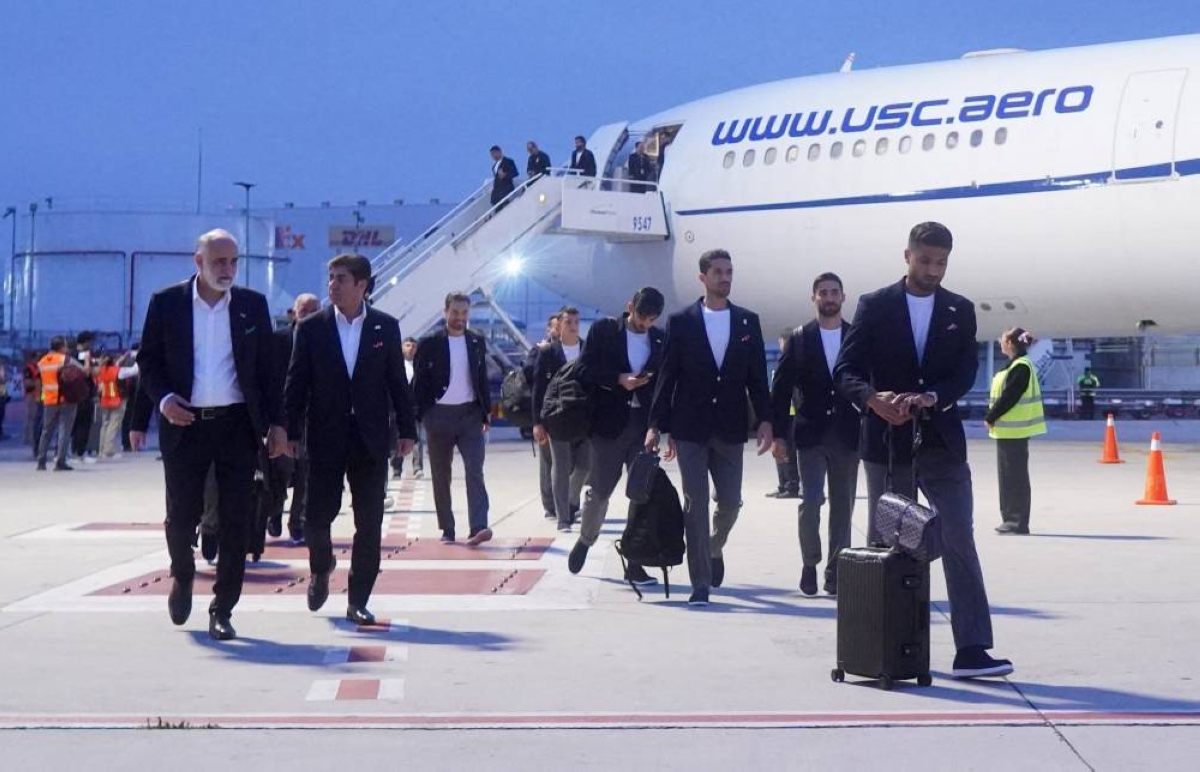
Iran’s World Cup squad landed in Mexico yesterday under the shadow of a bitter diplomatic row, after the US — in open military conflict with Tehran — refused to issue visas for some team support staff.Iran coach Amir Ghalenoei complained on arrival at Tijuana airport that “we should have been here last week because a 12-hour time difference needs two weeks of adjusting.” He added: “Usually in these tournaments, before technical matters, ethical and human considerations must be respected — which I think for us it was not the case.” The dispute erupted just days before Thursday’s kickoff of the 2026 World Cup, which is being jointly hosted by the US, Mexico and Canada.After departing from their training camp in Turkey a day earlier, the Iran team landed yesterday in the Mexican border city of Tijuana. The squad and their coaching staff left their plane amid tight security which included a contingent of Mexican national guard troops. Just a handful of fans waving Iranian flags were present at the airport to welcome them from a distance. The Iranian team will be based in Tijuana throughout the tournament, despite playing their entire group stage in the US — two games in Los Angeles and another in Seattle as they tackle New Zealand, Belgium and Egypt in Group G on June 15, 21 and 26.When they do play in the US, it will be the first World Cup to see a host nation receive the team of a country it is at war with. Ghalenoei thanked FIFA for its efforts to help secure entry, but said “we are upset about this behaviour. It has certainly never happened before.” Team captain Ehsan Hajsafi said he wanted to convey his grievance to FIFA about the delay in getting US visas. “Why so late?” he demanded. Hajsafi stressed the difficult backdrop for the team’s participation, as “in the last year, we experienced two imposed wars in our country.” Iran’s team spent nearly three weeks at the training camp in Turkey, using their time there to apply for visas to travel to Mexico, Canada and the US. On the eve of their departure for Mexico, the players finally received their US visas, Washington’s envoy to Turkey Tom Barrack said on X late Friday. But Iran’s embassy to Turkey said support staff had been denied visas — 15 administrative and management staff are concerned, an Iranian diplomat and state TV said. The embassy slammed what it called “deliberate and discriminatory treatment against Iran’s national football team” and called for FIFA “to hold the US accountable for violations of its rules.” Adding to the tensions, Iran’s ambassador to Mexico said Saturday the squad had been notified that, under their visa conditions, the team must enter and leave US soil on the same day as their matches. “We can enter in the morning and we must leave the same day,” Iran’s envoy Abolfazl Pasandideh told reporters. That appeared to contradict what the team’s spokesman Amir Mahdi Alavi told state TV earlier. 

World
Trump to ask Israel to hold back after Iranian attack

Trump to ask Israel to hold back after Iranian attack

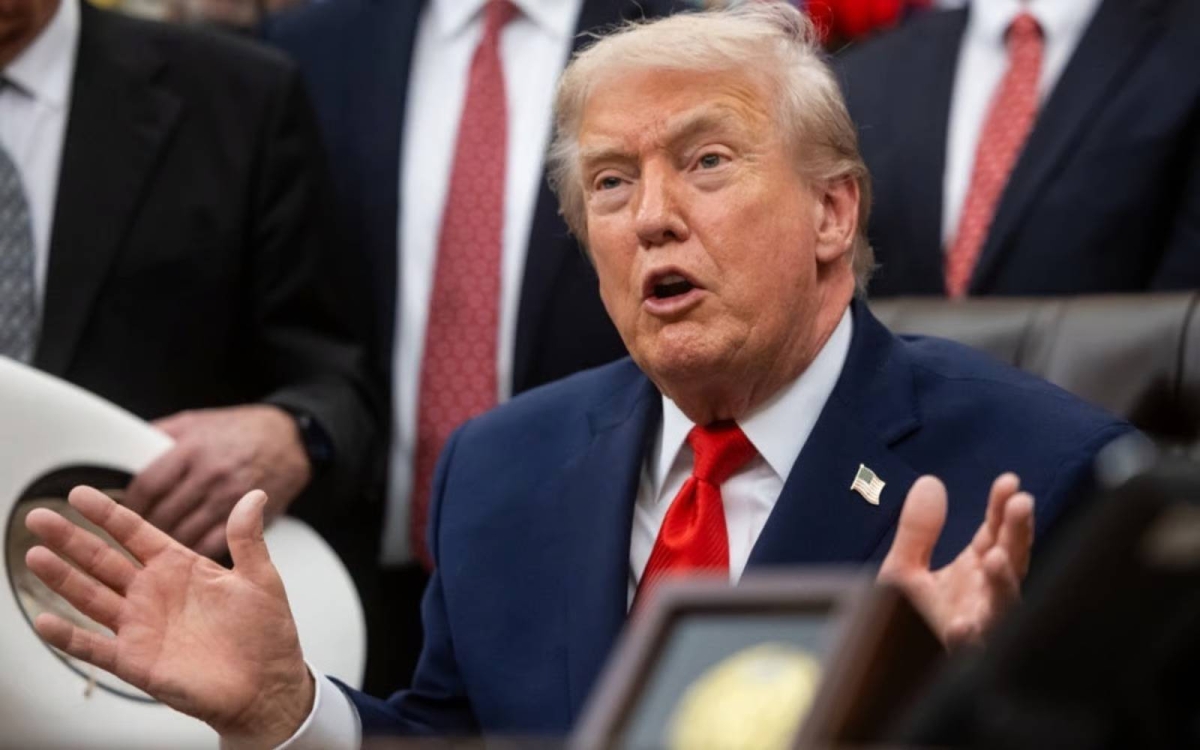
US President Donald Trump said yesterday he will call Israeli Prime Minister Benjamin Netanyahu to urge him not to retaliate against Iranian missile strikes on Israel, news outlet Axios reported.“I am going to call Bibi right now and tell him not to retaliate,” Trump was quoted as saying by Axios journalist Barak Ravid in a phone interview, using the Israeli leader’s nickname. “Each of them had their fun. Israel had its strike and Iran had its strike. We don’t need another one,” Trump said, according to excerpts of which Ravid posted on X.Israeli military chief Lieutenant General Eyal Zamir however vowed that the military would strike Iran “with force” upon receiving orders, after the Islamic republic fired missiles at Israel. Yesterday’s missile barrage was Iran’s first against Israel since an April ceasefire took hold in the Middle East war, and Trump voiced concern it could set back negotiations.“The Iranian strikes didn’t hurt anybody. Hopefully Israel is not going to retaliate. If Bibi strikes them back it’s just gonna keep going like the last 47 years, or the last 3,000 years,” the US president said. “We are very close to a final deal with Iran. It is going to be a good deal. I don’t want it to blow up because of what is happening now,” he added.Iran’s powerful Revolutionary Guards called yesterday’s attack a “warning” after Israel struck Beirut’s southern suburbs earlier in the day, threatening wider strikes in the event of repeated aggression. An April 8 ceasefire had halted major hostilities between Iran, Israel and the United States.But efforts to turn the truce into a settlement have repeatedly stalled, and yesterday’s launches were sure to further dampen hopes for a lasting peace as the war reached its 100th day. In a separate interview with Fox News, Trump said the Iranian strikes were not going to help negotiations, which were “very close” to reaching an agreement.“We’re very close. I would say an agreement would be signed on Monday, Tuesday or Wednesday of this coming week. And now this takes place.” He urged Iran to “get back to the table and make a deal.”Trump also criticised Israel’s strikes on Beirut yesterday, saying he was “not happy about it.” The White House did not immediately respond to an AFP request for comment.Iran’s Islamic Revolutionary Guard Corps (IRGC) says it launched ballistic missiles at Ramat David Air Base, about 20km from the city of Haifa in northern Israel. It said the Israeli air base was the “source of aggressions” launched against southern Lebanon and the southern suburbs of Beirut.Iran has closed the western part of the country’s airspace until further notice, the semi-official news agency Tasnim has reported. To Page 11 Iraq also has temporarily closed its airspace and suspended air navigation, civil aviation officials are saying. Iran also suspended flights at Imam Khomeini Airport until further notice.The Syrian Civil Aviation Authority announced a temporary closure of the southern air corridors and the suspension of operations at Damascus International Airport for 12 hours as well. The IRGC says it accepted a ceasefire with the US on condition that it was “a ceasefire on all fronts”.But it said the US and Israel have failed to meet their commitment by launching attacks in Lebanon and “violating the ceasefire by repeatedly attacking Iranian shores and vessels in the Strait of Hormuz, the Sea of Oman and the Indian Ocean”. “Tonight’s operation was a warning,” the IRGC said in its statement, adding that, “if aggressions are repeated, the responses will be broader”.The Iranian foreign minister said he had spoken with officials from the UK, Turkiye and Pakistan “following Iran’s response to the repeated violations of the ceasefire in Lebanon” by Israel.Araghchi posted on Telegram that he spoke with British Foreign Secretary Yvette Cooper and Turkish Foreign Minister Hakan Fidan.He also said he spoke with Pakistan’s army chief, Field Marshal Asim Munir, who has played a key role in US-Iran mediation efforts. 

World
Missing Malaysian hiker’s rescue hailed a ‘miracle’

Missing Malaysian hiker’s rescue hailed a ‘miracle’

Rescuers assisting Jaslinda Saludin (second left) after she was found in a forested area in central Malaysia's Perak state. (AFP) The rescue of a Malaysian hiker found alive after two weeks missing in the wilderness was hailed as “a miracle” by a friend yesterday, as authorities ended a massive search that gripped the nation. Indigenous Malaysians found a battered Jaslinda Saludin late Saturday in a forested area near the small town of Tapah, in central Malaysia’s Perak state, some way from where she was first reported missing, local papers said. Jaslinda, 49, described as an experienced hiker, was last seen two weeks ago while undertaking the Trans Spencer Chapman trek, an arduous 34-kilometre (21-mile) slog along the treacherous Titiwangsa mountain range. She departed alone from a rest camp for an ascent of Gunung Batu Putih, also known as White Rock Mountain, before being reported missing. Her disappearance made front-page news in the Southeast Asian country and triggered a major search involving helicopters, local indigenous Malaysian communities, and a crack team from Malaysia’s Fire and RescueDepartment. She was discovered on Saturday afternoon by local fishermen, saying she survived by drinking from rivers and eating berries and other forest plants.“When we heard that she had been found safe, it felt like our prayers had been answered. It is truly a miracle,” said her friend, Hishammuddin Ahmad.After her rescue, Jaslinda was taken to hospital. 

World
Trump ‘won’t unfreeze assets before deal’

Trump ‘won’t unfreeze assets before deal’

 US President Donald Trump said in an interview broadcast yesterday that he will not unfreeze Iranian assets before reaching an agreement with Tehran.Asked whether he would be willing, as part of a potential agreement, to unfreeze Iranian assets or lift certain sanctions against Iran, Trump replied: “No.” “(That) comes after. If they behave, if they do a good job, we start talking,” he said in the interview with NBC.Iran has demanded that billions in frozen assets be unblocked. According to a source close to the matter, the US Treasury is considering the possibility that Iran’s assets could be tapped to compensate Gulf states for damages caused by Iranian strikes. Iran’s Deputy Foreign Minister Kazem Gharibabadi said yesterday that regional governments were “not in a position to demand reparations”, responding to reports the US could use Iranian assets to compensate regional allies for war-related damages. Gharibabadi added in a post on X that Iran’s assets were “neither war spoils for Washington nor a payment fund for its allies”. 

World
US lobbying to force Iran to give details on nuclear sites

US lobbying to force Iran to give details on nuclear sites

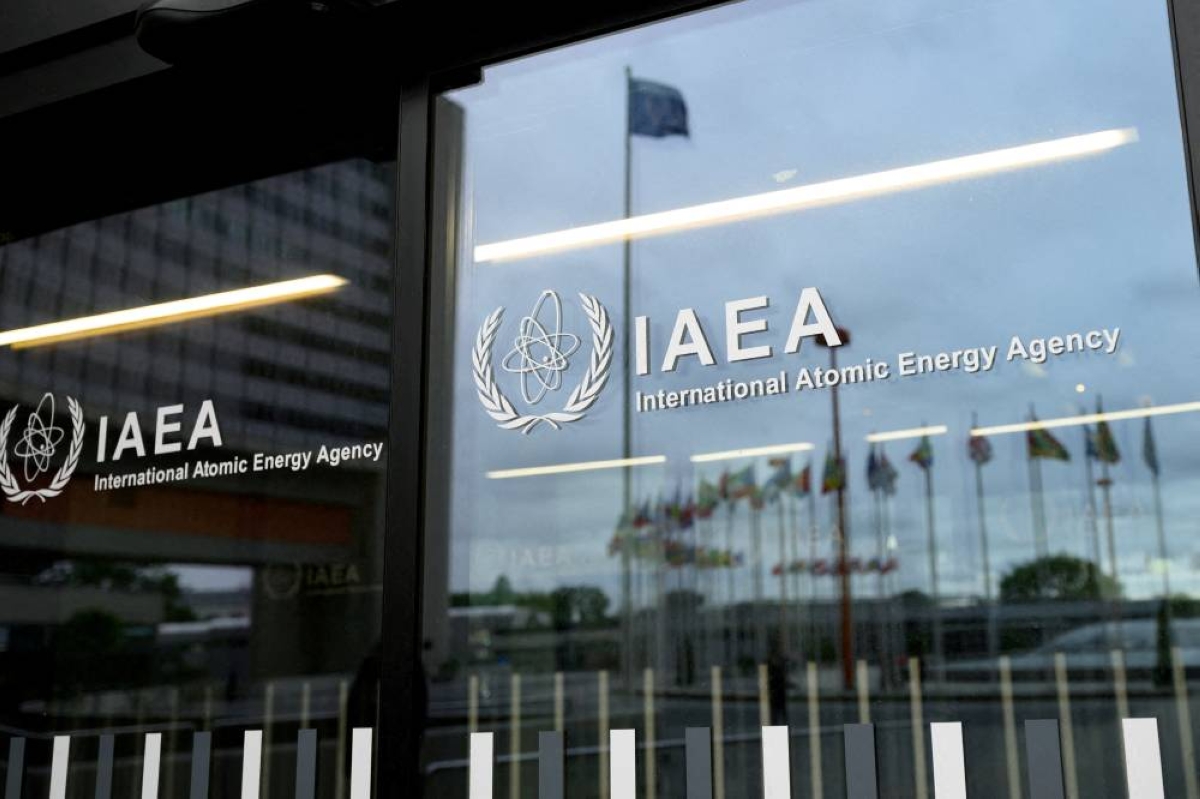
FILE PHOTO: The IAEA logo is displayed in front of the agency’s headquarters in Vienna, Austria, June 5, 2026. REUTERS/Elisabeth Mandl/File Photo The US ‌is lobbying other countries on the UN nuclear watchdog’s Board of ‌Governors to back a draft resolution ‌demanding that Iran tell the agency ‌what happened to its bombed nuclear sites and the enriched uranium stored there. The US-drafted text, seen by Reuters yesterday and circulated ahead of this week’s quarterly meeting of the 35-nation board, risks complicating talks between Washington and Tehran. Iran has typically retaliated against resolutions against it at the International Atomic Energy Agency (IAEA), escalating its nuclear activities or scaling back co-operation. Previous IAEA board resolutions on Iran, submitted by the US, Britain, France and Germany, have passed by wide margins. One adopted in November demanded that Iran inform the agency “without delay” about the status of its enriched uranium stock and damaged sites — something that has yet to happen. The US ‌draft says Iran must “provide the Agency with precise information on nuclear material accountancy and safeguarded nuclear facilities in Iran” and grant “all access it requires to verify this information.” Both steps are described as “essential and urgent” and must be taken “without delay”. The text stops short of referring Iran to the UN Security Council, a move some diplomats had said was under consideration.That would have followed up on a June 12, 2025 resolutiondeclaring Iran in breach of its non-proliferation obligations. Israel began bombing Iran’s nuclear sites a day later. While circulating a draft does not guarantee it will be formally submitted to ‌the board, which would then ‌vote on it, it signals an intention to do so. Current US-Iran talks aim to extend their ceasefire and pave the way for broader negotiations, including on Iran’s nuclear programme. US President Donald Trump has said his goal is to ensure Iran cannot develop nuclear weapons, something Iran denies seeking. While June’s strikes destroyed or badly damaged uranium-enrichment facilities, much of Iran’s enriched uranium is believed to have survived. Trump has said he wants Iran’s highly enriched uranium removed, particularly what remains of the 440.9 kg (972 lbs) enriched to up to 60% purity — a short step from roughly 90% weapons grade — that the IAEA estimates Iran had when Israel first attacked. That amount would be enough, if further enriched, for 10 nuclear weapons, according to an IAEA yardstick. Russia’s ambassador to the IAEA told reporters on Friday a resolution would only antagonise Iran.“It was exactly the US who undermined this co-operation,” he said, referring to the fact the IAEA had access to Iran’s ‌sites until the bombing started.Russia and China have opposed all recent resolutions against Iran. 

World
Zelensky meets allies in UK after strike hits Ukraine N-site

Zelensky meets allies in UK after strike hits Ukraine N-site

A handout image from Ukraine's Energoatom shows damage to a spent nuclear fuel storage facility, following what the company said was a drone strike, amid Russia's attack on Ukraine, near Chornobyl, yesterday. (Reuters) Ukrainian President Volodymyr Zelenksy arrived in Britain yesterday for defence talks with leaders of the UK, France and Germany after new Russian strikes killed five people and hit a nuclear site in Ukraine. Zelensky said in an online post he was in London and would meet British Prime Minister Keir Starmer, French President Emmanuel Macron and German Chancellor Friedrich Merz. Kyiv is asking its Western allies for more ammunition deliveries for its anti-air defences as Ukraine endures daily Russian strikes. Zelensky is also seeking ways for the allies to further pressure Russia to end the fighting. Yesterday, Russia fired waves of drones and other munitions at Ukraine, with one of the attacks damaging a nuclear storage facility in the Chernobyl exclusion zone, Ukrainian officials said.Radiation levels at the facility remained within normal limits following the attack, although its fuel reception building was “partially destroyed”, according to Ukraine’s nuclear energy operator, Energoatom.  Ukraine's

Opinion
Zelensky’s letter to Putin was intended for other ears

Zelensky’s letter to Putin was intended for other ears

President Volodymyr Zelensky’s open letter offering face-to-face peace talks to end the war in Ukraine was addressed to Russian President Vladimir Putin but meant to echo through the corridors of this week’s St Petersburg investment forum, and beyond.Zelensky published the letter on Thursday evening as Putin briefed foreign news editors at Russia’s premier business event.The previous day, Ukrainian drones had hit an oil terminal in St Petersburg, sending clouds of smoke billowing into the sky near the venue.Ukraine believes sections of Russia’s elite – “officials, businessmen, and Russia’s partners” – want to see an end to a conflict that has left its $3tn economy stagnant, according to one Ukrainian official.The glitzy gathering has highlighted rival visions within Russia.While some participants have said Russia should fight on and gird for long-term confrontation with the West, others have emphasised the economic advantages of ending a war coming closer by the week.Zelensky has for months been repeating his call for a ceasefire and offer to meet Putin, only for Putin to dismiss them, as he did again on Friday.The Ukrainian official insisted that Zelensky was serious about reviving negotiations.However, Dmytro Iarovyi, associate professor at the Kyiv School of Economics specialising in political psychology, said the drone strike and “performative” letter had been a concerted attempt to shape the conference’s narrative.He said the letter was intended to tell Russian society and Western governments – particularly US President Donald Trump – that recent territorial gains and painful long-range strikes on Russia had put Kyiv in a stronger position in any negotiations.“Trump always says ‘Ukraine doesn’t have any cards’,” said Kurt Volker, a former US ambassador to the Nato, and Ukraine envoy during Trump’s first administration. “Well, Ukraine is now showing that it’s in a stronger position.” – Reuters 

Opinion
The ghost that haunts the Caribbean

The ghost that haunts the Caribbean

The sea does not forget. Sixty-four years ago, Soviet missiles pointed at the heart of an American empire from a sliver of a Caribbean island, and the world held its breath at the edge of annihilation.The crisis passed. The missiles were removed.However, the punishment never ended. What Washington called an embargo, what Havana has always called by its true name, a blockade, began on February 3, 1962, and has never stopped.It is the longest sustained campaign of economic strangulation in modern history, outlasting the Cold War, outlasting the Soviet Union, outlasting every justification ever offered for it, and now, in the spring of 2026, it has metastasized into something that should terrify anyone still capable of being terrified.In what appears to be a carefully calibrated show of force, the United States has deployed the aircraft carrier USS Nimitz and its strike group into Caribbean waters, a move that coincided with the unsealing of murder charges against former Cuban leader Raúl Castro for a 1996 incident in which Cuban forces shot down planes operated by the Miami exile group Brothers to the Rescue.US Southern Command framed the move as a demonstration of operational readiness, citing the carrier’s prior combat operations from the Taiwan Strait to the Persian Gulf to underscore its capabilities and reach.“Welcome to the Caribbean, Nimitz Carrier Strike Group!” the command posted on social media, with the casual menace of a man pressing a boot to a throat.This is the Imperial Theatre. It is the language of domination dressed in legal costume.The empire always needs a pretext.In 1962, it was Soviet missiles. In 1996, it was a civilian aircraft.Today, for the Trump administration, which has declared Cuba “an unusual and extraordinary threat” to national security, the pretext is a 94-year-old man.Cuba’s Deputy Foreign Minister Carlos Fernández de Cossío described the indictment as “fraudulent”, lacking any legal, political, or moral foundation, and warned that the US has a “well-known, dark practice” of using accusations like this to take military action against sovereign states.He is not wrong. The playbook is familiar. First the dossier, then the carrier group, then the rubble.Cuban President Miguel Díaz-Canel accused Washington of using the island’s economic weakness as an “outrageous pretext” to seize it, promising that “any external aggressor will clash with an impregnable resistance”.These are not empty words from a government that has survived sixty years of siege, the Bay of Pigs, the assassination plots, the sabotage campaigns, the tourist boycotts, and now a fuel blockade that has plunged 10mn people into recurring darkness.The Trump administration’s attempts, in the words of Russian foreign ministry spokeswoman Maria Zakharova, to “tighten the sanctions noose around Cuba, combined with a decades-long trade, economic, financial, humanitarian and now energy blockade, directly reflect Washington’s intolerance for dissent”.“It is,” she said, “a cynical embodiment of a revived Monroe Doctrine.”The Monroe Doctrine. That 19th-century declaration of hemispheric ownership, that proclamation that Latin America belongs to Washington as a private estate.It never died. It merely slept. And now it walks again.Enter Marco Rubio, the US Secretary of State, son of Cuban exiles, the man who has waited his whole political life for this moment.Rubio has been unsparing: Cuba needs “new people in charge”, he said.“Their economy doesn’t work... they’re in a lot of trouble, and the people in charge don’t know how to fix it, so they have to get new people in charge.”It is the logic of the conqueror, packaged as the counsel of a friend.And Cuba’s Foreign Minister Bruno Rodríguez did not hesitate to label Rubio a “spokesperson for corrupt and vengeful interests”.However, here is what distinguishes 2026 from every previous chapter of this long war: Cuba is no longer alone in ways that matter.Russia has pledged the “most active support” to Cuba, with foreign ministry spokesperson Zakharova declaring full solidarity and vowing to “strongly condemn any attempts at gross interference in the internal affairs of a sovereign state, intimidation and the use of unilateral restrictive measures, threats and blackmail”.In March, Russia sent an oil tanker to the island, which Moscow called “humanitarian assistance”, a direct and deliberate defiance of the American blockade.China added its voice separately, demanding that the US stop wielding the “big sticks” of judicial proceedings and sanctions and cease its threats of force against Cuba.This is the architecture of the new world.The United States is simultaneously running pressure campaigns against Iran, backed by China, and Cuba, backed by Russia.The targets are no longer isolated. They are networked. They are backed.And as the empire extends itself across three simultaneous confrontations, from the Taiwan Strait to the Persian Gulf to the Caribbean, the question is no longer whether American power is formidable. It is whether it is wise.Cuba’s deputy foreign minister reminded the world that those charged in the 1996 incident “were fulfilling a duty, the duty to protect the airspace, the homeland, and the peace of the Cuban people”, and concluded with a warning that must be heard: “Any attempt to use this excuse for action against these comrades within Cuba will be met with fierce resistance from the Cuban people.”The USS Nimitz, the oldest carrier in the American fleet, commissioned in 1975, is now prowling waters it has not patrolled with such intent since the height of the Cold War.History does not repeat. But it returns. It rises from the water.And the ghost that haunts the Caribbean in May 2026 is the same ghost that haunted it in October 1962: the arrogance of a superpower that cannot conceive of a world in which it does not own every shore it surveys.The Cuban people know what that ghost wants. They have always known.And for 64 years, they have answered it with the only word that the empire never learns to accept.No.• The writer is a prominent news anchor, programme presenter and media instructor. 

Sports
Qatar Equestrian Federation to hold Future Riders Summer Programme from June 28

Qatar Equestrian Federation to hold Future Riders Summer Programme from June 28

Future Riders Summer Programme is open to boys and girls aged between 4 and 17 and will be held at Qatar Equestrian Federation's Future Riders School.  The Qatar Equestrian Federation (QEF) will launch its Future Riders Summer Programme on June 28, with the initiative running for two months at the Future Riders School located within the federation's premises.The programme is open to boys and girls aged between 4 and 17 and will be delivered by a team of highly qualified and experienced equestrian instructors in a safe and supportive learning environment. Each training session will last 40 minutes.The programme aims to teach equestrian skills in an engaging and enjoyable manner while incorporating a range of recreational, sporting and cultural activities. These activities are designed to develop participants' abilities, enhance their self-confidence and provide a well-rounded summer experience.QEF President Bader bin Mohammed al-Darwish said the summer programme is one of the Federation's key annual initiatives, aimed at making productive use of the school holidays while strengthening young people's connection to equestrian sport."The programme provides a safe and stimulating environment under the supervision of a select group of qualified trainers, allowing participants to develop their skills and gain valuable experience in equestrianism," he said.Al-Darwish added that the programme offers participants the opportunity to learn the fundamentals of riding while developing their physical and mental abilities and embracing values such as discipline, responsibility and self-confidence."These qualities help prepare a promising generation of riders capable of carrying forward the tradition of excellence in this prestigious sport," he said.He noted that equestrianism remains an integral part of Qatari identity and heritage, and that the Federation is committed to instilling these values in younger generations while expanding the sport's presence within the community.Al-Darwish also highlighted the Federation's ongoing efforts to enhance the programme each year through improvements to its training content and teaching methods, in line with international best practice and the expectations of participants and their families."This continuous development reflects the Federation's commitment to providing a comprehensive educational experience that nurtures talent and fosters a lasting passion for equestrian sport," he added.  Related Story