World
Armenia PM wins vote, cementing Westward tilt

Armenia PM wins vote, cementing Westward tilt

Armenian Prime Minister Nikol Pashinyan's party won parliamentary elections, according to preliminary results Monday that signalled a victory endorsing the nation's pro-Western shift after threats from Moscow and claims of Russian interference.Pashinyan's push to move Armenia out of the orbit of its former imperial ruler has angered the Kremlin — which claimed the West swayed the result and authorities had pressured the opposition.Pashinyan claimed a 'historic victory' in the election that came after years of turmoil since he was swept to power in a 2018 street revolution.The small Caucasus country is still haunted by Azerbaijan's 2023 military takeover of the Karabakh region, which ended decades of territorial conflict and prompted the exodus of the enclave's 100,000-strong ethnic Armenian population.Pashinyan framed the vote as a choice between lasting peace with Azerbaijan and a return to war.His ruling Civil Contract party secured 49.8 % of the vote, comfortably ahead of the 23.3 % of Russian-Armenian billionaire Samvel Karapetyan's Strong Armenia alliance, the Central Election Commission said. The turnout was 59 %.In Yerevan, voters greeted Pashinyan's victory with a mix of relief, hope and unease — some seeing it as a mandate for peace, others warning that Armenia's future remained uncertain.'I am very glad that our people trusted Pashinyan again. What did some people think, that the people would go and elect those corrupt Russian puppets?' 58-year-old welder Aram Mnatsakanyan told AFP.Sargis Harutyunyan, 81, said he feared post-election unrest, warning that opposition street protests 'would not be the right thing in this geopolitical situation'.European Union chief Ursula von der Leyen congratulated Pashinyan on his win, telling him: 'Armenia can count on us.''The spirit of the Velvet Revolution you led in 2018 is alive and well,' she said on social media.French President Emmanuel Macron said the result would boost 'momentum toward closer ties with Europe'.Pashinyan has drifted from Moscow since 2023, with Armenia criticising Russia not coming to its aid when Azerbaijan recaptured Karabakh.He froze participation in a Russia-led security bloc, signed a strategic partnership agreement with Washington, and set Armenia on a path toward possible EU membership.Moscow has in recent weeks escalated its rhetoric.In a pointed warning, Russian President Vladimir Putin said in May: 'We all see what is happening with Ukraine now... How did it all begin? With Ukraine's attempt to join the EU.'In the weeks before the vote, Russia banned the import of several Armenian products.The Kremlin was widely accused of online misinformation, hacking and pumping out Kremlin-friendly narratives portraying Western cooperation as dangerous.The Russian foreign ministry blasted the vote, alleging it was marked by 'Western interference' and 'unprecedented pressure' on the opposition.It said the results showed Armenian society was divided and that Pashinyan's support was declining.International monitors from the Organisation for Security and Cooperation in Europe said 'elections offered voters a genuine choice among political alternatives in a well-run process'.'Direct pressure from abroad, in the form of escalating (Russian) trade restrictions and security threats were observed during the campaign, aimed at unduly influencing voters in favour of the opposition,' they said in a statement.'The concentration of arrests and criminal prosecutions against opposition figures contributed to perceptions of selective justice,' they added.Armenia's Investigative Committee said it had opened 59 criminal cases over alleged electoral violations — including people casting multiple ballots — and detained nine people.Pashinyan's opponent Karapetyan — under house arrest on charges he alleges are politically motivated — called the elections 'shameful', denouncing alleged violations and saying dozens of his campaign staff had been arrested.Critics accuse Pashinyan of using the courts, police and administrative resources to pressure opponents.Analyst Armen Badalyan said the result means Pashinyan's party 'won enough seats in the new parliament to form the country's next cabinet'.'But it fell short of the supermajority needed to pass constitutional amendments' demanded by Azerbaijan as a condition for a final peace treaty.Pashinyan hailed a 'historic victory' and pledged to follow a balanced foreign policy, saying Armenia would 'continue the course of rapprochement with the West' while also deepening Russia ties.'I hope this will draw a positive response from Turkey and Azerbaijan,' he said.'We need to institutionalise peace between Armenia and Azerbaijan.' 

World
US judge asked to bar Trump's UFC fight at White House

US judge asked to bar Trump's UFC fight at White House

A federal judge in Washington has been asked to block President Donald Trump’s plan to host an Ultimate ‌Fighting Championship mixed martial arts bout ​at the White House ‌next week and to halt construction ‌of ⁠the metal arena ‌structure called 'the Claw' on ‌the South Lawn of the iconic executive residence.Two Washington-area ⁠residents in a court filing on Sunday asked US District Judge Amit Mehta to issue a temporary restraining order halting the event, scheduled to coincide with Trump’s 80th birthday on June 14.Mehta Monday asked the lawyers in ​the case to propose a schedule to hear the emergency request.Dubbed 'UFC Freedom 250', the event is set to ‌feature fighting inside the 92-foot-tall (28 ⁠meters), octagon-shaped cage ​with weigh-ins at the nearby Lincoln ​Memorial.The lawsuit, filed on Saturday, alleges that authorization of the program by the National Park Service and Interior Department was unlawful and should be set aside.'This nation’s public monuments should not be loaned out for private exploitation,” the plaintiffs said.In a statement, the White House called the case an 'obstructionist, baseless, and ‌dilatory lawsuit” and ‌said the event 'is no different ⁠than the various other White House-hosted events on ⁠the South ⁠Lawn and properly permitted events on the Ellipse and National Mall throughout the year.”The lawsuit contends the event violates rules barring sporting events on the South Lawn and at the Lincoln Memorial, and that construction ​of the large arena structure requires congressional authorization.Trump is facing other lawsuits over construction projects on the White House and elsewhere in the capital, including his plan to build a 90,000-square-foot ballroom on the site of the demolished East Wing, and his proposal to renovate and close The John F. ‌Kennedy Center ​for the Performing Arts. 

Sports
Stokes, Atkinson under investigation over nightclub incident, says ECB

Stokes, Atkinson under investigation over nightclub incident, says ECB

England's Gus Atkinson (left) celebrates the wicket of Australia's Scott Boland with Ben Stokes during the second day of the fourth Ashes Test at the Melbourne Cricket Ground (MCG) in Melbourne, Australia on December 27,

Opinion
Nvidia’s AI PC push banks on unproven demand beyond niche users

Nvidia’s AI PC push banks on unproven demand beyond niche users

Nvidia’s entry into the AI PC market with its RTX Spark superchip last week is less a breakthrough for regular users than a high-stakes bet that a largely unproven concept can find wider appeal, analysts said. At the ‌Computex trade show in Taiwan, the chipmaker pitched a future where laptops run ​large AI models locally and ‌act as personal digital agents, no cloud needed. It’s a claim that PC makers ‌HP and Dell have made for nearly three ‌years now, only to be met with skepticism ‌from Wall Street and consumers, with high prices outweighing tangible benefits. Nvidia, though, appears to be selling a different version of the AI PC than what exists today, one aimed more at developers and content creators who have long favoured Apple’s high-end MacBook Pros. Six companies -- Microsoft, Asus, HP, Lenovo, Dell, and MSI -- will make PCs using the chip. These stocks surged after Nvidia’s announcement on June 1. “RTX Spark doesn’t make traditional PCs obsolete. It creates a new category between the workstation and the AI server,” said Kevin Hein, analyst at Tirias Research. The chip combines a ​central processor, graphics engine and up to 128 gigabytes of unified memory, making it capable of running large AI models locally, something current AI PCs cannot do at scale. Nvidia says it could reshape how people ‌interact with computers, with AI agents handling tasks such as ​generating videos or debugging code. Existing AI PCs, marketed heavily over the past two years, have ​centered on modest features like transcription or image editing and have failed to drive meaningful sales for the device manufacturers and their partners such as Arm and Qualcomm. A premium price and a memory chip crunch, which has already driven up device cost, are likely to limit RTX Spark devices to niche adoption, analysts said. The cost “won’t deter all the big computer makers from working with Nvidia on this, but the bulk of PC sales for the next several years will still be more traditional Windows-based PCs with chips from Intel, AMD and Qualcomm,” said Bob O’Donnell, president at TECHnalysis Research. HP and Dell stock had been climbing ‌even before the launch of Nvidia’s superchip, ‌up 18% and 223%, respectively, so far this year. But that rally has been driven less by AI PCs and more by a wave of corporate upgrades to Windows 11, as well as booming demand for AI infrastructure, particularly for Dell. In its latest quarter, HP warned of a sharp decline in the PC market in the latter half of the year. The company did note strong demand for AI PCs, especially from enterprise customers, although the overall PC business recorded shrinking sales. The outlook for PC sales looks dour this year, with IDC estimating global PC shipments to ​decline 11.3% in 2026. It is unclear if devices powered by the Nvidia chip will outperform Macs. Nvidia said details on battery life and other metrics would be shared closer to the launch of the products this fall. Still, the Nvidia-powered laptops could make Windows machines competitive with Macs for the first time on memory bandwidth, a key bottleneck for AI software that constantly shuttles data back and forth between a machine’s processor and memory, adding latency. That brings it closer to Apple’s in-house chips, which have bundled unified memory since 2020. “I expect some companies will take the leap ‌to test out the long-term ​viability of on-device inferencing,” said Tom Mainelli, a group vice president at IDC. 

World
US demands Iran give UN nuclear watchdog access: draft resolution

US demands Iran give UN nuclear watchdog access: draft resolution

The US is demanding Iran provide 'precise' information on its enriched uranium stockpile and give the UN nuclear agency access 'without delay', according to a draft resolution seen by AFP Monday.The draft resolution is expected to be submitted for a vote this week to the board of governors of the International Atomic Energy Agency (IAEA) that started meeting Monday.Last week, the IAEA in a confidential report reiterated that the lack of access to nuclear sites in Iran constituted a 'proliferation concern'.The draft resolution affirms that it is 'essential and urgent' that Iran 'without delay' provides the agency with 'precise information on nuclear material accountancy and safeguarded nuclear facilities in Iran'.Tehran must also 'grant the agency all access it requires to verify this information', it adds.To be passed, the draft resolution needs to be submitted and approved by the 35-member IAEA board of governors.In a press conference after opening the board of governors' meeting, IAEA head Rafael Grossi said he had 'sporadic contacts with the foreign minister (of Iran) and others, but basically the channel of communication is broken'.'Of course, when you have active shelling or bombing, inspections are not possible, but there are many things that can be done. And the important thing is this dialogue,' he said.The IAEA has not had access to some key nuclear facilities in Iran since Israel, joined by the US, launched a 12-day conflict in June 2025 that included strikes on nuclear sites.Nuclear facilities have also been hit in the latest war, which erupted on February 28. The IAEA has repeatedly urged access.Prior to US strikes in June 2025, the IAEA calculated that Iran possessed approximately 440 kilogrammes (970 pounds) of uranium enriched to 60 %.This is close to the 90 % needed to make a bomb and well above the 3.67-percent limit set by a now-defunct 2015 agreement with Iran.The fate of this stockpile is uncertain.Israel and the US have long accused Iran of wanting to build a nuclear weapon.Tehran has repeatedly denied having any military ambitions, insisting on its right to the technology for civilian purposes.On Saturday, Iran denounced as a 'tool of political pressure' the report by the IAEA expressing concern over its lack of access to Iranian nuclear sites. 

Opinion
As OPEC+ meets, Iran war hobbles its power to shape market

As OPEC+ meets, Iran war hobbles its power to shape market

OPEC+ ministers met this weekend to weigh higher production quotas in a bid to cap oil prices that have surged since the Iran war effectively choked off Gulf crude shipments.However, even if the group members vow to ramp up output by thousands of barrels per day, analysts say that geopolitical realities mean they probably won’t move the needle on prices. With the crucial Strait of Hormuz shut since US and Israeli attacks on Iran in late February, oil prices have nearly doubled, igniting inflation pressures worldwide.Ministers from the 21 member states of OPEC+, the main oil producing nations and their allies, are holding their quarterly meeting online. The group is likely to beef up its production quotas by “188,000 barrels a day”, said Jorge Leon, analyst at Rystad Energy, similar to recent increases.However, in reality, only seven members – Saudi Arabia, Russia, Iraq, Kuwait, Kazakhstan, Algeria and Oman – have the capacity to do so. Tehran’s threats of retaliatory attacks to US and Israeli strikes have virtually blocked the vital Strait of Hormuz, through which roughly a fifth of global oil and gas supplies normally pass.That is equivalent to about 20mn barrels a day. With key Gulf producers shut out of the global market, pledges to raise output in a bid to ease spiralling prices are unlikely to sway traders.“Any announced production increases or changes to output targets will have limited practical value,” said Ole Hansen, a commodities analyst at Saxo Bank. “There is very little OPEC can do.”OPEC+ itself says daily production has plummeted to just 33mn barrels a day as tankers remain stuck, compared to nearly 43mn before the conflict. A US blockade on Iranian ports means “it will be even less than that” in reality, said Homayoun Falakshahi, head of crude oil analysis at data firm Kpler.The United Arab Emirates’s recent decision to quit OPEC further saps away at the cartel’s influence, given its huge excess production capacity.And Abu Dhabi has made clear it wants to boost output. “They don’t want to be dictated to, they want to maximise their revenues,” said Lawrence Haar, a lecturer in finance at the University of Brighton in England.And the group risks seeing other countries follow the UAE’s example.“If Iraq were to leave, it could mark the end of OPEC+,” Falakshahi said. Saudi Arabia, by far the cartel’s most influential member, “is going to do what it takes to stop anyone else from leaving”, Falakshahi predicted.That could translate into more flexible output quotas or decreased penalties for any excess production. However, “for now, the compensation framework has effectively become irrelevant due to widespread production shut-ins”, Hansen said.As a result, the Iran war has largely neutralised the group’s stated mission “to secure an efficient, economic and regular supply of petroleum to consumers, and a steady income to producers”.For Falakshahi, the only factor limiting further oil price spikes at the moment is China, “which is buying less oil than normal” by tapping into its vast strategic reserves. 

World
UK PM Starmer set to ban ‘harmful’ social media for under-16s

UK PM Starmer set to ban ‘harmful’ social media for under-16s

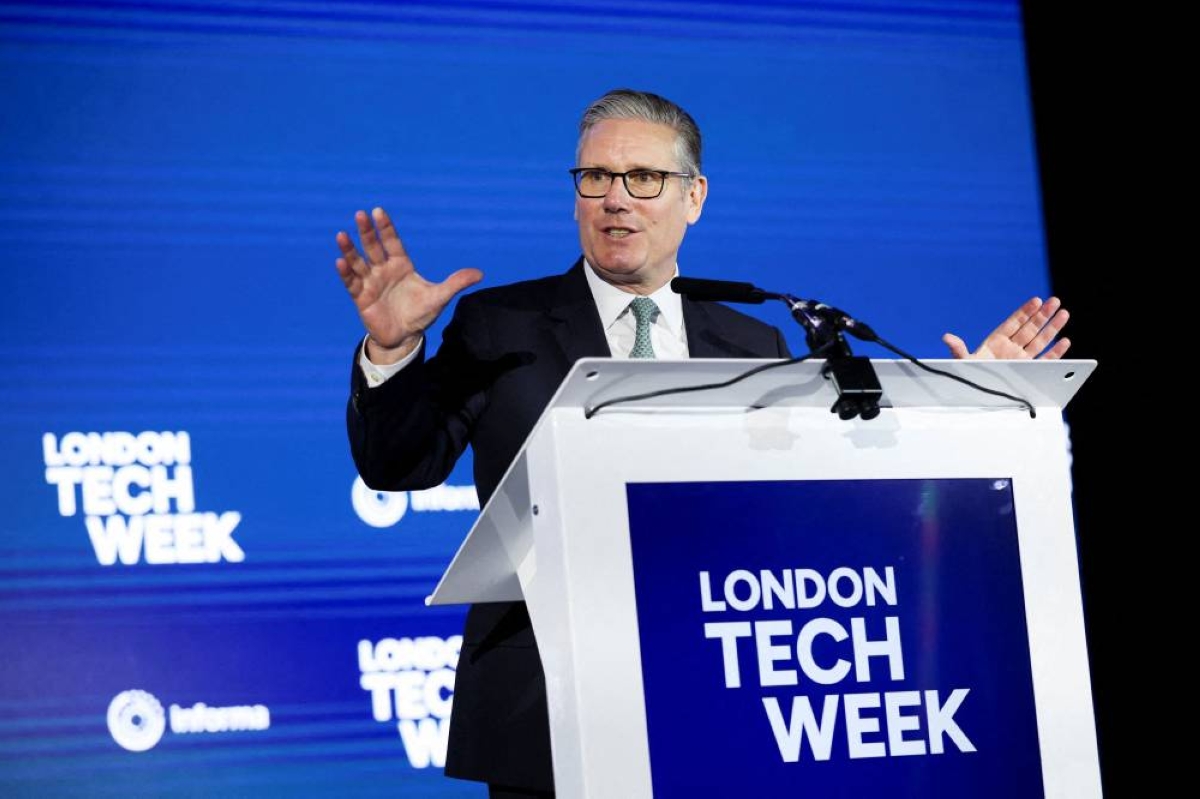
Britain's Prime Minister Keir Starmer delivers a speech at London Tech Week in London Monday. (AFP) British Prime Minister Keir Starmer is set to announce a ban on "harmful" online platforms for children under 16 while maintaining ‌access to some safer forms of social ​media, the Times ‌newspaper reported Monday.Starmer, who is due ‌to ⁠make a ‌speech later Monday, ‌is said to have decided to proceed with restrictions ⁠after speaking to bereaved parents and considering evidence from Australia, which brought in a ban for under-16s last December.Asked about the report, a source at Downing Street said: "The prime minister is not afraid about taking on the tech companies ​and their bosses to protect young people."A source close to the matter said a formal ban was ‌unlikely to come this week.Worries over the impact of social media on mental health and online safety prompted Britain to hold a consultation on children's access to social media earlier this year, with curfews, time limits and curbs on addictive design features, all under consideration.France, ‌Denmark and Poland ‌are also considering ⁠tightening rules around social media use for children, while ⁠Greece in April ⁠announced it would ban access to those under the age of 15 from January 2027.Starmer is expected to focus on how the government can ensure technology brings positive change when he speaks later Monday, ​according to a statement released by his office on Sunday.Britain's online safety law already requires social media companies to take measures to protect children from illegal and harmful online content.Experts are divided on how effective a total ban would be, while a group of young people in London recently told Reuters they ‌were opposed ​to restrictions.  Related Story

World
Korea should not give up on North's denuclearisation: president

Korea should not give up on North's denuclearisation: president

Republic of Korea should not give up on North Korea's denuclearisation, President Lee Jae-myung said Monday, as China's President Xi Jinping arrived in Pyongyang for a two-day visit.Lee made the remark at a press conference marking his first year in office, which he took after months of political upheaval triggered by his predecessor's martial law declaration.'We should not give up on the goal of denuclearisation because we cannot pursue nuclear armament ourselves,' he said.Xi makes the trip to the North after hosting US President Donald Trump and Russia's Vladimir Putin separately in Beijing recently and as North Korea's nuclear talks with Washington remain deadlocked.China, Washington's chief geopolitical rival, has been North Korea's main trading partner and a key source of diplomatic and economic support for the country, hit by multiple international sanctions.The White House said last month that Xi and Trump 'confirmed their shared goal to denuclearise North Korea' during their summit in Beijing.However, leader Kim Jong-un's powerful sister said on the eve of Xi's arrival that North Korea's nuclear weapons programme was 'the line of no retreat'.Lee said Seoul should not seek to acquire atomic weapons to counter Pyongyang's nuclear drive because of potential domino effects in the region.'If Republic of Korea were to pursue nuclear armament, do you really think Japan would stand still? Or Taiwan?' he said.'Everyone would end up going nuclear, and the entire region would turn into a nuclear flashpoint.'He said given Republic of Korea's heavy reliance on exports, they could not withstand severe global sanctions for attempting to go nuclear in violation of international rules.'We simply cannot afford to become like North Korea,' he said. 'We cannot survive under such sanctions.'On denuclearisation talks with Pyongyang, Lee said the country should first set 'limited short-term goals', such as securing a moratorium on further production of nuclear materials. 

World
Indonesia’s Prabowo appoints new head of free meals agency

Indonesia’s Prabowo appoints new head of free meals agency

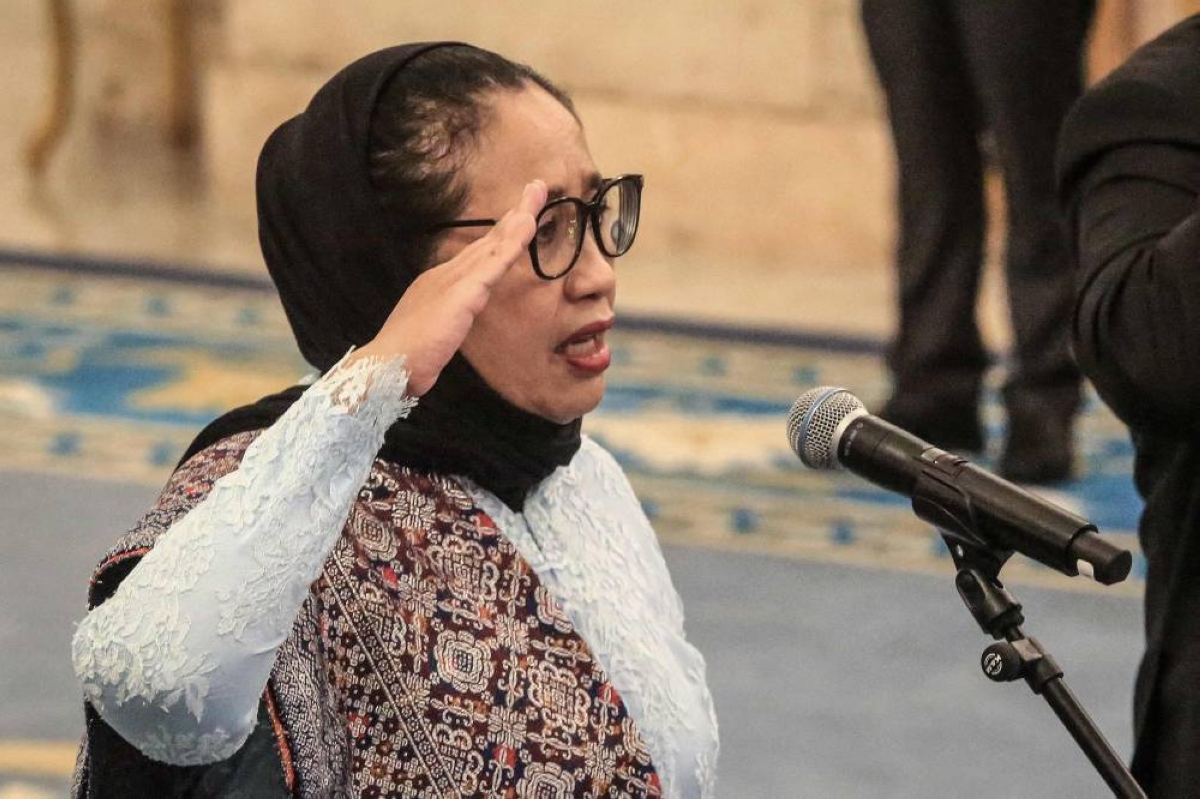
Newly appointed head of the National Nutrition Agency Nanik Deyang attends her inauguration ceremony at the Presidential Palace in Jakarta Monday. (AFP) Indonesian President Prabowo Subianto Monday appointed a new head of the agency responsible for implementing his flagship free meals programme, replacing the ‌previous office holder who was dismissed ​and arrested on graft charges ‌last week. Here are some key details ‌about the ⁠inauguration:At ‌the presidential palace, Prabowo ‌appointed Nanik Sudaryati Deyang as the new head of the ⁠National Nutrition Agency, replacing her predecessor Dadan Hindayana, who was arrested last week on allegations of corruption linked to the free meals programme.Indonesia's Attorney General's Office (AGO) also arrested two of the agency's deputy heads on charges of corruption leading to state losses.The three ​were accused of manipulating the selection of the foundations managing the programme's kitchens, and also artificially marking up the prices of ‌electric motorbikes, shoes, and ⁠televisions procured as ​part of the programme."Our concern is regarding ​budget efficiency so we will not burden the state budget, while at the same time maintaining the targets we have set," Nanik said after her inauguration.The efficiency measures include a moratorium on the establishment of new kitchens, "refocusing" the programme on new recipients and developing kitchens in remote areas through grants or CSR programmes from state firm or ‌private companies, rather than the ‌state budget, Nanik ⁠said.Prabowo also appointed two new deputy heads ⁠of the free meals ⁠agency: Agustina Arumsari, former deputy head of Financial and Development Supervisory Agency, and Major General Trenggono who has resigned from the Military.Prabowo also appointed the head of the Labour Party, Said Iqbal, as his new special adviser ​for manpower and labour welfare affairs.Prabowo's free meals programme, a key part of his election campaign launched in January 2025, has raised investor concerns about overspending and fiscal deficit risks.The programme has also sparked a public outcry about health and safety, with cases of food poisoning affecting at least 33,000 children as of April, ‌according to ​the Network for Education Watch, a non-government organisation.  Related Story

World
US warns Ebola outbreak on scale of largest ‘is possible’

US warns Ebola outbreak on scale of largest ‘is possible’

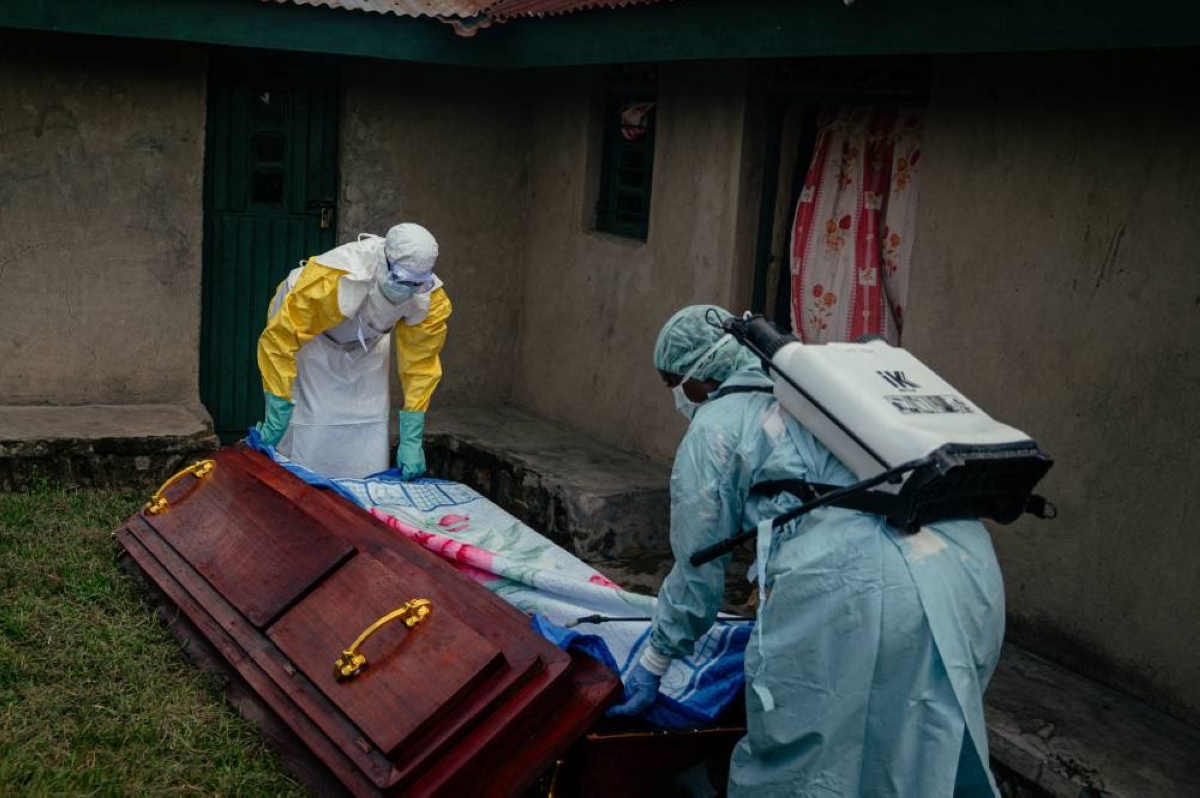
The US CDC urged strong public health interventions against the current Ebola outbreak, citing their models that show it could otherwise rival the scale of the 2014 West Africa outbreak. That eruption of the virus resulted in more than 28,000 cases and more than 11,000 deaths. “That scale is possible,” said Jason Asher, director of CDC’s Center for Forecasting and Outbreak Analytics, during a press briefing.The US projections from the Centers for Disease Control and Prevention were part of Morbidity and Mortality Weekly Report documents published Friday. The worst outcomes could be avoided if “a larger proportion of patients were identified, isolated, and treated,” the agency said in its reports. But “the public health response to control this outbreak will likely need to be of similar magnitude to the response for the 2014-2016 West Africa Ebola outbreak.” Asher emphasised the models were “not a forecast” but “a planning tool.” “They’re designed to support action, not to generate alarm.” They are based on four possible intervention scenarios ranging from poor (20%) to extremely high (95%) levels of isolation and treatment. If isolation levels are what the CDC would consider poor, with no other interventions there is a 65 percent chance cases will top 20,000 within three months, according to the agency.Satish Pillai, the CDC manager for the Ebola response, said “the total individuals that are infected and requiring isolation remains unclear.” But he said the situation on the ground would indicate levels of isolation are currently on the lower end. Also last week the World Health Organisation and the African Union’s public health agency said $518 million was needed across the next six months to combat the deadly Ebola outbreak in the DR Congo and its neighbors. The outbreak was declared on May 15 in northeastern DR Congo, but the rare Bundibugyo species of the Ebola virus is believed to have spread for some time beforehand. According to the WHO’s latest figures, there are 381 confirmed cases in the DRC, including 64 deaths. The outbreak has hit three provinces, with the epicenter in Ituri, which the Africa CDC says accounts for 90% of confirmed cases and 76% of confirmed deaths. Across the northeastern border in Uganda, there have been 16 confirmed cases, including one death. Seven Ebola patients in the DRC and two in Uganda have recovered.