Entertainment
Senator Tim Kaine Weighs in On Taylor, Travis Prenup

Senator Tim Kaine Weighs in On Taylor, Travis Prenup

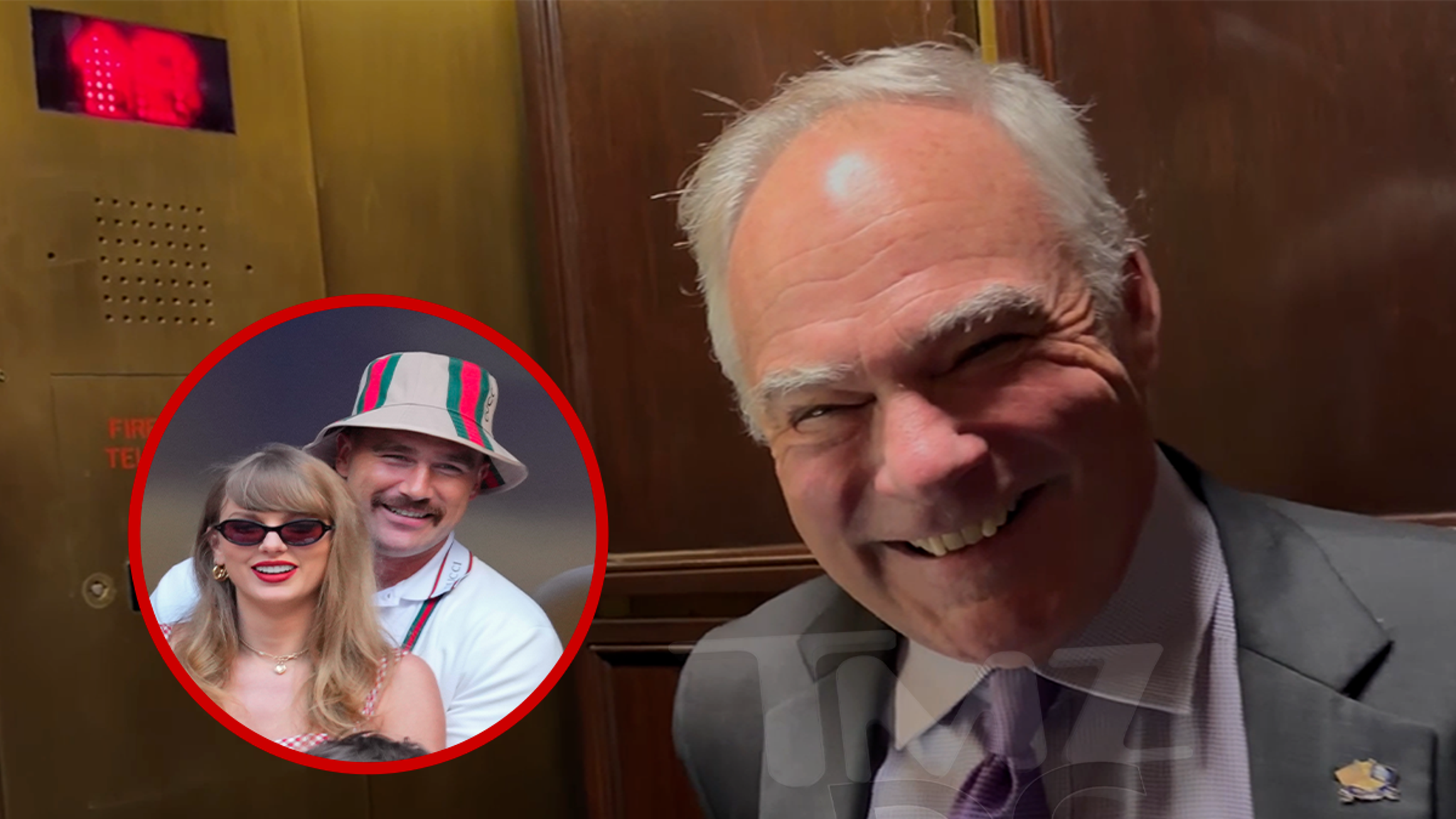
Senator Tim Kaine Here's My Take on Taylor/Travis Prenup!!! Published May 19, 2026 3:03 PM PDT Play video content Senator Tim Kaine has all sorts of advice on the probable Taylor Swift/Travis Kelce prenup ...

Sports
How Arsenal banished 'nearly men' tag to end 22-year title wait

How Arsenal banished 'nearly men' tag to end 22-year title wait

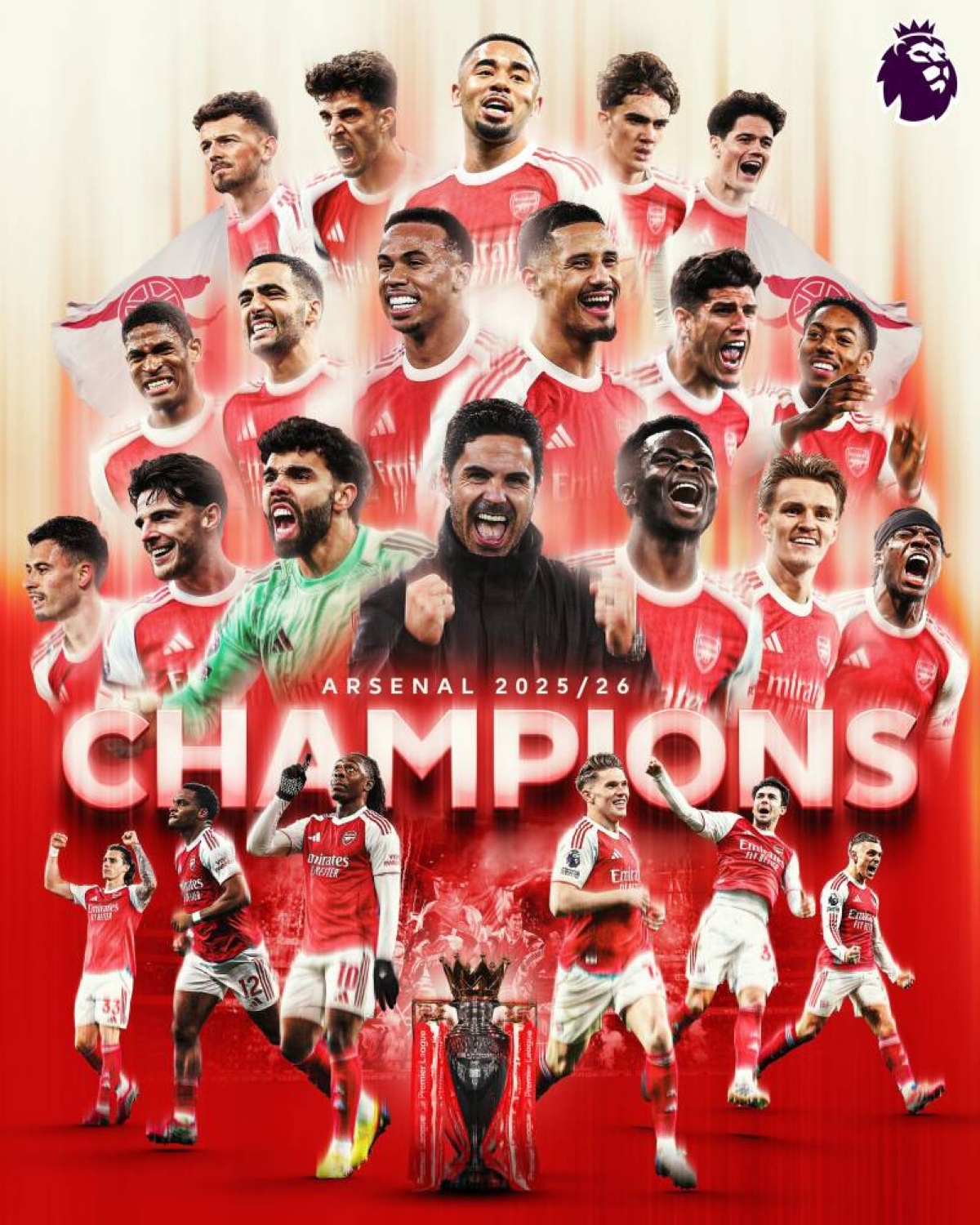
Just four years ago, Arsenal were wallowing in recriminations and regret after finishing 24 points behind Premier League champions Manchester City. Pipped to a Champions League place by arch-rivals Tottenham on the final day of the 2021/22 campaign, it seemed unlikely to many Arsenal fans that Mikel Arteta would ever lead them out of the wilderness. Yet on Tuesday, Gunners boss Arteta completed his quest to take the club back to the promised land as Manchester City's 1-1 draw at Bournemouth sealed a long-awaited Premier League title. Arsenal's 14th English title is their first since Arsene Wenger's 'Invincibles' went unbeaten through the 2003/04 league season at the club's old Highbury ground. Wenger and his stars cast a long shadow over the Emirates Stadium in the fallow period that followed. But winning a title fight against a club of City's calibre lifts Declan Rice, Bukayo Saka and company into the rarified air occupied by Wenger-era greats such as Patrick Vieira and Thierry Henry. For Arteta, it was the moment the student surpassed his teacher after three years spent learning from Pep Guardiola during his time as City's assistant manager. The 44-year-old has used those lessons to revitalise a club that was stuck in a rut when he arrived to replace the sacked Unai Emery in December 2019. Arsenal won the title three times in Wenger's first eight seasons as the trailblazing Frenchman took the Premier League by storm. But evidence of Wenger's decline could be found in the club's absence from the top two in 12 of his final 14 seasons. Arsenal's costly move from Highbury to the Emirates Stadium in 2006 was blamed for the club's inability to keep pace with big-spending title rivals. They finished sixth in Wenger's farewell campaign in 2018 -- the club's lowest final position since 1995. Emery was hired to rejuvenate the north London side but the former Sevilla and Paris Saint-Germain boss was a major disappointment. Arsenal failed to qualify for the Champions League in his first season and were demolished by Chelsea in the Europa League final. Emery was sacked in November 2019 with the club on their worst winless run since 1992. Stamping his authorityNuno Espirto Santo and Eddie Howe were reportedly among the candidates to replace Emery. But the ultra-competitive Arteta, who played for the club for five years, convinced the Arsenal hierarchy to bring him back home. Despite winning the 2020 FA Cup in his maiden campaign, he endured painful teething problems. A glimpse into how far Arsenal have come under Arteta's leadership can be garnered from their ramshackle defence -- comprising Saka, Sokratis Papastathopoulos, Ainsley Maitland-Niles and David Luiz -- in his opening game as manager. He had to rid the dressing room of divisive egos, stamping his authority by exiling unsettled captain Pierre-Emerick Aubameyang and moving on from Mesut Ozil. Arsenal finished a lowly eighth in 2020 and 2021, leading to calls for his dismissal. Yet, gradually, a highly motivated, superbly drilled team fashioned in Arteta's intense image emerged from the turmoil. Arsenal unexpectedly found themselves in the title race in 2023, but blew an eight-point lead to let Manchester City take the crown. Twelve months later they suffered the agony of being pipped to the title on the final day of the season by Guardiola's men. Arsenal came second for a third straight year in 2025, but this time they took a step back, ending 10 points behind champions Liverpool. While others wrote off the Gunners as 'chokers' and serial underachievers, Arteta's belief never wavered. The Spaniard once compared his work with the daily commute from his home to the club's London Colney training base. He likened his ability to navigate the busy north London traffic to the way he had to switch tactics and players during his Arsenal overhaul.For Arteta, and for the club, the long and winding road to the title has come to an unforgettable end. 

Opinion
Smart small states provide lessons for Gulf tech ambitions

Smart small states provide lessons for Gulf tech ambitions

In recent years, Gulf states have worked hard to turn their home region into a hub for digital innovation and investment in AI, cloud computing and clean-tech. The region has also established itself as one of the world’s fastest-growing destinations for the data centres and other types of digital infrastructure. This makes it a useful and timely exercise to consider how smaller state actors in other parts of the world have undertaken similar projects to become important tech players on the international stage. Two excellent examples are Ireland and Singapore. Neither has access to the energy resources of the Gulf states. But like smaller states in the Gulf they are acutely aware of both the limitations and opportunities of their smallness. Since the early 2000s, decision-makers in Ireland and Singapore have prioritised their tech sectors as a way to overcome the limits of their small domestic economies and populations to build capacity and diversify their economies. In doing so, both states have leveraged geographic location — Ireland between the US, UK and Europe; Singapore between the Straits of Malacca and South China Sea. They have also championed economic openeness, and built tech-savvy educated workforces that attract talent from all over the world. These moves have been supported by new regulatory frameworks, special economic zones, and cross-border agreements to maintain competitive advantage. In economic terms, the results have been impressive. Ireland serves as the European base for 16 of the top 20 global tech companies. The tech sector accounts for around $50bn annually, over 13% of the country’s GDP, and employs roughly 120,000 workers. For Singapore the numbers are even bigger. With a total of S$128.1bn value-added, tech accounts for 18.6% of GDP and employs 214,000 workers. This tech success has not only increased economic competitiveness, efficiency, and resilience. It has also resulted in the routing of global flows of information as well as capital through both countries. Singapore has more data cables landing on its territory than any other country in Southeast Asia. Three-quarters of all cables in the northern hemisphere pass through or near Irish waters, and four transatlantic cables directly connect with Ireland. This has significant geopolitical as well as economic implications. Not least, it makes the subsea infrastructures of Ireland and Singapore strategically important components of the international security system. This has enabled both countries to extend their political, as well as economic, reach beyond existing territorial and physical limitations. In turn, this has helped them offset some of the political vulnerabilities of smallness. But tech success also raises important challenges related to energy security, environmental management and tech geopolitics. The energy demands of building a state-of-the-art digital infrastrucure are massive. A single hyperscale facility can require the same amount of energy as a small town. Tech infrastructure also takes up large amounts of other vital resources including water. It also monopolises the use of precious space, a real concern in small states. The energy resources and financial power of the Gulf states position them well to address the energy security and environmental challenges associated with tech-leadership. But even in the Gulf, the building of a cutting edge digital infrastructure requires hard financial choices and the commitment of large amounts of energy. It also requires next-generation cooling systems that operate efficiently in hot weather. On the geopolitical level, the roles of Ireland and Singapore as regional gateways for the flow of data has located both countries at the centre of US-Chinese technology rivalry. It has also entangled them in tech geopolitics and governance issues relating to the control and use of data. The experiences of both Ireland and Singapore in becoming tech strongholds offers some guidance for other state actors, including Gulf states, on all of these issues. First, their tech journeys demonstrate the importance of social and human capital, innovation, learning and adaptation for attracting high levels of inward investment and diversification into tech. The messae is clear. Even in a world of de-globalisation and resource nationalism, smaller actors that effectively use their national development plans to establish themsevles as innovative ‘hubs’ and ‘gateways’ will attract significant tech opprotunties. Both cases also highlight the close connection between trans-formative tech and US-China great power competition. Ireland and Singapore have had some success in navigating this challenge. In particular, they have presented themselves as neutral third parties that are ‘neither pro-China nor pro-America,’ as the Singaporean government put it in 2024. For example, Ireland has repeatedly used the courts to block US access to Irish data centres and has fined Meta over data transfers to the US. Attracted by Ireland’s reputation for strict data protection laws and keen to counter claims of Chinese state surveillance, TikTok’s ‘Project Clover’ relocated its European user data to an Irish centre. Singapore has not only eagerly signed agreements with both the US and China on cooperation in the fields of data analytics and AI. It has also developed a legal regime for tech that takes into account Chinese protectionism and US surveillance, as a way to attract major tech firms from both countries. Such strategies have enabled Ireland and Singapore to present themselves as tech gatekeepers as well as gateways. This adds to their influence in regional affairs and their reputation and standing on the international stage. This could not be more relevant for smaller states in the highly contested Gulf region. China and the US already use technology in the Gulf as a form of statecraft. It is inevitable that going forward both great powers and ambitious regional players will look to use the emerging tech eco-system to shape regional geopolitics and security in their favour. For all these reasons, the cases of Ireland and Singapore provide valuable lessons for the Gulf states in their transition from buyers to suppliers of technology and key players in the global tech revolution. The writer is Professor of International Politics and Director of the Small States and Energy Studies Programs at Georgetown University. @RoryDavidMiller

Sports
Al Arabi SC wins Sports and Youth Excellence Award

Al Arabi SC wins Sports and Youth Excellence Award

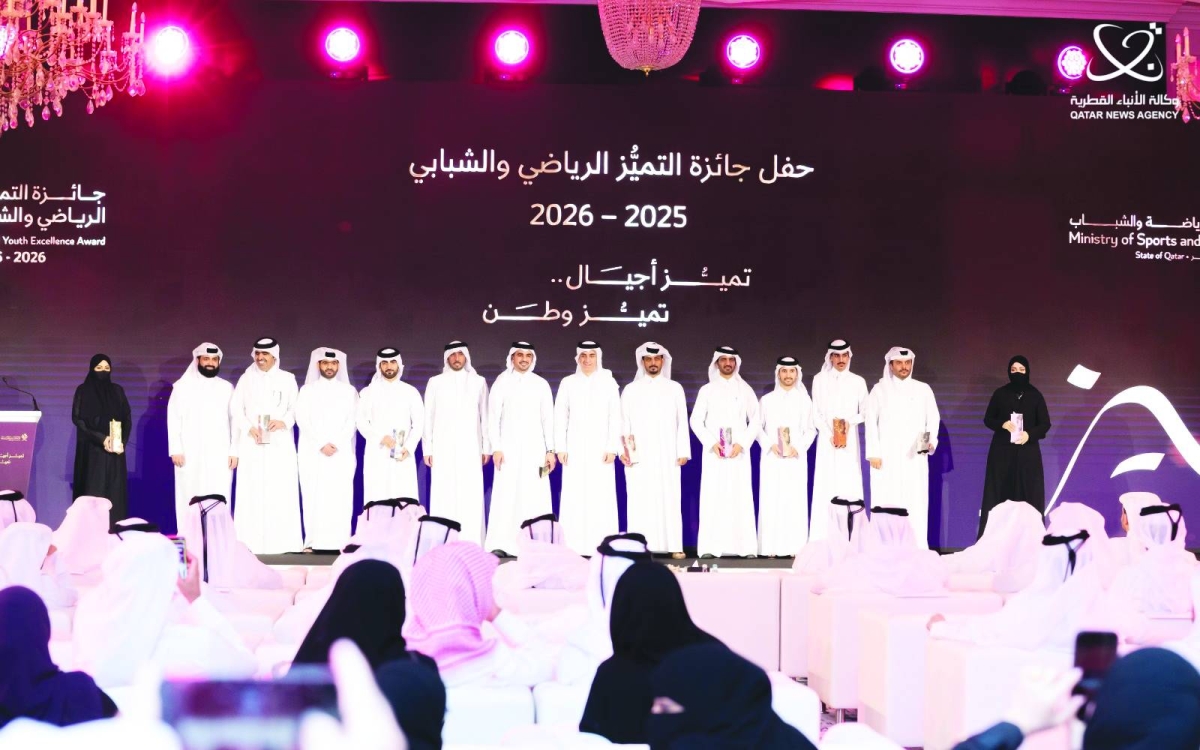
Al Arabi SC Wednesday won the Sports and Youth Excellence Award for the 2025/2026 season at a special ceremony attended by leaders of sports clubs, youth centers, and prominent institutions active in sports and youth development. Held under the patronage of His Excellency Sheikh Hamad bin Khalifa bin Ahmed al-Thani, Minister of Sports and Youth, the Ministry of Sports and Youth celebrated the winners of the fifth edition of the Sports and Youth Excellence Award for the 2025/2026 season. Al Sadd SC were second best while Al Rayyan SC won the third place. During the event, Engineer Yasser bin Abdullah Al Jamal, Undersecretary of the Ministry of Sports and Youth, honoured the winners across the award’s various categories, including Youth Committees, Youth Centers (Girls and General), Specialized Centers, and Sports Clubs. In his address, HE the Minister of Sports and Youth congratulated the award recipients, commending their exceptional efforts and remarkable achievements, which embodied determination, commitment, and excellence. The Minister said the fifth edition of the Sports and Youth Excellence Award marks a significant milestone in strengthening a culture of institutional excellence in Qatar. He noted that the award has evolved beyond an annual recognition program into a comprehensive national framework that motivates institutions and individuals to adopt best practices and elevate performance standards based on quality, sustainability, and innovation. He further stated that the award’s continuous development reflects the dedicated efforts of sports and youth institutions to enhance their programs and initiatives in alignment with Qatar’s vision of investing in people and building national capabilities. Through its successive editions, the award has contributed to creating a positive and competitive environment that encourages excellence while reinforcing the principles of leadership, strategic planning, performance measurement, and continuous evaluation. Since its launch five years ago, the Sports and Youth Excellence Award has become one of the State’s most prominent national initiatives aimed at advancing institutional performance and enhancing the quality of programs and services provided to young people. The award aligns with national development priorities and supports the preparation of a conscious, active generation capable of contributing effectively to the nation’s progress. It also reflects the Ministry of Sports and Youth’s vision of building an integrated culture of excellence founded on professionalism, innovation, and youth empowerment. The winners Youth Committees Category:First Place: Al Khor Sports Club Youth CommitteeSecond Place: Al Wakrah Sports Club Youth TeamYouth Centers Category (Girls and General):First Place: Doha Girls CenterSecond Place: Al-Reyada Girls CenterSpecialized Centers Category:First Place: Qatar Youth HostelsSecond Place: Qatar Science ClubSports Clubs Category:First Place: Al Arabi Sports ClubSecond Place: Al Sadd Sports ClubThird Place: Al Rayyan Sports Club General Centers Category:First Place: Al Thakhira Youth CenterSecond Place: Al Kaaban Youth Center  Related Story

Opinion
Lebanon is asking the wrong question about its future

Lebanon is asking the wrong question about its future

Lebanon has a talent for debating the architecture of its future while the foundations crumble beneath it. For two years, the most urgent conversation in Lebanese political circles — in Beirut salons, diaspora forums, and the offices of international mediators — has centred on a question of constitutional design: Should Leba non restructure itself as a federal state, granting its communities formal governing sovereignty? Or should it rebuild as a reformed unitary republic, concentrating authority at the centre and delivering it, this time, with competence and accountability? It is a genuine question. But the way it is being asked is wrong, and the frame in which it is being conducted is worse. The federal-versus-unitary debate is almost invariably a sectarian debate wearing constitutional clothes. Federalism’s advocates are communities that want to govern themselves because they no longer trust the state to govern them fairly. The unitary state’s defenders fear federalism as a prelude to partition, or a mechanism for rivals to entrench territorial control behind a constitutional warrant. Both sides are having a real argument. But it is the wrong argument. The wrong argument produces the wrong diagnosis. Lebanon’s crisis is not, at its root, a crisis of sectarian incompatibility. It is a crisis of institutional collapse — what Émile Durkheim called “anomie”: the condition that arises when the normative frameworks holding a society together break down faster than new ones can be built. Lebanon is not a country whose communities cannot coexist. It is one whose institutions have so thoroughly failed that citizens have retreated to communal solidarity as the only available social insurance. The sect did not destroy the state. The state’s failure made the sect indispensable. This distinction matters enormously. If Lebanon’s problem is sectarian incompatibility, the solutions are communal: redraw the boundaries, renegotiate power-sharing, allocate sovereignty by identity group. These are the solutions currently on offer, and they have a long record of failure. If the problem is institutional collapse, the solutions are civic and administrative: rebuild the courts, the civil service, the fiscal architecture, the rule of law. That is a harder project. It is also the right one. Lebanon’s confessional system was not an indigenous tradition; it was a French Mandate administrative tool, designed to make a diverse population legible to a colonial authority. What its founders did at independence was nationalise that tool — converting a mechanism of foreign control into the operating system of self-governance. The National Pact allocated the highest offices of the republic on a confessional basis calibrated to a 1932 census that has never been updated. The country’s population has quadrupled since. Its citizens are more educated, more urbanised, and more furious at an arrangement that has delivered only economic ruin. The scaffold meant to be temporary became the building. Into this structure came external shocks a functional state might have managed and Lebanon’s dysfunctional one could not: the Palestinian presence and the wars it brought; Syrian tutelage that systematically prevented Lebanese institutions from developing autonomous capacity; Hezbollah, which arose precisely in the space the state had vacated in the south, and which understood that schools, hospitals, and roads were the most effective instruments of political loyalty. Each exploited vacuums they did not create. The Lebanese state did — through neglect, corruption, and the chronic inability to reform an arrangement from which its political class profited. Against this background, the case for federalism deserves a sober rather than ideological assessment. Decisions made closer to communities are more responsive to local needs; local governments are, in principle, more accountable. But federalism’s benefits are conditional — they materialise only when functioning sub-national institutions exist to exercise devolved authority. In Lebanon today, constitutional federalisation would more likely entrench existing sectarian power structures behind federal sovereignty than dismantle them. The regional strongmen become governors. The patronage networks become administrative systems. The dysfunction acquires a constitution. There is a better path that does not require resolving the federal question first. The substantive goals behind the federalism argument — local accountability, community control over services, protection from arbitrary central interference — are achievable through administrative and fiscal decentralisation within a reformed unitary framework: elected regional councils with guaranteed funding and genuine authority over service delivery; municipal governments with real budgets and direct democratic accountability; a constitutional court with the independence to protect local governance from central override. These describe the normal operation of functional states — achievable without a constitutional convention and without crystallising Lebanon’s confessional map into permanent federal units. What makes this urgent is Lebanon’s human capital catastrophe. The diaspora — 15mn people, three times the resident population — is one of the developing world’s most extraordinary concentrations of global talent. Diaspora Lebanese who consider returning or investing ask a single question: is there a functioning legal system? The answer depends on governance quality — not constitutional architecture — and reads the same whether the state is federal or unitary. The October 2019 uprising offered a lesson the political class has not absorbed. For weeks, Lebanese citizens from every confessional community stood in the same squares, chanting the same slogans, demanding the same thing: a state that works. That solidarity was not an aberration. It showed what Lebanese civic identity looks like when people have an institutional space in which to express it. The uprising failed not because Lebanese citizens are incapable of transcending sectarian politics, but because no institutional mechanisms existed to convert civic energy into governing authority. Lebanon’s choice is not between a federal and a unitary state. Those are second-order questions about how authority is distributed within a functioning republic. The first-order question — the one that must be answered before any constitutional architecture makes sense — is whether Lebanon will build a real state at all: courts that enforce the law against the powerful and powerless alike; a civil service recruited on merit; a fiscal framework transparent and not subordinated to the financing needs of political patrons. A real state or a simulation of one: that is Lebanon’s actual choice, and no constitutional formula can make it on Lebanon’s behalf. Jamil K Mroue is a Lebanese writer and former editor of Al-Hayat in London and The Daily Star in Beirut.  

Sports
Rizkallah wins thriller in third round, Hassiba retains Qatar Karting Championship lead

Rizkallah wins thriller in third round, Hassiba retains Qatar Karting Championship lead

 Karim Rizkallah claimed a dramatic victory in Round 3 of the Qatar Karting Championship (QKC) after edging Victor Litaudon by a razor-thin margin of just 0.031 seconds in the Grand Final at Lusail International Circuit on Tuesday night. Competing on the 1.124km Lusail track, Rizkallah completed the 12-lap race in 12 minutes 49.943 seconds, narrowly holding off Litaudon in one of the closest finishes of the season. Rizkallah also clocked the fastest lap of the race at 1:02.886.Litaudon stayed glued to the leader throughout the race and crossed the line only fractions behind in 12:49.974, while Alfie McElroy secured third place after finishing 5.320 seconds off the pace.Felice Carena delivered another consistent performance to finish fourth, with championship leader Tameem Hassiba rounding off the top five after a solid drive that helped him strengthen his position in the standings.Following three rounds, Hassiba continues to lead the championship with 60 points, having collected 25 points in Round 2 and 10 in Round 3 after his opening-round tally. Litaudon sits second overall on 54 points, while Round 3 winner Rizkallah moved closer to the top after climbing to third with 52 points.Danish Quereshi remains fourth in the standings on 44 points, while Arkadiusz Barski completes the top five with 27 points despite failing to finish in Round 3. Related Story

Opinion
For Yasser Abbas, it’s ‘Gaza first’

For Yasser Abbas, it’s ‘Gaza first’

The son of Palestinian president Mahmoud Abbas said Fatah would prioritise Gaza and return it "to the fold of Palestinian legitimacy", the day after being elected to the movement's top decision-making body. Fatah's first congress in a decade came as the Palestinian movement faces existential challenges in the wake of the devastating Gaza war.Veteran Palestinian leader Mahmoud Abbas, 90, was re-elected as head of the movement, with his 64-year-old son Yasser Abbas securing a place on its central committee. In his first remarks since his election, Yasser Abbas said he would focus on "Gaza first, prisoners and the families of martyrs, and the refugee camps.""We will work to return Gaza to the fold of Palestinian legitimacy," he told journalists in the occupied West Bank city of Ramallah. Fatah has historically been the dominant force within the Palestine Liberation Organisation (PLO), the sole representative of the Palestinian people in international forums. It groups most Palestinian factions but excludes movements Hamas and Islamic Jihad."Achieving full national unity requires agreement to all the conditions for joining the Palestine Liberation Organisation in all its provisions: one law, one state, one legitimate weapon, and recognition that the organisation is the sole legitimate representative" of the Palestinian people, Yasser Abbas said. "Whoever accepts that is welcome."In recent decades, Fatah's popularity and influence have dwindled amid internal divisions and growing public frustration over the stagnation of the Israeli-Palestinian peace process. The sense of disappointment led to a surge in support for rival Hamas, which won the last legislative elections held in 2006, before going on to expel Fatah from the Gaza Strip after a bout of factional fighting.Under US President Donald Trump's Gaza peace plan, Hamas is to play no role in the future governance of the territory. It also demands sweeping reforms of the Fatah-led Palestinian Authority as a condition for it to play any meaningful role in post-war Gaza. On Monday, the Fatah congress announced the official preliminary results of the elections for its central committee and the revolutionary council, the party's parliament. A closing statement read out on Monday said that: "there is no state without Gaza, and no state in Gaza"."Any international administrative arrangement must preserve the ceasefire, end the occupation, ensure the flow of aid, and begin recovery and reconstruction, all clearly linked to the Palestinian government, which must be enabled to exercise all its responsibilities in Gaza," it added.

Sports
Saka says Arsenal critics ‘not laughing anymore’ after title triumph

Saka says Arsenal critics ‘not laughing anymore’ after title triumph

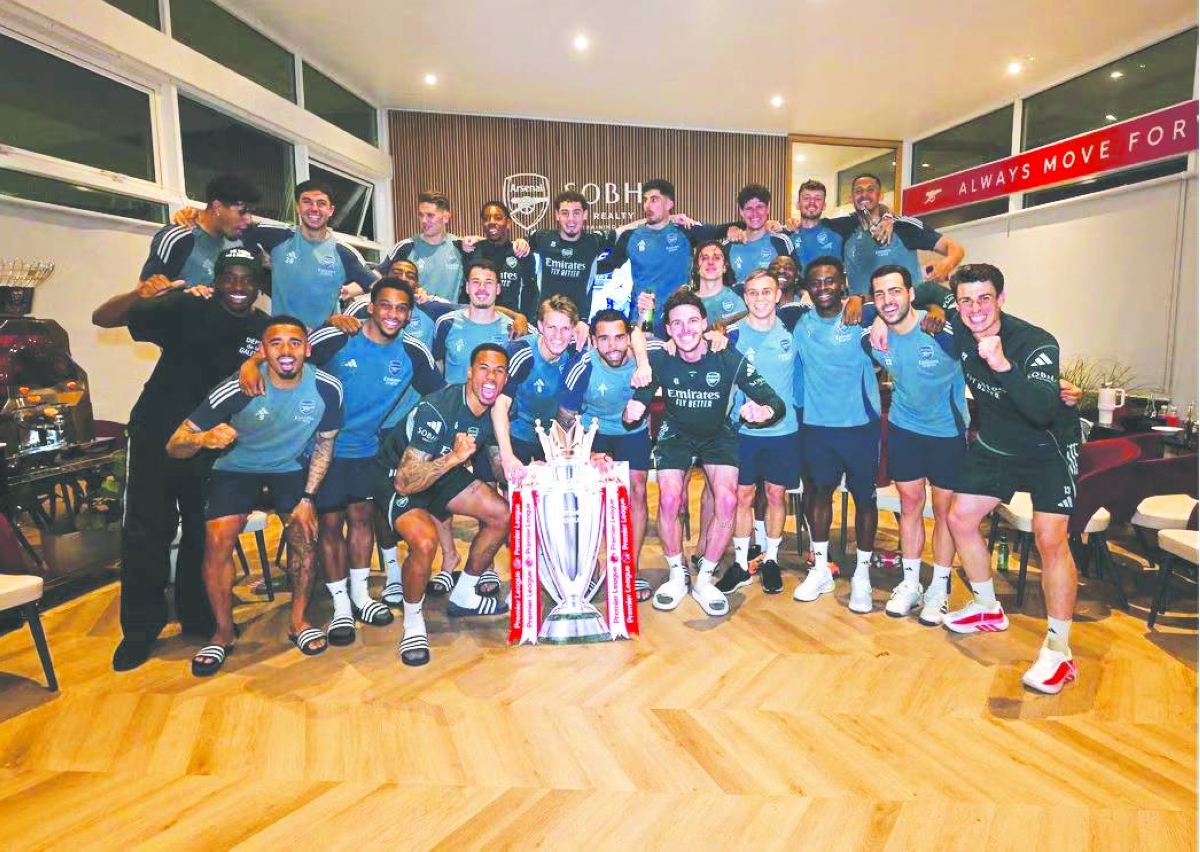
Arsenal players celebrate after being confirmed as Premier League champions for the first time in 22 years. Bukayo Saka said that Arsenal's critics were "not laughing at us anymore" as the club celebrated their first Premier League title in more than two decades.Gunners players and staff gathered at the club's London Colney training ground on Tuesday to watch closest challengers Manchester City draw 1-1 away to Bournemouth – a result which gave Arsenal an unassailable four-point lead at the top of the table with just Sunday's final round of matches remaining.As the Arsenal squad relished the club's first Premier League title since 2004, there were also joyous scenes at the north London side's Emirates Stadium, where thousands of supporters gathered to mark the occasion by lighting fireworks and flares.Arsenal, runners-up in the league for the previous three seasons, had faced accusations of "bottling" their title bid, with several observers questioning their temperament and ability to handle pressure following a 2-1 defeat at City on April 19.But while City subsequently drew at Everton and then at Bournemouth, Arsenal won their next four league games without conceding a goal. Arsenal's success meant Gunners boss Mikel Arteta joined a select group who've won English titles both as a player and manager.Arteta, who rejoined Arsenal as manager in December 2019 with the club in dire straits, installed a blacked-out Premier League trophy at Colney which would light up only when the Gunners won the title"Light that up," Saka said in footage posted by defender Jurrien Timber on his Instagram account. "Let me tell you something. Twenty-two years, 22 years. there was laughing, there was joking, they're not laughing anymore," the England international added. "Look, it is going to be shining, it is going to be shining bright."In an Instagram post, this time on Saka's channel, Arsenal's Myles Lewis-Skelly was seen holding a champagne bottle. "They called us bottlers," said Lewis-Skelly who, like Saka, came through the club's Hale End Academy youth system. "And now we're holding the bottle."Former Arsenal manager Arsene Wenger featured in a celebratory post put out by his old side. The Frenchman, who won three Premier League titles with the Gunners, including the 2004 'Invincibles', said: "You did it. Champions go on when others stop. This is your time. Now, go on and enjoy every moment."City manager Pep Guardiola, who had Arteta as his assistant for two of the Manchester club's league titles, paid tribute to his fellow Spaniard. "On behalf of everyone at Manchester City, we congratulate Mikel and all the staff, players and fans on winning the Premier League," Guardiola said. "They deserve it, for so much hard work and effort."Arsenal will be presented with the Premier League trophy after their final match of the domestic season at Crystal Palace on Sunday. The Gunners could yet end the campaign with an impressive double when they go in search of their first Champions League title against Paris Saint-Germain in a Budapest final on May 30. Arsenal players in dawn celebrations after winning Premier LeagueMeanwhile, Arsenal players were pictured celebrating with fans at 5am at Emirates Stadium on Wednesday after they clinched the Premier League title for the first time in 22 years. Declan Rice, Bukayo Saka and Jurrien Timber were pictured in the early hours in an Instagram post by their teammate Eberechi Eze. Thousands of fans had gathered outside the stadium while Manchester City, needing a win to keep the title race alive, played at Bournemouth. The crowd grew as Bournemouth took the lead and although City equalised in injury time, the draw meant the title was heading to North London. Some supporters marked the occasion by lighting fireworks and flares. The players held a party at their London Colney training ground with coach Mikel Arteta and then took the celebrations to the Emirates Stadium. Many of the players said the title win was especially sweet as they had finished runners-up for the past three seasons. Arsenal fans thronged around the stadium, hanging out of car windows and waving flags. Arsene Wenger, the French coach who was in charge when Arsenal won their last title in 2004, addressed the players in a video on the club's social media channels. "You did it! Champions go on when others stop. This is your time. Now, go on and enjoy every moment," Wenger said. Ian Wright, the striker who scored 185 times for Arsenal and was a member of the side that clinched the domestic double in 1998, was mobbed by fans as he celebrated outside the Emirates. Arteta's side will formally be presented with the trophy on Sunday after their final match of the season at Crystal Palace.  Then they will turn their attention to winning a Champions League title for the first time when they face Paris Saint-Germain in the final in Budapest on May 30. Related Story

Sports
Barshim clears 2.23m to win gold at Asian Jumps Championships

Barshim clears 2.23m to win gold at Asian Jumps Championships

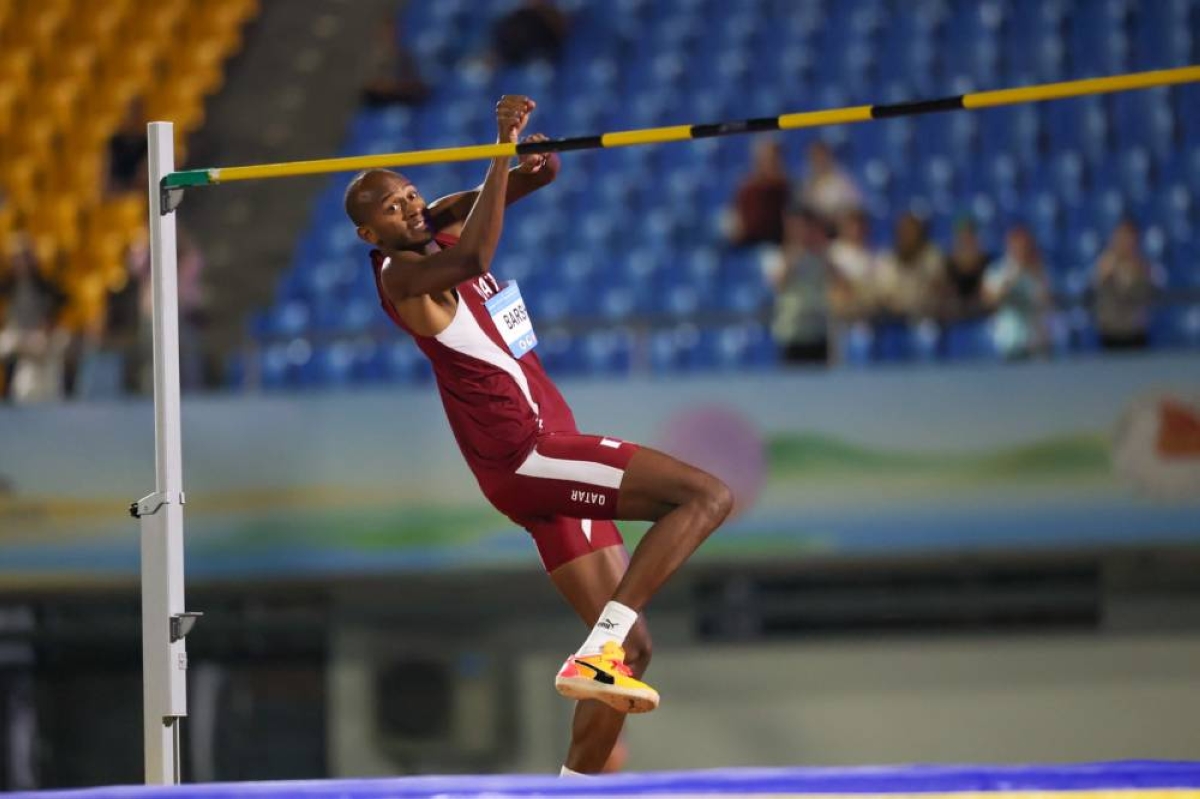
Qatar’s high jump icon Mutaz Essa Barshim claimed his first gold at the international stage since returning from injury yesterday as he cleared 2.23m at the 1st Asian Jumps Championships in Chongqing, China. A few days ago, Barshim had shared gold with Oman’s Fatih Abdulghafour Beit Jaaboub at the 4th GCC Games - Doha 2026 after both athletes cleared 2.16m, recreating the spirit of sportsmanship just like at the Tokyo Olympics when Barshim had famously shared Olympic gold with Italy’s Gianmarco Tamberi. Related Story

Sports
Taijul takes six to lead Bangladesh to Pakistan Test series sweep

Taijul takes six to lead Bangladesh to Pakistan Test series sweep

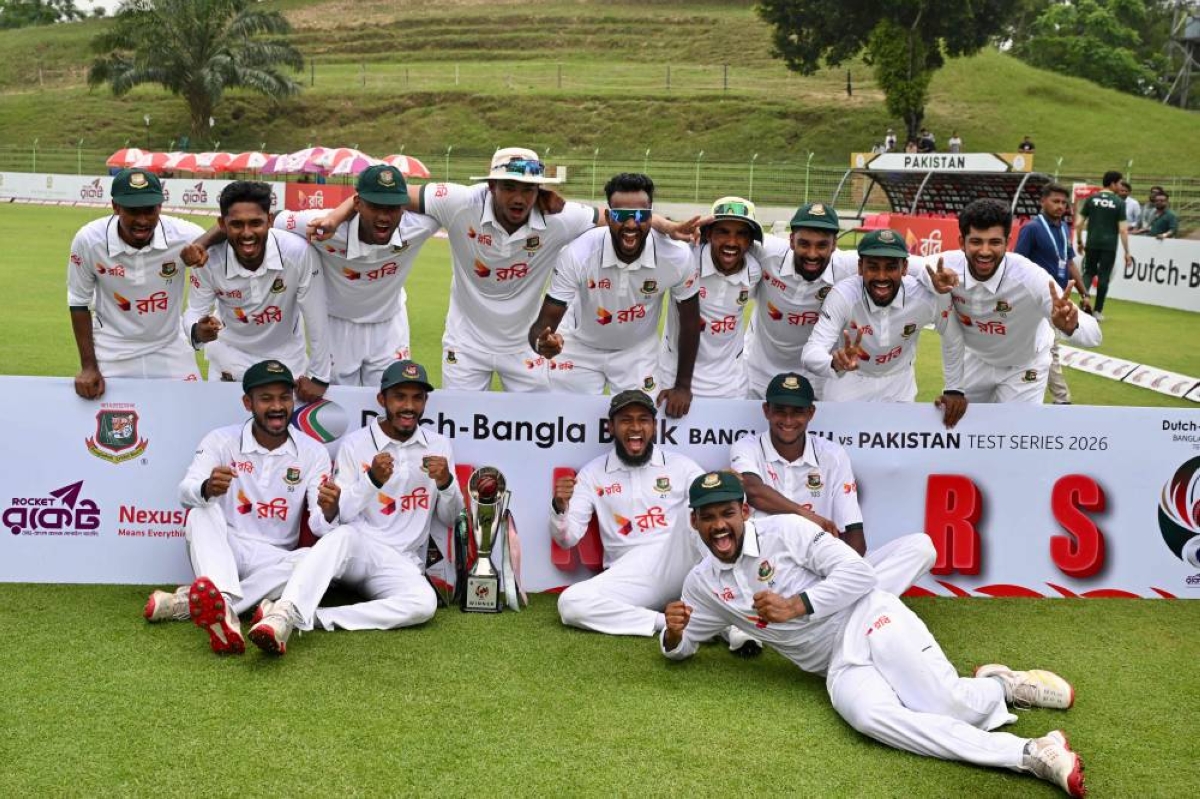
Bangladesh’s players pose with the tournament trophy after winning the second Test cricket match between Bangladesh and Pakistan at the Sylhet International Cricket Stadium in Sylhet on May 20, 2026. (AFP) Spinner Taijul Islam took six wickets to lead Bangladesh to a 78-run win over Pakistan in the second Test and clinch a famous 2-0 series win Wednesday.Pakistan, who started the fifth day on 316-7 chasing a record 437, were bowled out for 328 in the first session in Sylhet after Mohammad Rizwan hit a valiant 94.It was Bangladesh's first Test series win at home against Pakistan and a second successive sweep after their 2-0 triumph on Pakistani soil in 2024.The win marked another major milestone for Bangladesh, who secured four successive Test series victories for the first time in their history."It's difficult to explain the emotions of that final hour because Pakistan were batting really well and we were under pressure," Bangladesh captain Najmul Hossain Shanto said."But compared to previous matches, we controlled our emotions better and avoided panic."Every player and member of the support staff contributed, and as captain I feel very proud of the team's work ethic."Wicketkeeper Rizwan kept Pakistan in the hunt for an unlikely win with a 166-ball stay after the visitors had slumped to 162-5 on day four.Rizwan put on an eighth-wicket partnership of 54 with overnight partner Sajid Khan, who made 28.Taijul broke through to dismiss Sajid for his 18th Test five-wicket haul and pace bowler Shoriful Islam had Rizwan caught in the next over to end Pakistan's resistance."It's never good to lose games," said Pakistan skipper Shan Masood."In both matches we had significant chances, but we need to reflect on where we lost the game in batting, bowling and fielding if we want to move forward as a side."Taijul took the final wicket of Khurram Shahzad to return second-innings figures of 6-120 and trigger the Bangladesh celebrations.Taijul's four wickets on Tuesday had left Pakistan in deep trouble.Former captain Babar Azam counter-attacked with 47 before wicketkeeper Litton Das produced a stunning catch off Taijul.Captain Masood made 71, while Salman Ali Agha added 71 in a crucial 134-run sixth-wicket stand with Rizwan before Taijul broke through.Taijul, a left-arm spinner also took 3-67 during Pakistan's first innings 232.Litton, who was named player of the match, scored 126 in Bangladesh's first-innings 278.Veteran batsman Mushfiqur Rahim scored 137 in the second to guide Bangladesh to 390, with contributions from Mahmudul Hasan Joy (52) and Litton (69).The 39-year-old Mushfiqur was named player of the series for his 253 runs in two matches.Bangladesh won the opening Test by 104 runs. BRIEF SCORES: Bangladesh 278 (Litton 126, Shahzad 4-81) and 390 (Mushfiqur 137, Litton 69, Shahzad 4-86) beat Pakistan 232 (Babar 68, Rana 3-60, Taijul 3-67) and 358 (Rizwan 94, Masood 71, Agha 71, Taijul 6-120) by 78 runs.  Related Story