Entertainment
Fighter Jets Collide Midair in Idaho, Crew Members Ejected Safely

Fighter Jets Collide Midair in Idaho, Crew Members Ejected Safely

Idaho Air Show Fighter Jets Collide Midair... Crew Members Safely Ejected!!! Published May 17, 2026 2:17 PM PDT Two fighter jets collided midair during an air show at Mountain Home Air Force Base Sunday --

Sports
Batting great Inzamam urges Pakistan players to play more red ball cricket

Batting great Inzamam urges Pakistan players to play more red ball cricket

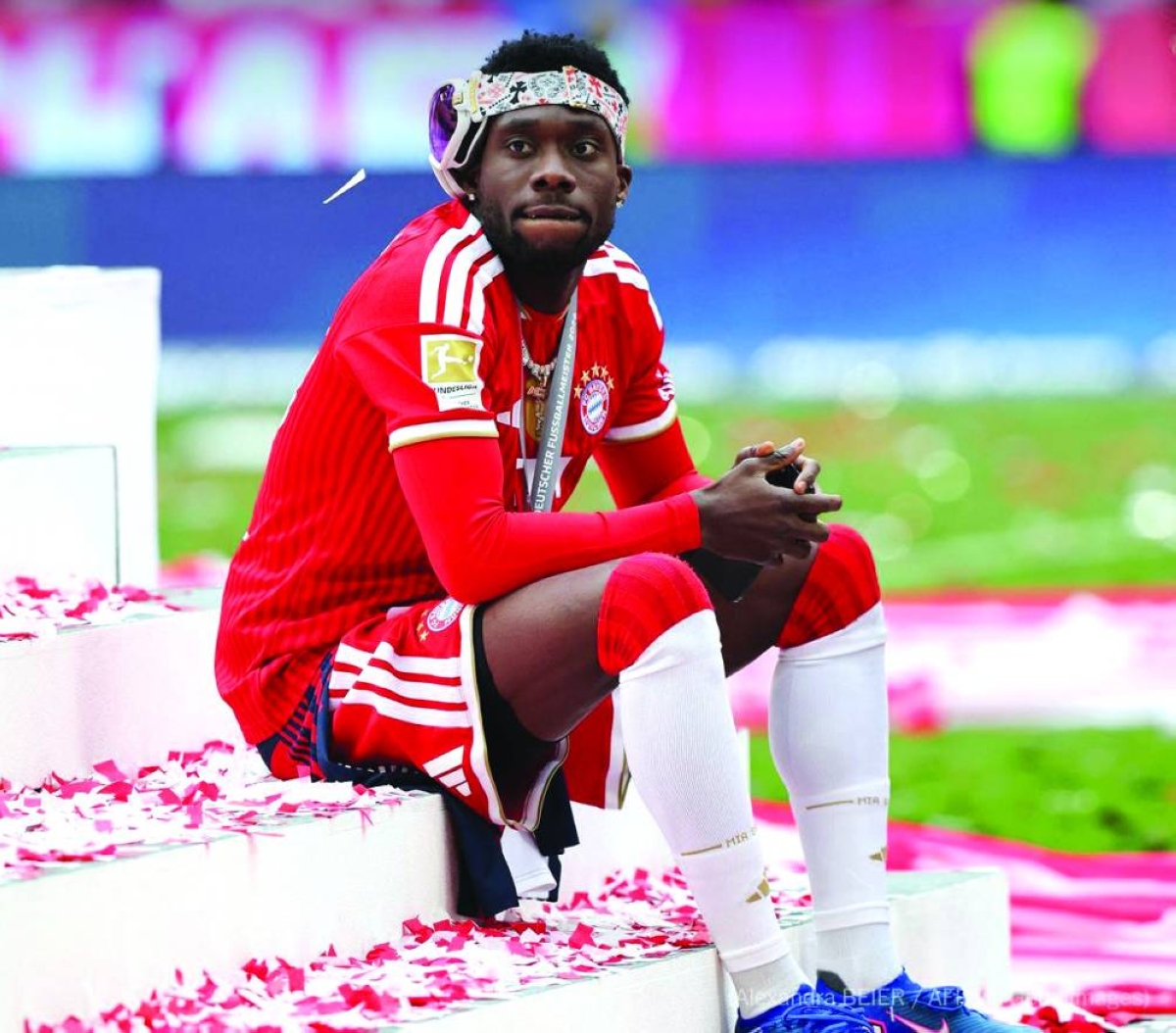
Former Pakistan cricket captain Inzamam Ul Haq talks to the media during his visit to Doha. Former batting great Inzamam Ul Haq says Pakistan's current batsmen and bowlers can only improve their performances by playing more red ball cricket. Pakistan is currently placed eighth in the World Test Championship (WTC) points table among nine teams chiefly because of poor scores by its frontline batsmen in this WTC cycle as well as the previous one. In a career spanning more than two decades, Inzamam played 120 Tests scoring 8,830 runs, and 245 first-class matches in which he smashed 45 centuries. "They urgently need to play more domestic, longer-format cricket. And yes, it would be a good idea for Pakistan players to appear in county cricket also," Inzamam, 56, said during a candid chat. "If Pakistan players do not play the longer format regularly, their technical foundation cannot become strong, which explains the ongoing inconsistency in performances," he added. "Pakistan's first-class cricket used to be robust, allowing players to spend long durations at the crease to refine both their technique and mental fortitude. This is not the case now. Nowadays, young players predominantly confine themselves to T20 cricket, where the game ends in just a few overs. This prevents both batsmen and bowlers from developing comprehensive skills," he added. "If we (Pakistan players) do not play more first-class cricket, we cannot sustain our international performances. Pakistan's first-class cricket, the longer format, has been heavily compromised by the overwhelming focus on T20s and ODIs. That is the root cause of our current performance issues," he underlined. The 1992 World Cup hero said young players in India play more first-class cricket before making it to the national side. "Despite the immense popularity of the IPL, every young Indian player prioritizes playing the Ranji Trophy. Consequently, their domestic system remains robust, ensuring a steady influx of fresh talent," Inzamam said. Inzamam also pointed to Australia, where first-class competitions like the Sheffield Shield are held in high regard. This very foundation ensures that the Australian team maintains consistency and boasts a formidable bench strength, he said. "Pakistan does not have good bench strength at the moment," Inzamam said. "Pakistan must revert to a similar model to ensure comprehensive player development." INDIAN PLAYERS AND RANJI TROPHY"If you look closely, Indian players still have to play first-class cricket; everyone has to participate in the Ranji Trophy. It isn't just about the IPL. Naturally, the IPL is a massive global tournament that carries immense influence, and they certainly utilize it to select their T20 squads. However, their players are still required to go back and play the Ranji Trophy," Inzamam, who played his 100th Test against India in 2005, explained. Inzamam said Pakistan's current batting star Babar Azam is as impactful as retired players like Zaheer Abbas, Javed Miandad, Mohammad Yousuf and Younis Khan."We have to acknowledge Babar Azam has the same level of elite impact. I prefer to focus on the positives. There are current players I genuinely admire. I highly admire Babar Azam. Despite the intense criticism directed at him, I like his play and believe in his ability," he said. "It's all about the sheer impact a player leaves on a match and Babar does that. In the generations before and during my time, we had a continuous line of world-class batsmen: Javed Miandad, Zaheer Abbas, Saeed Anwar, Salim Malik, Ijaz Ahmed, followed by myself, Younis Khan, Mohammad Yousuf, and Amir Sohail. It was a regular, uninterrupted cycle of dominance," Inzamam said. When asked about two of his most admired Indian cricketers, Inzamam quickly mentioned the names of Kapil Dev and Sachin Tendulkar. "Kapil Dev was one of the most intelligent bowlers I had ever faced. He got me out also once (in a World Cup match). Kapil did not rely purely on pace but he knew how to outsmart batsmen with his sharp cricketing mind and variations. He was a smart bowler. He could set up a batsman for dismissal. He was a very smart cricketer, I must say," Inzamam said. "Sachin Tendulkar was a proper cricketer. Sachin reached the pinnacle of world cricket through sheer dedication, discipline and relentless hard work."   Related Story

Sports
Di Giannantonio wins, Alex Marquez hurt in horror crash

Di Giannantonio wins, Alex Marquez hurt in horror crash

TOPSHOT - Team Gresini Racing MotoGP's Alex Marquez crashes during the 2026 Catalunya Moto GP Grand Prix at the Catalunya racetrack in Montmelo, near Barcelona, on May 17, 2026. (Photo by DANIEL BALLARIN / AFP)

Opinion
In Beijing, choreography outran the substance

In Beijing, choreography outran the substance

When the red carpets were rolled up in Beijing on Friday, what Donald Trump carried home from his two-day audience with Xi Jinping was less a diplomatic harvest than a bouquet — handsome enough to display, but already cut. The American president pronounced the summit a triumph, toasted “my friend” across the banquet table, and paraded a list of half-formed commercial wins: Boeing aircraft, soybeans, beef, an opening for US capital. By Saturday, Beijing was already deflating the largest of those claims, with Foreign Minister Wang Yi noting only that the working teams were still talking. What was on offer in the Chinese capital was, in the end, not so much an agreement as an atmosphere.  That, in itself, is no small thing. With the Strait of Hormuz still half-strangled by the unresolved Iran war the United States set in motion, with energy markets jittery and supply chains brittle, the world’s two most consequential capitals chose pageant over provocation. Both leaders had every reason to want it so. Xi is preparing to seek a fourth term while stewarding an economy on which an estimated 10-20mn Chinese jobs hinge on trade with America. Trump, his attention pulled in too many directions at once, needed Beijing not to add to the disorder. Stability of a kind was duly produced. Whether it is durable — or merely tactical — is the question worth asking.  The cameras captured a study in mismatched temperaments. Xi played host as a man who knew his guest’s weaknesses: the Temple of Heaven, the Great Hall of the People, the rose gardens of Zhongnanhai, and, as a parting flourish, a promise to send seeds for the White House lawn. He conceded almost nothing. Trump, for his part, performed his admiration in public — tall, very tall, the most beautiful roses anyone had ever seen — and came away with little beyond the goodwill itself. Susan Shirk, the veteran China hand, observed with diplomatic restraint that the flattery was not working. In truth it was working — for Xi.  Beneath all this lies a story of leverage, and how decisively it has shifted since Trump last flew into Beijing in 2017. China has spent the intervening years tightening its grip on the unglamorous machinery of modern power: rare-earth extraction and processing, magnet manufacture, active pharmaceutical ingredients, the workaday plumbing of the green-tech supply chain.  When Washington escalated tariffs last year, Beijing answered with export controls on critical minerals, and it was the American side that blinked. That single episode rewired the diplomatic muscle memory of both governments. As one analyst put it bluntly this week, China now handles the United States by deterrence rather than concession, willing and able to meet escalation with escalation of its own. The Beijing summit was the culmination of that shift, not a deviation from it.  Nowhere was the new arithmetic more exposed than on Taiwan. Xi opened the talks by warning that any mishandling of the island could plunge the entire relationship into crisis; Trump, by his own admission, made no comment in the room, said nothing publicly until Air Force One had cleared Chinese airspace, and then — astonishingly — recast a $14bn defensive arms package long awaited in Taipei as a “negotiating chip” whose fate “depends on China”. It is difficult to overstate how unsettling that single phrase will read in Taipei, in Tokyo, in Canberra, in Manila.  Within hours of leaving Beijing, an American president had publicly converted a commitment to a democratic partner into bargaining material for soybean orders. Whether or not the package is ultimately approved, the signal has been sent, and allies have heard it. So has Beijing.  Xi’s other gambit was conceptual, and shrewder than it first appears. By invoking the Thucydides Trap — the warning, drawn from the chronicler of the Peloponnesian War, that a rising power and an established one slide too readily into catastrophe — he draped the meeting in the language of statesmanship while quietly assigning the United States the role of the anxious incumbent. He then proposed a new formulation, “constructive strategic stability”, which Chinese state media duly reported as jointly agreed. The phrase is studied vagueness. It works as a set of guardrails Beijing can later accuse Washington of breaching whenever it suits — rules of a game written on a chalkboard the other side does not own.  And yet a case can be made — most thoughtfully by those urging a “cold peace” — that this is precisely the moment for stalemate rather than showdown. Decoupling the world’s two largest economies remains a fantasy. Japan, with 15 years of effort, has only pared its rare-earth dependency on China from above 90% to around 60%. More than a third of American active pharmaceutical ingredients come exclusively from Chinese suppliers. The interdependence is mutual, structural, and impervious to the rhetoric of decoupling. If the Beijing meetings did no more than keep the channels open, slow the deterioration, and give moderates on both sides a little room to breathe, that is not nothing.  But it is also not what was advertised. The president went to Beijing speaking of fantastic deals; he came back with promises whose specifics his hosts immediately declined to confirm. He went hoping, by his own account, for Chinese pressure on Iran to reopen the Strait of Hormuz; he came back with sympathy and no commitment. He went carrying the leverage of America’s chip alliance; he came back having mused aloud that Taiwan had stolen the industry it built.  Here, then, is the food for thought. The Beijing summit will be remembered less for what was agreed than for what it revealed: a Chinese leadership confident enough to receive flattery without returning it, and an American presidency increasingly willing to mistake atmosphere for achievement. The roses, one suspects, will bloom. The harder question is whether anything else planted this week will. • The writer is Deputy Managing Editor, Gulf Times.

World
Trump to hold off new Iran attack today

Trump to hold off new Iran attack today

US President Donald Trump speaks to the press aboard Air Force One enroute to the US following his official visit with President Xi Jinping in China, May 15, 2026. REUTERS/File picture US President Donald Trump said he would "hold off" an attack on Iran scheduled for today at the request of Gulf leaders.Trump said on his Truth Social network yesterday that "serious negotiations" were now underway with Iran and that Gulf states believed "a deal will be made."But he said Washington was ready for a "full, large scale assault of Iran, on a moment's notice, in the event that an acceptable Deal is not reached."On his Truth Social platform, Trump said he was asked by His Highness the Amir Sheikh Tamim bin Hamad al-Thani, Saudi Crown Prince Mohammed bin Salman and UAE President Mohamed bin Zayed al-Nahyan “to hold off on our planned military attack” on Iran, “which was scheduled for tomorrow”.His comments came after Iran said it submitted a response to the latest US proposal via mediator Pakistan.Iran sent the proposal to the US with terms that appeared similar to offers Washington has previously rejected, although a senior Iranian official told Reuters yesterday that the US had softened positions on some issues.A Pakistani source confirmed that Islamabad, which has conveyed messages between the sides in the war in ⁠the Middle East since hosting the only round of peace talks last month, had shared the latest proposal with Washington. But the source suggested progress had been difficult.The sides "keep changing their goalposts," the Pakistani source said, adding: "We don't have much time."Iranian Foreign Ministry spokesperson Esmaeil Baghaei confirmed that Tehran's views had been "conveyed to the American side through Pakistan" but gave no details. Washington did not immediately comment.The Iranian proposal, as described by the senior Iranian source, appeared similar in many respects to Iran's previous offer, which US President Donald Trump rejected last week as "garbage".It would focus first on securing an end to the war, reopening the Strait of Hormuz — a major oil supply route that Iran ⁠has effectively blockaded — and lifting maritime sanctions.Contentious issues around Iran's nuclear programme and uranium enrichment would be deferred to later rounds of talks, the source said.However, in an apparent softening of Washington's stance, the senior Iranian source said the United States had agreed to release a quarter of Iran's frozen funds — totalling tens of billions of dollars — held in foreign banks. Iran wants all the assets released.The Iranian source also said Washington had shown more flexibility in agreeing to let Iran continue some peaceful nuclear activity under supervision of the International Atomic Energy Agency.Iran's Tasnim news agency separately quoted an unidentified source as saying the US had agreed to waive oil sanctions on Iran while negotiations were under way.Iranian officials did not immediately comment on Tasnim's report, which a US official, ⁠who declined to be named, said was false.A fragile ceasefire is in place after six ⁠weeks of war that followed US-Israeli ⁠airstrikes on Iran. But talks mediated by Pakistan have stalled and Trump has said the ceasefire is "on life support".Washington has previously demanded Tehran dismantle its nuclear programme and reopen the Strait of Hormuz, which normally carries one-fifth of the world's seaborne oil and liquefied natural gas supply.Iran has been demanding compensation for war damage, an end to a US blockade of Iranian ports and a halt to fighting on all fronts, including in Lebanon.Trump is expected to meet top national security advisers today to discuss options for resuming military action, Axios reported.Baghaei said Tehran was prepared for all scenarios."As for their threats, rest assured that we are fully aware of how to respond appropriately to even the smallest mistake from the opposing side," he told a televised weekly press conference.  Related Story

Opinion
Fuel costs hit classrooms in the US

Fuel costs hit classrooms in the US

Soaring diesel prices since the onset of the Iran war are draining already tight US school district budgets, making it more expensive to bus students and run generators in a shock officials ‌say they will not be able to afford for long. School districts from Yakima, Washington to Waco, Texas are tapping emergency funding ​reserves to keep buses running. In remote Alaska, officials ‌are scrambling to secure enough fuel to keep the lights on, according to Reuters interviews. “It’s more than a straw ‌on the camel’s back, it’s like a haystack,” said Yakima Superintendent ‌Trevor Greene. The stress reflects one of many knock-on impacts of ‌the US-Israeli war on Iran, which has disrupted the flow of around a fifth of the world’s oil supplies. Since the war started in late February, fuel prices have posted one of their most rapid climbs on record. The spike has upended economies around the globe. It has caused enough pain in the US to be a political liability for President Donald Trump ahead of November midterm elections when his Republican party is trying to maintain slim majorities in the US Congress. US school bus operators are major buyers of diesel, consuming more than 800mn gallons of diesel annually, according to the American School Bus Council. Since December, the price US fleets of all types pay for diesel fuel has jumped 67% to $5.52 a gallon, an increase that would add about $1.8bn to the annual cost of operating those school buses, according to a recent ​analysis by fleet management technology provider Samsara. That’s a huge challenge for schools already facing tight budgets, said James Rowan, executive director of the Association of School Business Officials International. “Districts can plan for higher costs, but rapid swings in prices make it very difficult to budget accurately,” he said. “Even districts that have been able to ‌absorb costs this year through reserves or temporary measures - they may not have that same flexibility ​going forward.” Close to a third of US school districts are now siphoning money away from other funds or programs ​to cover their increased fuel costs, while almost a fifth are tapping reserves or rainy day funds, according to a survey of 188 school officials commissioned by the School Superintendents Association known as AASA and conducted during the week of May 4. School officials are trying to save money by consolidating bus routes, enforcing anti-idling measures, changing fuel purchasing practices, deferring maintenance work and reducing administrative spending and staffing, according to the survey, the results of which were shared exclusively with Reuters. Washington State’s Yakima School District executives said the price they pay for diesel was recently up 64% year-on-year to $6.30 a gallon. At that price, the district would need to pay $213,000 more a year on fuel to operate its 60 buses - roughly the equivalent of salaries for two teachers, said Greene. That is a big burden in an agriculture-dominated school district that has a poverty rate of 86%, and which is already “tremendously underfunded,” he said. In the meantime, the district is making piecemeal purchases for ‌its 30,000-gallon diesel tank on days when prices ‌dip, instead of filling it up, as it “limps through the end of the year,” district CFO Jacob Kuper said. Christopher Mills, superintendent of Thief River Falls Public Schools in northwestern Minnesota, said diesel costs tied to transporting as many as 800 students are up around 30% since the Iran war began. The district is working to limit direct impacts on classrooms, Mills said, “but if the prices continue to increase we could be in a position of reducing support services to students.” 

Sports
Qatar excels in athletics with 34-medal finish

Qatar excels in athletics with 34-medal finish

Qatar now has an overall tally of 109 medals including 39 gold, 38 silver and 32 bronze Team Qatar athletics concluded their participation at the 4th GCC Games Doha 2026 with an impressive medal haul that strengthened their lead in the overall standings, after raising their tally to 34 medals, including 12 gold, 13 silver, and 9 bronze medals, in an achievement that reflected the outstanding performances of Qatar’s athletes. Qatar now has an overall tally of 109 medals (39 gold, 38 silver, 32 bronze. In second place is Kingdom of Saudi Arabia with 61 medals (24 gold, 19 silver, 18 bronze) while Bahrain with 54 medals (22 gold, 20 silver, 12 bronze). Team Qatar’s success continued after adding nine medals on the final day of competition — including two gold, five silver, and two bronze medals — to secure top spot in GCC athletics. Bahrain finished second with 22 medals (11 gold, 8 silver, and 3 bronze), while Oman came third with 11 medals (7 gold, 2 silver, and 2 bronze).   The men’s 1500m race witnessed a strong performance from Team Qatar, as Mubarak Saeed won the gold medal after claiming victory in a highly competitive race, while Zakaria al-Alami secured silver and Kuwait’s Badr al-Suwaid took bronze. The race confirmed the dominance of Qatari runners in middle-distance events and their ability to control the pace from start to finish.In the men’s 4x400m relay, Team Qatar continued their dominance in team events after winning gold through the quartet of Mohammed Abdulrahman, Mubarak Mousa, Samir Hassan, and Bassem Humaida. In the women’s competitions, Alaa Suleiman won silver in the high jump, while Salma Hamid secured bronze. Oman’s Alia Al Mughairi claimed gold in a closely contested event. In the men’s discus throw, Moaz Ibrahim won silver and Mohammed Mohammed secured bronze, while Kuwait’s Issa Al Zankawi claimed gold following a strong performance.  e2f42c15-ec91-440b-91df-7dcef1133aaf  In the women’s 4x400m relay, Team Qatar’s quartet of Shahad Mohammed, Sara Ali, Dana Salem, and Awatif Sabah secured silver after a strong contest with Bahrain, who won gold through Zainab Mohammed, Aisha Abdullah, Soufiane Abdulgani, and Oluwakemi Adekoya. Dana Salem also added a bronze medal in the women’s 200m race, which saw Bahrain dominate the top two positions through Raihana Qarouba and Aisha Abdullah. This final medal haul confirmed Qatar athletics’ dominance at GCC level in both individual and team events, while also highlighting the emergence of new talents capable of strengthening Team Qatar’s competitiveness across various categories. Bronze for Qatar in bowling masters eventTeam Qatar bowler Jassim al-Marikhi won the bronze medal in the Masters category on the final day of the bowling competitions at the 4th GCC Games Doha 2026. Kuwait’s Faisal Saleem won the gold medal, while compatriot Mustafa Al Mousawi secured silver.The medal ceremony was attended by Abdullah Sultan al -Qattan, President of the Qatar Bowling Federation, and Ahmed Shaheen al-Marikhi, Board Member of the federation. With this result, Team Qatar bowling raised their overall tally to nine medals, including two gold, four silver, and three bronze medals. Saeed al-Hajri, Board Member of the Qatar Bowling Federation, expressed partial satisfaction with the results achieved by Team Qatar, praising the strong performances delivered by the players despite the tough competition against some of the Gulf region’s top bowlers. Al Hajri stated: “Today marked the conclusion of the bowling competitions at the GCC Games Doha 2026. We came very close to winning gold in the Masters category through our outstanding player Jassim al-Marikhi, who delivered excellent performances throughout the tournament, but he suffered a muscle strain in his hand during the decisive matches, which clearly affected his performance in the semi-finals, forcing him to settle for bronze.” He stressed that the bowling competitions were extremely competitive and reflected the significant development of the sport across the GCC countries.“What makes us proud is that 90 percent of our players are youth athletes aged between 16 and 17 years old. Despite their young age, they managed to challenge experienced Gulf champions and reach the podium with merit,” he added.Al Hajri noted that Team Qatar’s tally of nine medals reflected the federation’s hard work in developing a promising generation.Meanwhile, Kuwait’s Faisal Saleem said: “The competition today was never easy. All players delivered outstanding performances, but I managed to maintain my focus until the end and secure the gold medal, which makes me very happy, especially as it came at the conclusion of the tournament.”  Related Story

Sports
Aya, Mariam bring medals glory for Qatar in table tennis competition

Aya, Mariam bring medals glory for Qatar in table tennis competition

Team Qatar secured gold and silver in the women’s singles competition through Aya Mohammed and Mariam Ali respectively, after Aya defeated Mariam 3-1 in the final. Qatar also won silver in the men’s doubles event through Mohammed Abdulwahab and Abdullah Abdulwahab after they lost 3-0 in the final to Saudi Arabia’s Ali Al Khudrawi and Abdulaziz Boushalibi.On Saturday, Team Qatar had already won gold and bronze in the mixed doubles event. Mohammed Abdulwahab and Aya Mohammed captured gold after defeating the UAE pair Ali Al Hawai and Noura Al Mazmi 3-0 in the final, while Abdullah Abdulwahab and Mariam Ali secured bronze after defeating Bahrain’s Rashid Khalid Sanad and Rayan Emad 3-0 in the third-place playoff. In the men’s team competition, Team Qatar secured bronze to raise their overall tally in the tournament to six medals — including two gold, two silver, and two bronze medals.  Mohamed Abdulwahab and Abdullah Abdulwahab celebrate after winning the silver in the men's doubles table tennis competitions.  The winners were crowned by Hamad Ahmed al-Hammadi, President of the Qatar Table Tennis Association (QTTA), Prince Mohammed bin Abdulrahman Al Saud, President of the Saudi Table Tennis Federation, Ibrahim Al Aasam, Vice President of the UAE Table Tennis Federation, Ahmed Khalil al-Muhannadi, Secretary General of the Qatar Federation, and Jaber Saeed Afifa, Assistant Secretary General of the Qatar Federation. QTTA president al-Hammadi expressed his satisfaction with the technical and organisational success of the table tennis competitions, stressing that the tournament reflected Qatar’s growing status as a host of major regional, continental, and international sporting events. Al-Hammadi said: “We congratulate our players, who lived up to expectations and delivered performances worthy of Qatari sport. They proved their ability to compete strongly and reach the podium despite the participation of some of the best players in the GCC.” 

World
Trump warns ‘won’t be anything left’ of Iran unless it agrees to deal

Trump warns ‘won’t be anything left’ of Iran unless it agrees to deal

President Donald Trump yesterday warned Iran “there won’t be anything left of them” if Tehran does not quickly agree to a peace deal with the US. Washington, locked in conflict with Tehran since US and Israeli forces launched major strikes on the Islamic republic beginning February 28, has struggled to break an impasse and make any progress toward ending a war that has shaken the Middle East and sent energy prices climbing. “For Iran, the Clock is Ticking, and they better get moving, FAST, or there won’t be anything left of them,” Trump wrote on his Truth Social platform. “TIME IS OF THE ESSENCE!”The war has led to an effective blockade of the critical Strait of Hormuz, through which some 20% of global oil exports pass in peacetime, and has drawn neighbours Israel and Lebanon into a deadly side conflict. Iran’s clerical state, Hezbollah’s patron, has demanded a lasting ceasefire in Lebanon before any broader peace agreement with Trump, who has been frustrated by Tehran’s refusal to an accord on his terms. An Israeli military official said yesterday that Hezbollah had fired around 200 projectiles at Israel and its troops over the weekend, despite Israel and Lebanon agreeing to extend a ceasefire.Washington and Tehran agreed to a truce on April 8, but peace negotiations have stalled and sporadic attacks have continued.Yesterday, Iranian media said the US had failed to make any concrete concessions in its latest response to Iran’s proposed agenda for negotiations to end the war.The Fars news agency said Washington had presented a five-point list which included a demand for Iran to keep only one nuclear site in operation and transfer its stockpile of highly enriched uranium to the US.  Related Story

Opinion
Fibre-optic drones have exposed Netanyahu’s Hezbollah pipe dream

Fibre-optic drones have exposed Netanyahu’s Hezbollah pipe dream

In the ruined townships of southern Lebanon, a new kind of war has emerged — one that no Iron Dome can intercept and no electronic warfare suite can blind. A small quadcopter, guided not by radio waves but by a hair-thin fibre-optic cable unreeling silently behind it, skims rooftops before slamming into an Israeli Merkava tank with the precision of a surgeon’s scalpel. Israel’s multibillion-dollar defence architecture is, in this moment, rendered irrelevant by a spool of cable and a repurposed commercial drone. This is the battlefield arithmetic that confounds Benjamin Netanyahu’s proclaimed ambition to disarm Hezbollah — what his critics call his greatest pipe dream. Battered by a year of Israeli bombardment, stripped of key commanders, its Syrian supply corridor severed by Assad’s fall, the Party used fifteen months of fragile ceasefire not to disarm, as Beirut and Washington demanded, but to rearm — and to innovate. Israeli officials acknowledge that Hezbollah’s drone unit has launched over 160 FPV sorties since early March, 90 guided by fibtr-optic cables that defeat every electronic countermeasure in Israel’s inventory. When a medevac helicopter raced to evacuate the wounded at Taybeh, Hezbollah launched a second drone at the aircraft. Soldiers pointed their rifles at the sky. On May 7 and 8, FPV drones struck Iron Dome launchers, footage showing maintenance crews fleeing moments before impact. Netanyahu’s answer? A solution “will take time.” In the interim, front-line troops hang nets over their positions, hoping a drone snags on fabric before it finds flesh. Against this backdrop, the demand for disarmament assumes the quality of a theatre of the absurd. Behind closed doors, Lebanese officials have quietly conceded to American envoys that disarmament within any near-term horizon is not feasible. The Lebanese Armed Forces, underfunded and structurally compromised by decades of Hezbollah influence, have neither the firepower nor the political will to confront an organisation that has threatened civil war should anyone try. Secretary General Naim Qassem has warned that seizing the Party’s weapons will mean “no life in Lebanon.” In the vocabulary of Lebanese politics, that is not a threat — it is a constitutional fact. The Party’s negotiating position is a masterpiece of circular logic that happens to be tactically airtight: it will consider disarmament when Israel withdraws from all Lebanese territory — an outcome no Israeli leader, least of all Netanyahu, will accept before Hezbollah disarms. Israel retains forces at five strategic points along the border; Prime Minister Salam has noted that Israel effectively controls sixty-eight Lebanese villages in the south. The 1949 Armistice line, Lebanon demands as a baseline, remains a distant aspiration. The land Israel has seized by force shows no sign of returning for free. Washington pushes Aoun and Salam toward peace and mutual recognition with Israel — a proposition the Party categorically rejects, and that much of the Lebanese political class regards as surrender dressed in diplomatic language. The 1949 Armistice border is not merely a cartographic line; it is the architecture of national dignity. The Lebanese question cannot be understood apart from the larger battle between the US-Israel Axis and the Axis of Resistance. When American and Israeli strikes killed Khamenei on February 28, they did not merely decapitate a theocracy — they pulled the trip wire that brought Hezbollah back into combat after fifteen months of enforced restraint. Tehran, even in the convulsive aftermath, has not relinquished the Hezbollah card. It never will. The Party is the crown jewel of the IRGC’s four-decade investment in the Levant — trained, financed, and strategically directed by the Quds Force from its inception. To imagine Tehran surrendering that asset for diplomatic pleasantries is to misunderstand the Islamic Republic’s strategic grammar entirely. Now, with Trump dangling olive branches and threatening “massive maximum pressure” in the same breath, the most consequential variable hangs unresolved: what emerges from the Trump-Xi summit in Beijing? Regional sources have told CNN that progress in the Iran nuclear talks “will depend on the results of President Trump’s visit to Beijing.” Iran has already warned of ninety-percent uranium enrichment should a second round of US-Israeli strikes materialize.15 Should diplomacy collapse, and the bombs fall again, Hezbollah will unleash its remaining arsenal against northern Israel — where more than a million Israelis have already abandoned their homes, a demographic hostage to an impasse that no one in Washington, Jerusalem, or Beirut dares to resolve. Lebanon is, as it has always been, the theater in which larger powers rehearse their conflicts without suffering their consequences. The scorched villages, the families in schools north of the Litani, the iron-nerved drone operators threading quadcopters through bombed-out alleyways — all of this is the bill Lebanon pays for a geopolitical argument it did not author and cannot conclude. Disarming Hezbollah is not a policy question. It is a civilisational reckoning — with Iran’s ambitions, Israel’s appetite for security-through-dominance, America’s capacity to translate pressure into outcomes, and Lebanon’s chronic inability to imagine itself as a sovereign state rather than a corridor for other people’s wars. Netanyahu’s pipe dream of a disarmed Hezbollah will remain precisely that — a dream — as long as Iranian strategic interests, Lebanese political paralysis, and fiber-optic quadcopters make the alternative unenforceable. The Party has used every ceasefire to rearm, every setback to innovate, and every ultimatum to consolidate its base. The question no one in the triumvirate of Washington, Jerusalem, and Beirut dares answer aloud: if sixteen years of UN resolutions, three major wars, and the killing of Iran’s Supreme Leader have not disarmed the Party — what, exactly, will? • The writer is a news anchor, programme presenter and media instructor.  Related Story